Why Your Uber Driver Is Purposely Taking A Longer Route


Many Uber drivers complain of low pay and high operating costs. However, some drivers are fighting back, and it could affect your next ride.
Drivers are purposely making trips longer in order to earn more money, reports the the Wall Street Journal.
In a practice called "longhauling," drivers are taking routes that require more miles, and usually more time, in order to increase their cut of a fare. Fortunately for riders, the only thing they are losing is their time, since Uber's upfront fares lock in flat prices for riders before they step foot in the vehicle.
But if the fare is locked in, why are drivers taking longer routes? This is because Uber pays drivers a whole lot more on the distance driven versus the time of the ride, regardless of the price the rider is paying.
The WSJ provided an example of a ride in Los Angeles where if a driver were to go 33.5 miles for a ride they'd receive $47.75, or $35.81 after Uber took their 25% commission. But if the driver took a different route that added 10 miles (still traveling to the same destination) and six more minutes to the trip, they'd get paid $58.84, or $44.14 after Uber's cut.
In Los Angeles, drivers get paid $1.06 per mile and just .17 cents a minute. So going a few extra miles could significantly increase a drivers cut just for a few extra minutes on the road. Uber's fare structure for drivers is similar throughout the country.
Last week, ride-hailing company Lyft released a study that trips from New York JFK Airport take longer than any other airport in the US, and New York became the first major city to cap the number of ride-hailing cars and institute a minimum pay for drivers. The WSJ story mentioned drivers taking people from out of town on longer routes to bump their pay.
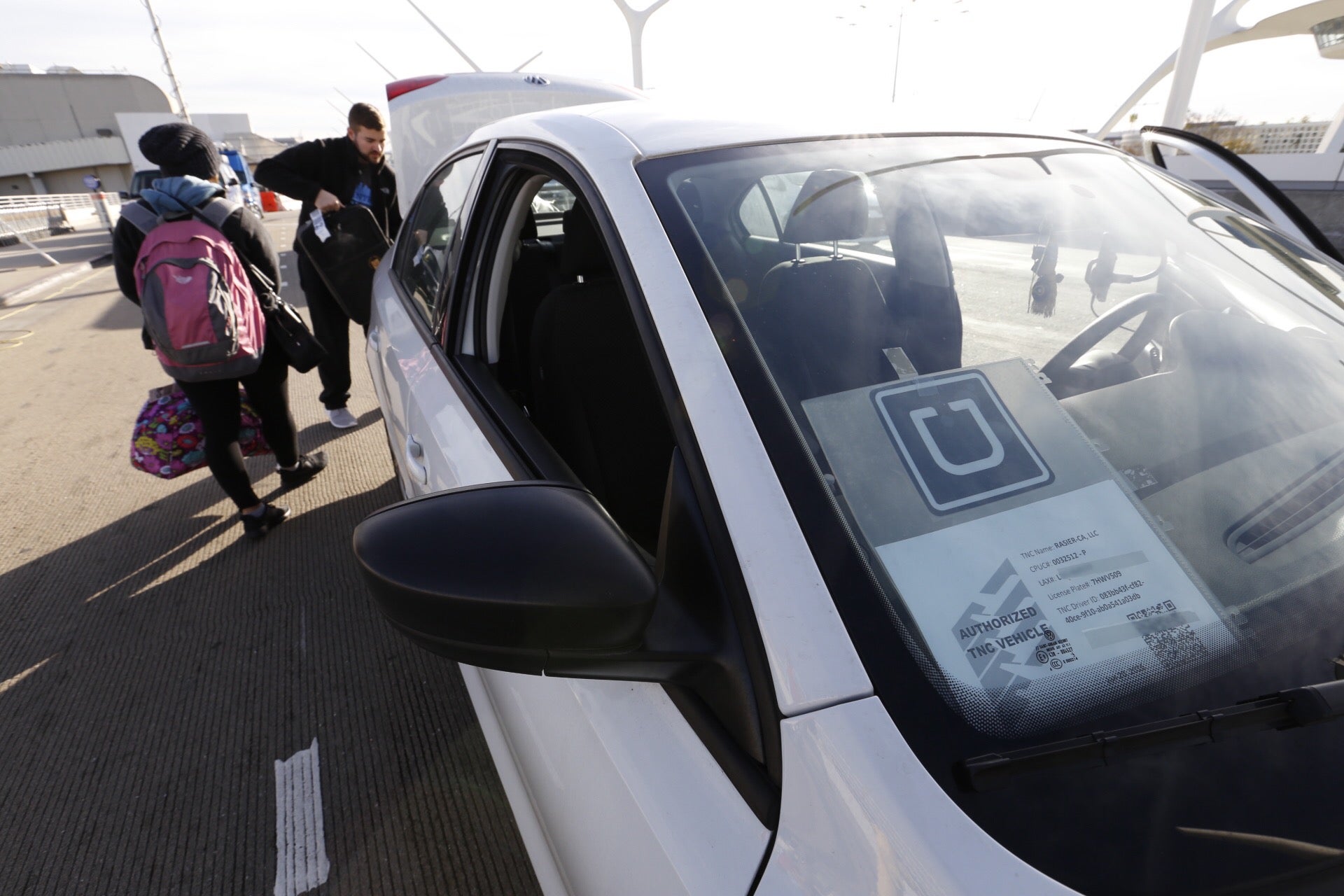
However, the practice isn't new, Harry Campbell, author of The Rideshare Guide tells TPG. He pointed us to his blog post in February 2017, "How to Beat Uber's Upfront Pricing" detailing how drivers can make more money by taking the less efficient routes.
While it's well enough known, Uber estimates that less than 1% of rides engage in longhauling.

"This type of behavior—while unacceptable—is exceedingly rare," an Uber spokesman told the Wall Street Journal. TPG reached out to Uber for this story but didn't hear back by time of publication.
Campbell says most drivers are confused about how Uber calculates fares.
"Since Uber switched to upfront pricing, a majority of drivers don't understand how pricing works since what the rider pays is no longer connected to what the driver receives," said Campbell. "This is probably one of the number one complaints I hear from drivers, not to mention the large percentages Uber now takes on some fares where they over estimate the price to the rider."
TPG found that Uber's upfront pricing can sometimes be way off. Uber uses an algorithm to estimate what it thinks passengers are willing to pay — instead of a standard price for every rider.
Campbell himself sometimes engages in longhauling — but only if it makes sense for the passenger:
"I guess technically I engage in long hauling here and there but it's only when the longer route will save my passenger time and I often confirm it with them ahead of time," said Campbell.
Kurt Wagner, a former driver in San Francisco said he would only take a longer route if the passenger authorized it.
"It definitely makes a difference. Why should drivers end up with less while doing the hard work?" Wagner told the WSJ.
Although upfront pricing should keep the price the same for passengers, that's not always the case:
"In testing for that article, we actually saw that if you go outside of one of the suggested Google Maps or Waze routes, then Uber does recalculate the fare for the passenger and will charge them more if you [the driver] go too far out of the way," said Campbell.
TPG featured card
at American Express's secure site
Terms & restrictions apply. See rates & fees.
| 4X | Earn 4X Membership Rewards® points per dollar spent on purchases at restaurants worldwide, on up to $50,000 in purchases per calendar year, then 1X points for the rest of the year. |
| 4X | Earn 4X Membership Rewards® points per dollar spent at US supermarkets, on up to $25,000 in purchases per calendar year, then 1X points for the rest of the year. |
| 5X | Earn 5X Membership Rewards® points on prepaid hotel stays booked through AmexTravel.com or the Amex Travel App™. |
| 3X | Earn 3X Membership Rewards® points on flights booked through AmexTravel.com, the Amex Travel App™, or purchased directly from airlines. |
| 2X | Earn 2X Membership Rewards® points on prepaid car rentals booked through AmexTravel.com or the Amex Travel App™ and cruises booked and paid through AmexTravel.com. |
| 1X | Earn 1X Membership Rewards® point per dollar spent on all other eligible purchases. |
Pros
- Valuable dining and food-related credits
- Flexible rewards with airline and hotel transfer partners
- Multiple travel and purchase protections
- No foreign transaction fees
- Access to Amex Offers for additional savings (enrollment required)
Cons
- Not as useful for those living outside the U.S.
- Some may have trouble using Uber and other dining credits
- You may be eligible for as high as 100,000 Membership Rewards® Points after you spend $8,000 in eligible purchases on your new Card in your first 6 months of Card Membership. Welcome offers vary and you may not be eligible for an offer. Apply to know if you’re approved and find out your exact welcome offer amount – all with no credit score impact. If you’re approved and choose to accept the Card, your score may be impacted.
- Earn 4X Membership Rewards® points per dollar spent on purchases at restaurants worldwide, on up to $50,000 in purchases per calendar year, then 1X points for the rest of the year.
- Earn 4X Membership Rewards® points per dollar spent at US supermarkets, on up to $25,000 in purchases per calendar year, then 1X points for the rest of the year.
- Earn 5X Membership Rewards® points on prepaid hotel stays booked through AmexTravel.com or the Amex Travel App™.
- Earn 3X Membership Rewards® points on flights booked through AmexTravel.com, the Amex Travel App™, or purchased directly from airlines.
- Earn 2X Membership Rewards® points on prepaid car rentals booked through AmexTravel.com or the Amex Travel App™ and cruises booked and paid through AmexTravel.com.
- Earn 1X Membership Rewards® point per dollar spent on all other eligible purchases.
- Pay It® lets you tap in the American Express® App to quickly pay for small purchase amounts throughout the month and still earn rewards the way you usually do. Plan It® gives you the option to split up big purchases into equal monthly payments with a fixed fee. You’ll know upfront exactly how much you’ll pay.
- $120 Dining Credit: Earn up to a total of $10 in statement credits monthly when you pay with the Gold Card at Grubhub (including Seamless), Buffalo Wild Wings, Five Guys, The Cheesecake Factory, and Wonder. This can be an annual savings of up to $120. Enrollment required.
- $100 Resy Credit: Get up to $100 in statement credits each calendar year at over 10,000 qualifying U.S. Resy restaurants after you pay for eligible purchases with the American Express® Gold Card. That’s up to $50 in statement credits semi-annually. Enrollment required.
- $84 Dunkin' Credit: Earn up to $7 in monthly statement credits after you pay with the American Express® Gold Card at U.S. Dunkin’ locations. Enrollment required.
- $120 Uber Cash on Gold: Enjoy up to $120 in Uber Cash annually with your Gold Card. Just add your Card to your Uber account and you'll get $10 in Uber Cash each month to use on orders and rides in the U.S. when you select an Amex Card for your transaction.
- Enjoy complimentary Hertz Five Star® Status benefits like skipping the counter at select locations, adding an additional driver at no additional cost*, and vehicle upgrades**. Benefit enrollment and Hertz Gold+ registration are required. *Additional drivers must meet standard rental qualifications and must be a spouse or domestic partner to qualify as complimentary. Other additional drivers subject to fees. **Benefits are subject to availability and vary by location. Additional Hertz program Terms and Conditions including age restrictions apply.
- Book two nights or more with The Hotel Collection through AmexTravel.com or the Amex Travel App™ and receive a $100* credit towards eligible charges at over 1,400 upscale hotels worldwide. *Eligible charges vary by property.
- Book your travel through the Amex Travel App™ with added peace of mind – backed by American Express® service and support. Only for American Express® Card Members.
- Whenever you need us, we're here. Our Member Services team will ensure you are taken care of. From lost Card replacement to statement questions, we are available to help 24/7.
- No Foreign Transaction Fees.
- Annual Fee is $325.
- Terms Apply.