A Look at Ethiopian Airlines, the Fastest Growing Airline in Africa

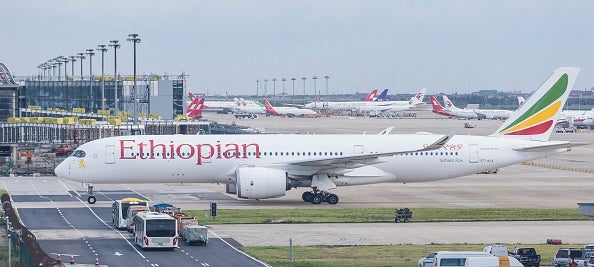
An Ethiopian Airlines jet crashed shortly after takeoff Sunday, killing all 157 people onboard and bringing tragedy to an airline that was a rising star in Africa's long-troubled aviation industry.
The crash marks the second fatal accident for Boeing's popular new 737 MAX in less than five months, and is a sharp blow to an airline that was riding the waves of rapid growth. Ethiopian Airlines has become a dominant force in African aviation and a role model for neighboring countries looking to grow their own national airlines.
Ethiopian Airlines was founded in 1945 by royal decree from emperor Haile Selassie. With financing from TWA, the airline was able to acquire five Douglas C-47s from the US government and commence regional flights from its hub in Addis Ababa. The US continued to finance Ethiopian's growth throughout the 1950s and 60s via the Export-Import bank, allowing the airline to commence long-haul flights to Europe.
Ethiopian has always been a leader in modern jet technology, becoming the first African carrier to order the Boeing 767 and the first airline overall to order both the 767-200ER and the 757 freighter. In the late 1990s, Ethiopian commenced flights to New York (JFK) and Washington DC (IAD) while continuing to expand its international route network. This growth, combined with a major fleet renewal program launched in the early 2000s, earned Ethiopian an invite to join the Star Alliance network.
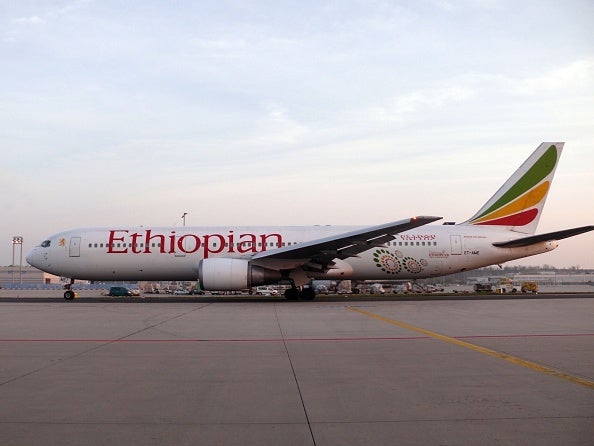
Fast forward and Ethiopian currently has 110 aircraft in its fleet with four more on order. Nearly half of these planes are next generation aircraft, including 787s, A350s, 777s and 737 MAXs like the one involved in Sunday's crash. Ethiopian Airlines was originally scheduled to be the launch customer for the 787, though that honor ultimately went to ANA. Still, Ethiopian was the third airline in the world to take delivery of the highly anticipated Dreamliners, a testament to how much Boeing values its relationship with the airline. Ethiopian currently has an average fleet age of just six years, compared to 11 for American Airlines, 15 for United and 16 for Delta.

In addition to Addis Ababa, Ethiopian has two other hubs: one in Lome, Togo (LFW) and one in Lumbadzi, Malawi (LLW). It's the largest airline in Africa in terms of fleet size, destinations served, revenue and passengers carried. For fiscal year 2017/18, Ethiopian reported a $223 million profit on operating revenue of $3.7 billion. During that year, Ethiopian carried 10.6 million passengers — the first time it had ever crossed the 10 million mark. This rapid growth and success in a market where other airlines have struggled to stay viable is a result of "Vision 2025," a 15-year development plan laid out in 2010 that called for the airline to increase its fleet size, route network and cargo offerings.

Outside of its own operations, Ethiopian Airlines has become a force in African aviation. The carrier bought a 49% stake in Air Malawi, and has entered into strategic partnerships to help Togo, Zambia and Guinea develop their civil aviation networks.
The crash of a brand new 737 MAX 8 aircraft was a shock and tragedy, and it may be weeks or even months before we understand what caused this horrible accident. Ethiopian has a long history of investing in modern aircraft and fleet improvements, and even after today, the Vision 2025 plan is likely to keep fueling Ethiopian's rapid growth. The management at Ethiopian clearly understands how much know-how they have to offer to the region, which is why they've partnered up to help neighboring countries and would-be competitors build stable airlines for themselves.
For more information, read TPG's full coverage of the Ethiopian Airlines 737 MAX crash and aftermath:
- How to Tell If You're Flying on a Boeing 737 MAX in North America
- Safety Experts Weigh in on the Boeing 737 MAX
- Boeing Cancels 777X Event Following Second 737 MAX Crash
- China Grounds 737 MAX Aircraft
- The Striking Similarities Between Lion Air and Ethiopian 737 MAX Crashes
- Ethiopian Airlines Boeing 737 MAX Crashes After Takeoff from Addis Ababa (Update)
Feature photo by Yu Chun Christopher Wong/S3studio/Getty Images.
TPG featured card
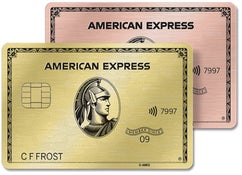
at American Express's secure site
Terms & restrictions apply. See rates & fees.
| 4X | Earn 4X Membership Rewards® points per dollar spent on purchases at restaurants worldwide, on up to $50,000 in purchases per calendar year, then 1X points for the rest of the year. |
| 4X | Earn 4X Membership Rewards® points per dollar spent at US supermarkets, on up to $25,000 in purchases per calendar year, then 1X points for the rest of the year. |
| 5X | Earn 5X Membership Rewards® points on prepaid hotel stays booked through AmexTravel.com or the Amex Travel App™. |
| 3X | Earn 3X Membership Rewards® points on flights booked through AmexTravel.com, the Amex Travel App™, or purchased directly from airlines. |
| 2X | Earn 2X Membership Rewards® points on prepaid car rentals booked through AmexTravel.com or the Amex Travel App™ and cruises booked and paid through AmexTravel.com. |
| 1X | Earn 1X Membership Rewards® point per dollar spent on all other eligible purchases. |
Pros
- Valuable dining and food-related credits
- Flexible rewards with airline and hotel transfer partners
- Multiple travel and purchase protections
- No foreign transaction fees
- Access to Amex Offers for additional savings (enrollment required)
Cons
- Not as useful for those living outside the U.S.
- Some may have trouble using Uber and other dining credits
- You may be eligible for as high as 100,000 Membership Rewards® Points after you spend $8,000 in eligible purchases on your new Card in your first 6 months of Card Membership. Welcome offers vary and you may not be eligible for an offer. Apply to know if you’re approved and find out your exact welcome offer amount – all with no credit score impact. If you’re approved and choose to accept the Card, your score may be impacted.
- Earn 4X Membership Rewards® points per dollar spent on purchases at restaurants worldwide, on up to $50,000 in purchases per calendar year, then 1X points for the rest of the year.
- Earn 4X Membership Rewards® points per dollar spent at US supermarkets, on up to $25,000 in purchases per calendar year, then 1X points for the rest of the year.
- Earn 5X Membership Rewards® points on prepaid hotel stays booked through AmexTravel.com or the Amex Travel App™.
- Earn 3X Membership Rewards® points on flights booked through AmexTravel.com, the Amex Travel App™, or purchased directly from airlines.
- Earn 2X Membership Rewards® points on prepaid car rentals booked through AmexTravel.com or the Amex Travel App™ and cruises booked and paid through AmexTravel.com.
- Earn 1X Membership Rewards® point per dollar spent on all other eligible purchases.
- Pay It® lets you tap in the American Express® App to quickly pay for small purchase amounts throughout the month and still earn rewards the way you usually do. Plan It® gives you the option to split up big purchases into equal monthly payments with a fixed fee. You’ll know upfront exactly how much you’ll pay.
- $120 Dining Credit: Earn up to a total of $10 in statement credits monthly when you pay with the Gold Card at Grubhub (including Seamless), Buffalo Wild Wings, Five Guys, The Cheesecake Factory, and Wonder. This can be an annual savings of up to $120. Enrollment required.
- $100 Resy Credit: Get up to $100 in statement credits each calendar year at over 10,000 qualifying U.S. Resy restaurants after you pay for eligible purchases with the American Express® Gold Card. That’s up to $50 in statement credits semi-annually. Enrollment required.
- $84 Dunkin' Credit: Earn up to $7 in monthly statement credits after you pay with the American Express® Gold Card at U.S. Dunkin’ locations. Enrollment required.
- $120 Uber Cash on Gold: Enjoy up to $120 in Uber Cash annually with your Gold Card. Just add your Card to your Uber account and you'll get $10 in Uber Cash each month to use on orders and rides in the U.S. when you select an Amex Card for your transaction.
- Enjoy complimentary Hertz Five Star® Status benefits like skipping the counter at select locations, adding an additional driver at no additional cost*, and vehicle upgrades**. Benefit enrollment and Hertz Gold+ registration are required. *Additional drivers must meet standard rental qualifications and must be a spouse or domestic partner to qualify as complimentary. Other additional drivers subject to fees. **Benefits are subject to availability and vary by location. Additional Hertz program Terms and Conditions including age restrictions apply.
- Book two nights or more with The Hotel Collection through AmexTravel.com or the Amex Travel App™ and receive a $100* credit towards eligible charges at over 1,400 upscale hotels worldwide. *Eligible charges vary by property.
- Book your travel through the Amex Travel App™ with added peace of mind – backed by American Express® service and support. Only for American Express® Card Members.
- Whenever you need us, we're here. Our Member Services team will ensure you are taken care of. From lost Card replacement to statement questions, we are available to help 24/7.
- No Foreign Transaction Fees.
- Annual Fee is $325.
- Terms Apply.