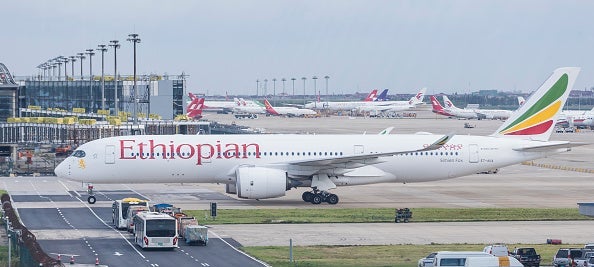

The crash marks the second fatal accident for Boeing’s popular new 737 MAX in less than five months, and is a sharp blow to an airline that was riding the waves of rapid growth. Ethiopian Airlines has become a dominant force in African aviation and a role model for neighboring countries looking to grow their own national airlines.
Ethiopian Airlines was founded in 1945 by royal decree from emperor Haile Selassie. With financing from TWA, the airline was able to acquire five Douglas C-47s from the US government and commence regional flights from its hub in Addis Ababa. The US continued to finance Ethiopian's growth throughout the 1950s and 60s via the Export-Import bank, allowing the airline to commence long-haul flights to Europe.
Ethiopian has always been a leader in modern jet technology, becoming the first African carrier to order the Boeing 767 and the first airline overall to order both the 767-200ER and the 757 freighter. In the late 1990s, Ethiopian commenced flights to New York (JFK) and Washington DC (IAD) while continuing to expand its international route network. This growth, combined with a major fleet renewal program launched in the early 2000s, earned Ethiopian an invite to join the Star Alliance network.
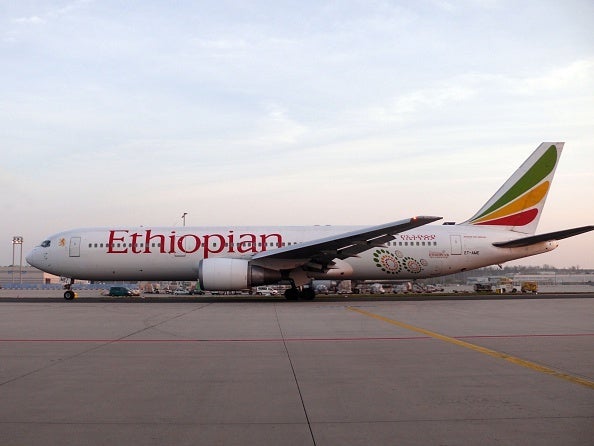
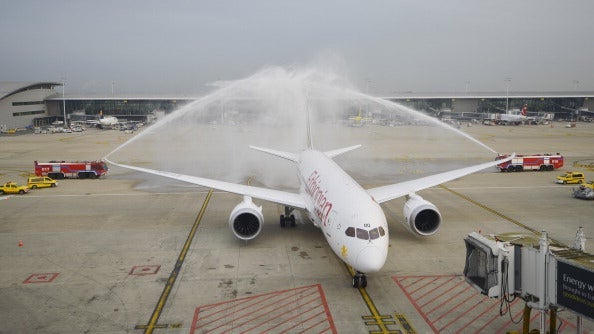
Fast forward and Ethiopian currently has 110 aircraft in its fleet with four more on order. Nearly half of these planes are next generation aircraft, including 787s, A350s, 777s and 737 MAXs like the one involved in Sunday's crash. Ethiopian Airlines was originally scheduled to be the launch customer for the 787, though that honor ultimately went to ANA. Still, Ethiopian was the third airline in the world to take delivery of the highly anticipated Dreamliners, a testament to how much Boeing values its relationship with the airline. Ethiopian currently has an average fleet age of just six years, compared to 11 for American Airlines, 15 for United and 16 for Delta.
In addition to Addis Ababa, Ethiopian has two other hubs: one in Lome, Togo (LFW) and one in Lumbadzi, Malawi (LLW). It's the largest airline in Africa in terms of fleet size, destinations served, revenue and passengers carried. For fiscal year 2017/18, Ethiopian reported a $223 million profit on operating revenue of $3.7 billion. During that year, Ethiopian carried 10.6 million passengers — the first time it had ever crossed the 10 million mark. This rapid growth and success in a market where other airlines have struggled to stay viable is a result of "Vision 2025," a 15-year development plan laid out in 2010 that called for the airline to increase its fleet size, route network and cargo offerings.
Outside of its own operations, Ethiopian Airlines has become a force in African aviation. The carrier bought a 49% stake in Air Malawi, and has entered into strategic partnerships to help Togo, Zambia and Guinea develop their civil aviation networks.
The crash of a brand new 737 MAX 8 aircraft was a shock and tragedy, and it may be weeks or even months before we understand what caused this horrible accident. Ethiopian has a long history of investing in modern aircraft and fleet improvements, and even after today, the Vision 2025 plan is likely to keep fueling Ethiopian's rapid growth. The management at Ethiopian clearly understands how much know-how they have to offer to the region, which is why they've partnered up to help neighboring countries and would-be competitors build stable airlines for themselves.
For more information, read TPG's full coverage of the Ethiopian Airlines 737 MAX crash and aftermath:
- How to Tell If You’re Flying on a Boeing 737 MAX in North America
- Safety Experts Weigh in on the Boeing 737 MAX
- Boeing Cancels 777X Event Following Second 737 MAX Crash
- China Grounds 737 MAX Aircraft
- The Striking Similarities Between Lion Air and Ethiopian 737 MAX Crashes
- Ethiopian Airlines Boeing 737 MAX Crashes After Takeoff from Addis Ababa (Update)
Feature photo by Yu Chun Christopher Wong/S3studio/Getty Images.