5 things to know about visiting a reopened Hawaii


Editor's note: This is a recurring post, regularly updated with new information.
Hawaii has had many false start, twists and turns when it comes to reopening the state and restarting tourism.
But the state's reopening date is now looming very near on Oct. 15. All signs point to this being the date that the state's pre-arrival testing program will begin. Beginning on that date, visitors and returning residents will be able to enter Hawaii without a mandatory 14-day quarantine with some very important testing caveats that vary a bit from island to island.
One thing that is the same across all of Hawaii is the necessity of a state-approved negative COVID-19 test taken no more than 72 hours before departing on the final leg of the journey to Hawaii. This test must come from one of the 17 approved partners. Multiple airlines have partnered with providers to help make that happen for some passengers.
But, there's more to the developing story. You may need a second COVID-19 test after arriving in Hawaii.
Sign up for the free daily TPG newsletter for more travel news and tips
While we expect things to change over time, here's what you need to know about testing and entering a very soon-to-reopen Hawaii as of right now.
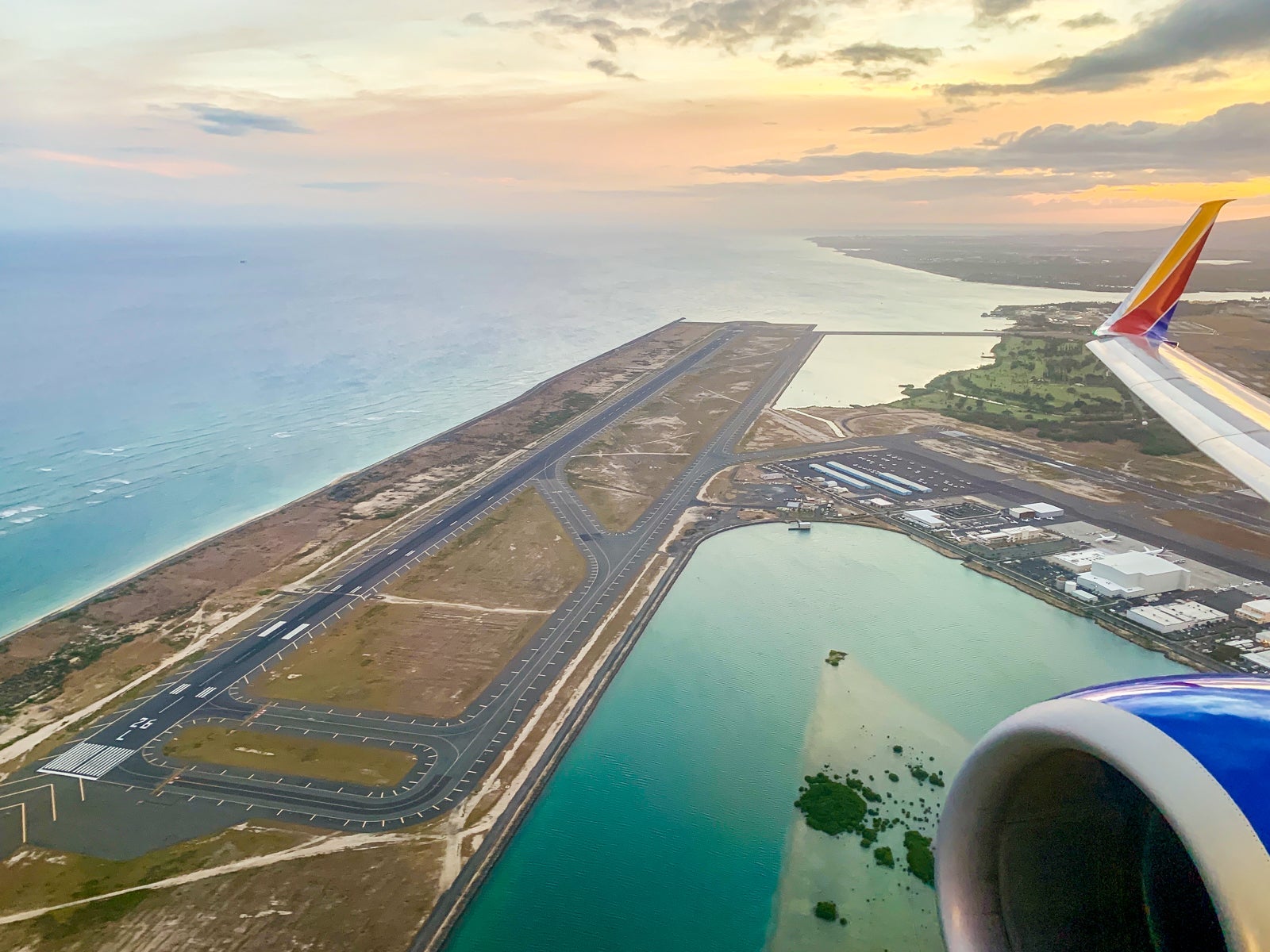
You'll need a test to go to Hawaii
There are many types of COVID-19 tests on the market, so this part can be tricky. Hawaii is currently requiring a test that detects the presence of active COVID-19 infections. (This is not an antibody test that would detect previous infections.)
The test must be an FDA-approved nucleic acid amplification test (NAAT), performed using a nasal swab, with results from a CLIA-certified laboratory from one of Hawaii's trusted testing partners.

PCR tests are a type of NAAT test, so if you can get a negative rapid PCR test result from a testing partner, that should be what you need to head to Hawaii.
Hawaii's approved trusted testing partners are currently listed as CVS, Walgreens, AFC Urgent Care, Bartell Drugs – in partnership with Alaska Airlines, Carbon Health, CityHealth Urgent Care, Color, Discovery Health MD, Quest Diagnostics, Vault Health and Kaiser Permanente.
Children under 5 are not required to take a COVID-19 test to travel to Hawaii. However, some of the testing providers do not test children, so you will need to double-check if your approved provider of choice tests children if you are traveling with a child 5 or older.
Related: Points and miles guide to visiting Hawaii
Airlines are aiding with testing
So far, four airlines have announced plans to manage the testing element of a trip to Hawaii.
This list will likely expand in terms of routes and participating airlines. For now, those traveling on United via San Francisco (SFO), Hawaiian Airlines via sites near Los Angeles (LAX) or SFO, Alaska Airlines out of Seattle (and soon expanding to other cities) or American Airlines out of DFW can lean into the airlines' testing systems.
United has partnered with GoHealth Urgent Care at SFO, and testing will be available from 9 a.m. until 6 p.m. daily to offer rapid tests to United's Hawaii-bound passengers for a price of $250 per person.
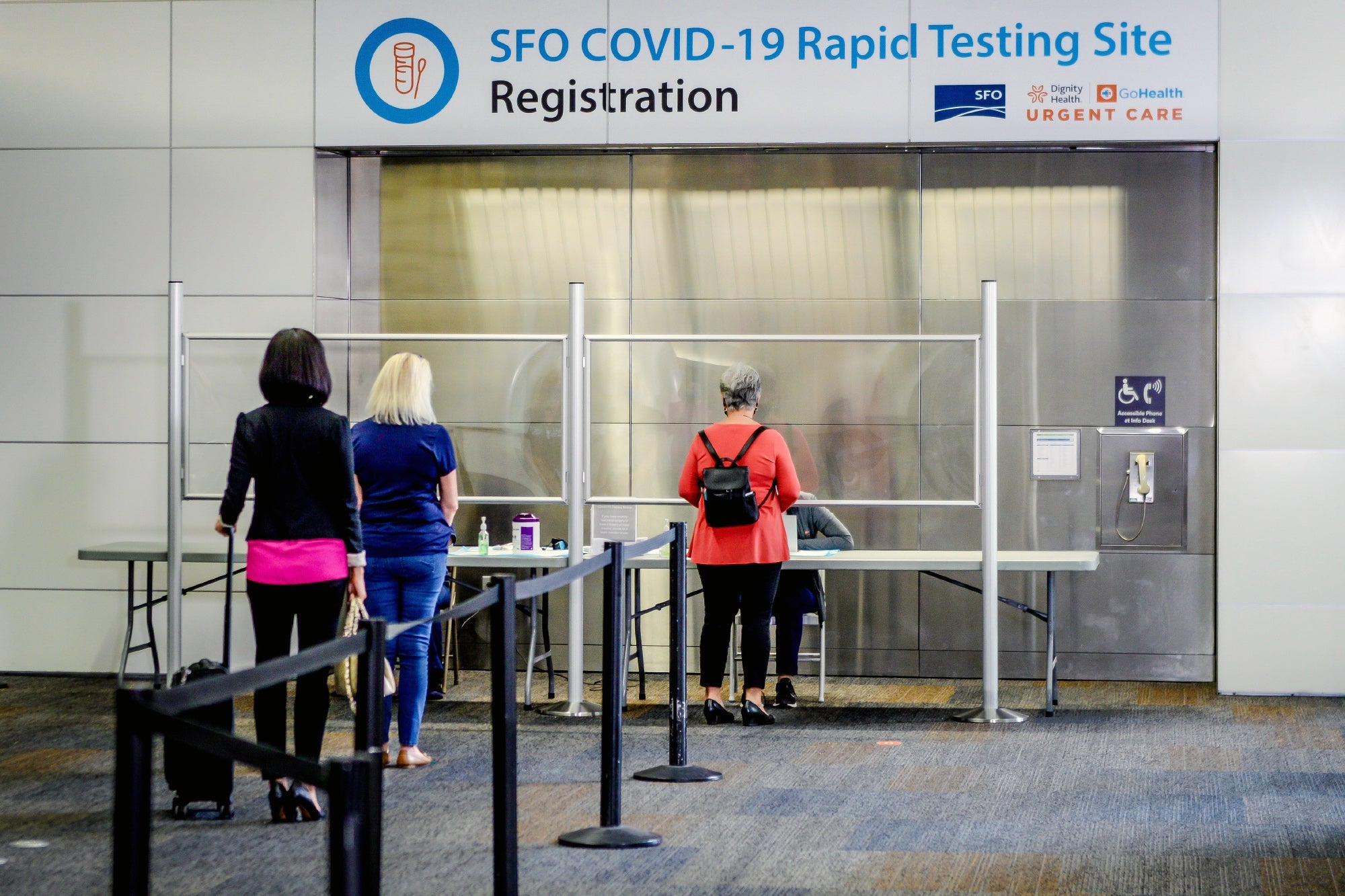
Alternatively, United flyers can take an $80 mail-in test from Color. The airline recommends that travelers begin the process 10 days before their travel, and collect a sample no more than 72 hours in advance of their trip. It is then returned via overnight mail or a dropbox at SFO. Results will then arrive via email and text within 24- to 48 hours. This means you may have some period of quarantine in Hawaii before results are received.
Hawaiian Airlines is partnering with Worksite Labs to provide drive-through PCR testing near both Los Angeles International Airport (LAX) and San Francisco International Airport (SFO). Worksite Labs will offer the Droplet Digital PCR shallow nasal swab test for $90, with results within 36 hours, or you can expedite at a cost of $150 for "day-of-travel express service."
Hawaiian has said it expects to roll similar testing out to other U.S. gateways soon.
Alaska Airlines has partnered with Carbon Health, a provider that will make rapid COVID-19 testing available at its Downtown Seattle location. Alaska passengers have priority testing at the pop-up clinic on Mondays, Wednesdays and Fridays from 9 a.m. to 7 p.m. PDT. Carbon Health promises a two-hour turnaround time on the Abbott ID NOW rapid test, which costs $135.
Alaska plans to expand its partnership with Carbon Health to additional West Coast cities over time, as flights return from cities like Portland, Oregon, San Jose, San Diego and Los Angeles. A timeframe for when these additional testing sites will launch has not yet been set.
Like the above carriers, American Airlines will launch three preflight testing options for passengers headed to Hawaii:
- An at-home test from LetsGetChecked, which is observed by a medical professional via a virtual visit (results expected within 48 hours)
- In-person testing at a CareNow urgent care location in North Texas
- On-site rapid testing at DFW administered by CareNow
Testing begins at DFW on Oct. 15.
Related: What it's like to fly Hawaiian Airlines to Hawaii

While routine PCR testing on arrival to avoid quarantine won't be in play, the airports in Hawaii are scanning passengers to ensure temperatures are under 100.4 degrees. Those with temperatures of 100.4 and above will be taken to secondary screening and offered a COVID-19 PCR test with results available generally after 24 to 48 hours.
You may need a second test
A very recent development in Hawaii's reopening journey is the need -- or option -- for a second test upon arrival, depending on which island you are visiting. While things will likely continue to evolve, for now only the Island of Hawaii (the Big Island) is requiring a second test upon arrival if you want to avoid the 14-day quarantine.
This second test to be taken upon arrival on the Big Island's airports is not a replacement for your PCR test taken prior to travel but will be a supplemental rapid antigen test that will be free to the traveler.
Related: Do you need a negative coronavirus test to fly?
Those heading to Maui or Kauai will be offered a voluntary test that can be taken three days after arrival at no-charge.
In addition to all of that, the State of Hawaii will also run a statewide surveillance testing program that tests up to 10% of incoming arrivals four-days after arrival at no cost. This particular program will run for at least 60 days.
You'll need to register with Safe Travels
There are travel and health forms to complete on the Safe Travels digital platform. This is also where you'll upload your test results. Safe Travels can be found at travel.hawaii.gov.
Related: State-by-state guide to coronavirus reopening
There are inter-island restrictions
Inter-island travel in Hawaii isn't as simple as it once was, but it is becoming possible again without 14-day quarantine in some cases.
Those traveling to Oahu from another Hawaiian Island do not have a 14-day quarantine or current testing requirement. However, those traveling to Kauai, Hawaii (Big Island), Maui, Lanai and Kalawao (Molokai) have been subject to a 14-day quarantine. Effective Oct. 15, those island hopping to Kauai or Maui will have the ability to participate in pre-travel testing done at an approved partner up to 72 hours before travel. This is virtually the same requirement as those coming from the mainland to Hawaii. This sort of program for inter-island arrivals to the Big Island is still being worked out.
If you just have a layover in Honolulu then the negative test result you took to enter Hawaii before travel is good through to your final destination. However, if your break in Honolulu is more than a layover, then you are subject to new inter-island testing or quarantine requirements.
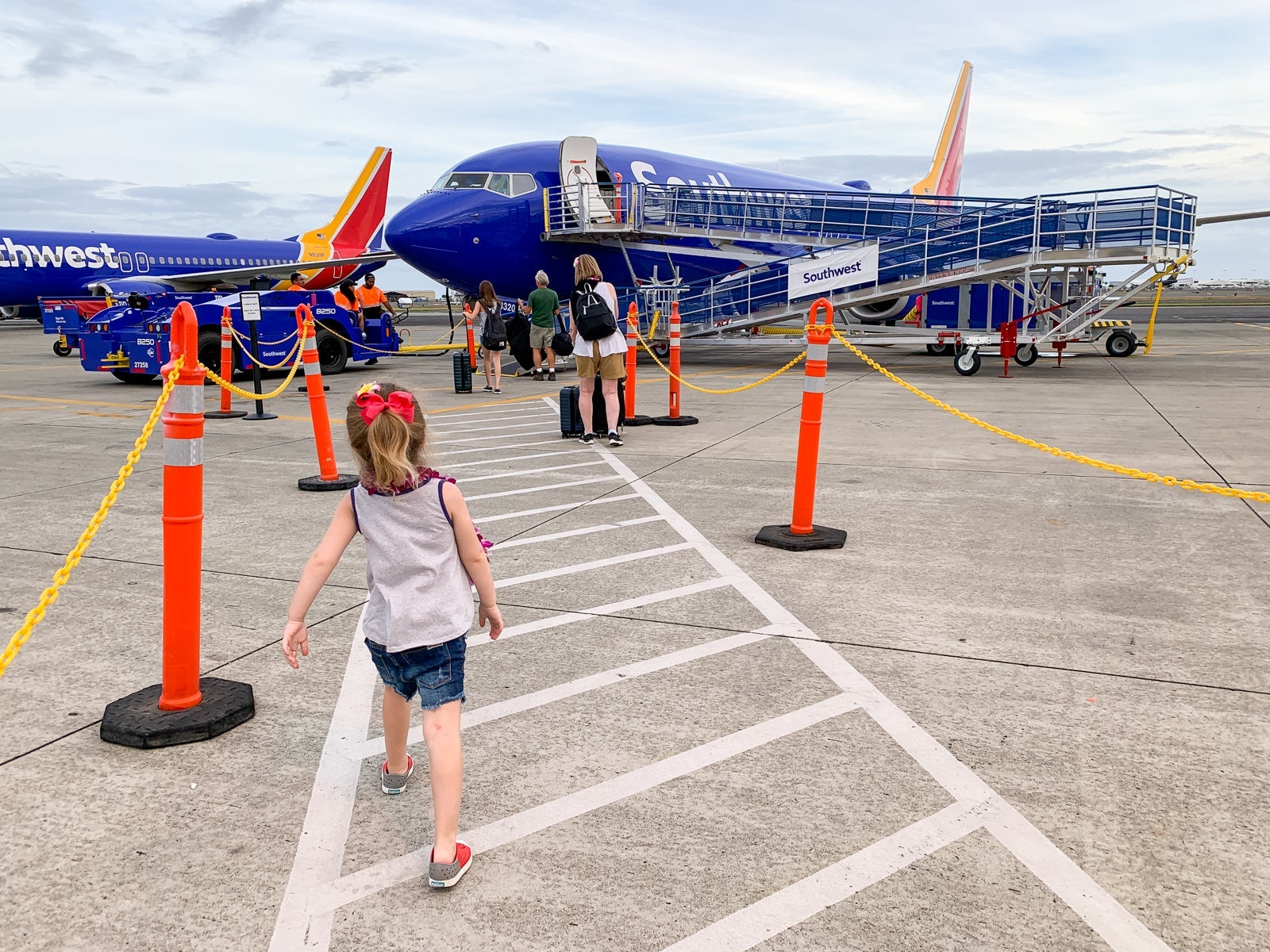
Related: One family's experience traveling in the age of coronavirus
Bottom line
Hawaii is magical and while the path to reopening has been anything but simple, this is the week when tourists can again land and almost immediately head to the beach -- if they can follow all the testing guidelines.
TPG featured card

at Capital One's secure site
Terms & restrictions apply. See rates & fees.
| 5X miles | Earn 5X miles on hotels, vacation rentals and rental cars booked through Capital One Travel |
| 2X miles | Earn unlimited 2X miles on every purchase, every day |
Pros
- Stellar welcome offer of 75,000 miles after spending $4,000 on purchases in the first three months from account opening. Plus, a $250 Capital One Travel credit to use in your first cardholder year upon account opening.
- You'll earn 2 miles per dollar on every purchase, which means you won't have to worry about memorizing bonus categories
- Rewards are versatile and can be redeemed for a statement credit or transferred to Capital One’s transfer partners
Cons
- Highest bonus-earning categories only on travel booked via Capital One Travel
- LIMITED-TIME OFFER: Enjoy $250 to use on Capital One Travel in your first cardholder year, plus earn 75,000 bonus miles once you spend $4,000 on purchases within the first 3 months from account opening - that’s equal to $1,000 in travel
- Earn unlimited 2X miles on every purchase, every day
- Earn 5X miles on hotels, vacation rentals and rental cars booked through Capital One Travel
- Miles won't expire for the life of the account and there's no limit to how many you can earn
- Receive up to a $120 credit for Global Entry or TSA PreCheck®
- Use your miles to get reimbursed for any travel purchase—or redeem by booking a trip through Capital One Travel
- Enjoy a $50 experience credit and other premium benefits with every hotel and vacation rental booked from the Lifestyle Collection
- Transfer your miles to your choice of 15+ travel loyalty programs
- Top rated mobile app