Travel is back in a big way as COVID-19 appears to be entering endemic stage; Why I'm still nervous

Since the start of 2022, we've seen nearly 20 countries across the world lift pandemic-related restrictions related to arrival testing, quarantining and other often cumbersome requirements that affect a traveler's on-the-ground experience.
It's finally getting easier to travel around the world.
After two years of tests, paperwork and a confusing web of ever-changing regulations, nations across the globe are starting to ease their COVID-19 travel restrictions. While the pandemic isn't yet over, the days of counting 24, 48 or 72 hours back from landing in order to schedule an arrival test may soon be over.
Love it or hate it, by this spring or summer we may be back to an age of open borders and easy weekend getaways to Europe.
Call it what you want — pandemic fatigue or an acknowledgment that many restrictions have done nothing to stop the spread of COVID-19 and its variants from crossing borders. We appear to be entering a phase when COVID-19 is endemic. Despite that I'm still nervous to travel.
Instead of answering TPG reader questions this week, I am tackling a few of my own.
Are we nearing the end of COVID-19 travel restrictions, and is that a good thing?
[table-of-contents /]
How I am approaching travel this year now that countries are loosening restrictions
A slew of countries have begun dropping many of their COVID-19 restrictions thanks to a recent global decline in new cases, with just a few exceptions.

I am thrilled that Australia will be reopening its doors on Feb. 21 to vaccinated travelers since the very first friend I made in Washington, D.C., after college is moving to Brisbane next month. I'm looking forward to visiting the Netherlands quarantine-free for a high school friend's wedding later this year, too.
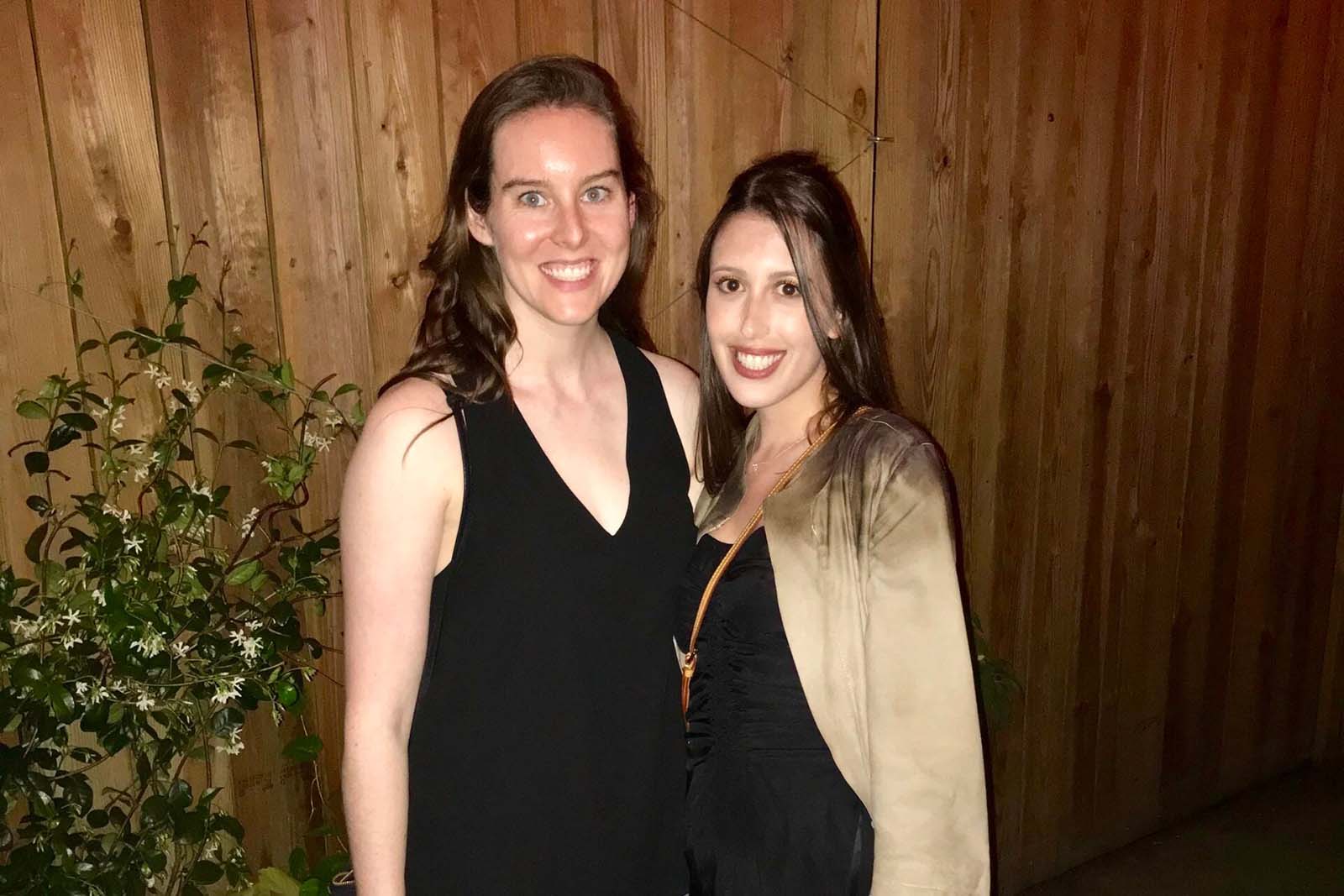
Stateside, I'm beyond excited to be reuniting in Chicago this summer with one of my best friends from Northwestern University, a fellow journalist who is from Italy and currently lives in Barcelona. We haven't seen each other since we graduated in 2018 and she moved back to Europe, so this reunion is long overdue.
Related: Updated: A country-by-country guide to coronavirus reopenings
How my view of travel has changed
Despite having at least one domestic trip planned, I'm still a bit wary about traveling in the U.S. The idea of traveling abroad just feels easier (and safer) to me than sticking closer to home.
Sure, there's been a change in rhetoric among White House leaders this week regarding a return to normality despite arrival testing for vaccinated Americans appearing to be here to stay, but with a sizable part of the population still unvaccinated and more states deciding to ditch mask mandates, I worry about contracting COVID-19 here on American soil.
That said, I have been relatively comfortable with the idea of getting on a plane throughout the pandemic.
I flew for the first time since Dec. 2019 in June of last year when I visited London to cover the reopening of the United Kingdom to vaccinated Americans. I felt oddly calm sitting in premium economy on British Airways, even though a couple across the plane continually removed their masks. I knew my fellow passengers were vaccinated and that we had all tested negative within the past 72 hours in order to board this plane.
View this post on Instagram
Being in London was an entirely different story. Despite being surrounded by many more vaccinated Brits than not, I faced two COVID-19 scares (and subsequent breakdowns) throughout my seven-day stay. I limited my time indoors and kept my mask on as much as possible, but that didn't keep me from avoiding close calls. I was continually nervous throughout the trip about the idea of not being able to return home as planned, even though I had been sent on a work trip and therefore knew I was covered by my employer should a health-mandated extended stay be required.
I did not fly again until last September to reunite with my parents, whom I hadn't seen in a year. Given that I was extremely concerned about bringing home COVID-19 to my somewhat elderly parents (no offense mom and dad), I had done everything I could to be negative for the virus upon boarding and could only hope that was still the case upon landing.
Related: I flew premium economy for the first time: my coach mindset says it's not worth the extra $
While I got my aisle seat of choice thanks to Southwest Airlines' open seating policy, there was nothing I could do when a brother-sister pair also traveling home to St. Louis took the window and middle seat next to me. They proceeded to take off their masks to inform me that while she was vaccinated, he was not. "But don't worry, I've had COVID like four times already," he told me in between coughs.
Although I continued to internally envision the worst-case scenario for the duration of the flight, I ended up engaging in a conversation with the pair for much of the two-hour journey, where I learned all about their divorces and political beliefs, because I just have that face that compels strangers to tell me their life stories.
Upon landing at St. Louis Lambert International Airport (STL), I greeted my parents by saying "I sat next to someone who wasn't vaccinated on the plane, so you might not want to hug me."
View this post on Instagram
Since then, I have flown several times in the U.S. for both work and my own trips, which I suppose could best be categorized as an acceptance of my own.
After each trip, I had the same thought — despite being hesitant about some or multiple parts of the trips, each one turned out seemingly OK, as stressful as they were.
Although I initially traveled to Scottsdale in December for work, I extended my stay to see my family, including my 96-year-old grandma. Upon saying goodbye, both my aunt and I started crying, knowing I might not see her again. It was at that moment that I realized how important it was for me to not let my fear stop me from taking this trip. I was proud of myself for being scared to do something, but to nevertheless do it.
What I see travel looking like moving forward
As I look ahead to the rest of 2022, particularly with upcoming spring and summer travel, I feel optimistic — optimistic that I can choose to travel within my boundaries.
While there does not appear to be enough evidence yet — at least not from chief medical advisers or the U.S. Centers for Disease Control and Prevention — to suggest whether reopening international travel is the best way to contain or end a pandemic, there is more than enough evidence to signal a widespread movement to ease travel restrictions for the first time since 2020.
I support booster requirements and feel more comfortable traveling to destinations with them in place. I've been frustrated at airlines for their failure to support a domestic vaccine mandate to fly, and I think non-medical masks should be prohibited on U.S. airlines, as they are on many foreign carriers. (I write this as I sit on a plane wearing an N95 mask.)
Face masks likely won't disappear from flights anytime soon, and we will probably have to continue to attest to not having been exposed to COVID-19 to fly, but we are finally getting closer to freely moving around the planet and connecting with people in a way we haven't been able to in two-plus years.
I can't say enough how much I'm looking forward to that moment when the pandemic is officially behind us.
Bottom line
The cost of traveling during COVID-19 can be stressful and expensive, particularly when you account for multiple tests taken at various steps along the way. My aforementioned trip to London, for example, required three tests costing $300.
Many TPG readers (and employees) have had to cancel trips at the last second because test results didn't come back in time.
However, with an increasing number of countries making it easier for travelers to come back, international trips are bound to get incrementally easier to take.
Thanks to changing regulations, weekend trips to the Caribbean, Europe and beyond now seem like they may be feasible again.
TPG featured card

at Capital One's secure site
Terms & restrictions apply. See rates & fees.
| 5X miles | Earn 5X miles on hotels, vacation rentals and rental cars booked through Capital One Travel |
| 2X miles | Earn unlimited 2X miles on every purchase, every day |
Pros
- Stellar welcome offer of 75,000 miles after spending $4,000 on purchases in the first three months from account opening. Plus, a $250 Capital One Travel credit to use in your first cardholder year upon account opening.
- You'll earn 2 miles per dollar on every purchase, which means you won't have to worry about memorizing bonus categories
- Rewards are versatile and can be redeemed for a statement credit or transferred to Capital One’s transfer partners
Cons
- Highest bonus-earning categories only on travel booked via Capital One Travel
- LIMITED-TIME OFFER: Enjoy $250 to use on Capital One Travel in your first cardholder year, plus earn 75,000 bonus miles once you spend $4,000 on purchases within the first 3 months from account opening - that’s equal to $1,000 in travel
- Earn unlimited 2X miles on every purchase, every day
- Earn 5X miles on hotels, vacation rentals and rental cars booked through Capital One Travel
- Miles won't expire for the life of the account and there's no limit to how many you can earn
- Receive up to a $120 credit for Global Entry or TSA PreCheck®
- Use your miles to get reimbursed for any travel purchase—or redeem by booking a trip through Capital One Travel
- Enjoy a $50 experience credit and other premium benefits with every hotel and vacation rental booked from the Lifestyle Collection
- Transfer your miles to your choice of 15+ travel loyalty programs
- Top rated mobile app