Sean Cudahy is an aviation reporter covering news about airlines, frequent flyer programs and consumer travel issues.
November 24, 2026 • 7 min read
The cards we feature here are from partners who compensate us when you are approved through our site, and this may impact how or where these products appear. We don't cover all available credit cards, but our analysis, reviews, and opinions are entirely from our editorial team. Terms apply to the offers listed on this page. Please view our advertising policy and product review methodology for more information.Editorial disclaimer: Opinions expressed here are the author's alone, not those of any bank, credit card issuer, airline or hotel chain, and have not been reviewed, approved or otherwise endorsed by any of these entities.
Comments
By commenting, you agree to our Community Guidelines to help create a positive space for conversation. The responses below are not provided or commissioned by the bank advertiser, our partners, or The Points Guy (“TPG”). They have not been reviewed, approved, or otherwise endorsed by any of these parties. All responses are submitted by individual contributors, and neither the bank advertiser, our partners, nor TPG are responsible for ensuring that all posts and/or questions are answered.
Related stories
Quick summary
Major storms on both U.S. coasts threaten to disrupt Thanksgiving air travel, with heavy rain and wind expected to cause delays at key airports.
Travel waivers have been issued for flights through San Francisco International Airport, allowing more flexibility for affected passengers.
East Coast airports, including those in Atlanta, Charlotte, Miami, Orlando, Washington, D.C., Philadelphia, New York City and Boston, may experience significant delays starting Wednesday.
Thanksgiving Day is typically quieter at airports, but the Sunday after remains the busiest travel day of the year.
What to consider
Travel waivers may allow itinerary changes for affected flights, but not all disruptions are covered, and flexibility varies by carrier.
Airlines generally do not cover costs like hotels or meals due to weather delays, though travel insurance or certain credit cards with built-in coverage may help.
Monitoring weather forecasts and airline advisories is crucial, as disruptions can cascade across the network.
What you'll miss from the article
Detailed strategies for handling delays, using airline apps efficiently and maximizing travel insurance benefits during weather disruptions.
Generated by AI with support from our editorial team.
It has been a messy few weeks for air travel in the U.S. Unfortunately, it appears the Thanksgiving rush could bring another big wave of flight delays.
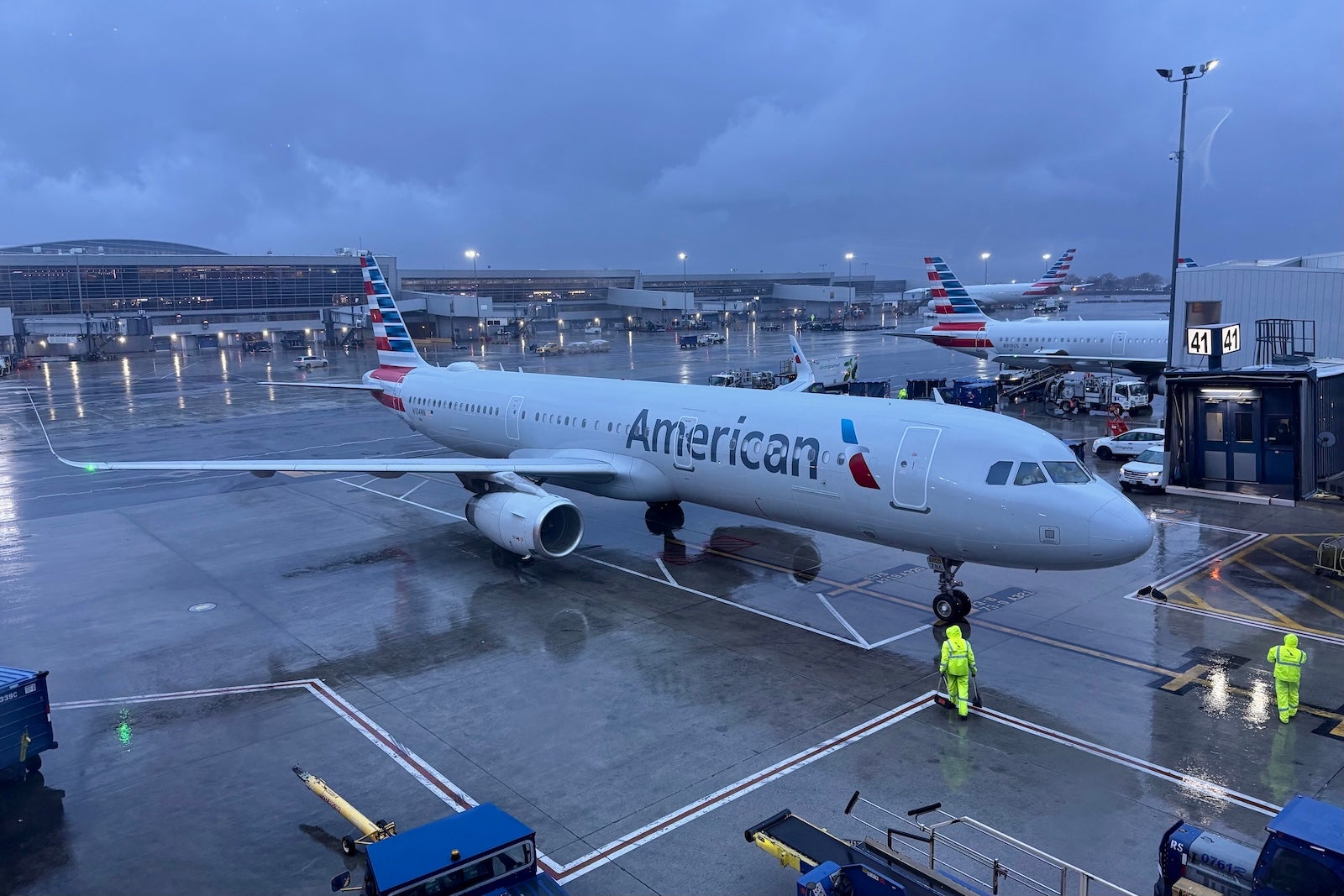
Storm systems developing along both coasts threaten to disrupt holiday plans for travelers catching last-minute flights.
On the West Coast, United Airlines is letting flyers passing through its San Francisco International Airport (SFO) hub change their tickets as heavy rain and wind move into the Bay Area, coinciding with the travel rush.
Meanwhile, forecasters are warning of a “monster” storm that could disrupt flights at several of the nation’s busiest East Coast hubs on Wednesday and Thursday.
“The timing couldn’t be worse,” Fox Weather meteorologist Bob Van Dillen told TPG.
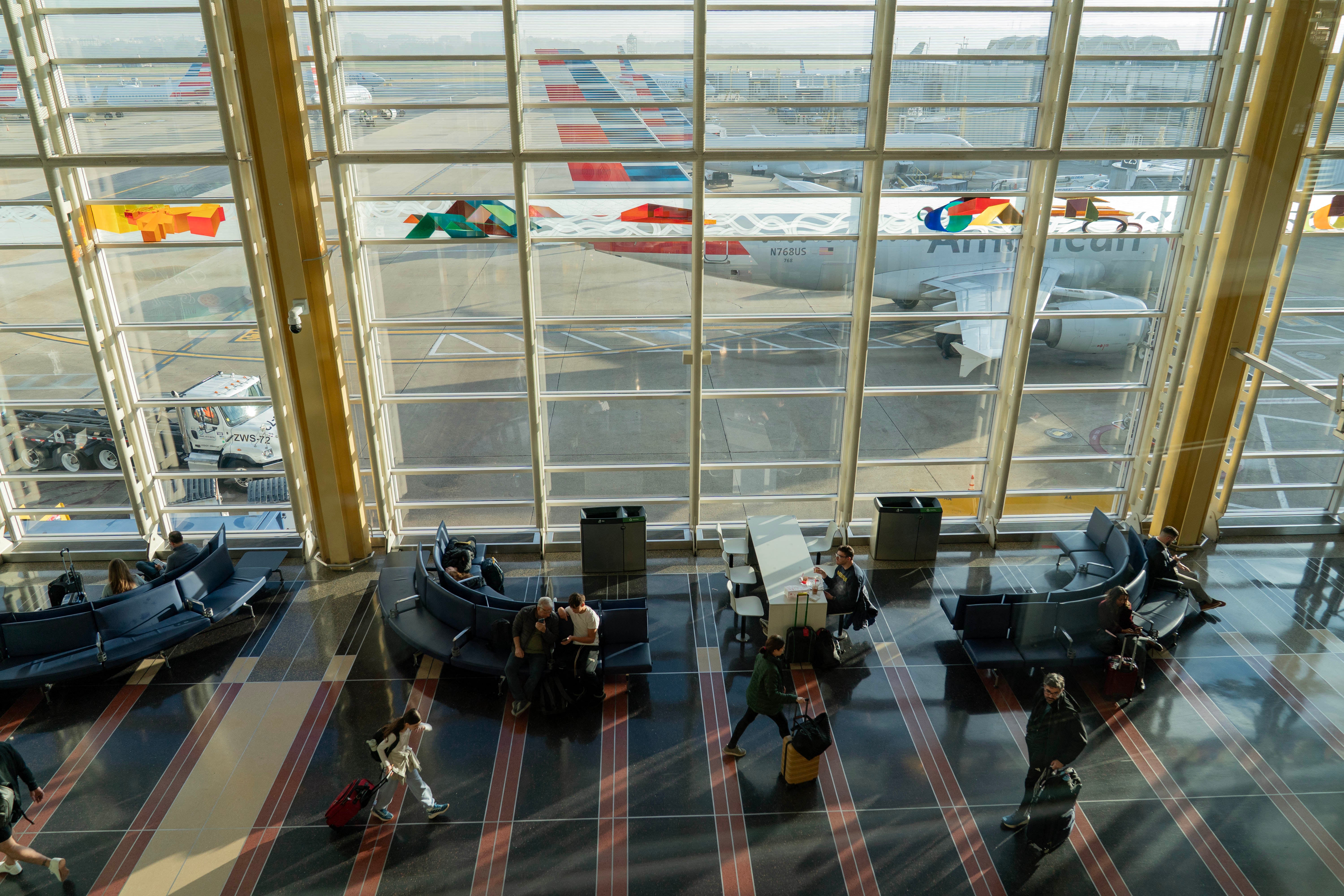
Ronald Reagan Washington National Airport (DCA). JOSE LUIS MAGANA/AFP/GETTY IMAGES
It’s looking like the latest in a series of frustrations for flyers. In the past two weeks alone, travelers dealt with a nationwide ground stop that led to 18,000 flight cancellations as well as technology outages at United and Delta Air Lines.
Now, it appears Mother Nature will be the biggest obstacle during one of the busiest weeks of the year at airports.
West Coast woes: SFO travel waiver in place
The West Coast storm is expected to impact the Thanksgiving getaway.
Late Monday, United issued a travel advisory for its San Francisco hub — a sign the carrier expects disruptions on the eve of Thanksgiving.
The waiver allows passengers with Wednesday flights in or out of SFO more flexibility to change their tickets.
It also applies to flyers connecting at the airport.
Fortunately, Bay Area leaders appear less worried about flooding at the airport itself.
In recent days, forecasters had grown concerned that heavy rain and high tides could lead to water covering SFO’s taxiways, which are right next to San Francisco Bay.
“At this moment, we are not expecting flood water to reach onto the tarmac at SFO, which is a positive development,” San Francisco Mayor Daniel Lurie said in a social media post — while warning that ground stops because of weather conditions were “still a possibility.”
In a statement to TPG, SFO officials said the airport was keeping pump stations and drainage areas clear, and staging sandbags ahead of the forecasted bad weather.
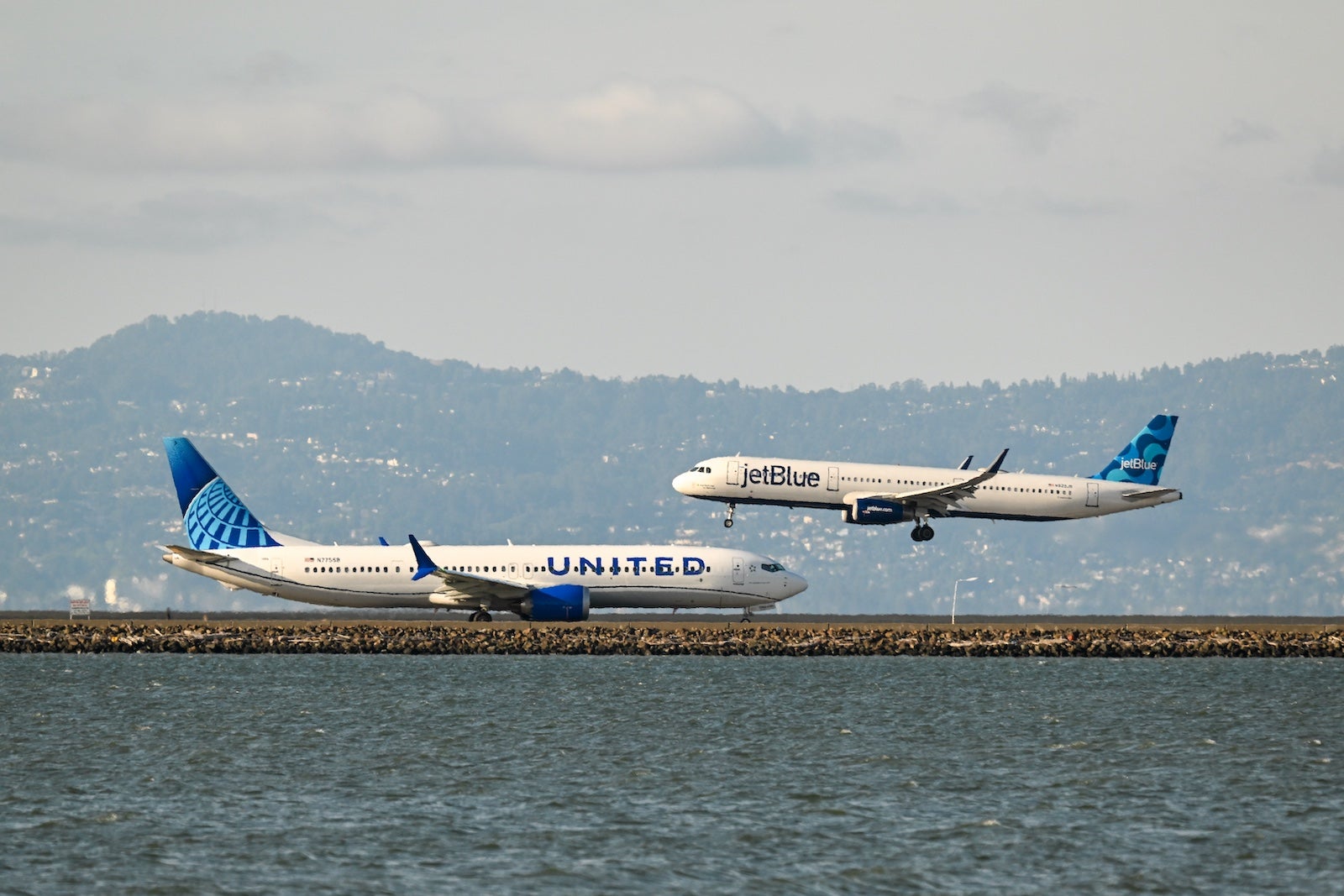
TAYFUN COSKUN/ANDALOU AGENCY/GETTY IMAGES
East Coast travel concerns grow
The worst travel disruptions could come from a powerful coastal storm developing in the east, meteorologists warn.
Which airports could be affected?
That East Coast system could bring strong winds, heavy rain and flooding to a large swath of the coast — including many of the nation’s busiest airports, according to Van Dillen.
He laid out which airports could be heavily affected:
Starting Wednesday morning: Delays could mount at Hartsfield-Jackson Atlanta International Airport (ATL), Charlotte Douglas International Airport (CLT), Miami International Airport (MIA) and Orlando International Airport (MCO).
Starting Thanksgiving Day, airports in the Washington, D.C., Philadelphia, New York City and Boston areas will be at risk of backups.
“My advice would be, the earlier you can get to your destination, the better,” Van Dillen advised East Coast travelers.
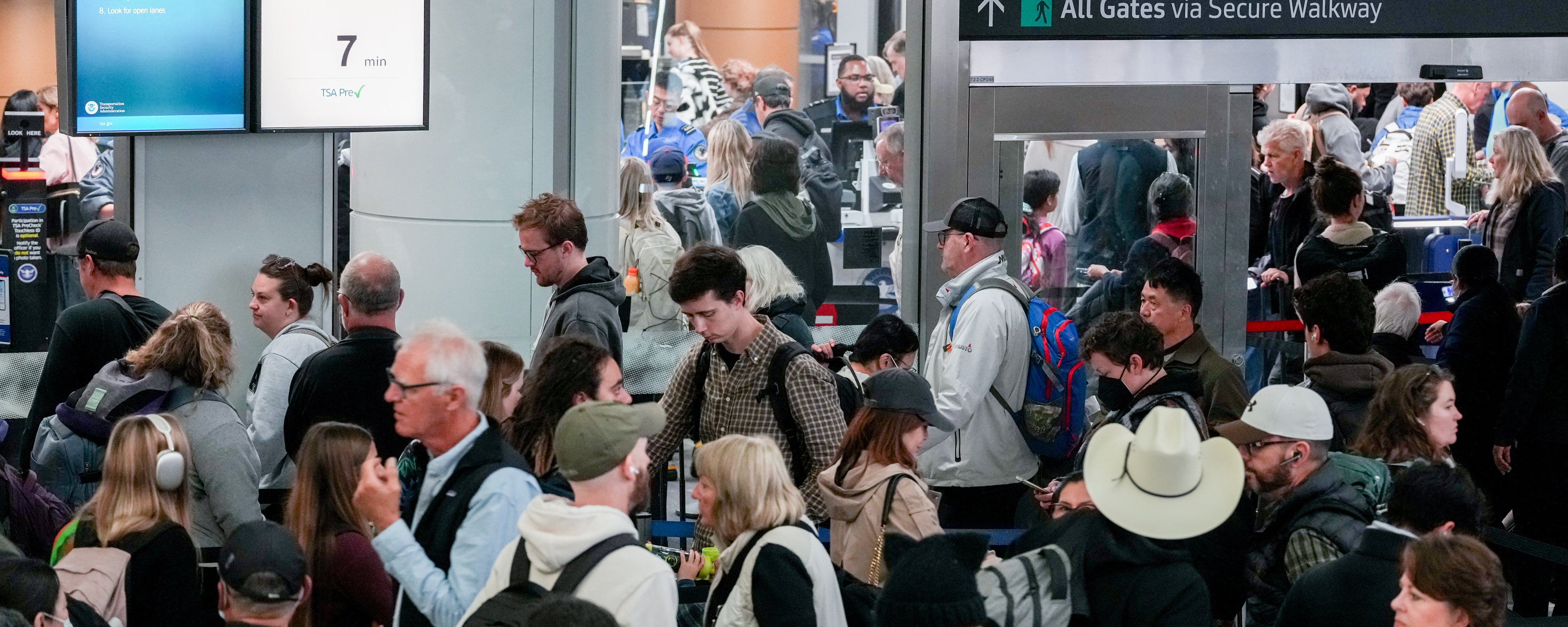
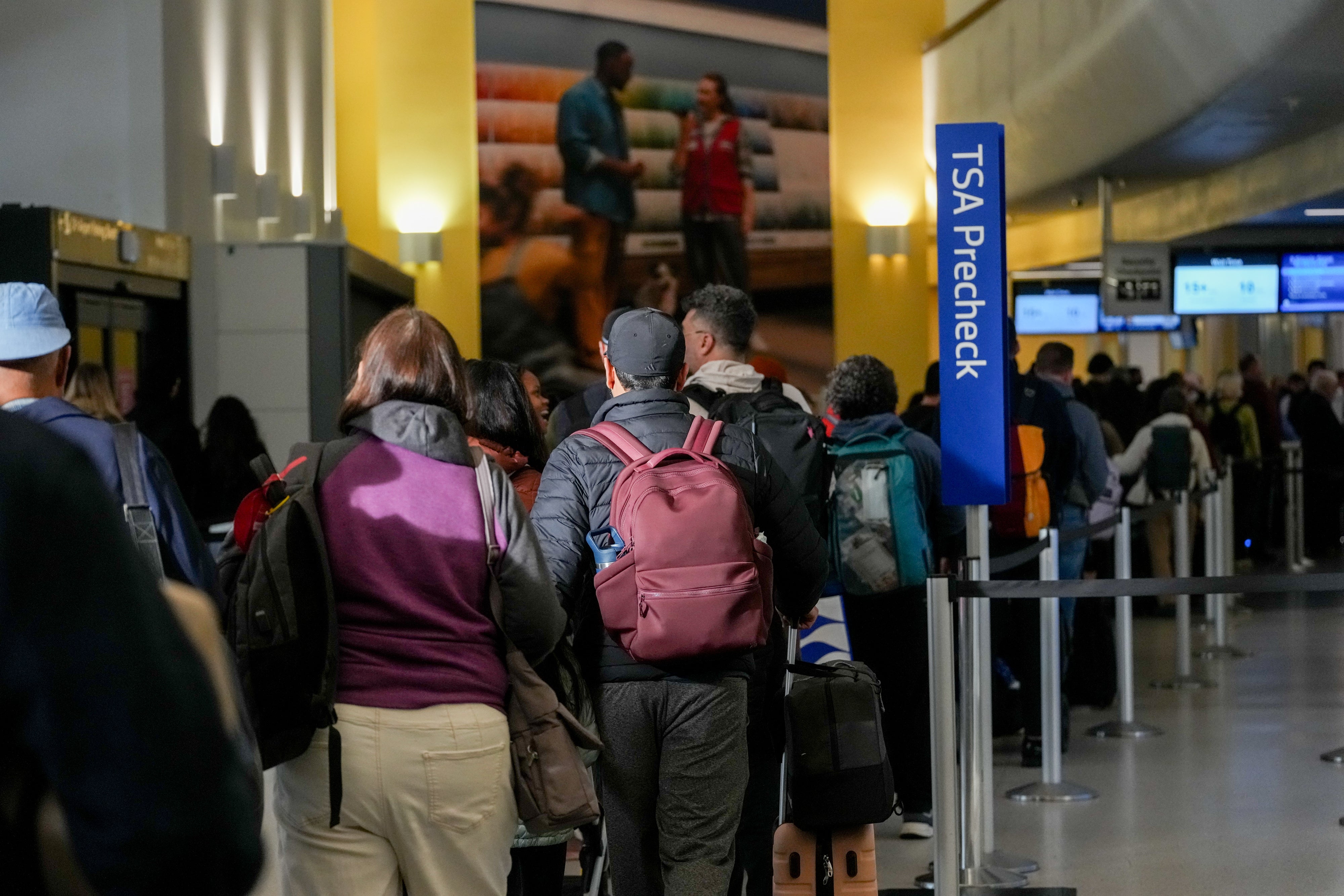
Travelers check in at San Francisco International Airport (SFO) ahead of Thanksgiving. DAVID PAUL MORRIS/BLOOMBERG VIA GETTY IMAGES
We've often seen how significant East Coast storms can snarl air traffic. With so many key airline hubs, a major weather system can cause cascading flight woes across the country.
The one silver lining
While Thursday could be a messy weather day, Thanksgiving Day itself is typically one of the quietest days of the year at airports.
All eyes will be on how Mother Nature cooperates on Sunday, as travelers return from the holiday. The Sunday after Thanksgiving is typically the single busiest day of the year to fly.
Here are some things you should do if you're planning to fly in the next few days.
Be willing to change your plans on the fly
Keep an eye out for airline travel advisories that could allow you more flexibility to change your itinerary.
Watch the weather closely
Take a close look at the forecast in every city you’ll be in — including wherever you might be connecting. That should give you a better sense of when the problem periods could be.
Just keep in mind: as more and more cities are affected by bad weather, it’s likely the disruptions could cascade across airlines’ networks.
Have your airline’s app downloaded, familiarize yourself with it, and opt in to all push notifications. Use it to:
Keep an eye on your incoming plane to monitor for signs of trouble.
Quickly rebook yourself if your flight gets delayed or canceled. Remember, planes will be packed — so you’ll want to act fast to grab open seats. Even if there’s no travel waiver, your carrier may allow you to do a “same-day confirmed change” or “same-day standby” to take an earlier (or later) flight.
By commenting, you agree to our Community Guidelines to help create a positive space for conversation. The responses below are not provided or commissioned by the bank advertiser, our partners, or The Points Guy (“TPG”). They have not been reviewed, approved, or otherwise endorsed by any of these parties. All responses are submitted by individual contributors, and neither the bank advertiser, our partners, nor TPG are responsible for ensuring that all posts and/or questions are answered.