There's a secret fund with millions to help resolve travel disputes that nobody knows about

Resolving disputes with travel agents can be frustrating, time-consuming and often, fruitless.
For people in California, however, there is a state-formed commission that handles consumer complaints against travel agencies and tour operators that can help get travelers a satisfactory resolution. It's called the Travel Consumer Restitution Corporation, and it can offer customers a security blanket that's almost unmatched anywhere in the country.
Here's the catch. Almost nobody has ever heard of it. A story by NBC's San Francisco affiliate shed light on this hidden asset for travelers. The TCRC has been around since 1995. It was originally funded by fees travel agents and tour operators had to pay when they registered with the state. According to Diane Embree , it was established by California's state legislature as a way to protect consumers when travel agents don't deliver the services they were paid for, or if they go out of business.
Related: California lifting mandatory stay-at-home orders
"The [California] attorney General's office wanted some kind of consumer protection written into the law. And this was a plan that was unique to California," says Diane Embree, an independent seller of travel who took part in the original legislation and actually served as the TCRC's first president. "I don't even think it could be duplicated in a lot of other states because California's a large state. There are a lot of sellers of travel here, travel agencies, tour operators based here…and you need to have enough of them to keep the fund going. Because the idea behind it was to have this funded entirely by the travel industry in California, no taxpayer dollars involved."
A board comprised of six people, four of them travel agents, oversees the TCRC. The board gets results for travelers, too. According to NBC Bay Area's analysis of claims filed since 2013, the TCRC has ruled in favor of customers 73% of the time in complaints filed, and paid out an average of $3,002 per claim.
But you have to know about the TCRC to file a claim, and clearly, not enough people do. On average, it receives an average of just 57 claims a year. In 2016, it received just 13 claims. Considering the Federal Trade Commission received more than 3,000 travel-related complaints from Californians, that number seems absurdly low.
Related: State-by-state guide to coronavirus reopening

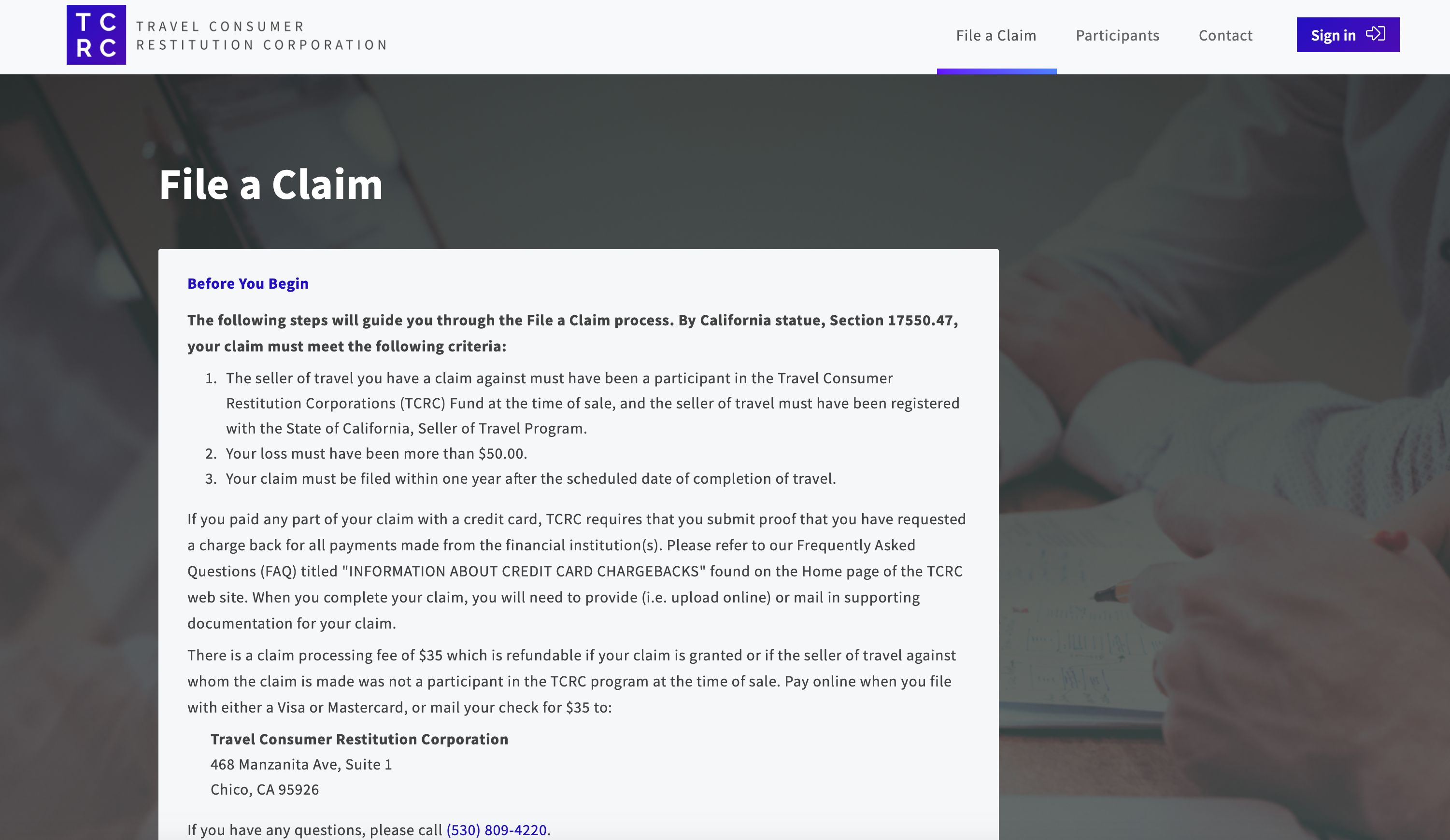
Why don't more people know about the TCRC? Well, outside of a website, the commission has very little public identity. It doesn't have a Facebook page or Twitter account, and no YouTube channel. Embree notes there was a big publicity push around the TCRC when it came into existence in the mid-90s, given that it was a travel protection policy no other state had. She emphasizes that it's not like anyone's trying to hide the existence of the TCRC from consumers.
"Secret probably isn't the right word, even though that's the word people use. It's not a secret," she says. "No, one's trying to hide [the TCRC] from anyone. I would say part of it is that more people are using registered sellers of travel, rather than fly-by-night agencies who are questionable. And part of it is, the last couple of decades has been good for the travel business. There aren't as many agencies going out of business."
Related: CA, OR and WA order recommended quarantine
After looking at the TCRC's website, the process for filing a claim seems fairly straightforward. Keep in mind, this claims process is only available to California residents. One important caveat: Airlines are exempt from claims made through the TCRC, because they are regulated by federal guidelines.
Related: Disneyland planning CA expansion
One recommendation Embree makes to any traveler in the state is, before they book travel with an agent, to check the TCRC's site to see if that travel agent has a "Seller of Travel" registration number with them. If they do, and you file within the eligible time frame, then you will have an extra layer of protection in case your travel plans go awry.
TPG featured card

at Capital One's secure site
Terms & restrictions apply. See rates & fees.
| 5X miles | Earn 5X miles on hotels, vacation rentals and rental cars booked through Capital One Travel |
| 2X miles | Earn unlimited 2X miles on every purchase, every day |
Pros
- Stellar welcome offer of 75,000 miles after spending $4,000 on purchases in the first three months from account opening. Plus, a $250 Capital One Travel credit to use in your first cardholder year upon account opening.
- You'll earn 2 miles per dollar on every purchase, which means you won't have to worry about memorizing bonus categories
- Rewards are versatile and can be redeemed for a statement credit or transferred to Capital One’s transfer partners
Cons
- Highest bonus-earning categories only on travel booked via Capital One Travel
- LIMITED-TIME OFFER: Enjoy $250 to use on Capital One Travel in your first cardholder year, plus earn 75,000 bonus miles once you spend $4,000 on purchases within the first 3 months from account opening - that’s equal to $1,000 in travel
- Earn unlimited 2X miles on every purchase, every day
- Earn 5X miles on hotels, vacation rentals and rental cars booked through Capital One Travel
- Miles won't expire for the life of the account and there's no limit to how many you can earn
- Receive up to a $120 credit for Global Entry or TSA PreCheck®
- Use your miles to get reimbursed for any travel purchase—or redeem by booking a trip through Capital One Travel
- Enjoy a $50 experience credit and other premium benefits with every hotel and vacation rental booked from the Lifestyle Collection
- Transfer your miles to your choice of 15+ travel loyalty programs
- Top rated mobile app