
In total, Qantas and Jetstar's international capacity is being reduced by 23% through mid-September 2020 versus 5% from the same time last year.
Most of the cuts are in the group's Asia operations (down 31% compared with the same period last year), as well as to the United States (down 19%), the United Kingdom (down 17%) and trans-Tasman (down 10%).
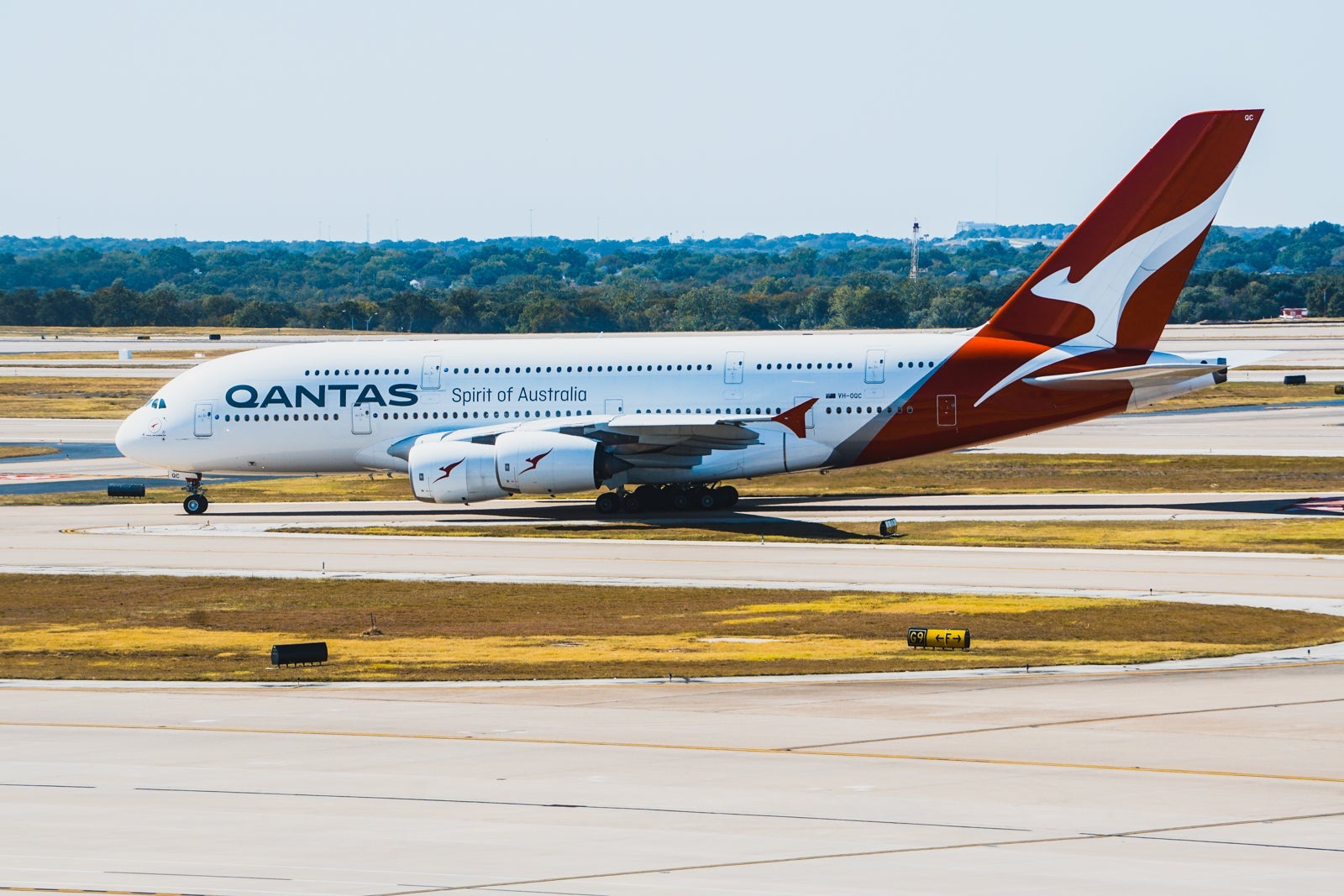
During the time of reduced capacity, Qantas is mostly taking to operating smaller aircraft and reducing the frequency of its flights, rather than completely cancelling routes. As a result of that initiative, Qantas has elected to ground eight of its Airbus A380 aircraft until mid-September. Another two of Qantas’ A380s are undergoing scheduled maintenance and cabin upgrades, leaving just two left it for scheduled service with the changes.
Related: Behind the scenes: What it was like on the 19-hour Project Sunrise flight
As part of the changes to its operations for the next six months, it's delaying the launch of its scheduled Brisbane to Chicago route. While it was originally supposed to launch on April 15, it's now been delayed until mid-September. Elsewhere in North America, the carrier is making the following changes:
| Route | What's changing? | Effective date |
|---|---|---|
| Brisbane – San Francisco | Route suspended (3 return flights per week) | April 18 |
| Sydney – San Francisco | Boeing 787 replaced by larger Boeing 747 | April 18 |
| Melbourne – San Francisco | Route suspended (4 return flights per week) | April 18 |
| Sydney – Dallas/Fort Worth | A380 replaced by smaller Boeing 787 | April 20 |
| Melbourne – Los Angeles | A380 replaced by smaller Boeing 787 | June 1 |
| Sydney – Vancouver | Seasonal service suspended (3 return flights per week) | June and July only |
“We expect lower demand to continue for the next several months, so rather than taking a piecemeal approach we’re cutting capacity out to mid-September," Qantas CEO Alan Joyce said in a statement. "This improves our ability to reduce costs as well as giving more certainty to the market, customers and our people. We retain the flexibility to cut further or to put capacity back in as this situation develops."
The carrier is also altering its operations to and from the U.K. While Qantas said that it's seen strong numbers on its nonstop route from London to Perth, its route from London to Sydney via Singapore has seen reduced demand. As a result, it's temporarily re-routing those flights — QF1 and QF2 — to become Sydney-Perth-London service as of April 20, hence making the Perth-London leg double daily. Additionally, the A380 that typically serves the route will be replaced by a smaller Boeing 787.
The 787 has approximately 250 fewer seats than the A380. Additionally, the 787 doesn't feature a first-class cabin, whereas the A380 does.
In total, both Qantas and low-cost subsidiary Jetstar will be grounding 38 aircraft across both international and domestic markets. During the time, Qantas said that aircraft will undergo scheduled maintenance.
To minimize the financial impact of the reduced coronavirus demand, annual management bonuses have been set to zero for the full-year 2020. Additionally, for the remainder of full-year 2020, the company's chairman will take no fees while CEO Joyce will take no salary. Further, the Qantas Board will take a 30% pay cut and Group Executive Management will take a 30% pay cut. For non-executive employees, Qantas is asking them to take paid or unpaid leave in light of the reduced flying activity, and it's also freezing non-essential recruitment and consultancy work.
“When revenue falls you need to cut costs, and reducing the amount of flying we do is the best way for us to do that," Joyce said. "Less flying means less work for our people, but we know coronavirus will pass and we want to avoid job losses wherever possible. We’re asking our people to use their paid leave and, if they can, consider taking some unpaid leave given we’re flying a lot less."
The airline said that it is contacting customers affected by the changes to its operations. International passengers who had booked travel will be offered an alternative flight with a partner airline or on an alternate day.
It's also waiving change fees for new international bookings made from Tuesday, March 10, until the end of March. The waiver applies to travel up to June 30, 2020, and is limited to one free change per customer, though you will need to pay any fare difference.
Qantas isn't the first carrier to alter its operations in response to the reduced travel demand as a result of coronavirus. Over the weekend, Lufthansa announced that it was temporarily grounding its fleet of 14 Airbus A380s due to its sharp decline in bookings. The German carrier's superjumbos will be parked through at least the end of May.
Many U.S. and European airlines have also reduced and/or suspend service to areas that are centres of the disease's outbreak including China, South Korea, Japan and Italy.