This new COVID-19 testing rule makes it harder for some Americans to fly back to the US

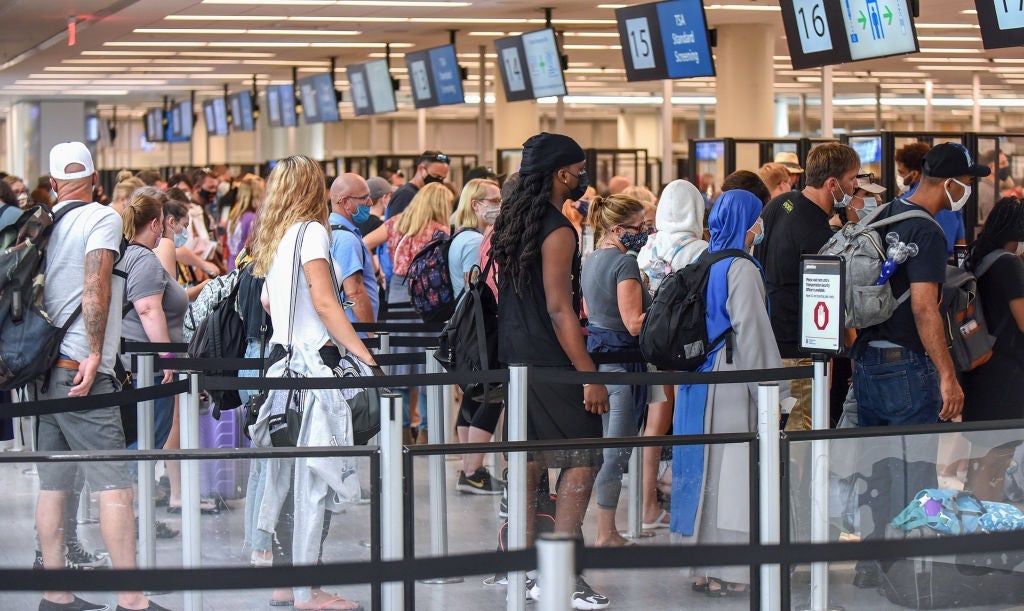
If you're traveling to the United States in November, whether from abroad or home from an international trip, listen up because the White House just released new guidance that will affect your trip.
The U.S. has been more or less closed for travel since the beginning of the pandemic and remained firmly shut even as countries worldwide reopened this summer. Now, the U.S. is preparing to reopen just in time for the winter holiday season.
But the announcement quickly paved the way for more questions, such as when, exactly, the U.S. would reopen (Nov. 8) and which vaccines would be accepted for travel -- issues the White House has since clarified.
And the Biden administration has released more guidance just two weeks before the reopening date, explicitly addressing how the policy will apply to unvaccinated Americans and certain unvaccinated foreign travelers.
There's a lot of ground to cover, so here's what you need to know about the new policy -- and how it will affect your international travel plans.
What the new policy means for unvaccinated Americans

To start, it's important to know that the new rules vary based on your vaccination status as of Nov. 8, 2021. While foreigners must be vaccinated to enter the U.S., unvaccinated American citizens can still enter — but they'll face stricter requirements.
Under the new rule, unvaccinated travelers now must show a negative COVID-19 test taken no more than one day before departure. This significantly shrinks the time window for testing and means unvaccinated travelers will need to arrange for COVID-19 tests sooner than vaccinated travelers. It also makes testing in the U.S. prior to a trip extremely difficult.
The Biden administration is expanding on an earlier mandate requiring all travelers flying into the U.S. from abroad to provide a negative COVID-19 test result taken within three days before boarding. This rule didn't exempt vaccinated travelers and has been the law of the land since. (Travelers flying back from U.S. territories, travelers arriving via land borders and flight crew members are exempt).
Keep in mind that the U.S. Centers for Disease Control and Prevention says travelers have the option of getting tested en route during one of their connections, a policy the agency hadn't clarified before.

However, the CDC also noted that travelers who test positive during a connection might be required to remain where they are and aren't permitted to fly to the U.S. The one-day testing rule also applies to any traveler who doesn't want to or cannot show proof of a COVID-19 vaccination.
What the new policy means for children

As the world reopens, families traveling with young children have had to deal with an entirely different set of rules.
It's possible to travel with young, unvaccinated children, even to countries with vaccination requirements. Many countries -- including the U.S. -- have relaxed vaccine rules for children under 12 who are ineligible to get a COVID-19 shot right now. Generally, countries with vaccination requirements allow children under a certain age to show proof of a negative coronavirus test in place of a vaccine.
Some countries, such as Iceland and Antigua, allow young children to skip pre-travel testing altogether.
But as the delta variant spread worldwide this summer, the U.S. appears to be taking a firmer testing stance.
Traveling to the U.S. will become significantly more complicated for young children if their parent or guardian isn't vaccinated. According to the CDC rule, children between 2 and 17 whose parent or guardian is not fully vaccinated must show a negative test taken no more than one day before departure. (The rule also applies to unaccompanied minors.)
According to the rule, these children will be subjected to the same pre-travel testing requirements as unvaccinated adults.
The rules remain unchanged for unvaccinated kids between 2 and 17 traveling with fully vaccinated parents or guardians. These children can travel to the U.S. with a negative COVID-19 test taken within three days of departure. (Children under 2 are not required to get a test, and that guidance remains unchanged.)
What the new policy means for vaccinated travelers

If you're fully vaccinated -- that means it's been two weeks since your final dose of a CDC- or WHO-approved COVID-19 vaccine -- then the new rule doesn't apply to you. The current mandate (that travelers have to show a negative test taken three days before departure) still applies to vaccinated Americans and foreigners.
Additionally, the rules haven't changed for travelers who have recently recovered from the coronavirus. These travelers are still permitted to travel with documentation of recovery and a letter from a healthcare provider.
TPG featured card
at American Express's secure site
Terms & restrictions apply. See rates & fees.
| 4X | Earn 4X Membership Rewards® points per dollar spent on purchases at restaurants worldwide, on up to $50,000 in purchases per calendar year, then 1X points for the rest of the year. |
| 4X | Earn 4X Membership Rewards® points per dollar spent at US supermarkets, on up to $25,000 in purchases per calendar year, then 1X points for the rest of the year. |
| 5X | Earn 5X Membership Rewards® points on prepaid hotel stays booked through AmexTravel.com or the Amex Travel App™. |
| 3X | Earn 3X Membership Rewards® points on flights booked through AmexTravel.com, the Amex Travel App™, or purchased directly from airlines. |
| 2X | Earn 2X Membership Rewards® points on prepaid car rentals booked through AmexTravel.com or the Amex Travel App™ and cruises booked and paid through AmexTravel.com. |
| 1X | Earn 1X Membership Rewards® point per dollar spent on all other eligible purchases. |
Pros
- Valuable dining and food-related credits
- Flexible rewards with airline and hotel transfer partners
- Multiple travel and purchase protections
- No foreign transaction fees
- Access to Amex Offers for additional savings (enrollment required)
Cons
- Not as useful for those living outside the U.S.
- Some may have trouble using Uber and other dining credits
- You may be eligible for as high as 100,000 Membership Rewards® Points after you spend $8,000 in eligible purchases on your new Card in your first 6 months of Card Membership. Welcome offers vary and you may not be eligible for an offer. Apply to know if you’re approved and find out your exact welcome offer amount – all with no credit score impact. If you’re approved and choose to accept the Card, your score may be impacted.
- Earn 4X Membership Rewards® points per dollar spent on purchases at restaurants worldwide, on up to $50,000 in purchases per calendar year, then 1X points for the rest of the year.
- Earn 4X Membership Rewards® points per dollar spent at US supermarkets, on up to $25,000 in purchases per calendar year, then 1X points for the rest of the year.
- Earn 5X Membership Rewards® points on prepaid hotel stays booked through AmexTravel.com or the Amex Travel App™.
- Earn 3X Membership Rewards® points on flights booked through AmexTravel.com, the Amex Travel App™, or purchased directly from airlines.
- Earn 2X Membership Rewards® points on prepaid car rentals booked through AmexTravel.com or the Amex Travel App™ and cruises booked and paid through AmexTravel.com.
- Earn 1X Membership Rewards® point per dollar spent on all other eligible purchases.
- Pay It® lets you tap in the American Express® App to quickly pay for small purchase amounts throughout the month and still earn rewards the way you usually do. Plan It® gives you the option to split up big purchases into equal monthly payments with a fixed fee. You’ll know upfront exactly how much you’ll pay.
- $120 Dining Credit: Earn up to a total of $10 in statement credits monthly when you pay with the Gold Card at Grubhub (including Seamless), Buffalo Wild Wings, Five Guys, The Cheesecake Factory, and Wonder. This can be an annual savings of up to $120. Enrollment required.
- $100 Resy Credit: Get up to $100 in statement credits each calendar year at over 10,000 qualifying U.S. Resy restaurants after you pay for eligible purchases with the American Express® Gold Card. That’s up to $50 in statement credits semi-annually. Enrollment required.
- $84 Dunkin' Credit: Earn up to $7 in monthly statement credits after you pay with the American Express® Gold Card at U.S. Dunkin’ locations. Enrollment required.
- $120 Uber Cash on Gold: Enjoy up to $120 in Uber Cash annually with your Gold Card. Just add your Card to your Uber account and you'll get $10 in Uber Cash each month to use on orders and rides in the U.S. when you select an Amex Card for your transaction.
- Enjoy complimentary Hertz Five Star® Status benefits like skipping the counter at select locations, adding an additional driver at no additional cost*, and vehicle upgrades**. Benefit enrollment and Hertz Gold+ registration are required. *Additional drivers must meet standard rental qualifications and must be a spouse or domestic partner to qualify as complimentary. Other additional drivers subject to fees. **Benefits are subject to availability and vary by location. Additional Hertz program Terms and Conditions including age restrictions apply.
- Book two nights or more with The Hotel Collection through AmexTravel.com or the Amex Travel App™ and receive a $100* credit towards eligible charges at over 1,400 upscale hotels worldwide. *Eligible charges vary by property.
- Book your travel through the Amex Travel App™ with added peace of mind – backed by American Express® service and support. Only for American Express® Card Members.
- Whenever you need us, we're here. Our Member Services team will ensure you are taken care of. From lost Card replacement to statement questions, we are available to help 24/7.
- No Foreign Transaction Fees.
- Annual Fee is $325.
- Terms Apply.