Not fair? JetBlue, Spirit cite precedent in asking DOT to suspend flights to 16 hubs


There was plenty of room to spread out on a recent JetBlue Airways flight to Minneapolis/St. Paul from Boston. Only two passengers joined crewmembers on the 162-seat Airbus A320 that, at least to the airline, exemplifies why it should be able to suspend service to the city amid the coronavirus pandemic.
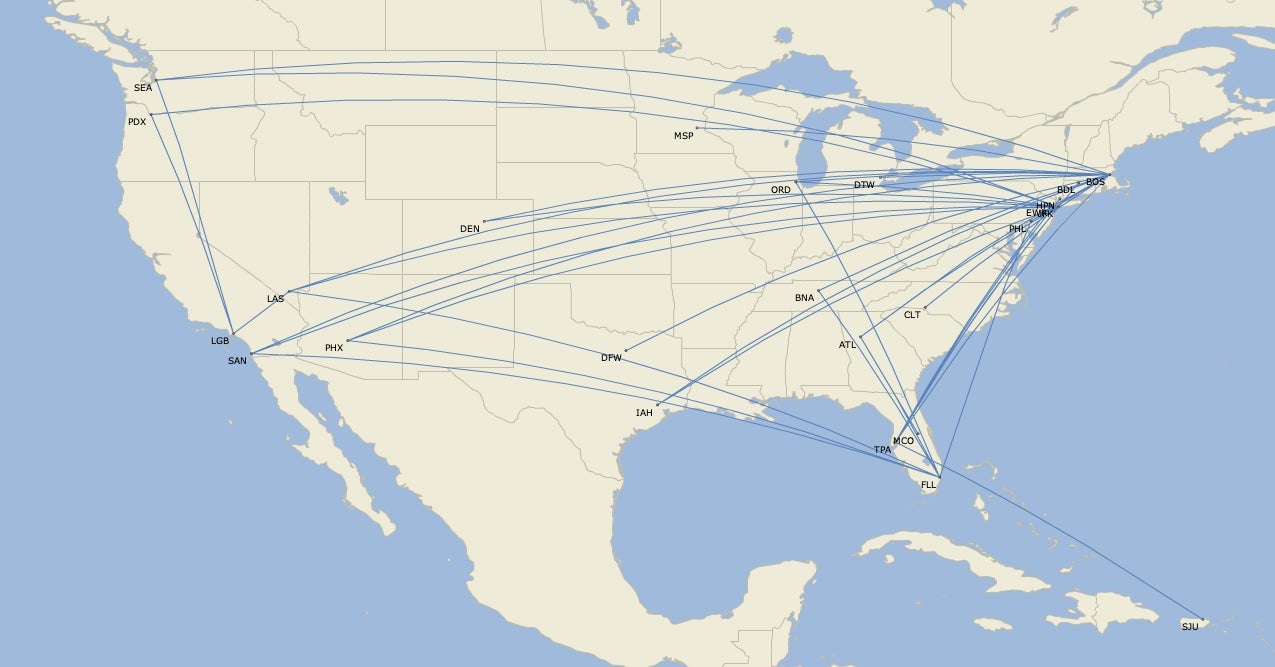
The New York-based carrier has renewed its push to suspend service to 16 large hub airports across the U.S. that – for now — it must serve as a condition of its payroll assistance from the federal coronavirus aid package known as the CARES Act. JetBlue accepted $936 million in aid.
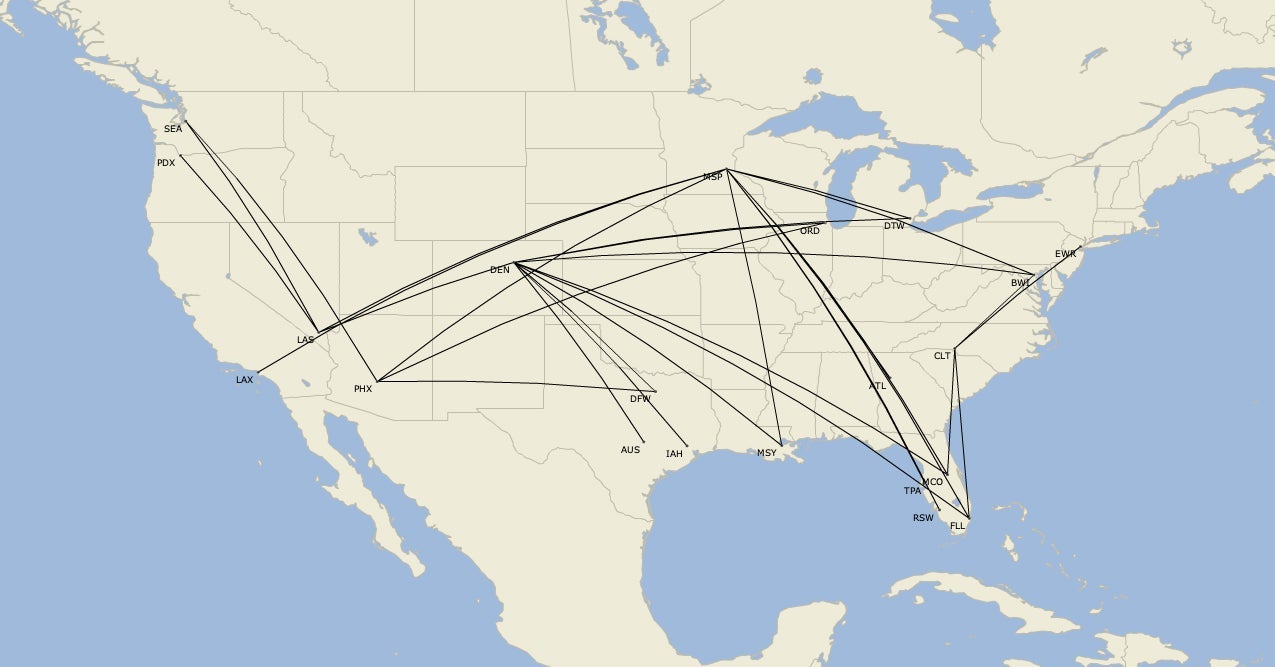
Spirit Airlines joined JetBlue in renewing its push for air service waivers from the Department of Transportation. The South Florida-based discounter wants to suspend flights to six airports that are hubs for other carriers — Charlotte (CLT), Denver (DEN), Minneapolis/St. Paul (MSP), Phoenix (PHX), Portland, Oregon (PDX) and Seattle (SEA) — during the pandemic.
Both JetBlue and Spirit were denied nearly all of their first waiver requests to suspend service to a number of airports.
Get Coronavirus travel updates. Stay on top of industry impacts, flight cancellations, and more.
Both requests center on the waiver granted to Massachusetts-based Cape Air that allowed it to suspend flights to New York John F. Kennedy (JFK) airport for the duration of the crisis. The DOT cited the regional carrier's small size — defined as any airline with less than a 10% share of the U.S. domestic market — and the "abundant service" to JFK on other airlines.
The arguments highlight the unusual predicament that airlines face. In non-pandemic times, there is seldom a day when Cape Air, the 13th-largest airline in the U.S. by passengers in 2019, would set a precedent that its much larger peers want to follow.
Such is the airline industry in the days of corona.
Related: JetBlue, Spirit rejected by DOT on nearly all bailout waiver requests

The coronavirus has decimated demand for air travel. On average there were only 17 people on domestic flights during the week ending April 28, the latest data from industry trade organization Airlines for America (A4A) shows. While the numbers are dismal, they are up slightly from fewer than 10 people on flights during the week ending April 14.
"The situation facing JetBlue continues to deteriorate and compliance with the [DOT] order will significantly harm JetBlue's financial liquidity and threaten to undermine the national economic recovery," the airline said in its waiver application on April 27. Load factors, or the percent of seats filled, on flights to the 16 cities in question are as low as 3%, JetBlue added.
JetBlue and Spirit want the Cape Air precedent applied to them. Both carriers said there is near-zero passenger demand for their flights to the 16 airports in question, all of which are hubs for other airlines.
Related: Spirit revamps schedule with circle routes so it can receive coronavirus aid
The 16 airports that JetBlue wants to suspend flights to are:
- Atlanta (ATL) - Delta hub and Southwest Airlines base
- Charlotte - American hub
- Chicago O'Hare (ORD) - American and United Airlines hub
- Dallas/Fort Worth (DFW) - American hub
- Denver - Frontier Airlines and United hub, Southwest base
- Detroit (DTW) - Delta hub
- Houston Bush Intercontinental (IAH) - United hub
- Las Vegas (LAS) - Southwest base
- Minneapolis/St. Paul - Delta hub
- Nashville (BNA) - Large Southwest presence
- Philadelphia (PHL) - American hub
- Phoenix (PHX) - American hub and Southwest base
- Portland - Alaska Airlines hub
- San Diego (SAN) - Alaska focus city and Southwest base
- Seattle/Tacoma - Alaska and Delta hub
- Tampa (TPA) - Large Southwest presence
Related: JetBlue begins flying new "tag" routes in order to comply with CARES Act
The DOT has taken a more nuanced approach to other airlines' requests since ruling on JetBlue and Spirit, its first two decisions on the CARES Act provisions. Delta was granted all of its waivers to begin seasonal service as planned in May and June instead of immediately, and Hawaiian Airlines was allowed to suspend all of its flights to the U.S. mainland except for Los Angeles (LAX) and San Francisco (SFO).
At the same time, United's argument that it be allowed to suspend service to small airports like Ithaca (ITH), New York, that are within driving distance of a large airport was denied. Ithaca is 60 miles, or about an hour-and-10 minute drive, from the Syracuse (SYR) airport.
U.S. airlines are in the midst of reporting their first quarter earnings with industry-wide losses expected. Even Southwest, which has never posted an annual loss in its 49-year history, reported its first quarterly pre-tax loss since 2009 during the three months ending in March. Financials for the second quarter, which includes April, May and June, are expected to be worse for all carriers.
Analysts expect the CARES Act payroll assistance to alleviate some of the immediate cash pressure on airlines. However, they also agree the industry will shrink — baring a miraculous recovery in demand — once the funds run out in the fall, forcing management teams to make difficult decisions about the future of their respective airlines.
Related: Is air travel on the rebound? TSA reports a week of passenger growth
TPG featured card

at Capital One's secure site
Terms & restrictions apply. See rates & fees.
| 5X miles | Earn 5X miles on hotels, vacation rentals and rental cars booked through Capital One Travel |
| 2X miles | Earn unlimited 2X miles on every purchase, every day |
Pros
- Stellar welcome offer of 75,000 miles after spending $4,000 on purchases in the first three months from account opening. Plus, a $250 Capital One Travel credit to use in your first cardholder year upon account opening.
- You'll earn 2 miles per dollar on every purchase, which means you won't have to worry about memorizing bonus categories
- Rewards are versatile and can be redeemed for a statement credit or transferred to Capital One’s transfer partners
Cons
- Highest bonus-earning categories only on travel booked via Capital One Travel
- LIMITED-TIME OFFER: Enjoy $250 to use on Capital One Travel in your first cardholder year, plus earn 75,000 bonus miles once you spend $4,000 on purchases within the first 3 months from account opening - that’s equal to $1,000 in travel
- Earn unlimited 2X miles on every purchase, every day
- Earn 5X miles on hotels, vacation rentals and rental cars booked through Capital One Travel
- Miles won't expire for the life of the account and there's no limit to how many you can earn
- Receive up to a $120 credit for Global Entry or TSA PreCheck®
- Use your miles to get reimbursed for any travel purchase—or redeem by booking a trip through Capital One Travel
- Enjoy a $50 experience credit and other premium benefits with every hotel and vacation rental booked from the Lifestyle Collection
- Transfer your miles to your choice of 15+ travel loyalty programs
- Top rated mobile app