JetBlue extends seat-blocking policy one last time, covering the December holidays

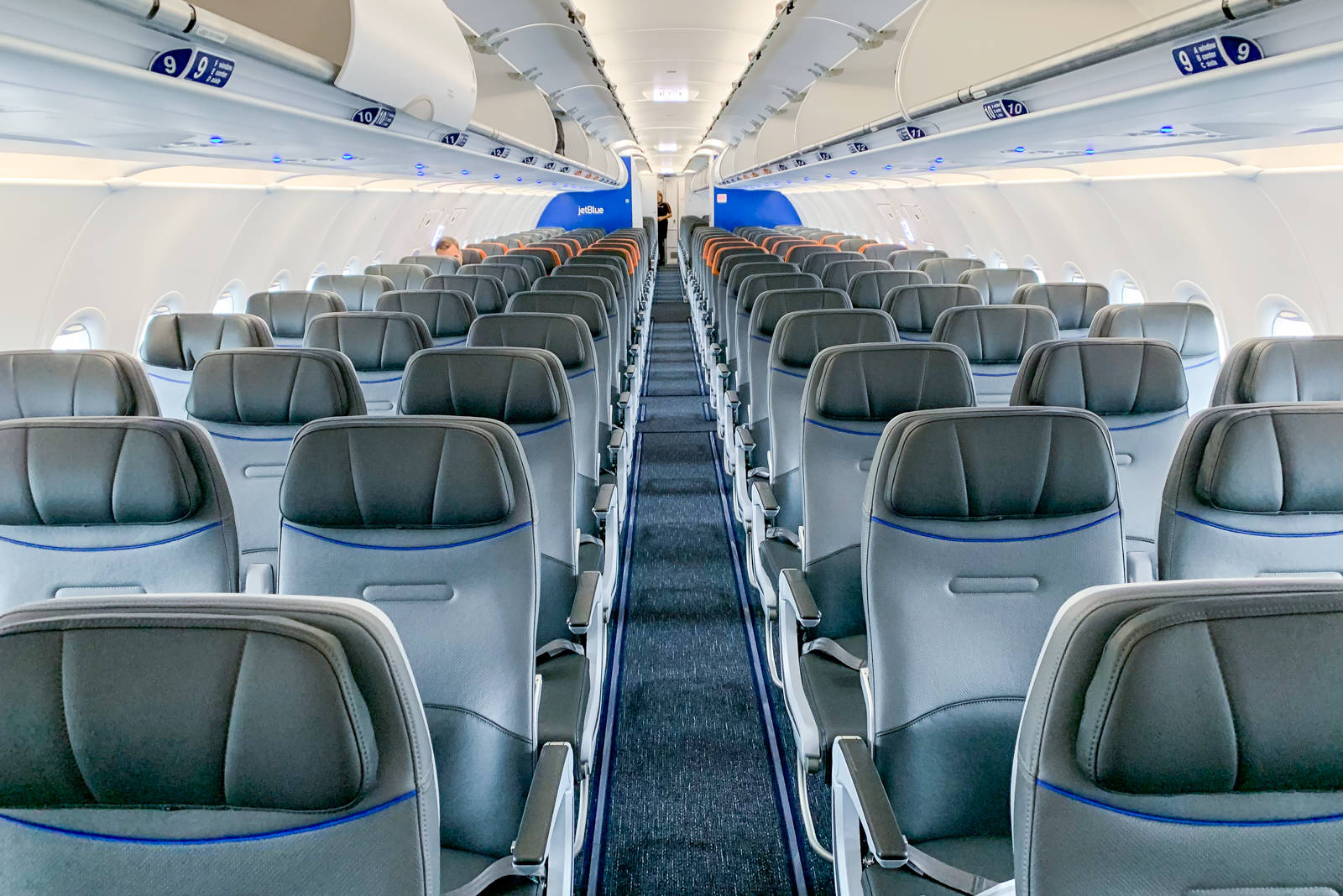
At the outset of the pandemic, airlines were quick to introduce additional safety measures to combat the spread of the coronavirus.
Initiatives included mandatory face-covering policies, increased frequency of cleanings, limiting the inflight service offerings and more. Some airlines, however, took the safety campaigns one step further by blocking middle seats.
This way, customers would be further spaced from others. At the height of the pandemic with demand for travel so low, blocked middle seats didn't necessarily displace paying passengers. But now, with the holidays approaching — and as we learn more about the what's thought to be a low risk of virus transmission on aircraft — carriers are slowly starting to walk back from the promise of empty middle seats.
The latest carrier to do so is JetBlue.
Sign up for TPG's free new biweekly Aviation newsletter for more airline and airport-specific news!
The New York-based airline will return to selling 100% of seats on its aircraft starting on Jan. 8, 2021, JetBlue said in a Thursday memo to employees that was viewed by TPG. Until then, JetBlue will continue blocking just a subset of seats, as follows:
- Through Dec. 1, 2020: Onboard capacity is capped at 70%. Empty middle seats aren't guaranteed, as previously reported.
- From Dec. 2, 2020 to Jan. 7, 2021: Onboard capacity is capped at 85%. No specific seats will be blocked.
- Jan. 8, 2021 and onwards: No capacity caps.
In September, JetBlue announced that it would increase the capacity cap to 70% through Dec. 1, but stopped short of offering a specific numerical cap for the December holiday season. With Thursday's update, flyers can be assured that Christmas and New Years' holiday flights won't be more than 85% full.
However, the carrier won't be blocking any specific seats. That means families and friends traveling together can assign any seat on the plane when booking. Instead, the airline won't take reservations for more than 85% of the available seats on a particular aircraft.

For instance, on the carrier's 100-seat Embraer E190, 85 tickets will be sold. Passengers can choose where they want to sit, without any seats blocked for distancing. Theoretically, you could end up with 15 empty seats in the last four rows of the plane.
Through Oct. 15, JetBlue blocked all the aisles in its Mint business-class cabin. From Oct. 16 to Nov. 8, the carrier reduced that cap to just the two aisles in row 1 to promote space between customers and flight attendants. Since Nov. 8, all 16 Mint seats have been available for sale.
JetBlue is one of the last remaining major U.S. carriers to announce when its passenger load cap will end. Both Alaska and Delta plan to bid farewell to blocked seats on Jan. 7, 2021. Southwest, on the other hand, will fill planes to capacity beginning Dec. 1, 2020. This leaves Hawaiian as the only airline to block middle seats without a set expiration date.
Related: Which US airlines are blocking middle seats?
Filling planes to 100% comes as there's increased scientific research as to the safety of the aircraft cabin. JetBlue touts the recent Harvard and Department of Defense studies as proof that "the air in our cabins [is] as safe or safer than the air in your own home or in a hospital operating room."
While JetBlue will continue its other anti-coronavirus measures, some flyers will undoubtedly want to maximize personal space. Personally, I've flown ten domestic flights since the pandemic and had an empty middle seat on all of them — even on airlines that weren't capping capacity.
With the holidays approaching and middle-seat blocking ending, be sure to check out my tips to scoring an empty middle seat.
TPG featured card
at American Express's secure site
Terms & restrictions apply. See rates & fees.
| 4X | Earn 4X Membership Rewards® points per dollar spent on purchases at restaurants worldwide, on up to $50,000 in purchases per calendar year, then 1X points for the rest of the year. |
| 4X | Earn 4X Membership Rewards® points per dollar spent at US supermarkets, on up to $25,000 in purchases per calendar year, then 1X points for the rest of the year. |
| 5X | Earn 5X Membership Rewards® points on prepaid hotel stays booked through AmexTravel.com or the Amex Travel App™. |
| 3X | Earn 3X Membership Rewards® points on flights booked through AmexTravel.com, the Amex Travel App™, or purchased directly from airlines. |
| 2X | Earn 2X Membership Rewards® points on prepaid car rentals booked through AmexTravel.com or the Amex Travel App™ and cruises booked and paid through AmexTravel.com. |
| 1X | Earn 1X Membership Rewards® point per dollar spent on all other eligible purchases. |
Pros
- Valuable dining and food-related credits
- Flexible rewards with airline and hotel transfer partners
- Multiple travel and purchase protections
- No foreign transaction fees
- Access to Amex Offers for additional savings (enrollment required)
Cons
- Not as useful for those living outside the U.S.
- Some may have trouble using Uber and other dining credits
- You may be eligible for as high as 100,000 Membership Rewards® Points after you spend $8,000 in eligible purchases on your new Card in your first 6 months of Card Membership. Welcome offers vary and you may not be eligible for an offer. Apply to know if you’re approved and find out your exact welcome offer amount – all with no credit score impact. If you’re approved and choose to accept the Card, your score may be impacted.
- Earn 4X Membership Rewards® points per dollar spent on purchases at restaurants worldwide, on up to $50,000 in purchases per calendar year, then 1X points for the rest of the year.
- Earn 4X Membership Rewards® points per dollar spent at US supermarkets, on up to $25,000 in purchases per calendar year, then 1X points for the rest of the year.
- Earn 5X Membership Rewards® points on prepaid hotel stays booked through AmexTravel.com or the Amex Travel App™.
- Earn 3X Membership Rewards® points on flights booked through AmexTravel.com, the Amex Travel App™, or purchased directly from airlines.
- Earn 2X Membership Rewards® points on prepaid car rentals booked through AmexTravel.com or the Amex Travel App™ and cruises booked and paid through AmexTravel.com.
- Earn 1X Membership Rewards® point per dollar spent on all other eligible purchases.
- Pay It® lets you tap in the American Express® App to quickly pay for small purchase amounts throughout the month and still earn rewards the way you usually do. Plan It® gives you the option to split up big purchases into equal monthly payments with a fixed fee. You’ll know upfront exactly how much you’ll pay.
- $120 Dining Credit: Earn up to a total of $10 in statement credits monthly when you pay with the Gold Card at Grubhub (including Seamless), Buffalo Wild Wings, Five Guys, The Cheesecake Factory, and Wonder. This can be an annual savings of up to $120. Enrollment required.
- $100 Resy Credit: Get up to $100 in statement credits each calendar year at over 10,000 qualifying U.S. Resy restaurants after you pay for eligible purchases with the American Express® Gold Card. That’s up to $50 in statement credits semi-annually. Enrollment required.
- $84 Dunkin' Credit: Earn up to $7 in monthly statement credits after you pay with the American Express® Gold Card at U.S. Dunkin’ locations. Enrollment required.
- $120 Uber Cash on Gold: Enjoy up to $120 in Uber Cash annually with your Gold Card. Just add your Card to your Uber account and you'll get $10 in Uber Cash each month to use on orders and rides in the U.S. when you select an Amex Card for your transaction.
- Enjoy complimentary Hertz Five Star® Status benefits like skipping the counter at select locations, adding an additional driver at no additional cost*, and vehicle upgrades**. Benefit enrollment and Hertz Gold+ registration are required. *Additional drivers must meet standard rental qualifications and must be a spouse or domestic partner to qualify as complimentary. Other additional drivers subject to fees. **Benefits are subject to availability and vary by location. Additional Hertz program Terms and Conditions including age restrictions apply.
- Book two nights or more with The Hotel Collection through AmexTravel.com or the Amex Travel App™ and receive a $100* credit towards eligible charges at over 1,400 upscale hotels worldwide. *Eligible charges vary by property.
- Book your travel through the Amex Travel App™ with added peace of mind – backed by American Express® service and support. Only for American Express® Card Members.
- Whenever you need us, we're here. Our Member Services team will ensure you are taken care of. From lost Card replacement to statement questions, we are available to help 24/7.
- No Foreign Transaction Fees.
- Annual Fee is $325.
- Terms Apply.