Skip to content

How passenger planes are converted into cargo jets filled with life-saving medical supplies

May 01, 2020
6 min read
Air Canada cargo conversion
How passenger planes are converted into cargo jets filled with life-saving medical supplies
The cards we feature here are from partners who compensate us when you are approved through our site, and this may impact how or where these products appear. We don’t cover all available credit cards, but our analysis, reviews, and opinions are entirely from our editorial team. Terms apply to the offers listed on this page. Please view our advertising policy and product review methodology for more information.

Throughout the coronavirus pandemic, we've seen all the major U.S. airlines slash their schedules and reduce frequencies.

With near-zero demand for air travel, airlines are stuck in a bind — what do they do with all their planes that have nowhere to go?

Most of the jets end up getting parked in the desert in the southwestern United States. That's because the low humidity of the high desert helps prevent corrosion. Plus, there's much more space in the southwest, so there's plenty of room for large planes at facilities such as Pinal Airpark and Roswell airport.

For more travel tips and news, sign up for our daily newsletter

Though you may think that airlines should use this time to retrofit their grounded fleets with lie-flat seats and other passenger improvements, truth is that they're looking to save every dollar they can. That's why it's unlikely we're going to see any acceleration in cabin retrofit programs.
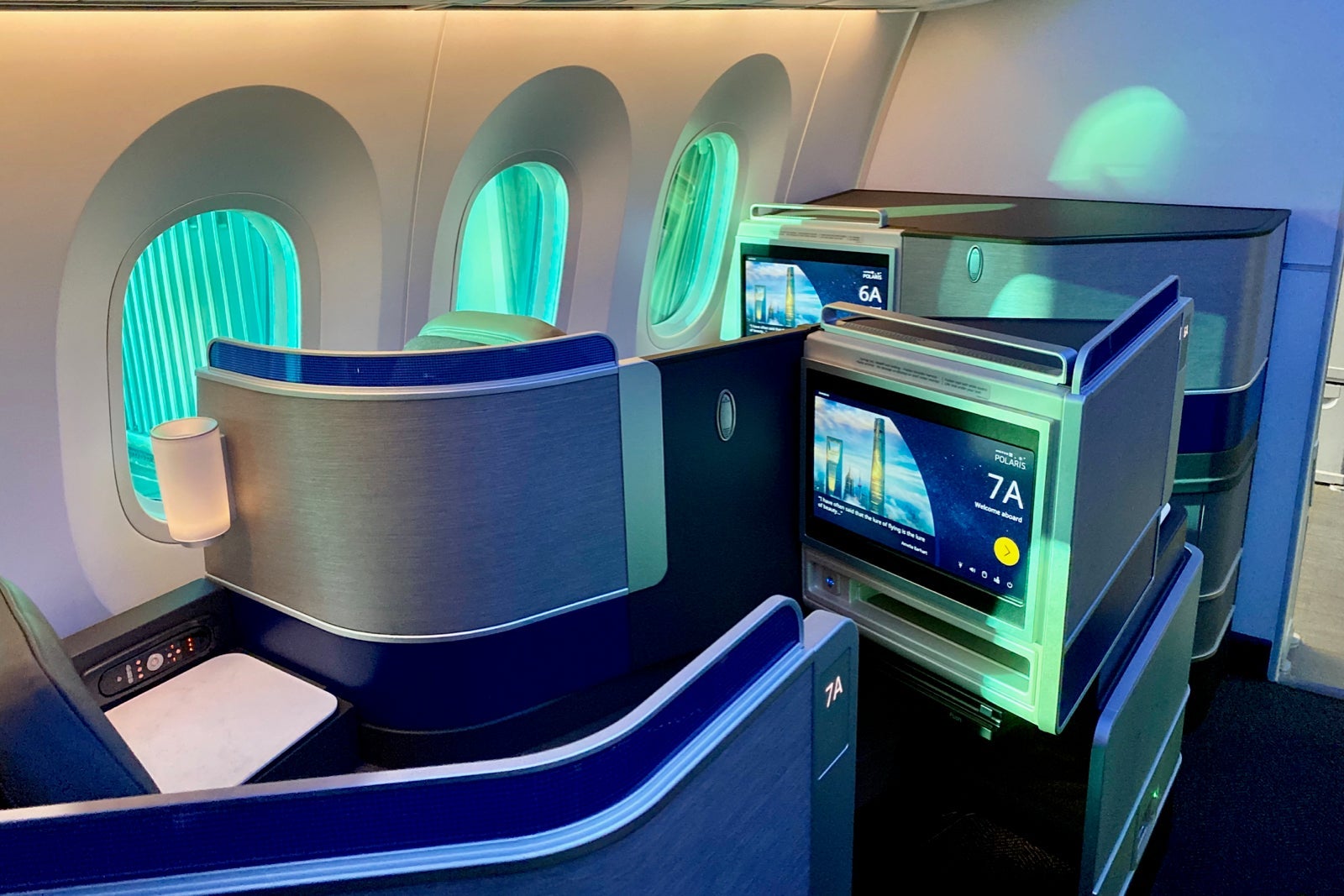
United Polaris retrofit project on the Boeing 787-8 Dreamliner (Photo by Zach Griff/The Points Guy)

But planes are a massive fixed cost, and they make no money stored in the desert. So the latest trend we've seen is airlines converting some of their passenger jets to (temporary) cargo planes to carry, among other things, masks and other desperately needed medical supplies across the world.

But how exactly do they do that?

First, some background: though passenger jets primarily carry people, they also have a good amount of cargo space below the main deck. In fact, I've had my fair share of experiences walking around the cargo hold of the Boeing 787 (take a look at my Instagram for those shots).

As such, passenger airlines could continue flying their jets without passengers by just filling the cargo hold. To maximize how much they can carry, however, we've seen airlines make temporary modifications to their passengers cabins.

Daily Newsletter
Reward your inbox with the TPG Daily newsletter
Join over 700,000 readers for breaking news, in-depth guides and exclusive deals from TPG’s experts

Related: Behind the scenes at Delta's cargo hub

After all, if they're not flying any passengers, what's the point in leaving the cabin empty?

The simplest way to put supplies in a passenger jet

There are two different models that we've seen airlines adapt for putting cargo in the main deck.

The fastest way is to just cover the seats and onboard electronics with protective film, fasten the cargo directly into the seats, wrap it with some netting and call it a day.

As you can imagine, that is not necessarily the best way to maximize space since you're limiting how much cargo you can carry to whatever fits into the seats. Plus, you have to be very careful not to damage the expensive seats.
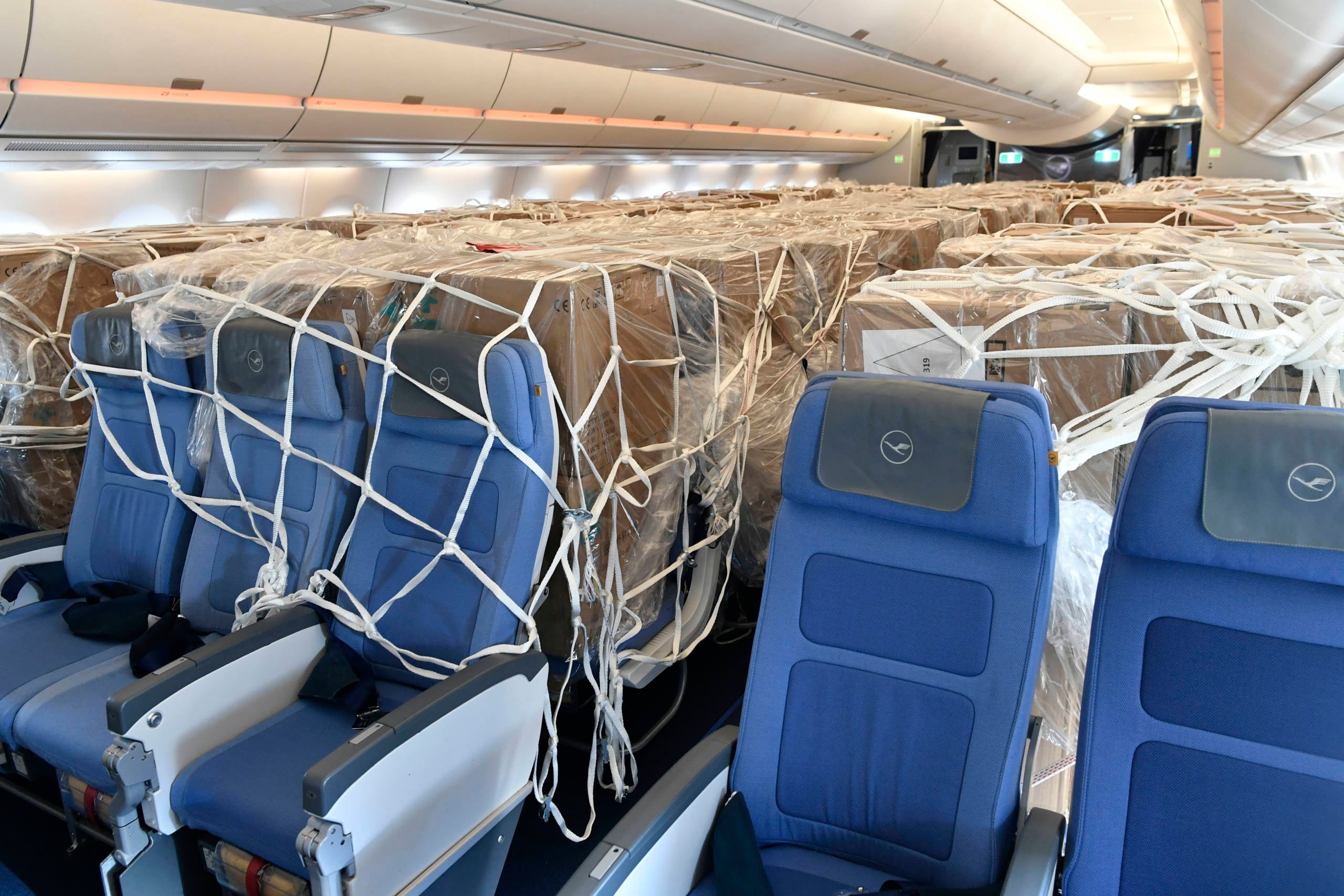
Photo courtesy of Lufthansa

This is exactly what Lufthansa did with four of its Airbus A350s. The planes operate daily cargo flights from Beijing and Shanghai stocked with masks urgently needed across Germany.

The much improved method to maximize cargo space in a passenger jet

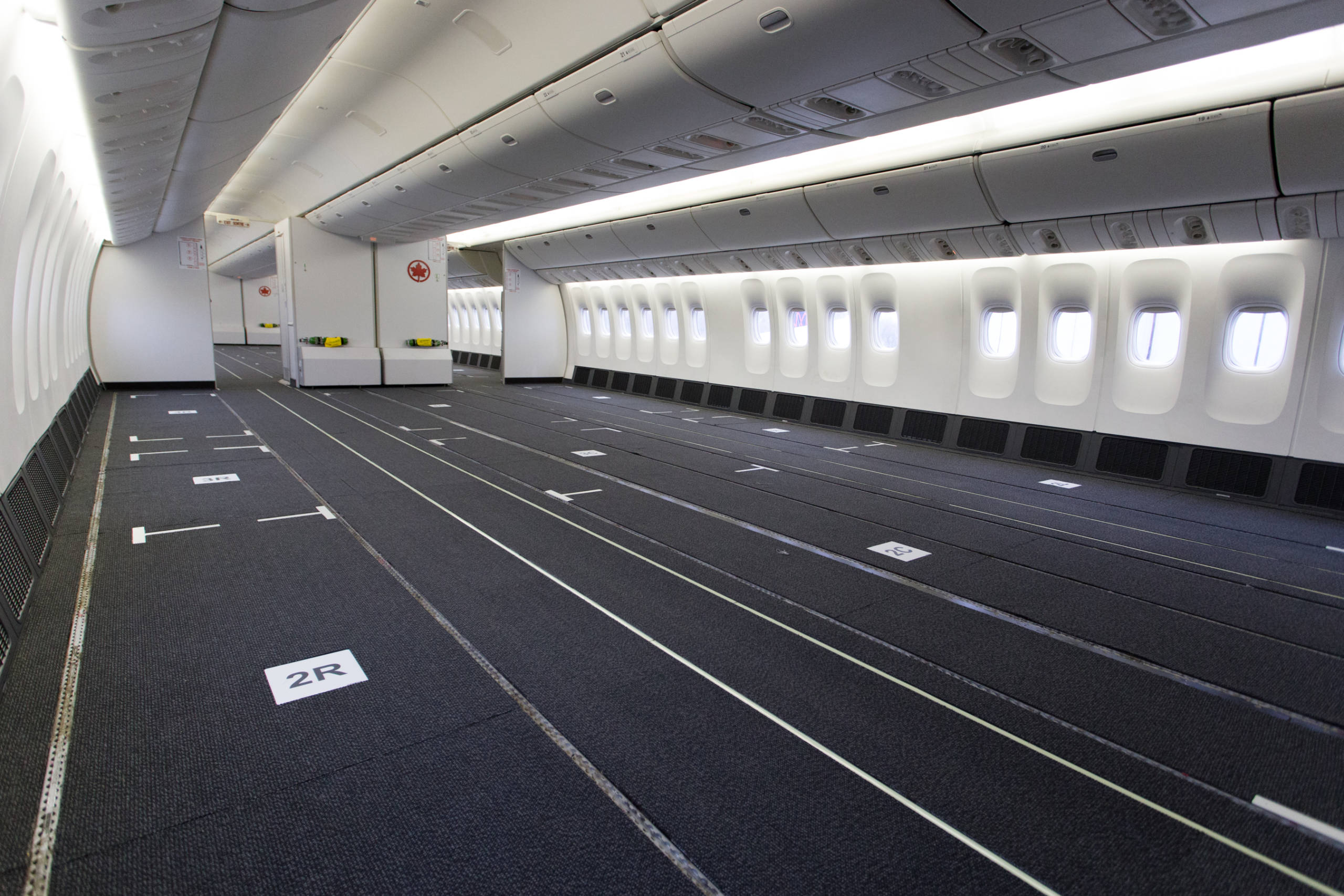
Hence, the reason for the second, more time-intensive and costly option — removing the seats from the plane. Air Canada recently took three of its flagship Boeing 777-300ERs and converted them to cargo jets using this method.

They removed the seats, protected the TVs and other cabin electronics and got the plane ready to carry important cargo like masks and ventilators.
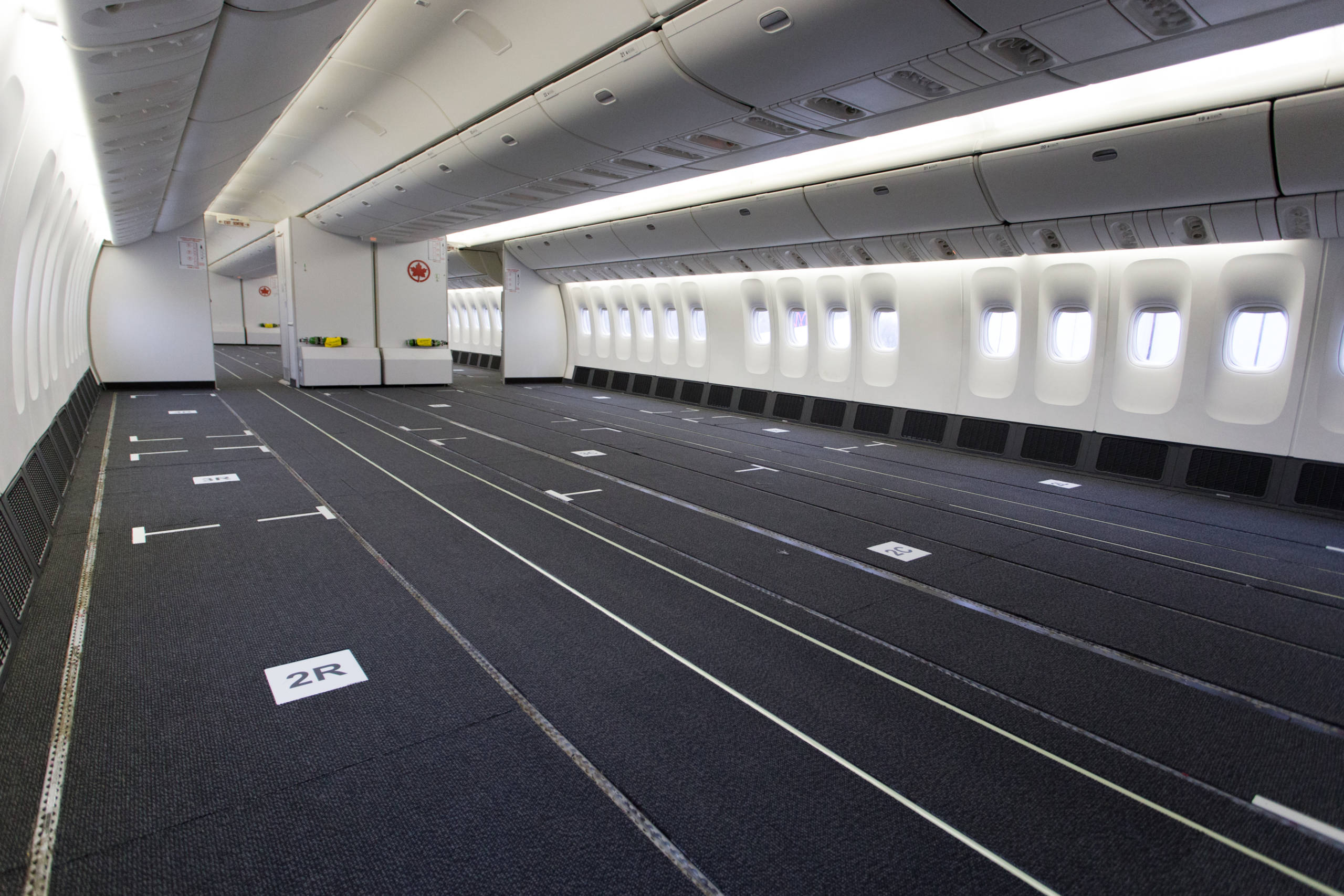
Photo courtesy Air Canada

When it comes time to load the plane, the airline just piles boxes on top of each other, and fastens them together using a netting that's tied to the floor.

This process was developed, produced and implemented within six days. These modifications were then certified and approved by Transport Canada, the government body regulating transportation.
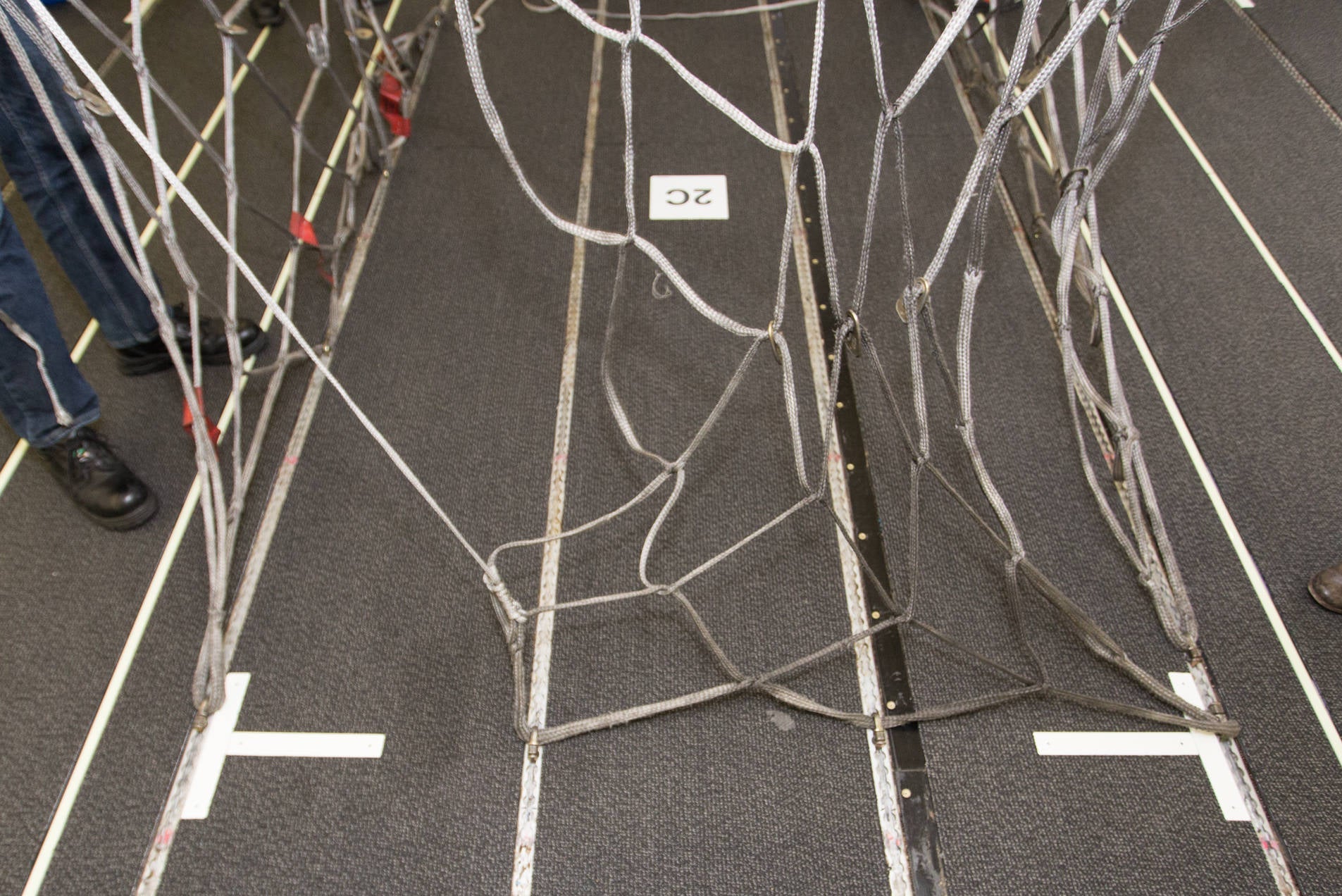
Photo courtesy Air Canada

Airbus has come up with an improvement to the method that Air Canada used. It's now offering customers operating A330s and A350s a solution that makes it easier to load cargo and maximize the volume they can fill. Specifically, the Airbus solution allows airlines to put pallets on the floor of the passenger cabin and connect them to the seat tracks.
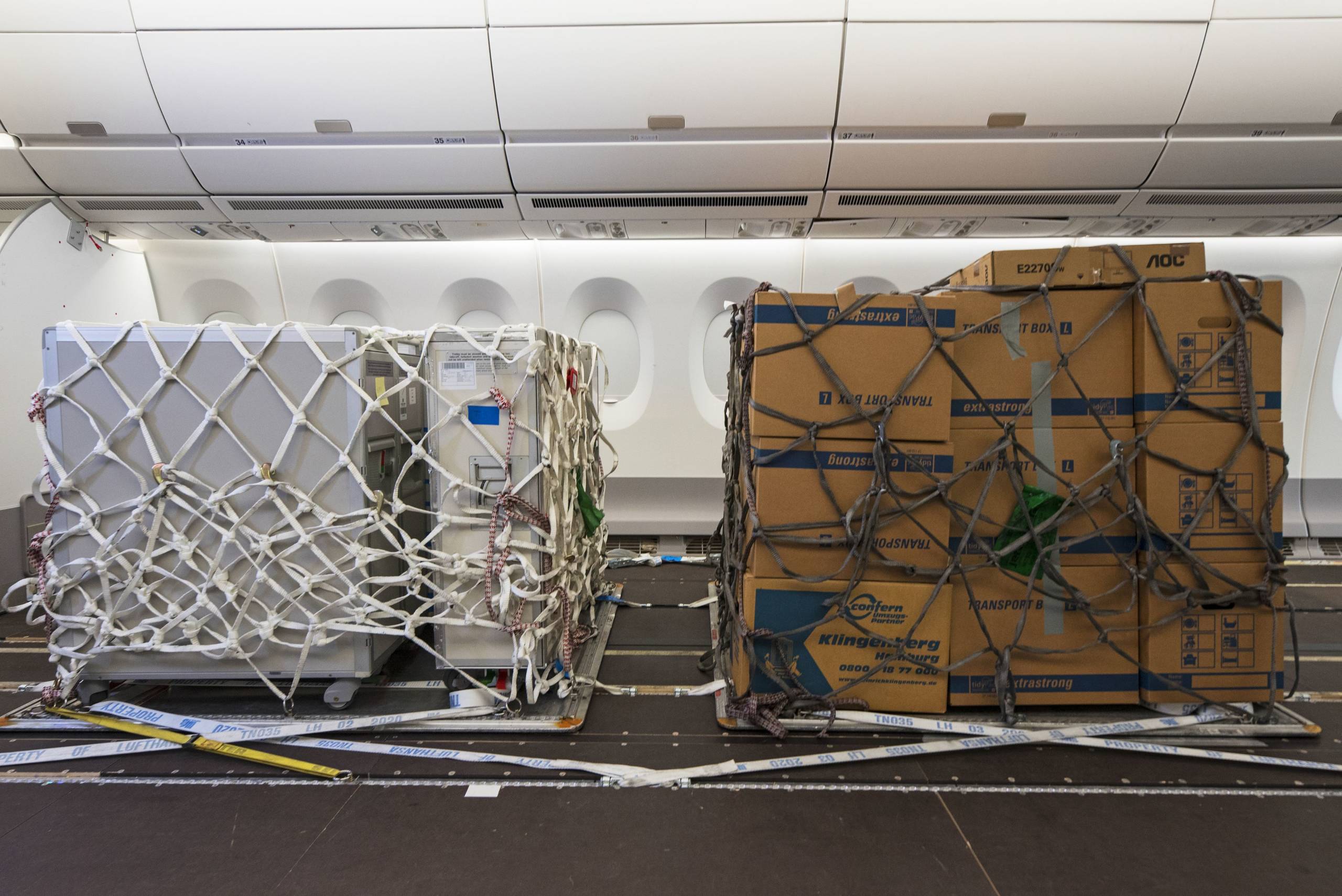
Photo courtesy of Airbus

According to Airbus, a full conversion once seats are out takes two people two hours, which is incredibly quick and potentially worthwhile to maximize the cargo space. Additionally, once this process is approved by the aviation safety regulatory boards, airlines can complete the modification without individual approval from local safety boards for every jet that gets this treatment.

Related: Left without flyers, airlines are using passenger jets for cargo

How does the cargo get into the plane?

Regardless of which conversion process airlines choose, you may be wondering — how do you get the cargo into the passenger deck? After all, there's no large freight door like there is on dedicated cargo jets.

Related: The retired American Airlines 767s are being turned into cargo planes

Well, airlines can only carry cargo that fits through the passenger doors. That means carriers are putting cardboard boxes one by one into the passenger compartments.
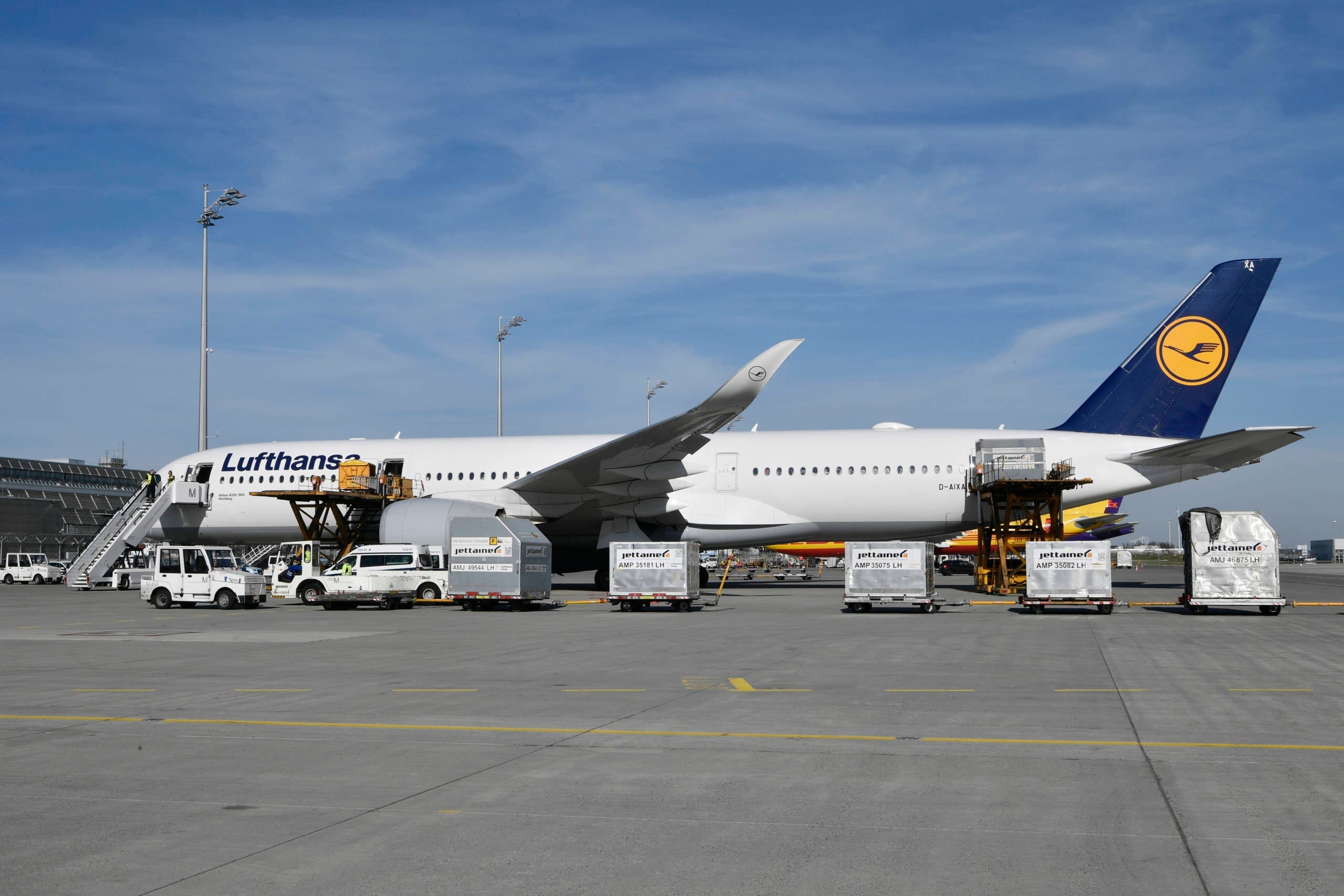
Photo courtesy Lufthansa

Take a look at these two pictures shared by Lufthansa. As you can see, the carrier is loading freight via the passenger doors. A forklift brings the cargo container up to the plane, where employees then need to unpack the container and put the boxes into the cabin.
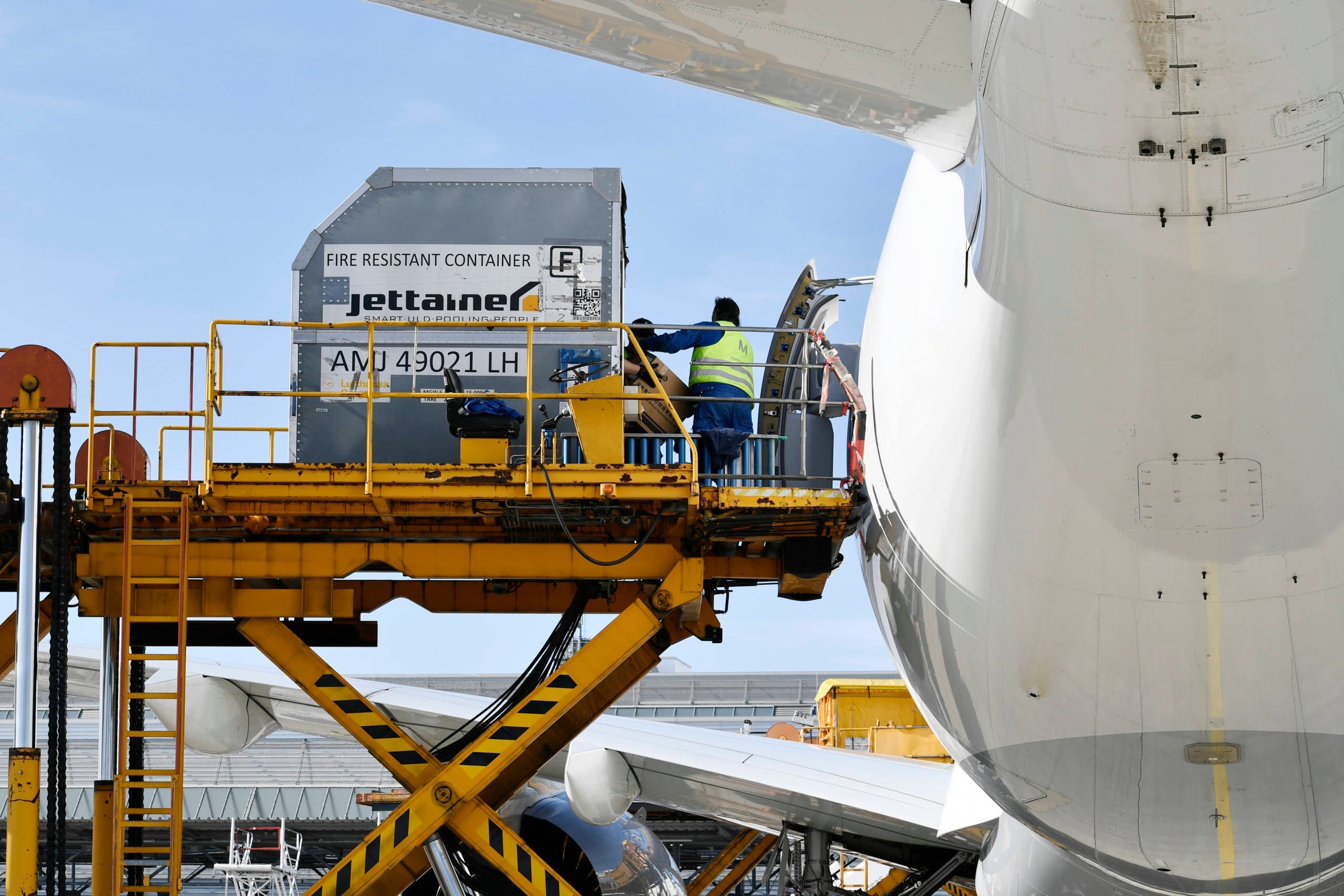
Photo courtesy of Lufthansa

Bottom line

We're living in unprecedented times. Just two months ago I was reviewing the Air Canada business class product on the Boeing 777-300ER. Now, the carrier, along with many others, is using thise exact jets to carry medical supplies around the world.

In fact, the process of converting the passenger planes to cargo ones isn't nearly as advanced as you might think. Even if the airlines deploy the most sophisticated conversion by removing seats from the main deck, it doesn't actually take too long.

And that's good news, because I can't wait for the time when the airlines are hurrying to re-convert their jets back into passenger service.

TPG featured card

Best for businesses with high spending
TPG Editor‘s Rating
4.5 / 5
Go to review

Rewards

2 - 10X miles

Intro offer

LIMITED-TIME OFFER: Earn up to 400K bonus miles

Annual Fee

$395

Recommended Credit

740-850
Excellent

Why We Chose It

The Capital One Venture X Business Card has all the Capital One Venture X Rewards Credit Card has to offer and more. It offers an incredible welcome bonus and requires an equally impressive spend to qualify. In addition, the card comes with premium travel perks like annual travel credit. (Partner offer)

Pros

  • The Capital One Venture X business card has a very lucrative welcome offer.
  • In addition, the card comes with many premium travel perks such as an annual $300 credit for bookings through Capital One Business Travel.
  • Business owners are also able to add employee cards for free.

Cons

  • The card requires significant spending to earn the welcome offer.
  • Another drawback is that the annual travel credit can only be used on bookings made through Capital One Business Travel.
  • LIMITED-TIME OFFER: Earn up to 400K bonus miles: 200K miles when you spend $30K in the first 3 months, and an additional 200k miles when you spend $150k in the first 6 months
  • Earn unlimited 2X miles on every purchase, everywhere—with no limits or category restrictions
  • Earn 10X miles on hotels and rental cars and 5X miles on flights and vacation rentals booked through Capital One Business Travel
  • With no preset spending limit, enjoy big purchasing power that adapts so you can spend more and earn more rewards
  • Empower your teams to make business purchases while earning rewards on their transactions, with free employee and virtual cards. Plus, automatically sync your transaction data with your accounting software and pay your vendors with ease
  • Redeem your miles on flights, hotels and more. Plus, transfer your miles to any of the 15+ travel loyalty programs
  • Every year, you'll get 10,000 bonus miles after your account anniversary date. Plus, receive an annual $300 credit for bookings made through Capital One Business Travel
  • Receive up to a $120 credit for Global Entry or TSA PreCheck®. Enjoy access to 1,300+ airport lounges worldwide, including Capital One Lounge locations and Priority Pass™ lounges, after enrollment
  • Enjoy a $100 experience credit and other premium benefits with every hotel and vacation rental booked from the Premier Collection
  • This is a pay-in-full card, so your balance is due in full every month
Apply for Capital One Venture X Business
at Capital One's secure site
Terms & restrictions apply. See rates & fees
Best for businesses with high spending
TPG Editor‘s Rating
4.5 / 5
Go to review

Rewards Rate

2X miles2 miles per dollar on every purchase
5X miles5 miles per dollar on flights and vacation rentals booked through Capital One Business Travel
10X miles10 miles per dollar on hotels and rental cars booked through Capital One Business Travel
  • Intro Offer

    LIMITED-TIME OFFER: Earn up to 400K bonus miles
  • Annual Fee

    $395
  • Recommended Credit

    740-850
    Excellent

Why We Chose It

The Capital One Venture X Business Card has all the Capital One Venture X Rewards Credit Card has to offer and more. It offers an incredible welcome bonus and requires an equally impressive spend to qualify. In addition, the card comes with premium travel perks like annual travel credit. (Partner offer)

Pros

  • The Capital One Venture X business card has a very lucrative welcome offer.
  • In addition, the card comes with many premium travel perks such as an annual $300 credit for bookings through Capital One Business Travel.
  • Business owners are also able to add employee cards for free.

Cons

  • The card requires significant spending to earn the welcome offer.
  • Another drawback is that the annual travel credit can only be used on bookings made through Capital One Business Travel.
  • LIMITED-TIME OFFER: Earn up to 400K bonus miles: 200K miles when you spend $30K in the first 3 months, and an additional 200k miles when you spend $150k in the first 6 months
  • Earn unlimited 2X miles on every purchase, everywhere—with no limits or category restrictions
  • Earn 10X miles on hotels and rental cars and 5X miles on flights and vacation rentals booked through Capital One Business Travel
  • With no preset spending limit, enjoy big purchasing power that adapts so you can spend more and earn more rewards
  • Empower your teams to make business purchases while earning rewards on their transactions, with free employee and virtual cards. Plus, automatically sync your transaction data with your accounting software and pay your vendors with ease
  • Redeem your miles on flights, hotels and more. Plus, transfer your miles to any of the 15+ travel loyalty programs
  • Every year, you'll get 10,000 bonus miles after your account anniversary date. Plus, receive an annual $300 credit for bookings made through Capital One Business Travel
  • Receive up to a $120 credit for Global Entry or TSA PreCheck®. Enjoy access to 1,300+ airport lounges worldwide, including Capital One Lounge locations and Priority Pass™ lounges, after enrollment
  • Enjoy a $100 experience credit and other premium benefits with every hotel and vacation rental booked from the Premier Collection
  • This is a pay-in-full card, so your balance is due in full every month