Here's What We Learned From Delta's Product Developer for the A220

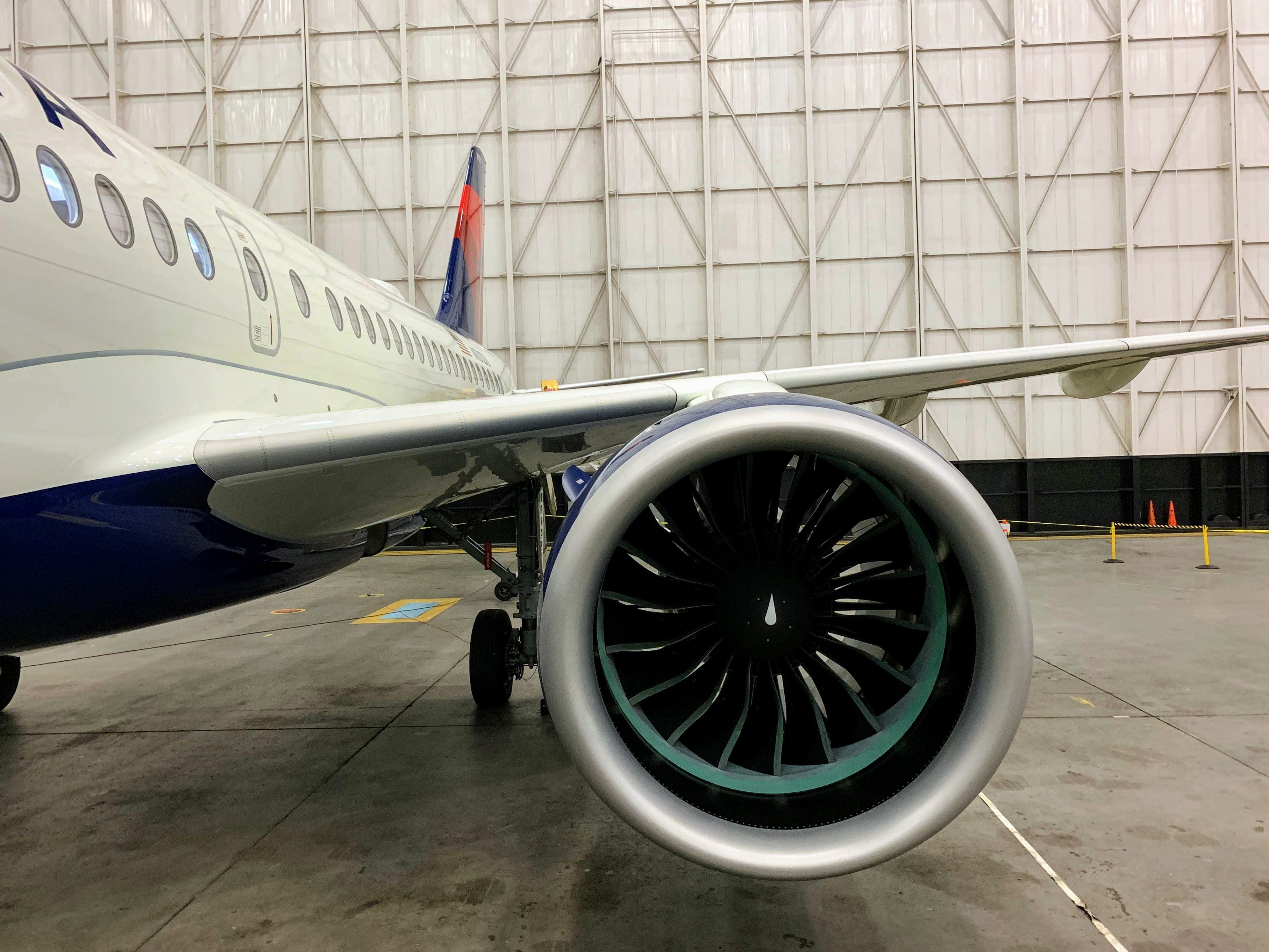
The Airbus A220, which will be eternally AKA'd as the Bombardier CS100, is poised to be a game changer for passengers. Delta is the first US carrier to take delivery of the aircraft, and will become first to shuttle passengers on it when inaugural flights depart Boston (BOS), New York (LGA) and Dallas (DFW) on Jan. 31, 2019.
We'll be onboard two of those launch day flights to bring you a comprehensive review, but we wanted to learn more about the plane's development after touring it at Delta's TechOps facility in Atlanta.
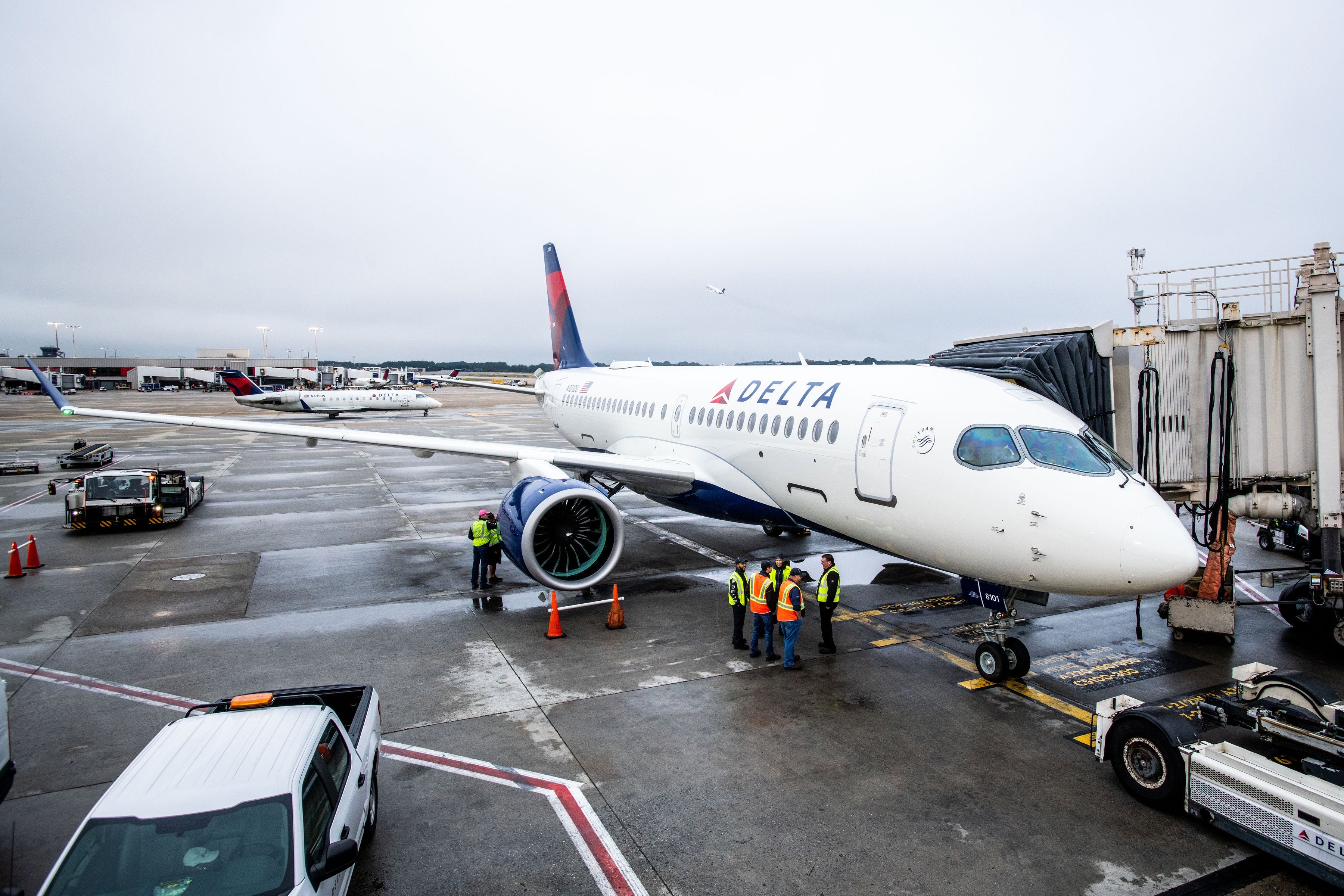
Ashley Garris, a senior product manager within Delta's onboard product development team, played a significant role in shaping Delta's incarnation of the A220. Producing an airliner's interior is no small feat. It takes years of hemming and hawing, nipping and tucking and poring over customer feedback.

Garris, pictured far right above, recently celebrated her achievements by being among an elite few chosen to fly Delta's first completed A220 from an Airbus facility in Mirabel, Quebec, to Delta's home in Atlanta. In an interview with The Points Guy, she called the day of this delivery flight "hands down, my favorite day at Delta Air Lines." Reminiscing, she described it as "the culmination of so many hiccups, working through so many different details, and facing trials and tribulations as we saw this through to completion."
I dug into some of those trials and came away with a deeper understanding of the unique challenges faced when interior design meets airline economics.
Lesson 1: Delta's Not Budging on Seat Width and Pitch
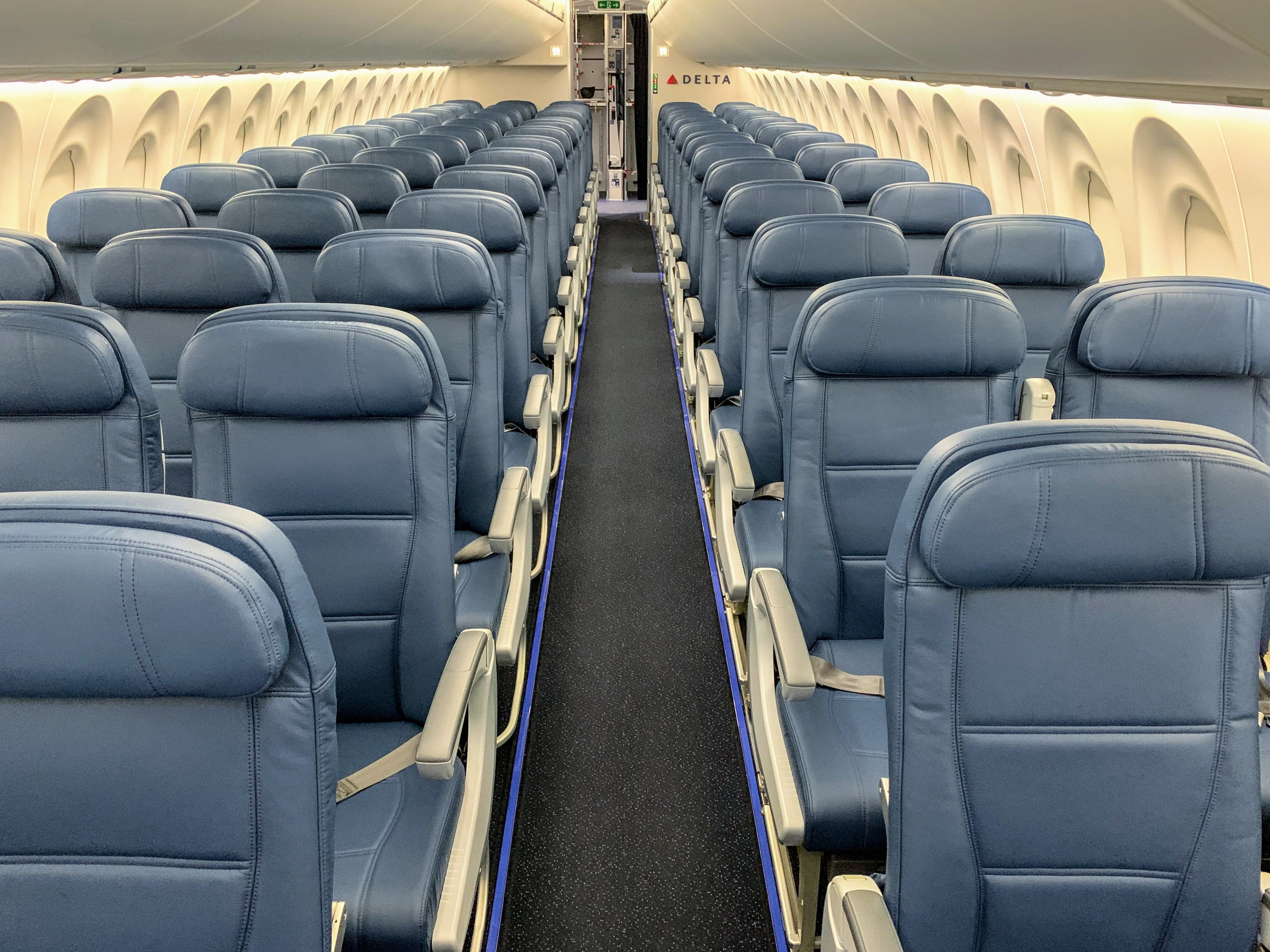
I asked Garris how much of the A220 was "set," from an interior perspective, and how much room Delta had to make it its own. "When we purchased the aircraft," she says, "the Layout of Passenger Accommodations (LOPA) had way too many seats."
Garris' team engaged in plenty of back and forth for revenue-minded groups at the airline, roping in customer feedback and NPS (Net Promoter Score) data to make a case for the configuration that Delta is shipping with. Per Garris: "We essentially said: 'Sorry, we can't have that many seats. It's below our minimum acceptable pitch, and we don't have slimline seats in our fleet. You're going to have to lower the passenger count.'"
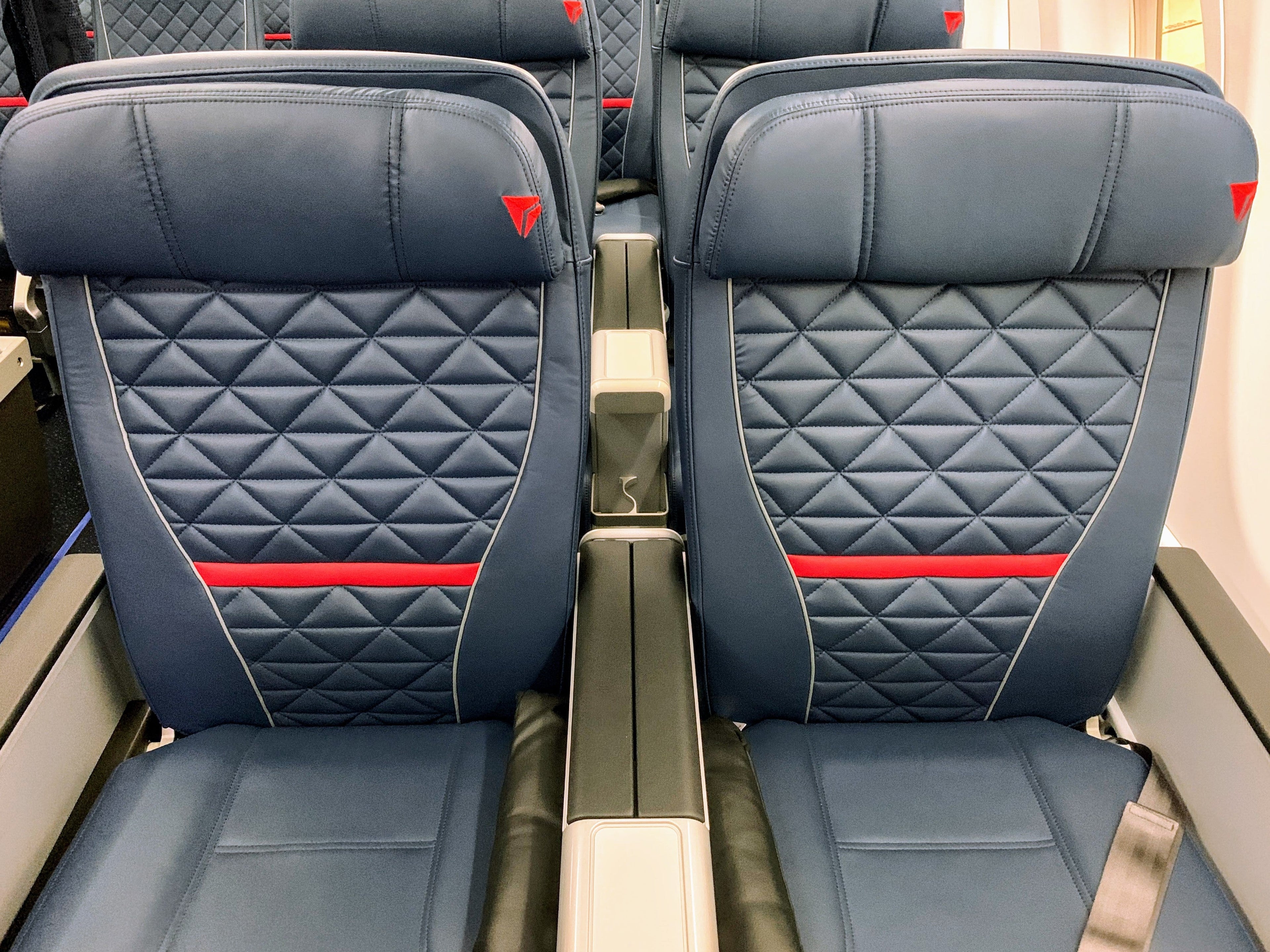
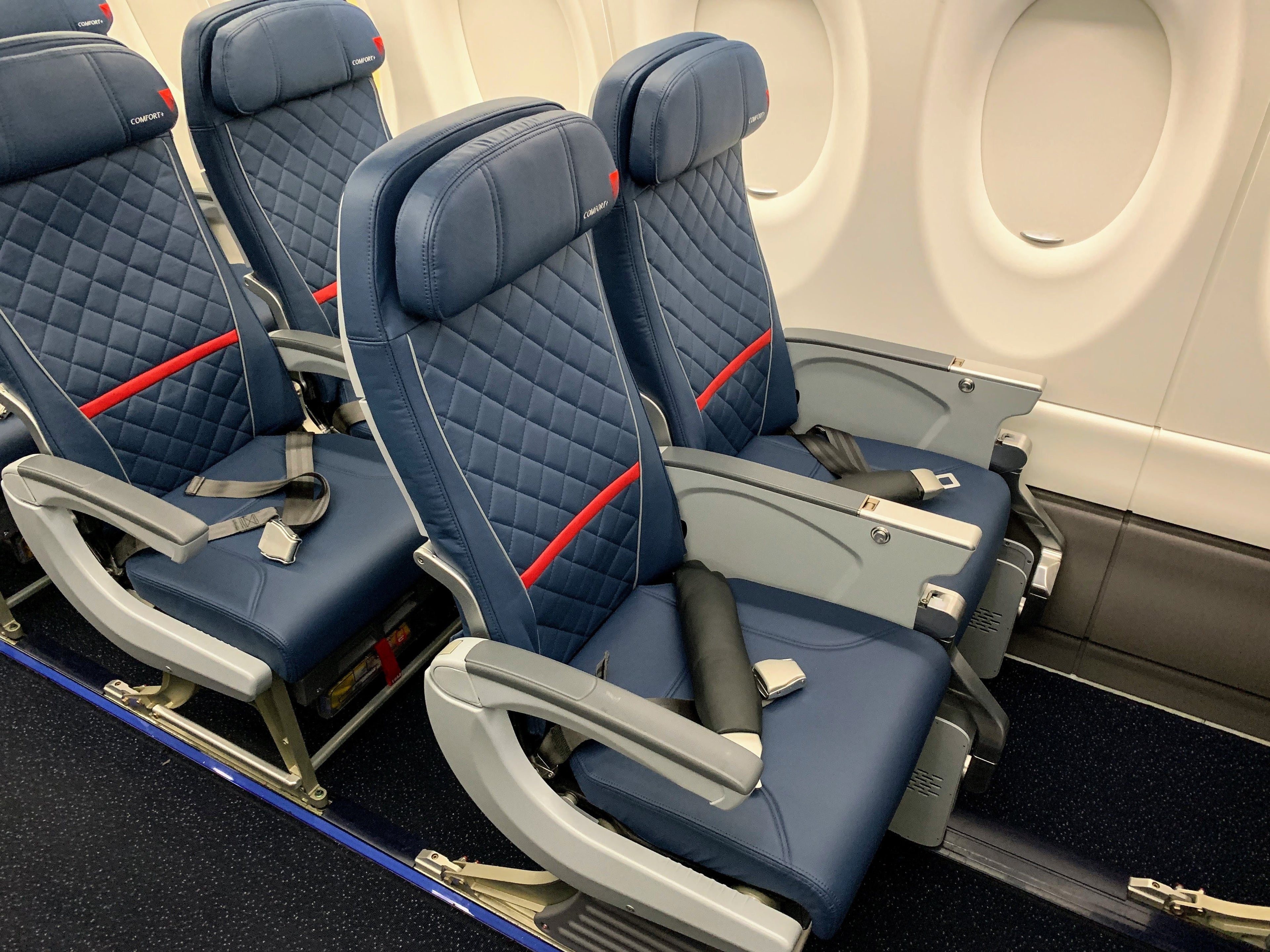
Not only did Garris' group work to give A220 passengers more room, but her team delivered the widest economy seats in Delta's entire fleet at 18.6 inches.
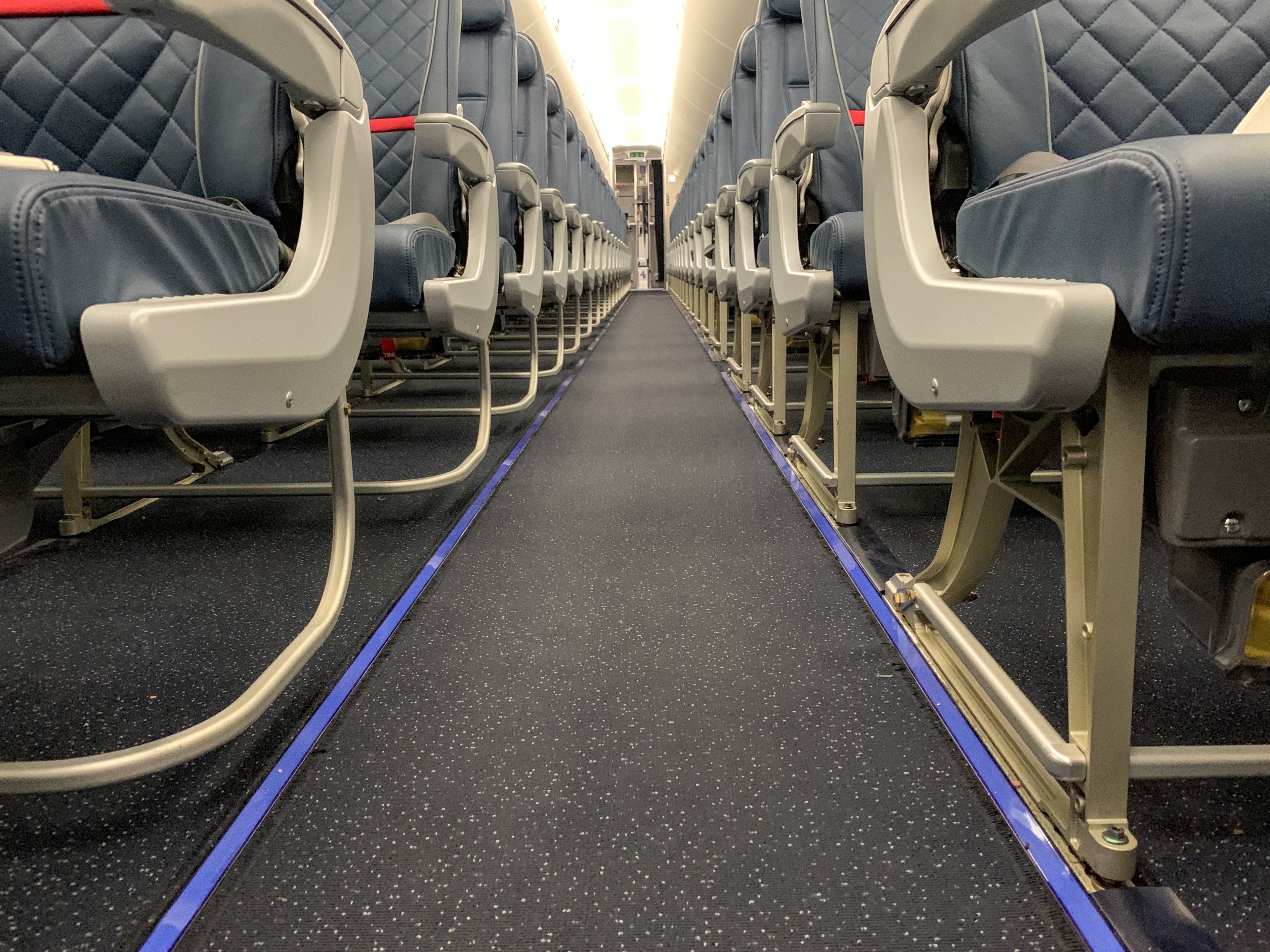
Delta has a standard seat pitch of 31 inches and a standard seat width of 17.3 inches. "Those standards are why we've bucked the industry trend on the Boeing 777," Garris added. "While everyone else is going ten abreast, we're sticking with nine."

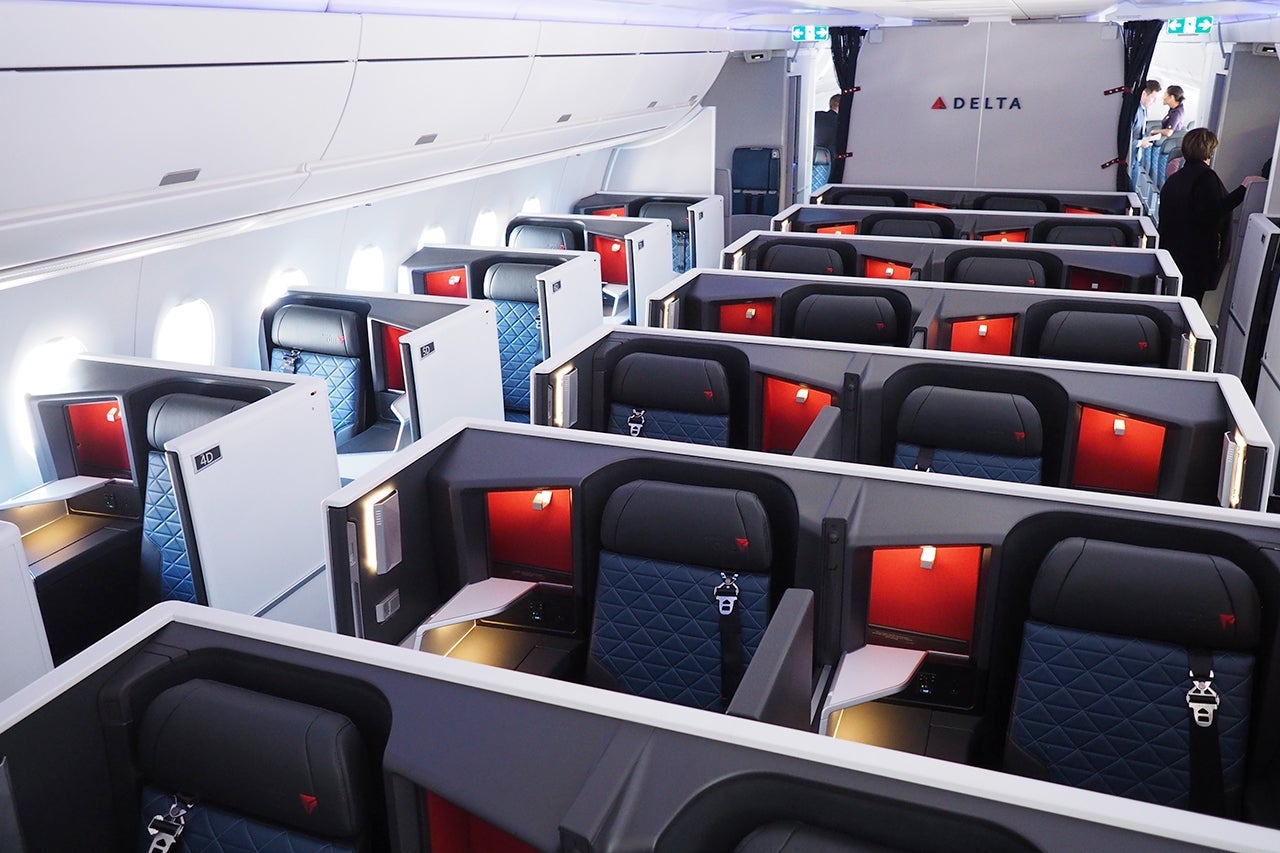
While that's great news for the majority of those seated on the A220, top-tier Medallion members should know that they will be competing with more members for a smaller ratio of first-class seats. Delta's A220 has a dozen first-class seats and 109 seats overall, while the CRJ900 and Embraer E-175 — the regional jets the A220 is most likely to replace — have the same quantity of first-class spots with just 76 seats overall.
Lesson 2: You Asked, Delta Listened — A220 Edition
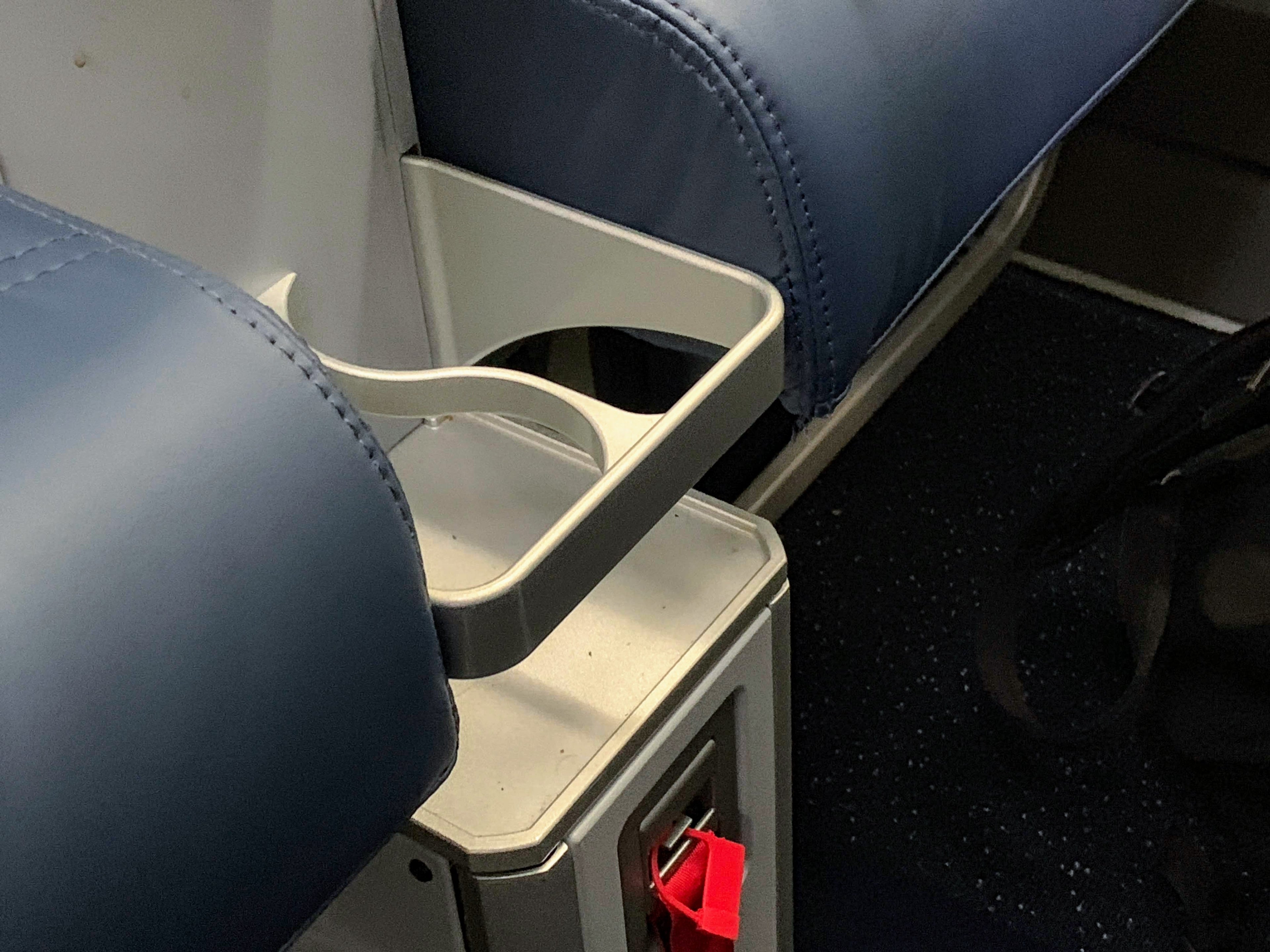
While customer feedback is great, there's a fleet of thousands who have earned Delta's trust: flight attendants and crew members. "We heard from attendants in first class that passengers would routinely scour for a place to put the water bottle that we give them when they first board," says Garris. "That's why you'll find a water bottle holder on the A220!"
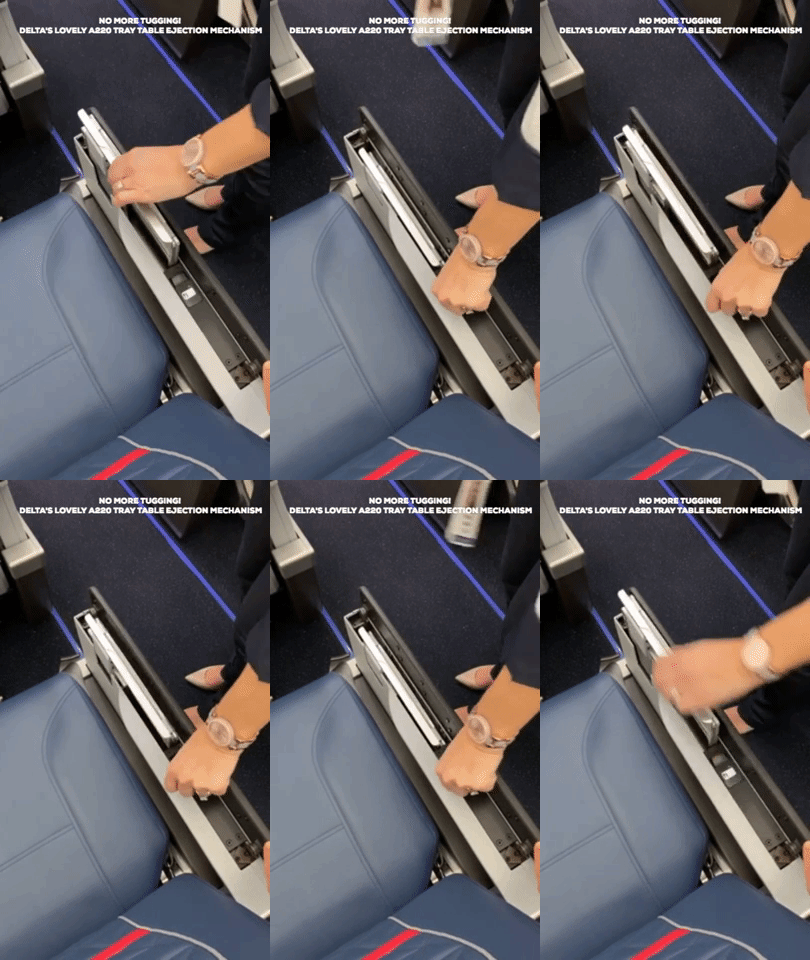
Oh, and you aren't the only one noticing the gate lice phenomenon. "People panic when it comes to boarding early to secure overhead bin space," Garris says, "so we designed the A220's bins to be larger than those in the MD-88 and MD-90, and far bigger than regional jets that will fly the same routes."
She continued: "Based on feedback that our lavatories were too small, we took the initial A220 spec and increased the lavatory size by 4 inches to create a space that would feel right at home on even a widebody aircraft."
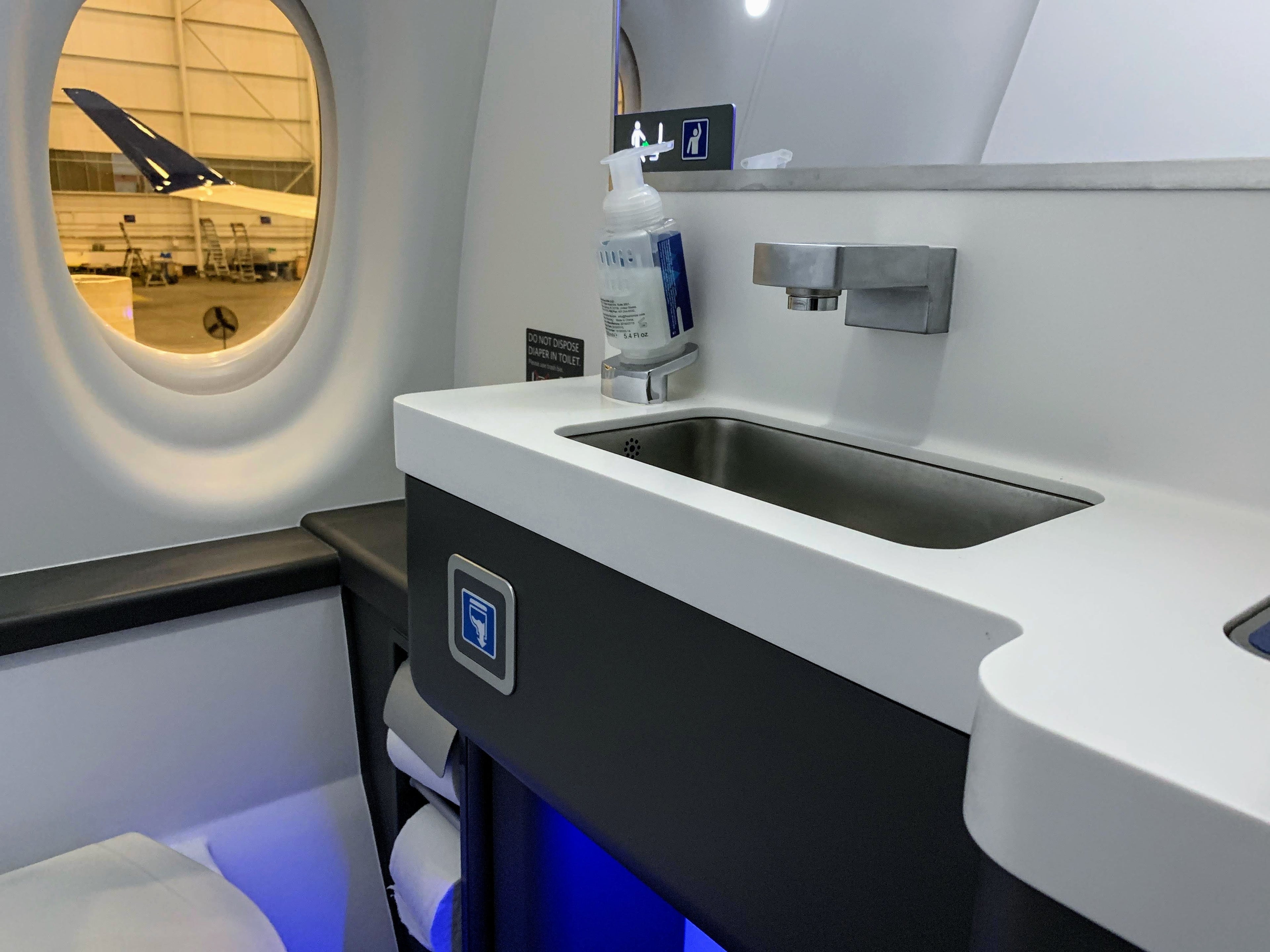
Sadly, I don't envision the lavatories on Delta's 737-900ER being expanded anytime soon.
Lesson 3: Analytics (and Customer Satisfaction) Matter
As Garris puts it, "If you fly Delta one time, and it's not great, you aren't likely to fly Delta again." Garris' job is made a bit easier by an apparent focus on long-term analytics. While Garris herself isn't on the team that collects "so much data we occasionally struggle to even make sense of it," she uses it to guide decisions.
Opting to install the widest economy seats in Delta's fleet is based on years of customer feedback, which essentially says that Delta's target customer group will pay up for more room. Or, perhaps, they'll be more likely to shop elsewhere if there's the opposite — less room.
I asked where all of this data comes from. Much of it arrives via those email surveys that show up after a flight, but there's also an open-ended comment submission tool on Delta's website. "Our frequent flyers love giving us feedback," Garris says with a chuckle. "We get a lot of unsolicited emails as well, telling us about both the good and the bad. When issues come up [with a plane's interior], we hear about it quickly."
Lesson 4: You Don't Need to Be a Designer to Design Airplanes
Garris didn't work in fashion before coming to Delta, nor was she responsible for choosing the paint scheme for Richard Branson's newest condo. Per her LinkedIn profile, she has a master's degree in logistics, materials and supply chain management, and in our discussion she admitted that her time working at "a distributor of aircraft parts" primed her for the role she's in today.
"You don't need an interior design background," Garris says. "We partner with design firms to help us tweak [interiors.]" For Garris, it's the technical background — understanding the unique challenges of building a living room, kitchen and several bathrooms in a flying metal tube — that proves most vital.
Translation? If you too want to build airliner interiors, you'll do well by having an uncanny ability to translate customer feedback into actionable guidance that works within the constraints of a fuselage.
Lesson 5: Delta Isn't Beholden to a Strict Refresh Schedule
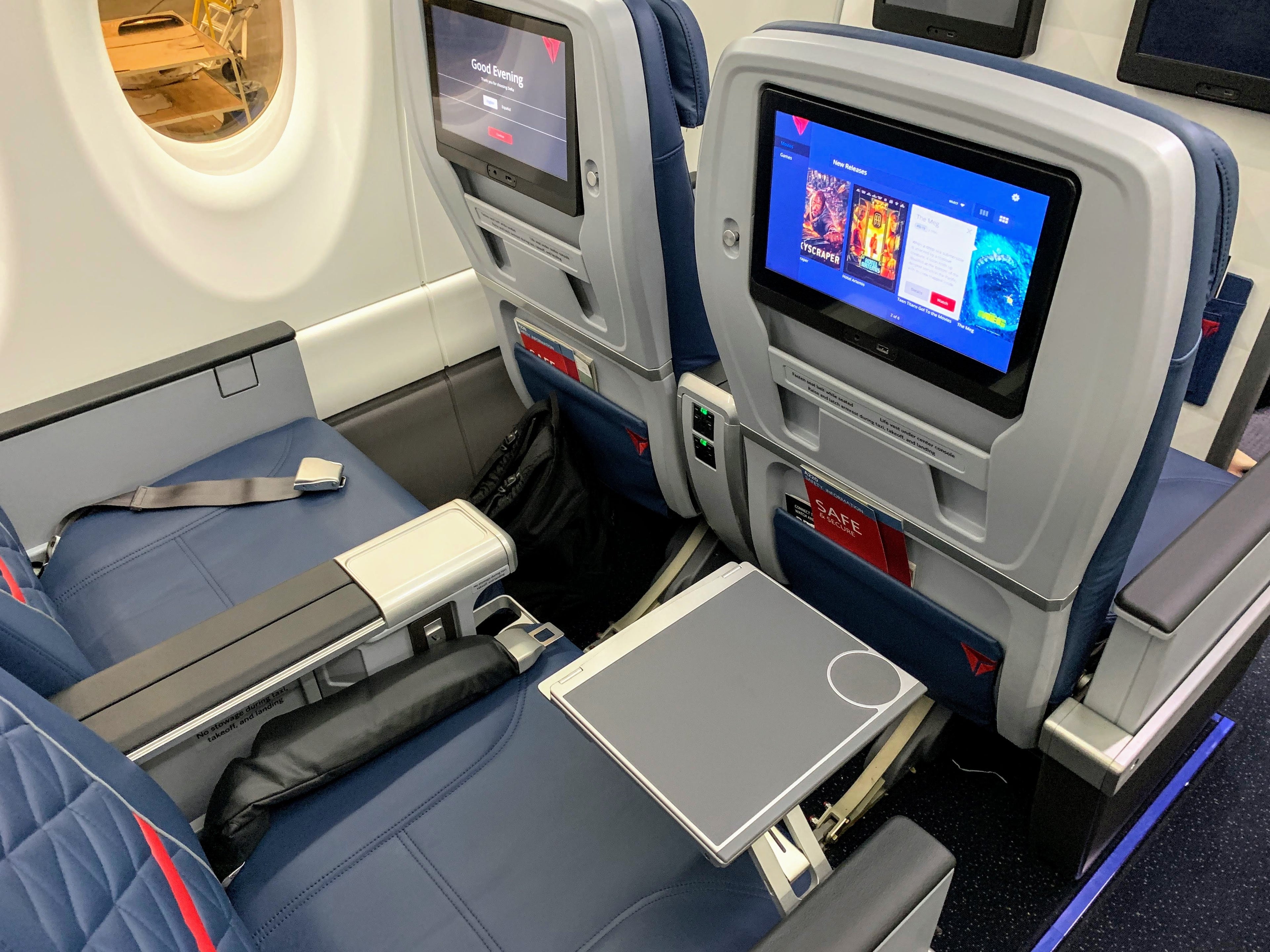
I asked Garris how long she designed the A220's interior to survive, and while Delta isn't going to put something into service that struggles to last but a couple of years, Garris was clear that a time stamp wouldn't supersede justified refreshes.
"The A350 has been flying for a year, and we still have weekly calls [to address feedback]," Garris says. "If the A220 started flying tomorrow, and we saw a wave of feedback that suggested a change was needed, we'd fix it. It's more important to have the right product in there than to wait for a predetermined refresh cycle."
Frankly, this floored me. I've covered automakers for years, and the brutal reality of that industry is that very little can change quickly. This agility is something that Delta prides itself on, and it's something I saw in the flesh when I toured its gargantuan TechOps facility in Atlanta earlier this year.
The takeaway here is that constructive feedback does matter, so take the time to provide it if and when you spot something that's great or could be improved. When I asked Garris if she's already thinking about improvements and tweaks for the A220 interior, which isn't even flying passengers yet, she replied with a laugh: "Ah, we're always thinking about the next step!"
Lesson 6: More Retrofits Are on the Way
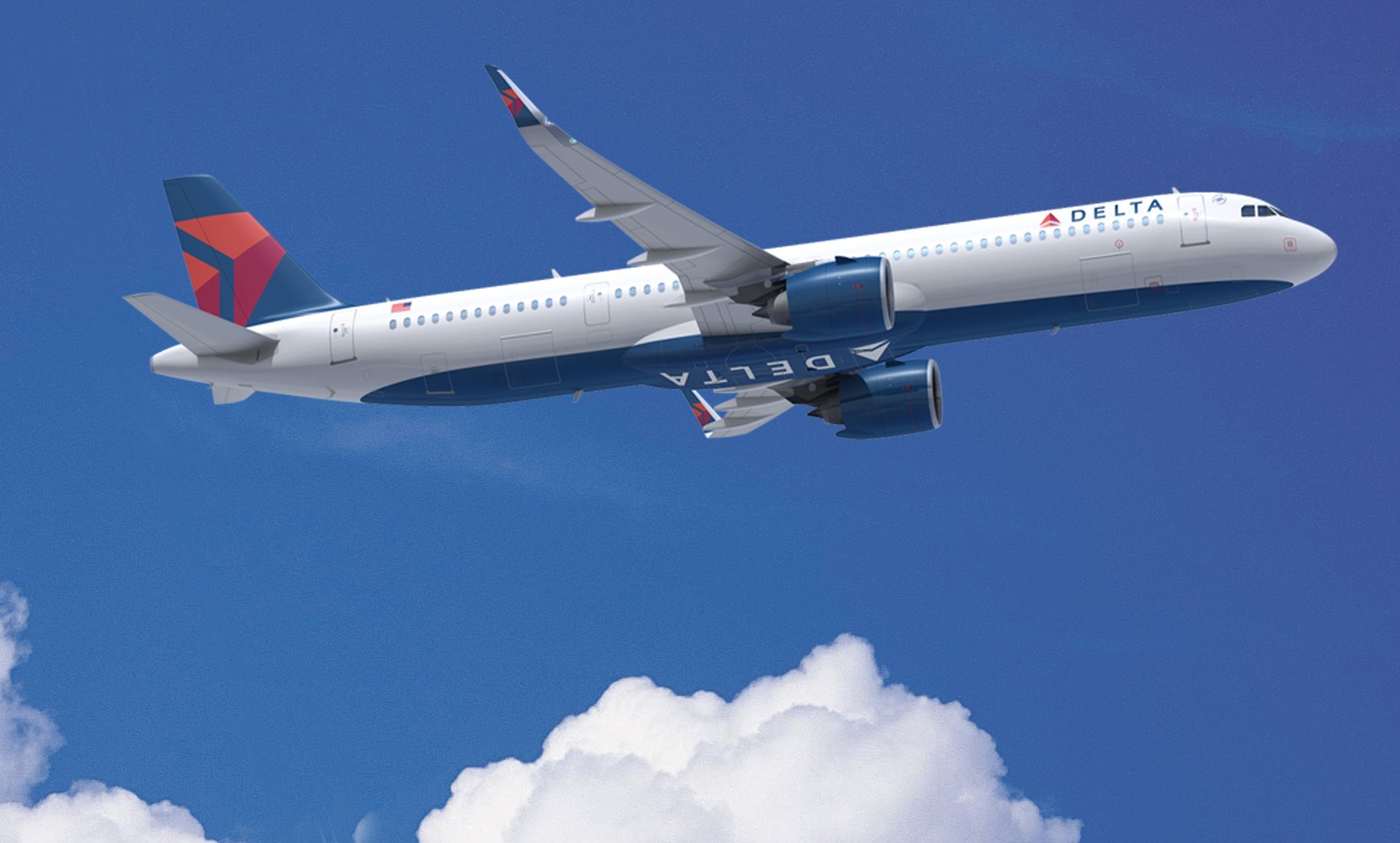
Speaking of which, Garris and her squad aren't resting on their laurels now that the A220's interior is wrapped. "I'm currently spending a lot of time looking at the [Airbus] A321neo," she says. "We're taking delivery of a hundred of those beginning in 2020."
She continued: "I'm also working on a few retrofits right now, which you'll be hearing more about soon. Delta is in the midst of a huge fleet modernization plan; we're not focused just on new aircraft but updating those which are lagging in customer satisfaction scores."
While she wouldn't divulge specifics, I'd hazard a guess that even more of its Boeing 777s will eventually be updated with Delta One Suites, more of its CRJ900s will be outfitted with its Atmosphere cabin and its workhorse fleet of 757s will get one more heavy dose of love before being phased out and replaced by the Boeing 797 (also referred to as Boeing NMA, or New Middle-Market Airplane).
TPG featured card
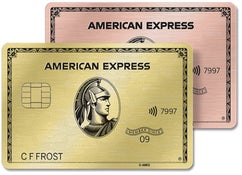
at American Express's secure site
Terms & restrictions apply. See rates & fees.
| 4X | Earn 4X Membership Rewards® points per dollar spent on purchases at restaurants worldwide, on up to $50,000 in purchases per calendar year, then 1X points for the rest of the year. |
| 4X | Earn 4X Membership Rewards® points per dollar spent at US supermarkets, on up to $25,000 in purchases per calendar year, then 1X points for the rest of the year. |
| 5X | Earn 5X Membership Rewards® points on prepaid hotel stays booked through AmexTravel.com or the Amex Travel App™. |
| 3X | Earn 3X Membership Rewards® points on flights booked through AmexTravel.com, the Amex Travel App™, or purchased directly from airlines. |
| 2X | Earn 2X Membership Rewards® points on prepaid car rentals booked through AmexTravel.com or the Amex Travel App™ and cruises booked and paid through AmexTravel.com. |
| 1X | Earn 1X Membership Rewards® point per dollar spent on all other eligible purchases. |
Pros
- Valuable dining and food-related credits
- Flexible rewards with airline and hotel transfer partners
- Multiple travel and purchase protections
- No foreign transaction fees
- Access to Amex Offers for additional savings (enrollment required)
Cons
- Not as useful for those living outside the U.S.
- Some may have trouble using Uber and other dining credits
- You may be eligible for as high as 100,000 Membership Rewards® Points after you spend $8,000 in eligible purchases on your new Card in your first 6 months of Card Membership. Welcome offers vary and you may not be eligible for an offer. Apply to know if you’re approved and find out your exact welcome offer amount – all with no credit score impact. If you’re approved and choose to accept the Card, your score may be impacted.
- Earn 4X Membership Rewards® points per dollar spent on purchases at restaurants worldwide, on up to $50,000 in purchases per calendar year, then 1X points for the rest of the year.
- Earn 4X Membership Rewards® points per dollar spent at US supermarkets, on up to $25,000 in purchases per calendar year, then 1X points for the rest of the year.
- Earn 5X Membership Rewards® points on prepaid hotel stays booked through AmexTravel.com or the Amex Travel App™.
- Earn 3X Membership Rewards® points on flights booked through AmexTravel.com, the Amex Travel App™, or purchased directly from airlines.
- Earn 2X Membership Rewards® points on prepaid car rentals booked through AmexTravel.com or the Amex Travel App™ and cruises booked and paid through AmexTravel.com.
- Earn 1X Membership Rewards® point per dollar spent on all other eligible purchases.
- Pay It® lets you tap in the American Express® App to quickly pay for small purchase amounts throughout the month and still earn rewards the way you usually do. Plan It® gives you the option to split up big purchases into equal monthly payments with a fixed fee. You’ll know upfront exactly how much you’ll pay.
- $120 Dining Credit: Earn up to a total of $10 in statement credits monthly when you pay with the Gold Card at Grubhub (including Seamless), Buffalo Wild Wings, Five Guys, The Cheesecake Factory, and Wonder. This can be an annual savings of up to $120. Enrollment required.
- $100 Resy Credit: Get up to $100 in statement credits each calendar year at over 10,000 qualifying U.S. Resy restaurants after you pay for eligible purchases with the American Express® Gold Card. That’s up to $50 in statement credits semi-annually. Enrollment required.
- $84 Dunkin' Credit: Earn up to $7 in monthly statement credits after you pay with the American Express® Gold Card at U.S. Dunkin’ locations. Enrollment required.
- $120 Uber Cash on Gold: Enjoy up to $120 in Uber Cash annually with your Gold Card. Just add your Card to your Uber account and you'll get $10 in Uber Cash each month to use on orders and rides in the U.S. when you select an Amex Card for your transaction.
- Enjoy complimentary Hertz Five Star® Status benefits like skipping the counter at select locations, adding an additional driver at no additional cost*, and vehicle upgrades**. Benefit enrollment and Hertz Gold+ registration are required. *Additional drivers must meet standard rental qualifications and must be a spouse or domestic partner to qualify as complimentary. Other additional drivers subject to fees. **Benefits are subject to availability and vary by location. Additional Hertz program Terms and Conditions including age restrictions apply.
- Book two nights or more with The Hotel Collection through AmexTravel.com or the Amex Travel App™ and receive a $100* credit towards eligible charges at over 1,400 upscale hotels worldwide. *Eligible charges vary by property.
- Book your travel through the Amex Travel App™ with added peace of mind – backed by American Express® service and support. Only for American Express® Card Members.
- Whenever you need us, we're here. Our Member Services team will ensure you are taken care of. From lost Card replacement to statement questions, we are available to help 24/7.
- No Foreign Transaction Fees.
- Annual Fee is $325.
- Terms Apply.