How far can airborne covid germs really spread on a plane?

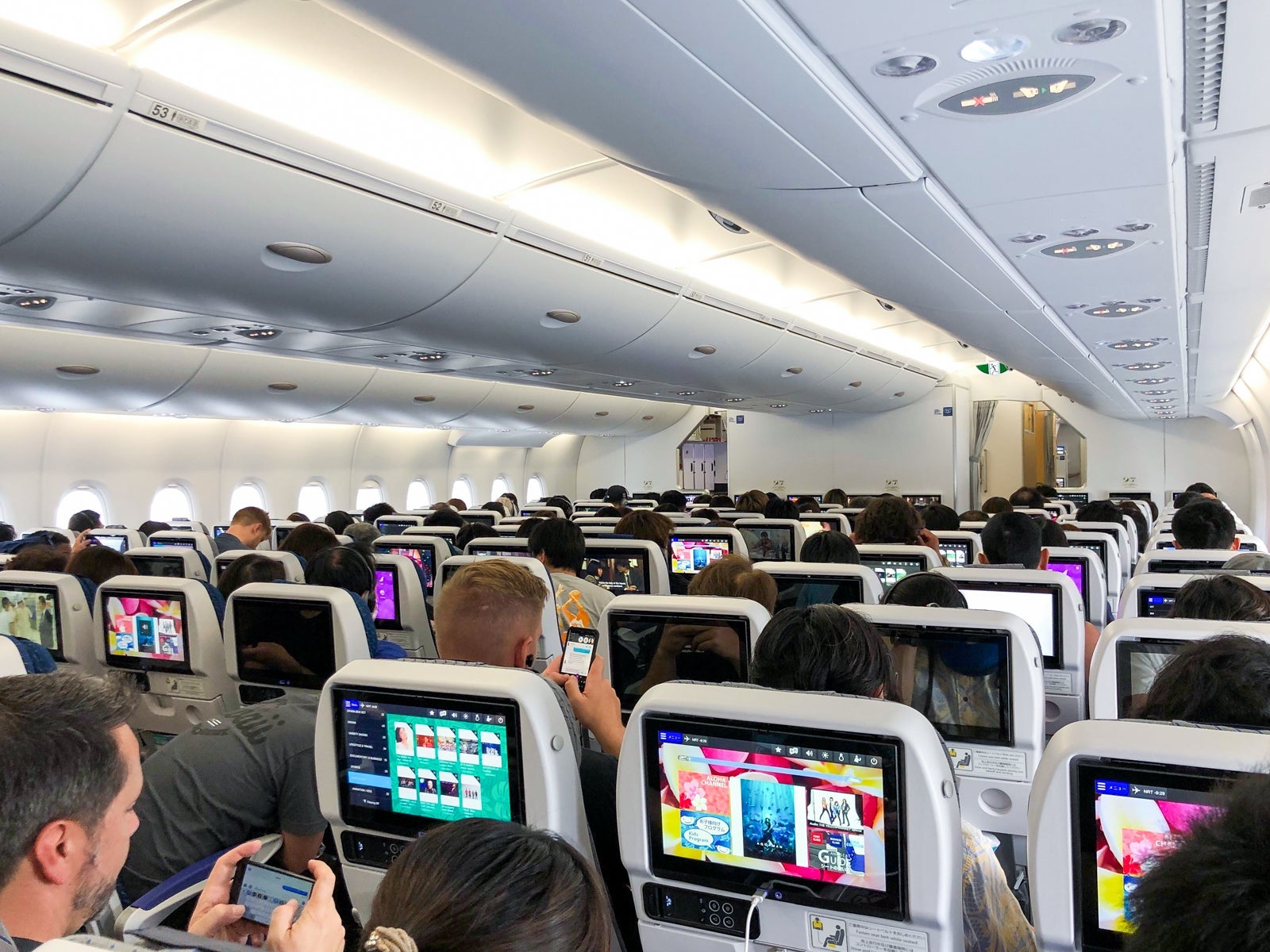
The air inside a plane cabin is essentially clean — unless, of course, someone in the next seat sneezes in your direction.
That's what experts want you to know as you think about flying again as coronavirus-related restrictions on travel ease.
Even before the coronavirus pandemic, people wondered if breathing recycled air at 35,000 feet exposed a person to more germs than they'd encounter walking down the street. And now, during this historic disease outbreak, those concerns seem only to be magnified.
Sign up for the free daily TPG newsletter for more aviation news.
Some people are already in the habit of wiping down tray tables and other surfaces in their personal seating bubble on board, and airlines are now going out of their way to make sure passengers have the supplies necessary to carry out their own cleaning routines if they choose.
But to the question about air quality: Is the air you breathe on a plane really more likely to make you sick than air on the ground?
It's complicated, according to R. Eric Jones, an associate professor and chair of the Aviation Maintenance Sciences Department at Embry-Riddle Aeronautical University.
But the short answer is: The air onboard is clean.
Related: How radically could air travel change? These questions from Delta offer some insights.

"I would say that sitting in an aircraft cabin is probably a lot like sitting in a movie theater," Jones said. Planes, even those decades-old ones nearing the end of their working lives, are designed to have air quality on board similar to what passengers are used to on the ground.
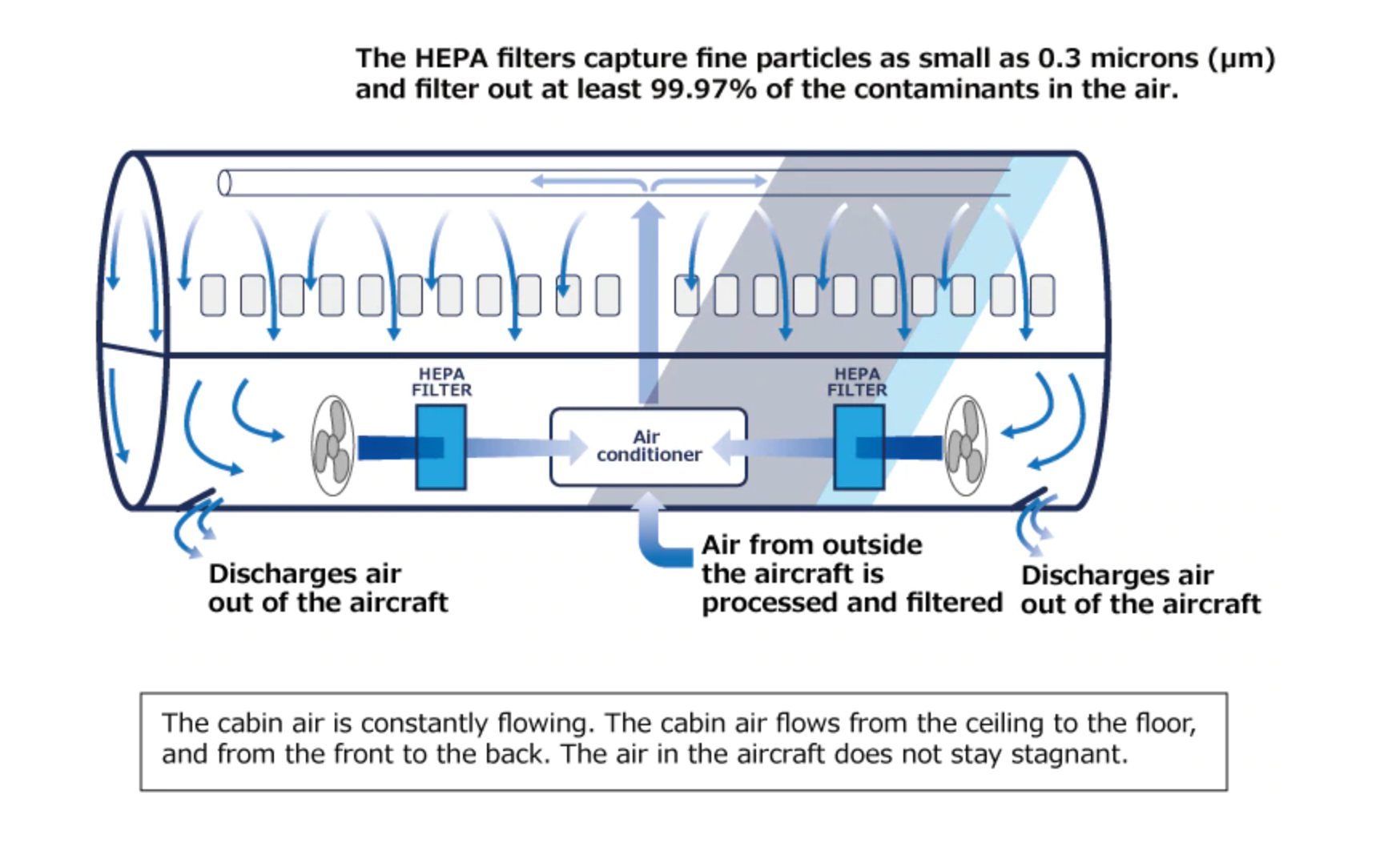
Achieving that is done by continually drawing in air from outside the cabin, forcing it through HEPA filters to remove most particles and germs, and then pushing it out of the cabin in a matter of minutes.
Robert W. Mann, an aviation analyst based outside of New York City, agreed with Jones. "I would be less concerned about cabin air (the recirculated portion of which is cycled through HEPA filters) than the hygieneity of cabin surfaces, armrests and tray tables, and anything in the lavs, particularly," Mann said in an email. "A good wipe down between flights and occupancies would help."
According to Japanese carrier ANA, cabin air is refreshed roughly every three minutes.
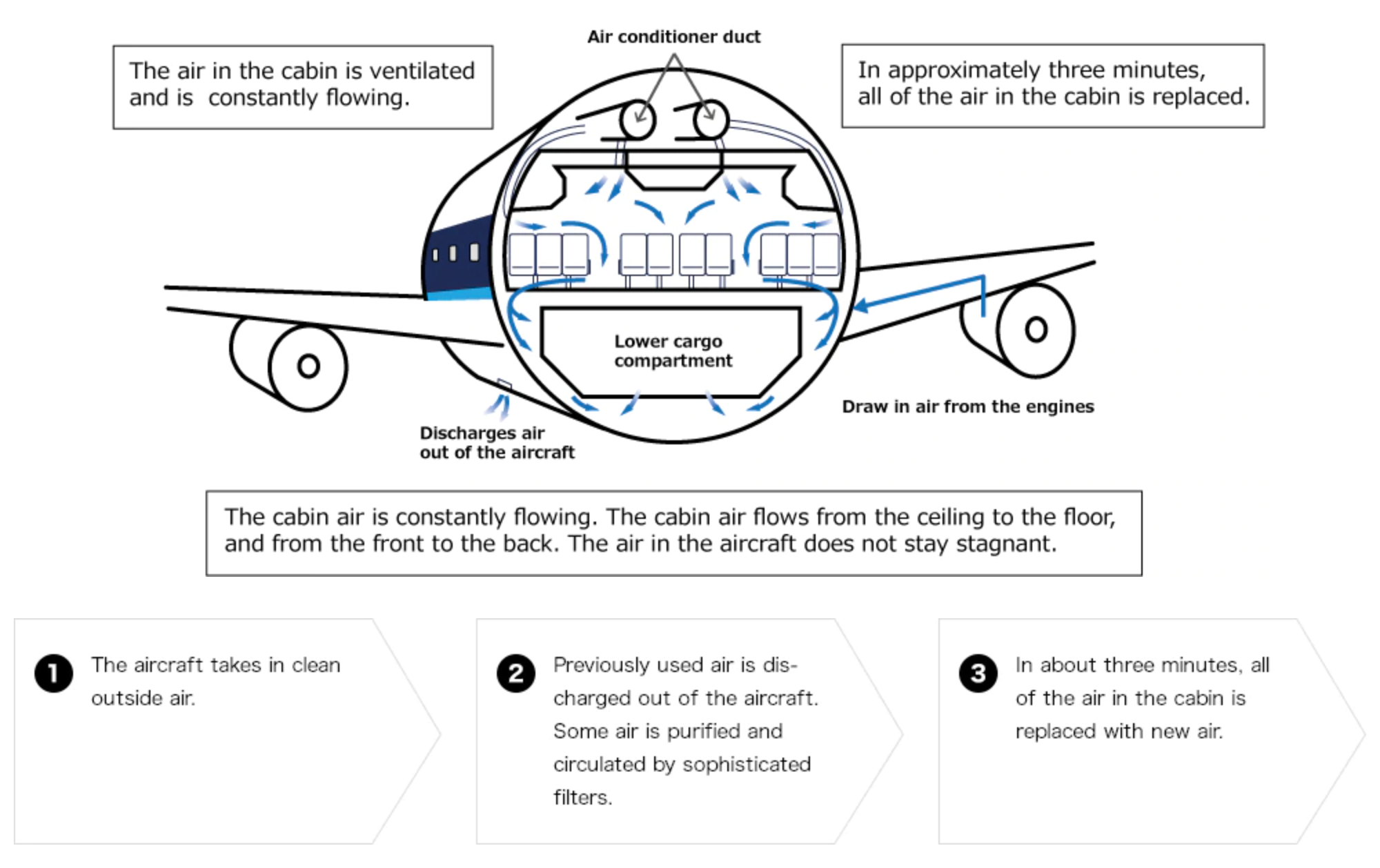
So onboard air is recycled pretty regularly. It also flows through the cabin essentially from ducts in the ceiling down to vents near the floor. That means that the cabin air circulates in a way that makes it difficult for airborne germs to spread between passengers — unless your seat neighbor rudely sneezes directly onto you, or participates in some other similarly inappropriate and unsanitary behavior.
According to the International Air Transport Association (IATA), seats on many airplanes can act as physical barriers between you and the passengers seated in other rows. They're mostly tall enough, IATA officials said during a media briefing earlier this month, to prevent droplets from spreading between rows. Essentially, they act as a blocking agent similar to the plexiglass shields that many airlines and airports are installing at check-in and gate counters.
But that doesn't mean airplanes are totally germ-free either. So passengers should still take some health precautions when they're traveling.
"You've got people that are in highly condensed areas, that are sitting inches apart," Jones said. "Colds, flu, any virus is going to transmit in that environment, but airlines and commercial and business operators, as a result of COVID, are taking very extreme measures to try to sanitize that environment as best they possibly can."
Related: Denied boarding after a temperature check? Here are your rights.
Though he emphasized that he's not not an infectious-disease expert, Jones pointed out that the real risk of catching something on a plane seems to come from proximity to other passengers or coming into contact with a contaminated surface, not because of the quality of cabin air.
"For me, the cabin air, I'm much more comfortable with than I would be going through a TSA line. I would probably be more worried about eating at an airport restaurant," Jones said, pointing out that surfaces in the airport or bins at the TSA checkpoint may be sanitized less regularly than aircraft interiors.
Read more: Please give us your attention as we explain the safety features of your inflight briefing.
And while airlines are going to great lengths to assure passengers that they're stepping up cleaning procedures, Jones said he still worries more about surfaces on board than the air in the plane.
"I cannot speak to the cleanliness of a cabin for contact spread," he said
Mann added that cabin air quality ranks low on his list of aviation-related health concerns.
"More than air and surfaces, my concern would be the health status of passengers in close proximity. Until we all have a way of knowing and ensuring that we are all free of transmittable disease, this will probably be a concern."
TPG featured card

at Capital One's secure site
Terms & restrictions apply. See rates & fees.
| 5X miles | Earn 5X miles on hotels, vacation rentals and rental cars booked through Capital One Travel |
| 2X miles | Earn unlimited 2X miles on every purchase, every day |
Pros
- Stellar welcome offer of 75,000 miles after spending $4,000 on purchases in the first three months from account opening. Plus, a $250 Capital One Travel credit to use in your first cardholder year upon account opening.
- You'll earn 2 miles per dollar on every purchase, which means you won't have to worry about memorizing bonus categories
- Rewards are versatile and can be redeemed for a statement credit or transferred to Capital One’s transfer partners
Cons
- Highest bonus-earning categories only on travel booked via Capital One Travel
- LIMITED-TIME OFFER: Enjoy $250 to use on Capital One Travel in your first cardholder year, plus earn 75,000 bonus miles once you spend $4,000 on purchases within the first 3 months from account opening - that’s equal to $1,000 in travel
- Earn unlimited 2X miles on every purchase, every day
- Earn 5X miles on hotels, vacation rentals and rental cars booked through Capital One Travel
- Miles won't expire for the life of the account and there's no limit to how many you can earn
- Receive up to a $120 credit for Global Entry or TSA PreCheck®
- Use your miles to get reimbursed for any travel purchase—or redeem by booking a trip through Capital One Travel
- Enjoy a $50 experience credit and other premium benefits with every hotel and vacation rental booked from the Lifestyle Collection
- Transfer your miles to your choice of 15+ travel loyalty programs
- Top rated mobile app