My first-year journey into the world of cards and points: From baby steps to maximizing rewards


Update: Some offers mentioned below are no longer available. View the current offers here.
Before I joined TPG in early 2022, my knowledge of credit cards and the world of points and miles was limited, to say the least. Authorized users ... what are those? Free night awards? Don't know. Chase's 5/24 rule — never heard of it.
I come from a family of relatively infrequent travelers. We vacation in the Outer Banks in North Carolina every summer but only go abroad a few times, and we do not have any real sense of how valuable credit cards can be to the average traveler.
That quickly changed when I began to work with the experts on TPG's credit cards and points and miles teams, who've taught me the basics — things like the major card issuers, how to maximize your redemptions and the all-important 10 commandments of credit card rewards. It's made me a more knowledgeable employee but has also helped me in life — allowing me to transition from having no credit history at all to a credit score comfortably above 700 in just over a year.
What follows is a step-by-step guide to how I did it and a simple blueprint for how you can do it, too.
I'm not from a credit card family
First, some context: My parents aren't exactly what you'd call points and miles enthusiasts. They have exactly one credit card, a cash-back card from their bank of choice. My dad, being the frugal guy he is, also didn't see to it that I got a student credit card in college or got added as an authorized user on their card. (For what it's worth, I wouldn't have trusted me either.)

Upon graduation, therefore, I had essentially no credit history to speak of, save for some rent payments on my college apartment and a few utilities. In one sense, that's not so bad — starting with a clean slate — but I was definitely behind the eight ball a bit in trying to build a trustworthy profile for issuers.
Getting added as an authorized user
TPG senior editorial director Nick Ewen was amused, but probably not too surprised, when I told him about my "limited" credit history a few weeks into the job. Together, we set about making a game plan to boost my score — and quickly. The first, very generous step on his end was adding me as an authorized user on his longest-standing credit card.

Days after he did that — and chopped up the additional card sent to his address, meaning I was essentially an authorized user in name only — my credit score catapulted into the 700s. With that credit score, I couldn't instantly land a premium credit card — issuers also looked at the length of credit history as part of their inquiries, and I still needed to build a longer record of creditworthiness. However, it was definitely a step in the right direction and a confidence boost for me to see my score was that high, having done, well, pretty much nothing on my end. Thanks, Nick.

Applying for a secured credit card
The next step, per our plan, is getting a card of my own. For me, that meant getting the Discover it® Secured Credit Card, one of the best-value secured cards on the market, with perks akin to the regular Discover it® Cash Back Credit Card.
Secured credit cards, in essence, are credit cards that require a security deposit for you to use them, reducing issuers' risk while allowing people with limited credit history to build it. In my case, I put in a security deposit of $2,500 to get a monthly credit limit of the same amount.

The Discover it Secured offers earning rates similar to the unsecured Discover it: 2% back at gas stations and restaurants and 1% back on everything else, with all of the cash back of your first year with the card matched by Discover. In my case, I got about $150 cash back — and that was doubled to over $300 at the end of my first year. Not bad.
The information for the Discover it Cash Back Credit Card and the Discover it Secured Credit Card has been collected independently by The Points Guy. The card details on this page have not been reviewed or provided by the card issuer.
Moving to an unsecured card
By paying off my card on time each month, I could move to the unsecured version of the Discover it and get my security deposit back after nine months with the secured version.
That was also a process that required nothing on my end — I simply got an email from Discover saying that my same card was now unsecured and no action was needed.
Getting my 2nd credit card
A few months later, I applied for and landed the Apple Card, which offers 3% cash back at select vendors (including Apple), 2% when you use Apple Pay and 1% on everything else.
Those rates are good — but not great — returns for a cash-back card. However, I felt it was the right card for me for several reasons.
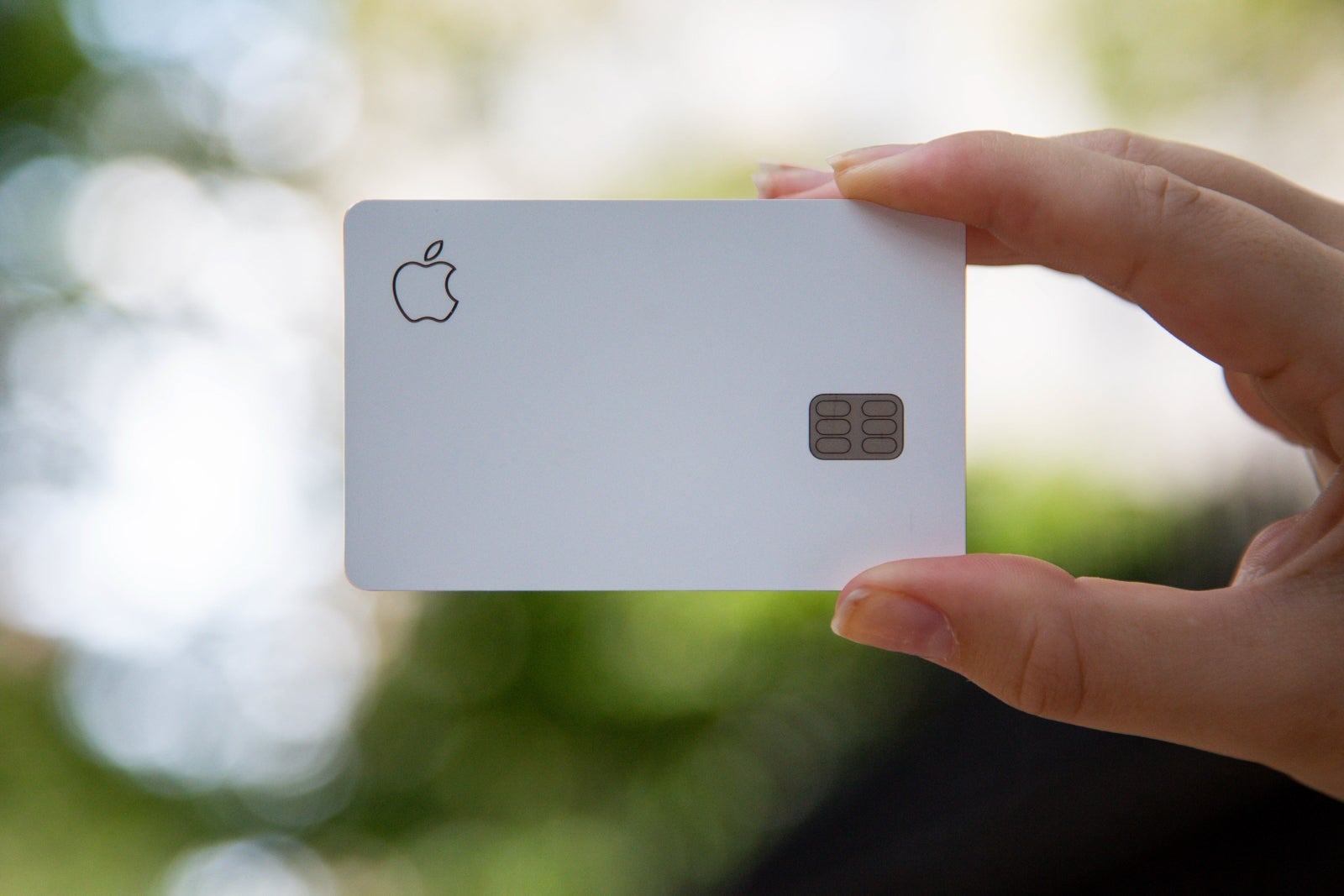
First, I eat out a lot and almost always use Apple Pay when I do so. The same goes for all my large online purchases. I also value the Apple Card interface's simplicity and ease of use. Plus, there are no fees of any kind.
Lastly, I capitalized on a targeted offer that landed me a $75 cash bonus when I got the card. Again, that's not great, but it's better than no bonus at all, in my opinion, and I've been enjoying the straightforward benefits of the card ever since.
That's one of the best credit card lessons I've learned in the last year or so, too: A card is only "valuable" if it gives value to you. If you don't travel a lot, consider a cash-back card. If you spend a lot in a given spending category, find a card that rewards that.
For example, the Blue Cash Preferred® Card from American Express offers 6% cash back at U.S. supermarkets (up to $6,000 per year, then 1% per dollar) and on streaming services (cash back is received in the form of Reward Dollars that can be redeemed as a statement credit and at Amazon.com checkout). If you spend big on groceries and watch lots of Netflix, it's a card that would likely make sense for your lifestyle.
The information for the Apple Card has been collected independently by The Points Guy. The card details on this page have not been reviewed or provided by the card issuer.
Next step: A top-tier travel rewards card
I'm almost 18 months into my card journey, with a ways to go. I still don't have a premium card like the Chase Sapphire Reserve® (see rates and fees) or The Platinum Card® from American Express. I also got denied a while back for the Chase Sapphire Preferred® Card (see rates and fees), with the issuer citing a lack of lengthy credit history as the reason why, despite my high credit score.

My plan from here out is to land a mid-tier annual fee card like the Sapphire Preferred or the Capital One Venture Rewards Credit Card, fully immersing myself in the points and miles world. The goal is to take advantage of that card's welcome bonus (obviously) and use those miles to pay for my next big trip, probably this holiday season or next summer.
Bottom line
I still have lots to learn in my credit card journey, but I'm much further along than before I joined TPG, all thanks to just a few simple steps.
By getting added as an authorized user on someone else's card and building up my credit history through a secured card, I was able to achieve a pretty good credit score in just a few months and set myself up for future approvals for more valuable cards.
If you're serious about your credit card journey, you can take these steps and do the same.
Related reading: