Evolution of an airliner: From the 747 jumbo jet to the 787 Dreamliner

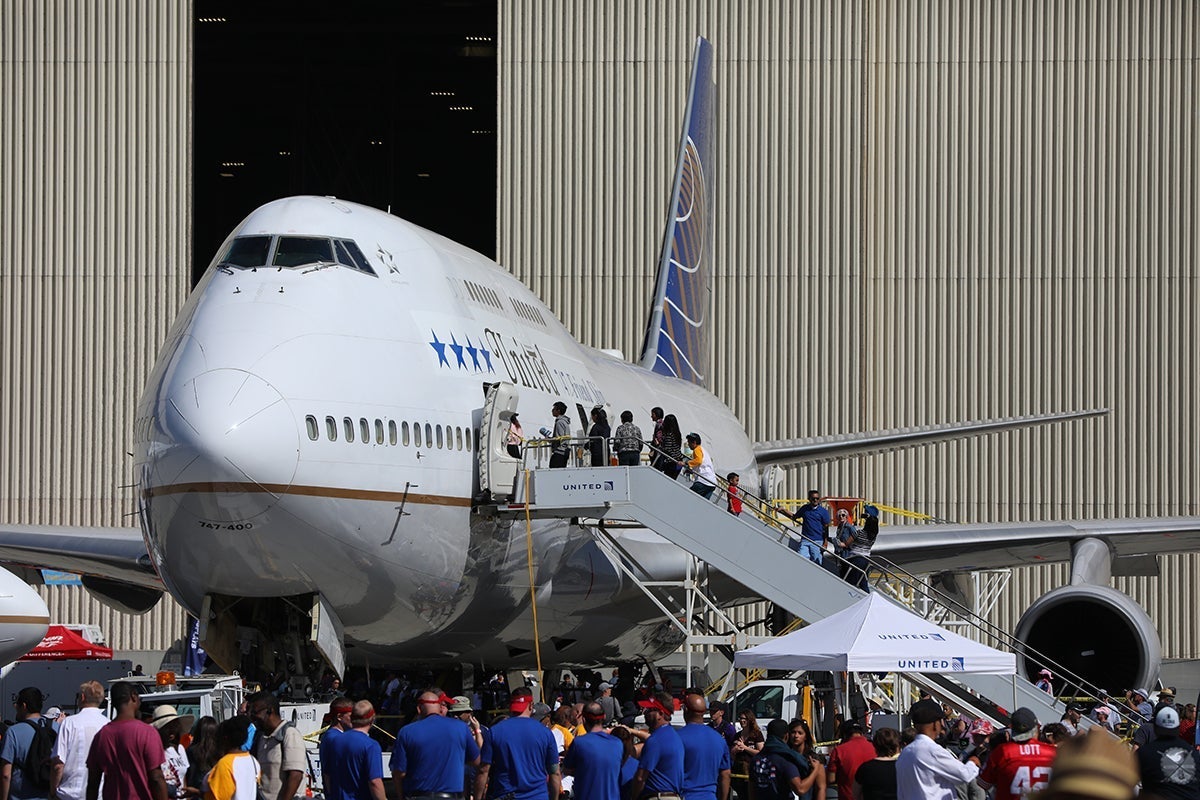
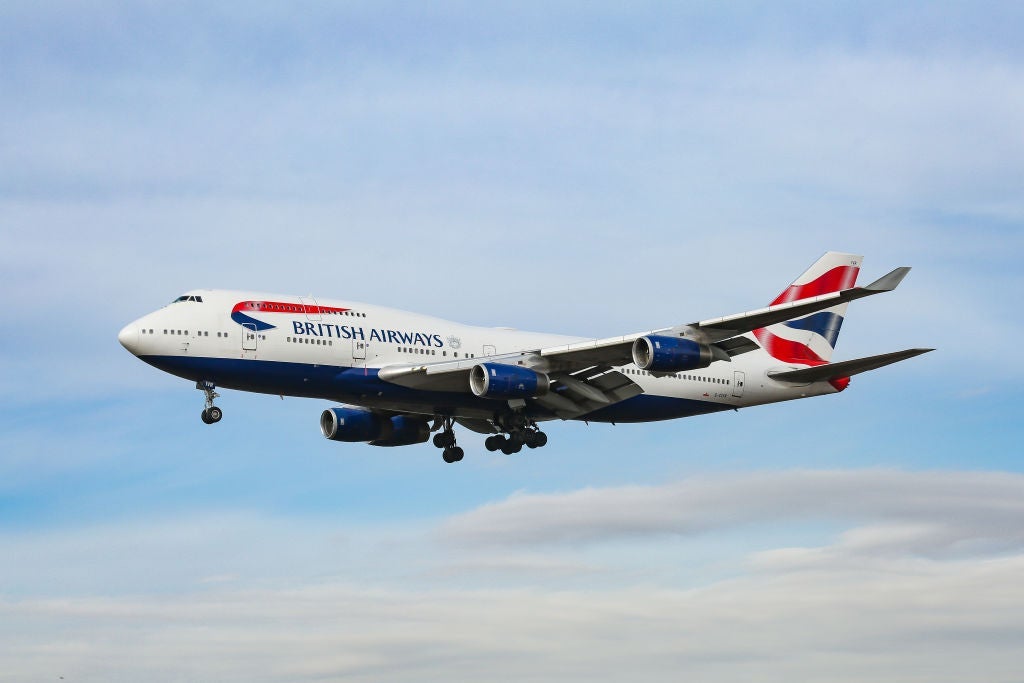
Last week, aviation enthusiasts from across the country descended on London Heathrow to watch British Airways' last 747-400s depart for their final resting places. The recent retirement of the aircraft leaves some very large shoes to fill. The 747 has been a core staple of long-haul travel for the past 50 years.
The aircraft was the pioneer for long-distance air travel, bringing with it syle and adventure in equal measure. Over the years, technology advanced and the aircraft tried to move with it. Sadly, time catches up with us all. Nowadays, of course, we find ourselves in a shifting landscape within the aviation industry. So naturally, the innovation and versatility offered by the 787 Dreamliner has propelled it to be one of the most abundant aircraft in the sky.
Related: 6 features that set the 787 Dreamliner apart from the rest
So how did the original jumbo jet evolve and pave the way for the next generation, and how do pilots feel coming from the older type to the new?
The Pilot's Perspective
Take a look at the flight deck of the 747-400 and then of the 787 — 20 years of technological advances will be clear to see. Bigger screens and windows are the standout features, but what do pilots who have spent many years flying the 747 notice most when moving onto the 787?
Related: A look inside the Boeing 787 Dreamliner flight deck
Head-Up Display
Part of learning to fly a jet aircraft is mastering the ability to flick our eyes between scanning the vital flight parameters on the flight deck screens and viewing the visual picture outside the aircraft. During an approach on the 747, a pilot's eyes will be constantly darting between the two.
However, technology has existed in military aircraft for quite some time that allows pilots to continue scanning the flight parameters whilst still looking outside — it's called a Head-Up Display (HUD), and they are standard fit on the 787.

An image generator is fixed to the ceiling above the pilot's head and it projects an image of the Primary Flight Display (PFD) onto a piece of glass in front of the pilot's face.

Whilst this feature is great during most stages of flight, it really comes into its own on the approach and landing. Some approaches require us to fly tight turns very close to the ground, often in marginal weather conditions. The approach to runway 13L at New York's JFK is a great example of this.
When we fly this approach, we need to keep our eyes on the runway just as much as we can. The HUD enables us to do this whilst still being able to scan our altitude and airspeed as we fly the tight turn around the corner, as can be seen in the video below, filmed in the simulator.
Flight deck environment
Long-haul flying is tiring. Not only can the flying duties be in excess of 18 hours, but the cumulative effect of crossing multiple time zones several times a month can lead to long-term fatigue.
Related: How pilots stay alert on ultra-long-range flights
If you work in an office, be it in a city or at home, I'm sure you'd like it to be a big one with plenty of space. Air conditioning would be great, too. No one likes working in a hot environment. Maybe a great view out the window will help inspire you, and a comfortable chair is essential whilst sat in front of your computer for hours on end. A fast internet connection and a modern computer certainly help you get more work done.
Therefore, it's unsurprising that when the flight deck is our office, the tools and facilities that we have at our disposal can make a big difference to our physical and mental health — and as a result, flight safety.
Temperature control
In the summer, the flight deck of the 747 could get incredibly hot — approaching 30°C. Not only did it get hot, but it would also take a long time to cool down. Sometimes, you'd be airborne for well over an hour before the temperature got to a comfortable 21°C.
The electrically powered air conditioning on the 787 is far more efficient. Even sat in the hot sun all day, within a few minutes, the flight deck and cabin can be cooled to a much more comfortable temperature. As we all know, cool heads make better decisions.
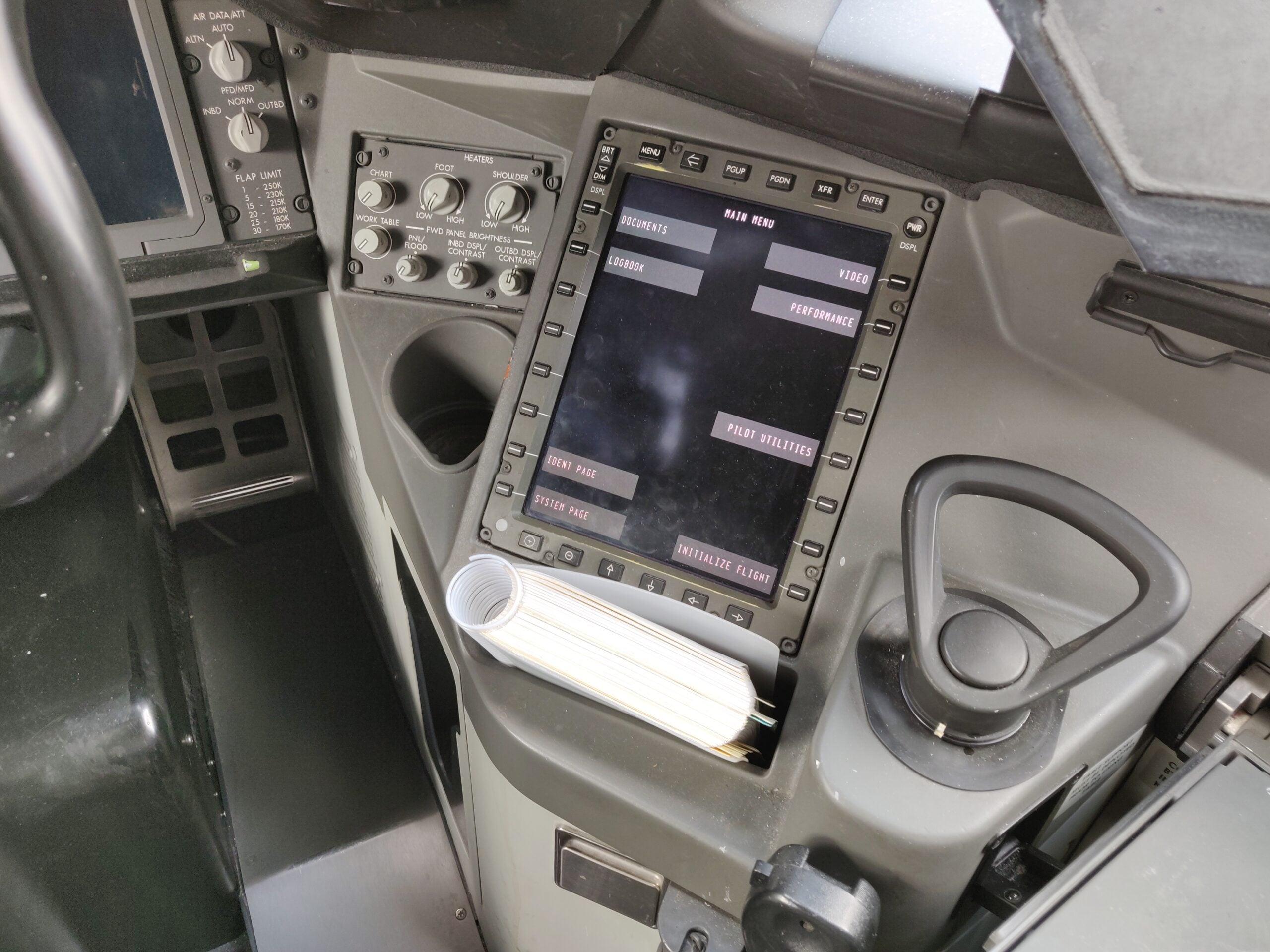
At the other end of the scale, the 747 flight deck could get very cold and draughty at night. Some pilots would resort to carrying a sweater to pull on as day gave way to night.
Not only does the 787 have a much more even distribution of air in the flight deck, but it also benefits from 100% air taken from outside the aircraft. This is to reduce the chance of smoke or fumes from the cabin or cargo holds from entering the flight deck.
It also has adjustable airflow over the pilot's shoulders to fine-tune the temperature around their body and a heated footplate to keep our feet warm.
Aircraft/pilot interface
As technology advances, more and more communications are handled by CPDLC (Controller Pilot Data Link Communication). Whilst functional, the CPDLC system on the 747 was very basic. To view a message, pilots had to take their eyes off the primary flight instruments and go 'heads-down' to access the flight computer.
Here, a CPDLC message was just that. Nothing more than a basic text message like on an old Nokia mobile phone. When the workload was high, or the body clock was at a low, details could be missed. Figures could be misinterpreted.
If the 747 was the Nokia 3210 of aircraft, then the 787 is an iPhone 12. With so much information now available to us as pilots, careful thought has gone into how we access it and how it is presented.
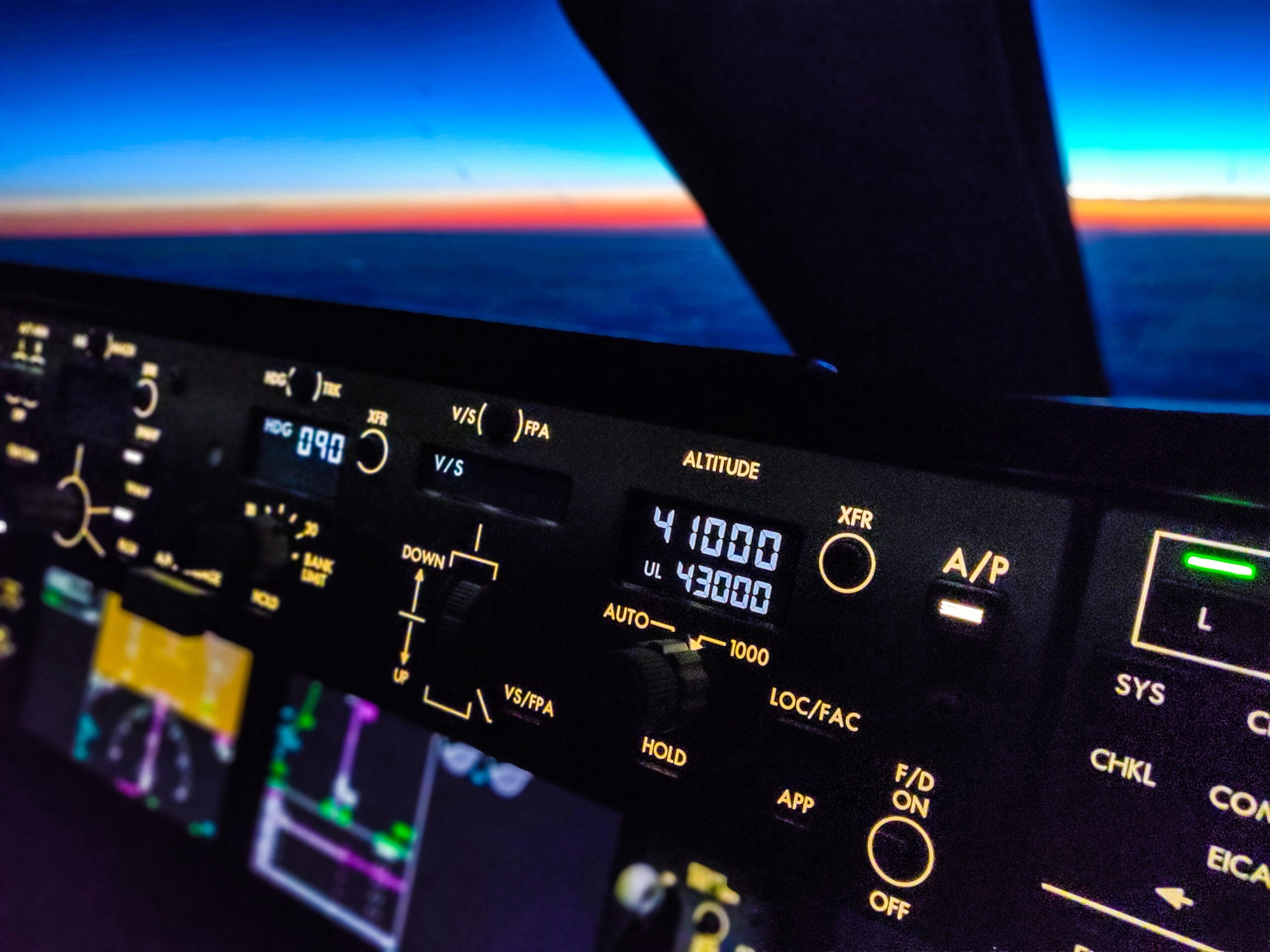
For easy viewing, CPDLC messages pop up on the screen next to the primary flight instruments. To action these messages, we use one of three conveniently placed buttons right in front of us.
Not only is the CPDLC system on the 787 easy to use, but it also reduces the chance of errors by automatically loading the instruction into the relevant control panel. For example, if we are cleared to a new altitude, the system will uplink this to the altitude window, ready for us to confirm and select it.
The technical perspective
The 747 changed the world by bringing travel to the masses, allowing people to cross the earth in style and comfort. However, as the years moved on, technology improved and the 747 become dated. A major update in 1988 brought glass cockpit technology to the flight deck in the form of the 747-400, but, the 747-8 aside, there have been few changes since then.
The introduction of the 787 brought a carbon composite fuselage, vastly improved engines and a wing that still amazes me today. Add to this significant weight savings by using electricity to power major systems such as the brakes, the 787 really is an aircraft a generation ahead of the pioneering jumbo.
Fuel efficiency
"4 engines 4 long-haul," the phrase coined by Virgin Atlantic went. The sight of two engines under each wing gives nervous passengers comfort, but with the improved reliability of the modern jet engine, this was nothing more than a marketing ploy.
The 747-400 uses 10 tons of fuel per hour. The 787 uses five tons per hour. With such a massive difference, it's clear why the sky is full of 787s at the moment and not 747s. However, with 40 years of technological improvement between the two models, it's not surprising that 787 performs so much better.
Carbon composite fuselage
One of the most significant technological leaps of the 787 is the usage of carbon composites to build multiple parts of the aircraft instead of the traditional aluminum, which the 747 used. In fact, by weight, 50% of the 787 is composite material. This gives the 787 a significant weight saving, increasing its fuel efficiency.
Not only are composite structures lighter, but also they do not fatigue or corrode, which reduces planned maintenance and increases the productivity of the aircraft. In addition, they absorb impact better and show damage more clearly. As a result, minor damage from inadvertent collisions by ground vehicles can be fixed at the gate, often in less than an hour.
The engines
Not only did the four engines give the jumbo immense power, but they also provided it with some serious redundancy. Lose an engine at any stage on a twin aircraft and you're diverting to the nearest suitable airfield. Lose an engine on the 747 and there's a chance you may continue to your destination.
However, having all these engines came with a downside. At around 5.7 tons each and providing 57,000 pounds of thrust, the 747 had nearly 23 tons of engines to carry. This gave them a thrust to weight ratio of 4.5.
Compare this with just 12 tons of engines on the 787, each providing up to 89,000 pounds of thrust, giving a much more efficient ratio of 6.0. The huge weight saving and improved performance of the 787 means that they burn far less fuel than the 747.
Innovative technology has also reduced the noise of the 787 engines compared to other types. The edges of the engine casing appear to have had pieces cut out of them, creating a circle of rounded teeth. This is called scalloping.
As the cooler air passes over these points, it is directed towards the hot air stream, where it mixes slightly. This mixing reduces the noise generated as the hot air comes into contact with the atmosphere.
The wing
The wing on the 787 is a thing of beauty. Viewed from above, I've always thought it looks like the wing of the common swift. Straight out initially before an obvious pinch sweeps it rearwards. Made from composite structures, it is far lighter than a conventional aluminum wing and is designed to bounce and flex, enabling it to ride turbulence better.
Next time you're on a 787, try and get a seat over the wing.
On landing, in the very last moments of flight, watch how the wing tip bends upwards at a seemingly impossible angle. As soon as the aircraft touches down, as the lift disappears the tip drops again to its natural position. Just incredible.
Air conditioning
The 747-400 uses the conventional method of bleed air to pressurise the cabin. As part of the engine operation, some air is 'bled' out of the high-pressure compression stage and then fed into the air conditioning system. This air is then used to pressurise the aircraft to an equivalent of 7000 feet and to keep the cabin at a comfortable temperature. The bleed system is also used to feed the wing and engine anti-ice systems.
This method works well, however, the downside being that the engines have to work harder than necessary whilst they feed air to the bleed system, using more fuel. It also means that should the bleed air be contaminated for any reason, there's a chance that it could end up in the cabin.
On the 787, instead of taking air from the engines, fresh air is drawn directly in from outside the aircraft by two dedicated inlets. From here, the air is fed to four electrically powered Cabin Air Compressors (CACs). Here, it is pressurised and sent to two air conditioning packs — L Pack and R Pack in the diagram below. The packs are responsible for conditioning the air to a certain temperature and humidity and then sending it towards the cabin.
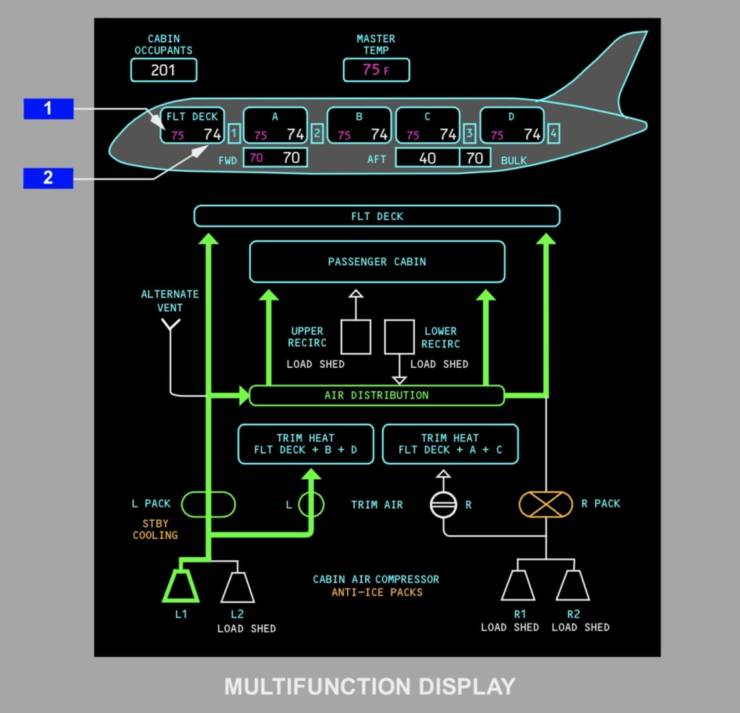
The green flow lines show that even with one pack inoperative, there is enough airflow from the other pack to maintain a normal flow of air into the aircraft.
Not only does this mean that inside the cabin the air is of much better quality, but it also means that there are savings to be made externally. As high-pressure air in the engines is not feeding the air conditioning system, all of it can be used to generate thrust. This means that the engines are not wasting airflow, making them much more fuel-efficient and thus reducing carbon emissions.
Bottom Line
A lot of changes in 50 years, however, the transformation seen in the 787 from the 747 are a testament to how successful the 747 has been. A true icon of commercial aviation, the jumbo will forever hold a special place in the hearts of those who flew her.
The job of a pilot changes with the times, as does the place we call our office. Flights are longer and we spend more time in our office a month than we ever did before. Our number one priority for every flight is the safe delivery of our passengers to their destination. By using the incremental gains of modern aircraft such as the 787, we can make flying safer and greener for everyone.
TPG featured card

at Capital One's secure site
Terms & restrictions apply. See rates & fees.
| 5X miles | Earn 5X miles on hotels, vacation rentals and rental cars booked through Capital One Travel |
| 2X miles | Earn unlimited 2X miles on every purchase, every day |
Pros
- Stellar welcome offer of 75,000 miles after spending $4,000 on purchases in the first three months from account opening. Plus, a $250 Capital One Travel credit to use in your first cardholder year upon account opening.
- You'll earn 2 miles per dollar on every purchase, which means you won't have to worry about memorizing bonus categories
- Rewards are versatile and can be redeemed for a statement credit or transferred to Capital One’s transfer partners
Cons
- Highest bonus-earning categories only on travel booked via Capital One Travel
- LIMITED-TIME OFFER: Enjoy $250 to use on Capital One Travel in your first cardholder year, plus earn 75,000 bonus miles once you spend $4,000 on purchases within the first 3 months from account opening - that’s equal to $1,000 in travel
- Earn unlimited 2X miles on every purchase, every day
- Earn 5X miles on hotels, vacation rentals and rental cars booked through Capital One Travel
- Miles won't expire for the life of the account and there's no limit to how many you can earn
- Receive up to a $120 credit for Global Entry or TSA PreCheck®
- Use your miles to get reimbursed for any travel purchase—or redeem by booking a trip through Capital One Travel
- Enjoy a $50 experience credit and other premium benefits with every hotel and vacation rental booked from the Lifestyle Collection
- Transfer your miles to your choice of 15+ travel loyalty programs
- Top rated mobile app