
The United States just announced on May 19 an extension of temporary travel restrictions to last through June 22, 2020. Under these guidelines, foreign travelers, including visitors from Canada and Mexico, cannot enter the United States via land ports of entry until that date except for reasons of essential travel.
Want more news and tips from TPG? Sign up for our free daily newsletter.
While United States land borders are still closed between Canada and Mexico, U.S. passport holders and permanent residents are allowed to fly home as long as they can find a route back. But if you've been wondering what to expect when entering the country's borders post-coronavirus, you won't find a lot of guidance anywhere.
Related: When can we travel? A country by country guide
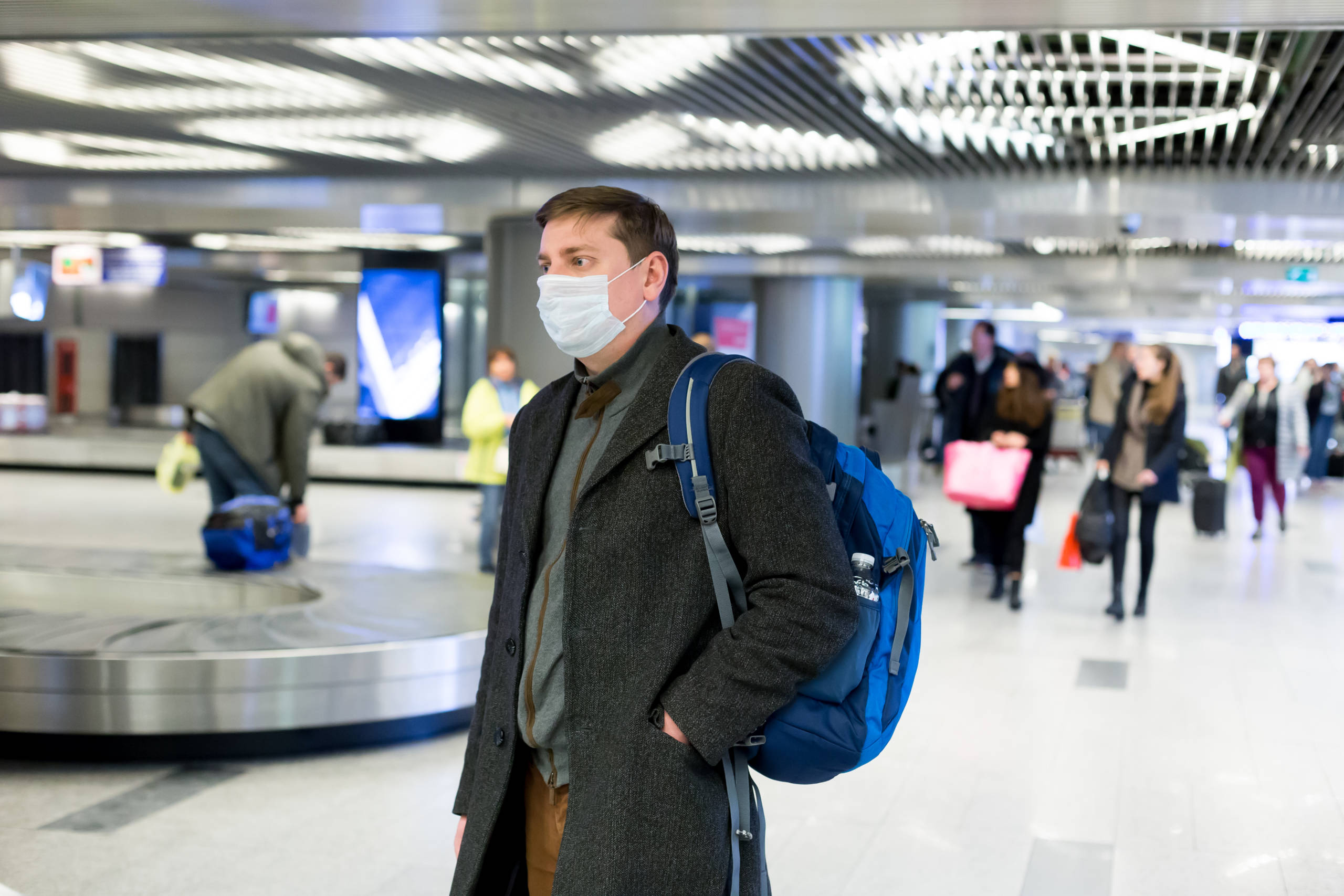
That's because there isn't much of a process at all where U.S. health screenings are involved. While some destinations like Hong Kong have implemented rigorous protocols that can take up to eight hours to complete, a number of travelers are increasingly calling out the absence of wellness checks in U.S. airports: No temperature checks, COVID-19 tests or doctor's note certifying a clean bill of health.
The Department of Homeland Security (DHS) has dedicated a section of its website to coronavirus efforts and information. The section on "protecting air travelers and the American public" references the Notice of Arrival Restrictions which was implemented on March 13 by DHS Acting Secretary Chad Wolf, which stated that U.S. passport holders returning from certain restricted countries had to enter the U.S. through the following 13 airports:
- Boston-Logan International Airport (BOS), Massachusetts
- Chicago O’Hare International Airport (ORD), Illinois
- Dallas/Fort Worth International Airport (DFW), Texas
- Detroit Metropolitan Airport (DTW), Michigan
- Daniel K. Inouye International Airport (HNL), Hawaii
- Hartsfield-Jackson Atlanta International Airport (ATL), Georgia
- John F. Kennedy International Airport (JFK), New York
- Los Angeles International Airport, (LAX), California
- Miami International Airport (MIA), Florida
- Newark Liberty International Airport (EWR), New Jersey
- San Francisco International Airport (SFO), California
- Seattle-Tacoma International Airport (SEA), Washington
- Washington-Dulles International Airport (IAD), Virginia
According to the DHS resource page for international travel, incoming travelers first pass through standard customs processing, then proceed to "enhanced entry screening," according to the DHS, where passengers would be asked self-report their medical history, current condition and contact information to local health authorities before passing through to their final destination, where they are asked to self-quarantine.
These simple procedures stack up poorly in contrast to the response in highly vigilant countries like New Zealand and Taiwan, which both have been repeatedly lauded for their effective squashing of potential coronavirus spread.
Furthermore, even the light requirements for enhanced entry screening in the U.S. haven't been followed to a T.
On May 7 Politico reported House investigators discovered "significant gaps" in the U.S. response to coronavirus screening in airports, including "no documentary evidence that screenings were being performed as promised." Instead, the U.S. often relied on foreign counterparts to screen outbound U.S. passengers in local airports, even when returning to the States from coronavirus epicenters such as Italy and South Korea.
Numerous travelers have corroborated the House investigation's findings with firsthand anecdotes from their own re-entry experiences, spanning from the beginning of the lockdown to just the past few days. "I flew into LAX from New Zealand on March 22," @BrehonFailte said on Twitter. "I could easily have come into contact with a Korean Air flight that was boarding in New Zealand. [There was] not one [health] screening when we got to the U.S. No temperature test, nothing."
While Twitter users @BrehonFailte and @RonNehring's firsthand accounts took place in March 2020, Twitter users @weijia and @sarcott reported similar experiences on both domestic and international travel in more recent days. "I arrived from Mexico this week into Los Angeles [and received] no extra screening," @sarcott said on Twitter. "CBP [officials] weren't even wearing masks. I had to fill out papers on the plane, but no one asked for them so I threw them i the trash. We did have our temperature taken in [the Mexico City airport] before boarding. That's it."
@sarcott's statement corroborates the House investigators' findings that the United States relies too heavily on its counterparts in foreign airports to screen incoming travelers for health concerns. Additional reports stated that travelers also weren't adequately screened regarding their most recent whereabouts, including transiting through high-risk countries.
U.S. Customs and Border Protection (CBP) officials told TPG that health screenings don't fall under the agency's jurisdiction. “U.S. Customs and Border Protection continues to follow the Centers for Disease Control and Prevention’s COVID-19 guidelines at all ports of entry," a CBP spokesperson told TPG. "CBP officers identify travelers who have recently been in China, Iran, Ireland, the United Kingdom or the Schengen Area or who exhibit symptoms of COVID-19 and refer such travelers to the CDC, DHS contract medical personnel, or local health authorities for enhanced health screening.”
TPG reached out to DHS and the Centers for Disease Control and Prevention (CDC) for comment on incoming traveler screening procedures, but had not received a response from either agency by publication time.
Related: Your summer trip to Iceland may be back on
Related: Greece is planning to open to tourists
Related: This iconic beach destination just banned cruises until 2022