Contour Airlines wants to change your idea of 'regional carrier'

California state Sen. Hannah-Beth Jackson makes the journey to Sacramento from her Santa Barbara district nearly weekly during the nine months of the year when the legislature is in session. Until recently, that meant either a traffic-dependent two-hour drive to the Burbank airport for a flight, or a more than six-hour drive to the state capital.
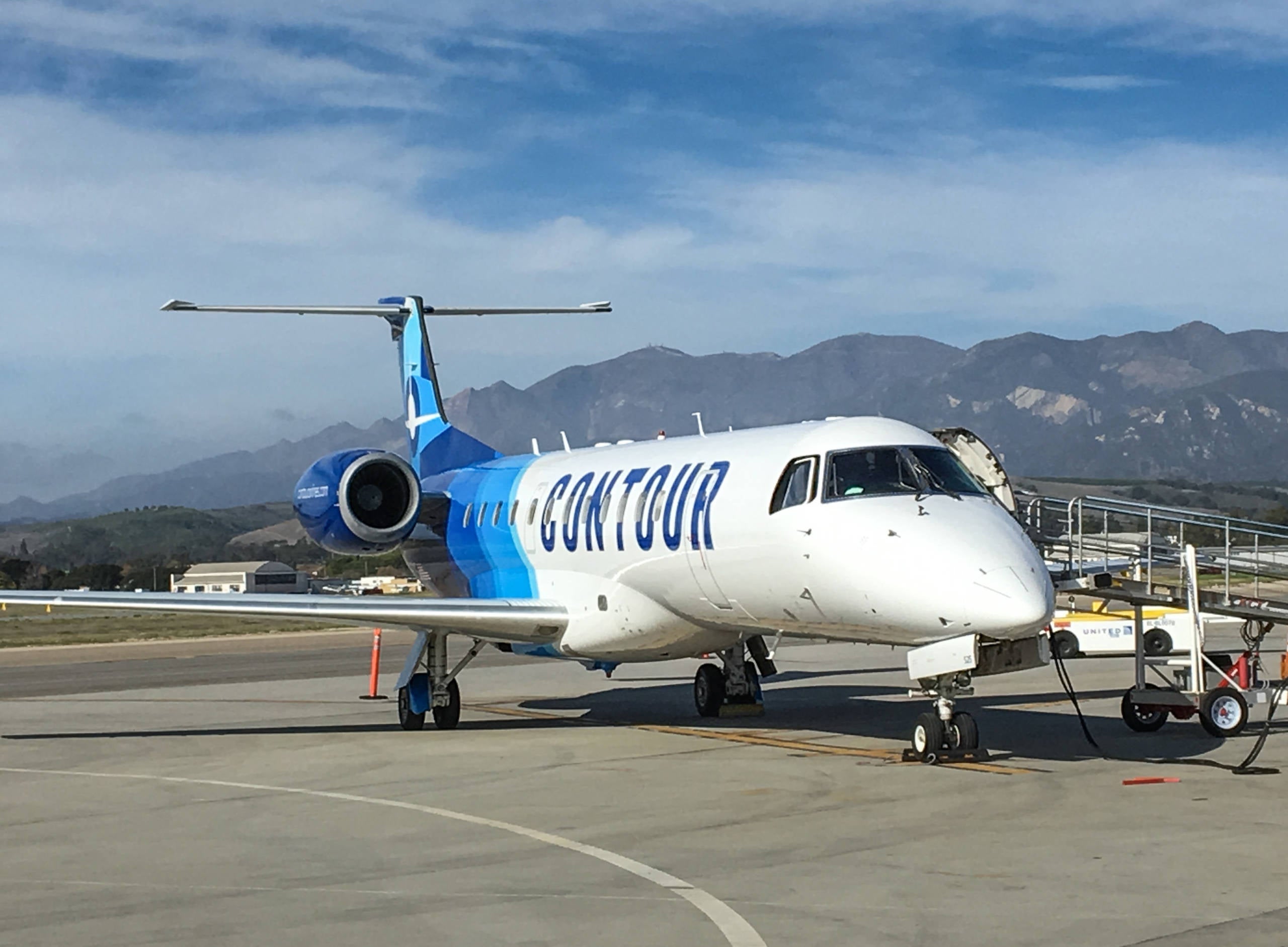
Enter Contour Airlines. Flying Embraer ERJ jets outfitted with 30 seats, the regional carrier connected Santa Barbara (SBA) and Sacramento (SMF) with an hour-and-15-minute flight last year -- faster than Jackson's drive to the Burbank (BUR) airport to catch a Southwest Airlines flight to the capital.
"It's an amazing boon to our community," Jackson told TPG on Contour's service to Santa Barbara.
Sign up for the free daily TPG newsletter for more airline news!
Smyrna, Tennessee-based Contour has offered scheduled passenger flights in its current form since March 2016, when it began serving Tupelo, Mississippi (TUP), under the subsidized Essential Air Service (EAS) program, according to Cirium schedules. The airline is the commercial brand for public air taxi operator Corporate Flight Management, which was founded in 1982.
Corporate Flight Management has offered scheduled air taxi service in the past, most notably under the Branson Air Express name.
For Contour, that first EAS route — between Tupelo and Nashville (BNA) — grew to include others like Crescent City, California (CEC), and Page, Arizona (PGA), by 2018. It was those western routes, where Contour would have an aircraft sitting idle for multiple hours at an airport like Oakland (OAK). That, said Contour CEO Matt Chaifetz, became the carrier's entry point to independent scheduled service to cities like Santa Barbara.
Contour connected Santa Barbara with Oakland and Las Vegas (LAS) in 2018, and added Sacramento to the mix a year later. Other point-to-point routes have since joined, including between Las Vegas (LAS) and San Luis Obispo (SBP), California; and between Sacramento and Palm Springs (PSP), California, where the carrier sees an opportunity for direct flights that appeal to the local market.
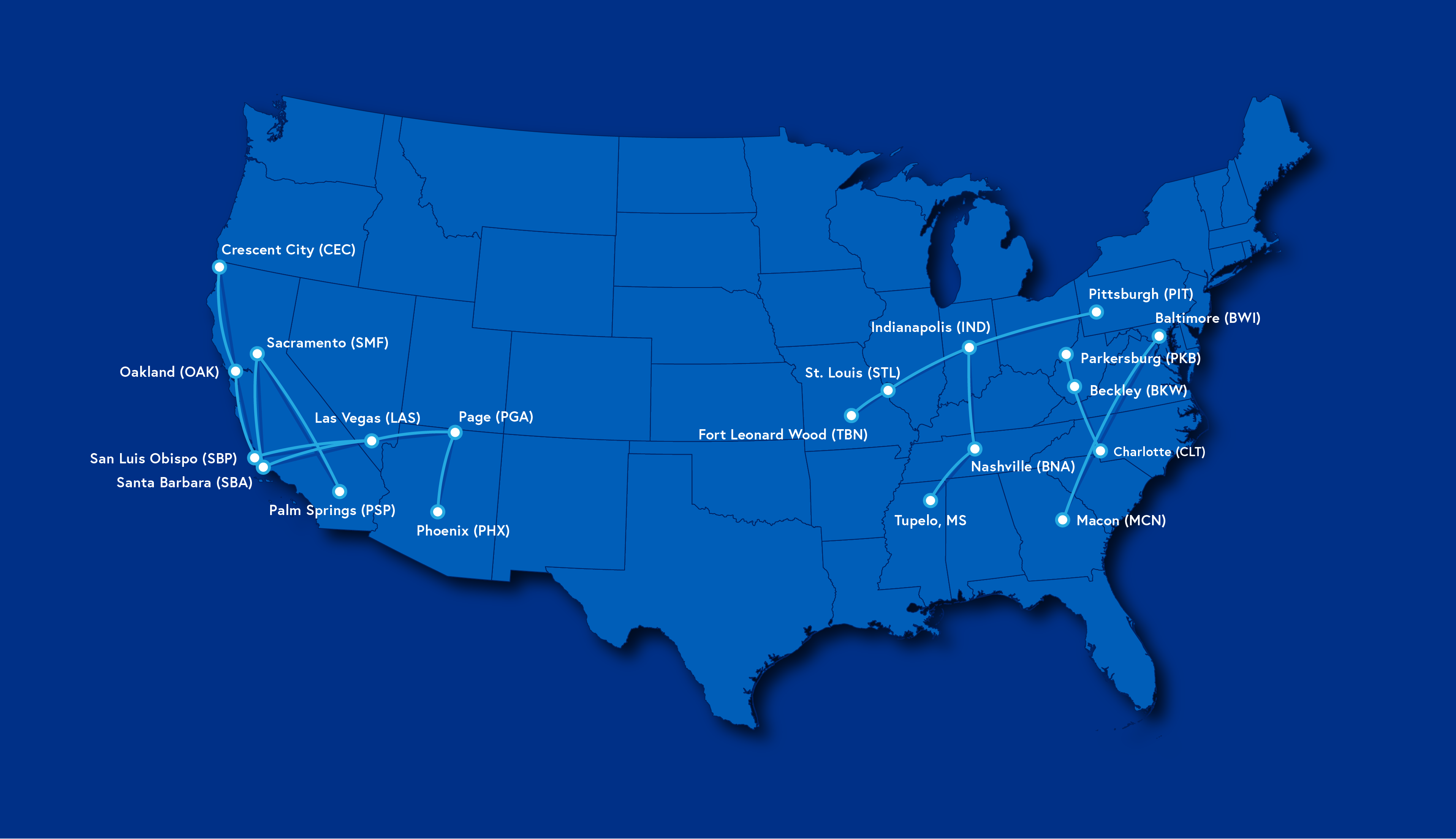
"Every single route that we fly is unserved by any other airline," Chaifetz told TPG on the sidelines of the Routes Americas forum in Indianapolis on Feb. 6. He added that, with only 30 seats to fill on each flight, the airline is able to offer reasonable — though not budget — fares while turning a profit at the same time.

The U.S. Department of Transportation does not collect financial data for air taxi operators like Contour, which operates under the U.S. Federal Aviation Administration's Part 135 air taxi standards compared to carriers like SkyWest Airlines that operate under Part 121 scheduled air carrier rules. This is not uncommon, for example Massachusetts-based Cape Air is also a Part 135 operator, but it makes it difficult to verify the financial performance of Contour's operations.
Related: What it's like flying Cape Air
Connecting points
Contour is betting — and many small airports agree — that there are more people like Jackson who prefer to fly between two small- or medium-sized cities without driving to a far off major airport or connecting over a hub.
Routes like these used to be well served by America's regional carriers. Santa Barbara boasted flights to Sacramento from at least the mid-1980s through the 2000s when the lethal combination of financially troubled airlines, high fuel prices and a recession saw the route cut.
A widely cited 2013 study by William Swelbar and Michael Wittman at MIT found that America's smaller airports lost 21.3% of their scheduled flights from 2007 to 2012. Many of these cities have since gained seats and flights to major hubs, but continue to lack connections to their small- and medium-sized peers.
Numerous airlines see an opportunity in these point-to-point markets. Allegiant Air has built a very successful business connecting smaller cities to big destinations in the Sun Belt, for example Orlando and Phoenix. JetBlue Airways' founder David Neeleman's new venture Breeze Airways plans to connect cities like these beginning in the eastern U.S. as soon as later this year.
Related: Neeleman's new airline Breeze to first fly routes in eastern U.S.
But the segment is also littered with failed past attempts. Names ranging from ExpressJet Airlines (and its ill-fated attempt at a stand-alone operation) to California Pacific Airlines and OneJet Airlines have tried to connect smaller dots without success.
"Contour is at the beginning stages of developing its model and its credibility," Ailevon Pacific Aviation Consulting managing director Brad DiFiore who works with airports trying to land new air service told TPG. "So far, they seem to be doing well. They've been developing goodwill amongst the airports... [and] I've only heard good things, which is somewhat extraordinary in this segment."
Contour, despite the past failures in its market, continues to grow. The airline operates 11 ERJ-135 and -145 jets with three more aircraft on the way to support the launch of a new Indianapolis (IND) focus city, said Chaifetz. Flights between the Hoosier State capital and Nashville, Pittsburgh (PIT) and St. Louis are due to begin in June.
The airline's planes are laid out in a 1-2 configuration with 36 inches of pitch in each row. Passengers are served complimentary beverages and snacks on all of flights and, in keeping things local, Contour serves local brews on certain routes. For example, beers from Crescent City's Seaquake Brewing are served on flights to the Northern California city.
Related: Contour among airlines moving to rebuilt Terminal 3 concourse in Phoenix
Travelers can also take advantage of an interline agreement with American Airlines. The pact allows passengers to connect seamlessly between flights on both carriers without having to check-in again or recheck luggage — though American frequent fliers cannot earn miles on Contour flights.
One thing Chaifetz thinks sets Contour apart from similar operators is its operational focus. For a small carrier with one or two flights in a market, reliability is key for customers, he said. He named defunct OneJet as an example of a regional carrier that failed to realize the importance of operational reliability.
Jackson said she is "very pleased," despite a few technical glitches that have delayed flights, with Contour's service to Santa Barbara.
"They do a good job," the state senator added. "There are no real frills but they're very friendly and it's very convenient."
TPG featured card

at American Express's secure site
Terms & restrictions apply. See rates & fees.
| 4X | Earn 4X Membership Rewards® points per dollar spent on purchases at restaurants worldwide, on up to $50,000 in purchases per calendar year, then 1X points for the rest of the year. |
| 4X | Earn 4X Membership Rewards® points per dollar spent at US supermarkets, on up to $25,000 in purchases per calendar year, then 1X points for the rest of the year. |
| 5X | Earn 5X Membership Rewards® points on prepaid hotel stays booked through AmexTravel.com or the Amex Travel App™. |
| 3X | Earn 3X Membership Rewards® points on flights booked through AmexTravel.com, the Amex Travel App™, or purchased directly from airlines. |
| 2X | Earn 2X Membership Rewards® points on prepaid car rentals booked through AmexTravel.com or the Amex Travel App™ and cruises booked and paid through AmexTravel.com. |
| 1X | Earn 1X Membership Rewards® point per dollar spent on all other eligible purchases. |
Pros
- Valuable dining and food-related credits
- Flexible rewards with airline and hotel transfer partners
- Multiple travel and purchase protections
- No foreign transaction fees
- Access to Amex Offers for additional savings (enrollment required)
Cons
- Not as useful for those living outside the U.S.
- Some may have trouble using Uber and other dining credits
- You may be eligible for as high as 100,000 Membership Rewards® Points after you spend $8,000 in eligible purchases on your new Card in your first 6 months of Card Membership. Welcome offers vary and you may not be eligible for an offer. Apply to know if you’re approved and find out your exact welcome offer amount – all with no credit score impact. If you’re approved and choose to accept the Card, your score may be impacted.
- Earn 4X Membership Rewards® points per dollar spent on purchases at restaurants worldwide, on up to $50,000 in purchases per calendar year, then 1X points for the rest of the year.
- Earn 4X Membership Rewards® points per dollar spent at US supermarkets, on up to $25,000 in purchases per calendar year, then 1X points for the rest of the year.
- Earn 5X Membership Rewards® points on prepaid hotel stays booked through AmexTravel.com or the Amex Travel App™.
- Earn 3X Membership Rewards® points on flights booked through AmexTravel.com, the Amex Travel App™, or purchased directly from airlines.
- Earn 2X Membership Rewards® points on prepaid car rentals booked through AmexTravel.com or the Amex Travel App™ and cruises booked and paid through AmexTravel.com.
- Earn 1X Membership Rewards® point per dollar spent on all other eligible purchases.
- Pay It® lets you tap in the American Express® App to quickly pay for small purchase amounts throughout the month and still earn rewards the way you usually do. Plan It® gives you the option to split up big purchases into equal monthly payments with a fixed fee. You’ll know upfront exactly how much you’ll pay.
- $120 Dining Credit: Earn up to a total of $10 in statement credits monthly when you pay with the Gold Card at Grubhub (including Seamless), Buffalo Wild Wings, Five Guys, The Cheesecake Factory, and Wonder. This can be an annual savings of up to $120. Enrollment required.
- $100 Resy Credit: Get up to $100 in statement credits each calendar year at over 10,000 qualifying U.S. Resy restaurants after you pay for eligible purchases with the American Express® Gold Card. That’s up to $50 in statement credits semi-annually. Enrollment required.
- $84 Dunkin' Credit: Earn up to $7 in monthly statement credits after you pay with the American Express® Gold Card at U.S. Dunkin’ locations. Enrollment required.
- $120 Uber Cash on Gold: Enjoy up to $120 in Uber Cash annually with your Gold Card. Just add your Card to your Uber account and you'll get $10 in Uber Cash each month to use on orders and rides in the U.S. when you select an Amex Card for your transaction.
- Enjoy complimentary Hertz Five Star® Status benefits like skipping the counter at select locations, adding an additional driver at no additional cost*, and vehicle upgrades**. Benefit enrollment and Hertz Gold+ registration are required. *Additional drivers must meet standard rental qualifications and must be a spouse or domestic partner to qualify as complimentary. Other additional drivers subject to fees. **Benefits are subject to availability and vary by location. Additional Hertz program Terms and Conditions including age restrictions apply.
- Book two nights or more with The Hotel Collection through AmexTravel.com or the Amex Travel App™ and receive a $100* credit towards eligible charges at over 1,400 upscale hotels worldwide. *Eligible charges vary by property.
- Book your travel through the Amex Travel App™ with added peace of mind – backed by American Express® service and support. Only for American Express® Card Members.
- Whenever you need us, we're here. Our Member Services team will ensure you are taken care of. From lost Card replacement to statement questions, we are available to help 24/7.
- No Foreign Transaction Fees.
- Annual Fee is $325.
- Terms Apply.