Did the Bahamas reopen too quickly?


Editor's note: This post has been updated with new information. It was originally published on June 29, 2020.
As the travel industry reopens following COVID-19 shutdowns, TPG suggests that you talk to your doctor, follow health officials' guidance and research local travel restrictions before booking that next trip. We will be here to help you prepare, whether it is next month or next year.
The Caribbean and the islands of the North Atlantic Ocean were some of the first regions in the world to reopen to U.S. travelers, as economies were battered by the effects of COVID-19 and the loss of tourism. We reported in June that infectious disease specialists warned reopening too soon could result in overwhelmed healthcare systems.
For more news on re-openings and all things points and miles please sign up for our daily newsletter.
Tourism is vital to the region's economic survival and employs over three million in the region. Throughout the pandemic, societies around the globe have tried to balance the isolation and economic harm of lockdowns with doing whatever they could to stop the virus from spreading. Some countries were successful in flattening the curve while others bungled the response.
Countries that have gotten it wrong, (particularly the U.S., where lockdowns were left up to individual states) reopened too soon or never really closed.
They are now being forced to once-again impose new restrictions as the pandemic drags on.
Related: Puerto Rico delays reopening
Unfortunately, we're starting to see the effects of those warnings as cases surge in the region, and now, one country is locking down altogether. Bahamas Prime Minister Hubert Minnis announced on August 3 that the country would go on lockdown as ICU beds are at capacity and deaths from the coronavirus increase. Healthcare workers in the Bahamas have also warned about overcrowded facilities.

"There has been an exponential increase in the number of cases, an increase in hospitalizations, an increase in the demand for ICU beds, and sadly, an increase in the number of deaths," Minnis said.
The Bahamas in mid-July banned U.S. travelers from entering its borders by plane or vessel (expect those traveling by private jet) as cases in Texas, California and Florida spiked. That ban was later amended to allow Americans to visit but required them to quarantine for 14 days at a government facility.
Before the increase in cases and subsequent reversal in reopening plans, travel boards, residents and businesses were cautiously optimistic about travel returning to the Caribbean and the islands of the North Atlantic. For Ed Buckley, 2020 was supposed to be the "best year" for his scuba diving business in the U.S. Virgin Islands, which has been in operation for more than 20 years.
"Prior to COVID-19, we were on track to have the best year in our almost 22-year history," Buckley, the owner of St. Croix Ultimate Bluewater Adventures told TPG.
And then the novel coronavirus happened.
"We refunded around $75,000 in prebooking money for summer bookings," Buckley said. "That was tough to swallow since that is money that we normally use for purchasing inventory for the normally busy summer months." Buckley has reopened his business with new social distancing procedures such as halving the number of divers on his boats and eliminating a communal mask rinse tank.
That's just one way the coronavirus pandemic has fundamentally reshaped the travel industry. Airlines have suspended flights, cruise lines have scrapped some of their ships and many hotels have offered full refunds for hotel bookings.
Related: How to travel to the Caribbean with points and miles
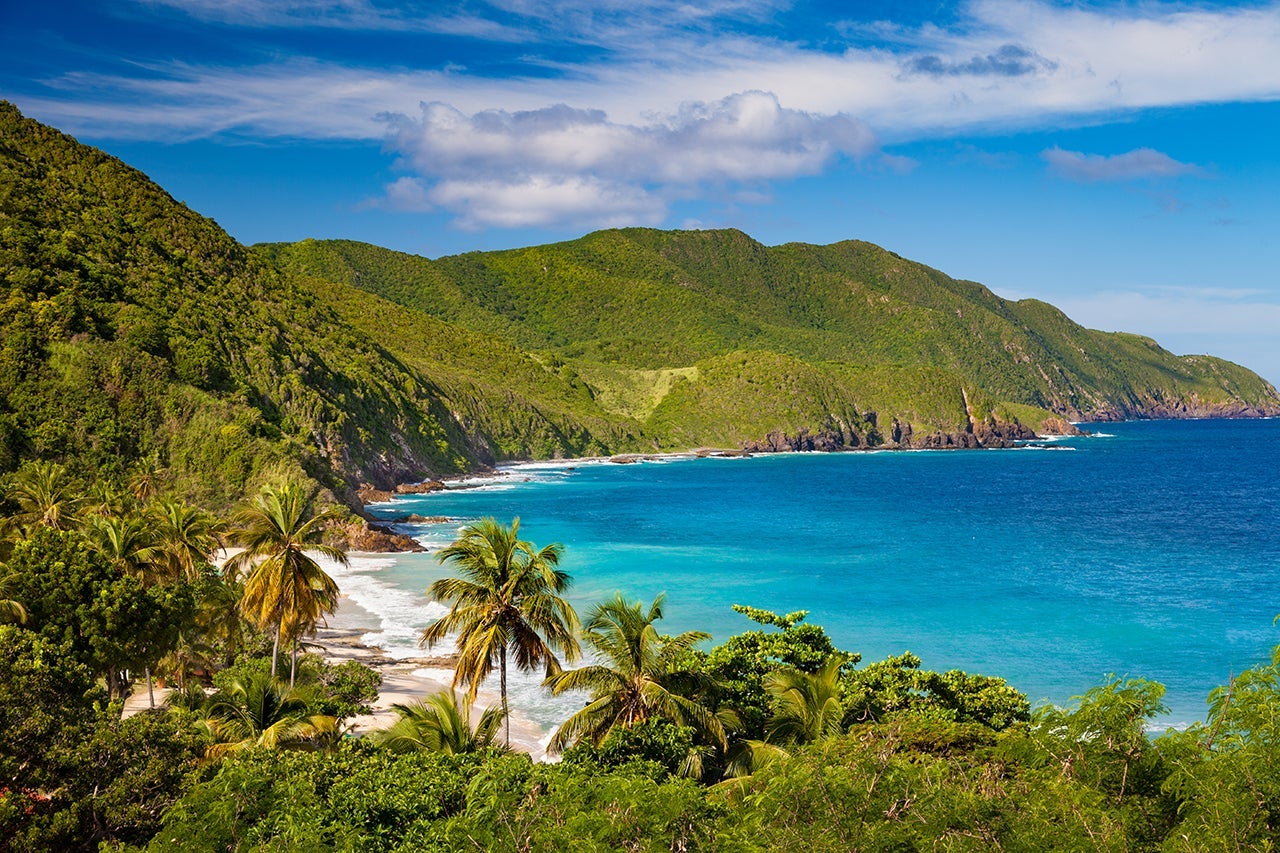
But in the Caribbean, where the travel and tourism industry is so central to the economy -- and how millions of people make a living -- reopening isn't really a choice. Tourism employs nearly three million people in the region and represented 14% of the Caribbean's total GDP in 2013, according to a World Travel and Tourism Council report.
Sign up for the TPG Cruise newsletter and learn more about cruise lines, ships, itineraries, ports and more.
Several islands in the region have already reopened to international travelers while more plan to reopen in the coming weeks. With relaxed travel restrictions, tourism boards are operating in full swing while small businesses hope to still turn a profit this year. Amid the pandemic, they also have to balance the economic implications of reopening with safety concerns to avoid outbreaks on small -- and in some cases, remote -- islands.
Related: The international places Americans can visit this summer
So far, many parts of the Caribbean have been spared from widespread outbreaks other countries like the United States and Italy have experienced. Jamaica has reported 684 cases of COVID-19 and 10 deaths, while the Bahamas reported 104 cases and 11 deaths. Several tourism boards and residents told TPG their countries are ready (and eager) to welcome tourists but urge travelers to practice social distancing.
Related: Best places to use points for a trip to the Caribbean
If done correctly, reopening could inject much-needed money back into the economy and serve as a model for other countries preparing to reopen. But done incorrectly, experts say, could lead to an outbreak that would be devastating to the region and would set back reopening efforts.
"We do not have the health system capacity to accommodate a significant surge in cases … already our health system is on a strain," said Dr. Yohann White, the medical director at Para Caribe Consulting in Kingston, Jamaica.
Residents agree -- and encourage travelers who plan to visit the region to follow local regulations to stop the spread of the virus.
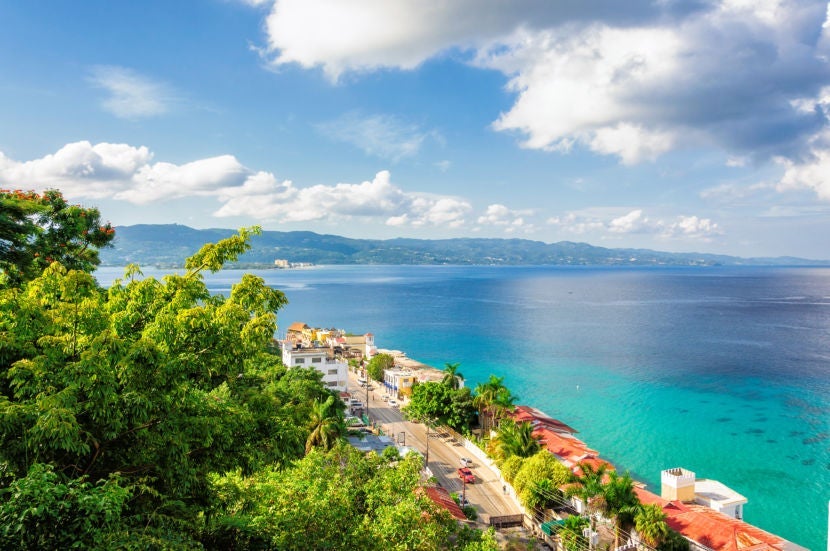
"Barbados is one of the safest places in the world," Joaquin Brewster, who lives in Barbados, told TPG. "But that can change, [if] the people coming here for vacation have the virus. It goes back to being safe and being cautious." Barbados has entered phase three of reopening and there is no restriction on travel to the island.
Related: A country-by-country guide to reopening the Caribbean
Antigua and Barbuda, two small islands with a population of just under 100,000, reopened for travelers on June 4. Nonstop flights are available from cities like New York (JFK) and Miami (MIA). The country isn't taking any chances for a potential outbreak -- mask-wearing is mandatory -- but looks forward to welcoming international tourists again. TPG's Brian Kelly visited Antigua just last week and said that the country was taking the pandemic very seriously.
"They disinfected my luggage on arrival, [had] plastic sheets in taxi vans to protect drivers and did not take away from the beautiful essence of Antigua," said Kelly.
"We want people to come here and to feel very welcomed," says Colin James, the CEO of the Antigua & Barbuda Tourism Authority. "So although we might be wearing a mask, we are smiling underneath."
In this new normal, James says, feeling safe on vacation is as important to travelers as feeling relaxed. In Antigua, health screenings and temperature checks are mandatory upon arrival, and customs officers will have little contact with travelers' luggage. Hotels have adopted online check-in to minimize contact and workers are sanitizing travelers' bags after arrival. Hotel rooms are now sealed after being cleaned. Hotels in Jamaica are now required to receive a "COVID-19 Compliant Certificate" to operate, Jamaica's director of tourism, Donovan White, told TPG in an email exchange.
"Our hospitality workers are receiving extensive training so they can enforce these new regulations, while also continuing to infuse our warmth and culture into the travel experience," White said.
Several travelers I spoke to are taking advantage of empty resorts and cheaper flights during the downturn. They've noticed the strides countries have made to make tourists and residents feel safer amid the pandemic. So what can travelers do to protect themselves and residents?
Related: The best credit cards to get for an almost-free Caribbean vacation
"As tourism resumes, it will be really important for it to be done responsibly," said Dr. Catie Oldenburg, an infectious disease epidemiologist at UC San Francisco. "That means taking the same precautions to keep infection down in your home communities."
Oldenburg says that means avoiding places at a resort, like bars, where overcrowding might take place. Overcrowding can cause transmission at resorts, which can then be transmitted to people who are working at the resorts and their communities. "It could be problematic and re-establish infections in countries where they've gotten it under control and [have been] able to reopen."
Experts and locals say that enjoying a Caribbean vacation is possible even amid the pandemic, but for the reopenings to be a success, it means tourists will have to do their part to protect themselves and residents.
TPG featured card

at American Express's secure site
Terms & restrictions apply. See rates & fees.
| 3X | Earn 3X Miles on Delta purchases. |
| 1X | Earn 1X Miles on all other eligible purchases. |
Pros
- Delta SkyClub access when flying Delta
- Annual companion ticket for travel on Delta (upon renewal)
- Ability to earn MQDs through spending
- Various statement credits for eligible purchases
Cons
- Steep annual fee of $650
- Other Delta cobranded cards offer superior earning categories
- Earn 100,000 Bonus Miles after you spend $6,000 or more in purchases with your new Card within the first 6 months of Card Membership and an additional 25,000 bonus miles after you make an additional $3,000 in purchases on the Card within your first 6 months, starting from the date that your account is opened. Offer Ends 04/01/2026.
- Delta SkyMiles® Reserve American Express Card Members receive 15 Visits per Medallion® Year to the Delta Sky Club® when flying Delta and can unlock an unlimited number of Visits after spending $75,000 in purchases on your Card in a calendar year. Plus, you’ll receive four One-Time Guest Passes each Medallion Year so you can share the experience with family and friends when traveling Delta together.
- Enjoy complimentary access to The Centurion® Lounge in the U.S. and select international locations (as set forth on the Centurion Lounge Website), Sidecar by The Centurion® Lounge in the U.S. (see the Centurion Lounge Website for more information on Sidecar by The Centurion® Lounge availability), and Escape Lounges when flying on a Delta flight booked with the Delta SkyMiles® Reserve American Express Card. § To access Sidecar by The Centurion® Lounge, Card Members must arrive within 90 minutes of their departing flight (including layovers). To access The Centurion® Lounge, Card Members must arrive within 3 hours of their departing flight. Effective July 8, 2026, during a layover, Card Members must arrive within 5 hours of the connecting flight.
- Receive $2,500 Medallion® Qualification Dollars with MQD Headstart each Medallion Qualification Year and earn $1 MQD for each $10 in purchases on your Delta SkyMiles® Reserve American Express Card with MQD Boost to get closer to Status next Medallion Year.
- Enjoy a Companion Certificate on a Delta First, Delta Comfort, or Delta Main round-trip flight to select destinations each year after renewal of your Card. The Companion Certificate requires payment of government-imposed taxes and fees of between $22 and $250 (for itineraries with up to four flight segments). Baggage charges and other restrictions apply. Delta Basic experiences are not eligible for this benefit.
- $240 Resy Credit: When you use your Delta SkyMiles® Reserve American Express Card for eligible purchases with U.S. Resy restaurants, you can earn up to $20 each month in statement credits. Enrollment required.
- $120 Rideshare Credit: Earn up to $10 back in statement credits each month after you use your Delta SkyMiles® Reserve American Express Card to pay for U.S. rideshare purchases with select providers. Enrollment required.
- Delta SkyMiles® Reserve American Express Card Members get 15% off when using miles to book Award Travel on Delta flights through delta.com and the Fly Delta app. Discount not applicable to partner-operated flights or to taxes and fees.
- With your Delta SkyMiles® Reserve American Express Card, receive upgrade priority over others with the same Medallion tier, product and fare experience purchased, and Million Miler milestone when you fly with Delta.
- Earn 3X Miles on Delta purchases and earn 1X Miles on all other eligible purchases.
- No Foreign Transaction Fees. Enjoy international travel without additional fees on purchases made abroad.
- $650 Annual Fee.
- Apply with confidence. Know if you're approved for a Card with no impact to your credit score. If you're approved and you choose to accept this Card, your credit score may be impacted.
- Terms Apply.
- See Rates & Fees