Is Amsterdam Schiphol’s flight reduction really the best way to combat climate change?
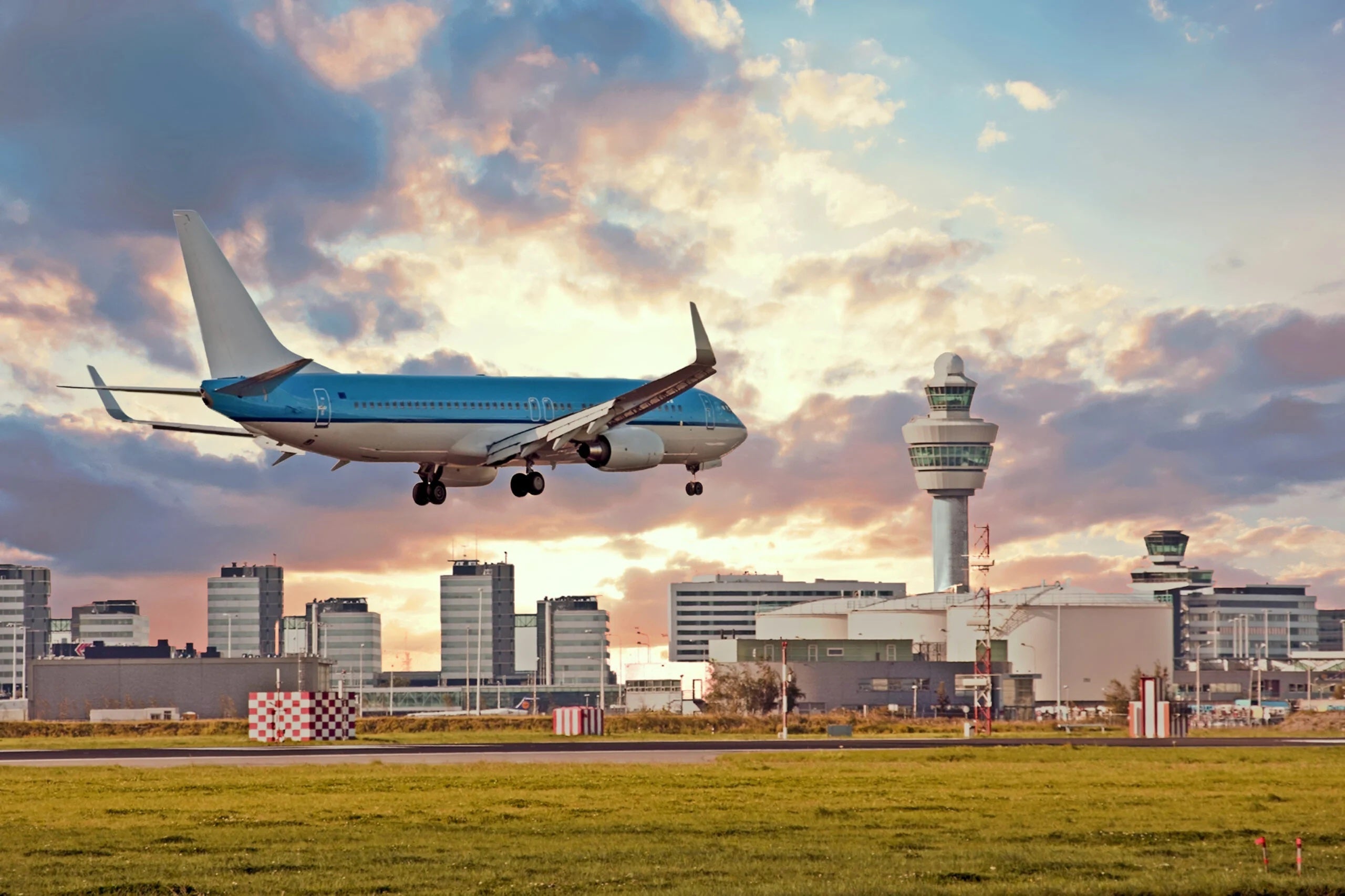
This week the Dutch government announced plans to cap flights at Amsterdam Schiphol Airport (AMS) in order to combat air pollution. The nation's busiest airport wants to reduce its flights from 500,000 to 440,000 annually starting in 2023.
Right now, when not besieged by delays, the airport handles roughly 1,250 flights a day.
Overall, the change would cut flights for the European hub by around 11% — a considerable dent in the traffic at Europe's third-largest airport.

The plan to help reduce carbon emissions, noise pollution and other eco-based challenges is — without a shadow of a doubt — a noble one. However, some might consider it a little bit naive within the wider context of climate change and the battle against air emissions.
It's undeniable that more needs to be done in the sector – the aviation industry currently accounts for 2.1% of all human-induced carbon dioxide emissions. However, are there more productive and less disruptive options to achieve these goals?
Related: American Airlines pauses ticket sales from Amsterdam as chaos continues
Here are a few for starters.
Invest more in alternative fuels
According to industry figures, global flights produced just over 1 billion tons of carbon dioxide (CO2) in 2019 — a lot, basically. The aviation industry as a whole produces 12% of emissions from all transport sources, and more must be done to find other options to keeping gas-guzzling airliners in the sky.
The answer may be closer than you think. This May, it was announced that the first-ever transatlantic flight powered entirely by recycled cooking oil and other waste could launch as early as 2023, making it the world's first-ever net-zero emissions flight between Europe and the U.S.

There's no limit to what aerospace manufacturers can achieve with sustainable aviation fuel (SAF).
The key issue lies in being able to ensure the facilities are there to produce enough SAF to fuel thirsty planes the world over. While this wouldn't completely wipe out carbon emissions, it does change the playing field somewhat.
Related: Spanish airline wants to bring the airship era back
Aptly enough, a Dutch consortium is aiming to launch the world's first sustainably fueled commercial flight by 2028.
If the country's officials invest more money and time into pursuing alternate fuels, rather than simply curtailing flights, Amsterdam could be at the forefront of the next generation of air travel as we know it. (We might not need to turn to airships just yet.)
Charge higher fees to airlines that don't meet eco-goals
You don't need to be Greta Thunberg to know that grounding 60,000 flights per year would give Mother Nature a breather. However, is there a smarter way to go here, perhaps by putting the onus on airlines to meet individual green goals?
Financial penalties would spawn a trickle-down effect, hitting airlines first, and then, as tick follows tock: passengers.
Obviously, the latter isn't ideal, but little by little it could push the aviation industry to work harder to bring about change. It could also change people's travel habits. Why fly to Paris or Brussels if there are better deals to be had on the Eurostar? Lower the demand and increase the chance of hitting eco goals.
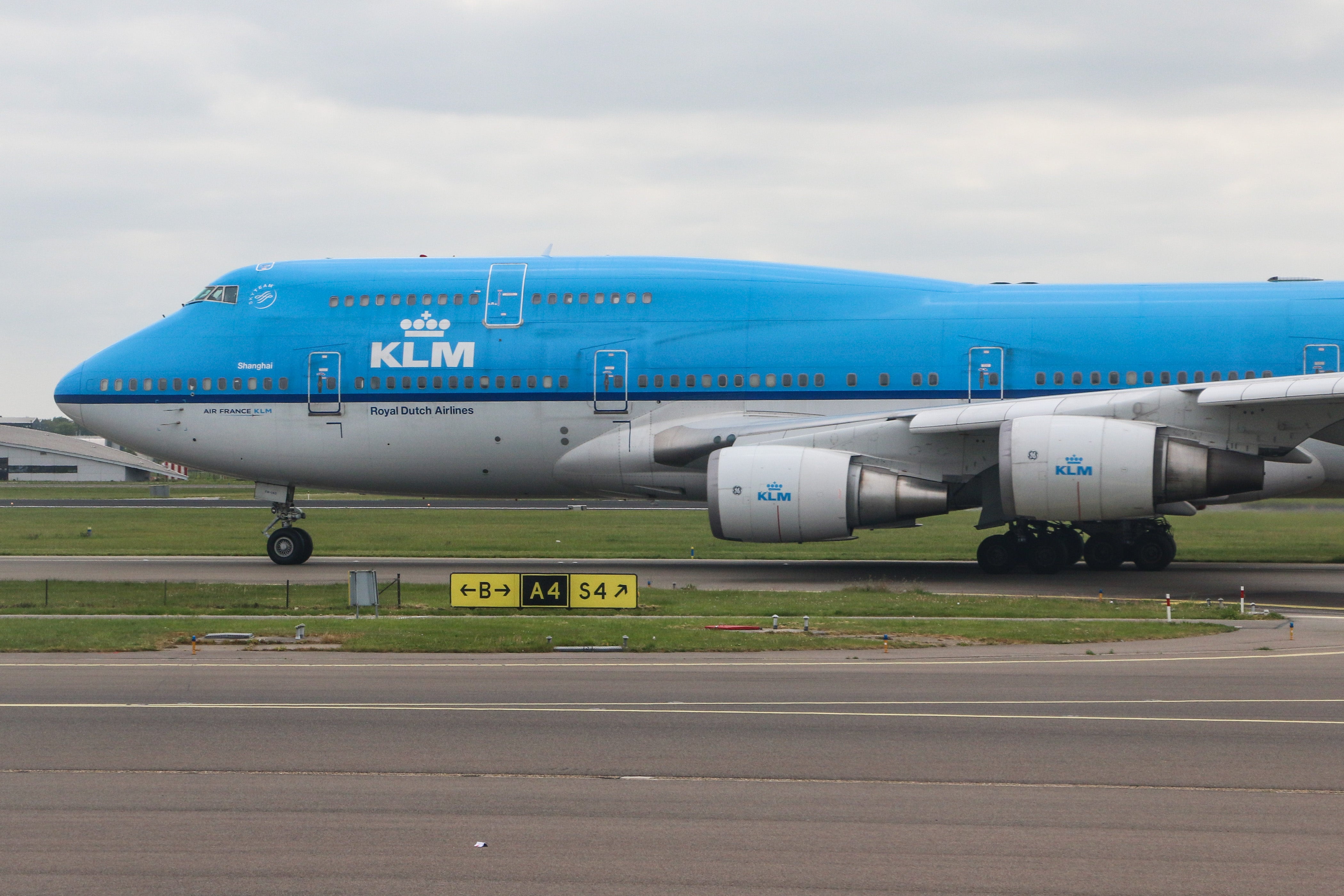
Of course, hitting airlines and flyers in the pocket may lead the industry back to the old days when air travel was for the elite, outpricing both regular travelers and low-cost airlines. However, if it's going to save the world, maybe it's a risk worth taking.
Banish ghost flights with landing slot amnesties
Ghost flights — otherwise known as when airlines send empty planes into the sky to keep hold of coveted landing slots at airports — are a scourge on modern aviation.
They pollute the skies for no other reason than commercial gain fueled by increased competition. This winter, as we've previously reported, there could be an estimated 100,000 ghost flights flying over Europe alone. It doesn't have to be this way.
One strategy recently floated to save U.K. airports from further travel chaos this summer was a proposed runway slot amnesty for airlines.
The logic is that this would reduce last-minute cancellations and allow the likes of British Airways and easyJet to cancel flights further in advance without the fear of losing their highly coveted slots for good. The vacated slots could then be temporarily given to other airlines able to fulfill the demand.
Related: What are 'ghost flights' and why are they causing so much uproar right now?
There are obviously incredibly complicated logistics at play to make this a viable solution. But if Schiphol Airport could overcome the logistical challenges, this type of solution could put it well on its way to meeting certain eco-goals without resorting to a flight purge.
Such a solution doesn't have to stop in Amsterdam, either. Imagine a country-by-country global slots amnesty, implemented along the lines of the Paris Agreement, helping to banish skeleton crews in the sky once and for all. The Amsterdam Agreement has a nice ring to it, no?
Ax flights based on destination
For many, particularly those traveling further afield for family or business matters, taking a plane is the only option available. But some destinations are just as easy to reach via car or train as they are by plane. Another approach could be for Dutch officials to get around a table with the airlines and look at cutting flights based on destination.

With France's recent short-haul flight ban, which streamlined services that were under two-hour flight time, there is a valid precedent here. Dutch airport bosses could easily follow suit by reducing domestic and extremely short-haul routes.
Related: Budget startup Norse Atlantic Airways adds 2 US routes to Berlin
There's certainly never been a better time for it. Right now, Europe is packed with increasingly ambitious cross-continental rail plans, including the news that SNCF and Deutsche Bahn are teaming up for a new high-speed link between Paris and Berlin.
With more choices like this, passengers may start saving their points for long-haul trips.
Cancel all flights one day a year
OK, this one might be extreme and a bit pie-in-the-sky, but hear us out. It would, after all, only be for a single day.
Rather than cut umpteen flights causing chaos for millions of tourists and business travelers across 365 days, how about staging an entire ban on commercial flights for one day?
Admittedly, if we're just talking Amsterdam Schiphol the figure would only be around 1,300 flights — down a great deal from the 60,000 they intend to eliminate.
However, it's a start — and if other airports were to join forces and do the same, it's a number that could be increased. It could be a national event, with other Dutch airports following suit — or how about a global one?
Airport bosses could even do this on World Environment Day (June 5), the United Nations-led event for encouraging environmental action. If you want to raise an issue, why not do it on the biggest stage of all?
Bottom line
In fairness to those behind the plan to cut 60,000 flights annually, attempting to bring in sustainable growth towards more environmentally friendly travel can feel like slow going. (For context, last month it was revealed that U.K. airlines have missed all but one climate target since the turn of the millennium.)
We've seen great technological advances. However, like anything else in this sector, the demand needs to be there first to spur on a movement.
Not for nothing has Airbus set a date of 2035 before it debuts the first zero-emission airliner running on hydrogen. Tech takes time.
If Dutch officials want to start a conversation on climate change, they've succeeded. However, as we've highlighted, this isn't the end of the conversation.
We might not have nailed them all, but there are other ways — arguably more productive in the long term — to go about things than a desk-bound civil servant clicking his or her fingers to make 60,000 flights disappear at once.
TPG featured card

at Capital One's secure site
Terms & restrictions apply. See rates & fees.
| 5X miles | Earn 5X miles on hotels, vacation rentals and rental cars booked through Capital One Travel |
| 2X miles | Earn unlimited 2X miles on every purchase, every day |
Pros
- Stellar welcome offer of 75,000 miles after spending $4,000 on purchases in the first three months from account opening. Plus, a $250 Capital One Travel credit to use in your first cardholder year upon account opening.
- You'll earn 2 miles per dollar on every purchase, which means you won't have to worry about memorizing bonus categories
- Rewards are versatile and can be redeemed for a statement credit or transferred to Capital One’s transfer partners
Cons
- Highest bonus-earning categories only on travel booked via Capital One Travel
- LIMITED-TIME OFFER: Enjoy $250 to use on Capital One Travel in your first cardholder year, plus earn 75,000 bonus miles once you spend $4,000 on purchases within the first 3 months from account opening - that’s equal to $1,000 in travel
- Earn unlimited 2X miles on every purchase, every day
- Earn 5X miles on hotels, vacation rentals and rental cars booked through Capital One Travel
- Miles won't expire for the life of the account and there's no limit to how many you can earn
- Receive up to a $120 credit for Global Entry or TSA PreCheck®
- Use your miles to get reimbursed for any travel purchase—or redeem by booking a trip through Capital One Travel
- Enjoy a $50 experience credit and other premium benefits with every hotel and vacation rental booked from the Lifestyle Collection
- Transfer your miles to your choice of 15+ travel loyalty programs
- Top rated mobile app