American will fly just 4 domestic wide-body routes as it goes all-in on Europe

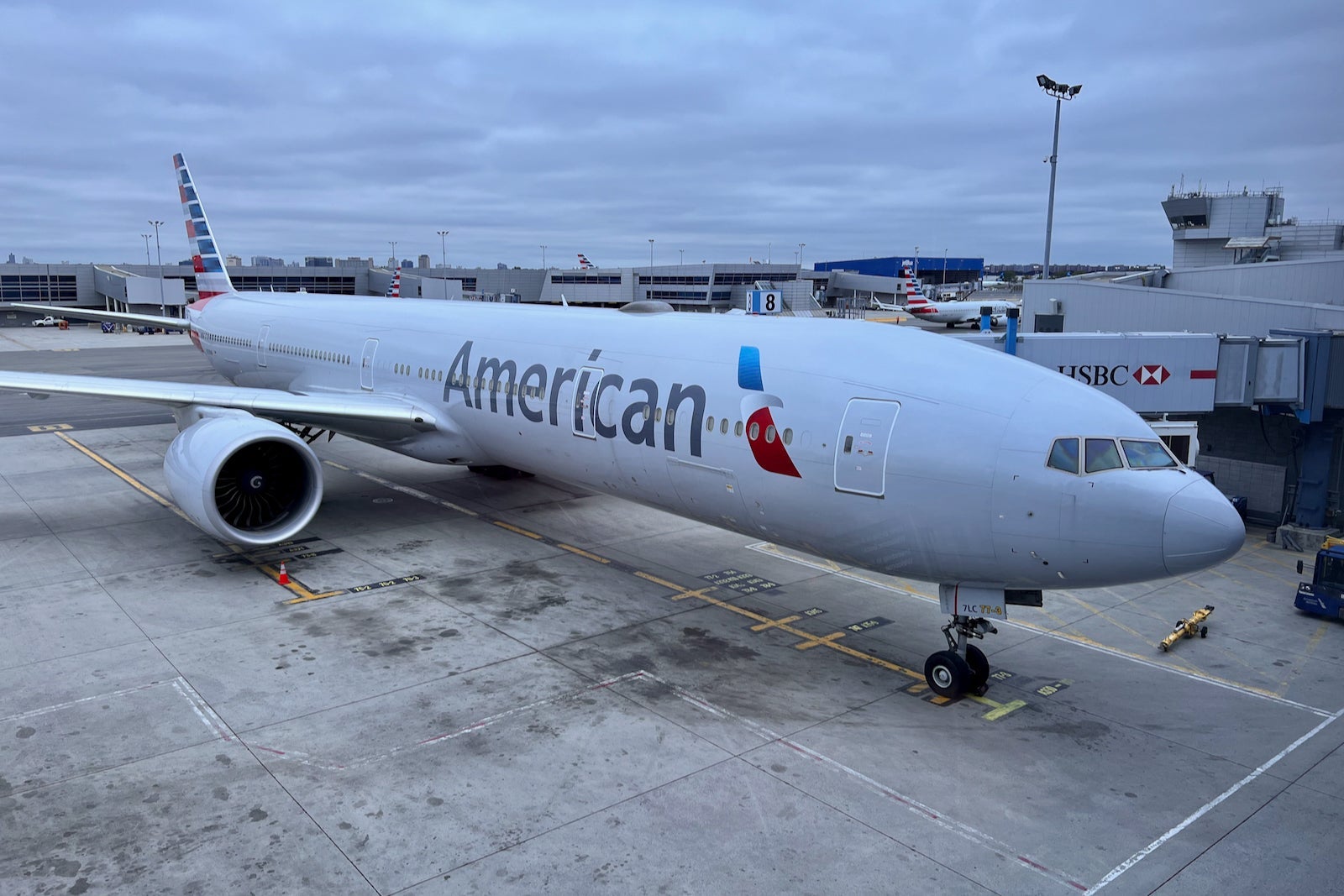
The days of enjoying a lie-flat business-class pod for a short domestic flight are coming to an end — especially if you're an American Airlines flyer.
Next summer, the Fort Worth-based carrier will deploy just 1.8% of its wide-body block-hours on domestic routes, a record low for the airline. That's according to Brian Znotins, the airline's vice president of network planning, who explained to TPG that the airline will instead bulk up its transatlantic network with its largest planes.
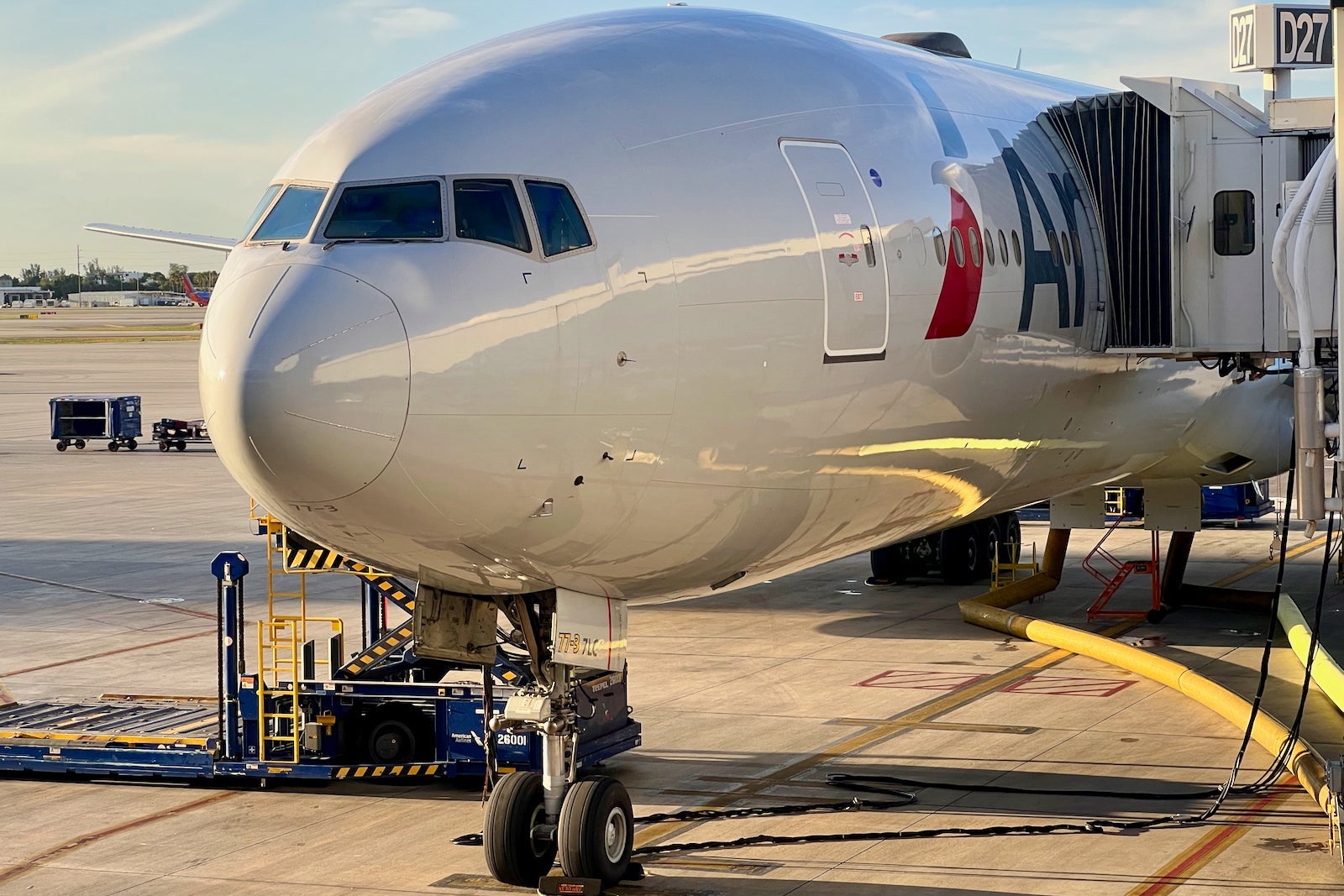
During the peak summer season, American will fly just four domestic routes with wide-body jets, with the full list available below. The wide-body pulldown was confirmed to TPG by a carrier spokesperson.
- Miami (MIA) — New York-JFK
- MIA — Charlotte (CLT)
- MIA — Dallas/Fort Worth (DFW)
- MIA — Los Angeles (LAX)
Note that this includes the Lower 48, as well as Alaska, but long-haul Hawaii routes will remain operated by wide-body planes, as will those on the airline's Airbus A321T, including New York to Los Angeles and San Francisco.
Only a handful of frequencies on the aforementioned routes will be operated by a twin-aisle plane, largely during downtime between long-haul flights. For instance, American might fly a 273-seat Boeing 777-200 on a mid-day round-trip between New York and Miami, departing after the plane's 6 a.m. arrival in JFK from Tel Aviv and well before its 11:55 p.m. departure from New York back to Israel.
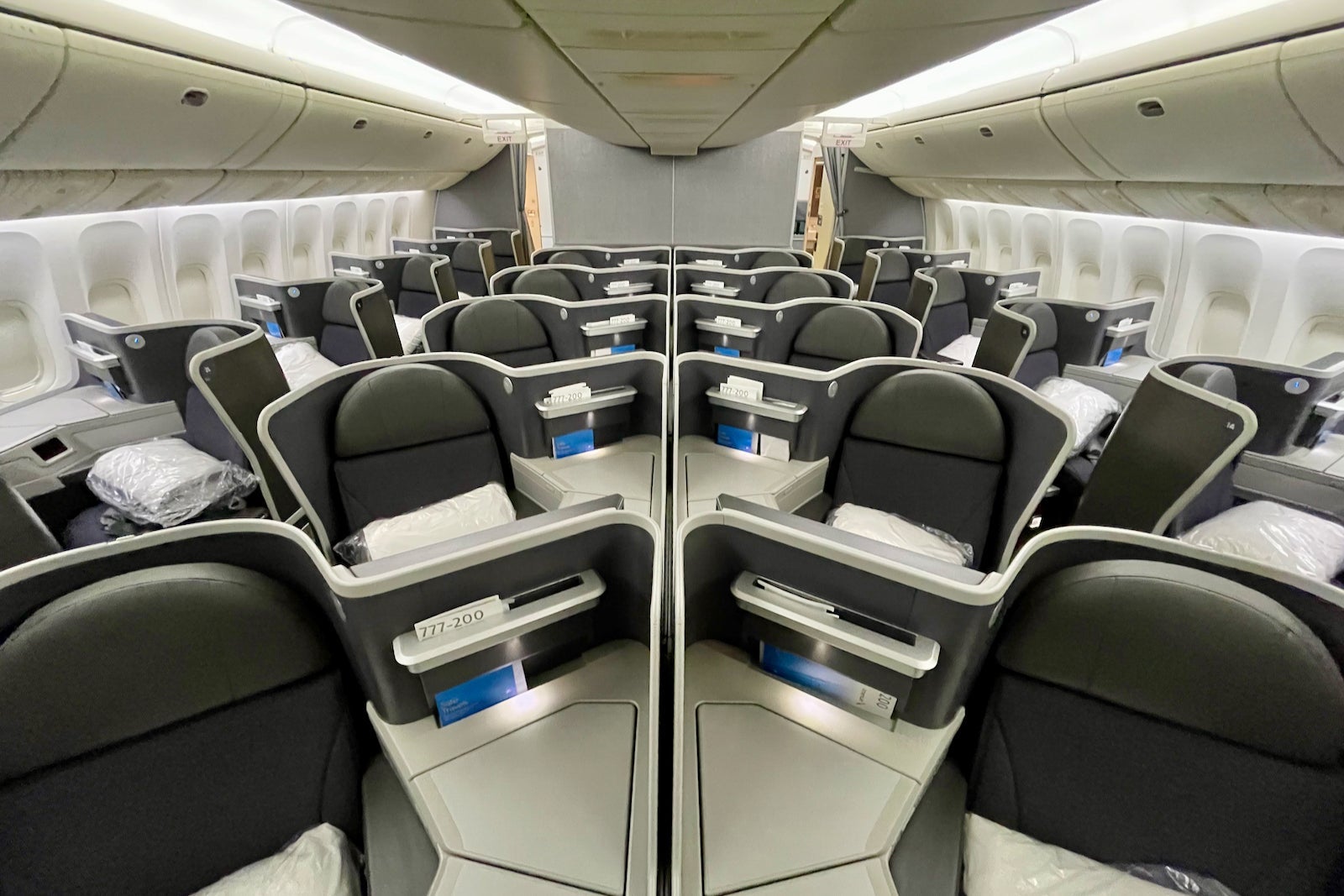
Wide-body planes, like the Boeing 777 and 787 Dreamliner, offer a significantly improved inflight experience compared to traditional single-aisle jets you'd otherwise find on domestic routes. If you're booked in the business-class cabin, you'll enjoy a lie-flat seat, along with a large TV, oversized tray table and plenty of storage.
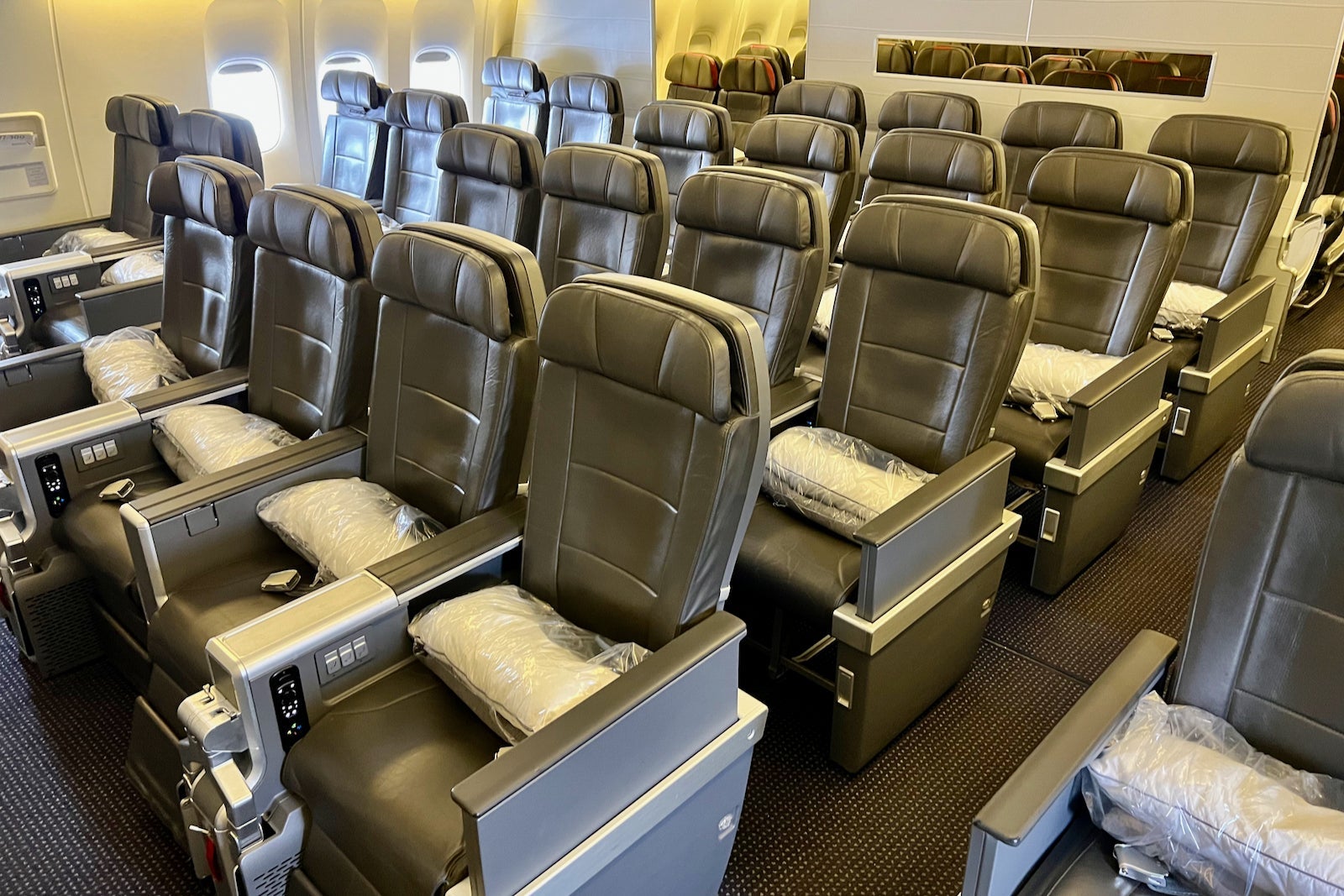
Those booked in extra-legroom Main Cabin Extra economy seats are usually seated in the premium economy cabin, which is outfitted with spacious recliners that are nearly identical to those you'd find in domestic first class.
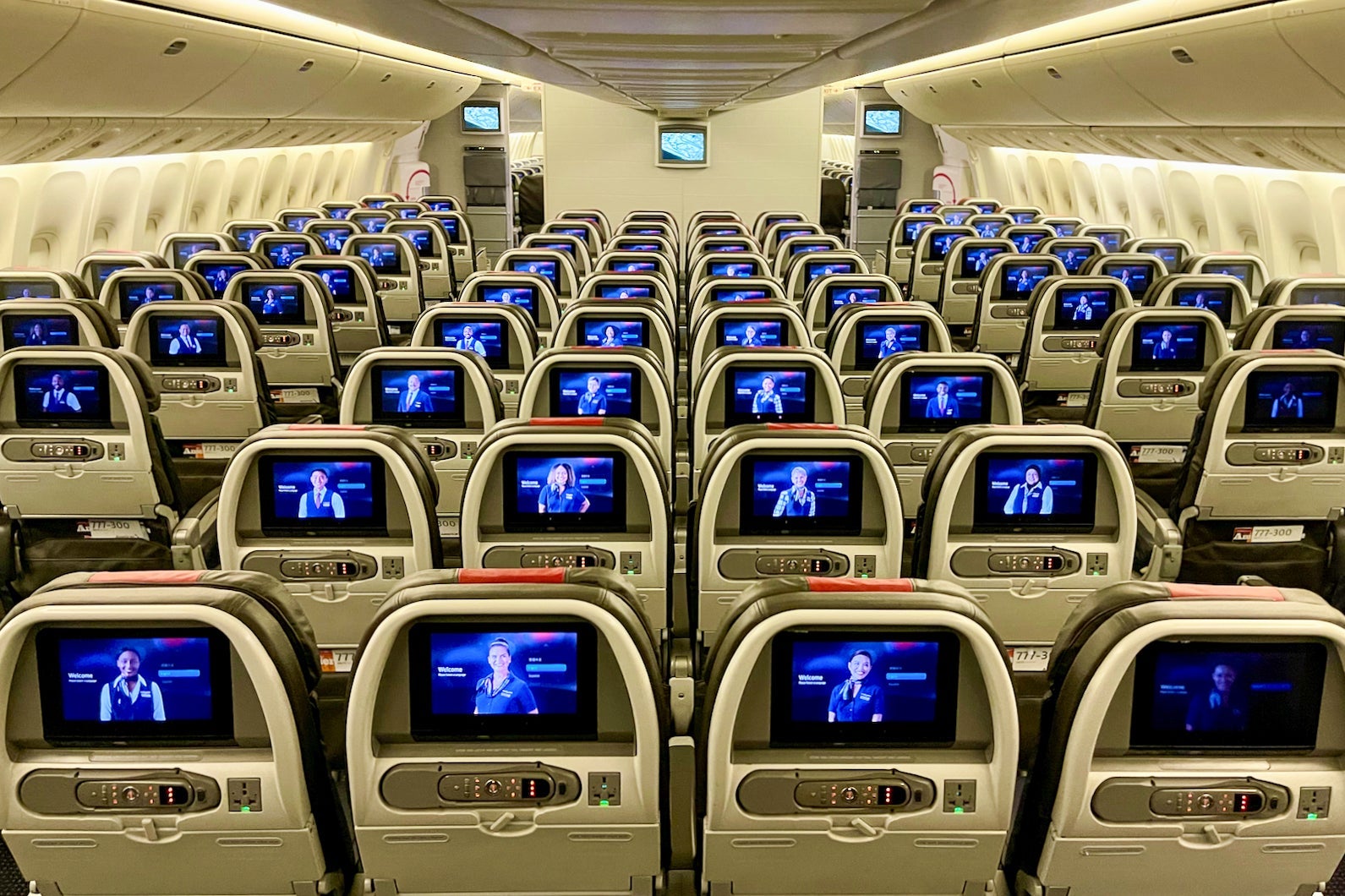
Finally, the coach seats on American's widebodies are all outfitted with personal TVs — a nice touch compared to most of American's domestic jets that only feature streaming entertainment to your own device.

Last summer, American flew 31.7% of its wide-body block hours in its domestic and short-haul system, a record high for the airline. This included a slew of (surprising) domestic routes, like Boston (BOS) and Las Vegas (LAS) to Miami, as well as short-haul international hops from Miami to cities across Colombia, Ecuador and Peru.
At the time, long-haul travel was largely off-limits to most Americans, with border closures and other pandemic-related restrictions cutting off these once-lucrative markets.
"It's almost the exact opposite of what happened last summer where the opportunity cost was so low on the widebodies," Znotins to TPG. "Europe and Asia weren't great for us [so] we flew them in JFK and Miami... and tried new things...because the opportunity cost was so low. Now, the opportunity cost is so high. Paris and Rome and Athens are just going to be on fire in the summer of next year."
Last summer, American's choice was to either park its widebodies or continue flying them domestically and on shorter-haul flights that didn't require the range of a wide-body. At the time, especially when payroll was covered by the government, it made sense to deploy them on shorter routes, according to Znotins.
But the calculus is going to be much different next summer.
For one, the airline is short on wide-body planes due to a delay in receiving new Boeing 787-8 Dreamliners from Boeing. The Chicago-based planemaker hit a manufacturing-related snag in its Dreamliner production line that has halted new 787 deliveries to all operators worldwide. Deliveries aren't slated to resume until April 2022, at the earliest.
At the outset of the pandemic, American retired its Airbus A330 and Boeing 767 fleet, leaving just its Boeing 777s and 787s as the backbone of its long-haul fleet. Between the retirements and the delay in receiving new Dreamliners, the airline has fewer widebodies than it would like for next summer.
After all, the airline (and its competitors) are predicting a surge in transatlantic demand next summer, both from American tourists vacationing abroad and from Europeans coming to the U.S. for a summer holiday.
"The demand is going to be so hot to Europe, and we're only going to fly 80% of our 2019 long-haul capacity this coming summer, which is far below where we'd want to be. And so we just had to get every wide-body we could and point them at these [European] markets," Znotins told TPG.
While that might be the correct strategic move from Znotin's network planning department, it certainly stings for anyone who has enjoyed an international flight experience on a far shorter domestic flight.
TPG featured card

at American Express's secure site
Terms & restrictions apply. See rates & fees.
| 4X | Earn 4X Membership Rewards® points per dollar spent on purchases at restaurants worldwide, on up to $50,000 in purchases per calendar year, then 1X points for the rest of the year. |
| 4X | Earn 4X Membership Rewards® points per dollar spent at US supermarkets, on up to $25,000 in purchases per calendar year, then 1X points for the rest of the year. |
| 5X | Earn 5X Membership Rewards® points on prepaid hotel stays booked through AmexTravel.com or the Amex Travel App™. |
| 3X | Earn 3X Membership Rewards® points on flights booked through AmexTravel.com, the Amex Travel App™, or purchased directly from airlines. |
| 2X | Earn 2X Membership Rewards® points on prepaid car rentals booked through AmexTravel.com or the Amex Travel App™ and cruises booked and paid through AmexTravel.com. |
| 1X | Earn 1X Membership Rewards® point per dollar spent on all other eligible purchases. |
Pros
- Valuable dining and food-related credits
- Flexible rewards with airline and hotel transfer partners
- Multiple travel and purchase protections
- No foreign transaction fees
- Access to Amex Offers for additional savings (enrollment required)
Cons
- Not as useful for those living outside the U.S.
- Some may have trouble using Uber and other dining credits
- You may be eligible for as high as 100,000 Membership Rewards® Points after you spend $8,000 in eligible purchases on your new Card in your first 6 months of Card Membership. Welcome offers vary and you may not be eligible for an offer. Apply to know if you’re approved and find out your exact welcome offer amount – all with no credit score impact. If you’re approved and choose to accept the Card, your score may be impacted.
- Earn 4X Membership Rewards® points per dollar spent on purchases at restaurants worldwide, on up to $50,000 in purchases per calendar year, then 1X points for the rest of the year.
- Earn 4X Membership Rewards® points per dollar spent at US supermarkets, on up to $25,000 in purchases per calendar year, then 1X points for the rest of the year.
- Earn 5X Membership Rewards® points on prepaid hotel stays booked through AmexTravel.com or the Amex Travel App™.
- Earn 3X Membership Rewards® points on flights booked through AmexTravel.com, the Amex Travel App™, or purchased directly from airlines.
- Earn 2X Membership Rewards® points on prepaid car rentals booked through AmexTravel.com or the Amex Travel App™ and cruises booked and paid through AmexTravel.com.
- Earn 1X Membership Rewards® point per dollar spent on all other eligible purchases.
- Pay It® lets you tap in the American Express® App to quickly pay for small purchase amounts throughout the month and still earn rewards the way you usually do. Plan It® gives you the option to split up big purchases into equal monthly payments with a fixed fee. You’ll know upfront exactly how much you’ll pay.
- $120 Dining Credit: Earn up to a total of $10 in statement credits monthly when you pay with the Gold Card at Grubhub (including Seamless), Buffalo Wild Wings, Five Guys, The Cheesecake Factory, and Wonder. This can be an annual savings of up to $120. Enrollment required.
- $100 Resy Credit: Get up to $100 in statement credits each calendar year at over 10,000 qualifying U.S. Resy restaurants after you pay for eligible purchases with the American Express® Gold Card. That’s up to $50 in statement credits semi-annually. Enrollment required.
- $84 Dunkin' Credit: Earn up to $7 in monthly statement credits after you pay with the American Express® Gold Card at U.S. Dunkin’ locations. Enrollment required.
- $120 Uber Cash on Gold: Enjoy up to $120 in Uber Cash annually with your Gold Card. Just add your Card to your Uber account and you'll get $10 in Uber Cash each month to use on orders and rides in the U.S. when you select an Amex Card for your transaction.
- Enjoy complimentary Hertz Five Star® Status benefits like skipping the counter at select locations, adding an additional driver at no additional cost*, and vehicle upgrades**. Benefit enrollment and Hertz Gold+ registration are required. *Additional drivers must meet standard rental qualifications and must be a spouse or domestic partner to qualify as complimentary. Other additional drivers subject to fees. **Benefits are subject to availability and vary by location. Additional Hertz program Terms and Conditions including age restrictions apply.
- Book two nights or more with The Hotel Collection through AmexTravel.com or the Amex Travel App™ and receive a $100* credit towards eligible charges at over 1,400 upscale hotels worldwide. *Eligible charges vary by property.
- Book your travel through the Amex Travel App™ with added peace of mind – backed by American Express® service and support. Only for American Express® Card Members.
- Whenever you need us, we're here. Our Member Services team will ensure you are taken care of. From lost Card replacement to statement questions, we are available to help 24/7.
- No Foreign Transaction Fees.
- Annual Fee is $325.
- Terms Apply.