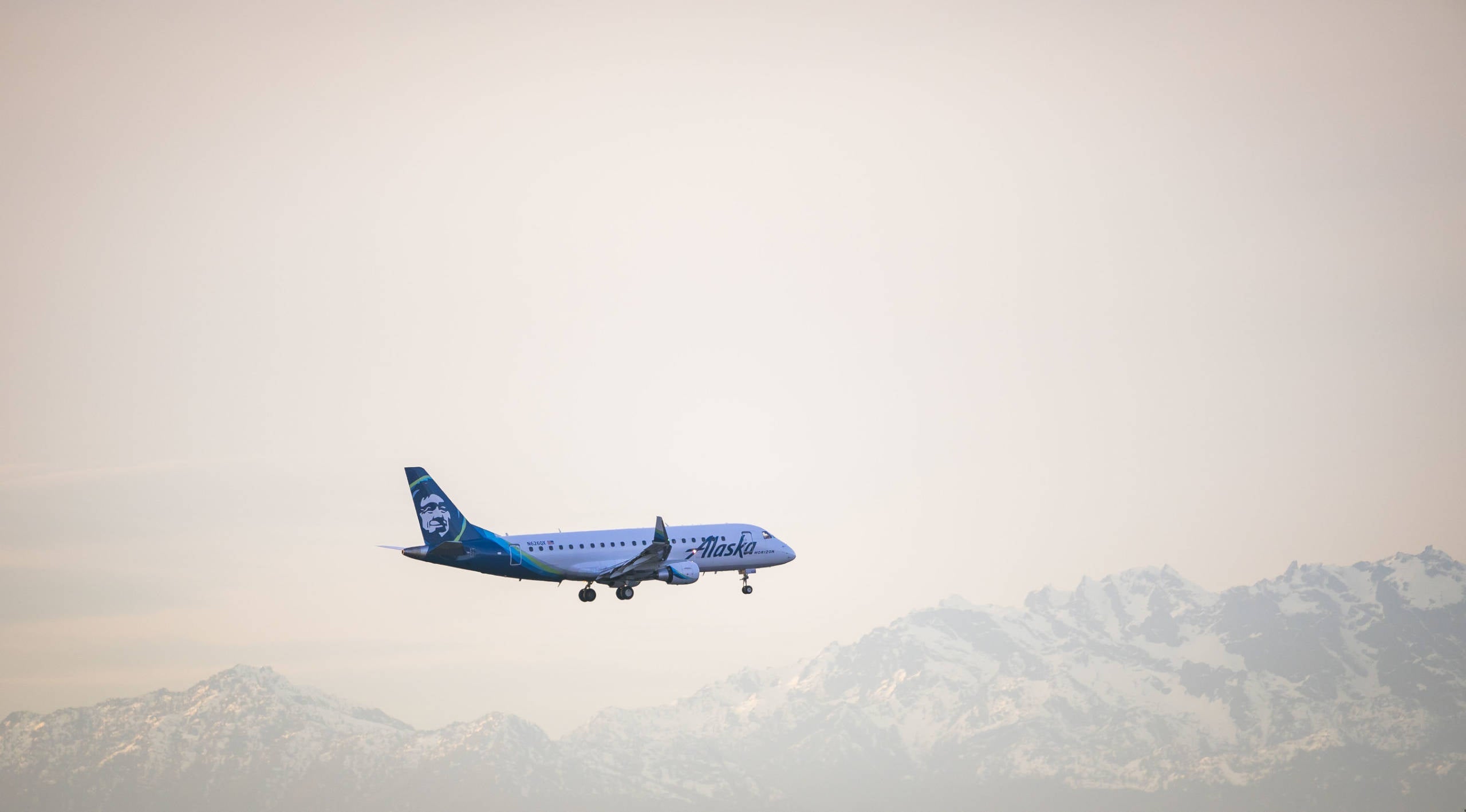

The Seattle-based carrier will begin flying the E175s on flights from Anchorage (ANC) to Fairbanks (FAI), Dillingham (DLG) and King Salmon (AKN) this October, Alaska said on June 22. With just 76 seats, the jets will allow Alaska to offer more flight options to Fairbanks and year-round service to the latter two communities that it cannot profitably provide with its larger Boeing 737 jets.
Alaska-subsidiary Horizon Air will operate the E175s that are outfitted with 12 first class, 12 extra-legroom Premium Class and 52 economy seats. Tickets for the E-Jet-operated flights will go on sale by June 26.
Sign up for the free daily TPG newsletter for more airline news!
Alaska's addition of the E175 in its namesake state comes as the coronavirus pandemic is driving map and fleet changes. The small jets will allow the airline to better fill the gap left by bankrupt RavnAir's shut down in April. Alaska will serve Dillingham and King Salmon year-round instead of just during the summer with the small jets.
Alaska has already added a stop in Cold Bay (CDB) in the Aleutian Islands to its flight to Adak (ADK). The stop replaced RavnAir in Cold Bay and added what some are calling a new AvGeek "milk run" — or flight that makes several stops enroute to its final destination — to the airline's map.
Airlines provide a lifeline to many small communities in the state of Alaska. Much of the state is inaccessible by road and, given its arctic climate, ships are often limited to warmer summer months. This leaves flights as the main mode of travel for both people and freight throughout the state.
Related: Alaska Airlines consolidates routes, commits to serving several RavnAir communities
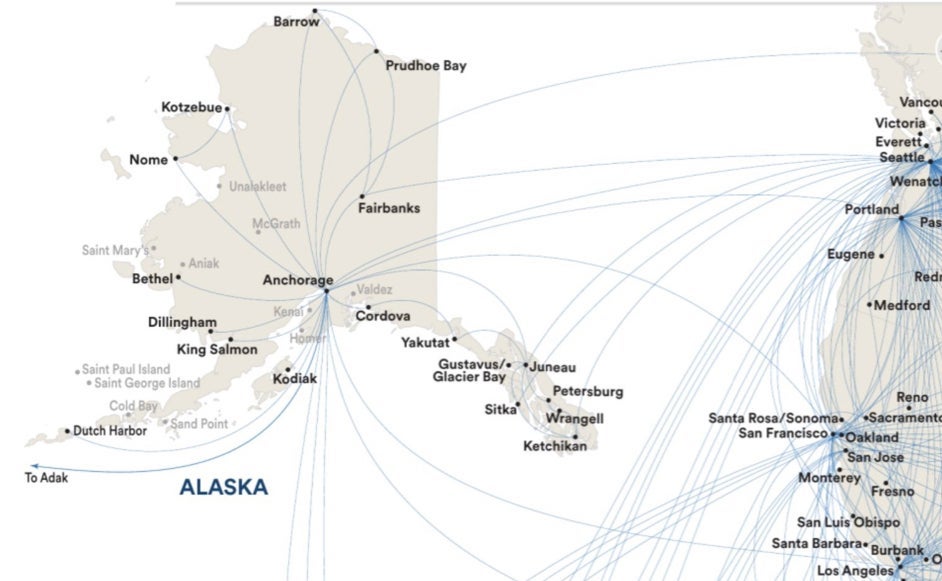
In addition to replacing RavnAir, the E175s will allow Alaska to provide more schedule flexibility on the Anchorage-Fairbanks route. At the same time, the jets allow it to reduce the number of seats it flies in the market in response to lower demand for air travel. The airline plans to offer up to seven daily Anchorage-Fairbanks flights with the small jets come October, up from just three today but comparable to the schedule it flew in July 2019.
The number of daily seats will rise to around 532 with the expanded E175 schedule, compared to up to 372 on 737-700s today, according to Cirium schedules. However, the number is about half of the daily seats Alaska offered on the Anchorage-Fairbanks route last summer.
This is not the first time Alaska had tried to fly smaller planes in the name of more flexibility in the state of Alaska. Horizon Air flew De Havilland Canada Dash 8 turboprops with 76 seats on select routes from Anchorage from 2014 to 2018. The carrier ended the operation as it was difficult for Horizon to "operate cost-effectively in such a remote environment with limited resources."
Related: The state of Alaska could face an entire year with almost no tourists
The state of Alaska has been hit hard by the pandemic. A mandatory 14-day quarantine for anyone arriving in the state aimed at limiting the spread of COVID-19 was eased only in June, though travelers still have to prove they do not have the virus. Many cruises and other tours have already been cancelled leaving the state's tourism industry wondering if they will have to wait until 2021 for a recovery.
Alaska's operational changes in its namesake come as it continues to evaluate its future fleet needs. The carrier released an updated plan on June 22 that holds its fleet steady at 319 planes, including 225 mainline jets and 94 regional aircraft, through the end of the year. This excludes the 12 Airbus jets that it already retired due to the coronavirus.
However, in a footnote the carrier said that it is "probable" that the plan will "change significantly" amid the uncertainty around the recovery from the pandemic.
“Things will likely not go back to pre-COVID levels in the next 12 months,” Alaska president Ben Minicucci told The Seattle Times earlier in June. “We see a smaller company in 2021. We see a smaller industry."
Related: Alaska Airlines advances Airbus A320 retirements, weighs post-pandemic fleet needs