The Airbus A380 might be back from the dead — but for how long?

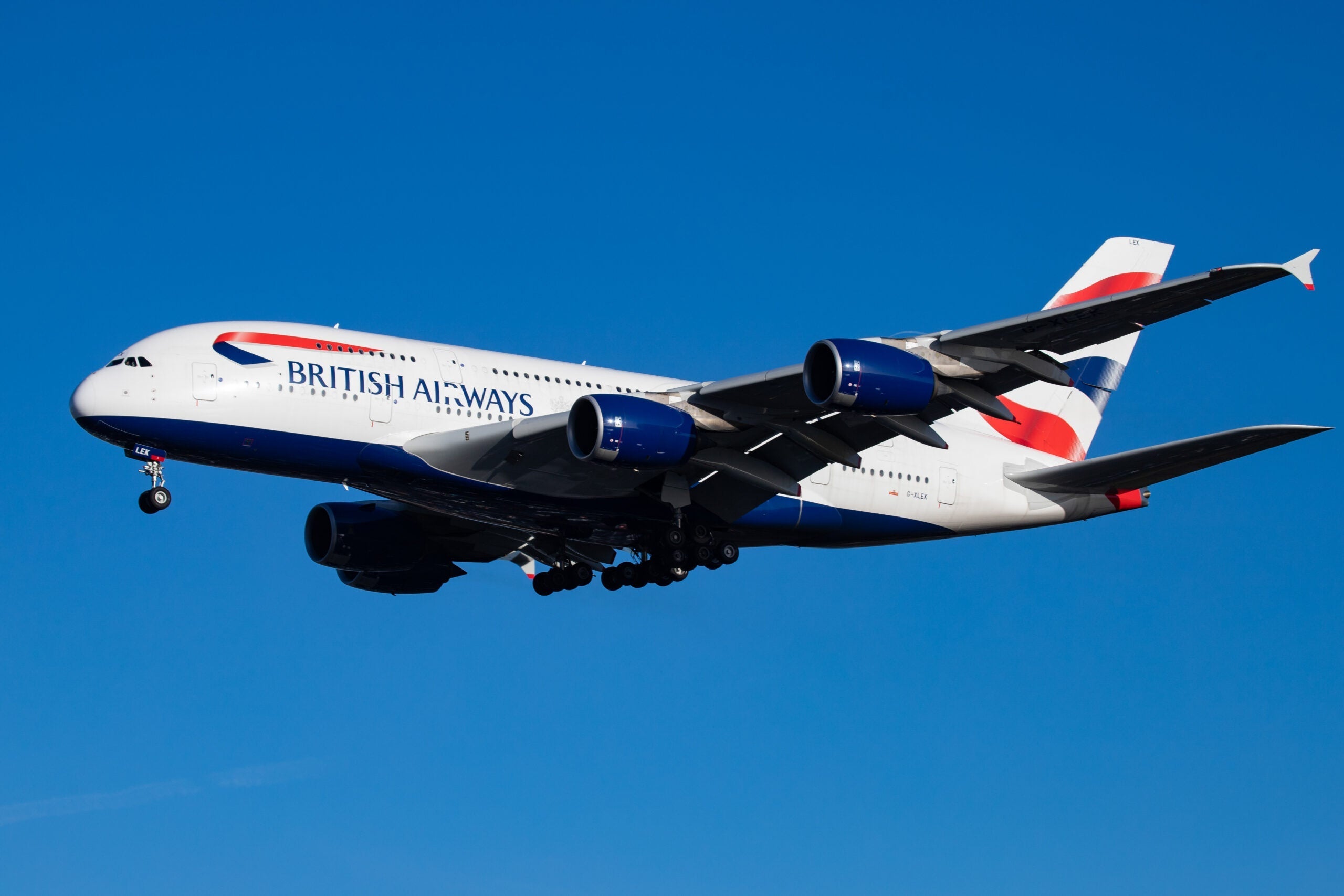
The future of the Airbus A380 looked bleak at British Airways in mid-2020.
Like much of the airline's fleet, the superjumbo — a favorite of AvGeeks and passengers alike — was parked during the initial phase of the COVID-19 pandemic. It was entirely possible the plane would never return to service. The writing seemed to be on the wall when, in July 2020, the airline announced it would retire its entire fleet of Boeing 747-400s — the so-called Queen of the Skies.
In the following months, travel remained depressed, and BA's long-haul fleet was exclusively operated by the Airbus A350, and the Boeing 777 and 787.
However, vaccines became available, and travelers began to slowly but surely return to the skies. Maybe there was a place in BA's fleet for the 469-seat behemoth after all. Maybe it wouldn't face a similar fate as the 747 fleet.
After the U.S. announced it was finally reopening its borders to most international travelers, including those from the UK, BA made an announcement of its own.
"British Airways to welcome back its A380 as it launches its biggest schedule since March 2020," read the Oct. 6, 2021, press release.
The A380 was back at BA. As of this month, the airline is on the verge of returning the final two of its 12 superjumbos back to service.
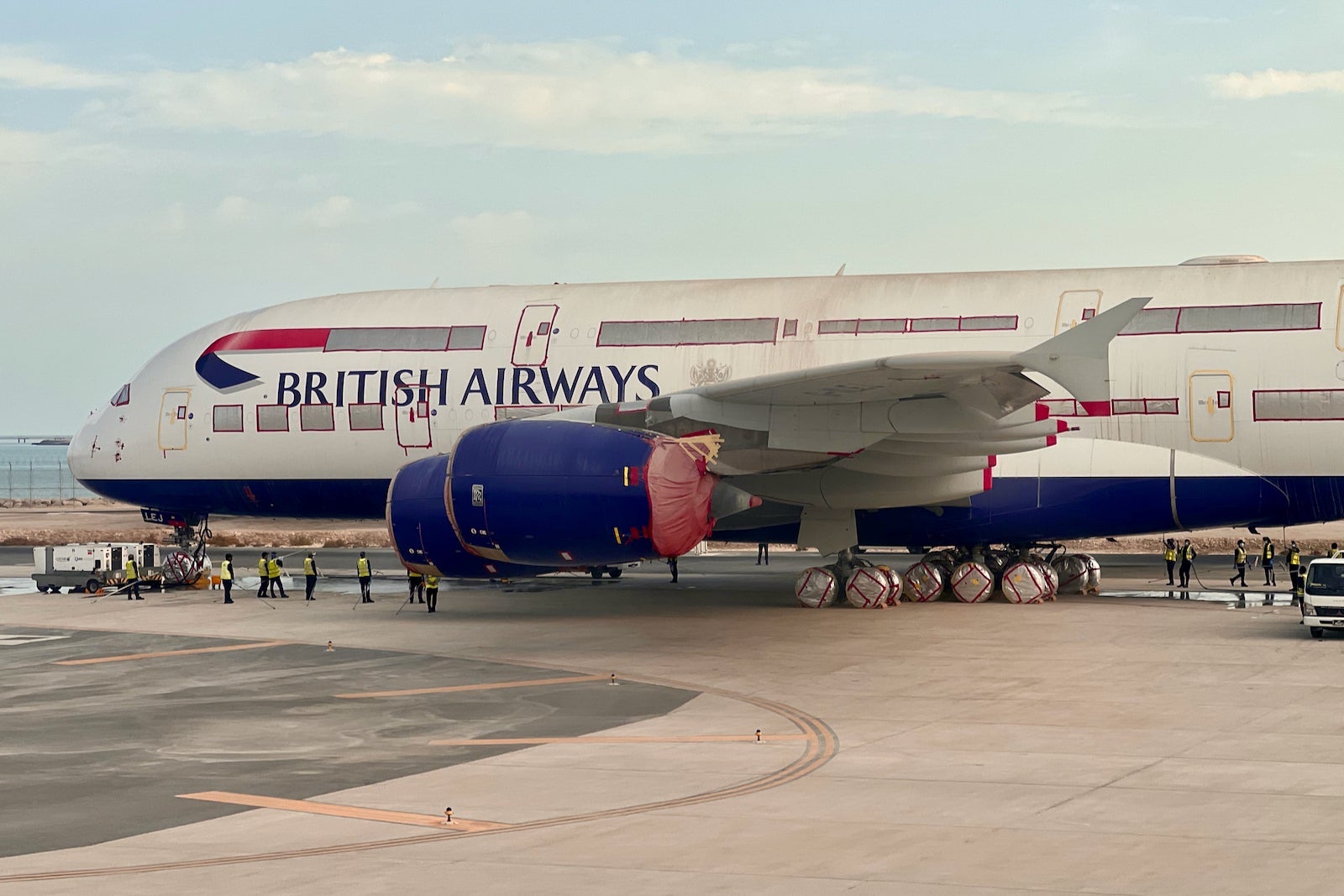
It's a happy ending to what could have been another sad consequence of the pandemic — another airline retiring yet another beloved fleet of aircraft.
This story of the A380 is not unique to BA; many other airlines made the same decisions regarding the massive plane. Although it was parked during the depths of the pandemic, the A380 is slowly on its way back.

In June 2019, there were 230 active A380s globally, according to Cirium Fleets Analyzer. The following June, there were just six (all of which were operated that month by China Southern). By June 2021, the recovery had slowly but surely begun, as there were 31 active A380s. As of this month, there are 105 active A380s, with 138 still in storage.
Now, as airlines face delivery delays for new aircraft (and perhaps regret the retirement of other aircraft during the height of the pandemic), the A380 has again become a go-to for high-density, long-haul missions — despite high fuel costs.
More: On board the first post-pandemic British Airways A380 flight
Some operators have bemoaned the relative inefficiency of four-engine aircraft in the past decade as more efficient twin-engine aircraft, such as the Boeing 787 and Airbus A350, have entered the market. However, there is still an upside to operating the A380, said Henry Harteveldt, an airline industry analyst and president of Atmosphere Research.
"Operating the 380 means that — especially in this high fuel environment — it allows an airline to carry more people on a single departure and to use one crew," Harteveldt told TPG in an interview. "So maybe you're able to consolidate what would normally be two flights into one perhaps, or just get that much more lift in and out of your hub or on a key route — the 380 may be able to prove it itself as being very valuable."
Surely, the future of the A380 is different depending on the airline. At Emirates, which operates the largest fleet (120) of A380s, the aircraft is a part of the airline's brand and has a secure future. In December, the carrier took delivery of the last A380 produced, practically guaranteeing that the plane will be a part of its fleet for years to come.
Earlier this year, the Middle Eastern carrier released an advertisement featuring the A380 circling Dubai's Burj Khalifa. A flight attendant stands on top as an A380 in a special Dubai Expo livery circles the building.
"Fly the iconic Emirates A380," reads the sign she's holding.
Air France and Lufthansa fall on the other side of the spectrum. Early on in the pandemic, both carriers decided to retire the A380. While some rumors have circulated about the A380's possible return to Lufthansa, Air France's fleet has begun to meet the scrapper's torch. It's a sad end for the superjumbo at the flag carriers of two countries that have contributed more to the design, development and production of the A380 than any others.
Also in this category is Etihad, which operated perhaps the most lavish A380 of all airlines: It featured The Residence, a private suite on the aircraft's upper deck. Etihad has stored its A380 fleet and has not announced any plans for reactivation.
Review: The Residence on Etihad's A380 — JFK to Abu Dhabi
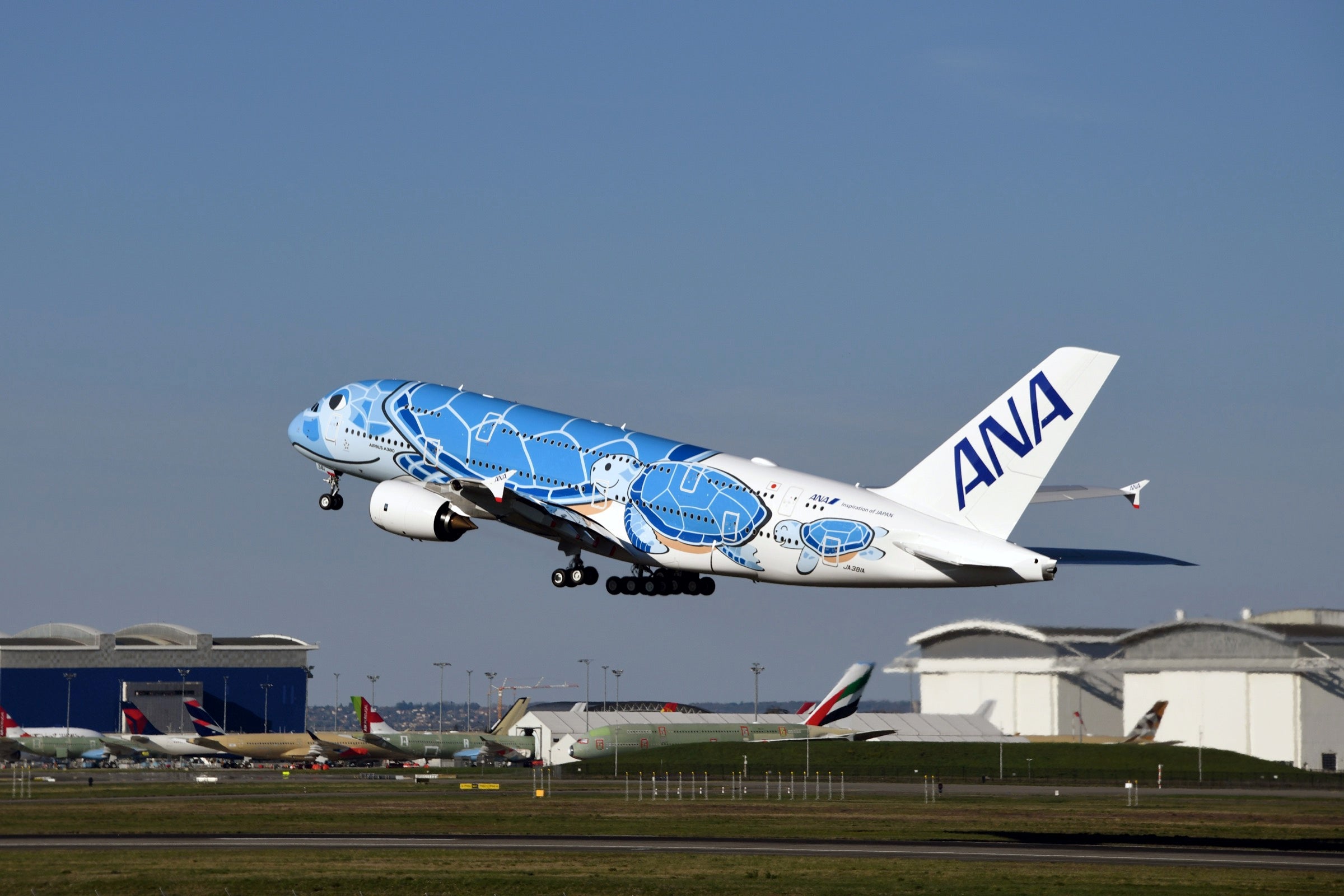
Then, there are the carriers that parked their A380s at the height of the pandemic but have since reactivated the fleets (or are committed to reactivating). In addition to BA, those carriers include launch customer Singapore Airlines, Qantas, Korean Air (and its merger partner Asiana Airlines), Qatar Airways and All Nippon Airways, which uses its three turtle-emblazoned Flying Honus exclusively between Tokyo Narita Airport (NRT) and Honolulu's Daniel K. Inouye International Airport (HNL).
Outside of Emirates, is the A380 here to stay? It's complicated.
The demand environment is incredibly strong at most airlines right now as we head into the summer, but some leading indicators show the economy might be slowing. As summer turns to fall and then winter, whether this much capacity will be necessary remains an open question, Harteveldt said.
"How much A380 capacity makes sense to operate and how much does not?" Harteveldt asked. "Depending on ownership costs, will we see airlines if the economy slows or if fuel costs get even more expensive, will we see airlines park, some or all of their 380s? As we enter the fall or winter, will that parking be temporary until we get to spring of next year? Or will they say, as much as we like the airplane, it just isn't going to work?"
In other words, unless you're Emirates, nothing about the A380 should be taken for granted.
TPG featured card

at American Express's secure site
Terms & restrictions apply. See rates & fees.
| 4X | Earn 4X Membership Rewards® points per dollar spent on purchases at restaurants worldwide, on up to $50,000 in purchases per calendar year, then 1X points for the rest of the year. |
| 4X | Earn 4X Membership Rewards® points per dollar spent at US supermarkets, on up to $25,000 in purchases per calendar year, then 1X points for the rest of the year. |
| 5X | Earn 5X Membership Rewards® points on prepaid hotel stays booked through AmexTravel.com or the Amex Travel App™. |
| 3X | Earn 3X Membership Rewards® points on flights booked through AmexTravel.com, the Amex Travel App™, or purchased directly from airlines. |
| 2X | Earn 2X Membership Rewards® points on prepaid car rentals booked through AmexTravel.com or the Amex Travel App™ and cruises booked and paid through AmexTravel.com. |
| 1X | Earn 1X Membership Rewards® point per dollar spent on all other eligible purchases. |
Pros
- Valuable dining and food-related credits
- Flexible rewards with airline and hotel transfer partners
- Multiple travel and purchase protections
- No foreign transaction fees
- Access to Amex Offers for additional savings (enrollment required)
Cons
- Not as useful for those living outside the U.S.
- Some may have trouble using Uber and other dining credits
- You may be eligible for as high as 100,000 Membership Rewards® Points after you spend $8,000 in eligible purchases on your new Card in your first 6 months of Card Membership. Welcome offers vary and you may not be eligible for an offer. Apply to know if you’re approved and find out your exact welcome offer amount – all with no credit score impact. If you’re approved and choose to accept the Card, your score may be impacted.
- Earn 4X Membership Rewards® points per dollar spent on purchases at restaurants worldwide, on up to $50,000 in purchases per calendar year, then 1X points for the rest of the year.
- Earn 4X Membership Rewards® points per dollar spent at US supermarkets, on up to $25,000 in purchases per calendar year, then 1X points for the rest of the year.
- Earn 5X Membership Rewards® points on prepaid hotel stays booked through AmexTravel.com or the Amex Travel App™.
- Earn 3X Membership Rewards® points on flights booked through AmexTravel.com, the Amex Travel App™, or purchased directly from airlines.
- Earn 2X Membership Rewards® points on prepaid car rentals booked through AmexTravel.com or the Amex Travel App™ and cruises booked and paid through AmexTravel.com.
- Earn 1X Membership Rewards® point per dollar spent on all other eligible purchases.
- Pay It® lets you tap in the American Express® App to quickly pay for small purchase amounts throughout the month and still earn rewards the way you usually do. Plan It® gives you the option to split up big purchases into equal monthly payments with a fixed fee. You’ll know upfront exactly how much you’ll pay.
- $120 Dining Credit: Earn up to a total of $10 in statement credits monthly when you pay with the Gold Card at Grubhub (including Seamless), Buffalo Wild Wings, Five Guys, The Cheesecake Factory, and Wonder. This can be an annual savings of up to $120. Enrollment required.
- $100 Resy Credit: Get up to $100 in statement credits each calendar year at over 10,000 qualifying U.S. Resy restaurants after you pay for eligible purchases with the American Express® Gold Card. That’s up to $50 in statement credits semi-annually. Enrollment required.
- $84 Dunkin' Credit: Earn up to $7 in monthly statement credits after you pay with the American Express® Gold Card at U.S. Dunkin’ locations. Enrollment required.
- $120 Uber Cash on Gold: Enjoy up to $120 in Uber Cash annually with your Gold Card. Just add your Card to your Uber account and you'll get $10 in Uber Cash each month to use on orders and rides in the U.S. when you select an Amex Card for your transaction.
- Enjoy complimentary Hertz Five Star® Status benefits like skipping the counter at select locations, adding an additional driver at no additional cost*, and vehicle upgrades**. Benefit enrollment and Hertz Gold+ registration are required. *Additional drivers must meet standard rental qualifications and must be a spouse or domestic partner to qualify as complimentary. Other additional drivers subject to fees. **Benefits are subject to availability and vary by location. Additional Hertz program Terms and Conditions including age restrictions apply.
- Book two nights or more with The Hotel Collection through AmexTravel.com or the Amex Travel App™ and receive a $100* credit towards eligible charges at over 1,400 upscale hotels worldwide. *Eligible charges vary by property.
- Book your travel through the Amex Travel App™ with added peace of mind – backed by American Express® service and support. Only for American Express® Card Members.
- Whenever you need us, we're here. Our Member Services team will ensure you are taken care of. From lost Card replacement to statement questions, we are available to help 24/7.
- No Foreign Transaction Fees.
- Annual Fee is $325.
- Terms Apply.