See An Airbus A320 Towed Out of a Hangar It's Too Big For

When a large commercial aircraft enters what's known as final assembly — the joining of key aircraft sections including the wings, vertical tail plane, and the main fuselage — it comes together in stages, entering the final assembly line (FAL) in pieces and leaving at the end almost ready to fly. That's what Boeing and Airbus do, for example, getting the components from various suppliers around the world and joining them together at one of their several production sites around the world. (Boeing assembles its jets at three facilities in Seattle and Charleston; Airbus has four, in Europe, the US and China.)
On a recent visit to Airbus headquarters in Toulouse, France, I got a chance to look at the final assembly line for the Airbus single-aisle family — the A319, A320 and A321. And that also meant a look at something that most passengers won't see their airplane do: Being towed ingeniously out of a hangar it is too big for.
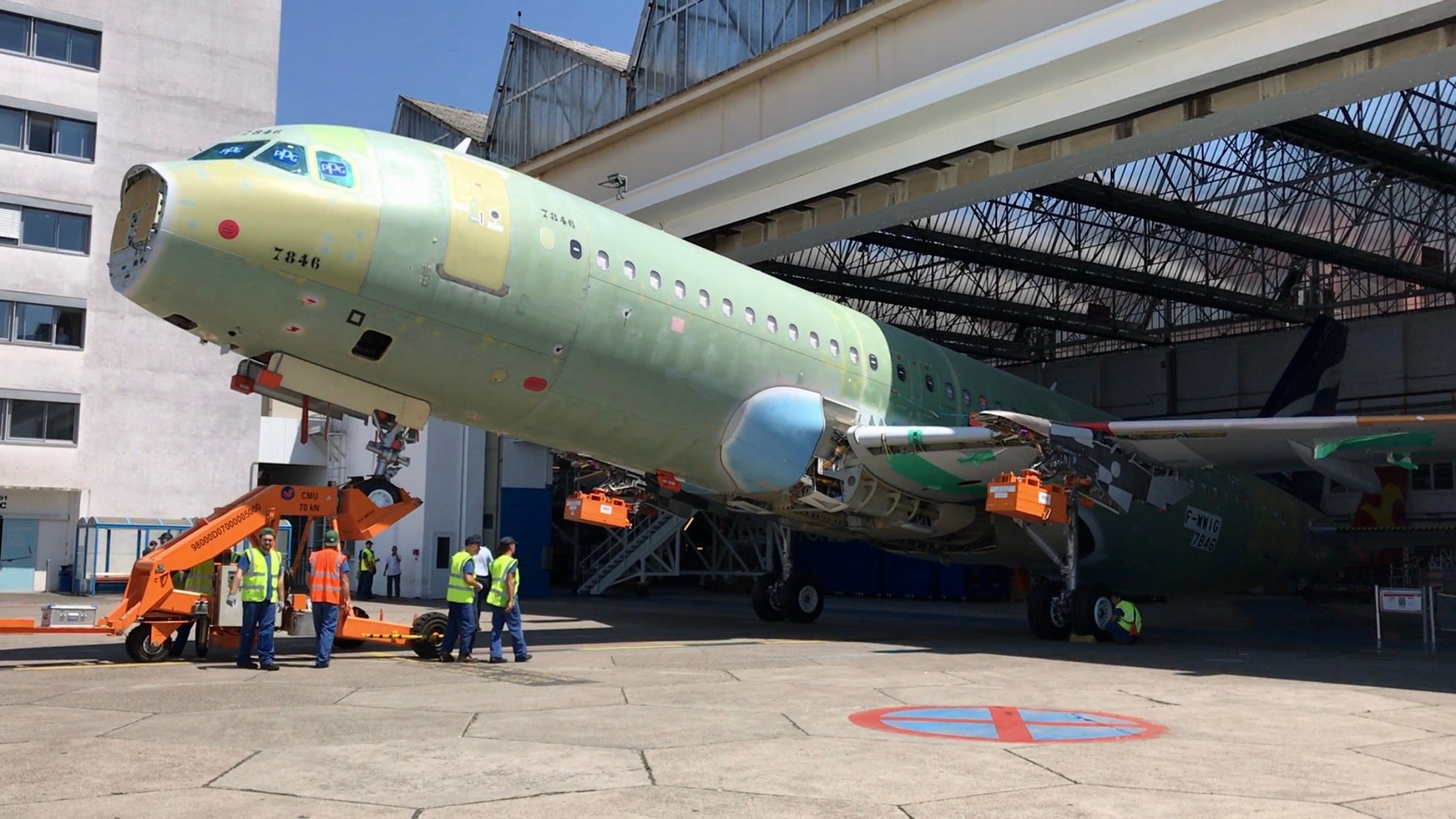
That is what happened with this almost-finished A320, number 7,846 off the assembly line. The tail was already painted in the colors of the customer, Aeroflot Russian Airlines. Ordinarily this jet would have just come out of the assembly building through the giant doors at the end of the line, which are big enough to let an A320 through.
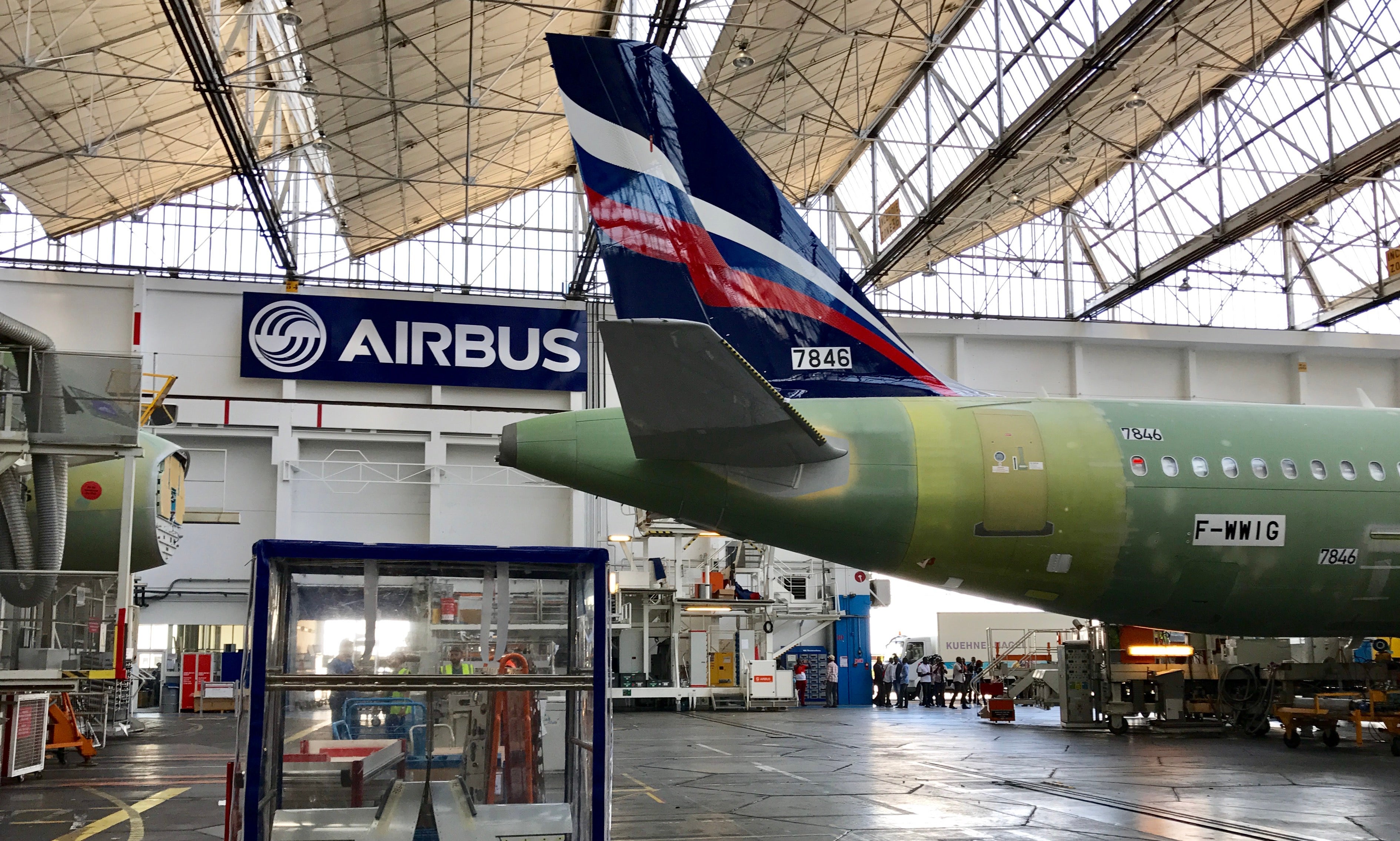
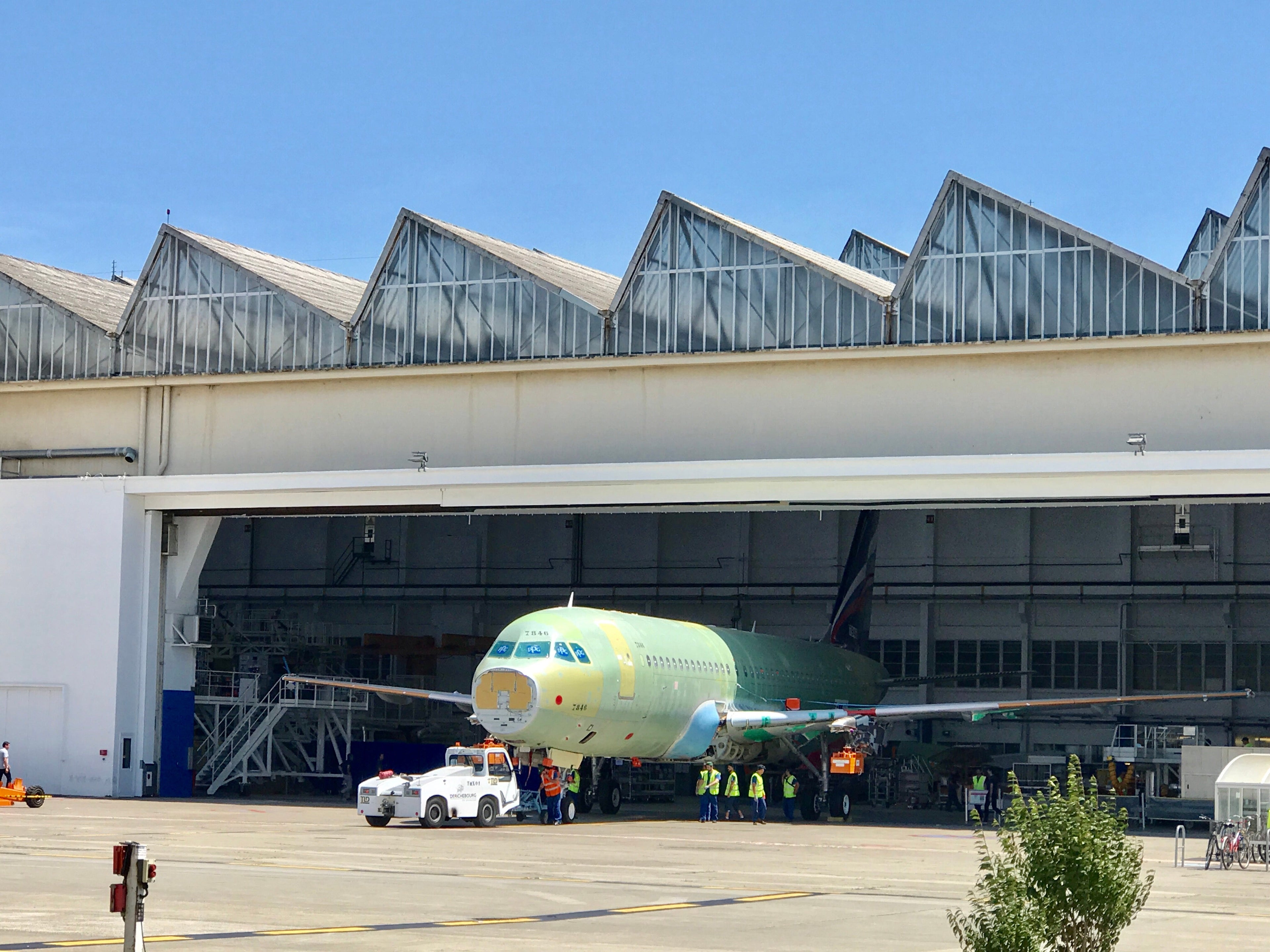
Sometimes the aircraft at the front of the final assembly line isn't quite ready to exit yet, but the aircraft behind it is. Keeping the airplane that's ready for delivery in the hangar while the one in front is finished would be a giant waste of money; these are after all machines that a customer pays $100 million for. Keeping them idle on the ground is not a good idea. Number 7,846 was ready to leave the assembly hangar ad move to another one for the final touches before delivery, but blocked by an unfinished jet in front.
This is where the "side door" trick comes in handy: You just open the side of the hangar and wheel the aircraft out. Except there's a problem: The 12-meter (38 feet) tail. It's too big to go through.
With the aircraft turned to face the exit, Airbus engineers resort to a neat solution: a hydraulic tow bar attached to the nose gear, lifting the aircraft, almost as if it were taking off. That lowers the tail enough to go through.
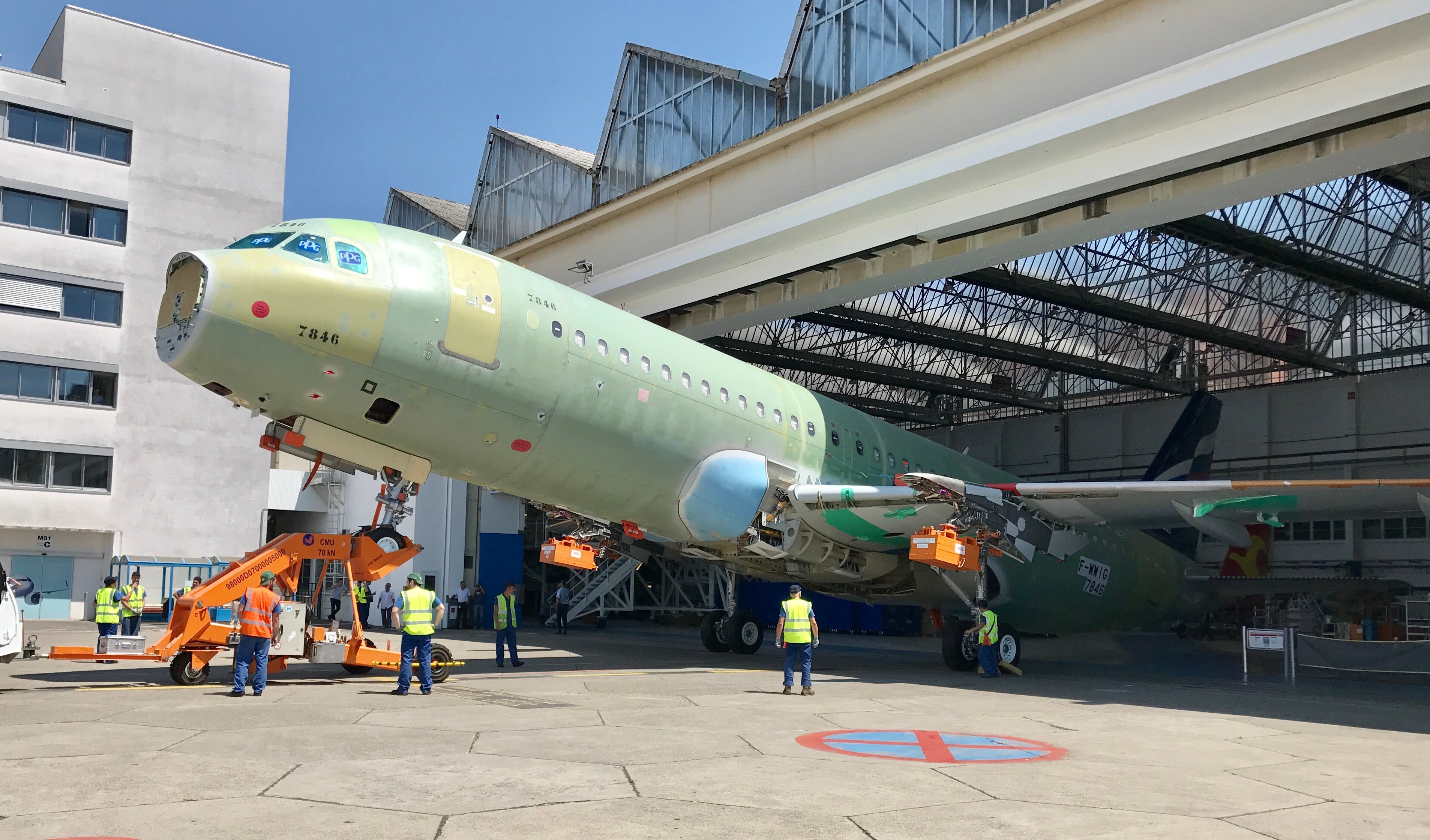
The aircraft is then slowly wheeled forward. The angle of the lift of the nose is crucial, as engineers must be careful not to cause a tail strike, which would be extremely costly.
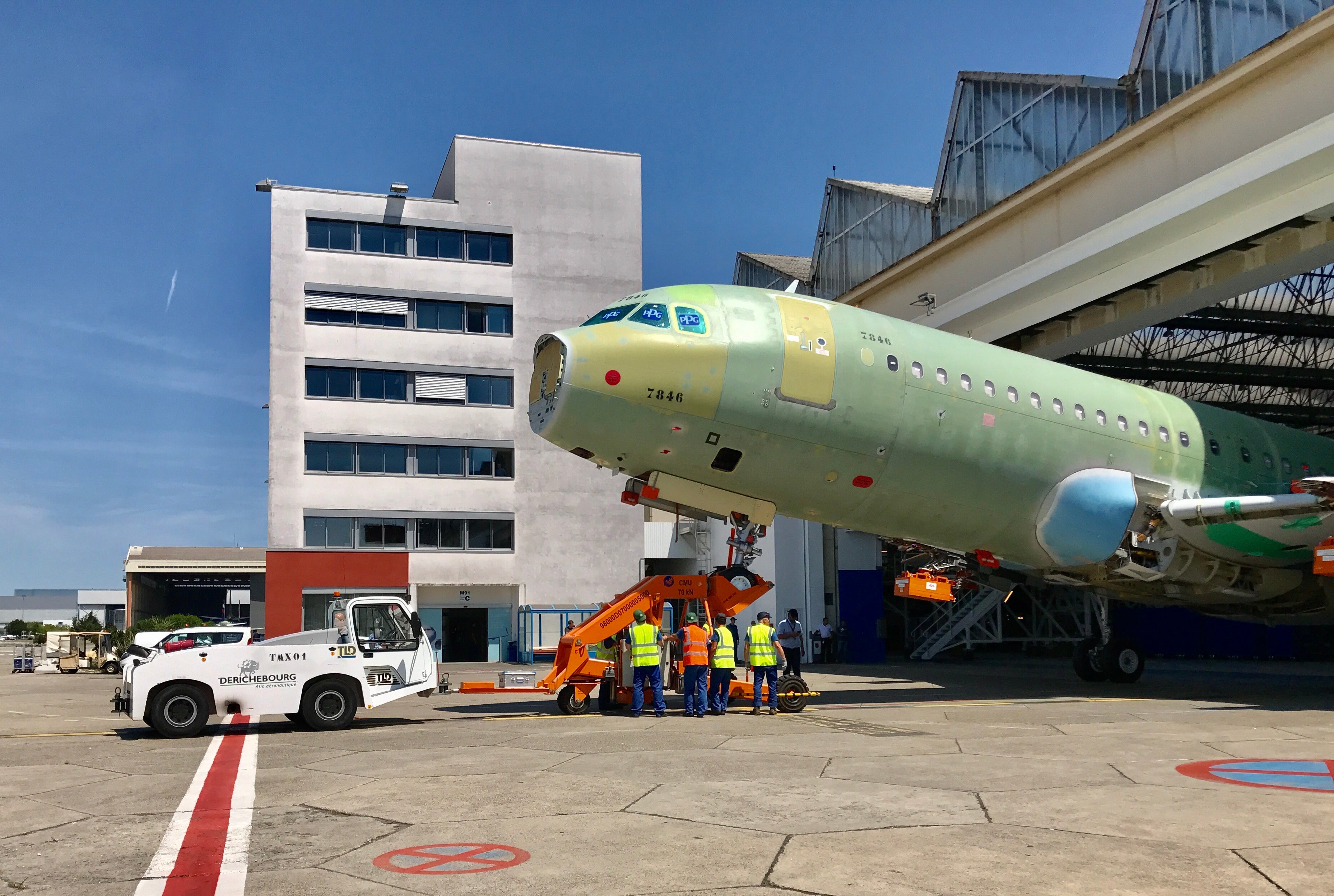
The video below shows how incredibly tight the clearance of the tail is.
The clearance is less than 15 centimeters, or 6 inches.


With the aircraft safely out of the hangar, it can continue assembly, rather than be held up by a slightly delayed aircraft at the front of the queue.
You might wonder why Airbus would design a hangar that its aircraft are too big for once assembled inside. The answer is that it hasn't: It inherited the Toulouse site from Sud-Aviation, a pioneer in commercial aviation. This hangar was originally built for the final assembly of the Caravelle —a French twinjet which holds the distinction of being the world's first jet-powered airliner to be developed for the short/medium-range market.
Soon after, final assembly of the Concorde took over the hangar. Timing deliveries of the supersonic jets perfectly wasn't exactly an issue: only 20 were built, for all of two customers.

And now the site is home to the final assembly of the world's best-selling single-aisle aircraft family, the A320, which has received 13,241 orders, with a backlog of around 5,450 jets still to be assembled.
TPG featured card
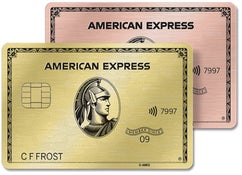
at American Express's secure site
Terms & restrictions apply. See rates & fees.
| 4X | Earn 4X Membership Rewards® points per dollar spent on purchases at restaurants worldwide, on up to $50,000 in purchases per calendar year, then 1X points for the rest of the year. |
| 4X | Earn 4X Membership Rewards® points per dollar spent at US supermarkets, on up to $25,000 in purchases per calendar year, then 1X points for the rest of the year. |
| 5X | Earn 5X Membership Rewards® points on prepaid hotel stays booked through AmexTravel.com or the Amex Travel App™. |
| 3X | Earn 3X Membership Rewards® points on flights booked through AmexTravel.com, the Amex Travel App™, or purchased directly from airlines. |
| 2X | Earn 2X Membership Rewards® points on prepaid car rentals booked through AmexTravel.com or the Amex Travel App™ and cruises booked and paid through AmexTravel.com. |
| 1X | Earn 1X Membership Rewards® point per dollar spent on all other eligible purchases. |
Pros
- Valuable dining and food-related credits
- Flexible rewards with airline and hotel transfer partners
- Multiple travel and purchase protections
- No foreign transaction fees
- Access to Amex Offers for additional savings (enrollment required)
Cons
- Not as useful for those living outside the U.S.
- Some may have trouble using Uber and other dining credits
- You may be eligible for as high as 100,000 Membership Rewards® Points after you spend $8,000 in eligible purchases on your new Card in your first 6 months of Card Membership. Welcome offers vary and you may not be eligible for an offer. Apply to know if you’re approved and find out your exact welcome offer amount – all with no credit score impact. If you’re approved and choose to accept the Card, your score may be impacted.
- Earn 4X Membership Rewards® points per dollar spent on purchases at restaurants worldwide, on up to $50,000 in purchases per calendar year, then 1X points for the rest of the year.
- Earn 4X Membership Rewards® points per dollar spent at US supermarkets, on up to $25,000 in purchases per calendar year, then 1X points for the rest of the year.
- Earn 5X Membership Rewards® points on prepaid hotel stays booked through AmexTravel.com or the Amex Travel App™.
- Earn 3X Membership Rewards® points on flights booked through AmexTravel.com, the Amex Travel App™, or purchased directly from airlines.
- Earn 2X Membership Rewards® points on prepaid car rentals booked through AmexTravel.com or the Amex Travel App™ and cruises booked and paid through AmexTravel.com.
- Earn 1X Membership Rewards® point per dollar spent on all other eligible purchases.
- Pay It® lets you tap in the American Express® App to quickly pay for small purchase amounts throughout the month and still earn rewards the way you usually do. Plan It® gives you the option to split up big purchases into equal monthly payments with a fixed fee. You’ll know upfront exactly how much you’ll pay.
- $120 Dining Credit: Earn up to a total of $10 in statement credits monthly when you pay with the Gold Card at Grubhub (including Seamless), Buffalo Wild Wings, Five Guys, The Cheesecake Factory, and Wonder. This can be an annual savings of up to $120. Enrollment required.
- $100 Resy Credit: Get up to $100 in statement credits each calendar year at over 10,000 qualifying U.S. Resy restaurants after you pay for eligible purchases with the American Express® Gold Card. That’s up to $50 in statement credits semi-annually. Enrollment required.
- $84 Dunkin' Credit: Earn up to $7 in monthly statement credits after you pay with the American Express® Gold Card at U.S. Dunkin’ locations. Enrollment required.
- $120 Uber Cash on Gold: Enjoy up to $120 in Uber Cash annually with your Gold Card. Just add your Card to your Uber account and you'll get $10 in Uber Cash each month to use on orders and rides in the U.S. when you select an Amex Card for your transaction.
- Enjoy complimentary Hertz Five Star® Status benefits like skipping the counter at select locations, adding an additional driver at no additional cost*, and vehicle upgrades**. Benefit enrollment and Hertz Gold+ registration are required. *Additional drivers must meet standard rental qualifications and must be a spouse or domestic partner to qualify as complimentary. Other additional drivers subject to fees. **Benefits are subject to availability and vary by location. Additional Hertz program Terms and Conditions including age restrictions apply.
- Book two nights or more with The Hotel Collection through AmexTravel.com or the Amex Travel App™ and receive a $100* credit towards eligible charges at over 1,400 upscale hotels worldwide. *Eligible charges vary by property.
- Book your travel through the Amex Travel App™ with added peace of mind – backed by American Express® service and support. Only for American Express® Card Members.
- Whenever you need us, we're here. Our Member Services team will ensure you are taken care of. From lost Card replacement to statement questions, we are available to help 24/7.
- No Foreign Transaction Fees.
- Annual Fee is $325.
- Terms Apply.