Airlines Week Lifetime Achievement Award recognizes two outgoing industry veterans

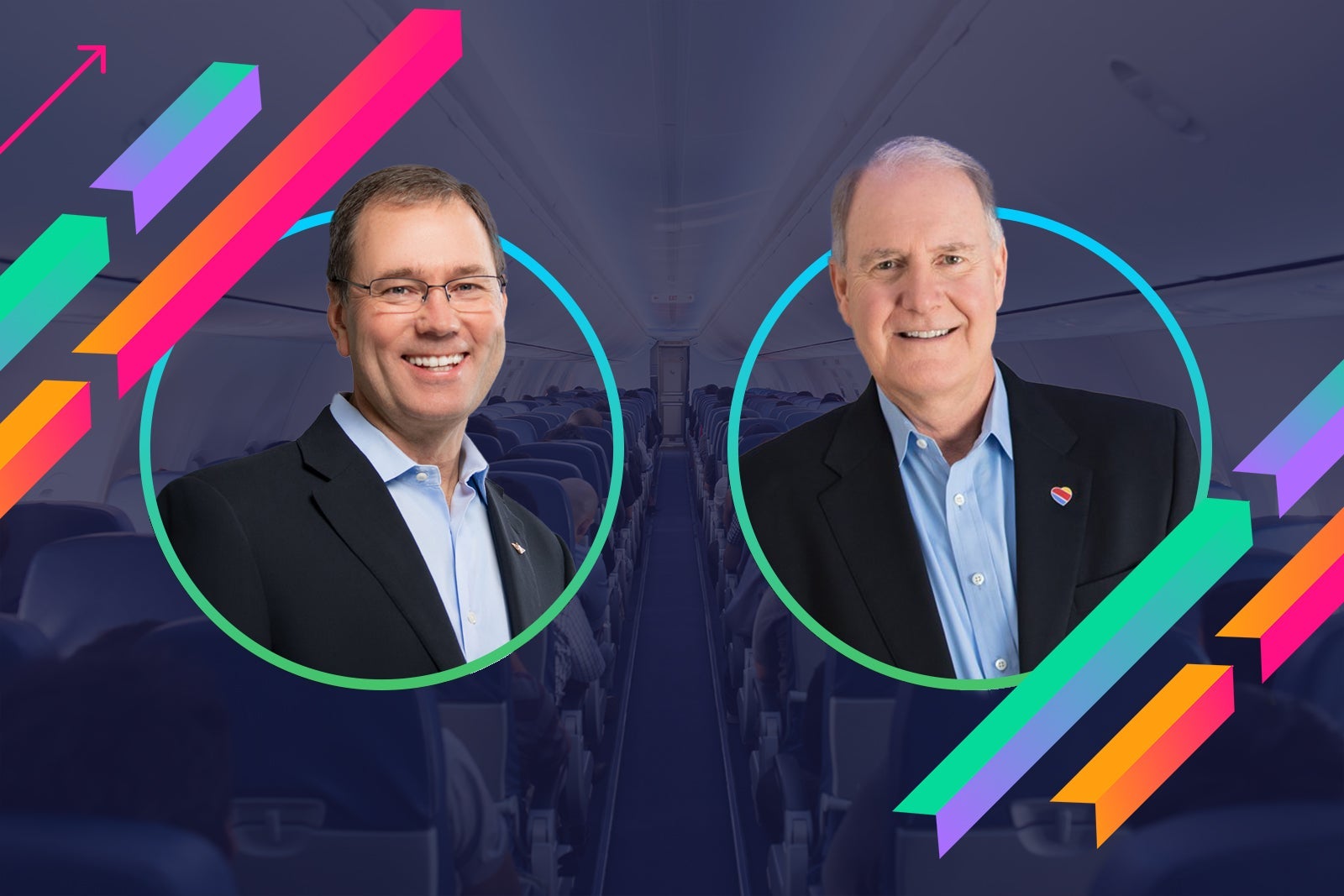

TPG's Airlines Week accolades have focused mostly on airlines, airports and loyalty programs.
But today we roll out our second special honor of the 2021 TPG Awards — this year's Lifetime Achievement Award — that acknowledges two outgoing CEOs. They've had an outsize influence not only on their individual carriers, but on the U.S. airline industry as a whole.
Read on to learn more about two retiring executives who'll cast a shadow over the industry far beyond their departures.
Gary Kelly, Southwest Airlines
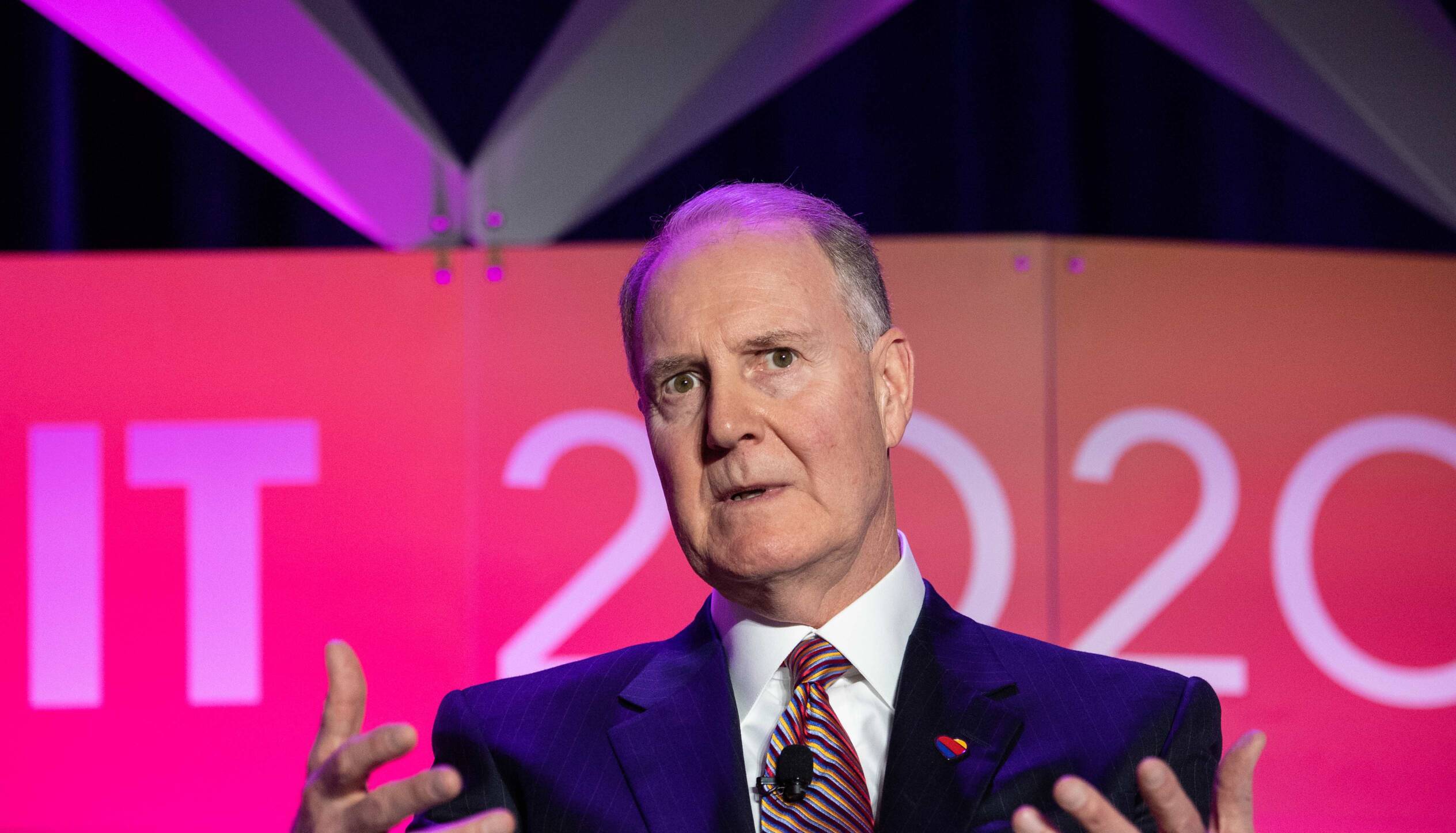
Gary Kelly is set to step down as Southwest CEO in February. Don't be surprised if the longtime Southwest leader is ultimately remembered as one of the most influential CEOs of the deregulation era.
Kelly, who took over as the company's top executive in 2004, has helped guide the evolving carrier through a period of remarkable growth that has firmly established it as an industry giant.
Under his leadership, Southwest has grown to become the biggest carrier of domestic passengers of any U.S. airline.
Kelly engineered Southwest's acquisition and assimilation of rival AirTran, a deal that brought Southwest into multiple new markets and paved the way for the airline's first-ever international service.
But while that deal in 2011 was a pivotal moment for Southwest, it was just one of many that will define Kelly's time at the company.

One overarching theme for his tenure is "growth."
Two months before Kelly took over as CEO, Southwest had just begun flying from Philadelphia – the 58th city served by the carrier at the time. Now, when the carrier begins flying from Syracuse next Sunday (Nov. 14), the New York airport will become the 121st pin on Southwest's route map – more than double the number when Kelly took over.
Among those new destinations are dozens that once would have been unimaginable for Southwest. Kelly pushed the airline into primary big-city airports – places like Boston, Washington National and Miami – that Southwest had famously avoided for decades. And there are now more than a dozen international destinations for the carrier, which had been domestic-only until 2014.
TPG exclusive: Q&A: Southwest CEO Gary Kelly chats about his legacy, new cities and change fees
On the frequent flyer front, Southwest launched a major overhaul of its Rapid Rewards program in 2011. Out was a simple scheme that gave most members a free trip after taking 16 flights within a two-year window, replaced with a new revenue-based setup. It was viewed as risky at the time, but it ultimately put Southwest ahead of an industry that eventually moved in a similar direction.
Longtime industry observers also may remember Kelly taking the battle to fellow Texas carrier American Airlines over the Wright Amendment, a 1970s-era federal law meant to protect the Dallas-Fort Worth airport – but one that restricted the destinations Southwest could serve from its home airport of Dallas Love Field. Southwest took the fight to repeal Wright public, winning concessions along the way as part of a decadelong fight that led to eventual compromise and the phaseout of most of the Wright Amendment's restrictions.
More recently, Kelly doubled down on a strategy of aggressive growth during the pandemic – using other airlines' cutbacks as an opportunity to muscle into new markets. In total, Southwest has announced 17 new markets since April 2020.
Kelly talked to TPG in September 2020, nearly a year before he announced his retirement. We asked him then if he had given any thought to what his legacy at Southwest might look like.
"If your career is long enough, it will encompass a number of different things," he said at the time. "The repeal of the Wright Amendment was ... one that I always felt was sort of a highlight for Southwest during my tenure."
Reflecting further – including on what role the company's response to the pandemic might play – he added: "In my lifetime, it's the ultimate challenge. I am very grateful that I'm here at Southwest still to be a part of this."
In a brief interview with TPG shortly before he announced his retirement, when asked what he thinks the airline will grow to look like in the future, Kelly grew wistful.
"I wish I was going to be around to see what it looks like, because it'll be different. But as long as we continue to offer great service at a low price and continue to innovate, we'll be good."
Read more: 9 cool places you didn't know you could fly on Southwest
Brad Tilden, Alaska Airlines
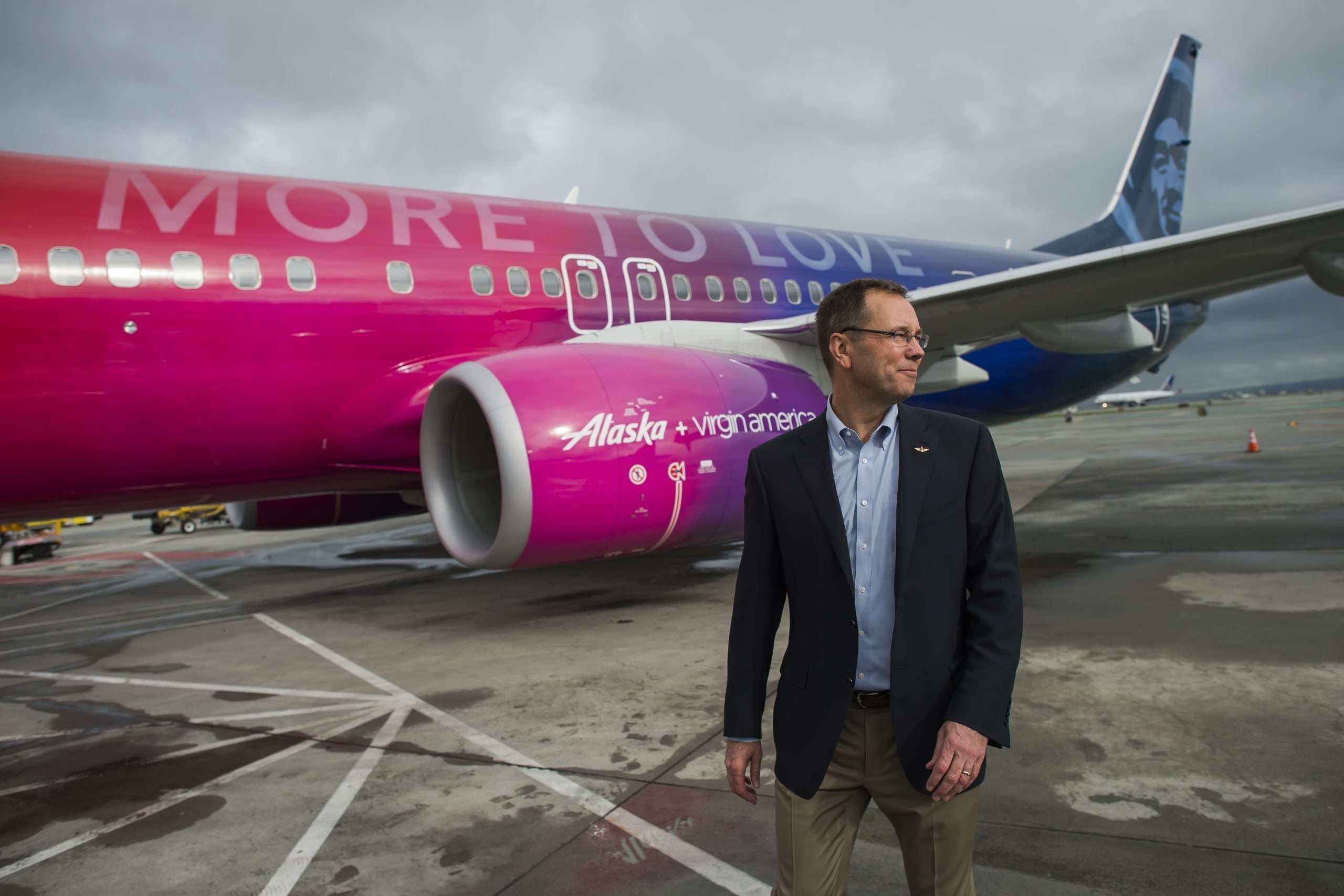
Whatever history is written of Alaska Airlines, expect Brad Tilden to take up an outsize chapter of the company's story.
Tilden, who stepped down after a 10-year run as CEO in March, oversaw momentous change for the Seattle-based carrier.
Under his leadership, Alaska ended its decadeslong run as an "unaligned" carrier that had previously bucked the industry's broader partnership trends. That was just one of several major developments under Tilden's watch that will help shape the airline's trajectory for years to come.
Among the others: Alaska's 2016 acquisition and subsequent assimilation of San Francisco-based Virgin America, repelling an assault by partner-turned-rival Delta, and a major expansion of service to Hawaii and the East Coast.
There's also a December 2020 order for at least 68 Boeing 737 MAXes that will keep the airline tethered to the behemoth jet maker that has its own long history in the Seattle area.
TPG exclusive: From battling 'frenemy' Delta to Oneworld to Virgin America, outgoing Alaska Airlines CEO leaves his mark
Perhaps the headliner for Tilden was the Virgin America takeover in 2016.
The deal was valued at about $2.6 billion — or at about $4 billion if Virgin America's debt and other expenses were included — and brought together two airlines that each enjoyed a strong reputation for customer service. It promised to meld them into a single West Coast juggernaut.
The deal also perhaps blocked an East Coast rival from making inroads on Alaska's West Coast turf. JetBlue made a competing offer to acquire Virgin America, with Alaska winning out after what Tilden described at the time as a "hard-fought competition."
While some Virgin America loyalists were disappointed that Alaska did not incorporate more of Virgin's inflight experience, the acquisition engineered by Tilden had a profound impact on competition in the West — strengthening Alaska's marketshare in California. Nationally, the deal solidified the carrier's position as the fifth-largest.
Elsewhere, Tilden furthered Alaska's expansion into Hawaii, which began under former CEO Bill Ayer and picked up pace following the collapse of Aloha Airlines in 2008. And Alaska expanded its national footprint with more flights to the East Coast and Midwest under Tilden's watch.
Tilden also will be remembered for solidifying Alaska's position in Seattle after a multiyear spat with partner-turned-enemy Delta. The carriers once had a strong relationship, but by the middle of the 2010s Delta launched a full-on expansion in Seattle that went head-to-head with Alaska on many of its most lucrative routes. In response. Alaska doubled down on its Seattle hub, going into growth mode there in a move that appears to have cemented its position in the market.
"We defended ourselves and grew market share when a major competitor came into our hub and tried to steal share from us," Tilden told TPG in March.
That also set the stage for the big changes on the frequent flyer front.
In March, Alaska officially joined the Oneworld frequent flyer alliance as part of a renewed strategic partnership with American Airlines. That ended Alaska's run as an "unaligned" carrier, and positioned Seattle as a key hub for Oneworld — and a counterbalance to Delta and its SkyTeam partners there.
Whatever course Alaska charts from here, it'll be hard to forget the role Tilden had in setting the airline off in that direction.
Related: Your complete guide to earning and redeeming with Alaska Airlines Mileage Plan
TPG featured card

at Capital One's secure site
Terms & restrictions apply. See rates & fees.
| 5X miles | Earn 5X miles on hotels, vacation rentals and rental cars booked through Capital One Travel |
| 2X miles | Earn unlimited 2X miles on every purchase, every day |
Pros
- Stellar welcome offer of 75,000 miles after spending $4,000 on purchases in the first three months from account opening. Plus, a $250 Capital One Travel credit to use in your first cardholder year upon account opening.
- You'll earn 2 miles per dollar on every purchase, which means you won't have to worry about memorizing bonus categories
- Rewards are versatile and can be redeemed for a statement credit or transferred to Capital One’s transfer partners
Cons
- Highest bonus-earning categories only on travel booked via Capital One Travel
- LIMITED-TIME OFFER: Enjoy $250 to use on Capital One Travel in your first cardholder year, plus earn 75,000 bonus miles once you spend $4,000 on purchases within the first 3 months from account opening - that’s equal to $1,000 in travel
- Earn unlimited 2X miles on every purchase, every day
- Earn 5X miles on hotels, vacation rentals and rental cars booked through Capital One Travel
- Miles won't expire for the life of the account and there's no limit to how many you can earn
- Receive up to a $120 credit for Global Entry or TSA PreCheck®
- Use your miles to get reimbursed for any travel purchase—or redeem by booking a trip through Capital One Travel
- Enjoy a $50 experience credit and other premium benefits with every hotel and vacation rental booked from the Lifestyle Collection
- Transfer your miles to your choice of 15+ travel loyalty programs
- Top rated mobile app