Up in the Air: Who Determines a Plane's Altitude?

Every passenger has followed along their flight's progress on the seat back entertainment — maybe wishing the plane were going just a bit faster. Nowadays, a flight's speed, course and altitude are displayed on the screen. Sometimes the plane is cruising at 30,000 feet, other times at 39,000 feet, or maybe at 35,000 or 40,000.
Why the difference?
Mark Vanhoenacker, British Airways pilot and author of Skyfaring, wrote that an airplane's altitude is "vertical wayfinding in the ocean of air." Aside from that beautiful turn of phrase, here's how that works.
The East Is Odd, West is Even Odder
"East is Odd, West is Even Odder" is a pilots mnemonic to remember what altitudes to fly at under visual and instrument flight rules. First, east and west are defined by the magnetic headings of zero to 179 degrees (East) and 180-359 degrees (West.)
Odd and even refer to the altitude. A commercial aircraft on a so-called IFR flight, i.e. all passenger planes, will cruise eastbound at so-called "odd" flight levels. That means for example at 33,000 feet (which pilots and air traffic control will refer to as FL330) or 35,000 feet (FL350) in increments of 2,000 feet. A westbound flight will cruise at even numbered flight levels—say 32,000 feet (FL320) or 34,000 feet (FL340)—again in increments of 2,000 feet.
That means that an aircraft passing under another aircraft will be separated vertically. Modern systems allow planes to pass as little as 1,000 feet above or below each other.
Curiously, the altitude displayed at the flight levels and on your seatback display is not the actual, true altitude above the ground. Planes flying below 18,000 feet set their altimeter to a reported pressure setting. This allows pilots to know their altitude compared to sea level. In the flight levels, the altitude is set by reference to a standard barometric pressure of 29.92 so as to create a standard reference for all aircraft and avoid any variation.
The Winds Aloft

The plane's altitude is largely determined by traffic en route and the only thing in aviation that's free—the wind.
"Our planned route is loaded into our computer, and takes into consideration winds aloft. In the wintertime those winds can be ferocious," said Shannon Pereira, a JetBlue first officer based in Boston in an interview with The Points Guy.
"[Air Traffic Control] is often very helpful for avoiding turbulence," said Pereira. "For example, if there is a plane 20 miles ahead of us that reported moderate turbulence, ATC will suggest an altitude to avoid it."

Pereira flies the Embraer E190, which has a performance function as part of its Flight Management System. This feature allows pilots to "what if" various scenarios based on winds aloft, weight and balance and fuel requirements. "We're always looking to maximize the benefit of the wind," she said.
Getting To En Route Cruise
Commercial aircraft depart airports through a standard procedure, where they are under positive control of ATC. These procedures instruct pilots when to make their turns in the direction of the destination and at what altitude they should expect.
"Climb out can be 10 to 15 minutes but often the Northeast is busy, so if we're leaving JFK we might be asked to stay at 20,000 feet for a time because of crossing traffic. It all depends. In the wintertime with a light load we can climb very quickly to our cruising altitude," Pereira said.
Flights Across The Atlantic
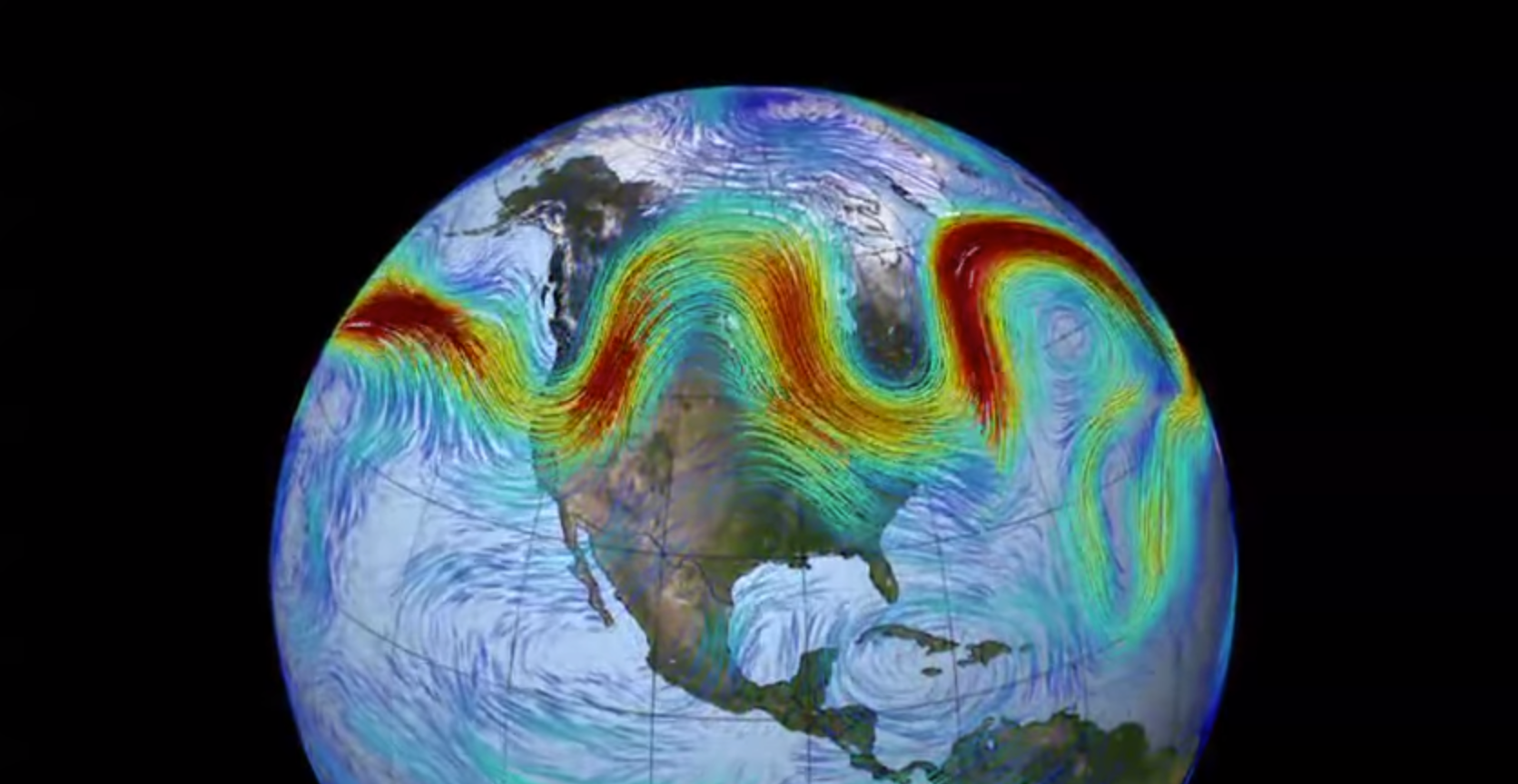
For flights across the Atlantic, routes are calculated by oceanic controllers in Gander, Newfoundland, and Prestwick, Scotland, twice per day. There, traffic flows depart Europe mostly in the late morning and afternoon, arriving in the US at a local time also in the late morning or afternoon thanks to the time zone difference. The planes then turn around and depart the US in the late afternoon and evening, arriving in Europe in the morning the next day. Most of the planes are heading the same way, separated by five minutes in the air. Controllers and airlines make use of the winds aloft to benefit from a tailwind and minimize substantial headwinds, knowing that the powerful jetstream winds blow at altitude always west to east.
Altitudes are chosen accordingly by the oceanic controllers. Because the planes are headed the same way along a track, controllers make use of every available flight level and not the "east is odd, west is even odder" rule above. In addition, airlines will want to maximize winds aloft and the performance efficiencies gained by flying at higher altitudes, where the air is thinner and opposes less resistance, meaning less fuel can be used.
Mike Arnot is the founder of Boarding Pass NYC, a New York-based travel brand, and a private pilot.
TPG featured card
at American Express's secure site
Terms & restrictions apply. See rates & fees.
| 4X | Earn 4X Membership Rewards® points per dollar spent on purchases at restaurants worldwide, on up to $50,000 in purchases per calendar year, then 1X points for the rest of the year. |
| 4X | Earn 4X Membership Rewards® points per dollar spent at US supermarkets, on up to $25,000 in purchases per calendar year, then 1X points for the rest of the year. |
| 5X | Earn 5X Membership Rewards® points on prepaid hotel stays booked through AmexTravel.com or the Amex Travel App™. |
| 3X | Earn 3X Membership Rewards® points on flights booked through AmexTravel.com, the Amex Travel App™, or purchased directly from airlines. |
| 2X | Earn 2X Membership Rewards® points on prepaid car rentals booked through AmexTravel.com or the Amex Travel App™ and cruises booked and paid through AmexTravel.com. |
| 1X | Earn 1X Membership Rewards® point per dollar spent on all other eligible purchases. |
Pros
- Valuable dining and food-related credits
- Flexible rewards with airline and hotel transfer partners
- Multiple travel and purchase protections
- No foreign transaction fees
- Access to Amex Offers for additional savings (enrollment required)
Cons
- Not as useful for those living outside the U.S.
- Some may have trouble using Uber and other dining credits
- You may be eligible for as high as 100,000 Membership Rewards® Points after you spend $8,000 in eligible purchases on your new Card in your first 6 months of Card Membership. Welcome offers vary and you may not be eligible for an offer. Apply to know if you’re approved and find out your exact welcome offer amount – all with no credit score impact. If you’re approved and choose to accept the Card, your score may be impacted.
- Earn 4X Membership Rewards® points per dollar spent on purchases at restaurants worldwide, on up to $50,000 in purchases per calendar year, then 1X points for the rest of the year.
- Earn 4X Membership Rewards® points per dollar spent at US supermarkets, on up to $25,000 in purchases per calendar year, then 1X points for the rest of the year.
- Earn 5X Membership Rewards® points on prepaid hotel stays booked through AmexTravel.com or the Amex Travel App™.
- Earn 3X Membership Rewards® points on flights booked through AmexTravel.com, the Amex Travel App™, or purchased directly from airlines.
- Earn 2X Membership Rewards® points on prepaid car rentals booked through AmexTravel.com or the Amex Travel App™ and cruises booked and paid through AmexTravel.com.
- Earn 1X Membership Rewards® point per dollar spent on all other eligible purchases.
- Pay It® lets you tap in the American Express® App to quickly pay for small purchase amounts throughout the month and still earn rewards the way you usually do. Plan It® gives you the option to split up big purchases into equal monthly payments with a fixed fee. You’ll know upfront exactly how much you’ll pay.
- $120 Dining Credit: Earn up to a total of $10 in statement credits monthly when you pay with the Gold Card at Grubhub (including Seamless), Buffalo Wild Wings, Five Guys, The Cheesecake Factory, and Wonder. This can be an annual savings of up to $120. Enrollment required.
- $100 Resy Credit: Get up to $100 in statement credits each calendar year at over 10,000 qualifying U.S. Resy restaurants after you pay for eligible purchases with the American Express® Gold Card. That’s up to $50 in statement credits semi-annually. Enrollment required.
- $84 Dunkin' Credit: Earn up to $7 in monthly statement credits after you pay with the American Express® Gold Card at U.S. Dunkin’ locations. Enrollment required.
- $120 Uber Cash on Gold: Enjoy up to $120 in Uber Cash annually with your Gold Card. Just add your Card to your Uber account and you'll get $10 in Uber Cash each month to use on orders and rides in the U.S. when you select an Amex Card for your transaction.
- Enjoy complimentary Hertz Five Star® Status benefits like skipping the counter at select locations, adding an additional driver at no additional cost*, and vehicle upgrades**. Benefit enrollment and Hertz Gold+ registration are required. *Additional drivers must meet standard rental qualifications and must be a spouse or domestic partner to qualify as complimentary. Other additional drivers subject to fees. **Benefits are subject to availability and vary by location. Additional Hertz program Terms and Conditions including age restrictions apply.
- Book two nights or more with The Hotel Collection through AmexTravel.com or the Amex Travel App™ and receive a $100* credit towards eligible charges at over 1,400 upscale hotels worldwide. *Eligible charges vary by property.
- Book your travel through the Amex Travel App™ with added peace of mind – backed by American Express® service and support. Only for American Express® Card Members.
- Whenever you need us, we're here. Our Member Services team will ensure you are taken care of. From lost Card replacement to statement questions, we are available to help 24/7.
- No Foreign Transaction Fees.
- Annual Fee is $325.
- Terms Apply.