Highways in the Sky: How Airplanes Navigate From Takeoff to Landing

Ever wonder how pilots fly the route from JFK to LAX — or between any two airports? Or why they sometimes zig and zag and don't fly directly point to point?
Flight trackers like FlightRadar24 or Flightaware will tell you everything about where airplanes are going, but not how they navigate and why they fly certain paths. This article explains some of the basics of en-route navigation.
Jet Routes
As would be expected, there are certain published routes—literally highways in the sky—that commercial jets use to get around the US. These are in the form of jet routes at altitudes above 18,000 feet.
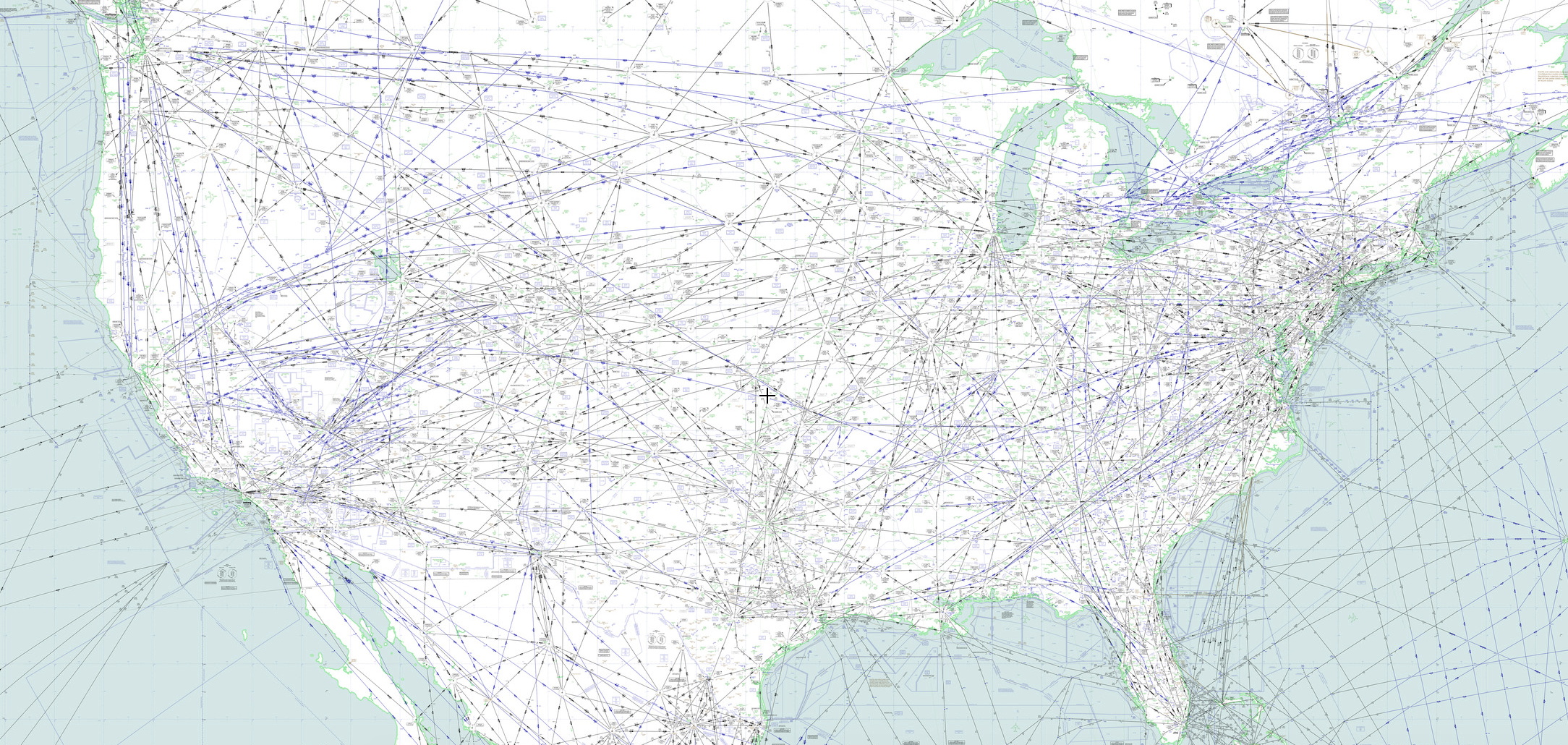
Image via Skyvector.
"Jet routes are a very helpful and easy way for us to visualize our planned flight, but they can also get very congested in places such as the Northeast," Shannon Pereira, a first officer with JetBlue, told TPG. "There's only so many places they can put airplanes and it's like trying to fly during rush-hour traffic. Once you add weather into it then you can probably get to your destination faster by riding a bike," she laughed.
Instrument Flight Rules and a Flight Plan
Commercial passenger aircraft fly on so-called instrument flight rules or IFR (essentially, meaning that they do not fly by sight, but following instrument readings) and according to filed flight plans. This means that the aircraft are under the control of air traffic controllers for the entire duration of the flight, in order to maintain proper separation between them. (You may be surprised to know that aircraft are vertically separated by as little as 1,000 feet. It's perfectly safe.) Aircraft flying above 18,000 feet (in the so-called "flight levels") are required to use IFR rules and flight plans.
"Most flight plans are typically programmed manually. There are some routes that are saved in our flight management system and loaded through a datalink system. Whether they are loaded manually or uploaded electronically, they are always verified by both pilots," Pereira said.

"Once the fight plan is inserted correctly into the airplane we then load it onto our electronic flight manuals to see if the route avoids weather or any other flight restrictions such as military airspace. If there are any issues we will work with JetBlue dispatchers to come up with an appropriate flight plan and then have it refiled with the new routing," Pereira said.
These so-called "canned" routes are developed with the Federal Aviation Administration—preferred routes that extend from the moment the plane departs to when it reaches its destination. The airline's dispatchers will work with controllers to find the optimal routes, taking into account weather, winds aloft and the aircraft's weight and balance.
Waypoint Names
Along the route are navigational fixes, which could be VOR stations (ie. a radar dome on the ground), airports, waypoints or reporting points. Each might be an intersection where the aircraft could make a change of jet route. These waypoints extend upwards to all altitudes, so several aircraft could intersect at a waypoint at different altitudes at the same time. While a VOR station is fixed on the ground, reference to a waypoint is a GPS coordinate.
Waypoints have names made of five letters. In the US they are named by the local offices of the FAA, and some can be quite entertaining.
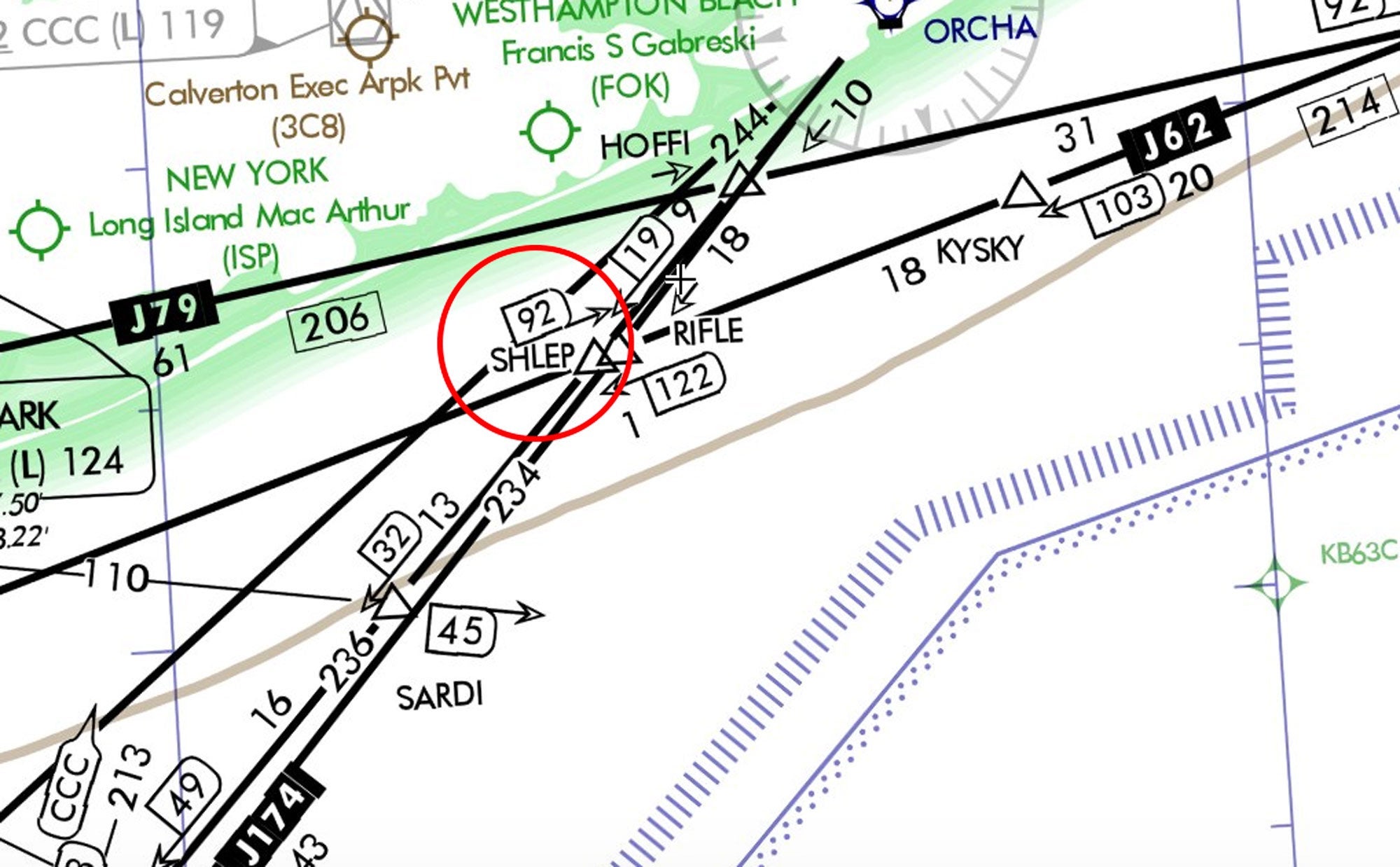
- SHLEP is a point off the south coast of Long Island, and a concept familiar to any New Yorker who has moved apartments. Also, note in the nvigational map above spot SARDI, named after the famous Broadway restaurant.
- Lebron James is on the chart near Cleveland, at a waypoint called LEBRN. (No word on whether it'll stay now that he's closer to LAX.)
- MAKRS and MARKK celebrate the famous red-dipped bourbon near Bardstown, Kentucky.
- The Portsmouth, New Hampshire, airport has an approach that uses the following waypoints: ITAWT, ITAWA, PUDYE, TTATT, IDEED.
- Kansas City features SPICY, BARBQ, TERKY and SMOKE on its approach plate, an homage to the best (you may disagree...) barbecue in the US.
Pereira's favorites? "SHNLY for my name, PUPPY because I'm a huge dog lover and KPIT because that means I'm home," she said. (KPIT isn't a waypoint, to be exact — it's the four-letter code for Pittsburgh airport.)
Come Fly With Me: JFK to FLL
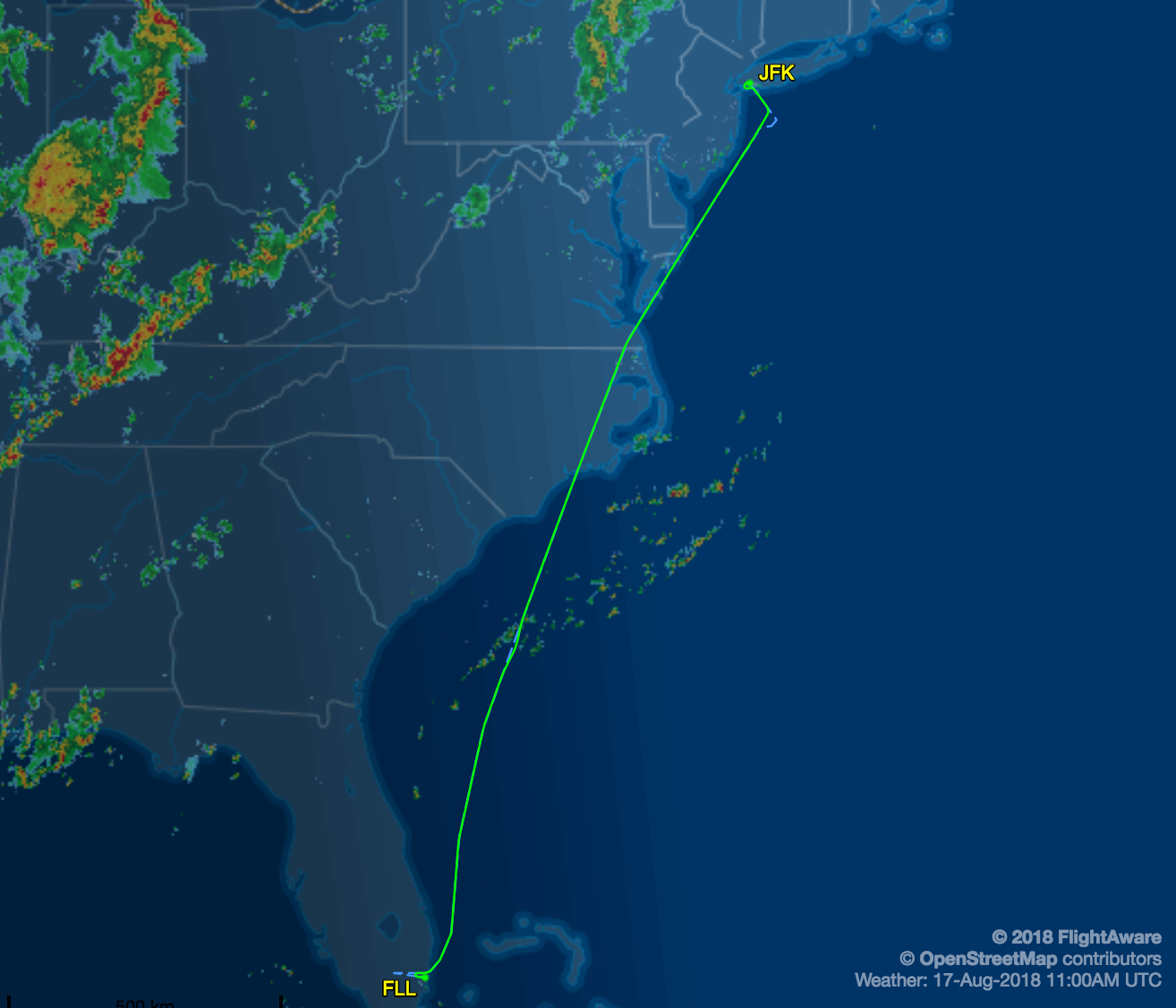
Above is an image from FlightAware of a recent JetBlue flight from JFK to FLL. Here, the weather was exceedingly good without many storm cells or turbulence along the route (unlike this same flight, a few days later which had to fly around weather.) FlightAware tells us the pilots flew a high-altitude preferred route from JFK:
WAVEY EMJAY J174 SWL CEBEE WETRO ILM AR21 CRANS FISEL7
What does this aplhabet soup mean? Its' easy.
The flight departed JFK according to a standard departure procedure. As the name suggests, these are published, standardized departure routes that a pilot will fly on the way to cruise altitude. They'll be required to fly to pre-set points along the route. In this case, the first waypoints are WAVEY and EMJAY just off the Jersey shore. Our pilots then proceeded on the Jet Route 174. (You can find that jet route itself on the Skyvector chart referenced below.) Next up was SWL, which is a directional aid known as a VOR in Snow Hill, Maryland, followed by CEBEE, a waypoint near Norfolk, Virginia, and shortly after WETRO, a waypoint over Hobbsville, North Carolina. Proceeding along, ILM means the the plane overflew the VOR near the airport in Wilmington, North Carolina, then along the jet route named AR21. From there, the flight proceeded to the CRANS waypoint off the coast of Cape Canaveral (and named after mission control director, Gene Crans, who got Apollo 13 home), followed by the FISEL7 arrival procedure, with more details you can explore here.
All of this would have been programmed into the Flight Management System at the outset of the flight, via keypads and displays situated on the center console of the flight deck, between the pilots.
Why Are Some Points Five Letters and Some Only Three?
The five-letter names (such as CRANS above) are waypoints, created by GPS coordinates or distance from a ground-based radar system. The three-letter names such as ILM are VOR stations (Very High Frequency Omnidirectional Radio Range) which are the radar domes you have probably seen near an airport or perhaps randomly near your home or place of work.
There are fewer than 1,000 of these VOR stations in the US, and the FAA plans to eliminate most of them by 2025. (Why? Because GPS. It's just that good.)
Explore on Your Own
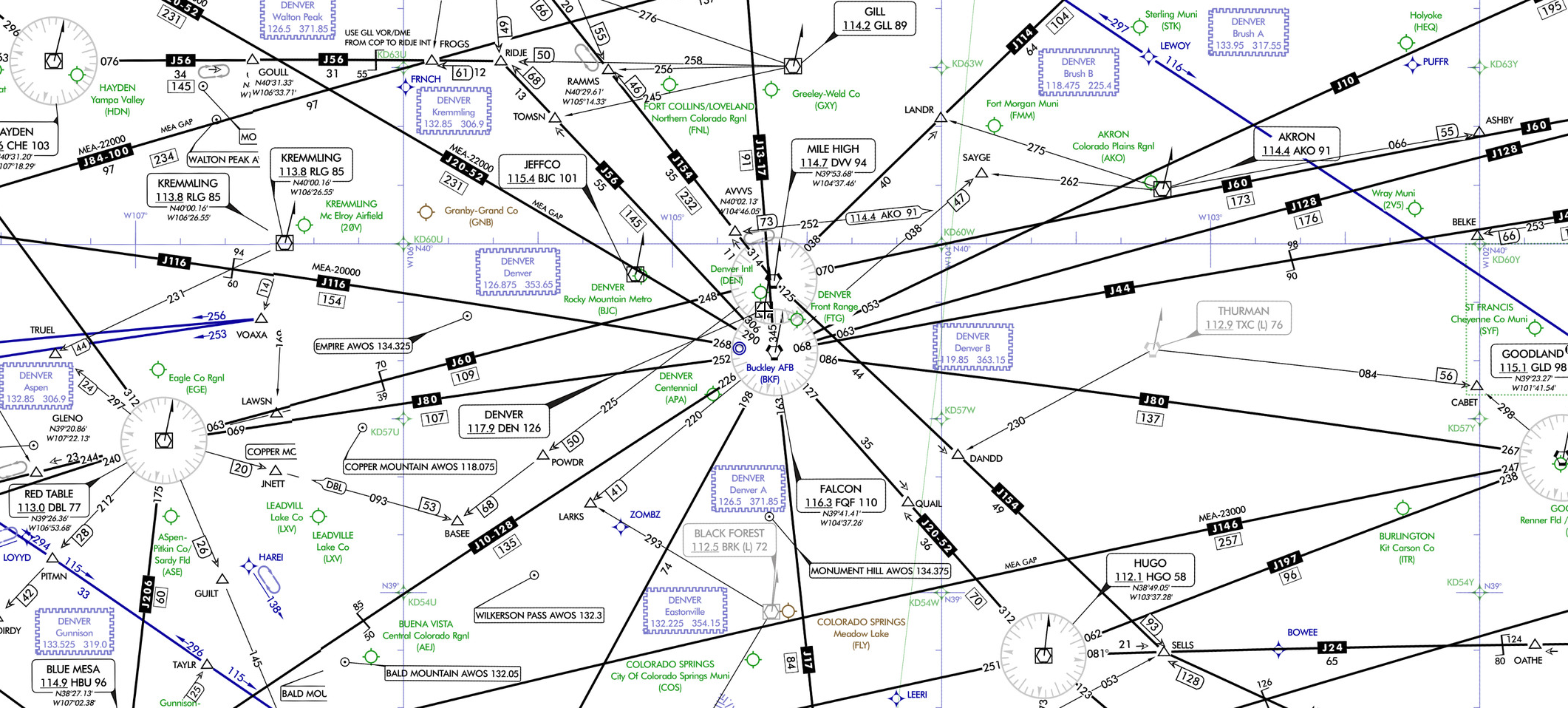
You can explore the jet routes by visiting Skyvector. Once there, select "World High," which provides the High Altitude Enroute IFR charts. Your map should look like the one above. In the box in the top left, type in your favorite airport anywhere in the world, and explore the high-altitude airspace nearby. There's a dropdown menu called "layers" where you can explore current weather and reports of turbulence.
The maps will not be easy to decipher at first. But know that the circles surround VOR stations on the ground, and the lines are the J-or Q-numbered jet routes that aircraft fly.
If you're so inclined, pull up your most recent flight on FlightAware and decode the route you took to get safe and sound to your destination.
Mike Arnot is a private pilot and the founder of Boarding Pass NYC, a travel brand.
TPG featured card
at American Express's secure site
Terms & restrictions apply. See rates & fees.
| 4X | Earn 4X Membership Rewards® points per dollar spent on purchases at restaurants worldwide, on up to $50,000 in purchases per calendar year, then 1X points for the rest of the year. |
| 4X | Earn 4X Membership Rewards® points per dollar spent at US supermarkets, on up to $25,000 in purchases per calendar year, then 1X points for the rest of the year. |
| 5X | Earn 5X Membership Rewards® points on prepaid hotel stays booked through AmexTravel.com or the Amex Travel App™. |
| 3X | Earn 3X Membership Rewards® points on flights booked through AmexTravel.com, the Amex Travel App™, or purchased directly from airlines. |
| 2X | Earn 2X Membership Rewards® points on prepaid car rentals booked through AmexTravel.com or the Amex Travel App™ and cruises booked and paid through AmexTravel.com. |
| 1X | Earn 1X Membership Rewards® point per dollar spent on all other eligible purchases. |
Pros
- Valuable dining and food-related credits
- Flexible rewards with airline and hotel transfer partners
- Multiple travel and purchase protections
- No foreign transaction fees
- Access to Amex Offers for additional savings (enrollment required)
Cons
- Not as useful for those living outside the U.S.
- Some may have trouble using Uber and other dining credits
- You may be eligible for as high as 100,000 Membership Rewards® Points after you spend $8,000 in eligible purchases on your new Card in your first 6 months of Card Membership. Welcome offers vary and you may not be eligible for an offer. Apply to know if you’re approved and find out your exact welcome offer amount – all with no credit score impact. If you’re approved and choose to accept the Card, your score may be impacted.
- Earn 4X Membership Rewards® points per dollar spent on purchases at restaurants worldwide, on up to $50,000 in purchases per calendar year, then 1X points for the rest of the year.
- Earn 4X Membership Rewards® points per dollar spent at US supermarkets, on up to $25,000 in purchases per calendar year, then 1X points for the rest of the year.
- Earn 5X Membership Rewards® points on prepaid hotel stays booked through AmexTravel.com or the Amex Travel App™.
- Earn 3X Membership Rewards® points on flights booked through AmexTravel.com, the Amex Travel App™, or purchased directly from airlines.
- Earn 2X Membership Rewards® points on prepaid car rentals booked through AmexTravel.com or the Amex Travel App™ and cruises booked and paid through AmexTravel.com.
- Earn 1X Membership Rewards® point per dollar spent on all other eligible purchases.
- Pay It® lets you tap in the American Express® App to quickly pay for small purchase amounts throughout the month and still earn rewards the way you usually do. Plan It® gives you the option to split up big purchases into equal monthly payments with a fixed fee. You’ll know upfront exactly how much you’ll pay.
- $120 Dining Credit: Earn up to a total of $10 in statement credits monthly when you pay with the Gold Card at Grubhub (including Seamless), Buffalo Wild Wings, Five Guys, The Cheesecake Factory, and Wonder. This can be an annual savings of up to $120. Enrollment required.
- $100 Resy Credit: Get up to $100 in statement credits each calendar year at over 10,000 qualifying U.S. Resy restaurants after you pay for eligible purchases with the American Express® Gold Card. That’s up to $50 in statement credits semi-annually. Enrollment required.
- $84 Dunkin' Credit: Earn up to $7 in monthly statement credits after you pay with the American Express® Gold Card at U.S. Dunkin’ locations. Enrollment required.
- $120 Uber Cash on Gold: Enjoy up to $120 in Uber Cash annually with your Gold Card. Just add your Card to your Uber account and you'll get $10 in Uber Cash each month to use on orders and rides in the U.S. when you select an Amex Card for your transaction.
- Enjoy complimentary Hertz Five Star® Status benefits like skipping the counter at select locations, adding an additional driver at no additional cost*, and vehicle upgrades**. Benefit enrollment and Hertz Gold+ registration are required. *Additional drivers must meet standard rental qualifications and must be a spouse or domestic partner to qualify as complimentary. Other additional drivers subject to fees. **Benefits are subject to availability and vary by location. Additional Hertz program Terms and Conditions including age restrictions apply.
- Book two nights or more with The Hotel Collection through AmexTravel.com or the Amex Travel App™ and receive a $100* credit towards eligible charges at over 1,400 upscale hotels worldwide. *Eligible charges vary by property.
- Book your travel through the Amex Travel App™ with added peace of mind – backed by American Express® service and support. Only for American Express® Card Members.
- Whenever you need us, we're here. Our Member Services team will ensure you are taken care of. From lost Card replacement to statement questions, we are available to help 24/7.
- No Foreign Transaction Fees.
- Annual Fee is $325.
- Terms Apply.