Efficient waterslides and cooking oil-powered trains: Here's how theme parks are focusing on sustainability

Nearly 60 million guests visited Walt Disney World Resort in 2019, according to the annual Global Attractions Attendance Report from the Themed Entertainment Association and AECOM, an infrastructure consulting firm.
Those tens of millions of character hugs, ice cream cones and spins on the Mad Tea Party teacups add up to energy consumption, water usage and waste production numbers that would scare the pants right off of Mickey Mouse (and hopefully onto Winnie the Pooh, because his seem to be perpetually missing).
In an article outlining the actions Disney is taking to lessen the impact of its operations on the planet, Dr. Mark Penning, Disney Parks' vice president of animals, science and environment, wrote: "[We at Disney] are working to reduce our environmental footprint, care for wildlife and their habitats, and create stories that inspire action. We call these collective efforts Disney Planet Possible — tangible actions we're taking to put possibility into practice and inspire optimism for a brighter, more sustainable future."
Related: From theme parks to power plants, why Denmark is our sustainable destination of 2022
It's not just Disney that realizes it's in a prime position to help mitigate the effects of energy and water consumed and waste produced. Theme parks around the world are "greening up" by harnessing the sun's natural energy, composting food scraps and recycling props.
But what do all these lofty goals translate to in practice, and are these steps enough to make a difference? Here's what we found when taking a closer look at how green goals translate to actual change at theme parks across the country.
[table-of-contents /]
Reducing energy consumption
Universal Studios Hollywood turns to electric trams
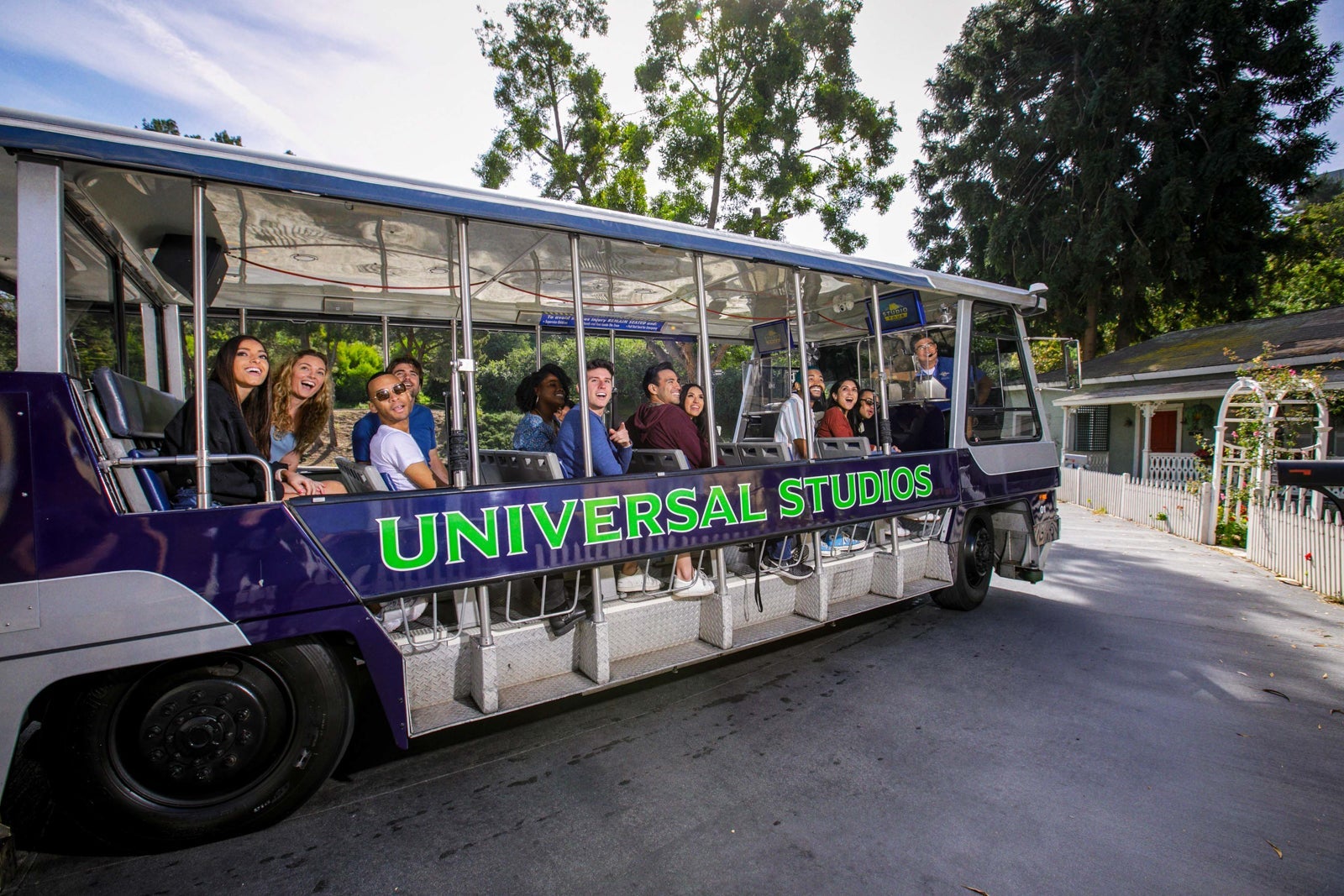
One of the highlights of a visit to Universal Studios Hollywood is the long-running Studio Tour, which takes guests behind the scenes of popular movie and television production sets. There are 21 trams in the attraction's fleet, four of which now run on electric power.
The electric trams made their debut on April 14, 2022, and the Southern California theme park plans to convert the entire fleet from diesel-hydraulic engines to zero-emission electric engines by 2025, according to a Universal Studios Hollywood spokesperson.

While the electric trams still require a source of energy to charge, they are quieter than diesel-hydraulic engines and can help reduce carbon emissions.
Disney focuses on solar energy to power its parks (and more)
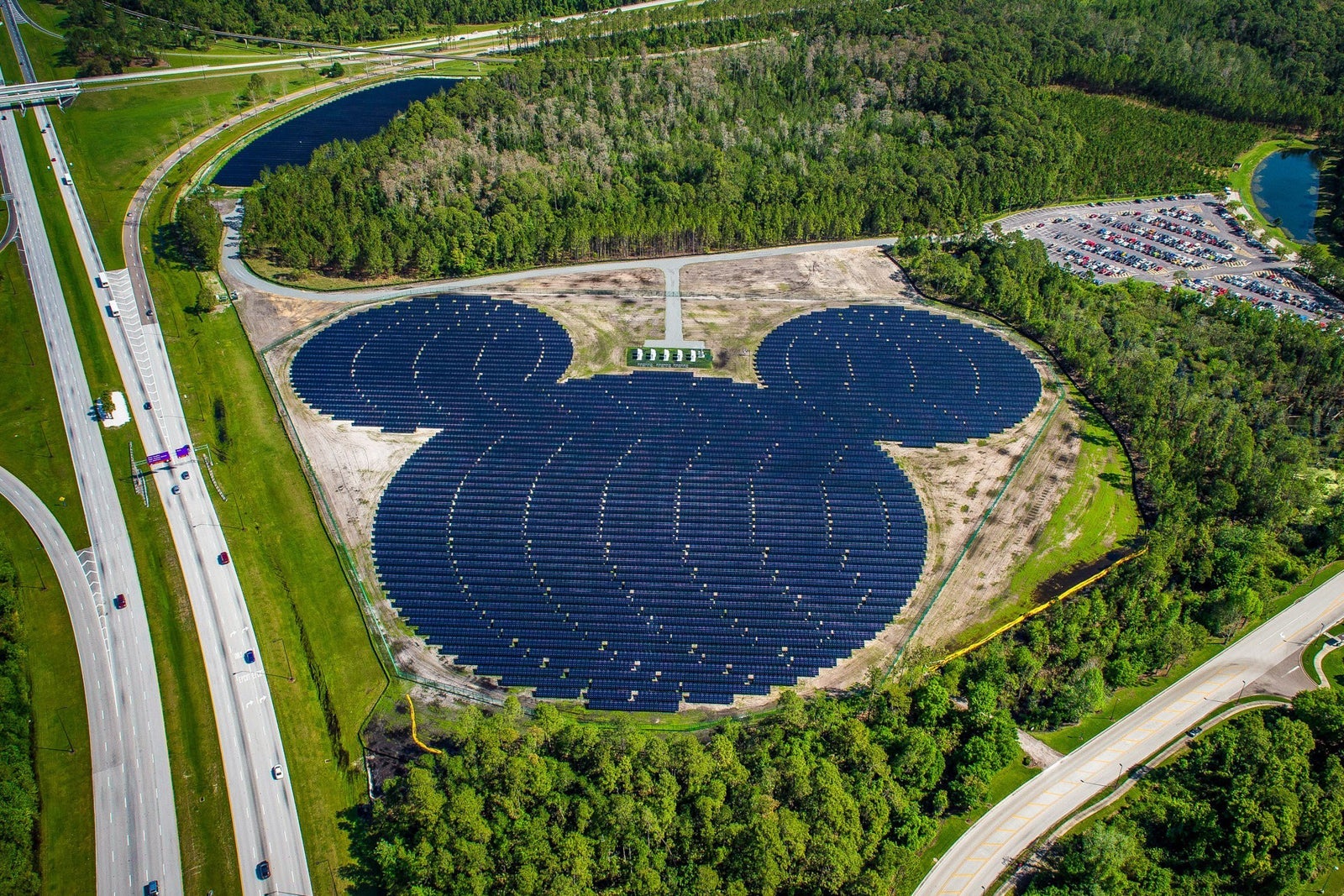
If you've ever flown over Walt Disney World Resort, you may have seen a large Mickey-shaped solar array on the resort grounds, but it's far from the only source of solar power available there.
In 2020, Disney brought a 270-acre, 57-megawatt solar facility online on Highway 429, just west of Disney World. This facility is, sadly, not Mickey-shaped, but it does generate enough power to operate two of the resort's four theme parks, thereby reducing annual greenhouse gas emissions by more than 52,000 metric tons.
By the end of 2023, Disney World will bring two more solar arrays online in Gilchrist and Polk counties that will more than double the amount of energy the resort is currently harnessing from the sun. With the addition of these two 75-megawatt arrays, Disney World will have the capacity to power 40% of its resort with solar energy, bringing it one step closer to its goal of being 100% carbon neutral by 2030.
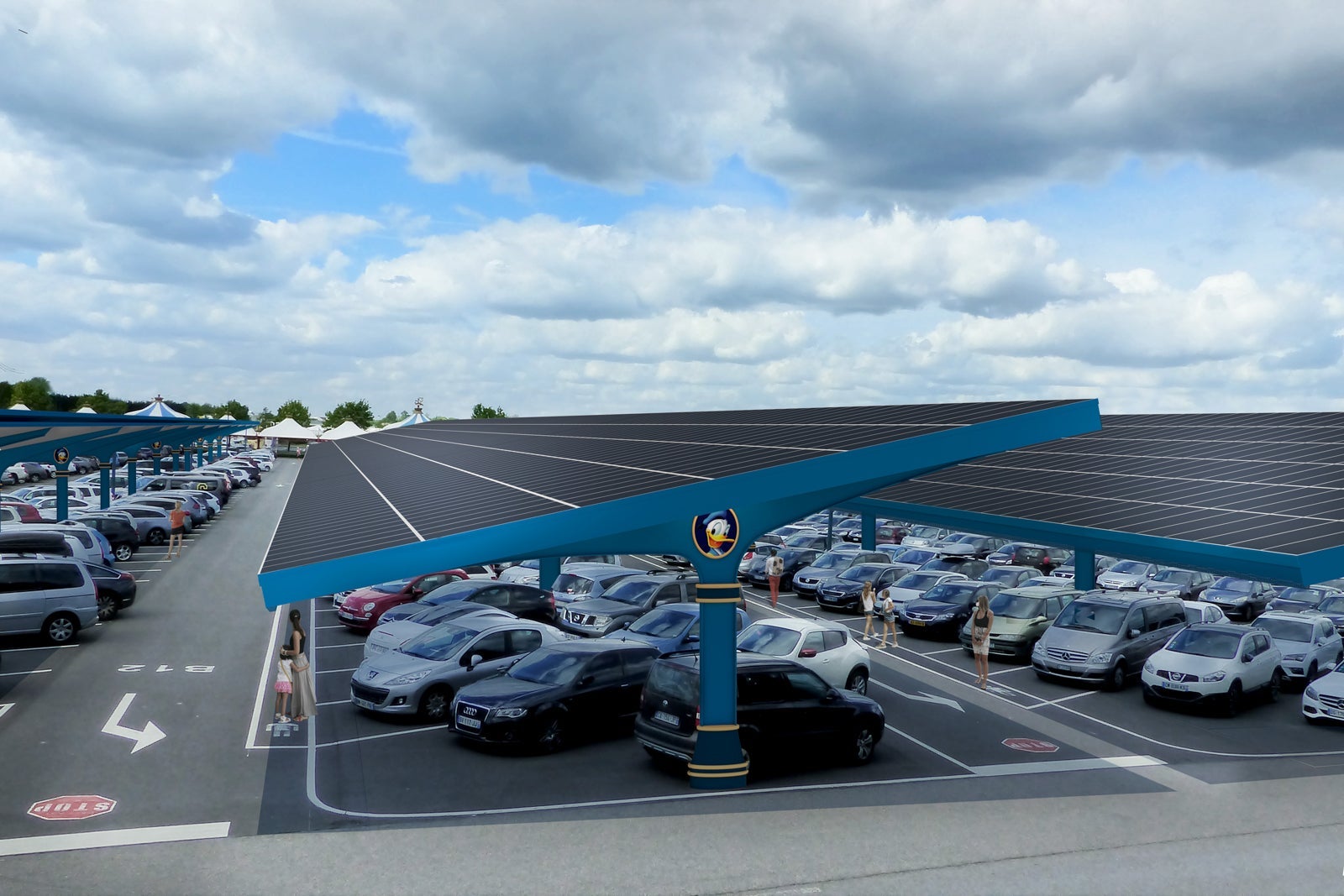
Outside of Central Florida, Disney uses solar energy to power attractions and facilities at Disneyland Resort, Hong Kong Disneyland, Disneyland Paris and Castaway Cay, Disney Cruise Line's private island in the Bahamas. While these smaller solar facilities only account for a fraction of the power needed to run these resorts, the effort is a good start.
Related: Can you cruise sustainably? This cruise line thinks so
PortAventura World in Spain is entirely carbon neutral
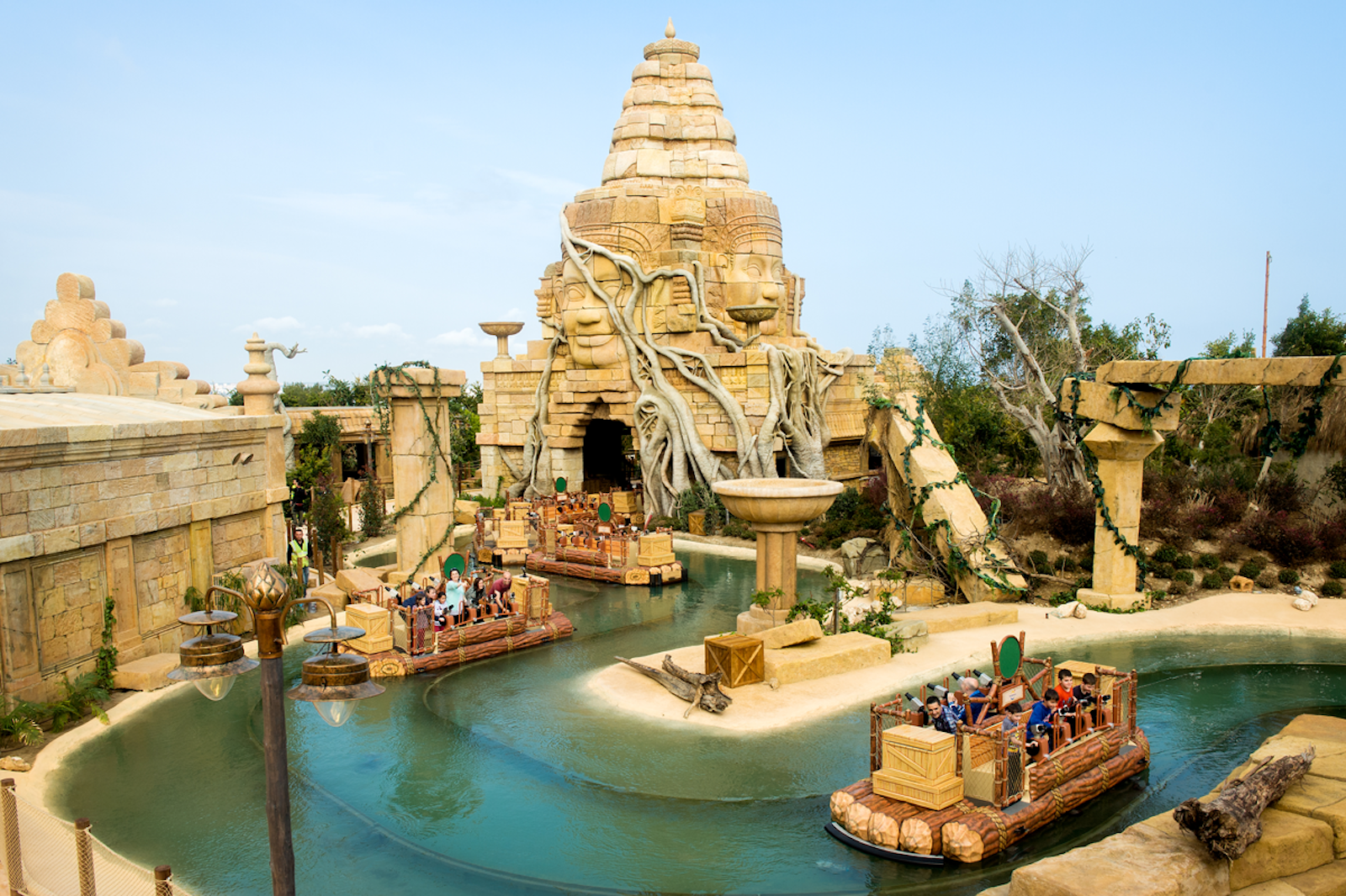
One theme park in Catalonia, Spain, is truly going above and beyond to operate more sustainably.
As of 2019, PortAventura World is completely carbon neutral, according to attractions industry news site Blooloop. It achieved this goal in part by generating all of its electricity from renewable energy sources, such as wind, water and light from the sun.
PortAventura leans on power created by a large solar facility and is working to fully eliminate single-use plastics in the park by the end of 2022. The park has also opened a four-star, zero-emission hotel called Colorado Creek.
Reducing water consumption
Universal's Volcano Bay features real volcanic rocks to reduce water usage

Don't worry, the volcano at Universal's Volcano Bay water park isn't real, but the park does utilize a form of volcanic material in the water filters used in attractions throughout the park.
Many large-scale water filters use sand or gravel to filter dirt and debris out of water, but the sediment buildup that can clog the filters needs to be cleaned out on a daily basis. So, Volcano Bay designed its filters to use a form of volcanic rock to clean the water used on-site. With these filters, the park's water can go about four weeks before needing to be backwashed, conserving thousands of gallons of wastewater every single day.
Related: The most surprisingly charming hotel I've stayed at in years: Universal's Cabana Bay Beach Resort
Water parks across America install more efficient waterslides
Most water coasters need quite a lot of water to propel riders along the slide, but innovative technology from water ride designer and manufacturer ProSlide allows riders to race through a water coaster's curves and hills with less water.
Rather than use a large sheet of water like most conventional waterslides, ProSlide relies on multiple water nozzles only in areas where riders need a little boost to get them from point A to point B, thereby using less water and power, according to the International Association of Amusement Parks and Attractions. Additionally, ProSlide designed an "eco mode" so its slides only power water jets when a raft is present.
These measures help reduce water and save energy, prompting parks like Holiday World Theme Park & Splashin' Safari Water Park in Santa Claus, Indiana, and Universal's Volcano Bay in Orlando to apply them to popular rides like the Cheetah Chase Water Coaster and the Krakatau Aqua Coaster.
Reduce, reuse, recycle
Universal Orlando transforms food waste into fuel
In addition to leaning on traditional recycling programs, Universal Orlando collects food scraps from more than 30 of its on-site restaurants on a daily basis. That food is then placed in a compactor before being moved to a facility where bacteria naturally break down the waste and generate energy to be used throughout the parks.
So if you can't finish your big pink donut from Lard Lad Donuts in "The Simpsons" area of the park, don't worry. There's a chance it may end up getting turned into green energy.
Disneyland Resort fuels its train with used cooking oil

Cooking corn dogs and french fries uses a lot of cooking oil, but Disneyland puts that oil to good use by repurposing it for the famed Disneyland Railroad.
All five steam trains and the Mark Twain Riverboat are fueled by biodiesel. This effort "eliminates approximately 200,000 gallons of petroleum diesel per year," according to Disney.
Disney seeks to eliminate food waste
Across its parks, Disney has set a goal to stop sending unused and uneaten food to landfills through a number of systems the company has put in place.
Besides growing fresh produce on-site and better predicting how much food is needed daily through meticulously planning menus every day, Disney composts as many food scraps as possible. For example, at Disney World, food scraps are sent off-site to be composted and later used to fertilize plants at Disney's Animal Kingdom theme park.
Disney parks around the world also donate prepared (but not served) meals to hunger-relief organizations whenever possible. In 2021, Disney World donated more than 550,000 pounds of food to Second Harvest Food Bank of Central Florida, while Disneyland provided more than 90,000 meals to the Orange County community. Likewise, Hong Kong Disneyland donated approximately 12,500 healthy meals to locals affected by the pandemic in 2021.
Universal parks in Orlando and Hollywood and Disney World reuse props from their annual events

During Universal Mardi Gras at Universal Orlando Resort and the holiday and Halloween events on both coasts, Universal transforms its parks from top to bottom. Although the props used for these events may be featured in different ways, many are creatively repurposed year after year.
Universal Studios Hollywood's Halloween Horror Nights, for example, reuses about 127 tons of items each year, including construction materials, scenic design elements and set dressings.
Disney World implements similar measures with its holiday decorations. The 300,000-square-foot "Holiday Services" warehouse is located not far from the Magic Kingdom and serves as a home for Disney's hundreds of holiday trees, ornaments and other holiday decor.
While refreshing and reusing decor year after year is eco-friendly, the folks at Disney World probably appreciate the cost savings it brings, too. Fully decorated 45-foot-tall Christmas trees presumably cost a pretty penny to put together.
Bottom line
Theme parks are doing their part to become more sustainable, but they can't do it alone. They need us, the tens of millions of visitors who pass through their gates annually, to pitch in and do our part, too.
Next time you visit a theme park, try doing things like packing a reusable water bottle and/or straw for drinks, bringing a small reusable bag for souvenir purchases and looking for recycling bins before tossing your trash. Back at your hotel, you can also reuse towels and sheets as much as possible.
There's a lot of work still to be done, but theme parks have set some lofty goals in the name of sustainability. Disney, for example, is planning for net-zero emissions and zero waste going to landfills by 2030.
Can the company do it? Only time will tell, but their efforts combined with those of the consumers who visit these attractions, can all aid in keeping theme parks fun and eco-friendly.
TPG featured card

at Capital One's secure site
Terms & restrictions apply. See rates & fees.
| 5X miles | Earn 5X miles on hotels, vacation rentals and rental cars booked through Capital One Travel |
| 2X miles | Earn unlimited 2X miles on every purchase, every day |
Pros
- Stellar welcome offer of 75,000 miles after spending $4,000 on purchases in the first three months from account opening. Plus, a $250 Capital One Travel credit to use in your first cardholder year upon account opening.
- You'll earn 2 miles per dollar on every purchase, which means you won't have to worry about memorizing bonus categories
- Rewards are versatile and can be redeemed for a statement credit or transferred to Capital One’s transfer partners
Cons
- Highest bonus-earning categories only on travel booked via Capital One Travel
- LIMITED-TIME OFFER: Enjoy $250 to use on Capital One Travel in your first cardholder year, plus earn 75,000 bonus miles once you spend $4,000 on purchases within the first 3 months from account opening - that’s equal to $1,000 in travel
- Earn unlimited 2X miles on every purchase, every day
- Earn 5X miles on hotels, vacation rentals and rental cars booked through Capital One Travel
- Miles won't expire for the life of the account and there's no limit to how many you can earn
- Receive up to a $120 credit for Global Entry or TSA PreCheck®
- Use your miles to get reimbursed for any travel purchase—or redeem by booking a trip through Capital One Travel
- Enjoy a $50 experience credit and other premium benefits with every hotel and vacation rental booked from the Lifestyle Collection
- Transfer your miles to your choice of 15+ travel loyalty programs
- Top rated mobile app