The 2 types of Regent Seven Seas Cruises ships, explained

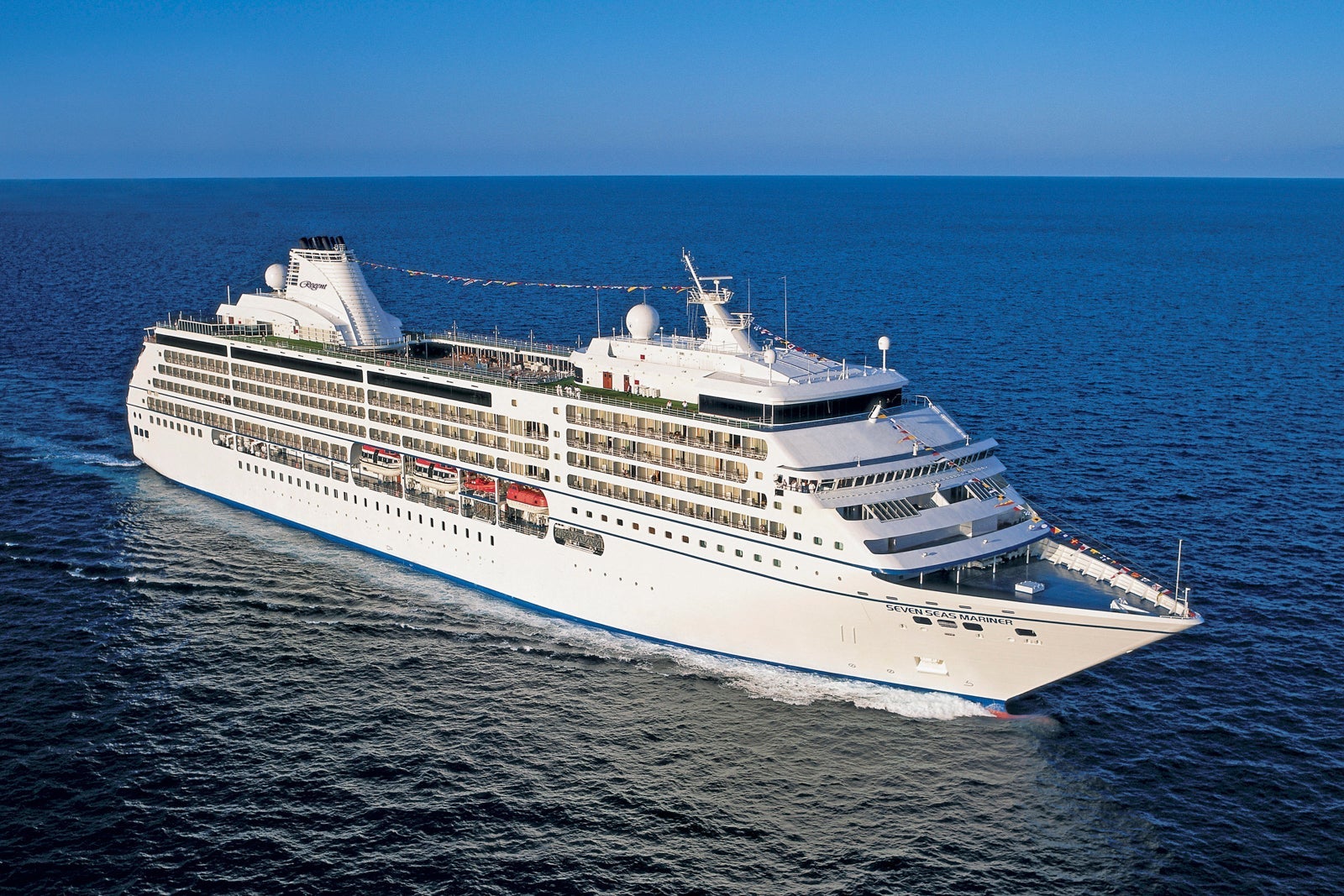
Among cruise lines that focus on high-priced luxury trips, Regent Seven Seas Cruises has one of the easiest-to-understand fleets.
The Miami-based luxury brand has just five (soon to be six) ships, all of which fall into one of just two groups: the Explorer Class ships and the Small Cruise Ship Class ships.
Built over the past decade, the Explorer Class ships are the line's newest, biggest and most elegant vessels. The Small Cruise Ship Class ships are much older vessels and, as the class name suggests, the smallest ships in the Regent fleet.
For now, there are just two ships in the Explorer Class, and both have debuted since 2016. But that number is scheduled to rise to three in December with the arrival of Regent's new Seven Seas Grandeur.
The three ships in the Small Cruise Ship Class are all at least 20 years old.
Each of the vessels in the Explorer Class has been built to the same basic design. If you know one member of the group, you know them all. The three ships in the Small Cruise Ship Class have more differences, though they share many of the same venues.
Here, we explain the distinctive features of Regent's two ship classes so you can plan the luxury cruise that's right for you.
An introduction to Regent ships
Regent is one of the oldest of about half a dozen major cruise lines that compete in the market for "ultra-luxury" cruises — voyages that promise a high level of elegance and pampering and have a high price tag to match.
Founded in 1992 as the result of a merger between two one-ship lines (Radisson Cruises and Seven Seas Cruises), Regent has been in the luxury cruise game longer than its biggest rival, Silversea Cruises (which dates to 1994), as well as such newcomers in the space as The Ritz-Carlton Yacht Collection and Scenic Luxury Cruises. It began operating just a few years after the founding of luxury cruise competitors Crystal Cruises (now reborn as Crystal) and Seabourn.

Like all such brands, Regent operates ships that are far smaller and more intimate than the giant floating megaresorts operated by Royal Caribbean, Norwegian Cruise Line and Carnival Cruise Line. Instead of thousands of passengers, each Regent vessel is designed to hold just a few hundred people.
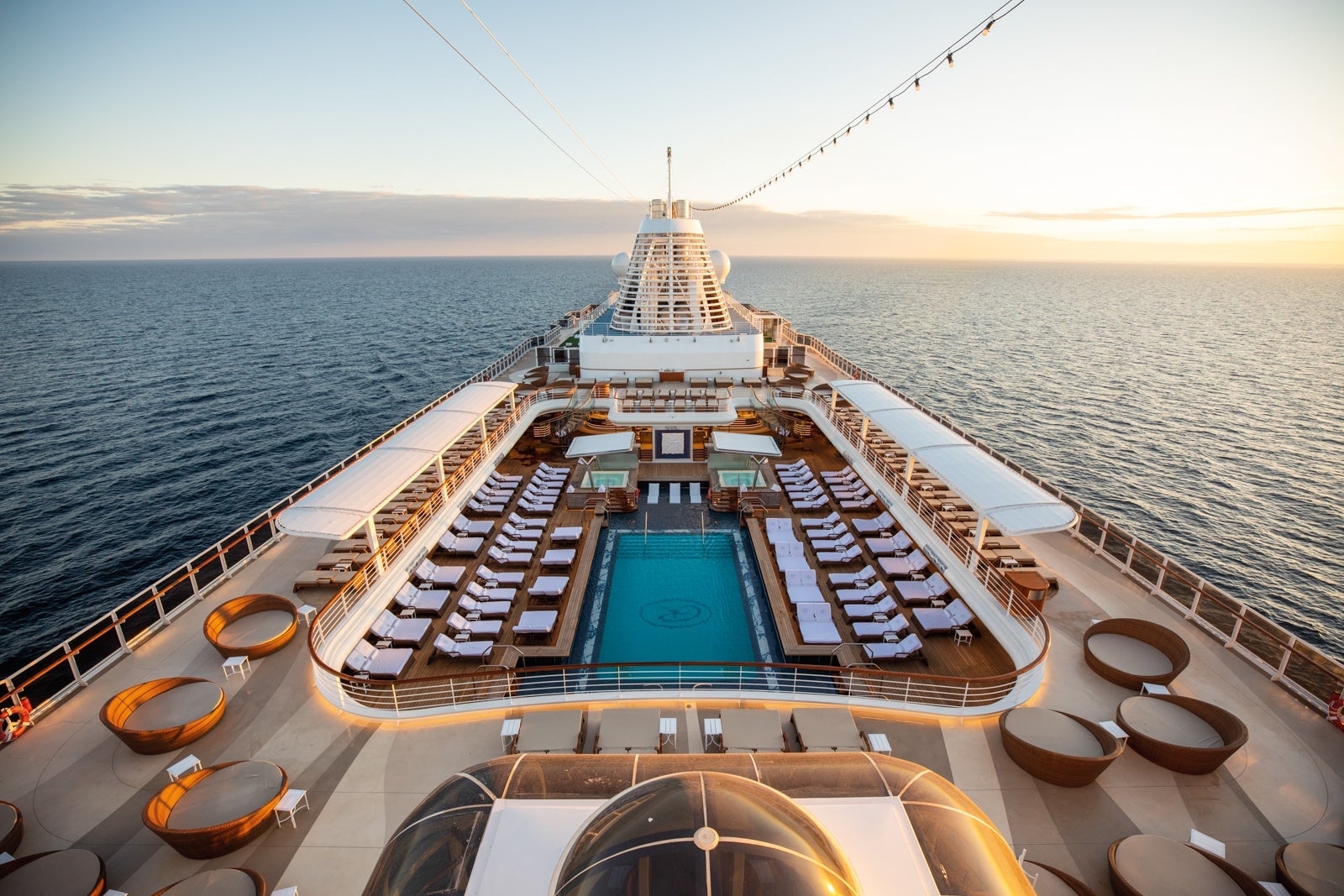
Still, while the ships are smaller than what you'll find at a mass-market line, they're not cramped. Indeed, they're among the most spacious ships at sea when measured by their space-per-passenger ratio, which is about 50% higher than what you'll find on many mass-market ships.
They also operate with roughly 1 crew member for every 1.4 passengers — one of the higher crew-to-passenger ratios in the cruise business (though not as high as on Crystal's recently revamped ships, which now operate at a stunning 1-to-1 crew-to-passenger ratio).
Both space-per-passenger ratios and staff-to-passenger ratios are measurements used as shorthand for the luxury level of a vessel.
Related: The 8 best luxury cruise lines for elegance and exclusivity
Among other luxury touches, every cabin on every Regent ship is a suite, and the number of restaurants, bars and lounges is impressive for vessels of this size.
In addition, Regent ships are known for being particularly opulent when compared to other ultra-luxury vessels. The line's new Explorer Class ships, in particular, are loaded with soaring spaces lined with pricey marble, crystal chandeliers and high-end art.
Explorer Class
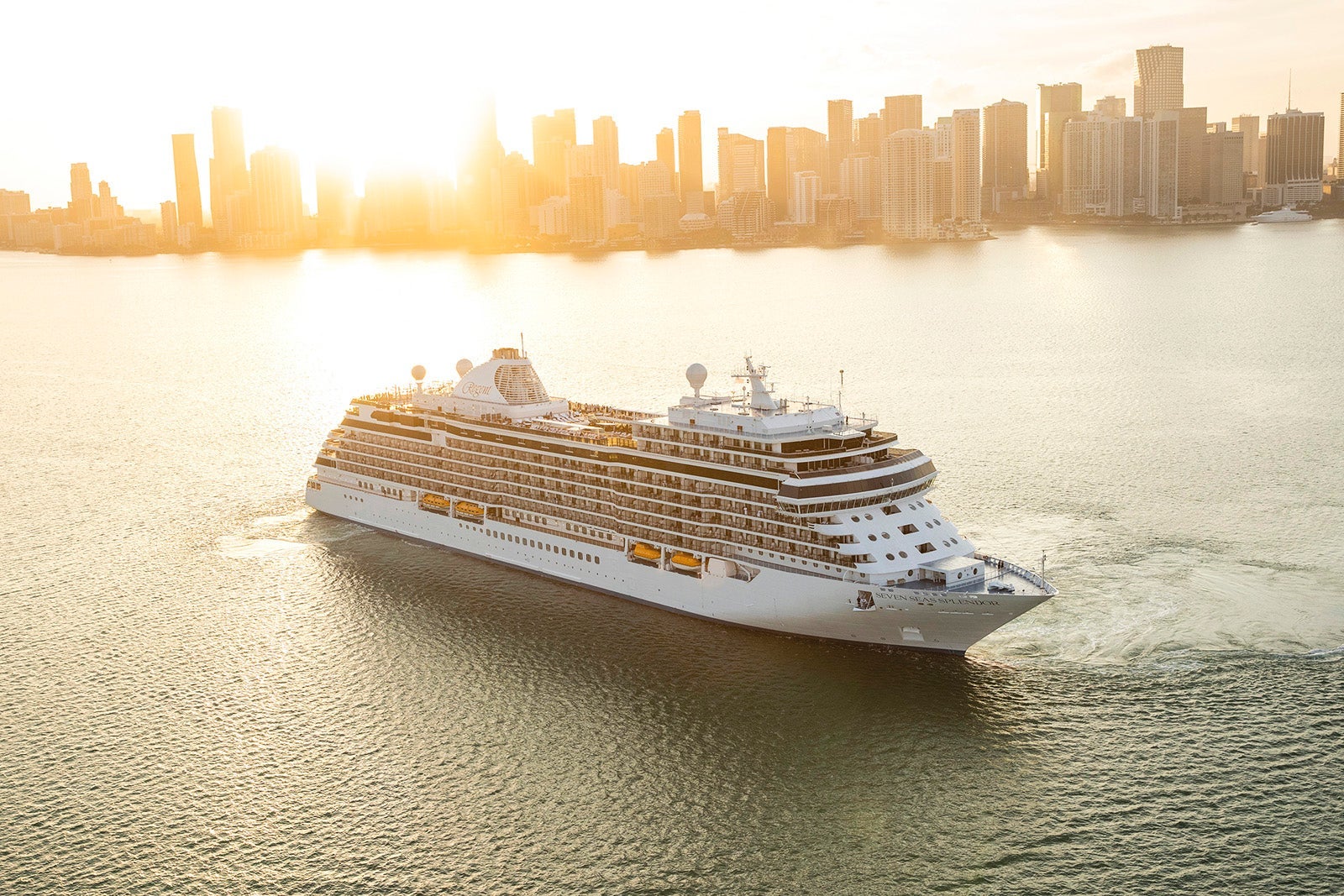
Ships in class: Seven Seas Grandeur (2023); Seven Seas Splendor (2020); Seven Seas Explorer (2016)
Regent's two (soon to be three) Explorer Class ships are the creme-de-la-creme of the Regent fleet — the vessels you'll want to pick if you gravitate to the most new and modern vessels.
All three of the 750-passenger ships are among the most opulent and upscale cruise vessels ever built, famous for their soaring ceilings, inlaid marble floors, crystal chandeliers (each of the vessels has more than 500) and Picassos on the walls, to name just a few high-end touches.
The vessels essentially offer two kinds of accommodations: fancy and really, really fancy.
As is often the case in the luxury cruise market, every cabin on these ships is a suite with a balcony (something that is also true for two of the line's three older ships). Even the smallest of the accommodations measures 307 square feet, which is not too shabby for a cruise ship.
Still, it's in the bigger cabin complexes at the front and back of the Explorer Class ships where things get really impressive.
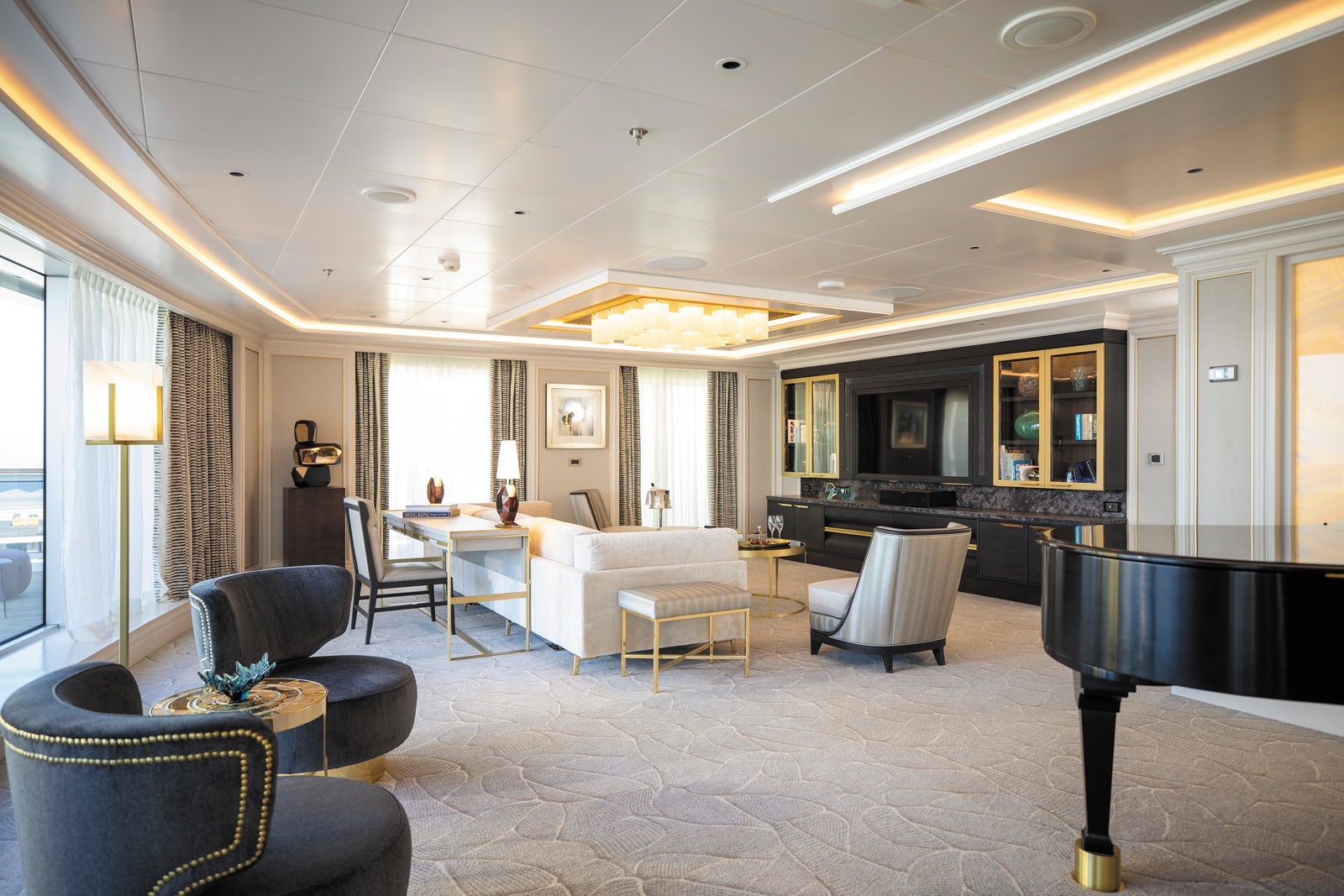
Each of the vessels is home to a ridiculously large, forward-facing room complex called the Regent Suite that, at 4,443 square feet, is one of the most elaborate and expensive cruise ship suites ever built. (Each also has an equally stunning price tag of $11,000 per night.) Each of the ships also has a dozen more suites that measure in the 1,000-square-foot to 2,000-square-foot range, as well as additional accommodations in the 500-square-foot to 1,000-square-foot range.
Explorer Class vessels also offer a wide array of elegant and high-end restaurants, all included in the fare. They include Compass Rose, the international cuisine staple of all Regent ships; Regent's signature steakhouse Prime 7; casual restaurant La Veranda; Asian eatery Pacific Rim; and French restaurant Chartreuse.
Multiple bars and lounges on these vessels in recent years have embraced the trend of ever-quirkier craft drinks. A new drinks menu has brought designer gin drinks that incorporate new-for-Regent Fever-Tree premium tonics and all sorts of spices, herbs and fruits.
Related: 5 secrets to getting a luxury cruise for less
For the most part, the footprints of all three ships in this series are the same, but eagle-eyed cruisers will notice that Regent made a few tweaks to the design as the series developed.
In an effort to improve passenger flow, for instance, Regent turned around the grand staircase in the central atrium on Seven Seas Splendor as compared to how it was laid out on Seven Seas Explorer. A major focal point of the vessel's interior, the staircase now cascades down from the public areas on Deck 5 toward the magnificent, marble-floored promenade on Deck 4. This promenade leads directly into Seven Seas Splendor's main restaurant, Compass Rose.
Among standout features, all Explorer Class vessels have an elaborate cooking classroom, which doesn't exist on older Regent ships. Dubbed the Culinary Arts Kitchen, each of these venues has 18 individual cooking stations tricked out with top-of-the-line induction cooktops, stainless steel sinks and all sorts of cool cooking equipment. They're backed by floor-to-ceiling windows looking out over the ocean.
All three of the ships also have an elaborate Serene Spa & Wellness Center with treatment rooms and a relaxation room. A hydrothermal suite includes a multisensory aromatherapy steam room, chill room, infrared sauna and experiential showers, plus an outdoor lounge area with three whirlpools. The spa areas also offer hair and nail care in a beauty salon.
Small Cruise Ship Class
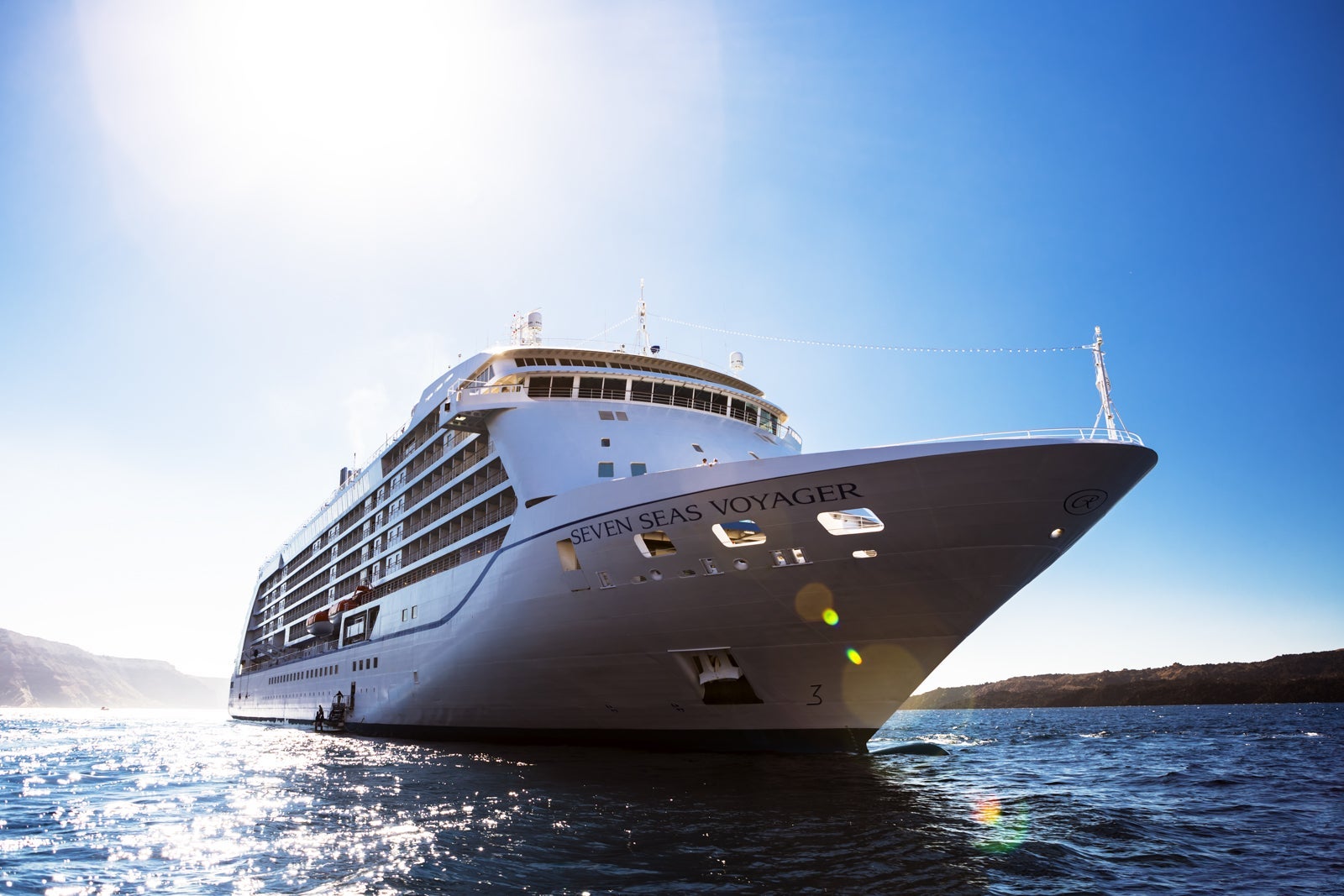
Ships in class: Seven Seas Voyager (2003); Seven Seas Mariner (2001); Seven Seas Navigator (1991)
The three ships in the simply named Small Cruise Ship Class are considerably older than the line's Explorer Class ships and aren't quite as big — or opulent — as their sisters.
They also have more variation among them than the Explorer Class ships. The newest of the ships, the 2003-built Seven Seas Voyager, measures 42,363 tons, which is about 12% smaller than the slightly older, 48,075-ton Seven Seas Mariner.
Seven Seas Navigator, which dates to 1991, is an even bigger outlier as it measures just 28,803 tons, which makes it about 40% smaller than Seven Seas Mariner.
Regent lumps all of these ships together in one class, and we do, too, because they share many of the same features despite their size variation.
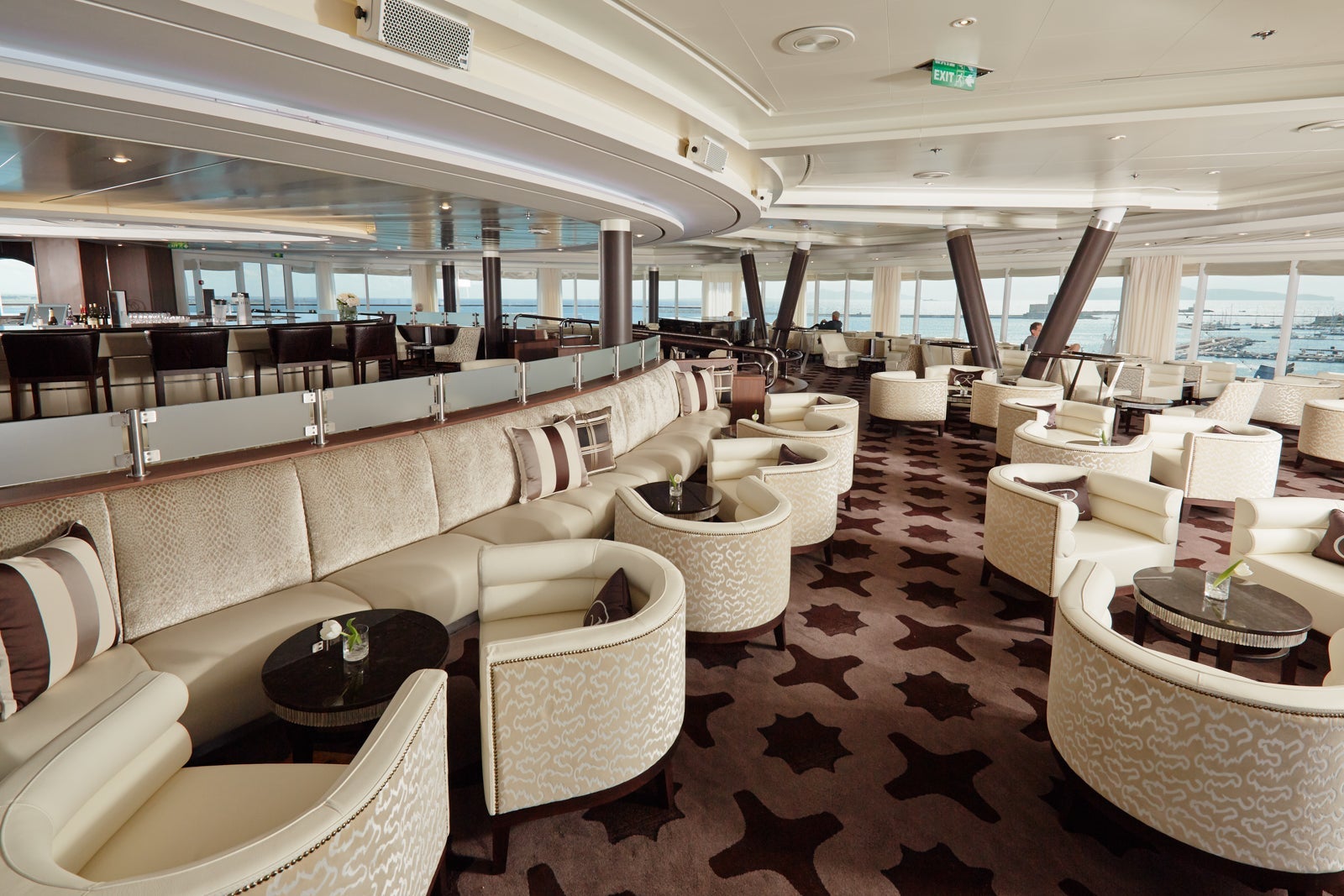
Seven Seas Voyager and Seven Seas Mariner, in particular, are very similar. Both are designed for about 700 passengers and have the same basic array of venues, including the same lineup of four restaurants: the international cuisine-serving Compass Rose, steakhouse Prime 7, casual eatery La Veranda and French restaurant Chartreuse.
Unlike on the bigger Explorer Class ships, there is no Asian eatery on either of the vessels.
The smaller Seven Seas Navigator, which holds just 490 passengers, has all of the same eateries above, too, with the exception of Chartreuse. It's the only Regent ship without this popular French restaurant.
As is the case with Regent's Explorer Class ships, all the cabins on the Small Cruise Ship Class vessels are suites. Seven Seas Voyager and Seven Seas Mariner are all-balcony ships, too. One big difference, though, is that these three older ships don't have the truly giant suites found on the Explorer Class ships. The biggest suites on all three of the vessels are in the 1,000-square-foot to 1,200-square-foot range.
Planning a cruise? Start with these stories:
- The 5 most desirable cabin locations on any cruise ship
- A beginners guide to picking a cruise line
- The 8 worst cabin locations on any cruise ship
- The ultimate guide to what to pack for a cruise
- A quick guide to the most popular cruise lines
- 21 tips and tricks that will make your cruise go smoothly
- Top ways cruisers waste money on vacation
- The ultimate guide to choosing a cruise ship cabin
TPG featured card

at Capital One's secure site
Terms & restrictions apply. See rates & fees.
| 5X miles | Earn 5X miles on hotels, vacation rentals and rental cars booked through Capital One Travel |
| 2X miles | Earn unlimited 2X miles on every purchase, every day |
Pros
- Stellar welcome offer of 75,000 miles after spending $4,000 on purchases in the first three months from account opening. Plus, a $250 Capital One Travel credit to use in your first cardholder year upon account opening.
- You'll earn 2 miles per dollar on every purchase, which means you won't have to worry about memorizing bonus categories
- Rewards are versatile and can be redeemed for a statement credit or transferred to Capital One’s transfer partners
Cons
- Highest bonus-earning categories only on travel booked via Capital One Travel
- LIMITED-TIME OFFER: Enjoy $250 to use on Capital One Travel in your first cardholder year, plus earn 75,000 bonus miles once you spend $4,000 on purchases within the first 3 months from account opening - that’s equal to $1,000 in travel
- Earn unlimited 2X miles on every purchase, every day
- Earn 5X miles on hotels, vacation rentals and rental cars booked through Capital One Travel
- Miles won't expire for the life of the account and there's no limit to how many you can earn
- Receive up to a $120 credit for Global Entry or TSA PreCheck®
- Use your miles to get reimbursed for any travel purchase—or redeem by booking a trip through Capital One Travel
- Enjoy a $50 experience credit and other premium benefits with every hotel and vacation rental booked from the Lifestyle Collection
- Transfer your miles to your choice of 15+ travel loyalty programs
- Top rated mobile app