There's COVID-19 on nearly every cruise ship right now: Here's what cruisers need to know

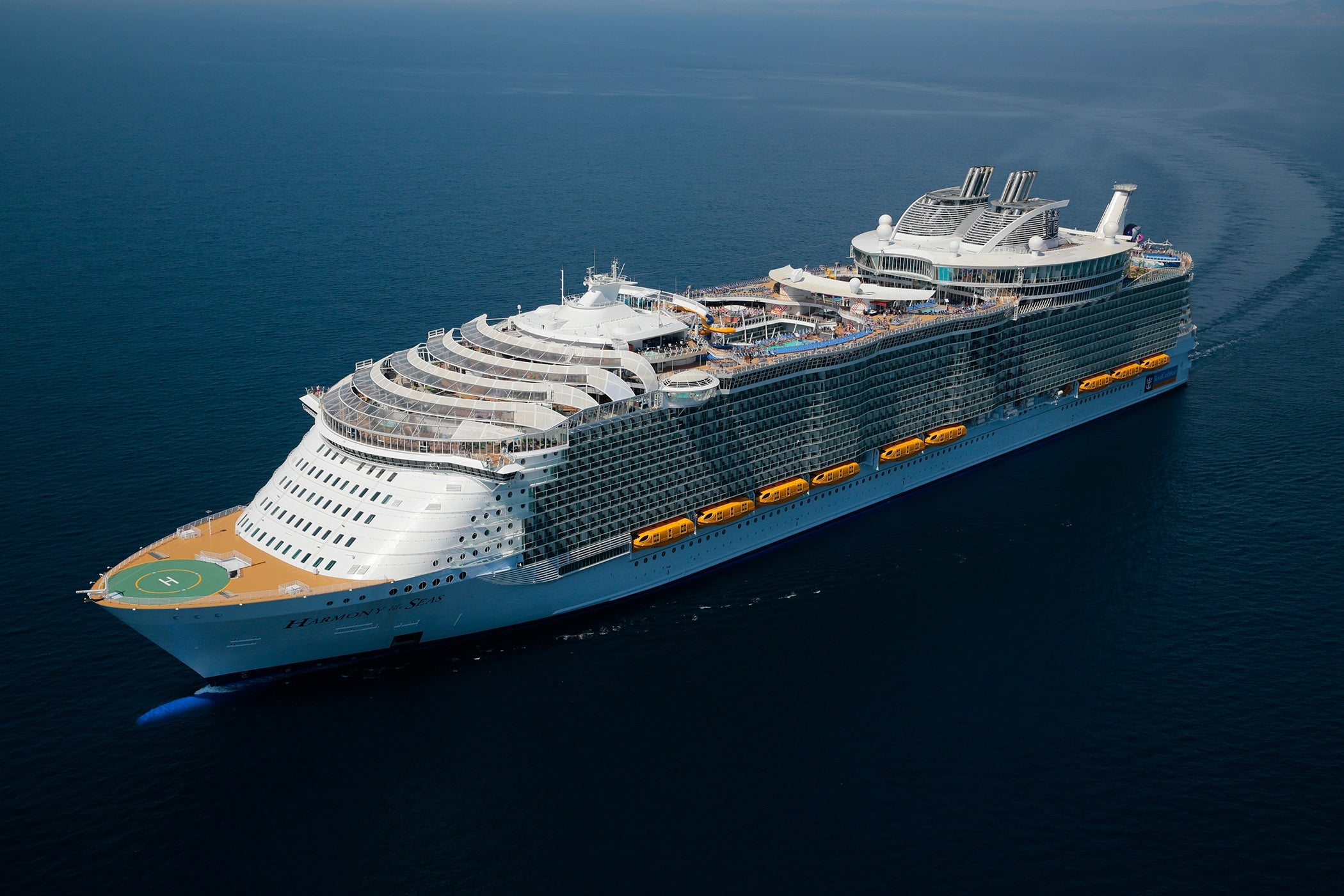
Things are getting iffy again for cruisers -- at least for those with near-term bookings.
The ongoing surge in COVID-19 cases around the world is causing a growing number of disruptions to itineraries and even some last-minute cancellations of entire voyages.
The number of passengers being quarantined on ships (after testing positive for COVID-19) also is on the rise. And passengers who aren't COVID-19 positive are getting caught up in short-term quarantines for being "close contacts" of shipmates who are.
Meanwhile, just getting to ships is becoming increasingly stressful, as getting the pre-cruise COVID-19 test that's often required before cruising is getting more difficult. Plus, a "perfect storm" of soaring COVID-19 cases and rough winter weather has wreaked havoc with airline operations for weeks.
Still, the situation isn't anywhere near as dramatic or disruptive as what we saw at the start of the COVID-19 pandemic two years ago, when whole ships were being quarantined due to outbreaks of the illness and, eventually, the entire industry shut down.
As I saw myself during a cruise to Antarctica in recent weeks, many sailings are operating relatively normally, even when there are COVID-19 cases on board.
Here's a look at everything you need to know if you've got a cruise booked in the coming weeks -- or further out.
COVID-19 cases on ships are up a lot
While cruise ships have recorded relatively few cases of COVID-19 over the past year, in part due to unusually strict health protocols, the number of passengers and crew testing positive on ships has been rising sharply in recent weeks along with the greater surge on land.
At the end of December, the U.S. Centers for Disease Control and Prevention reported that 5,013 COVID-19 cases had been reported on cruise vessels operating in U.S. waters during the last two weeks of the month, up from just 162 cases during the first two weeks of the month.

That's a 3,094% increase.
Anecdotal reports are that the number of cases on ships is up even more in the first 10 days of the new year.
Notably, all 92 cruise vessels currently operating in U.S. waters have recorded at least a handful of COVID-19 cases in recent weeks, according to CDC data.
Still, it's important to note that most of these "cases" of COVID-19 are asymptomatic or mild, only discovered during routine testing. While some ships only are testing passengers who report feeling ill for COVID-19 (and close contacts of those who subsequently test positive), other ships are testing every single passenger at least once per voyage, sometimes more. One line, Viking, is testing every single passenger for COVID-19 every day.
Cruise lines also are testing all crew members regularly.
The result is the detection of many asymptomatic cases that otherwise would have gone undetected. This is a level of surveillance that is much greater than what is the norm for other travel venues such as land-based resorts or theme parks, and it can give the false impression that the positivity rate for COVID-19 on ships is unusually high as compared to other places.
If anything, the positivity rate is far lower on ships than on land, thanks to much stricter health protocols (more on that in a moment).
It's also important to note that the detection of COVID-19-positive passengers or crew on board your ship won't necessarily impact your sailing (unless you are among those testing positive).
Health authorities no longer are quarantining whole ships when a few -- or even a lot -- of passengers and crew test positive for COVID-19. The current protocol on most ships is to isolate COVID-19-positive passengers and crew but otherwise continue on with voyages as planned.
Your itinerary could change
While health authorities no longer are quarantining whole ships when a few passengers or crew test positive for COVID-19, the presence of the illness on board a vessel still could result in notable disruptions to your itinerary.
Cruise lines in recent weeks have faced a growing number of ports that are balking at allowing ships with COVID-19-positive passengers or crew to dock.
Several ships recently had to skip port calls in Mexico, for instance, after passengers and crew on board the vessels tested positive for COVID-19. The ports have since reopened after Mexico's Health Department overruled the decisions of local port officials.
Cruise ships also have had to cancel stops recently at the islands of Aruba, Bonaire and Curaçao, and at San Juan, Puerto Rico, due to local worries about COVID-19-positive passengers and crew on board and/or tighter COVID-19-related entry requirements.
Lines also are dealing with a small but growing number of destinations -- India and Hong Kong, for example -- that are at least temporarily closing to cruising completely, even for ships where no one has tested positive for COVID-19.
Viking on Sunday was forced to announce a major revision of its soon-to-begin, 120-day world cruise after India notified the line it was closing to cruise ships. Viking's 930-passenger Viking Star will begin its world cruise this week by heading south from Los Angeles to Central America and South America instead of sailing westward toward Asia, where it was scheduled to spend a significant amount of time in India.
Your cruise could be canceled on short notice
A growing number of cruise lines are canceling sailings on short notice, citing the disruptions caused by COVID-19. The world's largest cruise operator Royal Caribbean on Friday canceled soon-to-depart sailings on four of its 25 ships, including the next three departures of the world's largest ship, Symphony of the Seas.
Norwegian Cruise Line on Wednesday canceled soon-to-depart voyages on eight of its 17 ships.
Other lines canceling one or more sailings in recent days include Holland America, Silversea, Atlas Ocean Voyages, Regent Seven Seas Cruises, MSC Cruises, Costa Cruises and Oceania Cruises.
The cancellations come as lines struggle to maintain adequate staffing levels on some ships due to crew members testing positive. When crew test positive, they and their close contacts must stop working and isolate, even if asymptomatic, leaving shipboard venues short-staffed.
You probably won't be quarantined, stranded or stuck
As noted above, health authorities no longer are quarantining whole ships when a few -- or even a lot -- of passengers and crew test positive for COVID-19.
The current protocol on most ships is to quickly isolate COVID-19-positive passengers and their close contacts. But only the COVID-19-positive passengers are being isolated long term.
As my colleague Ashley Kosciolek experienced first-hand on a cruise in 2021, close contacts only are being isolated for a short period while they are tested for COVID-19. If they test negative, they typically are allowed out of their rooms to rejoin the rest of their fellow cruisers on board.
This means that many sailings are going ahead as planned, with little disruption, even when some passengers and crew on the trips test positive for COVID-19. I experienced this myself in late December when on a Silversea vessel where four passengers tested positive for COVID-19. Some passengers who were deemed close contacts of the passengers who tested positive were isolated for a short period while being tested for COVID-19. But the positive cases had little impact on most of the passengers on board the vessel, and the voyage went ahead as planned.
Such a protocol comes at the recommendation of the CDC, which has set guidelines for how cruise lines should respond to COVID-19-positive cases on board ships, and it has worked well for the past year.
Of course, if you do test positive for COVID-19 on a ship, you will, unfortunately, face what could be several days of isolation in a cabin on a ship or on land. If you are an American cruising overseas, you also won't be able to return to the U.S. until you have tested negative for COVID-19 (or until you recover from the illness and are cleared in writing to travel by a licensed healthcare provider or a public health official).
This is one of the biggest risks of taking a cruise right now, and one reason you may consider canceling a sailing scheduled in the short term (see the section on more-flexible cancellation policies below).
Most COVID-19 cases on ships aren't serious
Cruise lines are reporting that the vast majority of passengers testing positive for COVID-19 in recent weeks are asymptomatic or have mild symptoms.
All major cruise lines currently are requiring all or nearly all passengers to be fully vaccinated for COVID-19, with some also starting to require booster shots, to boot. This creates an onboard population that is far less likely to experience serious symptoms of COVID-19 than a cross-section of people on land, according to CDC data.
For all adults ages 18 years and older, the cumulative COVID-19-associated hospitalization rate is about eight times higher in unvaccinated persons than in vaccinated persons, according to the latest CDC data.
You'll face lots of new health protocols
If you haven't cruised since before the pandemic, you might be surprised by how many new health- and safety-related policies cruise lines have implemented to keep COVID-19 off ships.
For starters, there are the vaccine mandates noted above. No other segment of the travel industry has been as uniform in requiring almost every customer to be fully vaccinated against COVID-19.
Related: Will I need a COVID-19 vaccine to cruise? A line-by-line guide
As noted above, cruise lines also are requiring passengers to undergo COVID-19 tests before boarding ships -- a screening process that is keeping many COVID-19 positive people from ever stepping on board a vessel.
When COVID-19 is detected on a ship, cruise lines sometimes then test passengers multiple times to ensure it isn't spreading. On my recent trip to Antarctica, I underwent six COVID-19 tests in just eight days -- three in advance of stepping on board the vessel (including a PCR test required by Chile, where my trip began) and three while on board.
In addition, most cruise lines now are requiring passengers to wear masks at all times while in interior spaces of vessels, and they have stepped up cleaning regimens, improved air filtration systems on ships and made other onboard changes.
The CDC says to avoid cruising for now
On Dec. 30, the CDC added cruise ships to its list of "Level 4" destinations you should avoid visiting for now due to high levels of COVID-19.
For what it's worth, more than 80 countries around the world -- including a good chunk of all the places you might want to travel -- are on this list. So, the CDC is basically telling you that now isn't a good time to travel. Fair enough. But the warning shouldn't be seen as a call-out on any elevated risk to cruising as opposed to visiting other places, per se.
Places on the Level 4 list currently include Canada, much of Europe and nearly every country in the Caribbean.
The cruise industry has been highly critical of the designation, arguing that cruise ships are far safer places to be right now than almost anywhere else, given their strict health protocols.
"The decision by the CDC to raise the travel level for cruise is particularly perplexing considering that cases identified on cruise ships consistently make up a very slim minority of the total population onboard — far fewer than on land — and the majority of those cases are asymptomatic or mild in nature, posing little to no burden on medical resources onboard or onshore," the main trade group for the industry, the Cruise Lines International Association, said in a statement to TPG.
You can cancel if you're worried (in many cases)
If you're booked on a cruise in the coming weeks, and you're having second thoughts, there's a good chance you can get out of your trip. Many lines continue to be far more flexible than normal about cancellations.
Take cruise giant Carnival Cruise Line. Its current flexible cancellation policy allows passengers to cancel as long as a public health emergency remains in effect and receive 100% of the cruise fare paid in the form of a future cruise credit. Passengers are also able to cancel if they test positive for COVID-19. (Proof of a positive test result is required.)
Another large line, Norwegian, just last week extended its pandemic-era Peace of Mind policy to allow passengers to cancel any sailing taking place between now and May 31. For now, the cancellation needs to be done by Jan. 31, and the refund would come in the form of a future cruise credit to be used on any sailing that embarks through Dec. 31.
That means you could call the line right now to back out of a cruise that is just days away. In normal times, you'd lose all your money if you backed out of a seven-night Norwegian cruise with fewer than 31 days' notice.
Planning a cruise? Start with these stories:
- A beginners guide to picking a cruise line
- The 5 most desirable cabin locations on any cruise ship
- The 8 worst cabin locations on any cruise ship
- A quick guide to the most popular cruise lines
- 21 tips and tricks that will make your cruise go smoothly
- 15 ways cruisers waste money
- What to pack for your first cruise
TPG featured card

at Capital One's secure site
Terms & restrictions apply. See rates & fees.
| 5X miles | Earn 5X miles on hotels, vacation rentals and rental cars booked through Capital One Travel |
| 2X miles | Earn unlimited 2X miles on every purchase, every day |
Pros
- Stellar welcome offer of 75,000 miles after spending $4,000 on purchases in the first three months from account opening. Plus, a $250 Capital One Travel credit to use in your first cardholder year upon account opening.
- You'll earn 2 miles per dollar on every purchase, which means you won't have to worry about memorizing bonus categories
- Rewards are versatile and can be redeemed for a statement credit or transferred to Capital One’s transfer partners
Cons
- Highest bonus-earning categories only on travel booked via Capital One Travel
- LIMITED-TIME OFFER: Enjoy $250 to use on Capital One Travel in your first cardholder year, plus earn 75,000 bonus miles once you spend $4,000 on purchases within the first 3 months from account opening - that’s equal to $1,000 in travel
- Earn unlimited 2X miles on every purchase, every day
- Earn 5X miles on hotels, vacation rentals and rental cars booked through Capital One Travel
- Miles won't expire for the life of the account and there's no limit to how many you can earn
- Receive up to a $120 credit for Global Entry or TSA PreCheck®
- Use your miles to get reimbursed for any travel purchase—or redeem by booking a trip through Capital One Travel
- Enjoy a $50 experience credit and other premium benefits with every hotel and vacation rental booked from the Lifestyle Collection
- Transfer your miles to your choice of 15+ travel loyalty programs
- Top rated mobile app