Confused about changing COVID-19 rules for cruise ships? Here's everything you need to know


Do you still need a COVID-19 vaccine to board a cruise ship? A negative COVID-19 test? A mask?
Not too many months ago, the answer was "all of the above" for most cruise vessels. But today it's not so straightforward. Some cruise lines have been loosening their COVID-19 rules. Others have been mostly holding fast to policies.
The divergence has come as more countries around the world, including the United States, peel back their COVID-19 rules for cruise ships, leaving it up to individual lines to decide just how strict — or not — they want to be.
The result is that preparing for a cruise has become more confusing than ever.
Don't panic. We're here to help. In the segments below, we look at the COVID-19 policy landscape as it stands right now across the world's biggest cruise lines and try to make sense of it all.
It's a landscape that is likely to continue to change markedly in the coming months. In just the last few weeks, several lines have done away with pre-cruise COVID-19 testing requirements, and the buzz in the cruise world is that more lines soon will follow suit.
Already, mask-wearing rules on ships have mostly disappeared, though not everywhere.
[table-of-contents /]
Do I still need a COVID-19 vaccine to cruise?
For the most part, yes. With just a few exceptions, cruise lines still require most, if not all, passengers to present proof of a COVID-19 vaccine to board a ship.

Some lines make exceptions for young children and people who can't be vaccinated due to medical conditions or religious beliefs. The world's largest cruise line, Royal Caribbean, for instance, exempts children under the age of 12 from its vaccine requirement on most sailings. So does Carnival Cruise Line, the world's second-largest cruise brand.
This has been the broad policy at nearly all cruise lines since cruises allowing Americans restarted in 2021. In recent weeks, a few cruise lines have relaxed their vaccine rules slightly but not to a great extent.
Adults-only line Virgin Voyages, for instance, on Thursday said it would allow up to 10% of passengers on any given sailing to be unvaccinated for COVID-19. Under its previous policy, all passengers had to be vaccinated. Would-be cruisers who are unvaccinated must contact the line before booking a cruise to ensure one of the limited slots for unvaccinated travelers is available.
Related: Do I need a COVID-19 vaccine to cruise? A line-by-line guide
Are children required to have a COVID-19 vaccine to cruise?
In many cases, yes. But as noted above, some lines make exceptions to vaccination rules for young children.
Many major cruise lines require anyone who is eligible to receive a COVID-19 vaccine to be fully inoculated before being allowed to sail.
For cruisers from the U.S., that means anyone 5 years or older must have proof that they've had their shots. Anyone 4 years old or younger is exempt from the vaccination rule. Some lines such as Royal Caribbean, Carnival and MSC Cruises set the cut-off for mandatory vaccines higher at the age of 12.
Passengers under these age cutoffs who aren't vaccinated typically have to present negative COVID-19 test results and submit to mandatory testing at the port on embarkation day to board. In general, the testing requirements for the unvaccinated on ships are more rigorous than the testing requirements for the vaccinated.
Note that some lines require that all passengers boarding ships be vaccinated for COVID-19, no matter their age. This means that young children who are not eligible for a COVID-19 vaccine by definition cannot sail.
Lines with such a rule include Oceania Cruises, Regent Seven Seas Cruises, Scenic Luxury Cruises and Tours, Silversea Cruises and Windstar Cruises.
Related: Do children need to be vaccinated to cruise? Here's the policies at the biggest lines
Do I need to test negative for COVID-19 before boarding a cruise ship?
It depends. For much of the past year, every major cruise line required passengers to test negative for COVID-19 before boarding a ship. However, a handful of lines in recent weeks, including Virgin Voyages and Norwegian Cruise Line, have dropped pre-cruise testing requirements for at least some sailings, and more lines are expected to follow suit in the coming months.
Virgin Voyages is among the lines that have loosened testing rules the most. On Thursday, it said it would no longer require pre-cruise tests on any sailing in the two markets where it operates: Europe and North America (the new policy takes effect July 24 for sailings in Europe and July 27 for sailings in North America).
Small-ship specialist Azamara, which currently has all its ships in Europe, also dropped testing requirements for all sailings in recent days.
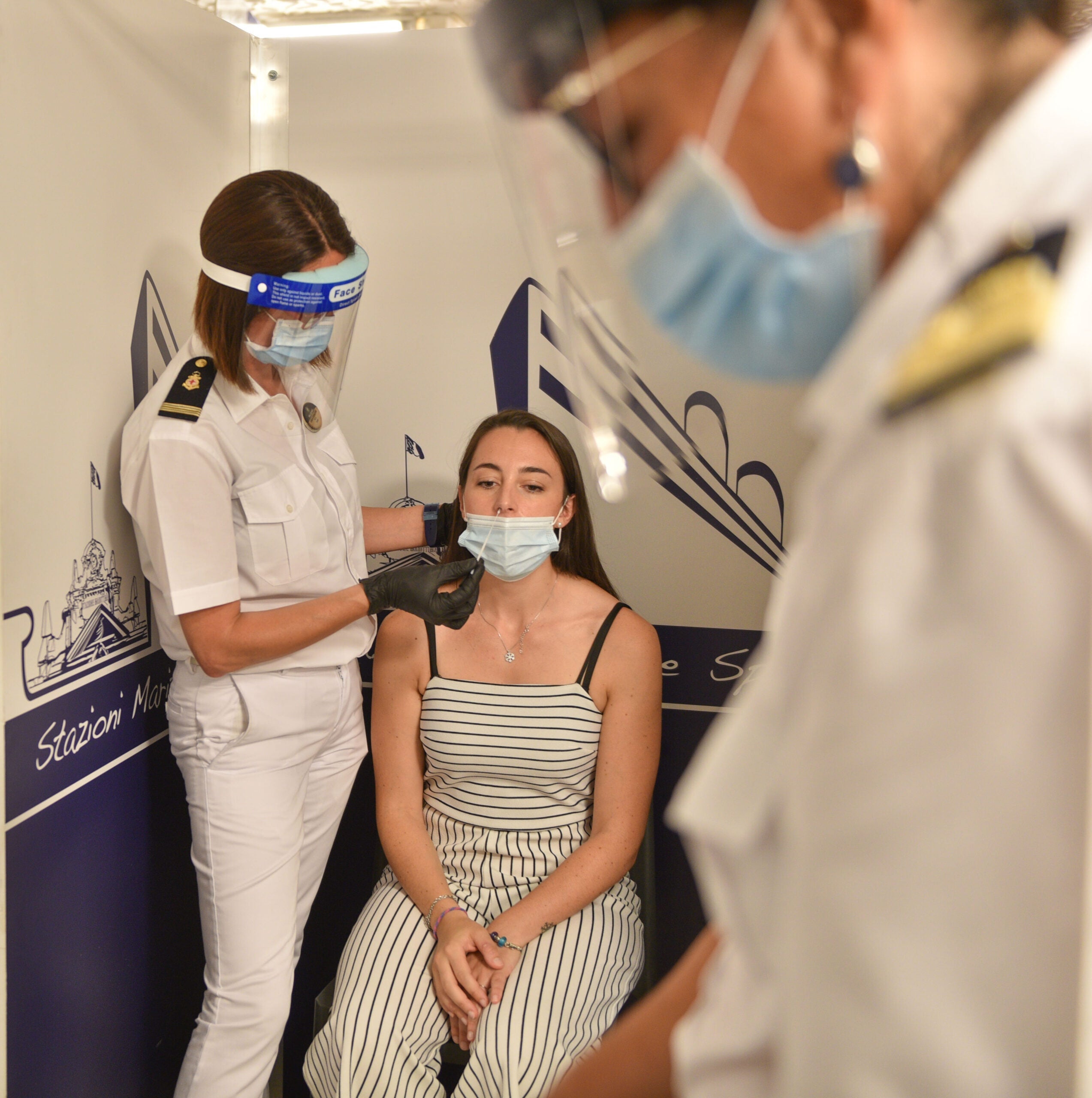
Other lines are taking a more scattershot approach to dropping testing requirements, mostly due to lingering testing rules in some of the countries where they operate.
Norwegian, for instance, recently said it would drop pre-cruise test requirements for most sailings in Europe but not other regions on Aug. 1. An exception will be sailings from Greece, where testing is required by the local government and will continue. Holland America recently waived pre-cruise testing requirements for just one vessel, Rotterdam, on select itineraries out of Amsterdam.
Just remember, no matter what your cruise line's policy is on pre-cruise testing, some countries around the world such as Japan still require a negative COVID-19 test for entry. If you're planning a cruise out of one of these countries and are not already within the country, you'll still need to test negative in advance of the trip even if your cruise line doesn't require a negative test result.
Related: Do I need to take a COVID-19 test before cruising?
Could I still be quarantined on a cruise ship if I test positive for COVID-19 while on board?
Yes. Cruise lines are still quarantining passengers who test positive for COVID-19 while on a ship. Passengers who display COVID-19 symptoms even without testing positive are also being quarantined on some ships. Passengers who are deemed to be "close contacts" of such passengers may also find themselves isolated for a time while they undergo COVID-19 testing.
Some cruise lines still warn passengers in their travel documentation that they could be quarantined on land for a time if they test positive for COVID-19 just before embarkation after flying to a ship. Additionally, passengers may be forced to quarantine on land for a time after disembarking a ship if they test positive while on board.
Related: I got quarantined after testing positive for COVID-19 on a ship; here's what it was like
Is the CDC still setting the rules for cruise ship COVID-19 policies?
No. In the early days of the COVID-19 pandemic, the U.S. Centers for Disease Control and Prevention issued rules that cruise lines had to follow in order to resume cruising in U.S. waters that touched on everything from mask-wearing policies on ships to pre-cruise testing. However, the rules have morphed into non-binding guidelines in several steps over the past year.
The CDC's initial Conditional Sail Order imposing COVID-19-related rules on cruise lines expired in February and was replaced by a set of recommended policies that cruise lines could opt-in or opt-out of following. On July 18, this subsequent optional program was replaced by an even less formal set of recommendations that the agency said cruise lines "should carefully consider."
The bottom line is cruise lines have been free to choose whether they follow CDC recommendations for COVID-19 protocols on ships for many months.
Is the CDC still listing the COVID-19 outbreak status of ships?
No. As of July 18, the CDC stopped posting information on the extent of COVID-19 cases on cruise ships on its website.
Previously the line listed a color status for every cruise ship sailing in U.S. waters — red, yellow or green — on its Program for Cruise Ships website. This color status indicated how widespread COVID-19 was on board. As COVID-19 screening policies have begun to vary more widely from line to line in recent months, making apples-to-apples comparisons between ships has become more difficult, the CDC suggested.
"The previous color-coding system under CDC's COVID-19 Program for Cruise Ships depended upon each cruise line having the same COVID-19 screening testing standards, which may now vary among cruise lines," the CDC said Monday in announcing the end to the color-coded status postings. "Therefore, the cruise ship color status webpage has been retired."
Cruise lines are still required to report COVID-19 cases on ships to the CDC. The data just aren't being reported to the public.
Do I need to wear a mask on a cruise ship?
In most cases, no. Mask-wearing requirements were common on cruise ships through much of 2021 and into early 2022 as COVID-19 spread across the globe in several major waves. But most major cruise lines dropped mask mandates earlier this year as COVID-19 cases worldwide dropped significantly.
Where you'll still find mask-wearing rules on ships is a bit hit-or-miss. It often has to do with local laws that require mask-wearing or with cruise line concerns about short-term spikes in COVID-19 cases in specific areas.
In recent months, itineraries where mask-wearing rules on ships have been more common include voyages in the Mediterranean that include stops in Italy (where ports specifically require passengers to wear KN95/FFP2 type masks) and some sailings to Alaska. Mask-wearing inside ships is also required by local regulation on all sailings out of Singapore.
Note that some ports around the world still require mask-wearing in terminals. You might find that you don't need to wear a mask while aboard a cruise ship but must wear one while boarding and disembarking the ship in ports.
Do I need a negative COVID-19 test to get home from a cruise?
The answer to this question depends in part on where your home is. For U.S.-based cruisers returning to the U.S. by plane from a cruise overseas, there is no longer a COVID-19 testing requirement, as of June 12. You also don't need to test negative for COVID-19 to return home to a U.S. address after disembarking a cruise at a U.S. port.
Do I need to worry whether ports on my itinerary have extra COVID-19 requirements?
For the most part, no. Many cruise lines warn in their travel documentation that "guests are ...responsible for complying with all local health and safety requirements which may include additional pre-embarkation testing at the terminal," as Norwegian puts it in its documentation.
However, lines will typically tell you in advance if there are specific COVID-19 requirements in ports that could affect your trip.
Generally, if a port on your itinerary requires passengers to show proof of a COVID-19 vaccine or a negative COVID-19 test, the line will make that a condition of your sailing. In cases where a negative COVID-19 test is required to enter a certain port or port country, lines will likely test you on board before arriving at that port, often for free.
Note that lines do make clear that it's your responsibility to figure out what COVID-19 vaccine or testing documentation you need to pass through countries by air or land on the way to your cruise.
As Norwegian puts it, the line "recommends for all guests to follow, and where possible, sign up for notifications from their local government on international travel regulations that may prevent, restrict, or require additional documentation when traveling to another country for embarkation or during their cruise."
What onboard COVID safety measures are cruise ships still taking?
As noted above, most cruise lines still require all or most passengers to be vaccinated for COVID-19. Most cruise lines also require all crew on ships to be vaccinated for COVID-19, and on most ships crew also continue to wear masks at all times.
In addition, as noted above, most lines still require passengers to test negative for COVID-19 before boarding ships and crew are regularly tested for COVID-19, too. Passengers and crew who test positive for COVID-19 while on board a vessel are isolated.
In the past two years, cruise lines have made significant investments in sophisticated air filtration systems for cabins and other onboard areas of ships and have increased cleaning and sanitizing efforts on ships. Medical centers on ships have also been upgraded and often are staffed at a higher level than in pre-COVID-19 times.
What can I do to minimize my exposure to COVID-19 on ships?
Although many cruise lines no longer require mask-wearing on ships, they still recommend that you wear one, based on guidance from various health authorities and experts.
Keeping socially distant from other passengers is another strategy for staying healthy on ships as is regular hand-washing and hand sanitizing.
Major cruise lines typically place free hand sanitizer at the entrance to most public rooms on ships. Restaurants on newer cruise ships often have hand-washing stations at their entrances. On some ships, cruise ship staff are assigned to stand at the entrances to onboard restaurants and require passengers to wash or sanitize their hands.
Where can I find my specific cruise line's COVID-19 policy?
Every major cruise line lists its COVID-19 policies including vaccination and testing requirements on its website, often in great detail. Cruise lines regularly update these web pages, and they are the best place to find the very latest information.
Here are the key COVID-19 information pages on the websites of the eight major lines that account for the majority of cruising in North America:
- Carnival Cruise Line's Have Fun. Be Safe. policies page.
- Celebrity Cruises' Healthy at Sea page.
- Disney Cruise Line's Know Before You Go page.
- Holland America's Travel Well FAQ page.
- MSC Cruises' What to Know Before You Go page.
- Norwegian Cruise Line's Sail Safe page.
- Princess Cruises' Cruise Health requirements page
- Royal Caribbean's Healthy Sail Center.
How will I find out if policies change after I book?
As noted above, cruise lines list their COVID-19 policies on their websites. To be safe, check these websites often in the months leading up to your cruise. Cruise lines also notify customers by email when there are significant changes to their COVID-19 policies, as well as alert travel agents who book cruises.
Can I cancel for free if I get covid-19 in advance of a sailing?
In many cases, yes. Major lines will usually offer you a refund, sometimes in the form of a future cruise credit, if you have to cancel a cruise because of a positive COVID-19 test in your traveling party in the days leading up to a sailing.
Royal Caribbean, for instance, promises a 100% refund if anyone in your travel party tests positive for COVID-19 within 10 days of your cruise. Carnival has a policy with similar wording.
Cruise lines will also offer a refund, typically in the form of a future cruise credit, if you are denied embarkation or reboarding, or quarantined or disembarked during a voyage, due to a positive COVID-19 test or being suspected of having COVID-19. If you are quarantined for just part of a cruise due to a positive COVID-19 test, you'll likely receive a pro-rated refund for the days of the cruise you missed.
Planning a cruise? Start with these stories:
- The 5 most desirable cabin locations on any cruise ship
- The 8 worst cabin locations on any cruise ship
- A quick guide to the most popular cruise lines
- 21 tips and tricks that will make your cruise go smoothly
- 15 ways cruisers waste money
- 12 best cruises for people who never want to grow up
- What to pack for your first cruise
TPG featured card

at Capital One's secure site
Terms & restrictions apply. See rates & fees.
| 5X miles | Earn 5X miles on hotels, vacation rentals and rental cars booked through Capital One Travel |
| 2X miles | Earn unlimited 2X miles on every purchase, every day |
Pros
- Stellar welcome offer of 75,000 miles after spending $4,000 on purchases in the first three months from account opening. Plus, a $250 Capital One Travel credit to use in your first cardholder year upon account opening.
- You'll earn 2 miles per dollar on every purchase, which means you won't have to worry about memorizing bonus categories
- Rewards are versatile and can be redeemed for a statement credit or transferred to Capital One’s transfer partners
Cons
- Highest bonus-earning categories only on travel booked via Capital One Travel
- LIMITED-TIME OFFER: Enjoy $250 to use on Capital One Travel in your first cardholder year, plus earn 75,000 bonus miles once you spend $4,000 on purchases within the first 3 months from account opening - that’s equal to $1,000 in travel
- Earn unlimited 2X miles on every purchase, every day
- Earn 5X miles on hotels, vacation rentals and rental cars booked through Capital One Travel
- Miles won't expire for the life of the account and there's no limit to how many you can earn
- Receive up to a $120 credit for Global Entry or TSA PreCheck®
- Use your miles to get reimbursed for any travel purchase—or redeem by booking a trip through Capital One Travel
- Enjoy a $50 experience credit and other premium benefits with every hotel and vacation rental booked from the Lifestyle Collection
- Transfer your miles to your choice of 15+ travel loyalty programs
- Top rated mobile app