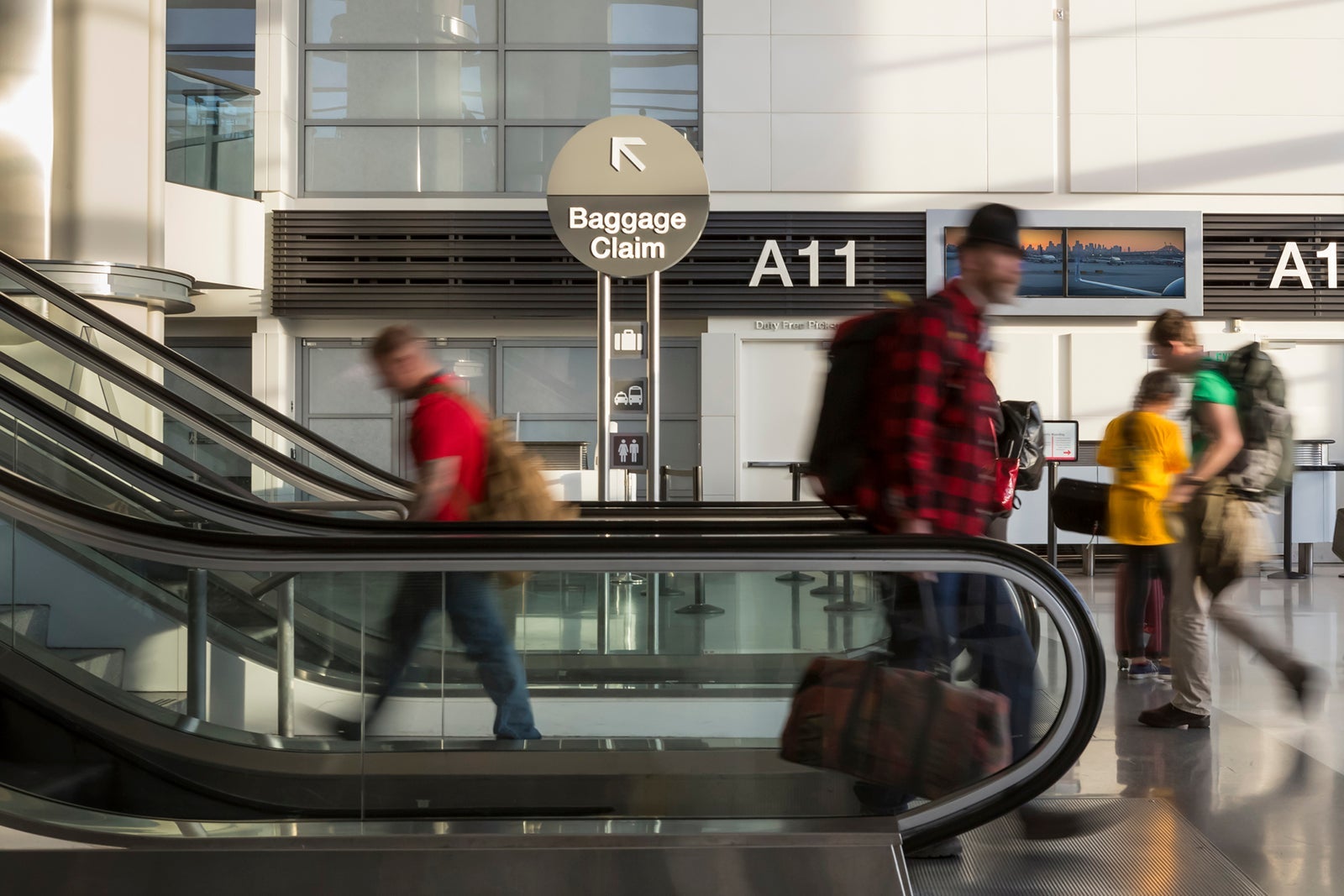
A checked bag is luggage you hand over to the airline at check-in to be stowed in the aircraft's cargo hold — as opposed to a carry-on, which you bring into the cabin. As of 2026, most U.S. airlines charge about $45–$50 per checked bag each way in economy, though fees vary by airline, route and fare class. Travelers can often avoid or offset these fees with a co-branded airline credit card that waives the first checked bag, a premium travel card that offers an airline fee or travel statement credit, or a higher fare class.
TL;DR / Key Takeaways
- A checked bag is luggage stored in the cargo hold — not carried onto the plane.
- Fees typically run $45–$50 per bag each way on major U.S. carriers in economy.
- The best way to avoid fees: hold a cobranded airline card or have elite frequent flyer status.
- Most airlines allow bags up to 50 lbs and 62 linear inches; overweight bags trigger fees of $100-$200.
- Pack valuables, medications and fragile items in your carry-on; checked bags can be lost or delayed.
How checked bag fees work (and what they actually cost)
Checked bag fees are charged per bag, per direction of travel — meaning a round trip can cost you double. Domestic economy fares on the three largest U.S. carriers follow a familiar pricing structure, though fees creep up nearly every year.
| Factor | Checked Bag | Carry-On |
|---|---|---|
| Typical size | Up to 62 linear inches (length + width + height) | Up to 22 x 14 x 9 inches (varies by airline) |
| Weight limit | 50 lbs (economy), 70 lbs (first/business on some airlines) | No weight limit on most U.S. carriers |
| Fee (economy) | $45–$50 per bag on major U.S. airlines | Included on most U.S. flights |
| Access during flight | Not accessible; loaded in cargo hold | Accessible in the overhead bin or under seat |
| Best for | Trips 4+ days, bulky gear, liquids over 3.4 oz | Short trips, quick connections, valuables |
Oversize bags — those exceeding 62 linear inches — and overweight bags (above 50 lbs) trigger separate fees, typically $100-$200 each way. International routes can have different allowances and fees, so always check the airline’s baggage policy before you pack.
How to avoid checked bag fees with a credit card
The fastest path to free checked bags is usually a cobranded airline credit card. Most of these cards extend the first checked bag benefit to the primary cardholder and a select number of travel companions on the same reservation — which can translate to substantial savings on a family trip.
Here’s how to think about which approach makes the most sense:
- Cobranded airline cards typically waive the first checked bag fee for the cardholder and a set number of companions. On a round-trip flight for two, that’s up to $180–$200 in savings — often enough to offset the card’s annual fee.
- Premium travel cards may include airline fee credits that can cover incidental fees, including checked bags on a selected airline. Elite status with an airline may include complimentary checked bags as a core benefit — the number of free bags scales with your status level.
- Basic economy fares often carry stricter baggage rules. Even with a cobranded card, some basic economy fares may not include checked bag waivers — read the fine print before booking.
For a full breakdown of which cards cover checked bags on which airlines, see TPG’s guide to the best airline credit cards.
Checked bag vs. carry-on: which should you choose?
The decision to check a bag or pack light depends on trip length, destination and how much you value your time at the airport. Neither is universally better — it depends on your priorities.
Carry-on bags are the right call when you need speed and certainty. You skip baggage claim, eliminate the risk of lost luggage and breeze through quick connections. On a two-day business trip, a carry-on is almost always the smarter move.
Checked bags make more sense for longer trips (4+ days), destinations requiring gear (like ski trips or beach holidays), and any time you’re traveling with a child who needs a car seat or stroller — most airlines transport those at no additional charge, even in economy.
Plan accordingly and factor the fee into your total trip cost from the start. Learn what to pack in a carry-on with our travel guide.