Here's what it takes to pass the captain test for a major airline

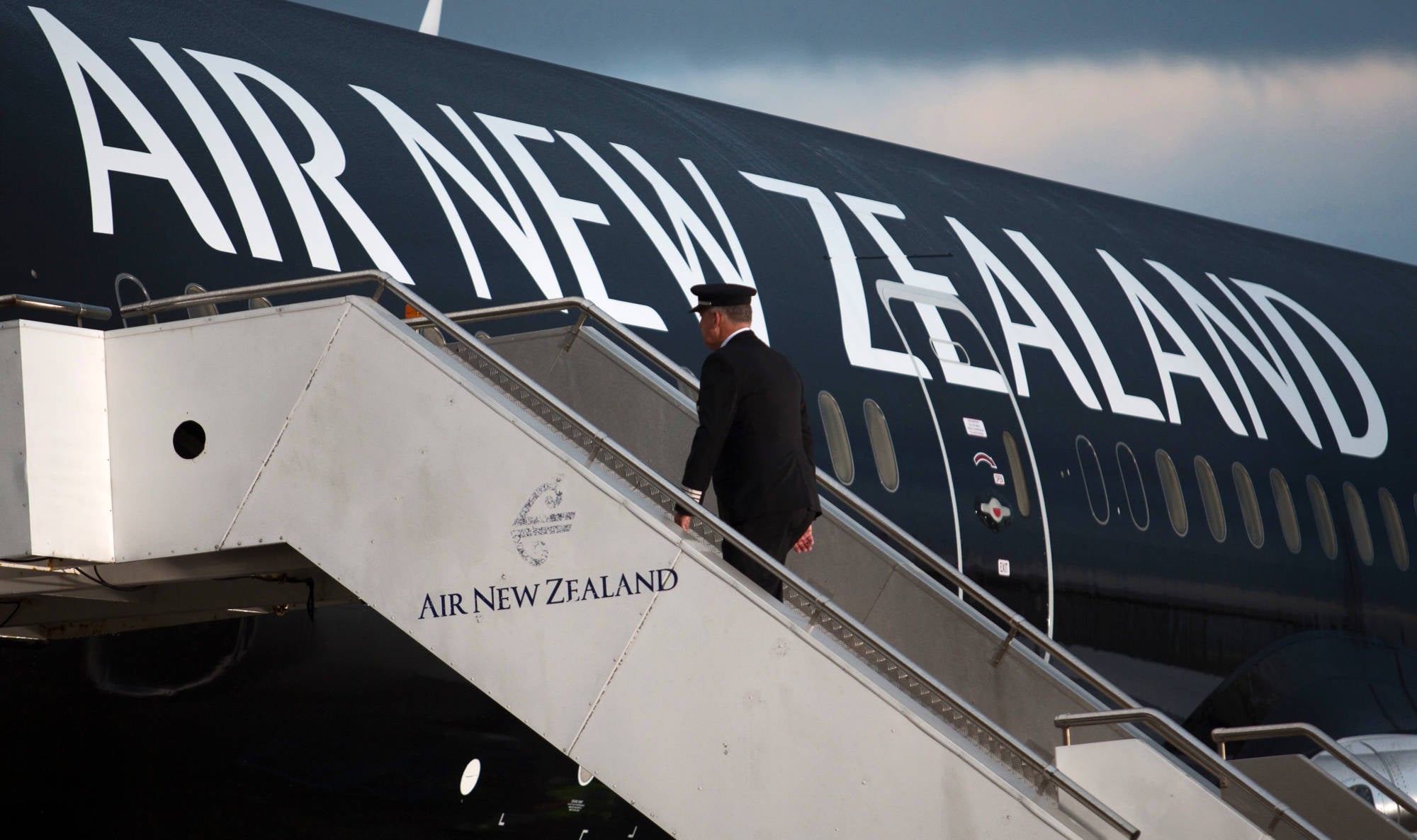
Reaching the rank of captain is one of the most significant moments of any airline pilot's career. Trading in the three-stripe jacket and picking a pristine new four-stripe uniform is the culmination of years of hard work.
Whilst the years spent in the right-hand seat are all building toward that upgrade, the final few months are the most demanding of a pilot's entire career. In order to make the move from first officer to captain, all pilots must complete the command course.
It's not just about flying
Many people imagine the job of a pilot is pretty straightforward. Press a button and the aircraft takes off. Press another button and it lands. The rest of the time, we just watch the screens as the autopilot does all the work. Feet up, drinking coffee, chatting about the latest football results with their colleague.
However, as soon as the weather gets exciting or we deal with an in-flight emergency, all of a sudden we are heroes. How can the same coffee-drinking, autopilot-reliant sports fans suddenly become saviors?
As a community, airline pilots are fairly reserved. We come to work, we do our job safely and professionally and then we go home. Our mission is to take you safely from point A to point B, without you knowing any of the difficulties we may encounter during that journey. If having our passengers think that flying is so straightforward that we just sit there drinking coffee, we'll take that. Whatever it takes to give you peace of mind.
However, the reality is quite different.

Whilst a pilot needs to have good aircraft handling skills, particularly when the weather turns nasty, it's only a small part of the job. With modern aircraft, a pilot is rapidly becoming an aircraft manager first and a "stick and rudder" pilot second.
The peak of this aircraft management is when a pilot becomes a captain.
First officer development
For their entire career as a first officer, pilots are building the skills required to become a captain. As a result, an experienced first officer is, in effect, a captain in waiting. Airlines that are proactive in developing the skills of their first officers will encourage them to "be the captain" when they are flying the aircraft.

In these situations, the captain will let the first officer be the primary decision-maker. They will perform all the roles the captain would normally do, except for signing the legal paperwork. It will be their responsibility to decide the fuel required for the flight, to brief the flight attendants, to liaise with the ground staff to make the "welcome onboard" announcement and to ensure that the flight gets away safely on time.
Read more: The path to becoming an airline captain — how pilots climb the ranks
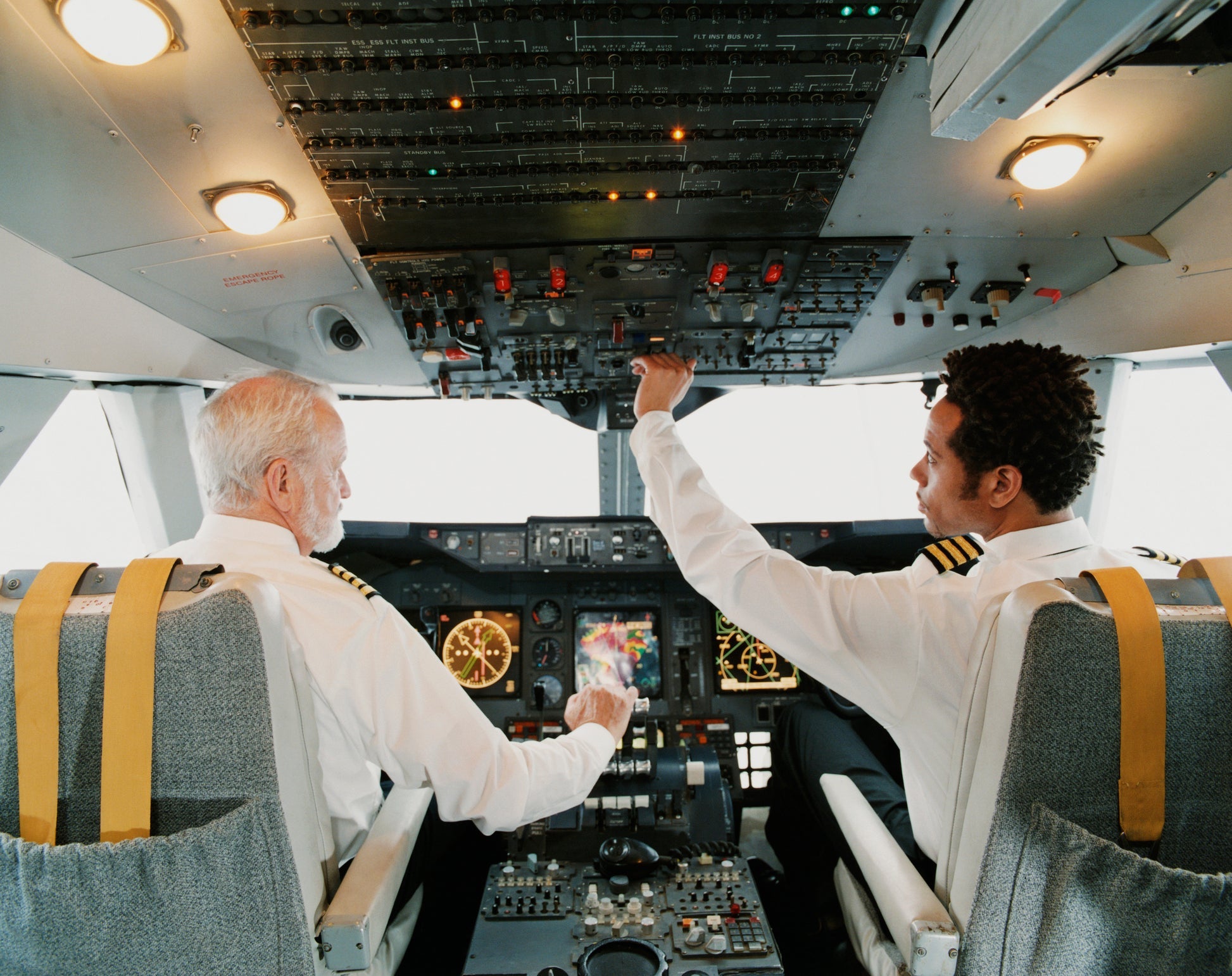
Naturally, at any point that the captain is not happy with how the flight is progressing, they will offer their input and guidance. With years of practice acting as the captain, when the time finally comes to doing the command course, the first officer has developed all the skills they need to be a successful captain.
All that needs doing is refining those skills and that's what the command course is for. It looks at the key skills required to be a good captain and helps candidates develop those further.
Depending on the airline and the aircraft type flown previously, the command course will consist of around five to 10 simulator sessions and then 12 to 24 normal flights, all under the guidance of a team of training captains.
Each simulator session is designed to help the prospective captain learn how the dynamic shifts from being an able first officer to becoming a competent captain. The operating sectors then enable them to put these into practice in a real-world environment.
Authority gradient
When you think of the captain, you may think of the big chief. The person who everyone obeys, the one who everyone curtails to. However, a good captain must know how to strike a balance between being authoritative and allowing their team to influence their decisions.
The authority gradient refers to how command and decision making is made within a team. If all the power lays in the hands of one person, this can lead to a steep authority gradient. However, if there is no clear leader and the team is left to solve problems on its own, there is a shallow authority gradient.
Think of the bosses you've had in your life. I'm sure we've all had one who was so authoritative that the team members felt unable to speak up and contribute to the task, fearful that they would be beaten down by the boss. This is an example of a steep authority gradient.

Steep authority gradients can impede productive team dynamic, reduce feedback up the management chain and reduce creativity as team members retract from offering their thoughts altogether. It's obvious that this is far from ideal in the business world, even more so in a safety-critical job.
That said, the polar opposite, a shallow authority gradient, can be just as unproductive. A team leader who tries to please everyone will soon find out that decision making is extremely slow. By trying to make everyone in the group feel equally valued, you go round and round in circles and nothing is achieved. There needs to be a point where someone makes a definitive decision.
In the safety-critical environment of an aircraft flight deck, the captain must not only strike a balance between being too strong and too weak but must also be able to move up and down on that scale, depending on the situation. Adaptability is key.
Take, for example, when an experienced captain flies with an inexperienced first officer. The captain must be able to reduce the authority gradient to enable their less experienced colleague to feel part of the team.
Conversely, should the same captain fly with a first officer with equal experience, the captain may need to increase the gradient slightly to ensure safe decisions are made in good time.
Time and workload management
What goes up must come down, and with an aircraft, our up is always limited by our fuel endurance. Sooner or later, we have to land. However, this isn't always the most pressing issue. As an airline pilot, time and workload management are one of the key skills needed to conduct a safe flight.
If you've read "The Chimp Paradox" by Dr. Steve Peters, you'll be familiar with the concept of the "inner chimp." No matter how advanced the human race has become today, inside us still lives our original ancestor, the one who behaves like any other animal in the jungle.
When that ancestor felt threatened, the immediate reaction of its brain was the "fight or flight" impulse. Do I stay and fight or do I run away? When something untoward or surprising happens to us today, that inner chimp still reigns supreme. If you're walking home late at night and you sense that you're being followed, or your boss drops a last-minute project on your desk with severe implications if it's not completed, your chimp escapes from its box and all hell breaks loose.
Read more: Can you hear me now: How pilots communicate with ATC while 35,000 feet in the air
Am I about to be robbed? How on earth am I going to finish this project? Will I get fired if I don't? Panic sets in and you're unable to make rational decisions. Uncontrolled, the chimp will react for you and make you do something you may not expect. It may make you turn and fight the stalker or react and tell your boss you're not going to do the project. In hindsight, neither of these may have been the best decision.
When flying an airliner and an engine suddenly catches fire in the middle of the night, it's only natural for the chimp to escape from the box. Red lights are flashing and warning alarms are going off. However, when flying an aircraft with 300 lives on board, we rarely get a second chance to rectify a poor decision made instinctively. What we must do is put the chimp back in the box to allow us to think rationally.
As part of the command course, captains perfect their skills on remaining calm in these situations, enabling them to think clearly. Part of being able to think clearly is defining how much time we have.

When something untoward happens on the flight, we need first to ascertain the severity of the situation. "How soon is something really bad going to come from this situation?" From this, we can deduce how quickly we need to work and make a decision.
For some situations, such as a sudden loss of cabin pressurization, we need to take initial steps quickly. We have to don our oxygen masks immediately to protect ourselves from the threat of hypoxia. As a result, we don't even discuss this, it's an instinctive action. Once this is done, we can then begin a rapid descent to a lower altitude.
Conversely, an engine fire in the cruise may seem catastrophic for those watching from the cabin, however, once the fire has been extinguished and the engine shut down, we can assess our situation. On the 787 Dreamliner, we know that we are certified to fly on a single-engine for up to three hours. Why rush to land at the nearest airport where the weather might be problematic when you could continue for another hour and land at a far safer alternative?
There is no right or wrong answer in these situations, but as the captain, you have overall responsibility to manage to time and workload to ensure a safe outcome for the flight.
Risk management
Flying is a risk. You take 300 people, put them in a metal tube less than one centimeter thick and then fill the remaining area under their feet with all sorts of cargo. Before going anywhere, you then fill the wings with 70 tons of fuel.
You then tear off down a strip of concrete at 180 mph before climbing eight miles into the air and flying across oceans, jungles and deserts at 550 mph. To finish it off, you then have to bring that same metal tube back down to earth up to 19 hours later when your body wants to be asleep.
That said, every time you step out of your front door, you're taking a risk. Life is one big game of risk, however the decisions which we make every moment of our waking day weigh up the pros and cons of those risks.
A major part of the captain's role is to manage risk and as part of the command course, pilots develop methods to evaluate risk. The engine fire mentioned above is a great example. Flying on a single-engine is safe, but there is an obvious need to land as soon as possible.
Read more: How pilots operate cargo flights on passenger aircraft

With the fire extinguished and the engine shut down, the crew have a decision to make. Conveniently, there is an airport right underneath them. However, on checking the weather, they find out that there's a howling crosswind blowing and the visibility is right on the legal limits.
Not only that, once on the ground, there may not be engineers available to fix the engine and the availability of hotels for the passengers may be limited. That said, the aircraft will have achieved the requirement to land as soon as possible.
Alternatively, being the good crew that they are, the pilots had already determined before the engine fire that there was a good diversion airfield 90 minutes flying time away. The weather was favorable, it had good engineering cover and there were plenty of hotels for the passengers. The only snag is that it's further away.
So which option do you take? Is it better to get on the ground ASAP, but in poor weather, or is it preferable to fly to the airport further away but be assured of far better conditions on the ground? Often there's no right or wrong answer but the captain has the final decision on what they deem best for the flight.
Read more: The maneuvers pilots use to prevent a collision in the air
Bottom line
The first phase of the command course enables the prospective captain to develop their command skills in the safe environment of the simulator. How the pilot manages the flight in both normal and non-normal situations is key to the success of the course. Flying the aircraft is the easy part. Being able to manage time and risk whilst maintaining a working environment where team members feel they can contribute is key.
Ultimately pilots get paid to make safety-critical decisions in a time and resource-limited environment. The decisions the captain takes could have severe repercussions on the safety of the aircraft and all its occupants. With that in mind, the candidate will only progress to the flying part of the command course once they have satisfied the instructors in the simulator stage. Check back next week to see how the intensity steps up when the training moves onto the aircraft.
TPG featured card

at Capital One's secure site
Terms & restrictions apply. See rates & fees.
| 5X miles | Earn 5X miles on hotels, vacation rentals and rental cars booked through Capital One Travel |
| 2X miles | Earn unlimited 2X miles on every purchase, every day |
Pros
- Stellar welcome offer of 75,000 miles after spending $4,000 on purchases in the first three months from account opening. Plus, a $250 Capital One Travel credit to use in your first cardholder year upon account opening.
- You'll earn 2 miles per dollar on every purchase, which means you won't have to worry about memorizing bonus categories
- Rewards are versatile and can be redeemed for a statement credit or transferred to Capital One’s transfer partners
Cons
- Highest bonus-earning categories only on travel booked via Capital One Travel
- LIMITED-TIME OFFER: Enjoy $250 to use on Capital One Travel in your first cardholder year, plus earn 75,000 bonus miles once you spend $4,000 on purchases within the first 3 months from account opening - that’s equal to $1,000 in travel
- Earn unlimited 2X miles on every purchase, every day
- Earn 5X miles on hotels, vacation rentals and rental cars booked through Capital One Travel
- Miles won't expire for the life of the account and there's no limit to how many you can earn
- Receive up to a $120 credit for Global Entry or TSA PreCheck®
- Use your miles to get reimbursed for any travel purchase—or redeem by booking a trip through Capital One Travel
- Enjoy a $50 experience credit and other premium benefits with every hotel and vacation rental booked from the Lifestyle Collection
- Transfer your miles to your choice of 15+ travel loyalty programs
- Top rated mobile app