Skip to content

Why You Shouldn't Worry When You See a Pilot Sleeping in First Class

Sept. 10, 2018
3 min read
United 767-300ER Polaris Review
Why You Shouldn't Worry When You See a Pilot Sleeping in First Class
The cards we feature here are from partners who compensate us when you are approved through our site, and this may impact how or where these products appear. We don’t cover all available credit cards, but our analysis, reviews, and opinions are entirely from our editorial team. Terms apply to the offers listed on this page. Please view our advertising policy and product review methodology for more information.

The Daily Mirror is a British tabloid paper — one that seems especially partial to airline-related "stories," since they generally have broad interest. That certainly seems to be the motivation behind the publication's most recent aviation post, "United Airlines passengers stunned to see pilot take off clothes and fall asleep in first class."

I cringe when I see many Daily Mirror headlines, and this one's no exception — the entire premise of this post is utter nonsense. Now I've seen plenty of flight crews act against the airline's policy, but a pilot sleeping during the flight? On longer legs, such as those across the Atlantic, it's actually required by law.

According to the Code of Federal Regulations, or CFR, when there are three or more pilots operating a flight, each may not exceed more than eight hours of flight deck duty in any 24-hour period. The flight in question, United 161, from Newark (EWR) to Glasgow, Scotland (GLA), typically has a flight time of less than seven hours, so two pilots could operate that eastbound leg. The return can exceed eight hours of cockpit time, however, so an additional pilot is required — and they can't spend rest time on the flight deck.

Much of the time, pilots complete their rest requirements far from passenger view. On larger planes, like Boeing's 777, pilots have a dedicated crew rest above the forward galley, such as on Crystal Cruises' 777-200LR, pictured below. After entering an entry code on a restricted-access door, they climb up a small set of stairs and step into a small room with a pair of recliners and two full-length beds behind.

Pilot crew rest on a Boeing 777-200LR. Photo by Zach Honig.

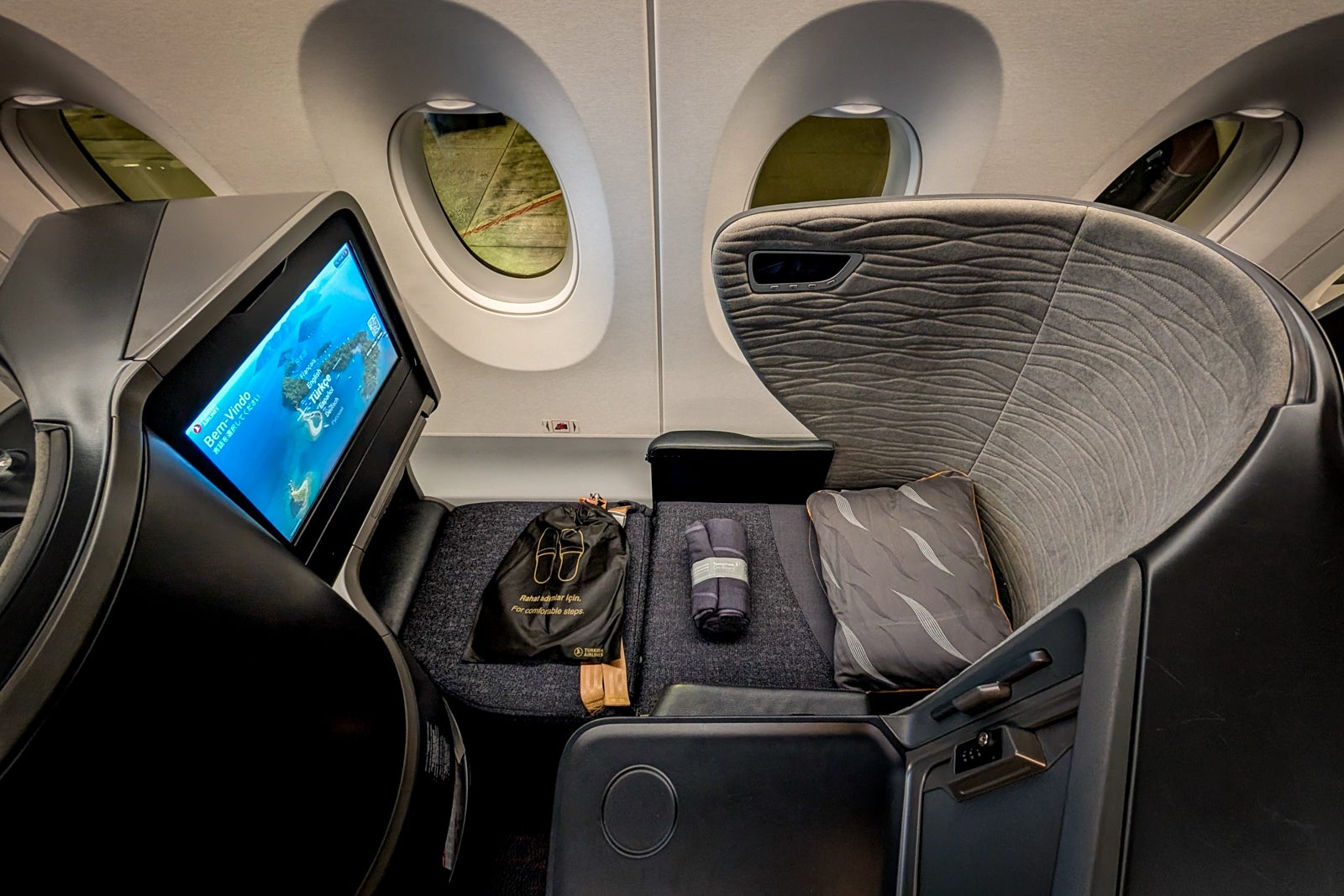
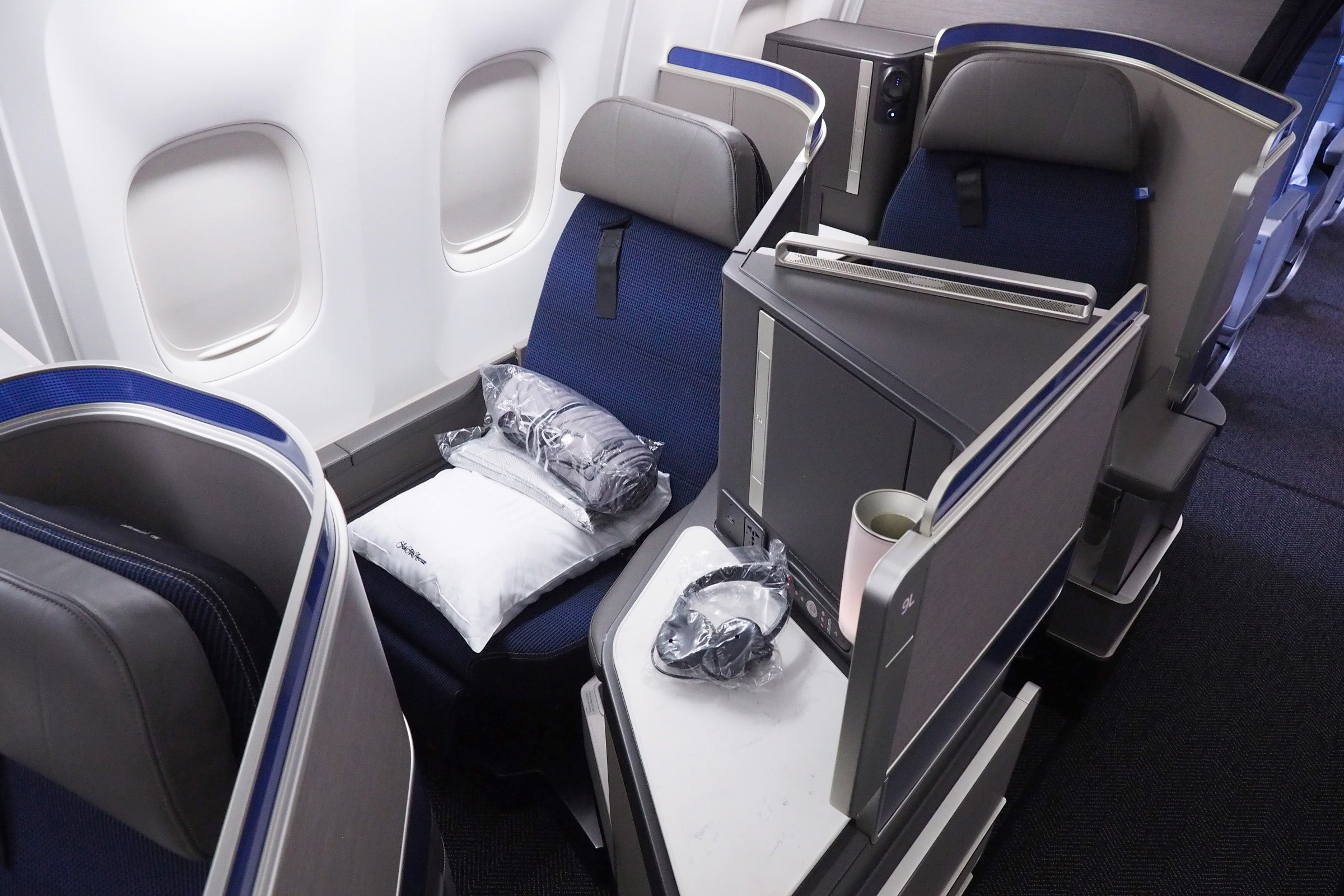
Meanwhile, on the far smaller 757-200, which United flies between Newark and Glasgow, one of the 16 lie-flat business-class seats is reserved specifically as a crew rest, with pilots completing mandatory rest requirements during the over-water portion of the flight.

United’s 757-200 business class. Photo by Ravi Ghelani.

Longer flights may have a fourth pilot, and in the case of ultra-long-hauls, such as the upcoming world's longest flight, from Newark (EWR) to Singapore (SIN), there may be redundant cabin crews as well.

Daily Newsletter
Reward your inbox with the TPG Daily newsletter
Join over 700,000 readers for breaking news, in-depth guides and exclusive deals from TPG’s experts

Like pilots, flight attendants may be required to snooze in the passenger cabin on smaller planes, too. United's 767s have dedicated flight attendant seats in the economy cabin, for example, though Airbus A330s and larger wide-body planes most often have a dedicated flight attendant crew rest, either above or below the center or rear coach cabin.

The next time you see pilots resting during a long-haul flight, there's no cause for alarm — they're simply following the law designed to avoid fatigue, keeping you and other passengers safe in the process.
TPG featured card

Rewards rate
2X milesEarn 2X miles per $1 on every purchase, everywhere
5X milesEarn 5X miles per dollar on hotels, vacation rentals and rental cars booked through Capital One Business Travel
Intro offer
Open Intro bonus
Limited-time offer: Earn up to 150,000 bonus miles
Annual fee
$95
Regular APR
24.49% (Variable)
Recommended credit
Open Credit score description
740-850Excellent

Pros

  • Simple earning structure
  • Bonus categories
  • Annual credits
  • No foreign transaction fees
  • Flexible redemption options, including transfer partners

Cons

  • Has an annual fee
  • Fewer bonus categories than some competitors
  • Lacks premium perks
  • Limited-time offer: Earn up to 150,000 bonus miles—75,000 miles once you spend $7,500 in the first 3 months, and an additional 75,000 miles once you spend $30,000 in the first 6 months
  • Earn unlimited 2X miles per dollar on every purchase, everywhere, no limits or category restrictions, and miles won't expire for the life of the account
  • Receive up to $220 in credits: Receive an annual $50 travel credit for bookings through Capital One Business Travel, up to an annual $50 statement credit for purchases at qualifying advertising or software merchants, plus up to a $120 credit for Global Entry or TSA PreCheck® every four years. Terms and conditions apply
  • Unlimited 5X miles on hotels, vacation rentals and rental cars booked through Capital One Business Travel
  • Transfer your miles to 15+ travel loyalty programs
  • Redeem your miles instantly for any travel-related purchases, from flights and hotels to ride-sharing services
  • $95 annual fee
  • Free employee cards which also earn unlimited 2X miles from their purchases
  • Top rated mobile app