Review: Gogo 737-500 First Class — Austin to Austin

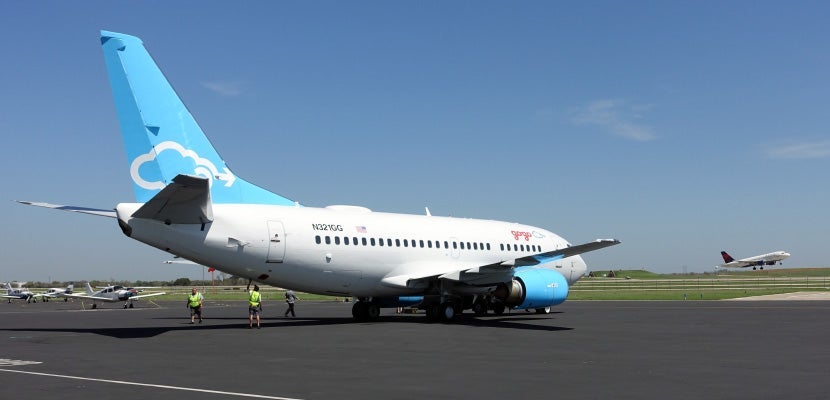
Gogo operates a 737-500 "inflight connectivity laboratory" that the internet provider flies around the world, testing the latest connectivity options before they're released to the public. This week, the plane made its way to Austin for SXSW, and TPG Editor-in-Chief Zach Honig joined for a ride.
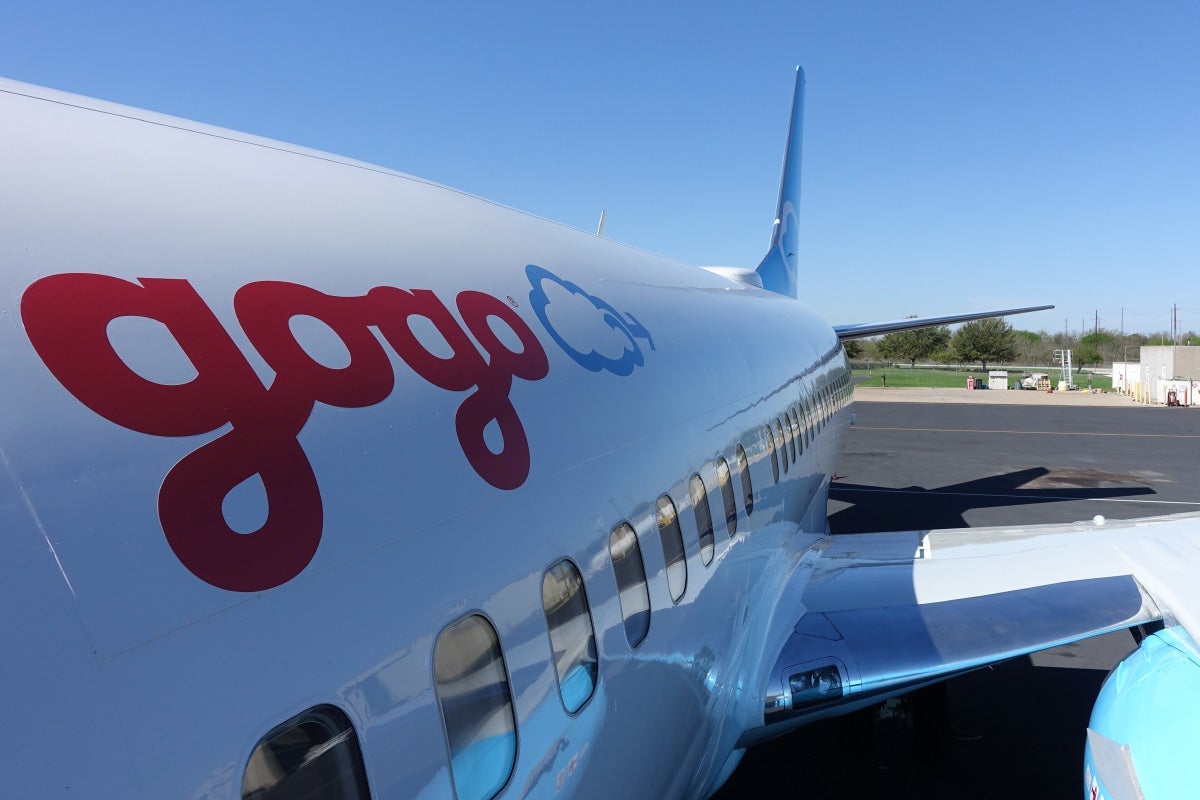
Yesterday, I spent an hour and a half flying in a circle above Austin, Texas — voluntarily. It was our first chance to get on board Gogo's new "private jet," a 737-500 called "Jimmy Ray" (after the company's founder). Jimmy Ray is currently being used to test out Gogo's new 2Ku Wi-Fi, which uses dual satellite antennas to improve performance without using newer Ka-band satellites, like ViaSat-1 (which powers JetBlue Fly-Fi).
While I could write an article about how Gogo's going to revolutionize the in-flight Wi-Fi space, making it possible to do all the things you want to (like stream video and load websites quickly), I'm hesitant to declare the new tech a success based on one flight on an aircraft that's specifically designed to demonstrate Gogo's next-gen capabilities. So rather than that post, I'm giving you a fun take on our flight review, letting you experience the 737-500 just as I did this week.
Airport and Boarding
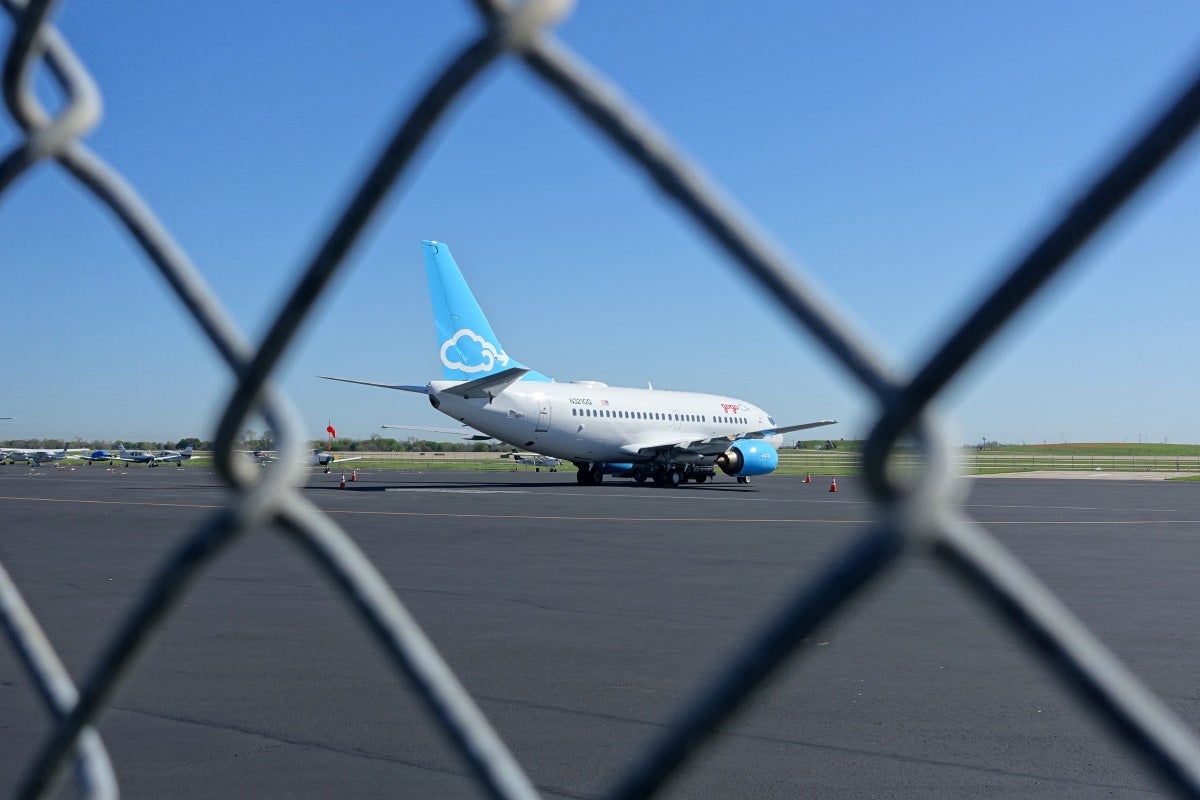
I arrived at Signature Flight Support (a private aircraft terminal) at Austin-Bergstrom Int'l Airport (AUS) around 10:45am. Our flight was scheduled to depart roughly an hour later, and I was pretty excited for what was to be my very first flight in a "private" jet (unless we're counting the Qatar A350 charter flight from JFK).
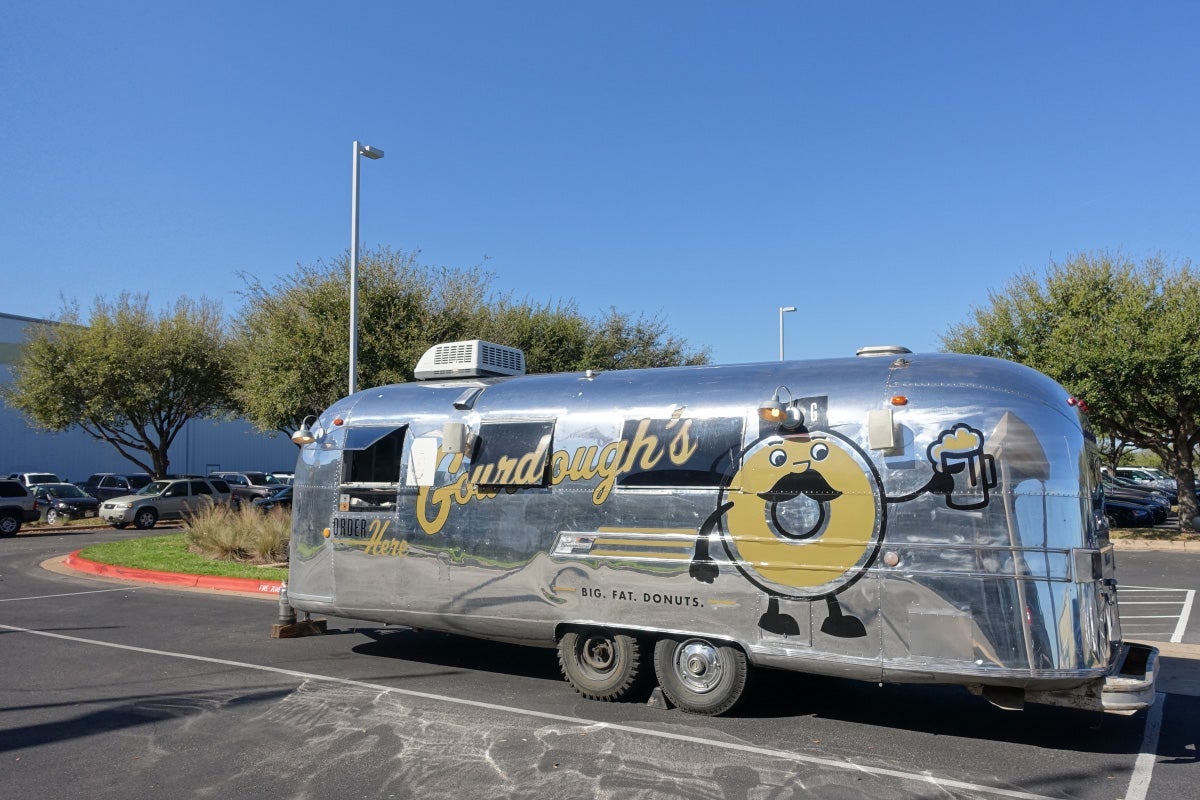
Since this is Austin, Gogo hired a food truck to feed the journalists attending the demo flight.

Considering there wouldn't be an in-flight meal on the plane, I decided to order a breakfast sandwich and a Bloody Mary.

I wouldn't be surprised if this breakfast sandwich exceeded 1,000 calories — it consisted of a sausage patty smothered in cheese sandwiched between two full-size donuts. This was by far the most unhealthy airport meal I've ever had — I managed just a couple of bites.
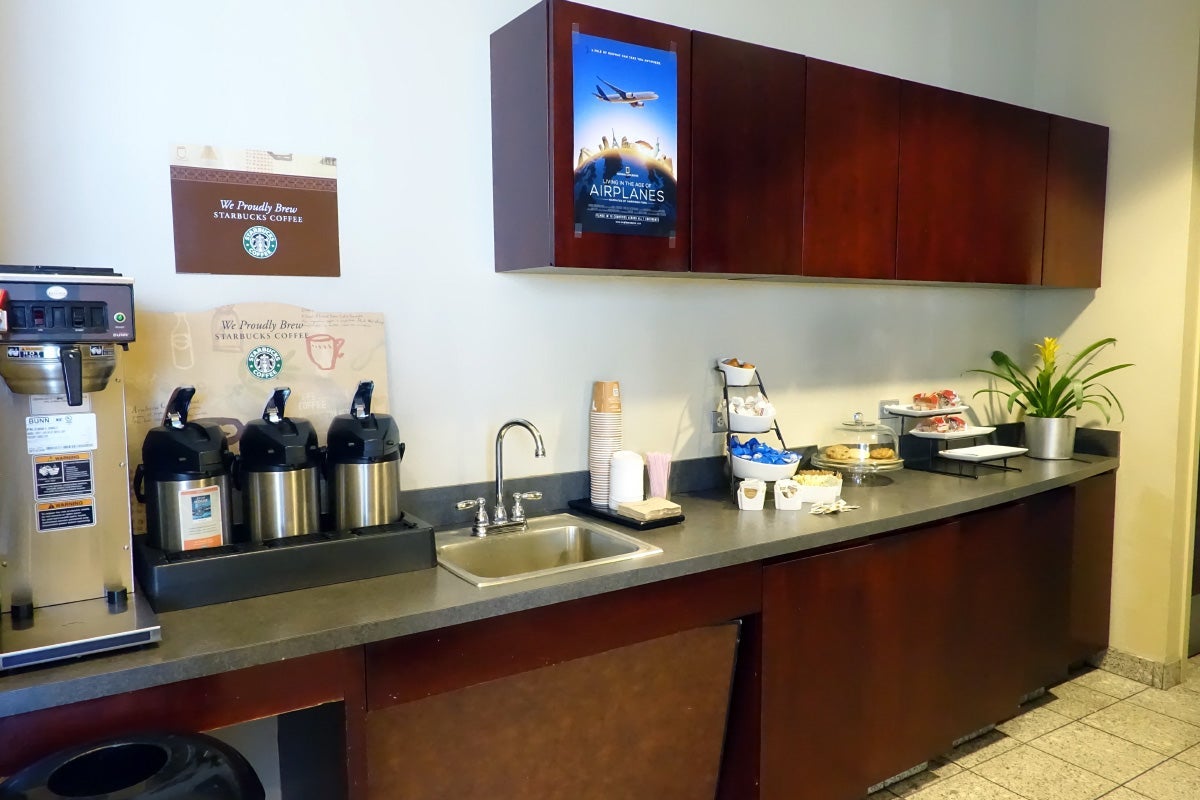
Meanwhile, the private terminal didn't have much of a spread to speak of — there was some coffee, a few pre-packaged muffins and a small selection of cookies. The Admirals Club offers a better pre-flight experience.

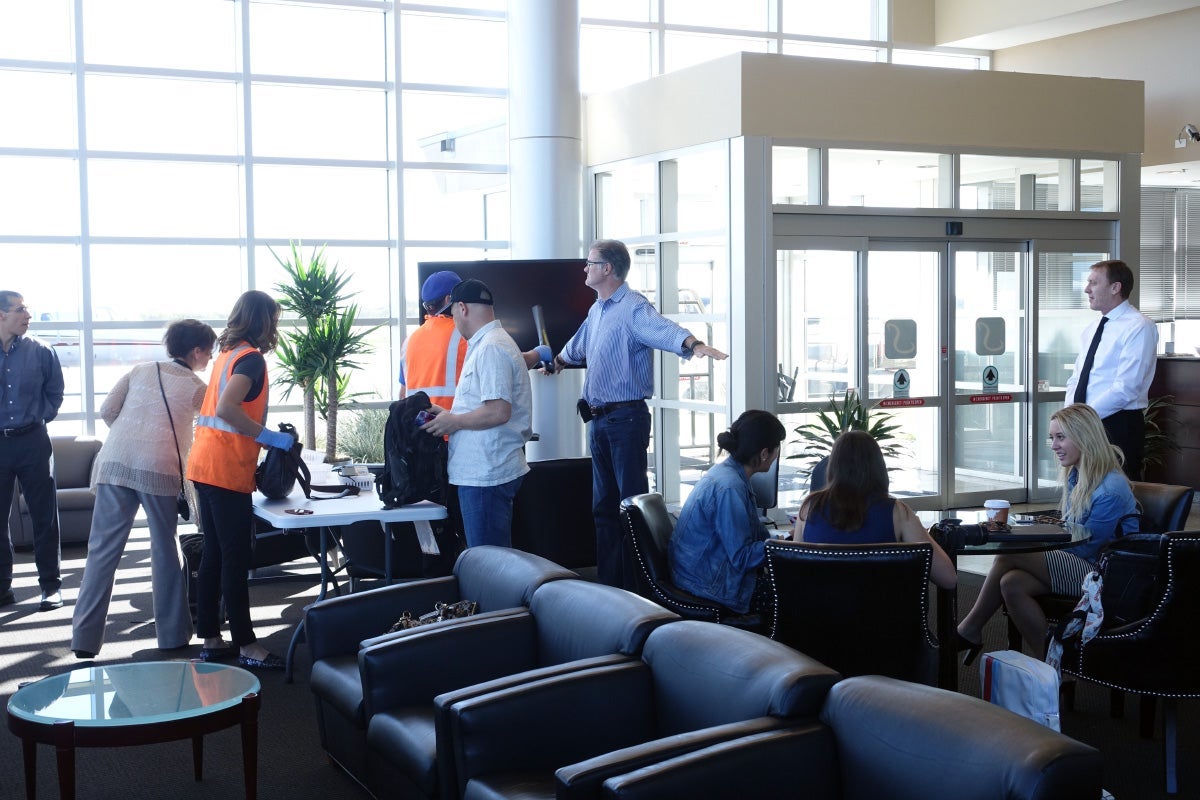
Gogo passengers went through "security" at the private terminal, which consisted of a bag search and metal-detector wanding. Believe it or not, the security here was far more thorough than what I experienced before boarding the Qatar A350 flight at JFK — it reminded me a bit of the experience at the Lufthansa First Class Terminal.
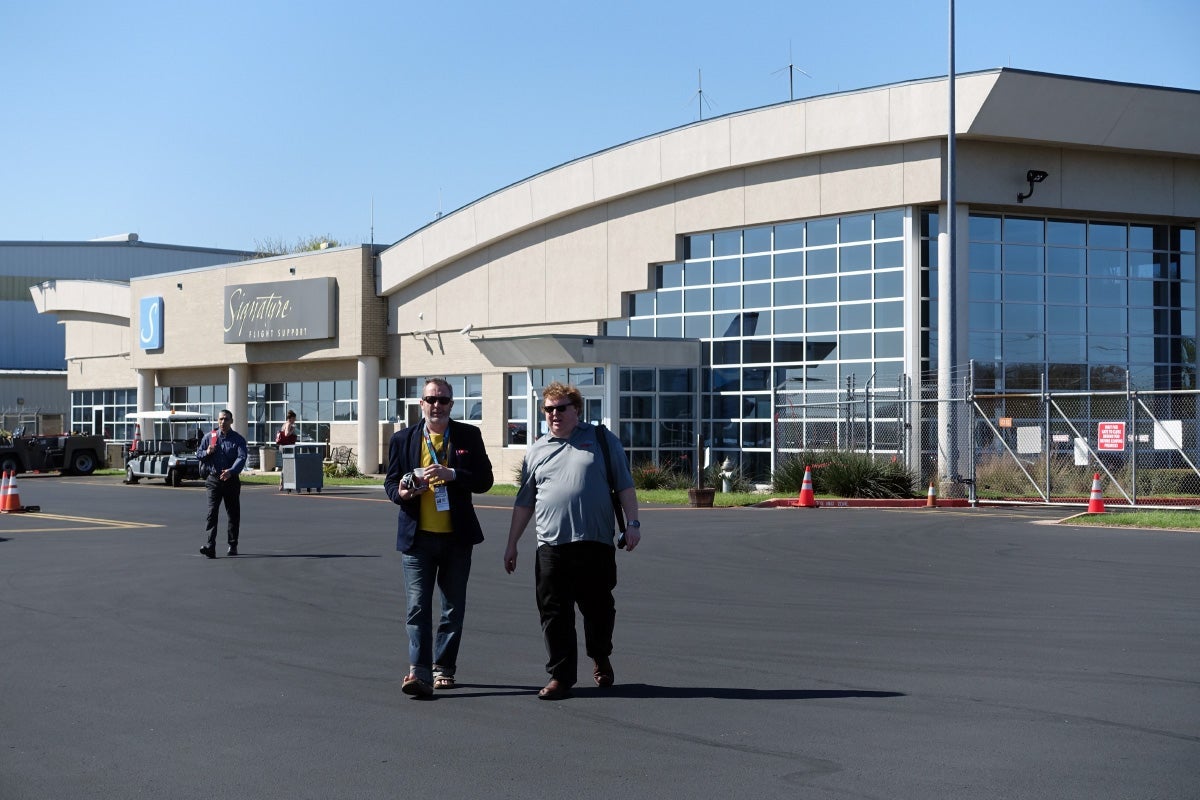
After that, the other 20 or so passengers and I walked out to the plane. There were a few other familiar faces on board, including Grant Martin, Daniel Brusilovsky and fellow travel blogger Gary Leff (who ended up being my seat mate).
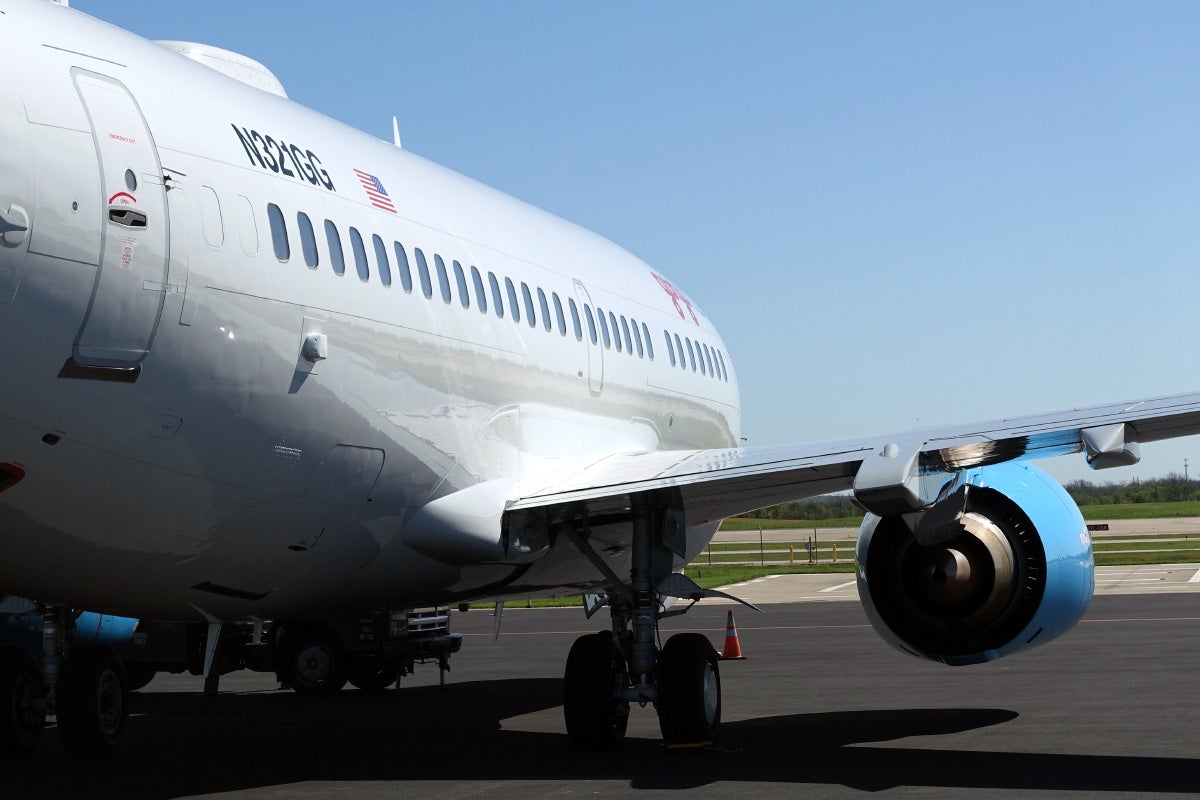
Say what you will about Gogo — the company has a pretty fantastic "inflight lab" with its 737-500. Just look at that beaut!
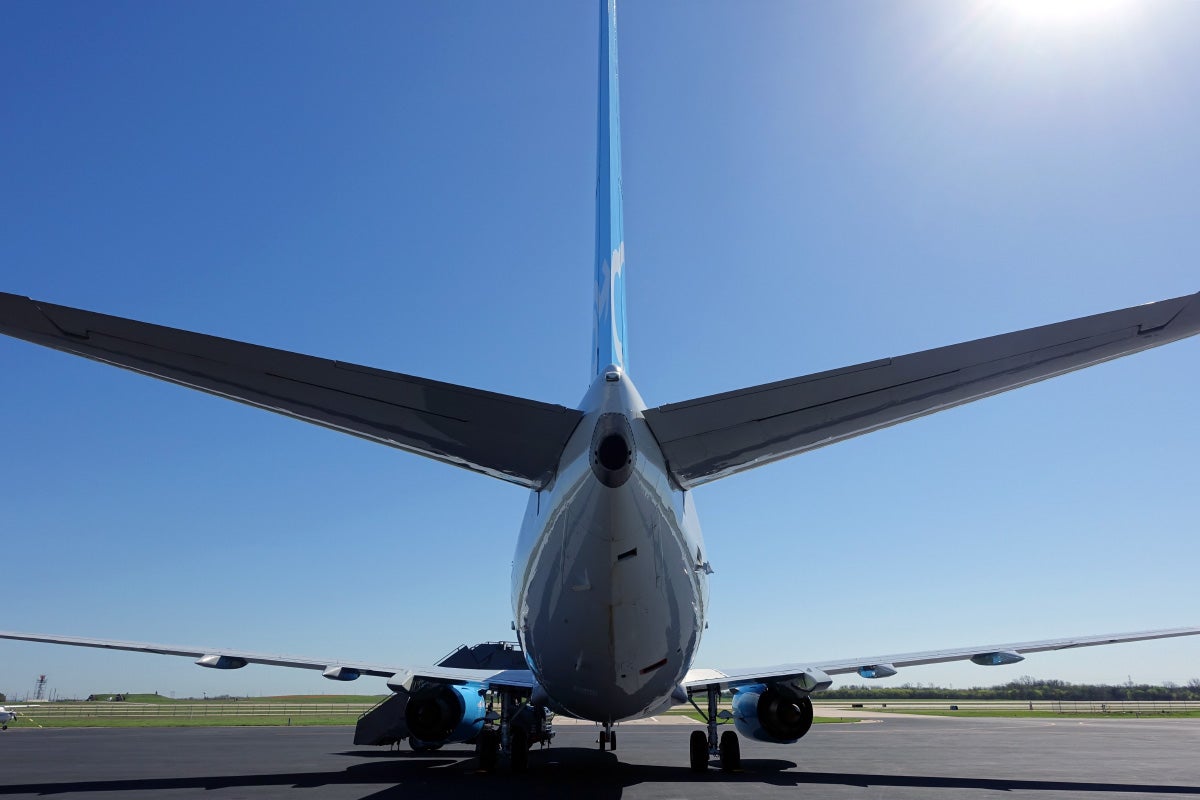
We had pretty much unrestricted access to the plane — during boarding and throughout the flight.
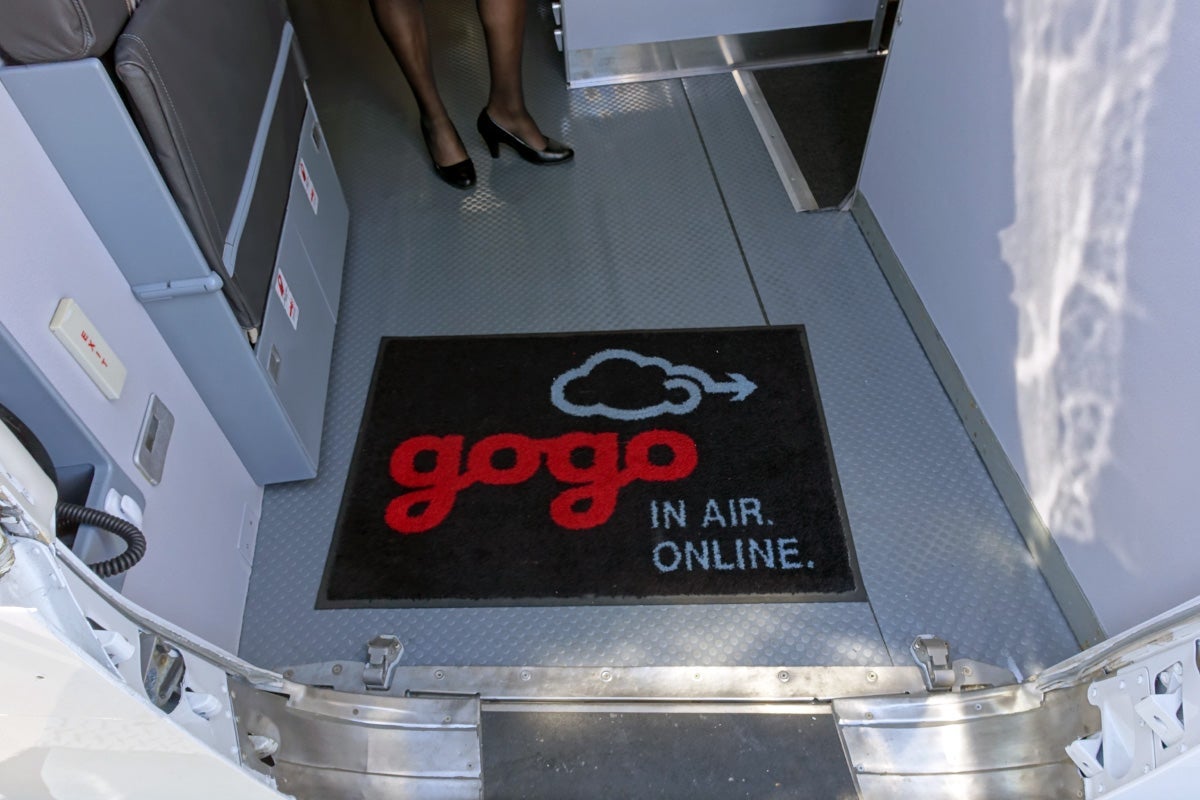
There's even a welcome mat at the forward door!
First Class
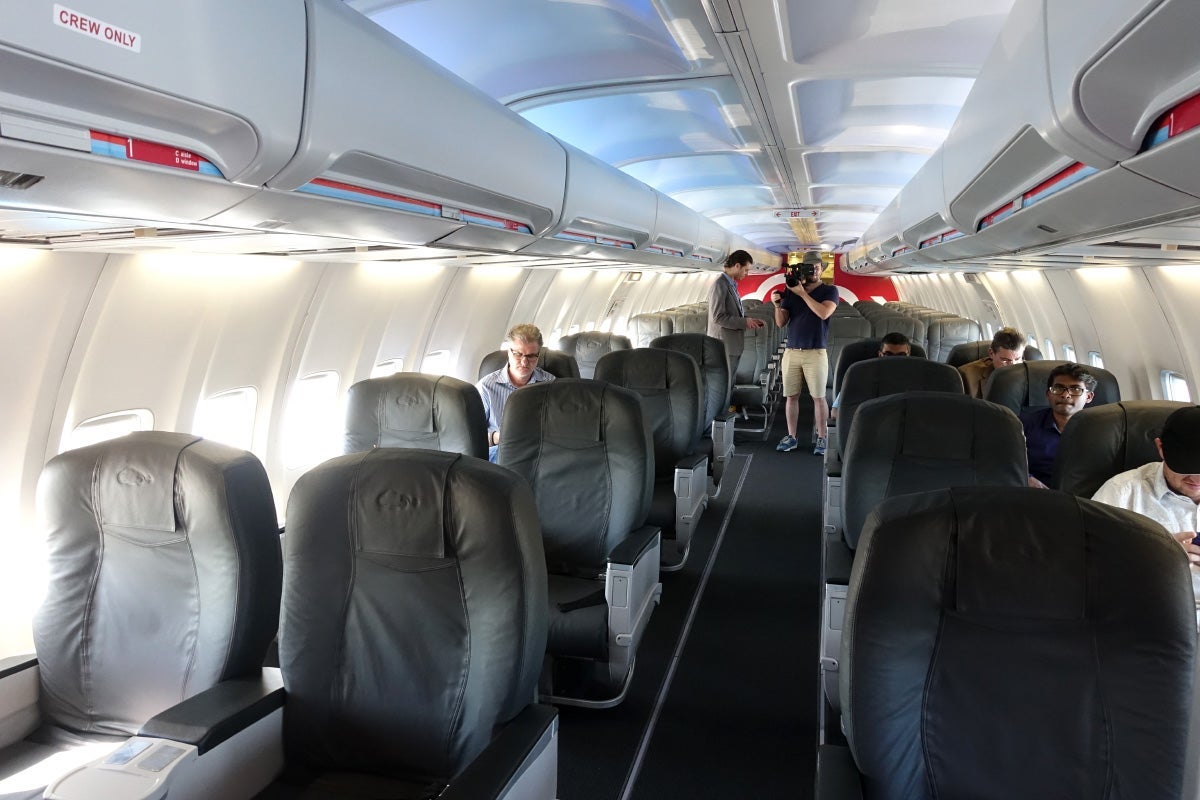
Seating was first-come, first-served, so I quickly grabbed a seat in the second row of first class. The first-class "cabin" consists of four rows of four seats in a 2-2 configuration, for a total of 16 seats.
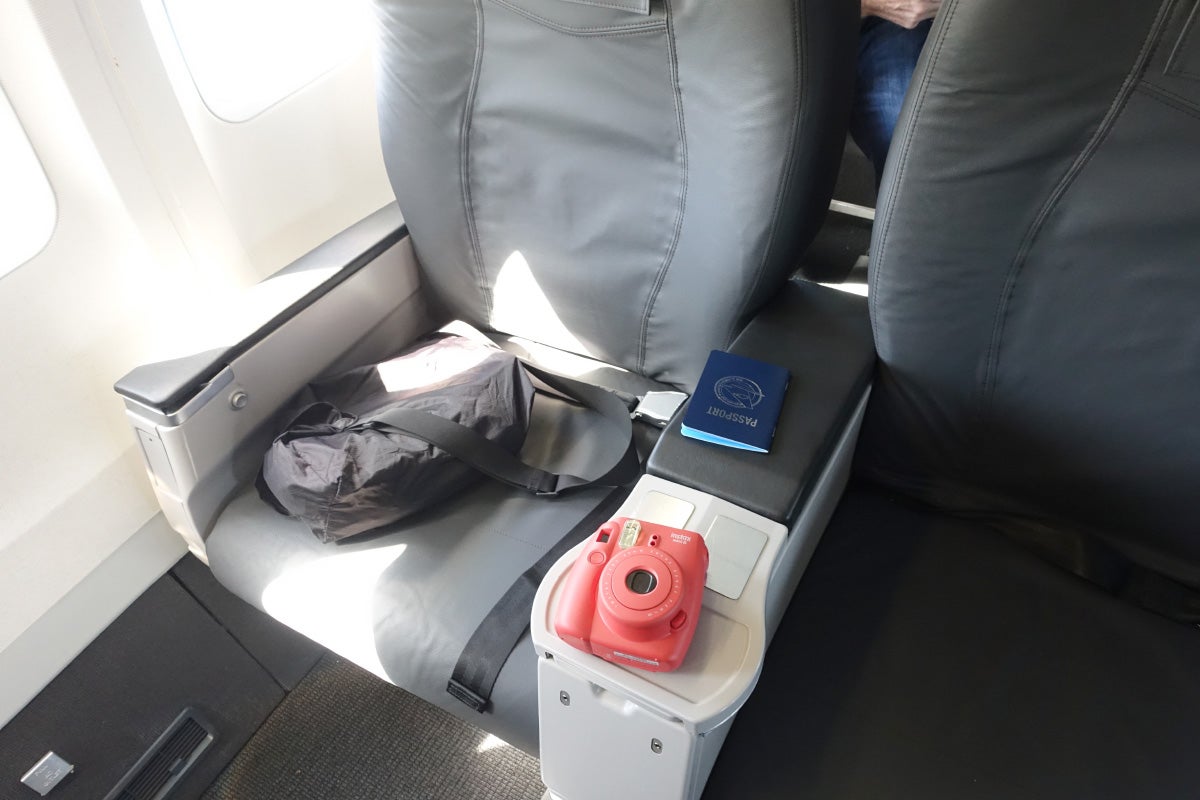
I didn't notice seat numbers, but I chose the equivalent of 2F. There was an instant camera (for use during the flight) and a "passport" (info booklet) waiting at the seat.
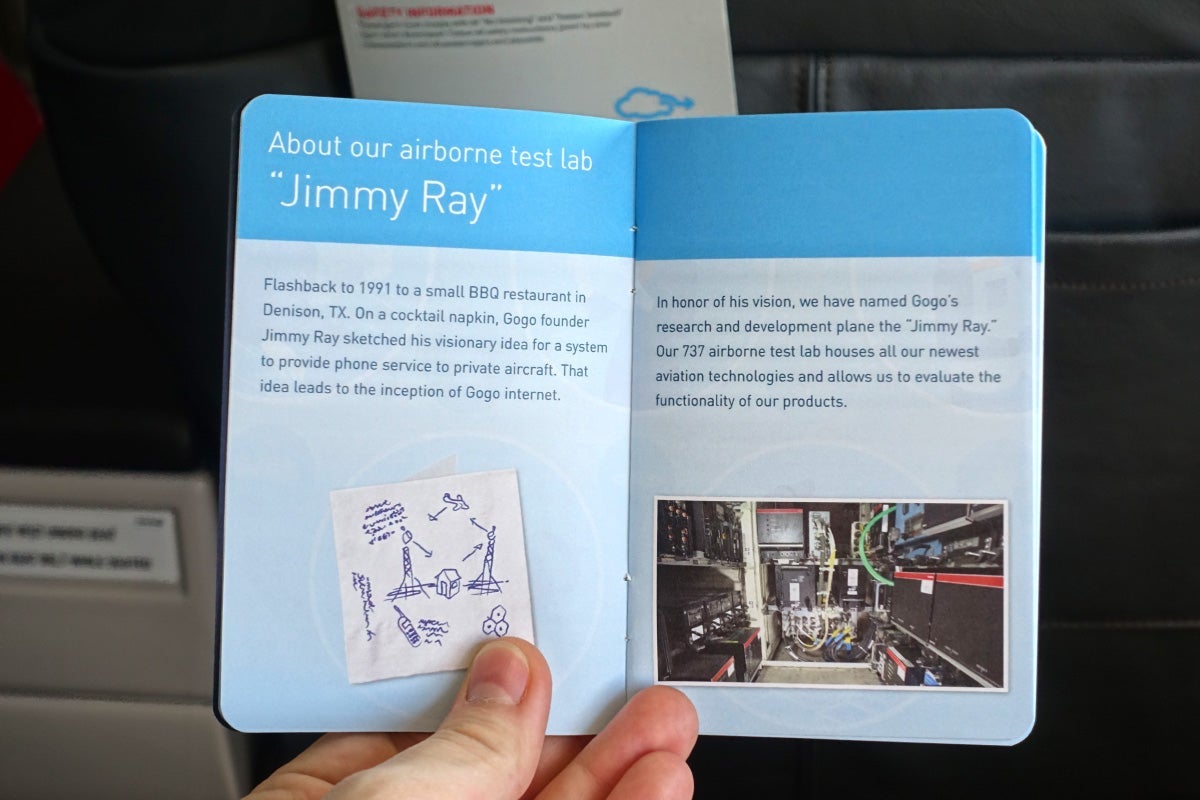
The Gogo booklet contained some info about the aircraft, including an explanation for the name "Jimmy Ray."
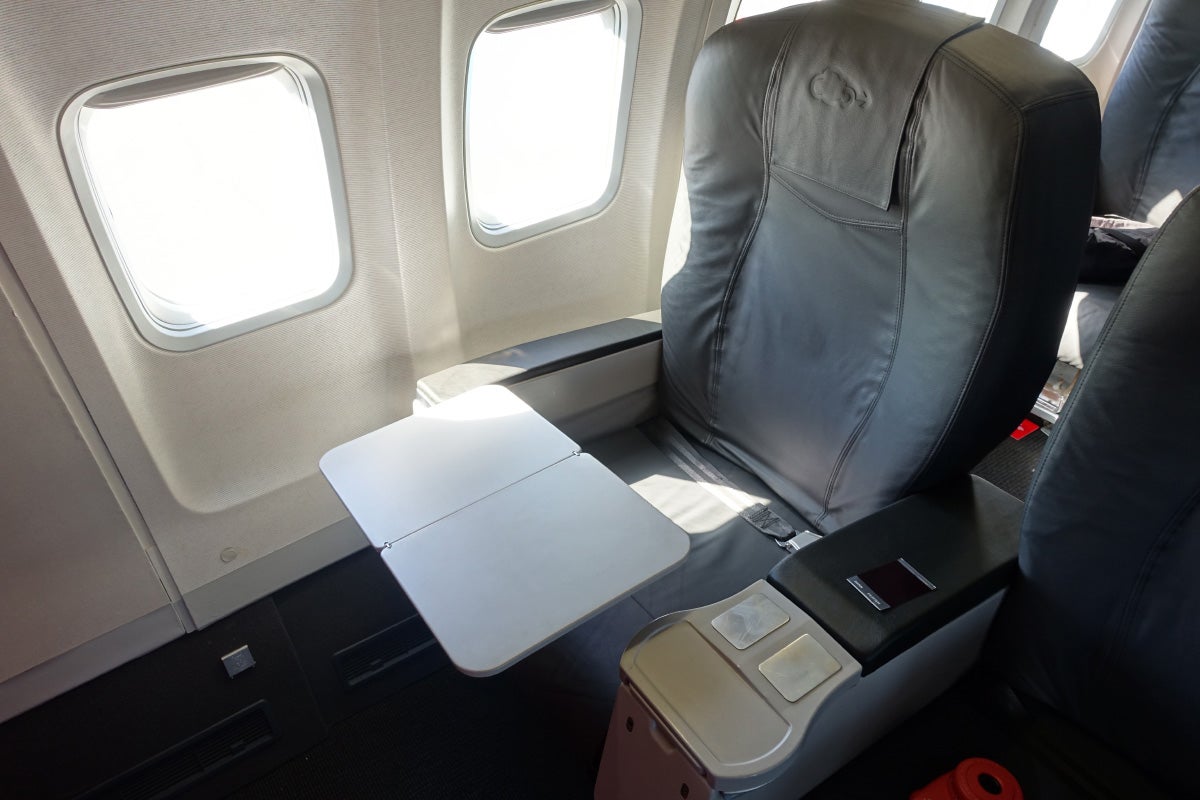
Gogo's first-class seats offer a fair amount of recline, but I was a bit surprised to see that there isn't a leg rest. That was perfectly fine for the 90-minute flight, but considering that Gogo's 737-500 flies around the world for testing purposes (including legs across the pond), the seats weren't quite as comfy as you'd probably like them to be for a long overnight flight.
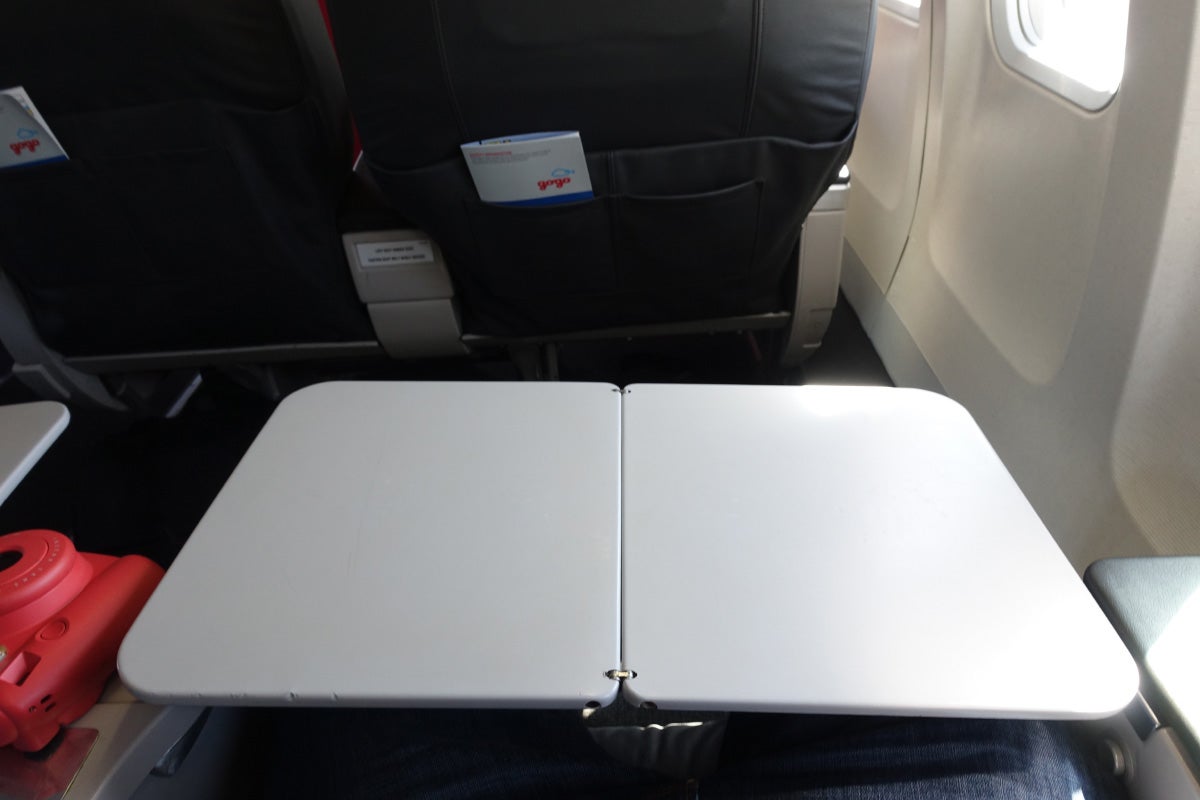
There's a tray table that folds out from the side — we didn't have a meal, so I used the table to support my laptop.
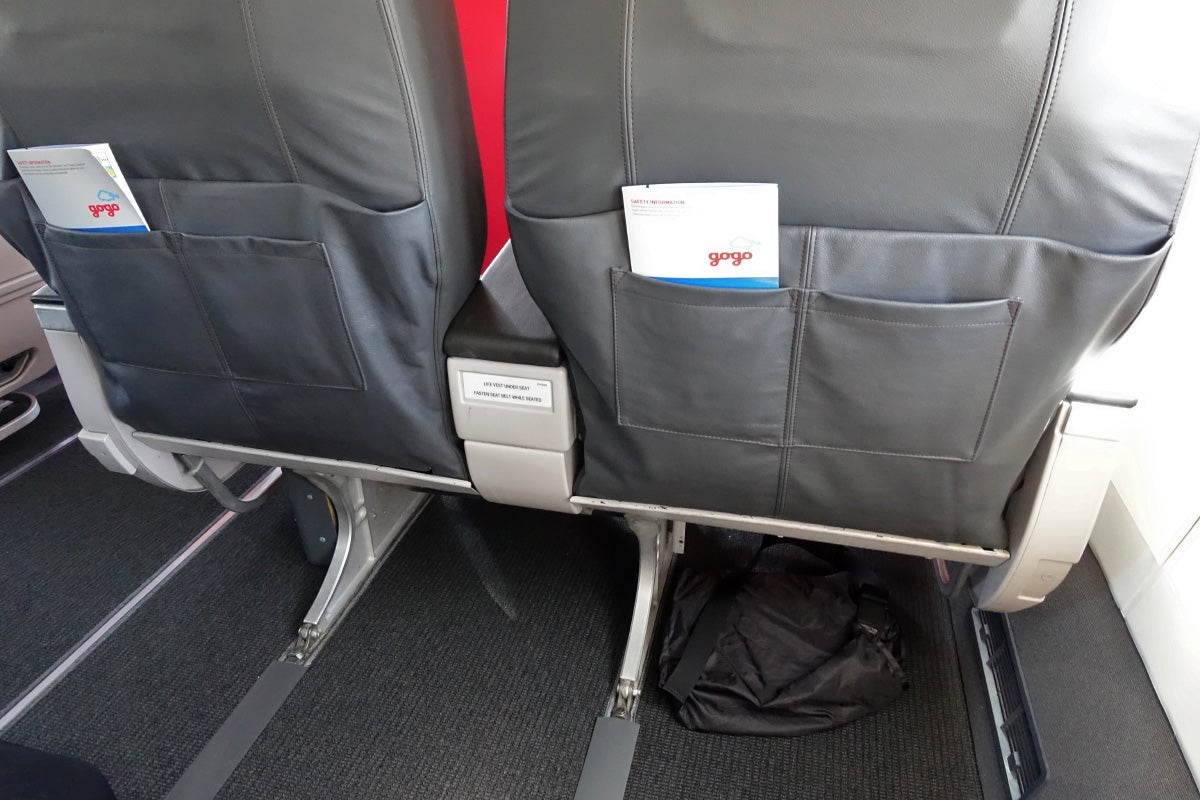
There was plenty of room to store bags under the seat in front, and given the relatively open cabin, I imagine there's no shortage of bin space, even during full flights.
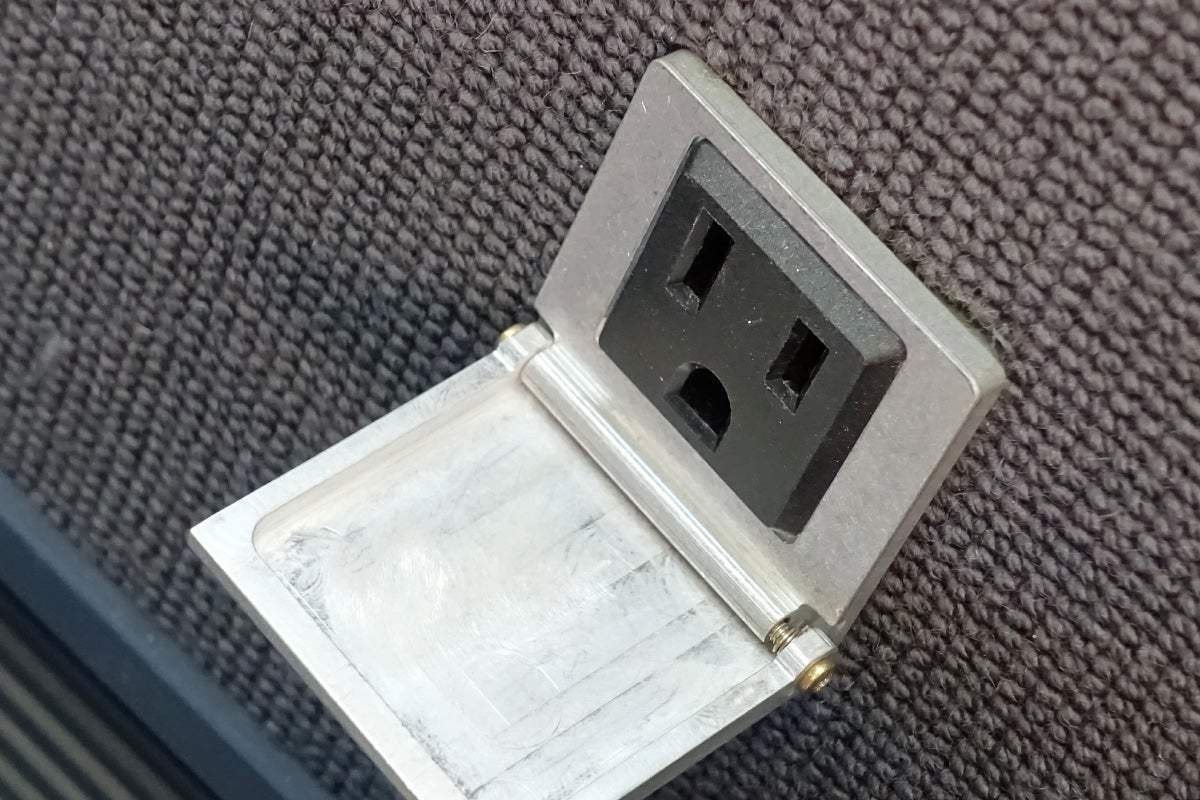
There's a US power outlet at each row, which is a necessity for a Wi-Fi-equipped flight — ya hear that, United? Every plane with Wi-Fi should also have power outlets.
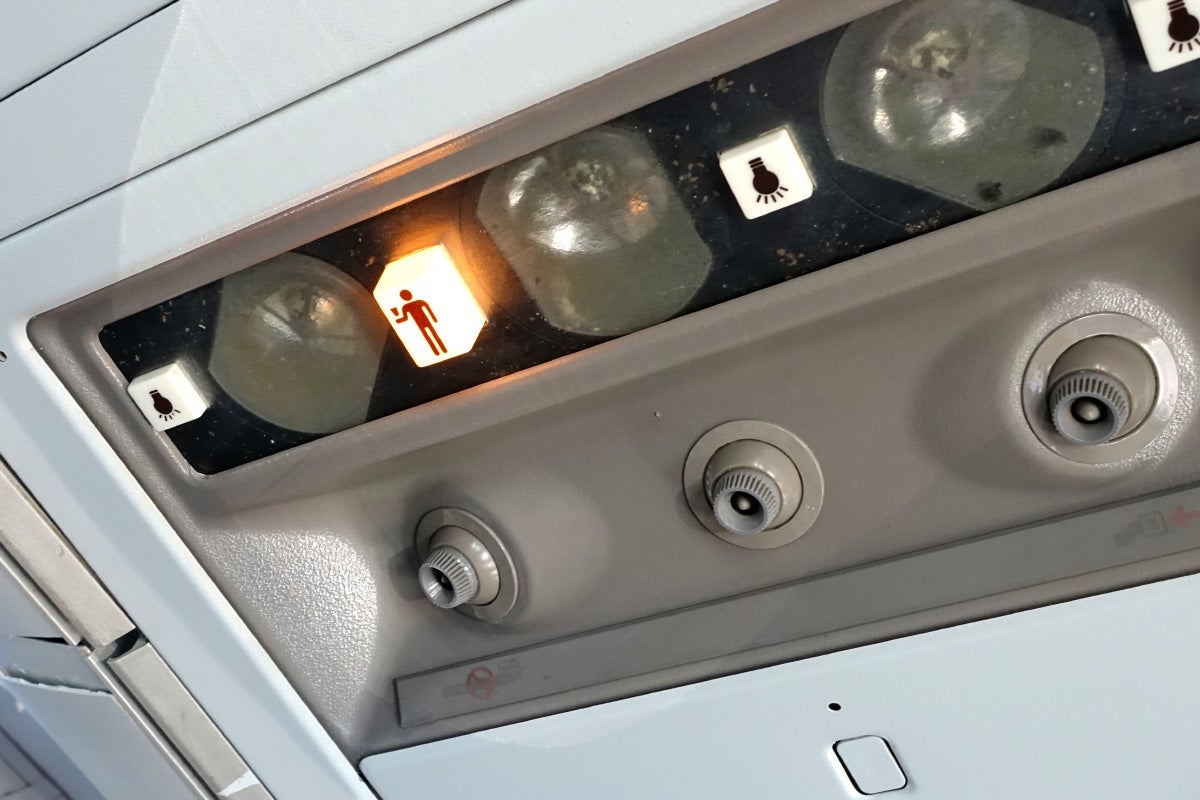
Each row has adjustable air vents and a flight attendant call button — I pressed the button to see if it was connected and a flight attendant appeared in a few moments (there were two on this flight), so it definitely works!
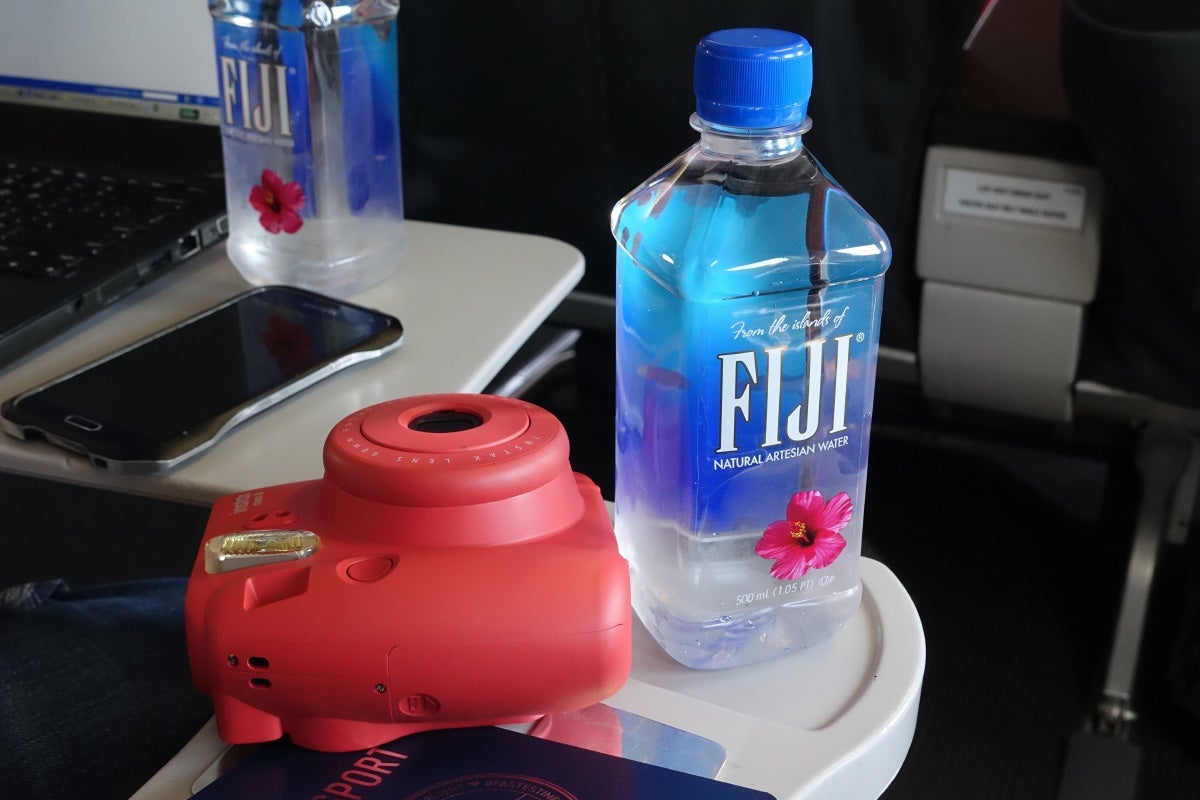
Being that everyone was (expected to be) focused on testing the Wi-Fi, we were served bottles of Fiji water before takeoff, and that was the extent of the in-flight service.
Economy
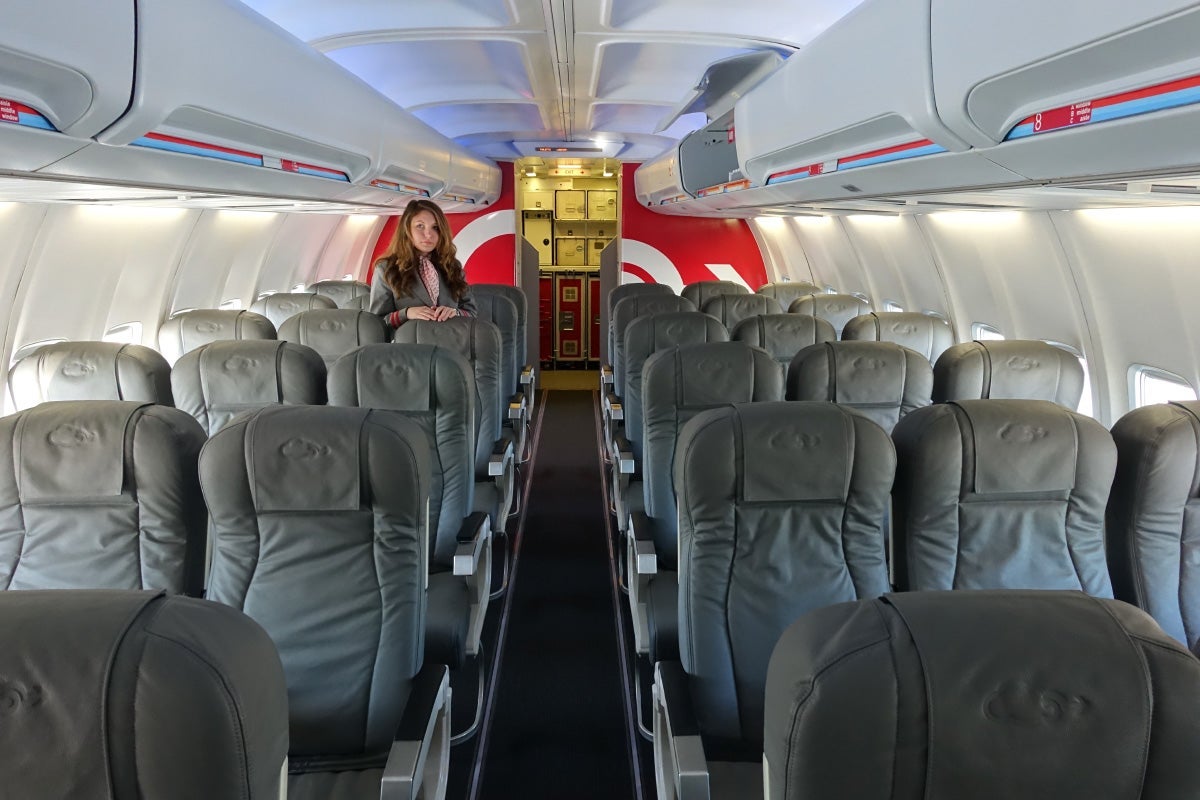
Nobody had much interest in sitting in the economy cabin, which has 9 rows of seats in a 3-3 configuration, for a total of 54 coach seats.
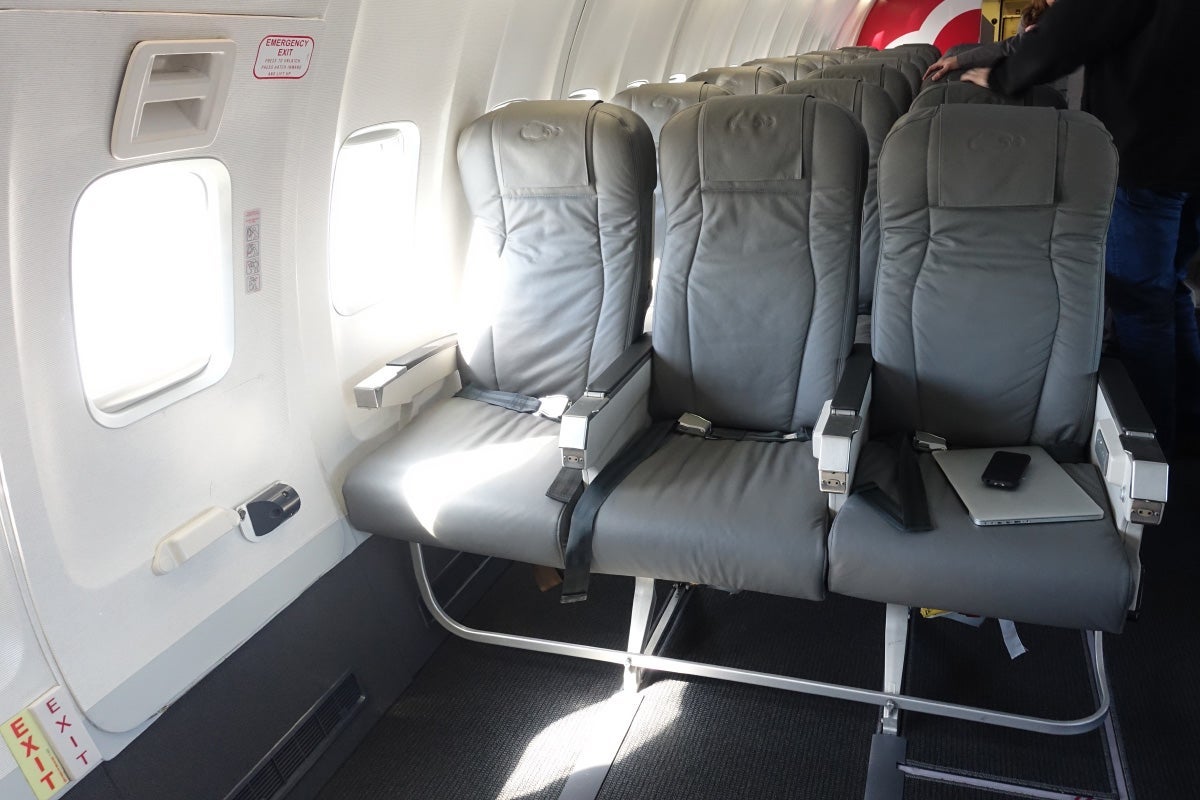
Naturally, you'll want to choose the exit row on this plane (unless you manage to score a seat in first class).
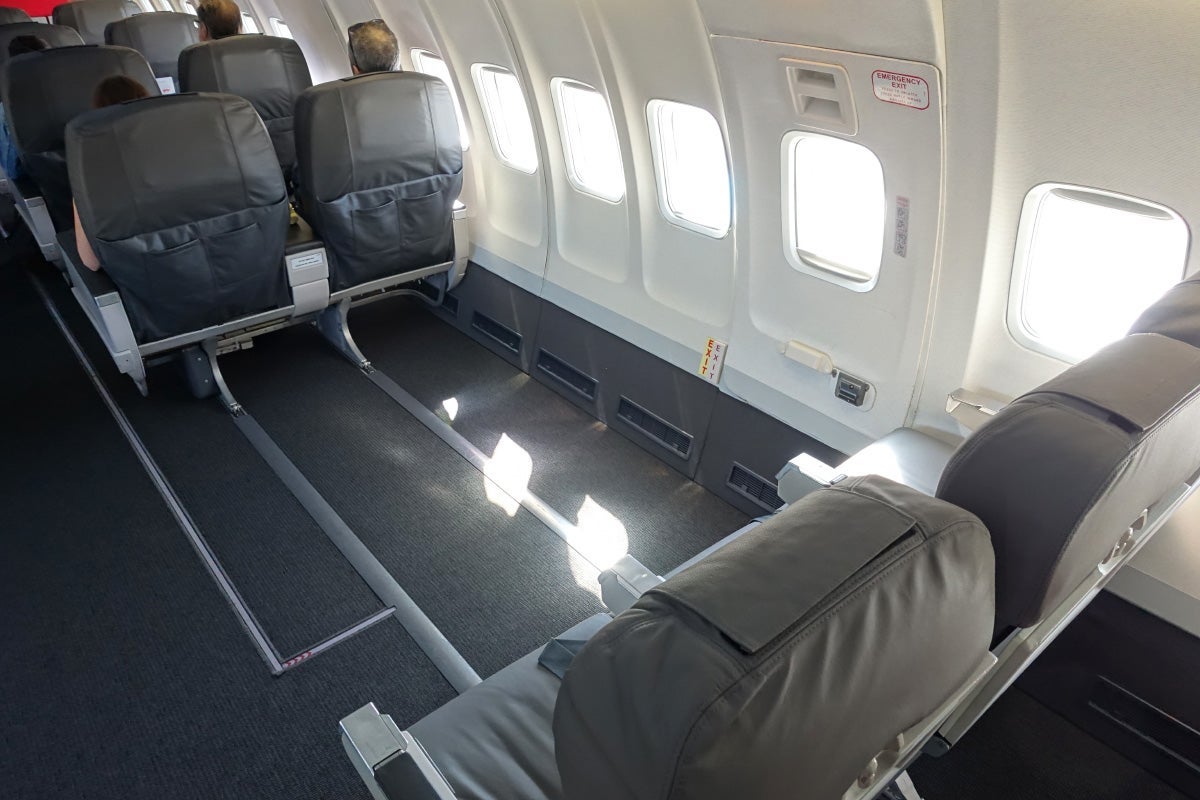
Look at that pitch! There's enough room to pitch a tent between economy and first.
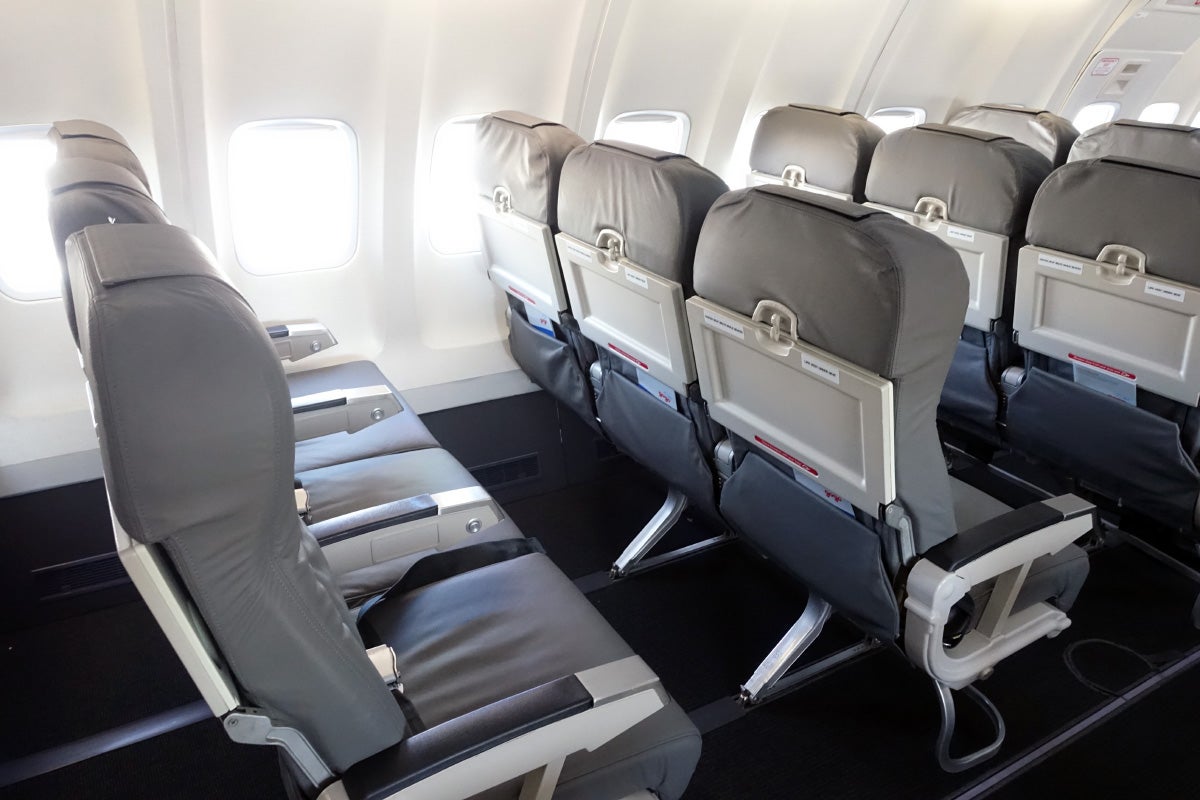
The economy seats are comfortable enough, with a fair amount of legroom in every row.
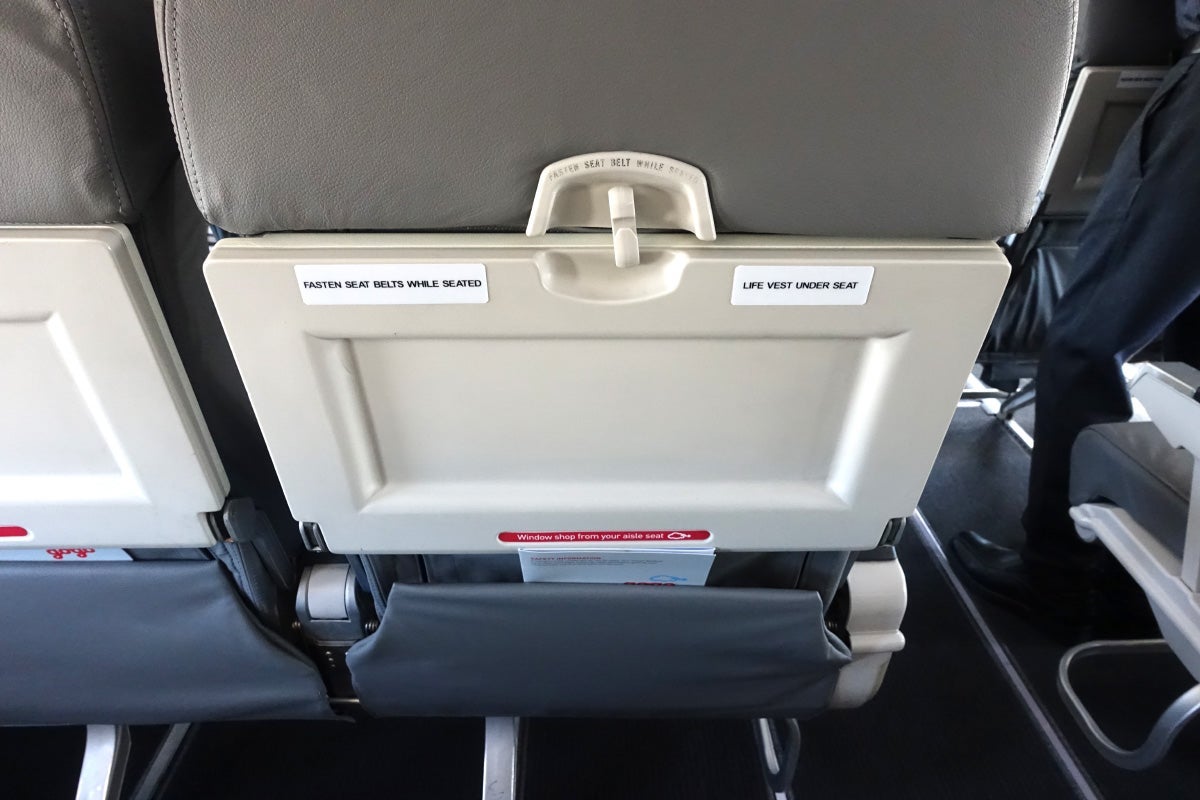
There's a standard fold-down tray table as well.
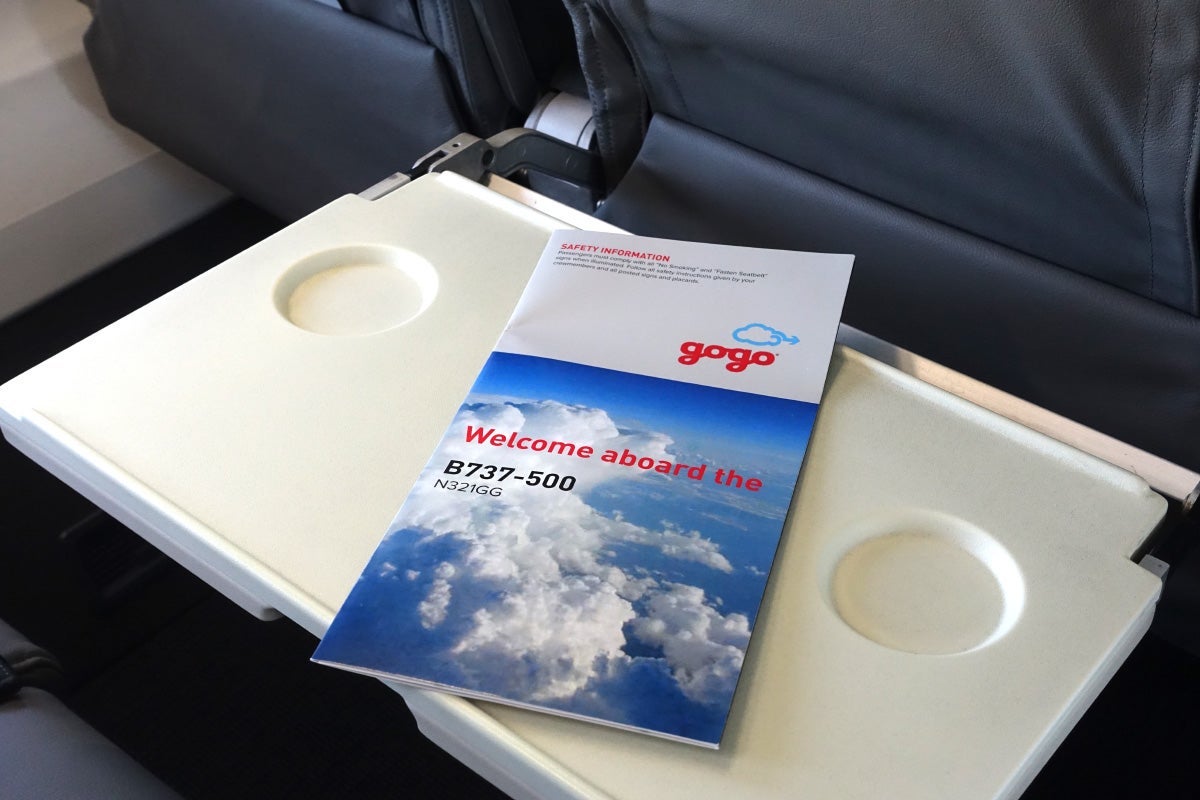
Given that Gogo only operates one 737-500, the plane's tail number (N321GG) is on the safety information leaflet.
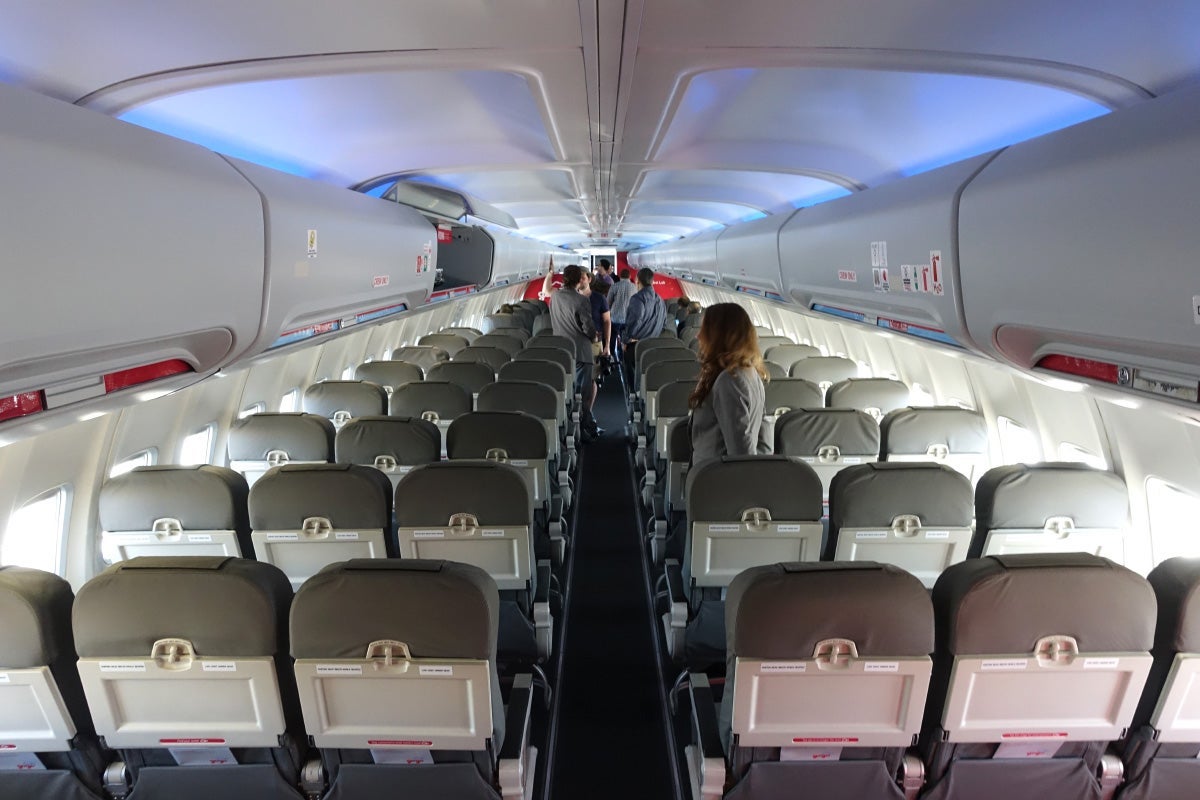
Between the two cabins, the plane had more than enough space to accommodate our group.
737-500 Cabin and Cockpit
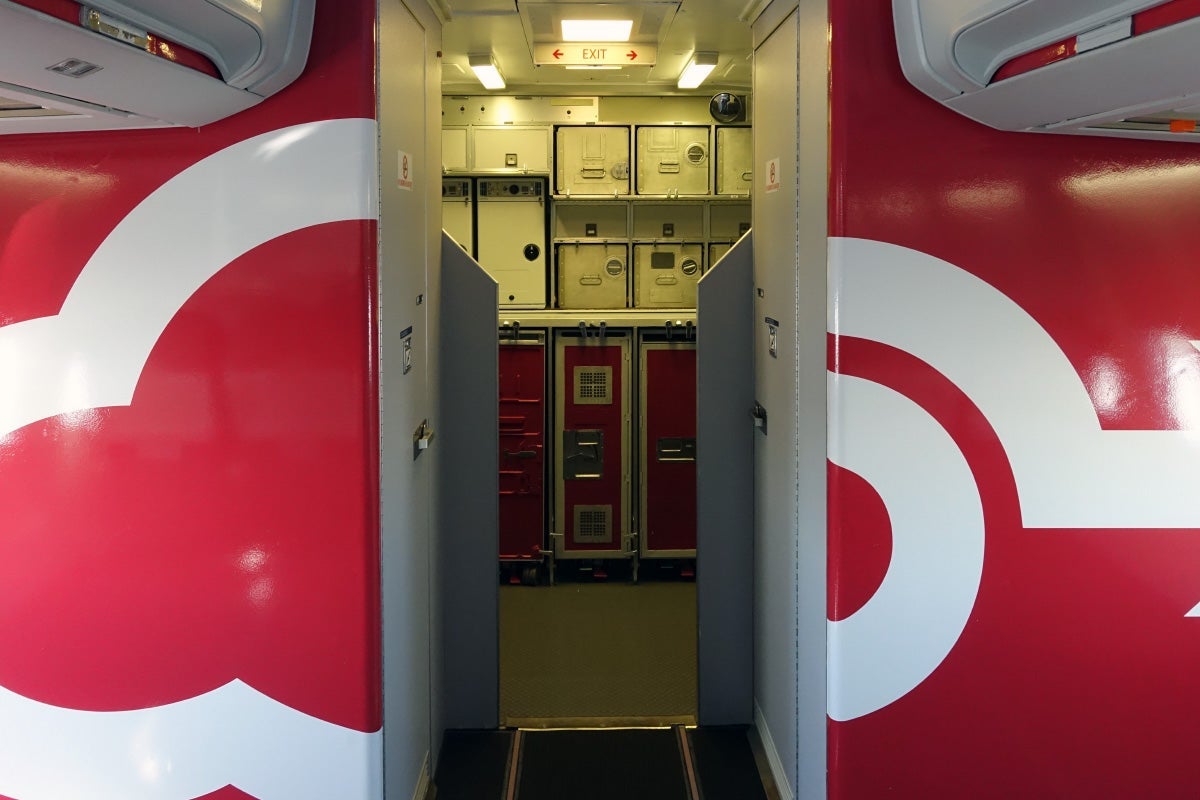
Besides the comfier seat configuration and fancy new equipment on board, the 737 is set up just like any other.
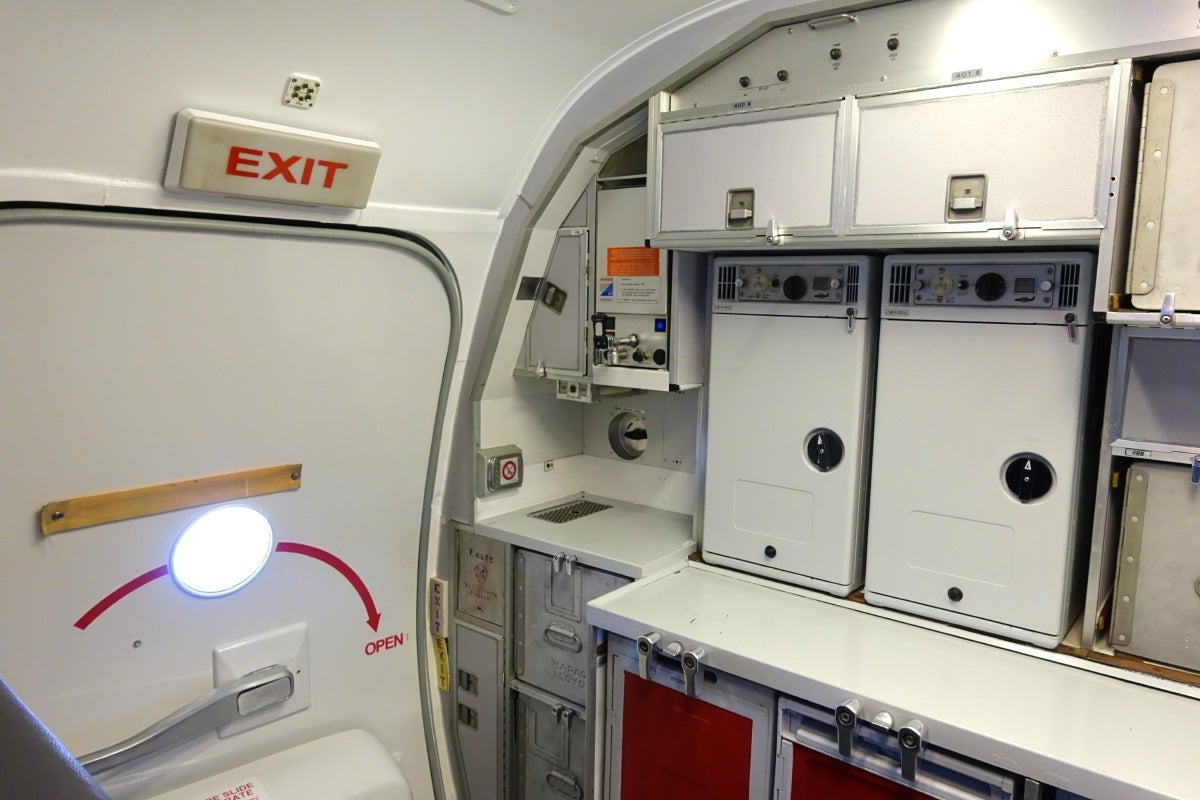
That means a full galley at the rear of the plane — while we didn't have anything to eat on this flight, it's definitely possible for flight attendants to prepare meals.
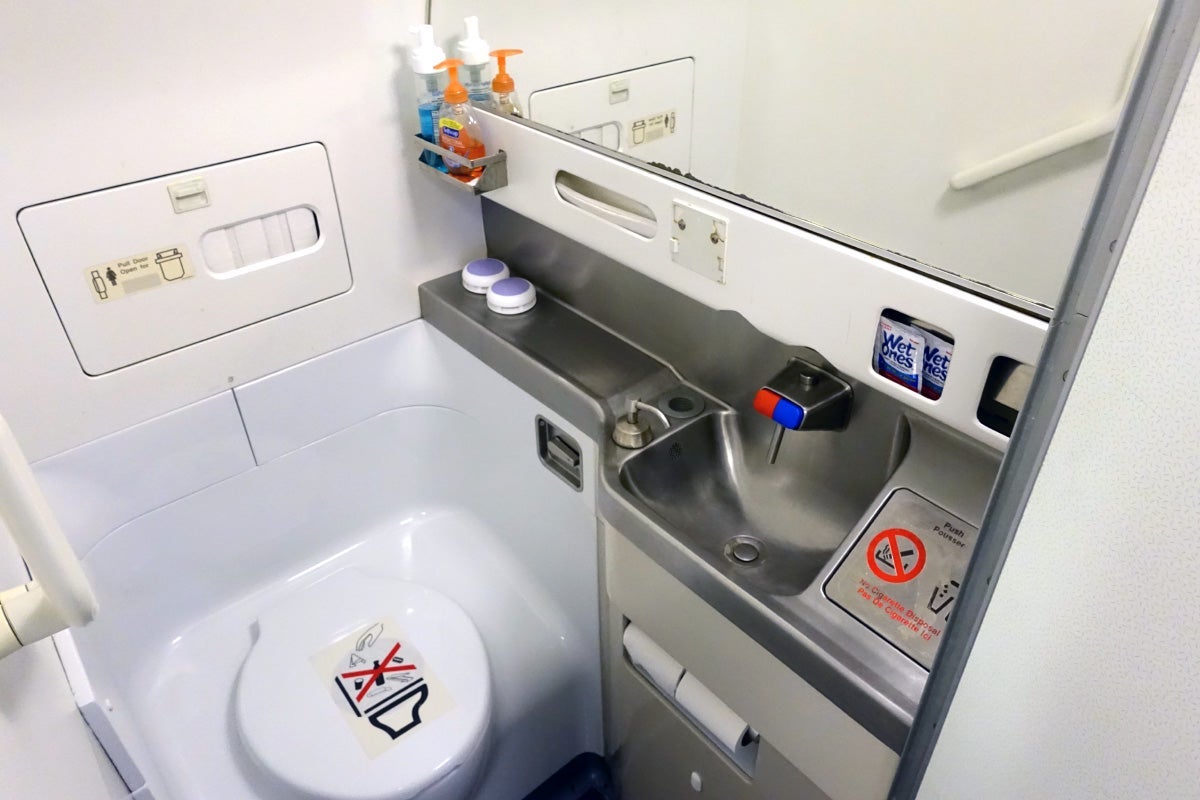
There are also three lavatories on board — two in the rear and one up front near the forward door.
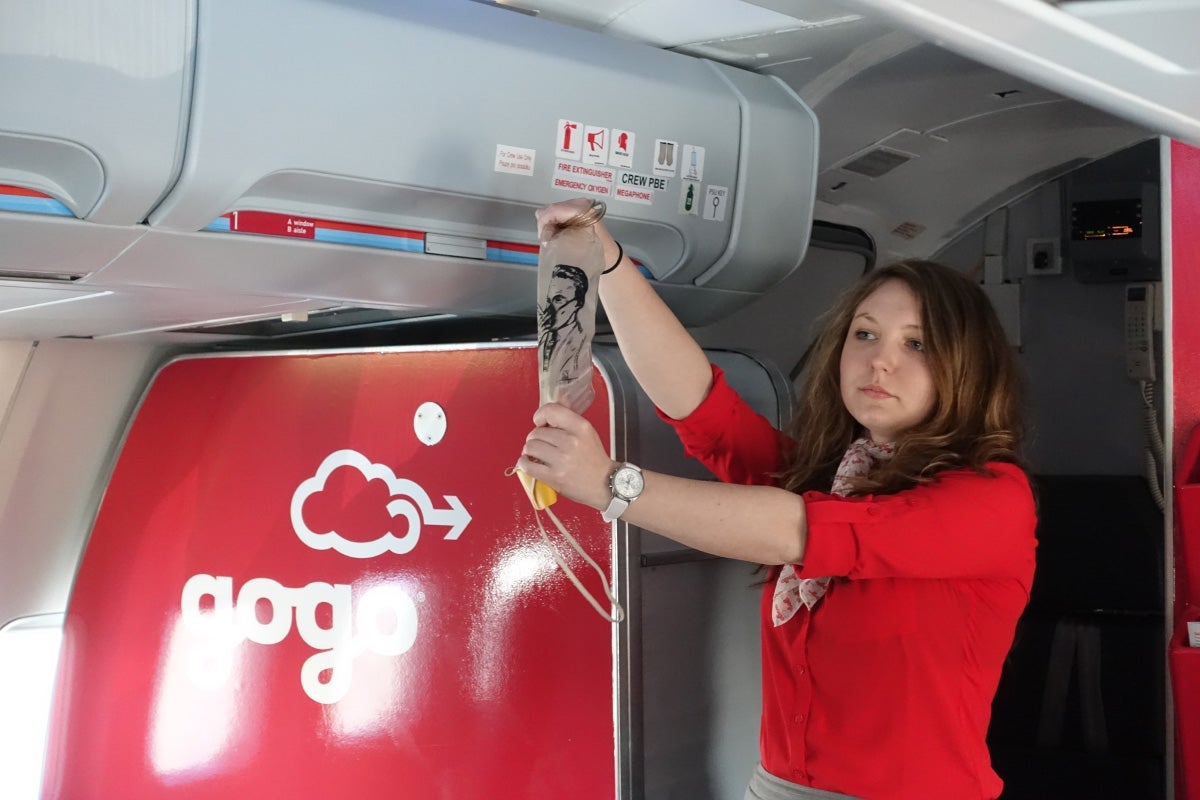
Even though this isn't a commercial flight, flight attendants walk passengers through a standard safety briefing.
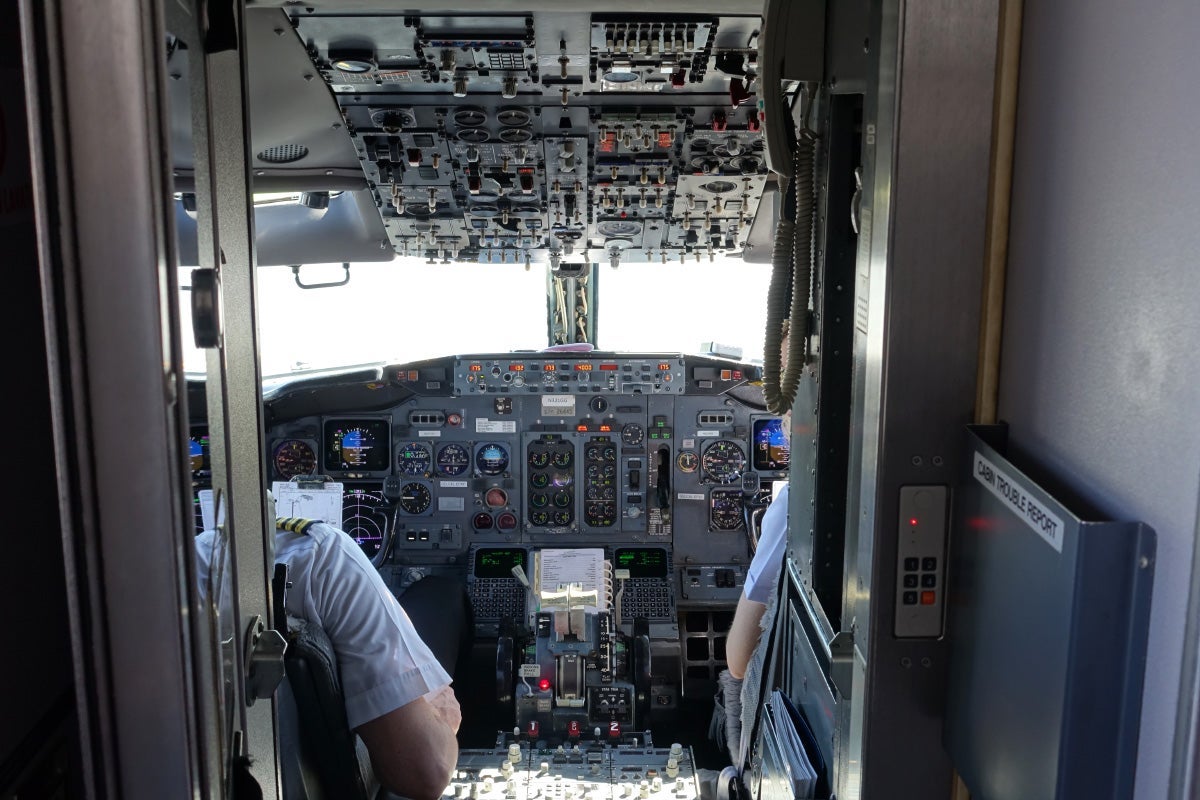
Here's one thing you'll never experience on a commercial 737, though — the cockpit door was left open for most of the flight.
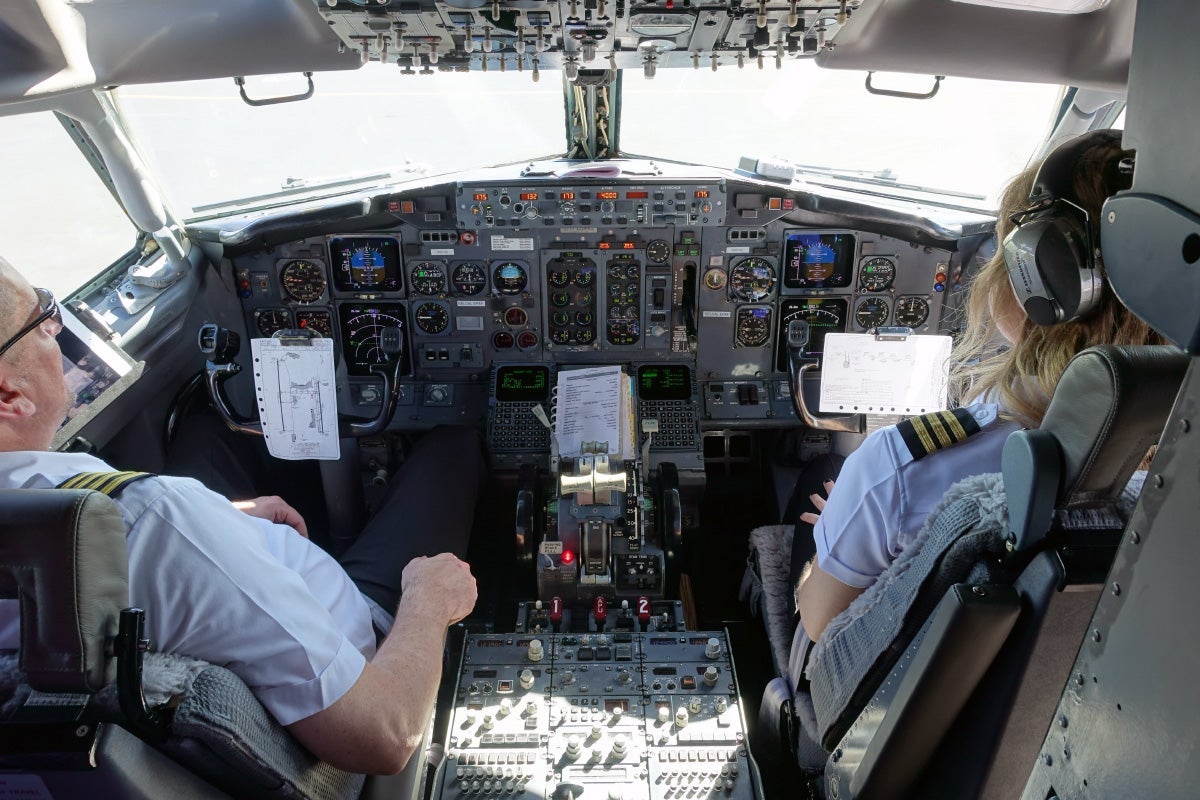
The crew consists of a captain and first officer — not a bad gig!
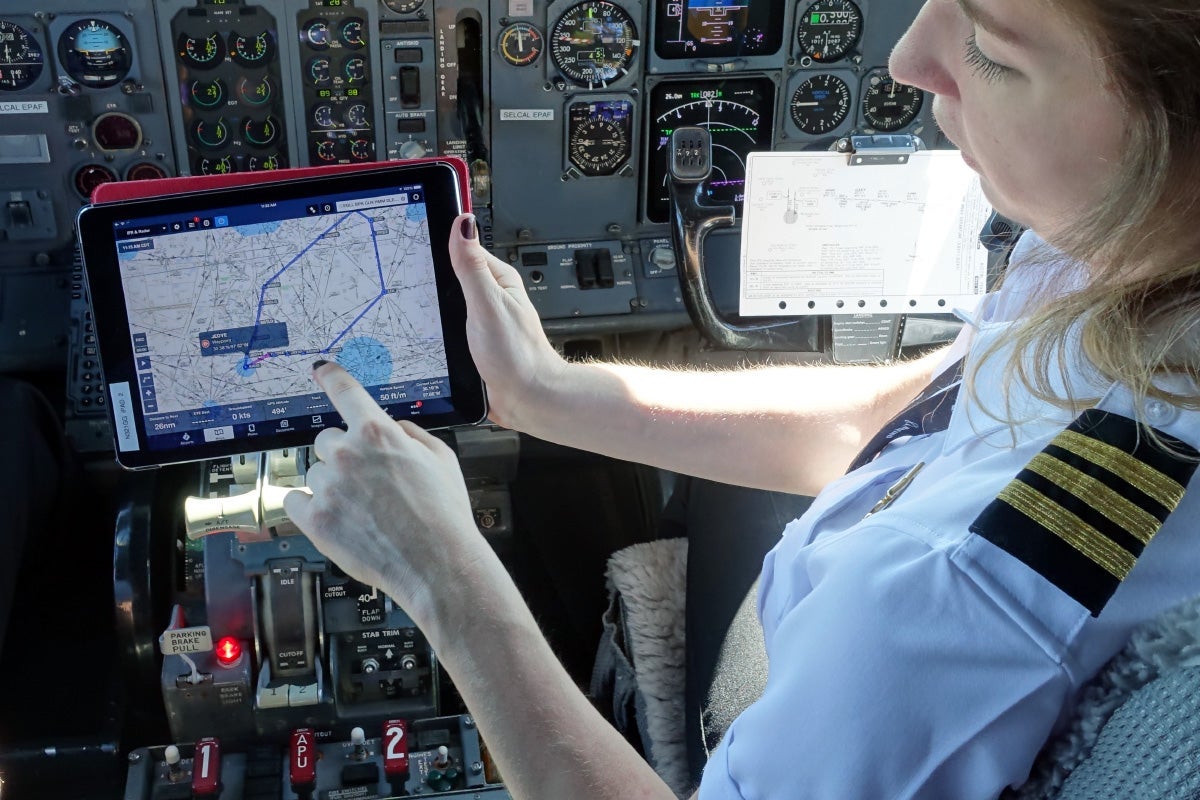
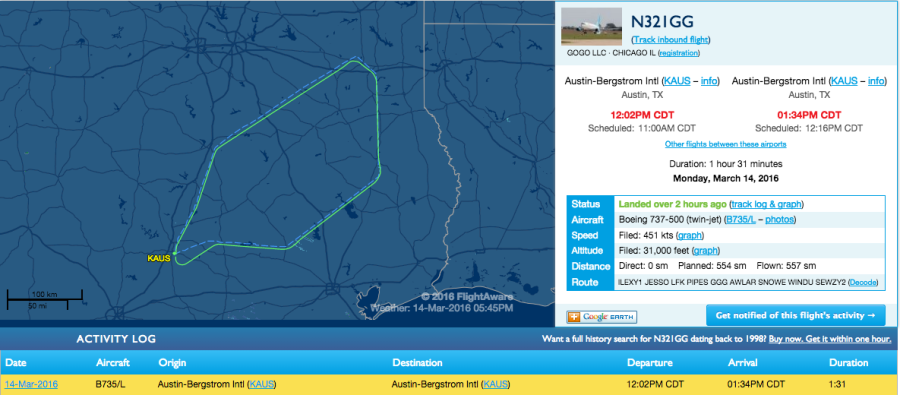
The first officer showed off our route for the day — we basically made a circle above central Texas, departing from and returning to Austin-Bergstrom Int'l Airport (AUS).
Testing 2Ku Wi-Fi
At the core of Gogo's 2Ku system is a large radome mounted atop the plane.
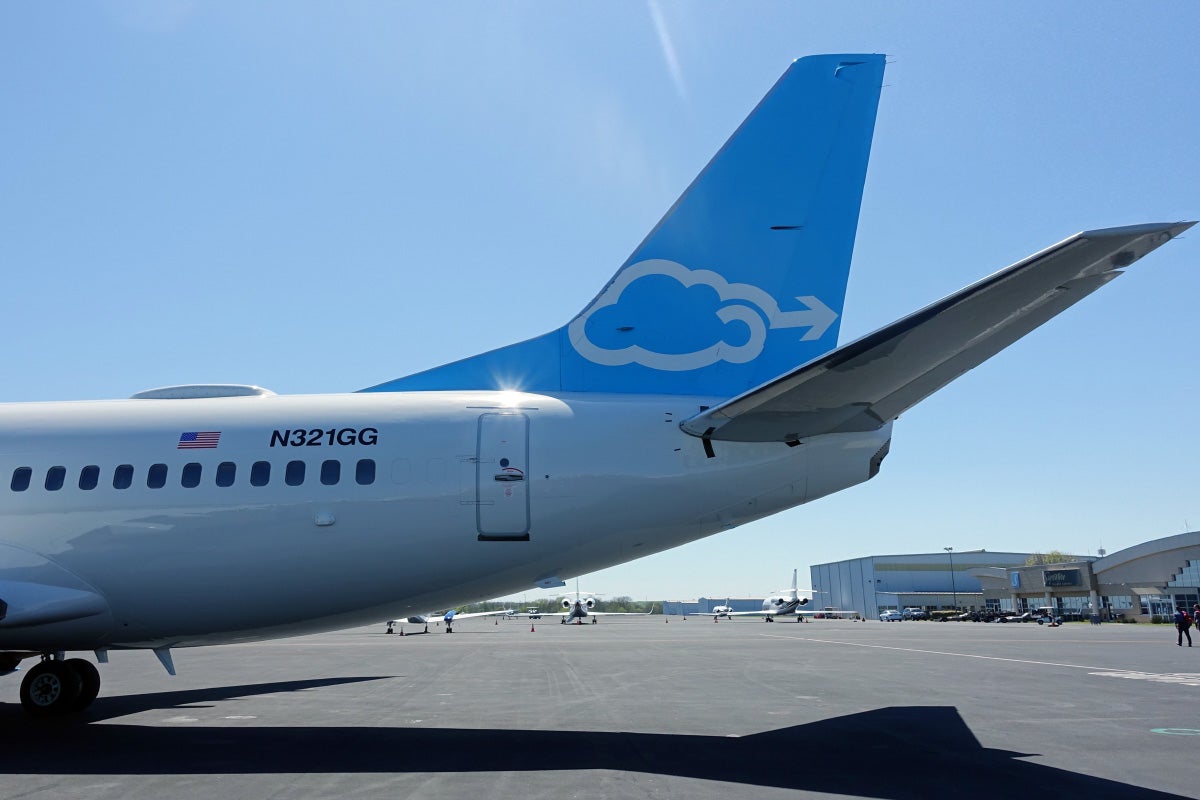
Underneath the radome (seen above the American flag) are dual antennas — one is used to send info from the plane to the satellite, while the second is dedicated to receiving data, be it text in an email, images or streaming HD video.
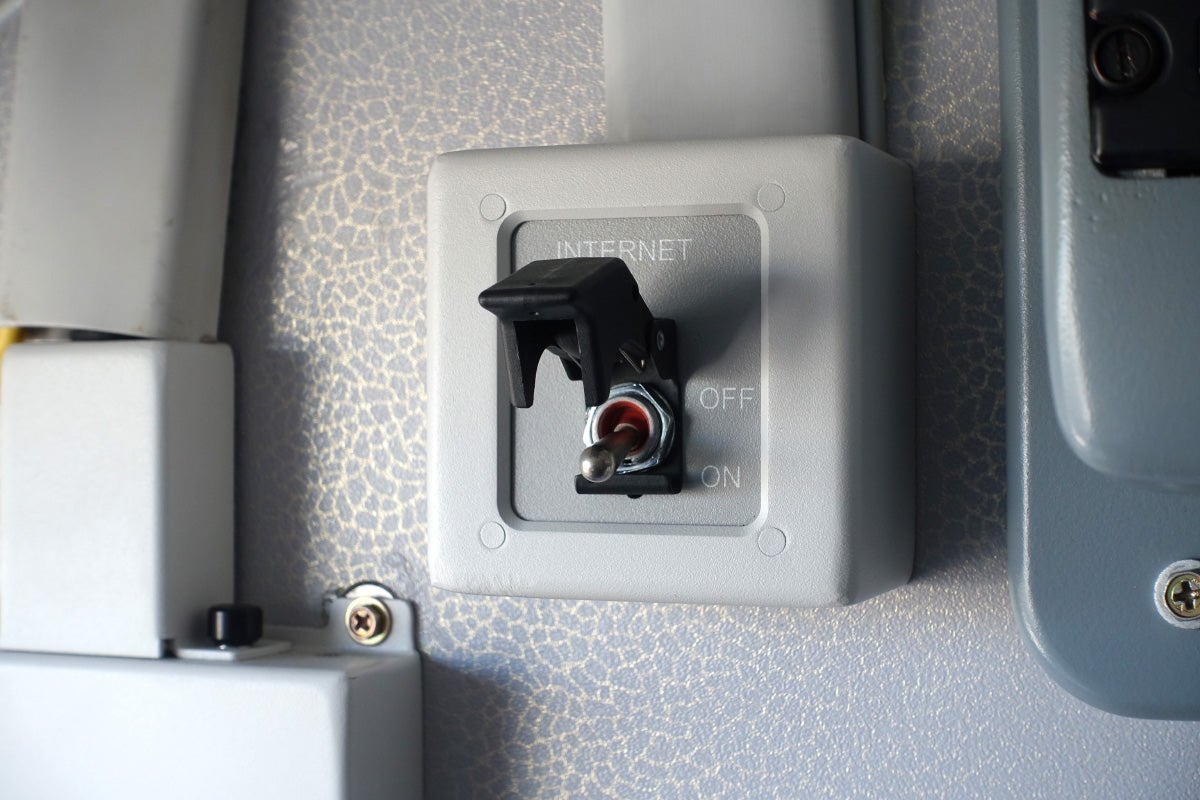
There's an internet on/off switch, but there wouldn't be much point in having it in the "up" position for this flight!
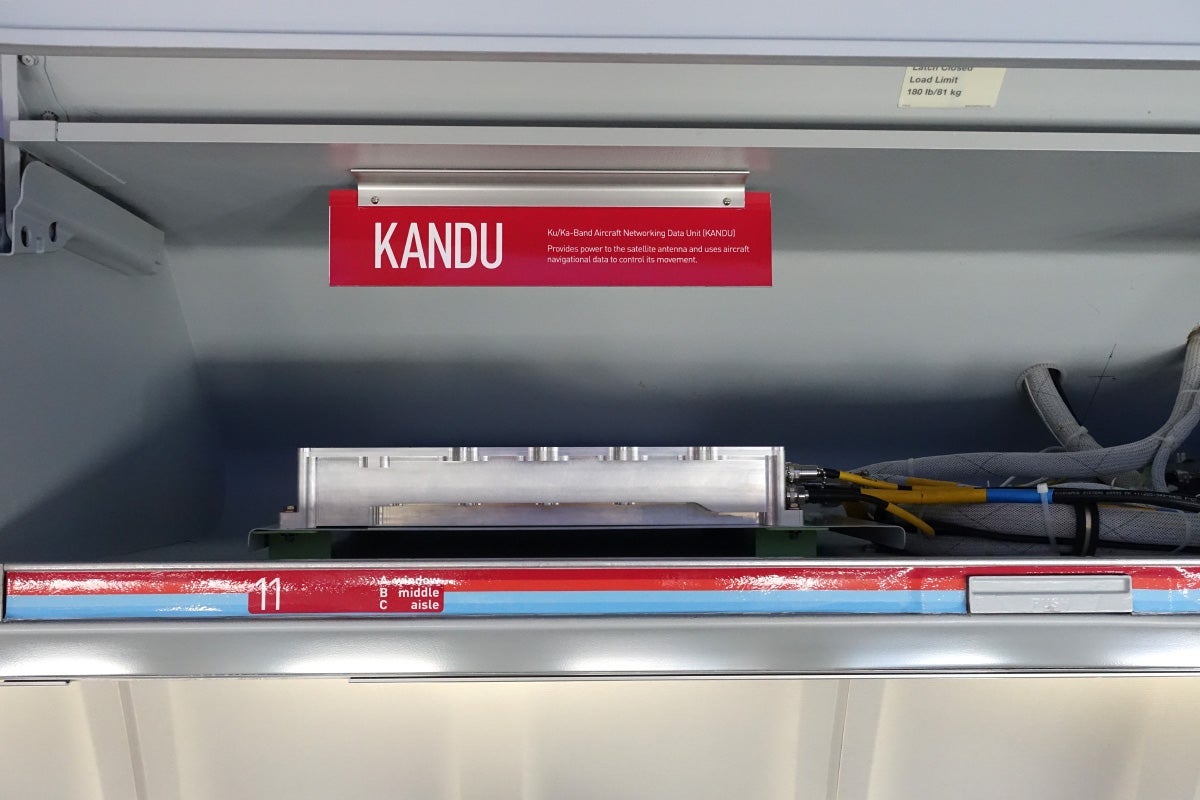
On this aircraft, Gogo has some of the Wi-Fi equipment mounted in an overhead bin rather than in the belly of the plane. The KANDU (Ku/Ka Aircraft Networking Data Unit) provides power to and controls the satellite antenna.
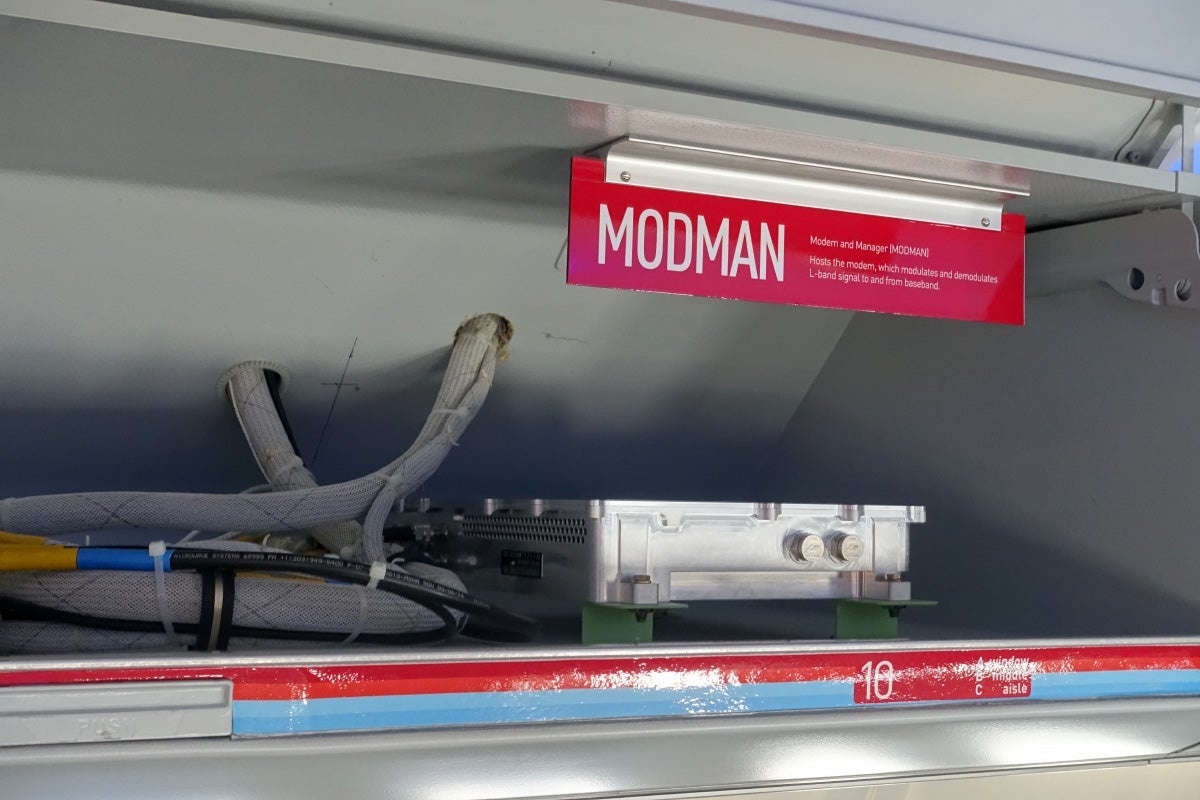
The second unit, MODMAN, is the MODem and MANager, which serves as the aircraft's modem, processing the signal from the antenna. Gogo recently announced that it will begin using an updated antenna that's capable of 400 Mbps speeds (though the 2Ku system maxes out at 75 Mbps per aircraft). According to Gogo, this particular plane was provisioned for 25 Mbps of bandwidth.
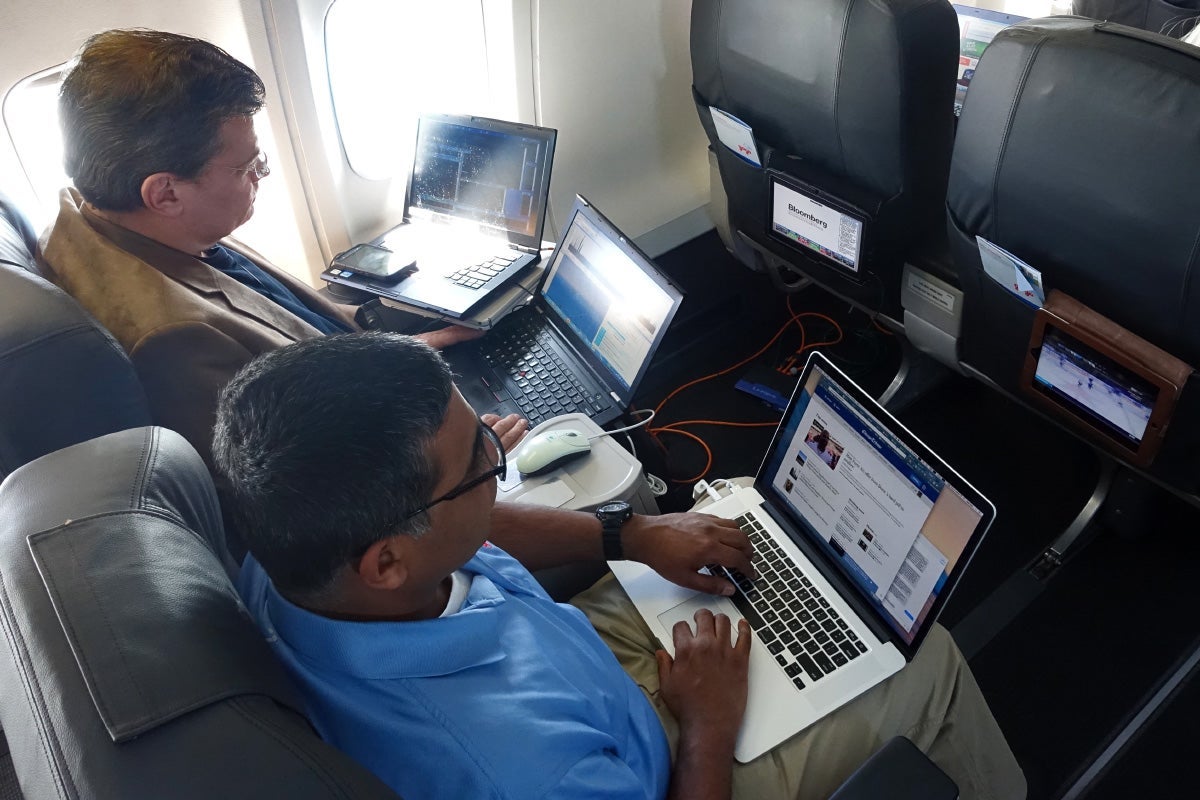
Several Gogo employees were on board to test 2Ku as well, connected to the modem via Ethernet and a switch.
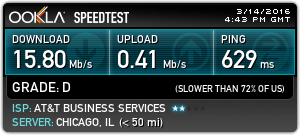
I conducted several speed tests to get an idea of how the system performed — note that speed tests can be used as an indication of performance, but a better way to get a feel for the system is to load websites and video content (scroll on for that).
Below is a speed test I performed while we were on the ground in Austin:
Then, shortly after takeoff (as we were maneuvering), the performance dropped off a bit:
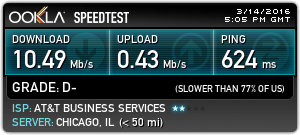
The 2Ku system reached its peak at cruising altitude — I was able to get download speeds of over 16 Mbps (note that upload speeds are capped to prevent things like VoIP calls and video streaming from the plane).

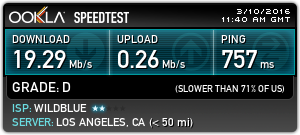
Meanwhile, on my United flight to Austin (which had ViaSat Wi-Fi), I was able to get speeds of more than 19 Mbps using United's $3.99/hour browsing option. I only did this one speed test and I only purchased one hour of usage, but the Ka-band system performed well during my one-hour session.
I'm also including a series of screen capture videos (warning: there's no audio) to give you a better idea of how 2Ku performed on this flight. Overall, it did very well, but it's important to note that this is the only aircraft flying with this service right now, and while there were 51 devices connected during the flight, I only noticed a few passengers really pushing the system to its limits by streaming video, for example.
Below is a speed test performed during the middle of the flight:
And here's an example of a browsing session — I surfed a few sites (including TPG) and loaded YouTube videos with ease:
Finally, here's a look at Gogo's new IPTV offering — Airlines will be able to stream live TV to passenger devices (if they choose to do so):
Gogo only had two IPTV streaming channels available, but it's a very cool proof of concept. The quality was very good and content loaded right away. I really hope Gogo's airline customers choose to offer this.
Bottom Line
The company's 2Ku demo flight offered a great opportunity to escape the craziness of SXSW, but it also gave us a glimpse into the future of Gogo service. It's a clear step up from Gogo's current (and most popular) system, which uses antennas mounted on the belly of the plane to communicate with antennas on the ground. While I'll reserve judgment for my first commercial flight with 2Ku, the system performed very well during this week's test run.
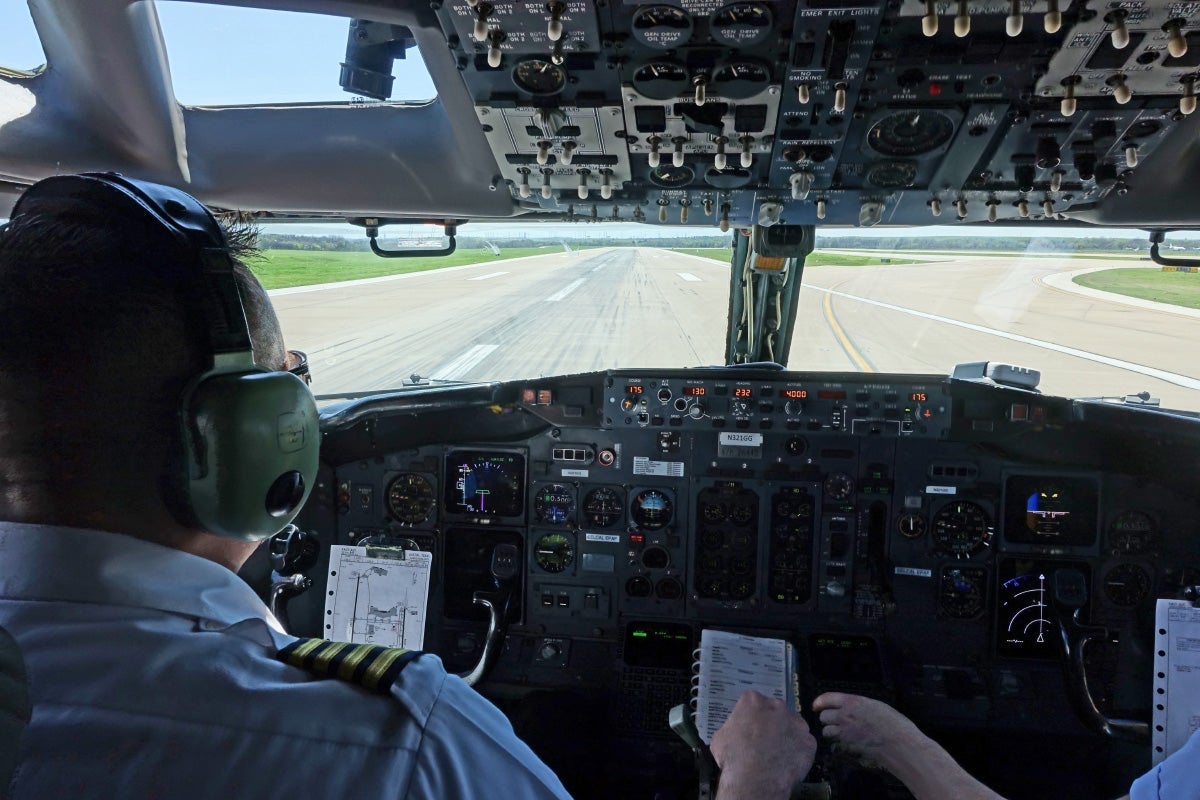
And getting to fly in Gogo's 737-500 was a blast. I actually had an opportunity to ride in the jump seat for the descent and landing — something a passenger would never be permitted to do during a commercial flight. Stay tuned for a video of the landing!
Also, according to Gogo's site, the 737 may be going on tour soon, with an opportunity for customers to come on board to try 2Ku. That may not involve a flight (unlike Gogo's ATG, the 2Ku system does work on the ground), but it's worth signing up if you're interested.
TPG featured card
at American Express's secure site
Terms & restrictions apply. See rates & fees.
| 4X | Earn 4X Membership Rewards® points per dollar spent on purchases at restaurants worldwide, on up to $50,000 in purchases per calendar year, then 1X points for the rest of the year. |
| 4X | Earn 4X Membership Rewards® points per dollar spent at US supermarkets, on up to $25,000 in purchases per calendar year, then 1X points for the rest of the year. |
| 5X | Earn 5X Membership Rewards® points on prepaid hotel stays booked through AmexTravel.com or the Amex Travel App™. |
| 3X | Earn 3X Membership Rewards® points on flights booked through AmexTravel.com, the Amex Travel App™, or purchased directly from airlines. |
| 2X | Earn 2X Membership Rewards® points on prepaid car rentals booked through AmexTravel.com or the Amex Travel App™ and cruises booked and paid through AmexTravel.com. |
| 1X | Earn 1X Membership Rewards® point per dollar spent on all other eligible purchases. |
Pros
- Valuable dining and food-related credits
- Flexible rewards with airline and hotel transfer partners
- Multiple travel and purchase protections
- No foreign transaction fees
- Access to Amex Offers for additional savings (enrollment required)
Cons
- Not as useful for those living outside the U.S.
- Some may have trouble using Uber and other dining credits
- You may be eligible for as high as 100,000 Membership Rewards® Points after you spend $8,000 in eligible purchases on your new Card in your first 6 months of Card Membership. Welcome offers vary and you may not be eligible for an offer. Apply to know if you’re approved and find out your exact welcome offer amount – all with no credit score impact. If you’re approved and choose to accept the Card, your score may be impacted.
- Earn 4X Membership Rewards® points per dollar spent on purchases at restaurants worldwide, on up to $50,000 in purchases per calendar year, then 1X points for the rest of the year.
- Earn 4X Membership Rewards® points per dollar spent at US supermarkets, on up to $25,000 in purchases per calendar year, then 1X points for the rest of the year.
- Earn 5X Membership Rewards® points on prepaid hotel stays booked through AmexTravel.com or the Amex Travel App™.
- Earn 3X Membership Rewards® points on flights booked through AmexTravel.com, the Amex Travel App™, or purchased directly from airlines.
- Earn 2X Membership Rewards® points on prepaid car rentals booked through AmexTravel.com or the Amex Travel App™ and cruises booked and paid through AmexTravel.com.
- Earn 1X Membership Rewards® point per dollar spent on all other eligible purchases.
- Pay It® lets you tap in the American Express® App to quickly pay for small purchase amounts throughout the month and still earn rewards the way you usually do. Plan It® gives you the option to split up big purchases into equal monthly payments with a fixed fee. You’ll know upfront exactly how much you’ll pay.
- $120 Dining Credit: Earn up to a total of $10 in statement credits monthly when you pay with the Gold Card at Grubhub (including Seamless), Buffalo Wild Wings, Five Guys, The Cheesecake Factory, and Wonder. This can be an annual savings of up to $120. Enrollment required.
- $100 Resy Credit: Get up to $100 in statement credits each calendar year at over 10,000 qualifying U.S. Resy restaurants after you pay for eligible purchases with the American Express® Gold Card. That’s up to $50 in statement credits semi-annually. Enrollment required.
- $84 Dunkin' Credit: Earn up to $7 in monthly statement credits after you pay with the American Express® Gold Card at U.S. Dunkin’ locations. Enrollment required.
- $120 Uber Cash on Gold: Enjoy up to $120 in Uber Cash annually with your Gold Card. Just add your Card to your Uber account and you'll get $10 in Uber Cash each month to use on orders and rides in the U.S. when you select an Amex Card for your transaction.
- Enjoy complimentary Hertz Five Star® Status benefits like skipping the counter at select locations, adding an additional driver at no additional cost*, and vehicle upgrades**. Benefit enrollment and Hertz Gold+ registration are required. *Additional drivers must meet standard rental qualifications and must be a spouse or domestic partner to qualify as complimentary. Other additional drivers subject to fees. **Benefits are subject to availability and vary by location. Additional Hertz program Terms and Conditions including age restrictions apply.
- Book two nights or more with The Hotel Collection through AmexTravel.com or the Amex Travel App™ and receive a $100* credit towards eligible charges at over 1,400 upscale hotels worldwide. *Eligible charges vary by property.
- Book your travel through the Amex Travel App™ with added peace of mind – backed by American Express® service and support. Only for American Express® Card Members.
- Whenever you need us, we're here. Our Member Services team will ensure you are taken care of. From lost Card replacement to statement questions, we are available to help 24/7.
- No Foreign Transaction Fees.
- Annual Fee is $325.
- Terms Apply.