I tried Frontier's UpFront Plus, featuring a blocked middle seat. Calling it 'premium' is a stretch

Earlier this year, Frontier Airlines unveiled what it's calling its newest "premium" product: a new seating option called UpFront Plus.
The new product lets passengers pay extra to essentially block the middle seat in their row, guaranteeing that it stays empty. It also includes a seat in the first two rows of the aircraft, which have a little bit of extra legroom.
It's an interesting concept because it allows the airline to earn ancillary revenue and sell a higher-end ticket without having to install new seats or retrofit cabins with bells, whistles or hard-product changes.
It may sound a bit familiar: European legacy airlines sell "business class" by blocking middle seats on many short-haul flights; this allows them to add a distinct cabin without an expensive overhaul requiring new seats.
Speaking to Wall Street in September, CEO Barry Biffle likened UpFrontPlus to the latter product, referring to the concept as "kind of a European business class."
Spirit Airlines also unveiled a similar idea this summer with its Go Comfy fares, including a blocked middle seat. Spirit's changes also saw the carrier begin selling its Big Front Seat as a new business class-style product.
So far, Frontier says passengers have been more than willing to pay for the extra space.
"The positive reception of this premium product has far exceeded our expectations," Chief Commercial Officer Bobby Schroeter said on the company's most recent earnings call in August.
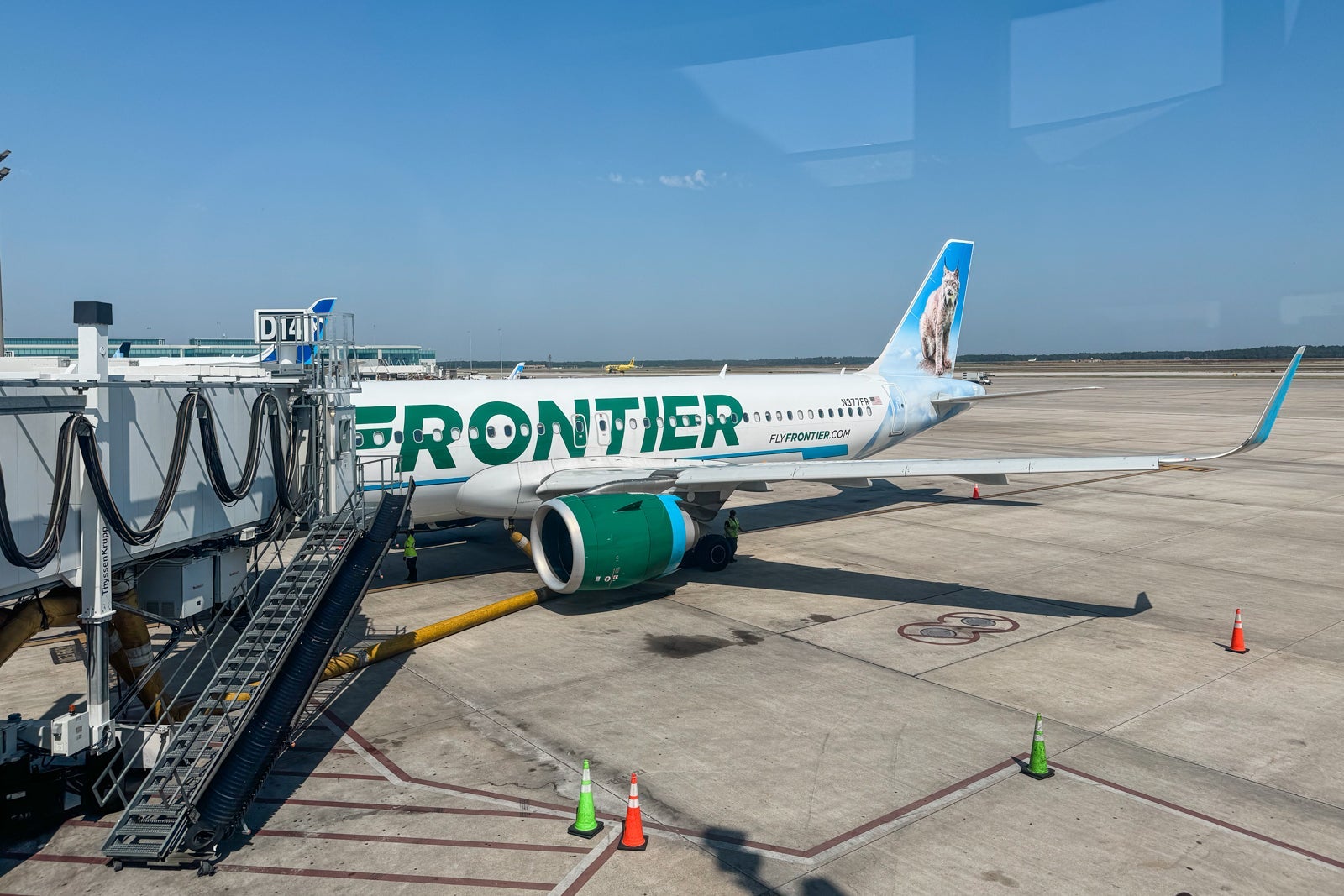
But what exactly does "blocked middle seat" mean? Does this new seating concept actually bring Frontier into a more premium space? Or does it simply get the passenger a little bit more space on board?

I decided to find out.
Booking Frontier UpFront Plus
When Frontier announced UpFront Plus in March, the airline pitched four main perks: a blocked middle seat that offers more elbow room, a "quick exit" because the rows are at the front of the plane, overall extra legroom and comfort, and the ability to be the first to get inflight service.
I decided to test these perks on a recent flight from Hartsfield-Jackson Atlanta International Airport (ATL) to Houston's George Bush Intercontinental Airport (IAH).
As is often the case with Frontier and other ultra-low-cost airlines, the lowest base fare option you see at first is quite low. Prices started at $34 for a basic ticket (or $26 for those who pay for Frontier's Discount Den membership).
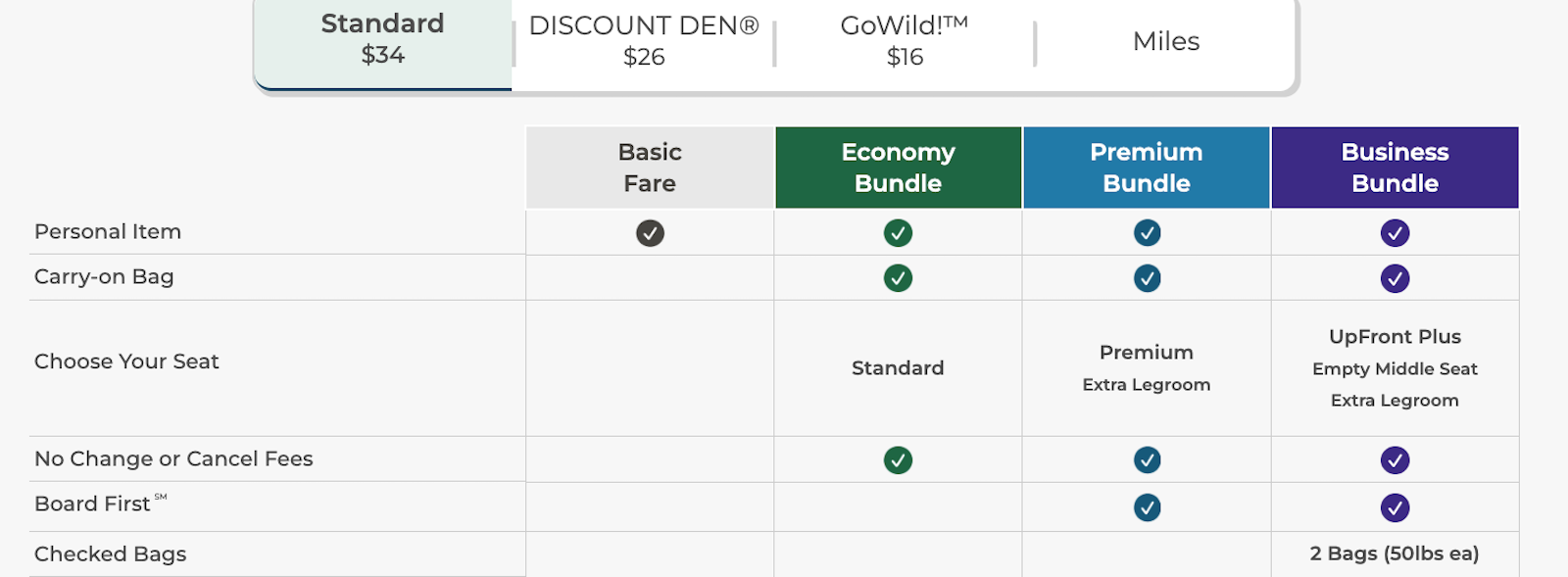
That $34 ticket, though, is a traditional budget airline fare: a spot on the plane and nothing more.
As part of sweeping changes this year, Frontier now offers four concrete "bundles" upfront: basic, economy, premium and business. They have varying amenities.
To get UpFront Plus seating, you have to select the highest business tier.
The more you know: The best time to book flights for the cheapest airfare
Along with the more spacious seating accommodation, the bundle includes a full-size carry-on bag and up to two checked bags, plus the Board First boarding group.
On this flight, the business bundle was a reasonable $49 extra, one-way, on top of the $34 base fare.
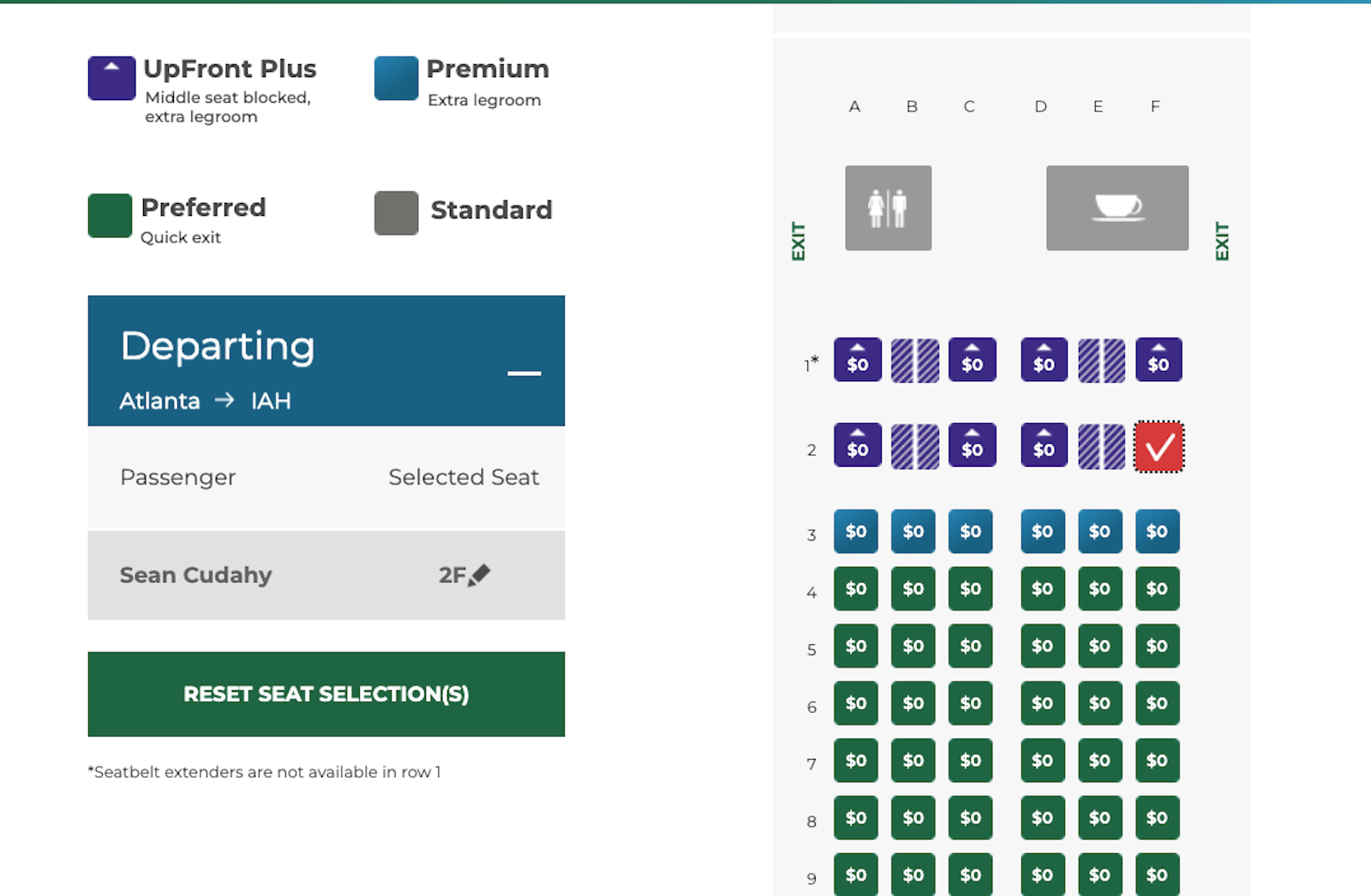
Then comes seat selection. As you can see, the UpFront Plus section includes the first two rows, and you have your choice of a window or aisle seat. The middle seat is blocked in each of those rows.
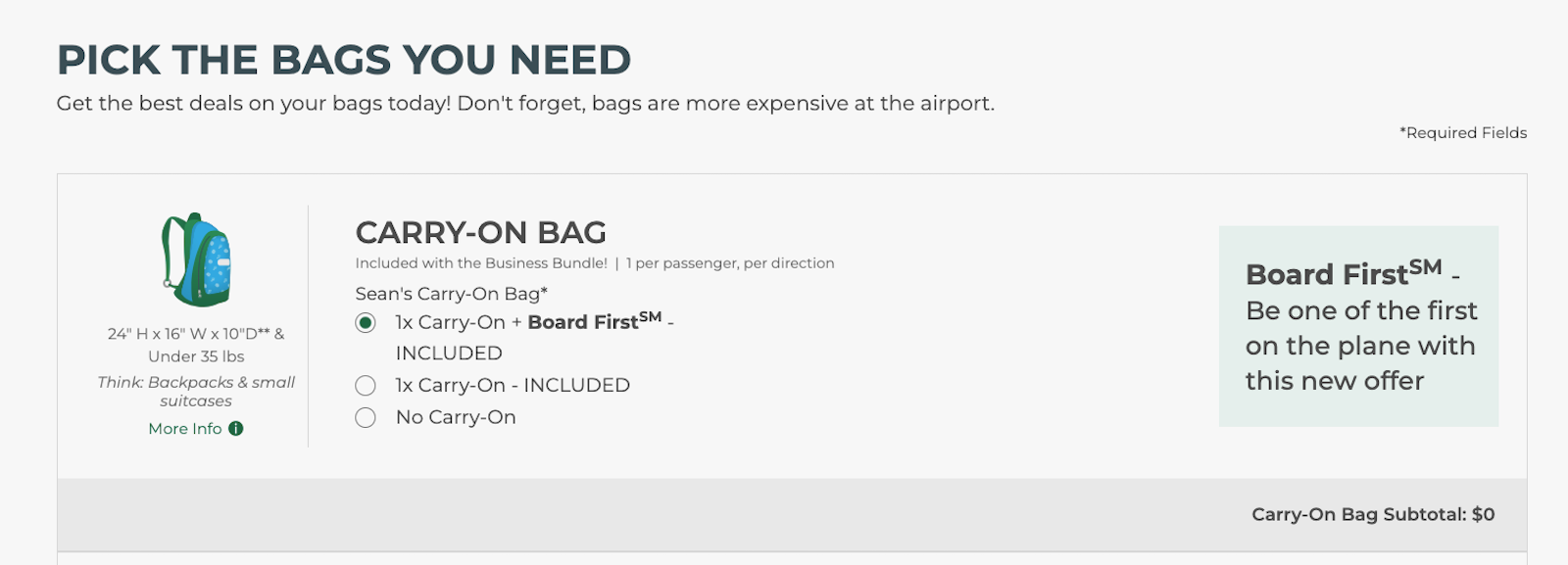
The baggage page reminds you of your all-inclusive ticket — no need to pay extra.
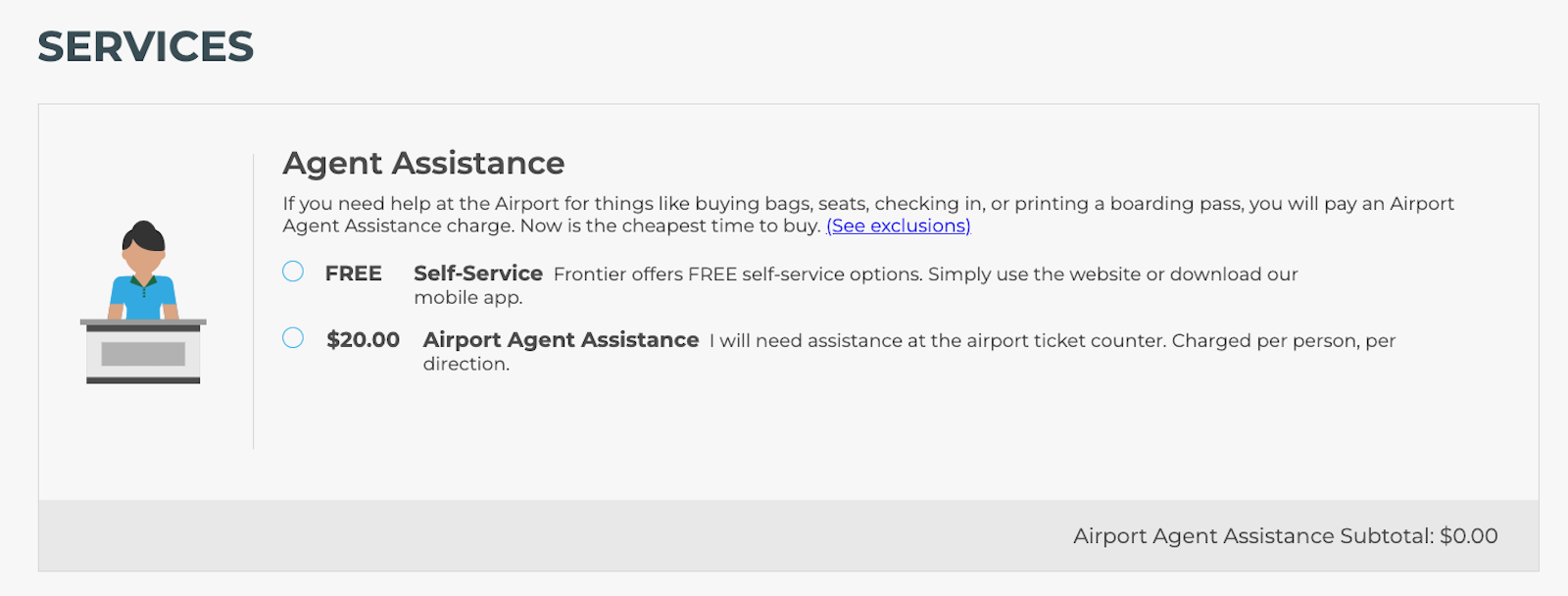
You may be paying for a higher-end bundle, but it's still Frontier: You'll need to download your boarding pass before your flight or print it out at home. Otherwise, you'll have to fork over $20 for counter assistance at the airport.
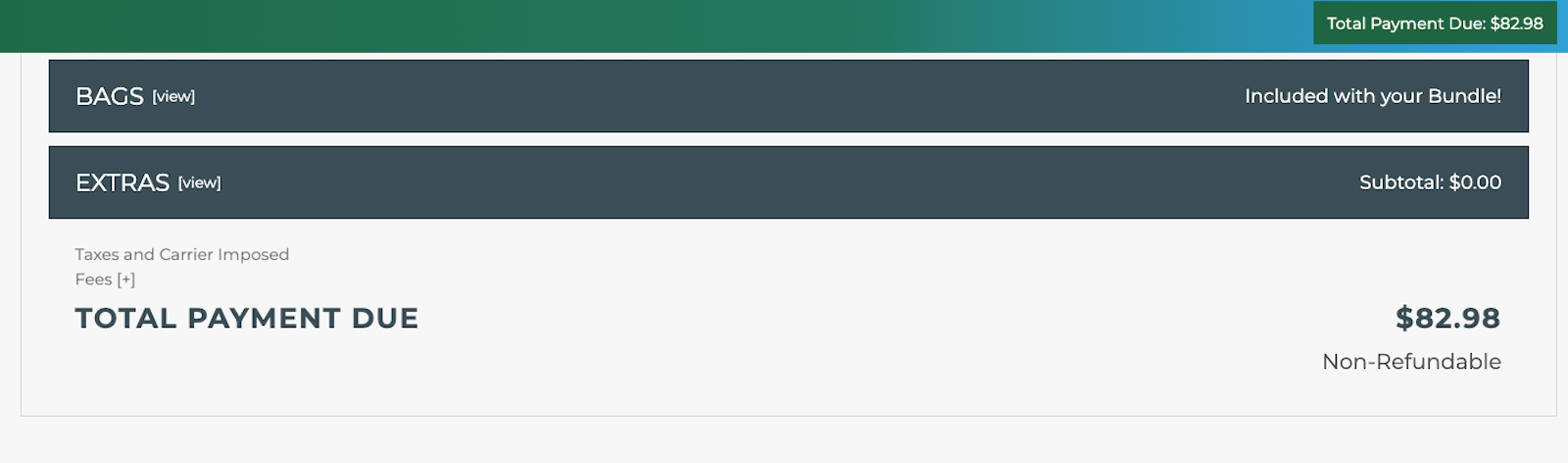
My total price: just shy of $83.
An UpFront Plus ticket gets you "priority" boarding, which means you board along with other customers who have sprung for extras like seat selection or a full-size carry-on bag.
Boarding
Boarding in the Board First group, I was probably behind a dozen or so passengers on the jet bridge, most of whom had opted for preboarding.
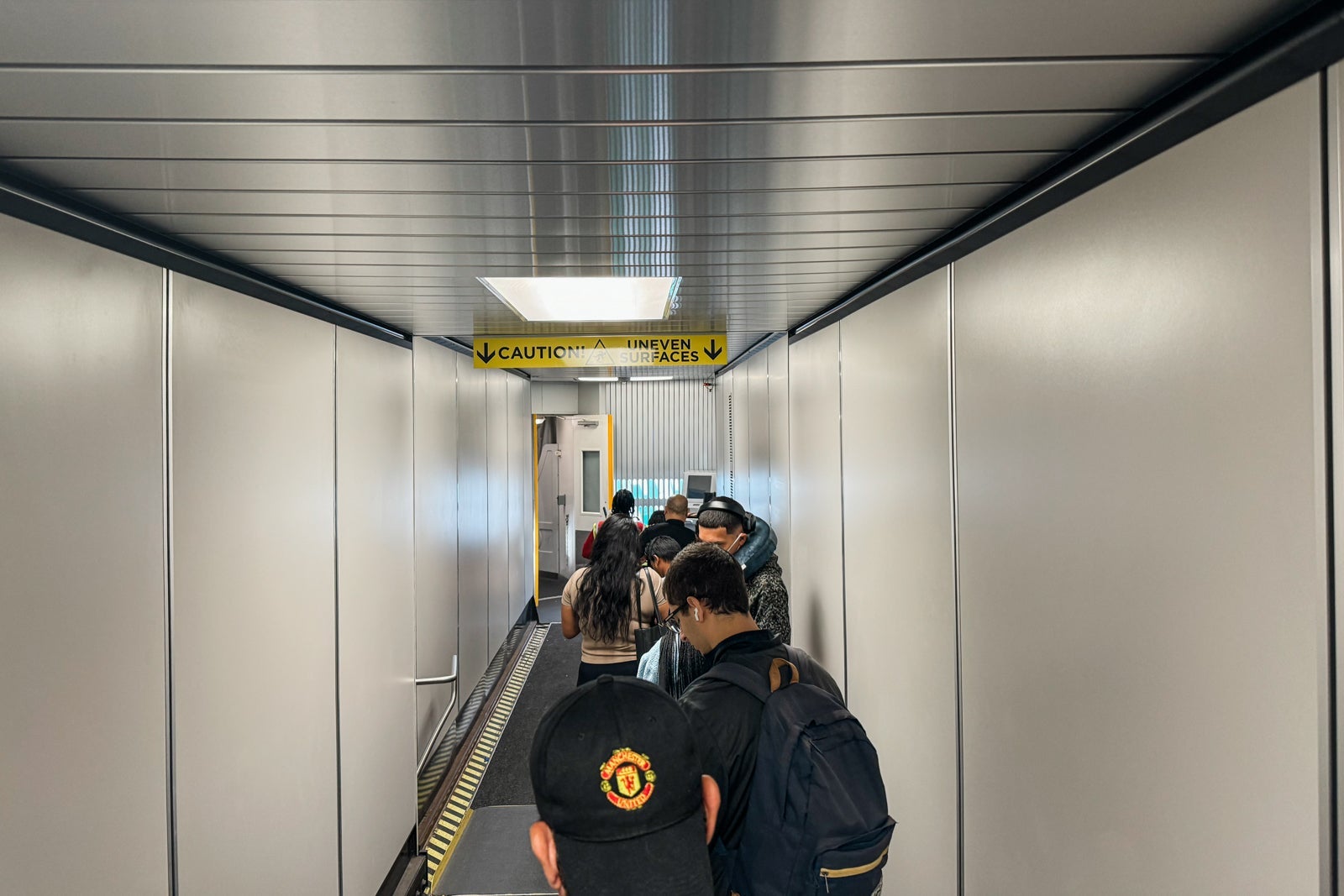
As I prepared to board the Airbus A320, I wondered what a blocked middle seat in UpFront Plus would look like. Would there be any hardware? Or would it just be an empty seat that I'd have to watch to make sure that Frontier honored the purchase?
After all, European short-haul business class often features a middle seat that is physically blocked by a console of sorts, doubling as a table surface for those seated in the aisle and window seats. Beyond that, those carriers typically offer a "soft product" of food and drinks that more closely resembles domestic first class in the U.S.
What is Frontier UpFront Plus like?
Frontier's UpFront Plus was in no way similar to that.
At first glance, you wouldn't be able to even tell that the rows were part of a separate seating arrangement. There's no curtain or other distinguishing feature in the cabin.
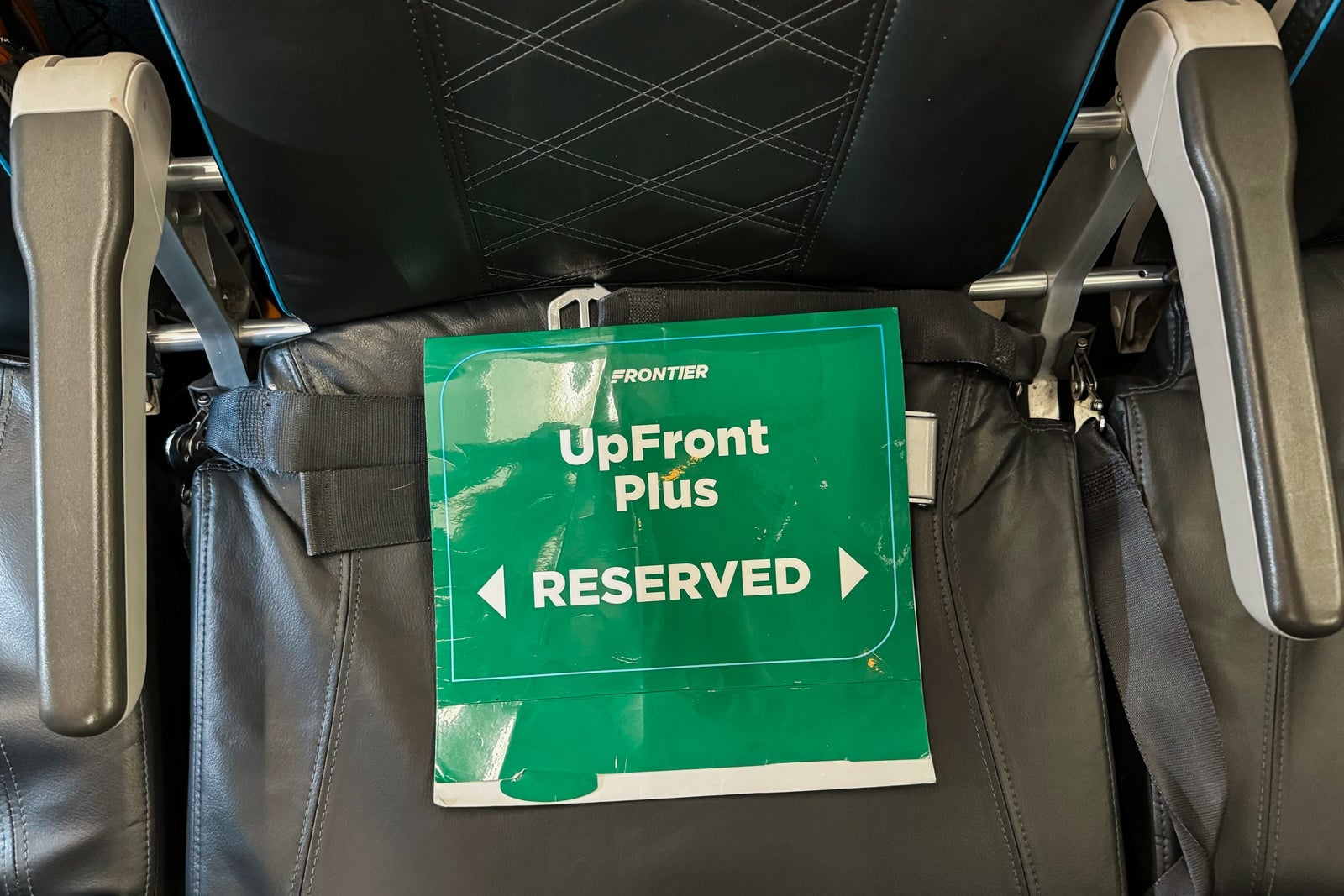
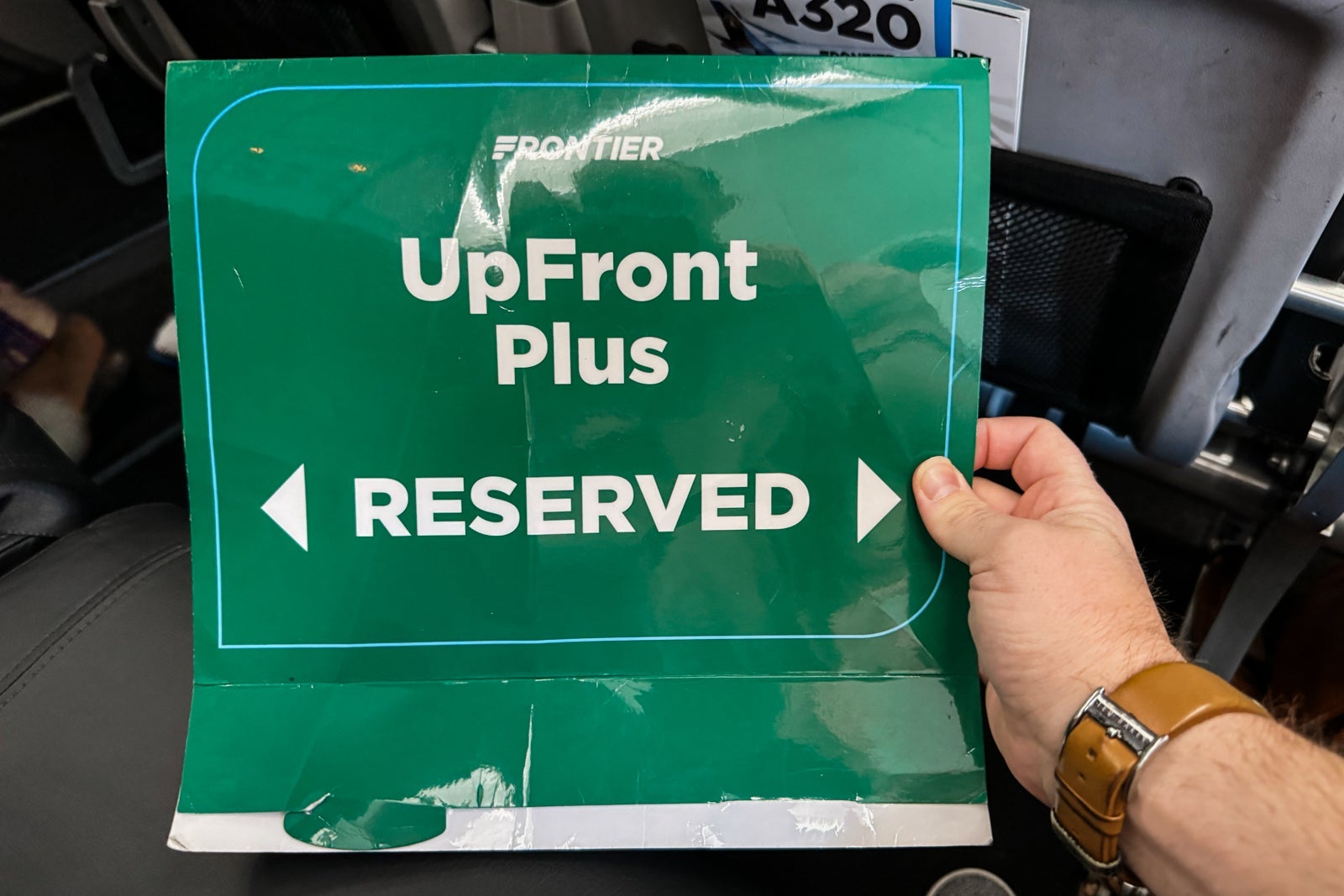
The only sign there was something different about the first two rows: a laminated green card that said "UpFront Plus."
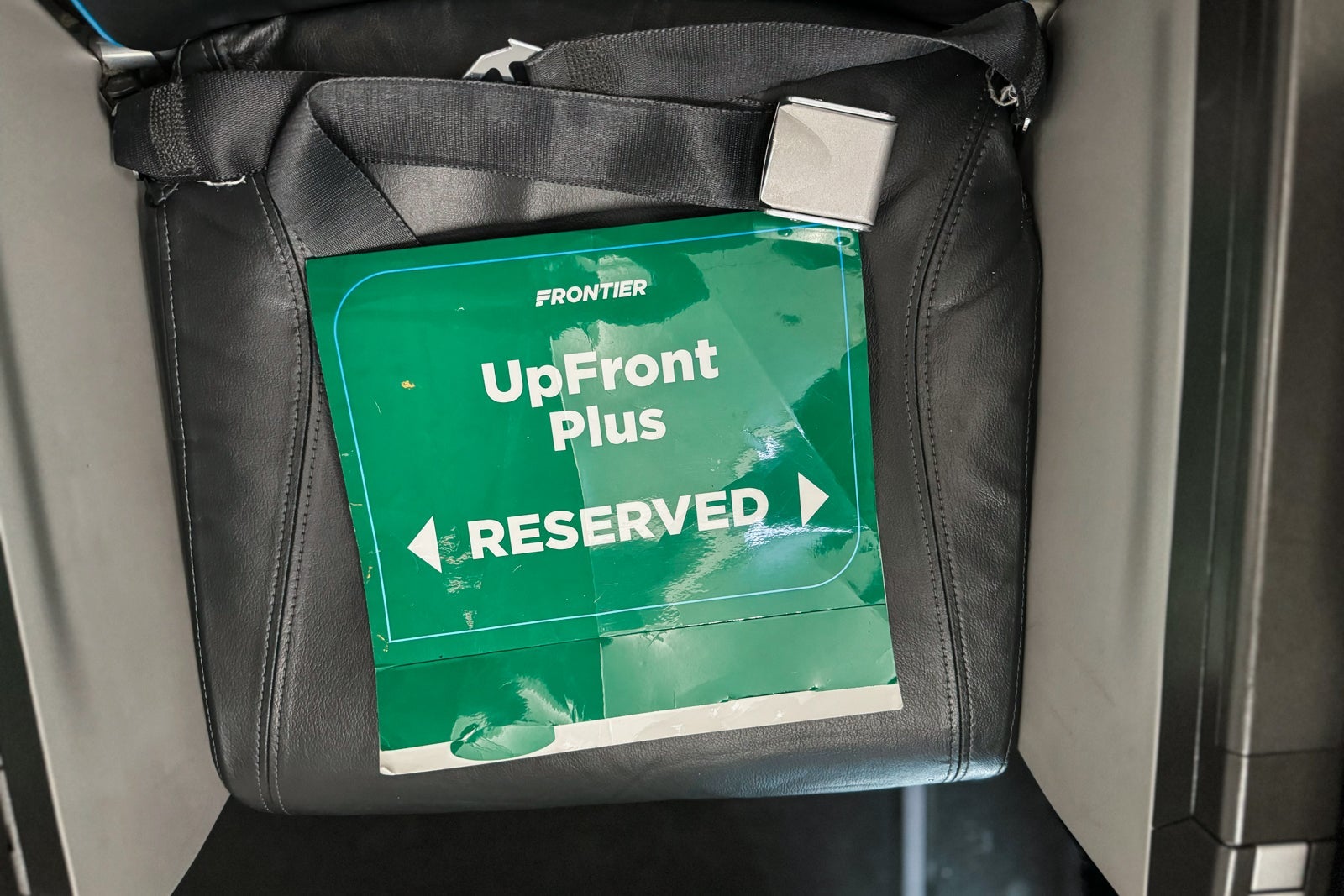
Ostensibly, the card is meant to block the middle seats in those rows. However, just one row on my flight had the card, and upon boarding, it wasn't even in the right seat. It was in an aisle seat in the first row.
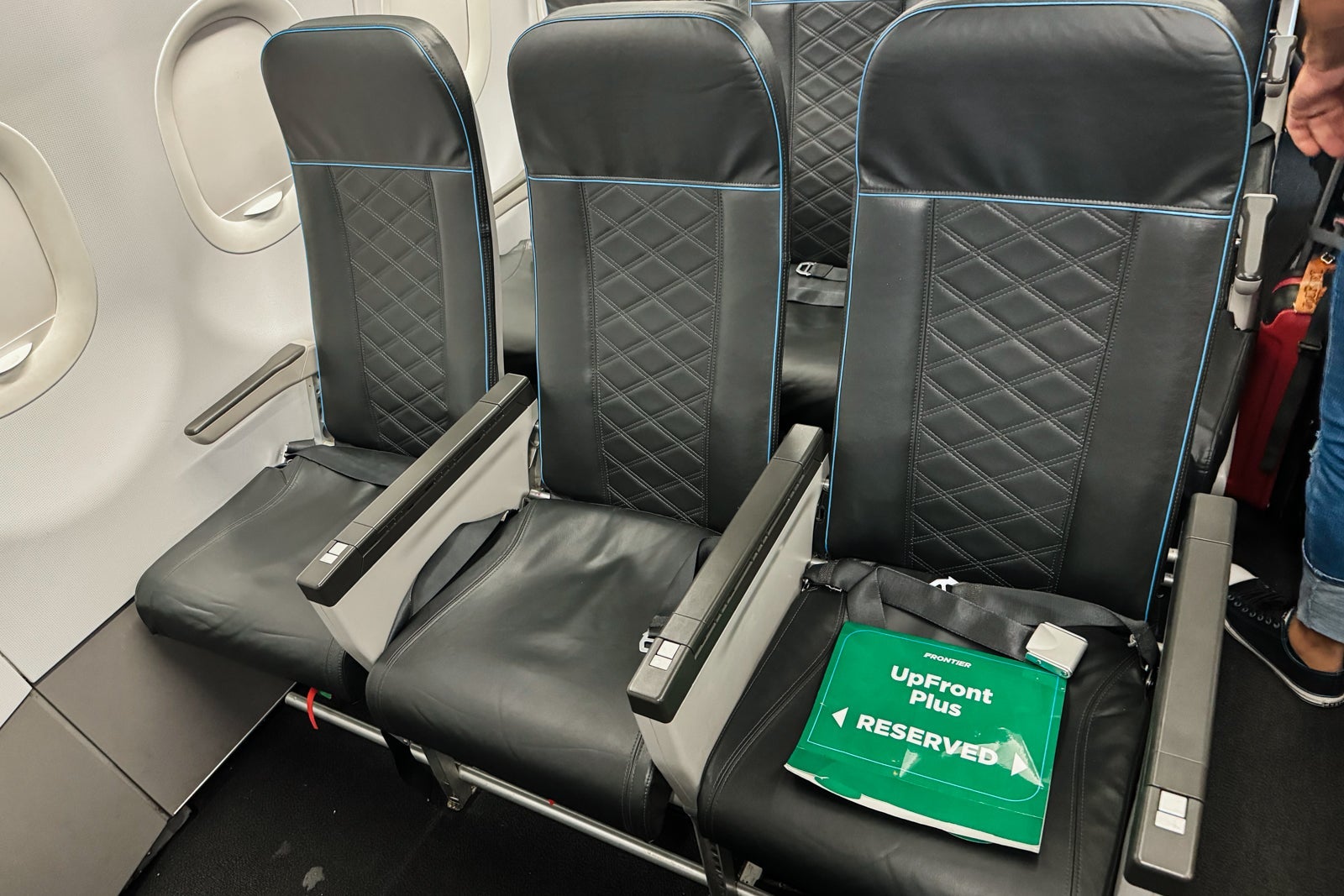
I borrowed it for the middle seat in my row once all passengers boarded, in order to offer a demonstration of what the setup should look like — and to ensure no one sat in the middle seat I'd paid to have empty.
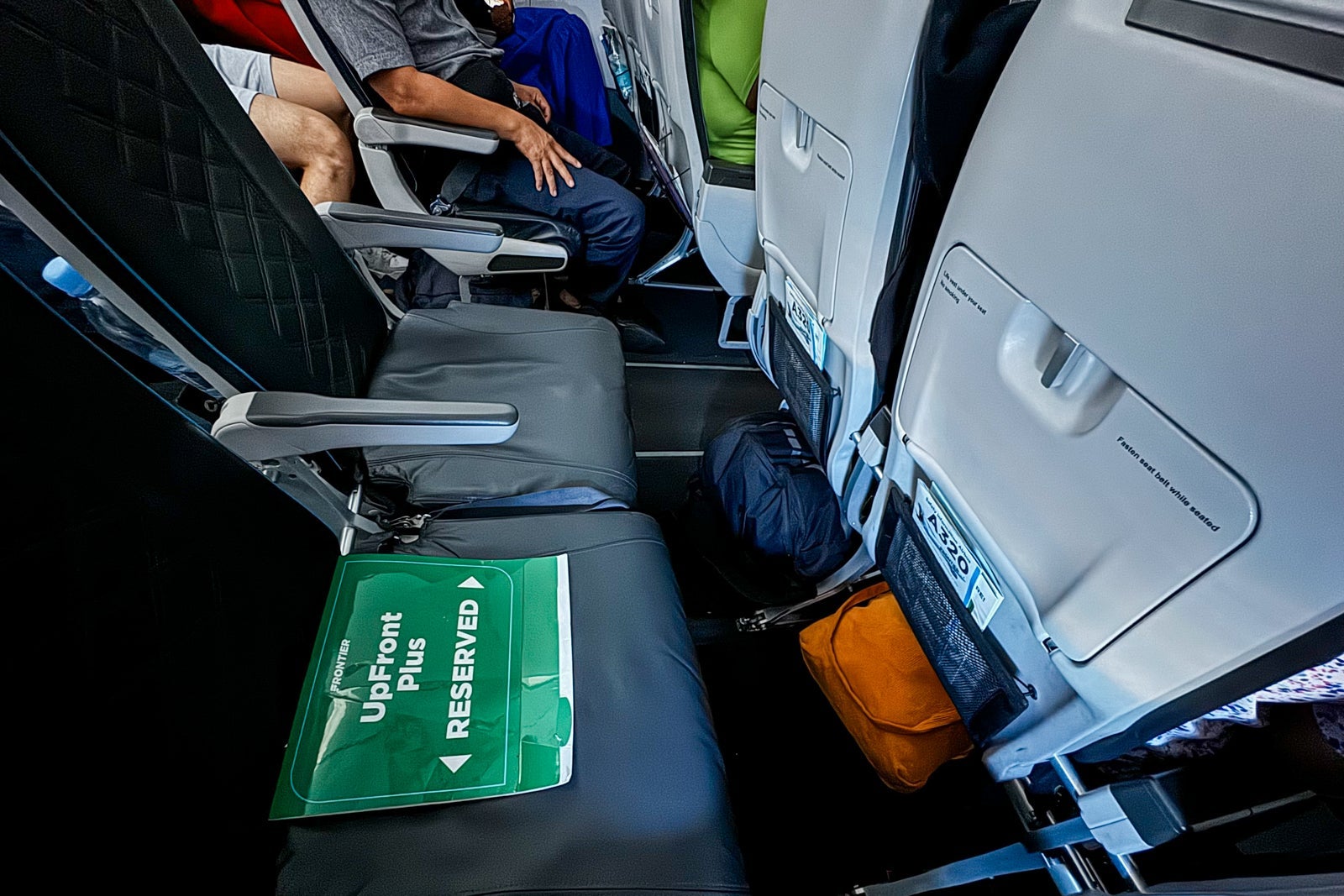
In a statement to TPG after the flight, a Frontier spokesperson told TPG the carrier has no plans to add a physical divider or a console that would block the middle seat. However, the company said it is creating an elastic band that would "go around the middle seat seatback and denote the UpFront Plus section of the aircraft."
Those should be in place sometime this month, the carrier said.
In flight
When the flight was underway, it became clear that only three features distinguish UpFront Plus: You're in one of the first two rows, you have a bit more legroom than in the standard coach seats, and the middle seat is empty.
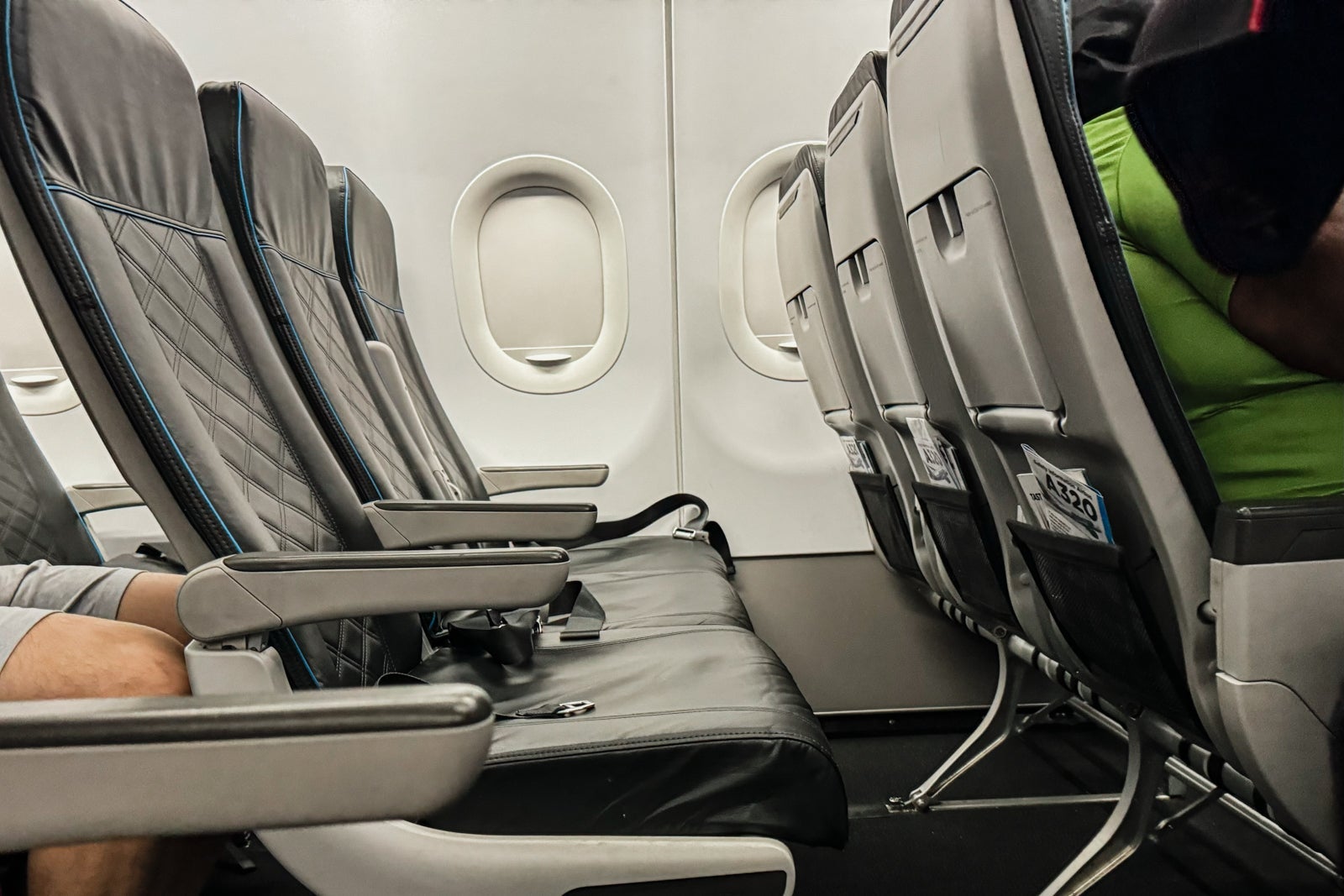
Actually, as it happened, the aisle seat remained empty in my row, too, giving me an entire row to myself. (However, the flight attendant gave the passengers in Row 1, in front of me, permission to stow their personal items under the two seats in my row.)
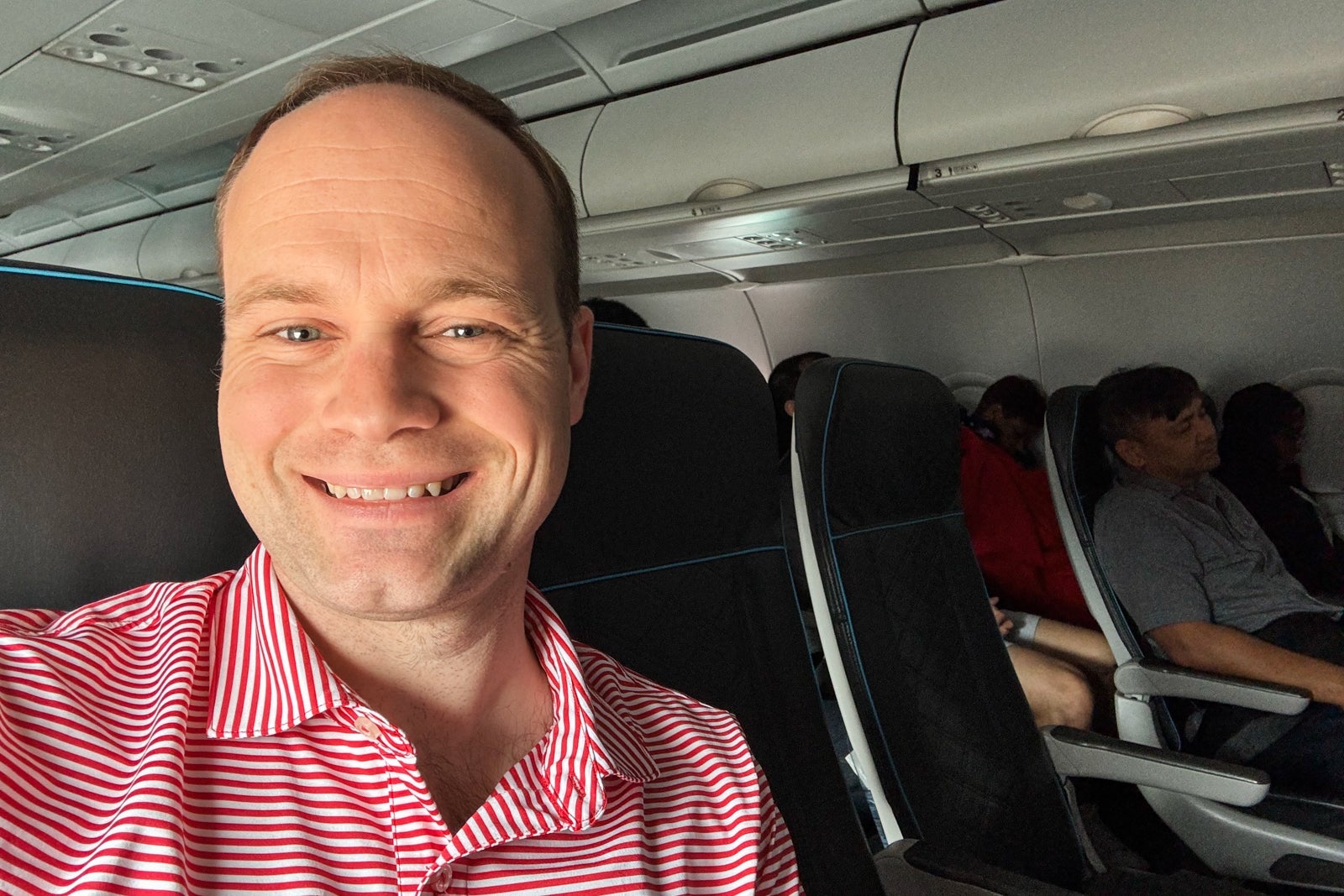
Suffice to say, don't expect a predeparture beverage — or a free beverage of any kind.
I hadn't read every term and condition for my ticket, so I wondered silently whether the airline charges UpFront Plus passengers for a soft drink or snack as part of its highest-tier Business Bundle. Budget airlines generally make you pay extra for any sort of refreshment, although Spirit's two new premium fares include a variety of free snacks and drinks.
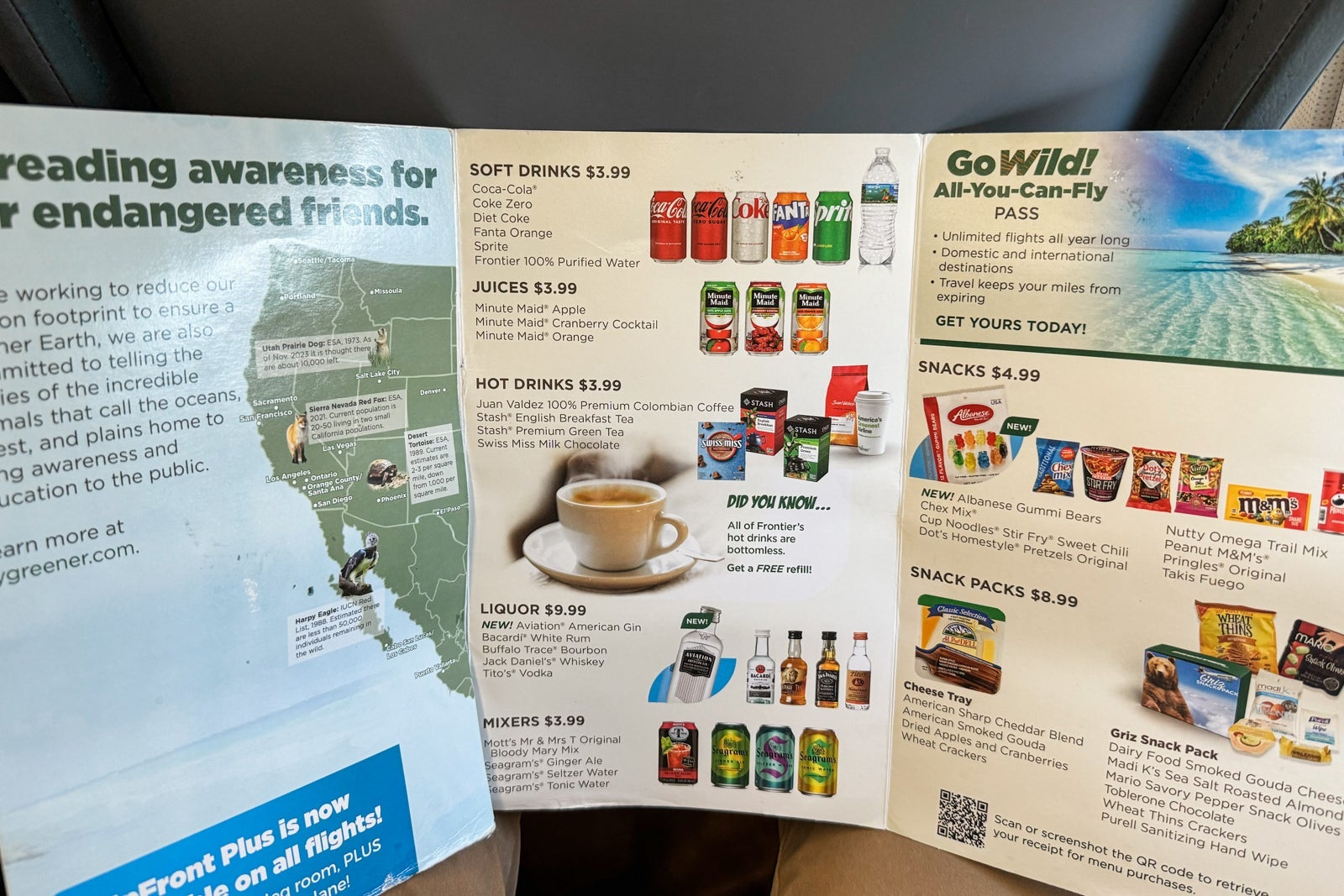
Indeed, that can of ginger ale was $3.99 during my flight.
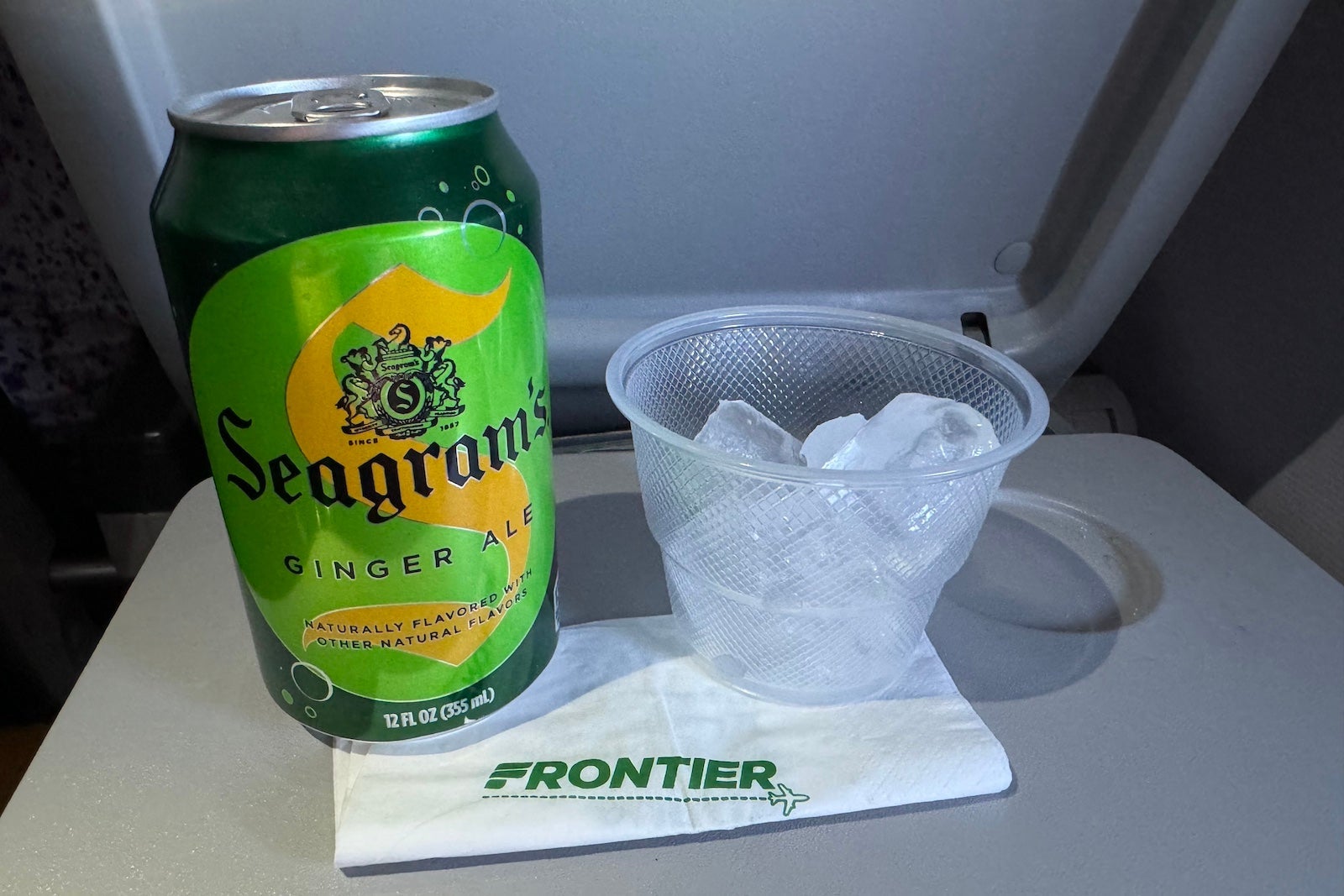
True to the airline's promise at booking, I was one of the first passengers on board to get my hands on a beverage since I was in one of the first rows. (Actually, I was one of the few in my vicinity to order one at all.)
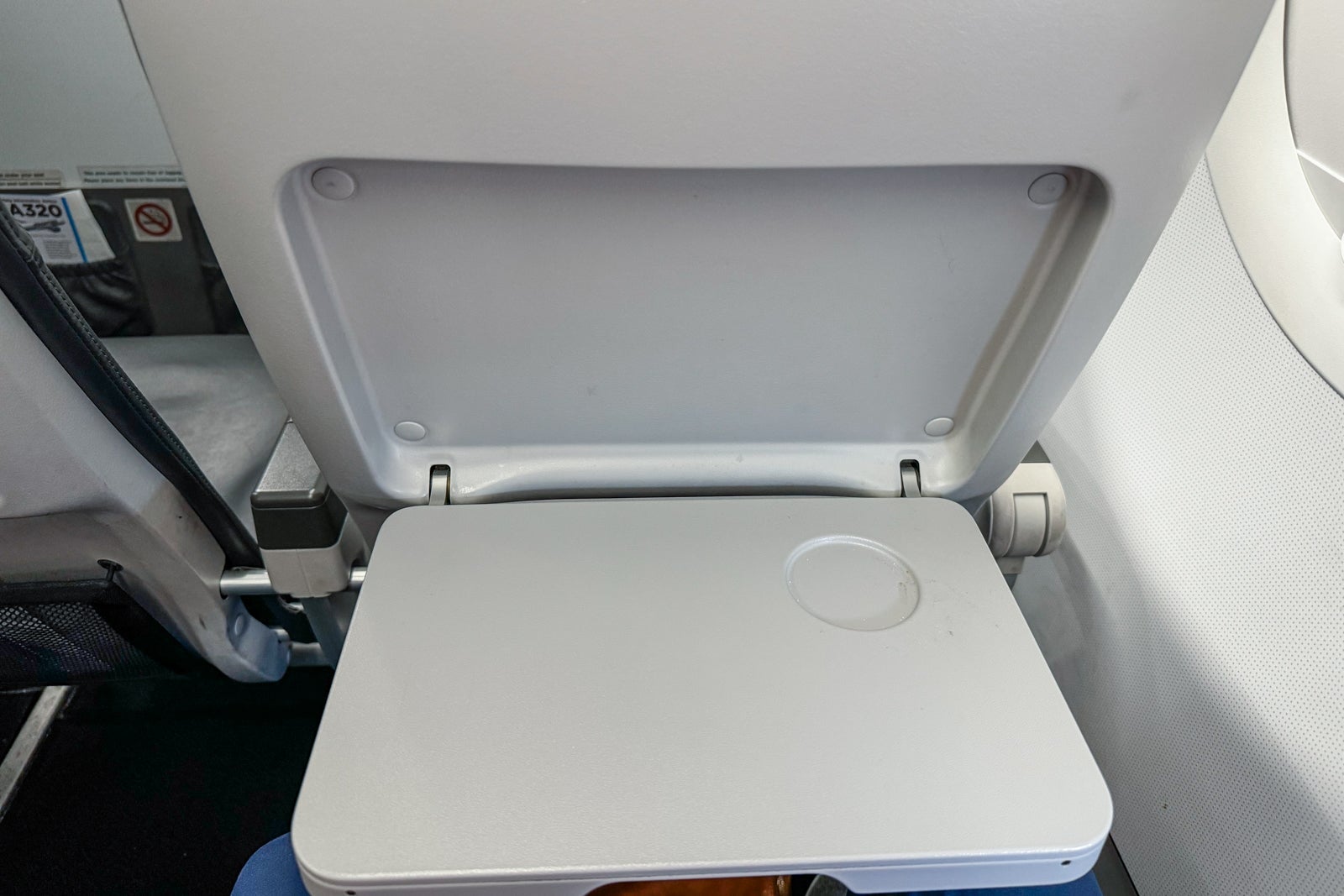
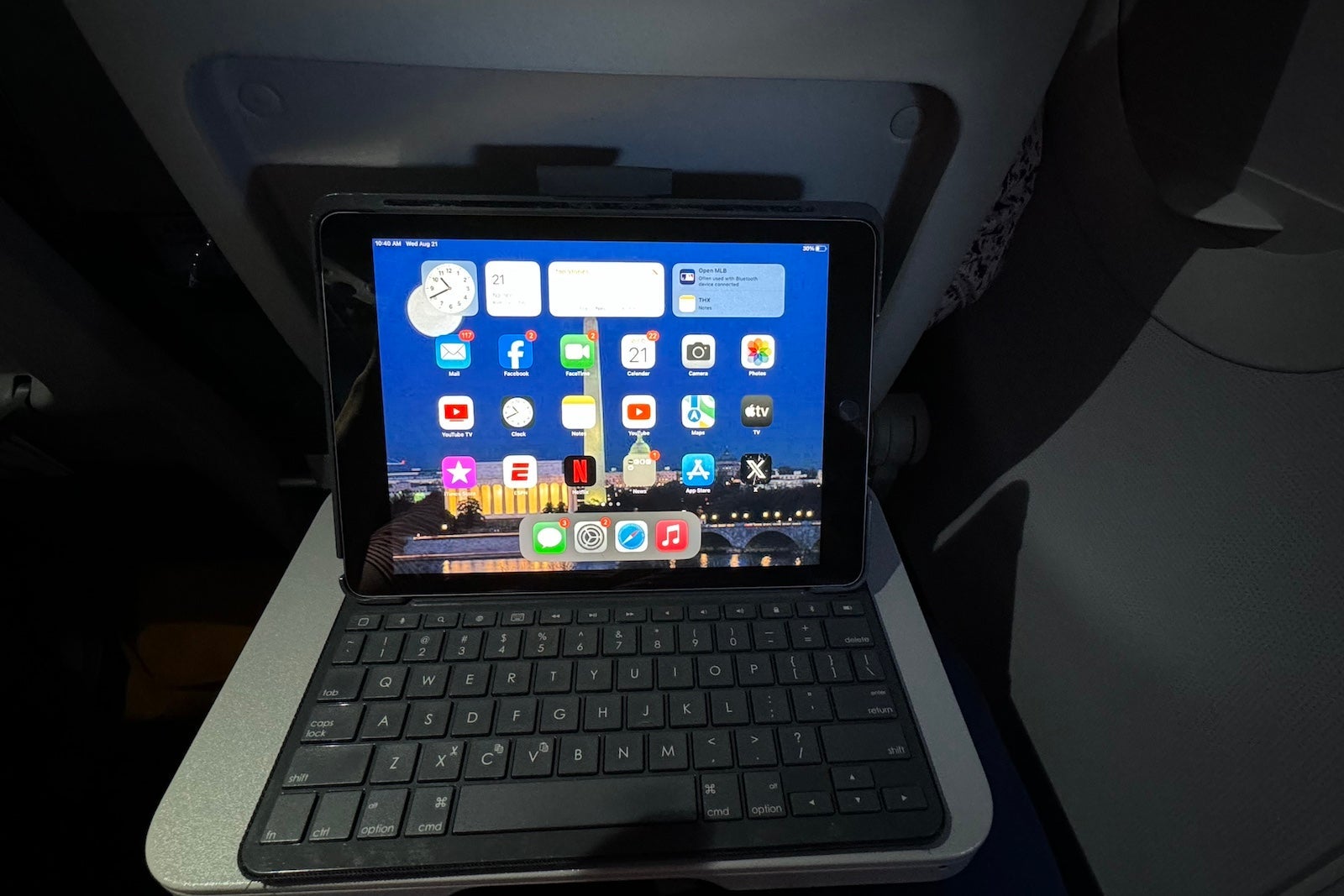
As you'd expect on a budget airline, most other elements of the experience are pretty basic. The tray table was small; it narrowly fit my iPad, but a larger laptop would have been a stretch. Keep that in mind if you're hoping to get some work done while in flight.
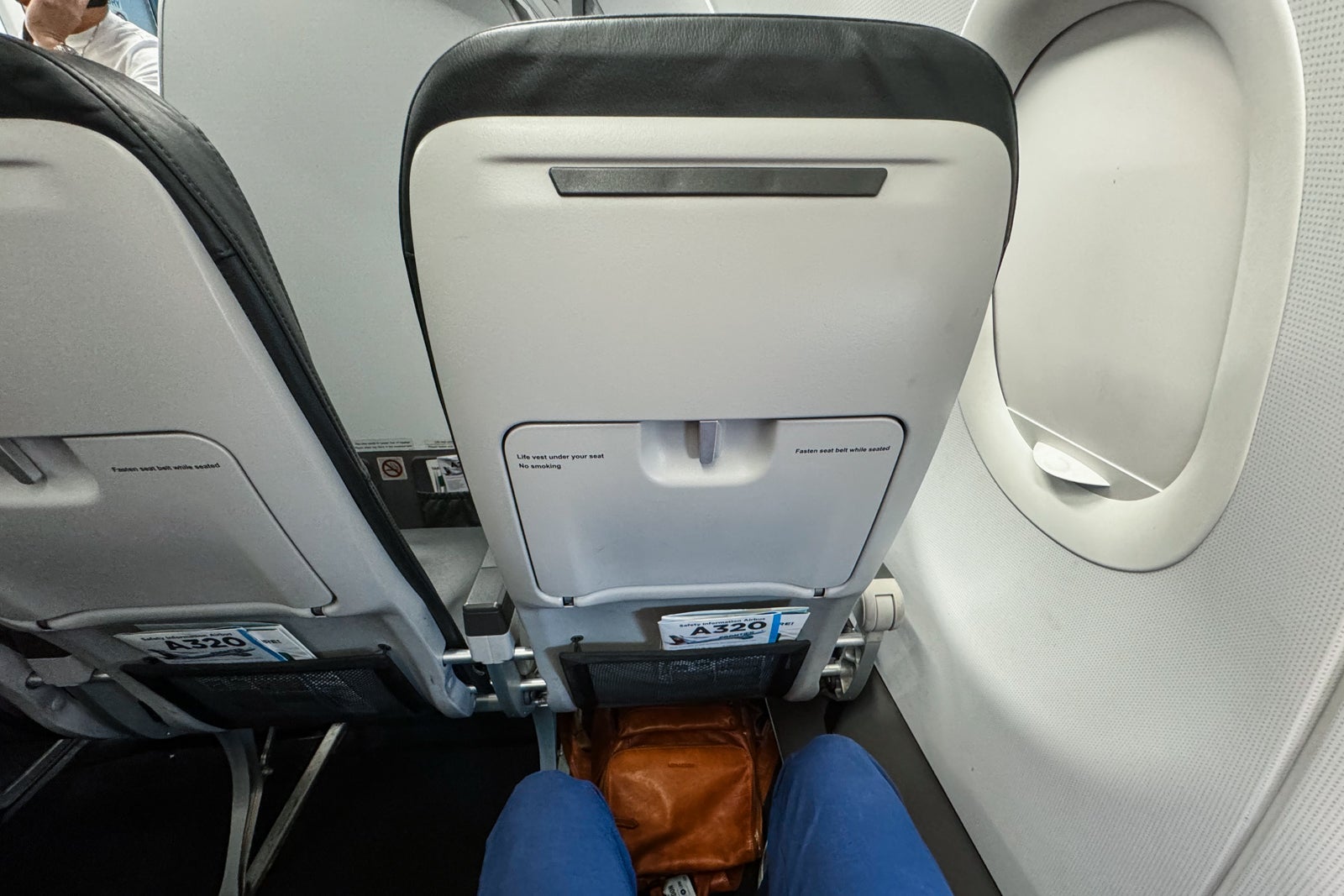
Don't expect Wi-Fi, entertainment screens or streaming movies — Frontier doesn't have these, as is the case with many low-cost carriers around the world.
Deplaning and final thoughts
Also true to Frontier's sales pitch, one of the best perks of being in an UpFront Plus seat was the ability to deplane quickly after the slightly delayed, two-hour and 13-minute flight to Houston.
Would I book one of the seats again?
Sure, if the price difference were modest compared to a basic seat, as it was on this flight. If it were three or four times the price of a standard ticket? I probably wouldn't bother — though Frontier executives maintain customers have jumped at the chance for the extra space, so that's certainly notable.
That said, there wasn't much that was truly "premium" about this experience — at least not in comparison to what you'd get on a full-service carrier. You're paying to guarantee you won't have a seatmate, and that's about it. It's a slightly less cramped way to get from point A to point B — and a way to include bags and seat assignments in your fare.
According to executives, that's largely the goal of the product: to offer passengers willing to pay a bit more a chance at a little more space.
"Let's don't overemphasize this," Biffle said at the Morgan Stanley Laguna conference in September. "We are not joining an alliance. We're not adding lounges. We don't have a true first class. We offered a little bit more space, and we're finding that people are willing to pay [for] that."
Improvements on the horizon?
In a statement to TPG, the company reiterated the early interest in UpFront Plus from customers, and it seemed to tease potential improvements in the future.
"We are very pleased with the customer response so far, and continue to explore options to further enhance the product," a spokesperson said.
Related reading:
- When is the best time to book flights for the cheapest airfare?
- The best airline credit cards
- What exactly are airline miles, anyway?
- 6 real-life strategies you can use when your flight is canceled or delayed
- Maximize your airfare: The best credit cards for booking flights
- The best credit cards to reach elite status
- What are points and miles worth? TPG's monthly valuations
TPG featured card

at American Express's secure site
Terms & restrictions apply. See rates & fees.
| 3X | Earn 3X Miles on Delta purchases. |
| 1X | Earn 1X Miles on all other eligible purchases. |
Pros
- Delta SkyClub access when flying Delta
- Annual companion ticket for travel on Delta (upon renewal)
- Ability to earn MQDs through spending
- Various statement credits for eligible purchases
Cons
- Steep annual fee of $650
- Other Delta cobranded cards offer superior earning categories
- Earn 100,000 Bonus Miles after you spend $6,000 or more in purchases with your new Card within the first 6 months of Card Membership and an additional 25,000 bonus miles after you make an additional $3,000 in purchases on the Card within your first 6 months, starting from the date that your account is opened. Offer Ends 04/01/2026.
- Delta SkyMiles® Reserve American Express Card Members receive 15 Visits per Medallion® Year to the Delta Sky Club® when flying Delta and can unlock an unlimited number of Visits after spending $75,000 in purchases on your Card in a calendar year. Plus, you’ll receive four One-Time Guest Passes each Medallion Year so you can share the experience with family and friends when traveling Delta together.
- Enjoy complimentary access to The Centurion® Lounge in the U.S. and select international locations (as set forth on the Centurion Lounge Website), Sidecar by The Centurion® Lounge in the U.S. (see the Centurion Lounge Website for more information on Sidecar by The Centurion® Lounge availability), and Escape Lounges when flying on a Delta flight booked with the Delta SkyMiles® Reserve American Express Card. § To access Sidecar by The Centurion® Lounge, Card Members must arrive within 90 minutes of their departing flight (including layovers). To access The Centurion® Lounge, Card Members must arrive within 3 hours of their departing flight. Effective July 8, 2026, during a layover, Card Members must arrive within 5 hours of the connecting flight.
- Receive $2,500 Medallion® Qualification Dollars with MQD Headstart each Medallion Qualification Year and earn $1 MQD for each $10 in purchases on your Delta SkyMiles® Reserve American Express Card with MQD Boost to get closer to Status next Medallion Year.
- Enjoy a Companion Certificate on a Delta First, Delta Comfort, or Delta Main round-trip flight to select destinations each year after renewal of your Card. The Companion Certificate requires payment of government-imposed taxes and fees of between $22 and $250 (for itineraries with up to four flight segments). Baggage charges and other restrictions apply. Delta Basic experiences are not eligible for this benefit.
- $240 Resy Credit: When you use your Delta SkyMiles® Reserve American Express Card for eligible purchases with U.S. Resy restaurants, you can earn up to $20 each month in statement credits. Enrollment required.
- $120 Rideshare Credit: Earn up to $10 back in statement credits each month after you use your Delta SkyMiles® Reserve American Express Card to pay for U.S. rideshare purchases with select providers. Enrollment required.
- Delta SkyMiles® Reserve American Express Card Members get 15% off when using miles to book Award Travel on Delta flights through delta.com and the Fly Delta app. Discount not applicable to partner-operated flights or to taxes and fees.
- With your Delta SkyMiles® Reserve American Express Card, receive upgrade priority over others with the same Medallion tier, product and fare experience purchased, and Million Miler milestone when you fly with Delta.
- Earn 3X Miles on Delta purchases and earn 1X Miles on all other eligible purchases.
- No Foreign Transaction Fees. Enjoy international travel without additional fees on purchases made abroad.
- $650 Annual Fee.
- Apply with confidence. Know if you're approved for a Card with no impact to your credit score. If you're approved and you choose to accept this Card, your credit score may be impacted.
- Terms Apply.
- See Rates & Fees