Behind the scenes: A pilot's view during one of the most exciting approaches in the world

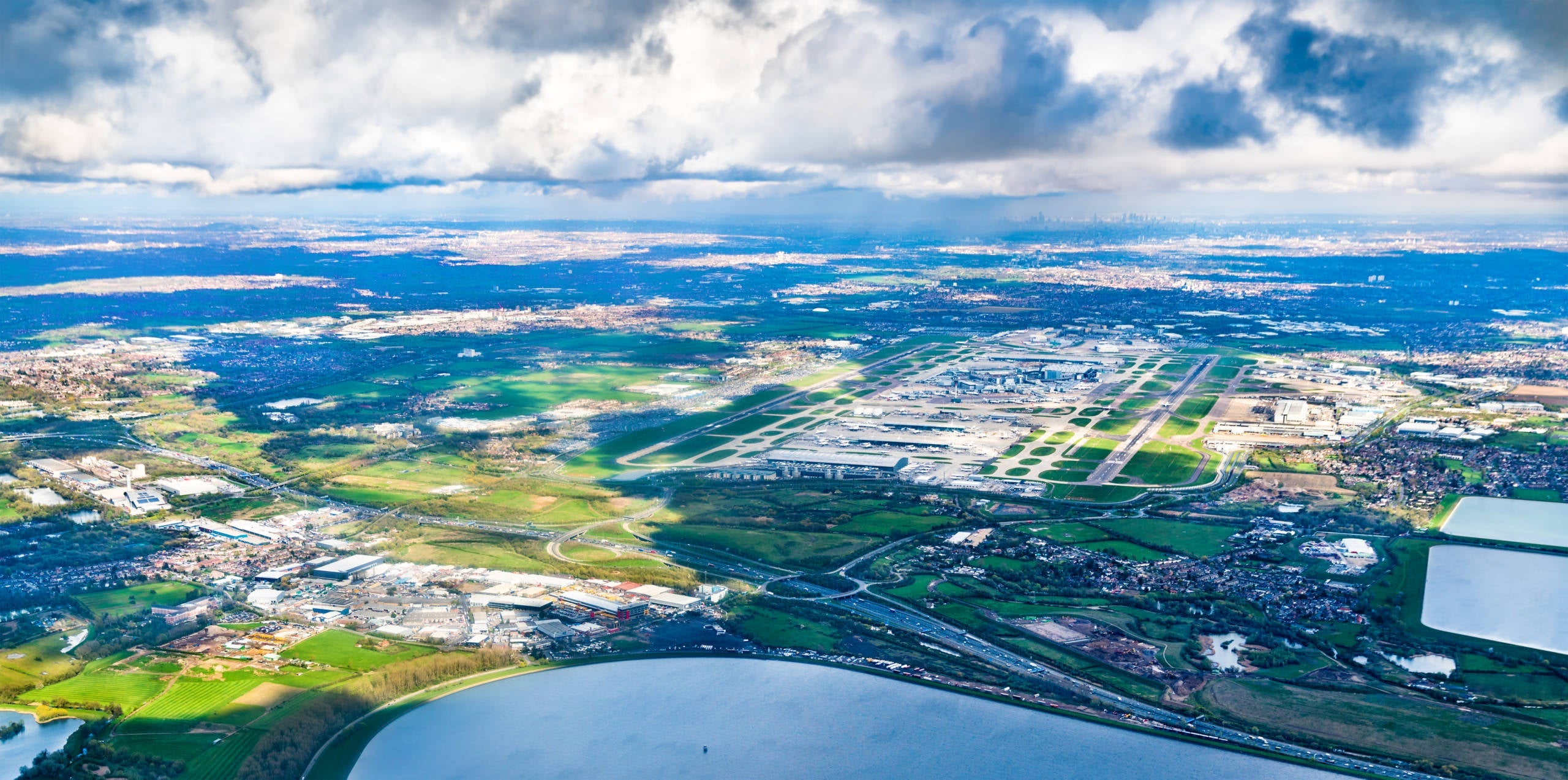
Whilst most of us are on the ground looking fondly up at the sky for now, for those few pilots making approaches to land at Heathrow, they are getting some of the best views in the world. There are very few places where the approach takes you directly over the city, and they don't get any better than London. On a good day, you're spoiled with views of Buckingham Palace, Tower Bridge and Big Ben to name just a few.
However, if you think you've got a good view from the back, the view from the flight deck is nothing short of spectacular.
Four entry points
London Heathrow is one of the busiest airports in the world. To make it more difficult, it sits in the middle of some of the busiest airspace in the world. There are five London airports within a stone's throw of one another, plus there is also traffic arriving and departing from other airports in the southeast such as Farnborough and Northolt.
In order to stream the traffic into LHR, aircraft fly a Standard Terminal Arrival Route, better known as a STAR. These bring traffic off their routes and stream them into one of four holding patterns, or stacks, around London. Ockham in Surrey to the south, Biggin Hill in Kent to the southeast, Lambourne in Essex to the northeast and Bovingdon in Hertfordshire to the north. (Or, if you're an American/United/Delta pilot, BovingTon -- little inside joke there!)

As pilots are handed over to London Air Traffic Control, they are assigned one of several STARS, normally named from the waypoint at which they start. A flight from Hong Kong routes in over The Netherlands where it is handed over to London Control over the North Sea. Coming in from this direction, the STAR is the LOGAN 1H, as can be seen on the chart below.
As the flight progress laterally and vertically down the STAR, the pilots are passed from one ATC unit to the next. As they approach the Holding Pattern at Lambourne, they are handed over to Heathrow Approach.
The STAR chart gives pilots several pieces of information. Firstly, it shows us the route that we must fly. This will have been loaded and checked during the quiet of the cruise. If a particular arrival is busy, ATC may tell us at the last minute to fly another arrival. If this happens, one pilot ensures that they are flying the aircraft whilst the other changes the route in the flight computer.
Read more: How pilots and aircraft keep cabin air fresher than you may think

Altitudes versus Flight Levels
Before we continue, a quick technical explanation. What's the difference between an altitude and a Flight Level?

Altitude refers to the vertical distance of an object above sea level. The important factor here is that this is very much dependent on the air pressure. As weather systems move around the world, the pressure of the air changes above a certain location on the ground. As a result, pilots have to be aware of the air pressure for their location. To make sure they are flying the correct altitude, they have to update their altimeter accordingly.
Constantly changing the altimeter for 12 hours would get tedious and also increases the risk of other aircraft flying on the incorrect setting. As a result, when above a certain altitude, pilots set a standard pressure setting and fly at Flight Levels. Take the last two zeros from the altitude and you have the FL -- i.e. 23,000 feet becomes FL230.
By flying at a Flight Level (FL), aircraft can fly for thousands of miles without having to reset the pressure setting.
Vertical and speed restrictions
The STAR also gives us indications of vertical restrictions. With traffic arriving and departing from other U.K. airports, many of the routes cross the STAR route. To maintain safe vertical separation, aircraft must be at a particular altitude at certain points. When reaching the point SABER, we must expect to be at FL160. Working back up the descent path, we can then calculate the point at which we need to start our descent from our cruising level.
Like on the roads, there are also speed restrictions in the sky. Toward the end of the STAR, there is the SLP -- Speed Limit Point. By this point, we must be flying 250 knots (290 mph) unless told otherwise. This process is engineered to deliver the aircraft to Lambourne at its minimum clean speed (slowest speed without extending any flaps) of around 220 knots (250 mph).
When reaching Lambourne, one of two things will happen. If there is a lull in traffic and things are quiet, Heathrow Approach will instruct the aircraft to leave Lambourne on a specific heading. However, as happens most of the time, the aircraft will be instructed to take up the holding pattern. Once again, the STAR chart gives the details of this, showing an inbound heading of 263 degrees with turns to the left.
Read more: How a small Canadian town is integral to your trans-Atlantic flight
When the first left turn is complete, the aircraft is on what is called the "outbound" leg. So how long do you fly outbound for before turning back? Unless specified otherwise, for all holds below 14,000 feet pilots must fly a one-minute leg, for any holds above 14,000 feet the outbound leg must be 1.5 minutes. Aircraft in the holding pattern are separated by 1,000 feet vertically. So even if the aircraft out of the window looks really close, you're still safely separated. This looks even more pronounced when you're turning and there's an aircraft directly above or below you.
When ATC is ready, the aircraft at the bottom level of the stack, normally around FL80, is taken off and directed toward the runway. Once clear of the pattern, the aircraft in the level above can drop down 1,000 feet. When that aircraft has descended, the one above them can do the same and so on.
Sequencing for the approach
Once clear of the stack, there's still quite a way to go. ATC must take aircraft from the four stacks and join them into one line toward the landing runway. To do this, the stacks are divided in two. The two northern stacks (Bovingdon and Lambourne) are controlled by one Air Traffic Control Officer (ATCO). The two southern stacks (Ockham and Biggin) are controlled by another ATCO.
Which runway?
The direction the aircraft take from their stack depends on the runway in use. As aircraft should take off and land into the wind, when it's blowing from the west, aircraft approach in over central London and land on one of the two westerly runways.
All runways are given a numeric designator. This number is taken from the magnetic bearing of the runway, minus the last digit. At Heathrow, the runway heading is 271 degrees so the runway is 27, pronounced as "two-seven." As there are two runways with the same bearing, they are named 27L (two seven left) and 27R (two seven right).
Read more: How pilots prepare to land during severe storms
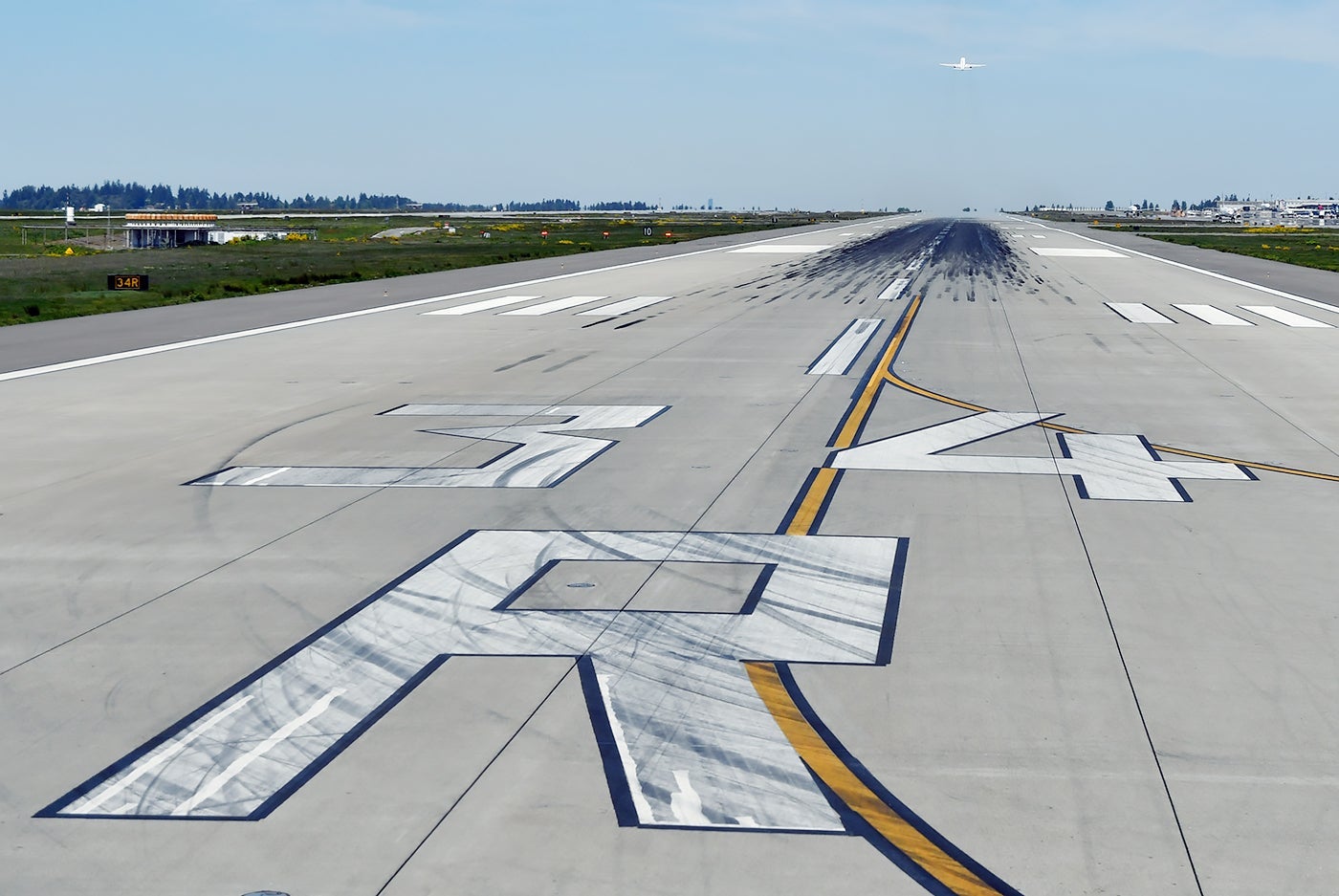
Naturally, when using the other end in easterly winds, the runways are the reciprocal heading, 091 degrees, therefore the runways are 09L and 09R.
For the most part, one runway is used for takeoffs and the other for landings. At 3 p.m. every day, these switch sides to reduce the effect of the noise on surrounding residents.
Initial approach
The Emirates Stadium and Highbury
When flying a light aircraft out of a small airfield, there is a traffic pattern which all aircraft must fly. The same principle is used when vectoring an aircraft to land at a large airport like Heathrow.
For our flight leaving Lambourne, ATC instructs us to fly a heading roughly west at our minimum clean speed. This is my favorite approach into London and I call it the "Stadium Tour" as it takes in most of the major stadiums in the capital.
At around the same time as we leave Lambourne, another aircraft will be leaving the stack at Bovingdon. The skill of the ATCO is to get the two aircraft turning to fly east, the downwind leg, the correct distance apart. The two aircraft will also be separated by 1,000 feet vertically.
As we both pass Wembley Stadium on the right and then Lord's cricket ground in the distance, we will be perfectly separated, flying in a straight line roughly heading toward Arsenal's Emirates Stadium. At this point, there are around 25 miles left to touch down which will take about eight minutes.
Taking a look out of my window on the right-hand side of the aircraft, I can not only see onto the pitch at The Emirates, but you can also see what is left of Arsenal's old stadium, Highbury.

When the club moved to the new facility in 2006, Highbury was converted into 711 properties known as Highbury Square. The Art Deco exteriors of two of the stands were incorporated into the new developments and the pitch became communal gardens. Looking down on the development from above, you can see how the stadium looked when it was still in use.
Base turn
As we approach the Emirates Stadium, it's time for ATC to start to slow us down. Normally we'll be asked to reduce our speed to 180 knots, roughly 205 mph.
To allow us to fly this slow, we have to start extending the leading edge slats and the trailing edge flaps on the wings. These increase the surface area of the wing, creating greater lift and allowing us to fly slower.
As the northern stream of traffic approaches east London, a similar stream of aircraft has been forming on the south side from the southern stacks. We are then handed over to the final Heathrow approach controller who has the task of turning both streams toward each other and then zippering them together toward the runway. To do this, we are normally instructed to turn right and fly a southerly heading, the base leg, taking us over the London Olympics stadium, now home to West Ham United.
The base leg is usually quite short, maybe 20 to 30 seconds and around 18 miles to touchdown. Another right turn is then made to give us an intercept to the localizer.
Intercepting the localizer
Most approaches into London Heathrow are ILS approaches -- Instrument Landing System. Two sets of antennae located near the runway send radio beams up into the sky to guide the aircraft toward the correct touchdown point on the runway. The localizer beam helps us track the extended centerline of the runway whilst the glideslope gives us the ideal descent profile to the touchdown zone.
ATC normally give us a 30 degrees intercept to the localizer. This enables the autopilot to pick up the signal and make a smooth turn onto it without flying through it. Quite often this happens either directly overhead London City airport and the O2 Arena, or even better, over the top of Tower Bridge and The Shard. I still get a buzz looking down on the history of the Tower of London, surrounded by modern skyscrapers such as the Gherkin.
Only once on the localizer will ATC will clear us to intercept the glideslope. This approach brings us over the top London City airport so we mustn't start our final descent too soon. Once on the ILS, it's just another 14 miles or so till touch down and things are about to get a whole lot busier.
Bottom line
The approach into London Heathrow is one of the most exciting approaches in the world. Everywhere you look there are scores of famous buildings and features to spot. After hundreds of flights in over the city, I still get excited coming into land on a clear day. The run-in from the north is my favorite, taking in most of the major sports stadiums including Wembley, Lord's, Emirates stadium and the former Olympic Stadium.
It is also one of the busiest airspaces in the world. Fortunately, London has the best ATCOs anywhere I've flown to. Their skill and calmness under pressure ensure that aircraft are kept flowing toward the landing runway whilst being kept safely separated at all times.
However, the best views and the busiest part of the flight is still to come. Check back next week when I'll guide you through the final stages of the approach into London Heathrow and the views that come with it.
TPG featured card

at Capital One's secure site
Terms & restrictions apply. See rates & fees.
| 5X miles | Earn 5X miles on hotels, vacation rentals and rental cars booked through Capital One Travel |
| 2X miles | Earn unlimited 2X miles on every purchase, every day |
Pros
- Stellar welcome offer of 75,000 miles after spending $4,000 on purchases in the first three months from account opening. Plus, a $250 Capital One Travel credit to use in your first cardholder year upon account opening.
- You'll earn 2 miles per dollar on every purchase, which means you won't have to worry about memorizing bonus categories
- Rewards are versatile and can be redeemed for a statement credit or transferred to Capital One’s transfer partners
Cons
- Highest bonus-earning categories only on travel booked via Capital One Travel
- LIMITED-TIME OFFER: Enjoy $250 to use on Capital One Travel in your first cardholder year, plus earn 75,000 bonus miles once you spend $4,000 on purchases within the first 3 months from account opening - that’s equal to $1,000 in travel
- Earn unlimited 2X miles on every purchase, every day
- Earn 5X miles on hotels, vacation rentals and rental cars booked through Capital One Travel
- Miles won't expire for the life of the account and there's no limit to how many you can earn
- Receive up to a $120 credit for Global Entry or TSA PreCheck®
- Use your miles to get reimbursed for any travel purchase—or redeem by booking a trip through Capital One Travel
- Enjoy a $50 experience credit and other premium benefits with every hotel and vacation rental booked from the Lifestyle Collection
- Transfer your miles to your choice of 15+ travel loyalty programs
- Top rated mobile app