Practice makes perfect: How pilots train for every situation

At 36,000 feet over the Indian Ocean, it's quite a view. Clear pale blue sky reaches down from above until it meets the rich turquoise of the ocean below. Dabs of cotton wool cloud create tiny dark shadows on the water, giving the surface a speckled effect. Even though the air outside is a chilly minus 60F, in my pressurized Boeing 787 Dreamliner, the environment is just like being on the ground on a pleasant summer's day in Denver. Life is good.

BANG! BOOM! BANG!
What on earth was that?! Compose yourself. Breathe. Fly the aircraft. The whole flight deck shakes again with another bang. Assess. What's going on? The left engine is surging. Ask the other pilot for the Engine Surge Vital Actions. Autothrottle Arm Left switch to off. Left thrust lever? Confirmed? Slowly reduce the power. The rhythmic bangs and engine instruments say it's still surging. Reduce the power some more. Still surging. Bring the power to idle and finally it stops.
Now flying on one engine. Whilst perfectly safe, it'll mean we're too heavy to stay at 36,000 feet. We'll have to descend. Talk to Air Traffic Control. Declare an emergency. Ask for descent. More checklists to run. What's the plan now? Carry on to London? Go back to Mauritius? Somewhere else? What have the passengers experienced? We'll need to reassure them.
Suddenly, all motion stops. Everything goes silent. "Aaand, let's hold it there guys", says the instructor leaning forward between us. "Nicely handled, let's have a chat about what happened".
So Real, You Feel Like You're Flying
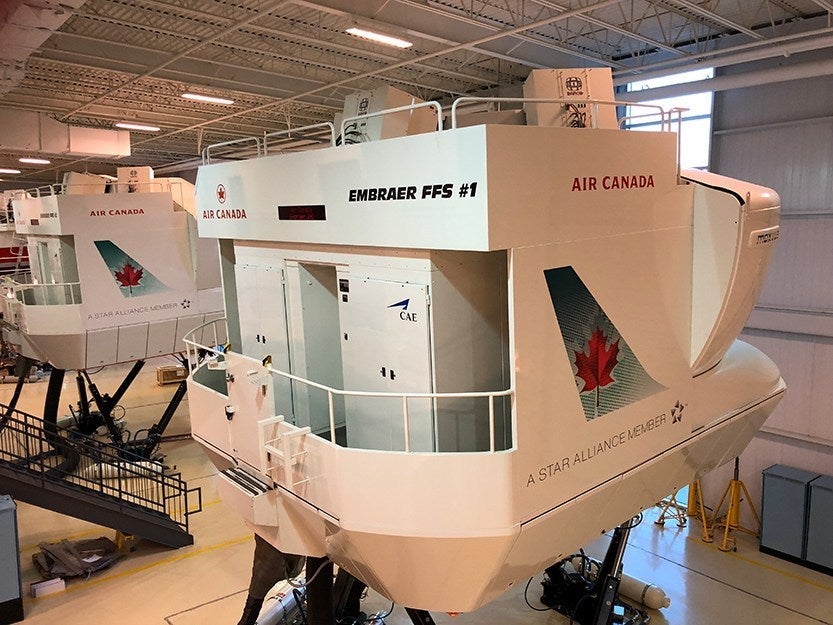
Indeed, we are not 36,000 feet above the Indian Ocean, but instead we are in a state-of-the-art flight simulator, firmly bolted to the ground in a building near Gatwick Airport. The view was very real, the bangs and shaking were all very real, but they were all created by sophisticated computer software and electronic actuators.
Every six months, all airline pilots spend two days in a flight simulator having their skills checked and practicing normal and non-normal situations that could occur in the aircraft. It's an integral part of making sure that you're kept safe whilst in our hands on board.
The flight simulators recreate how the aircraft handles so accurately that pilots will often go directly from simulator training to flying the aircraft with passengers on board. When taxiing the aircraft to the runway, you feel the bumps of the lights on the taxiway. As you start the takeoff run, you get pushed back in your seat. And when you land less than smoothly, you certainly feel it.
Your pilots are on board to keep you safe in order to fly you to your destination as easily and comfortably as possible. However, things do sometimes go wrong and this is why most of our training is geared towards dealing with these non-normal situations. We never know which routine flight may require us to call on all our skill and experience. Just ask the crew of US Air Flight 1549, which landed on the Hudson River in New York.

With that in mind, our simulator sessions every six months are designed to make sure that our operating standards are up to scratch and to practice non-normal situations should they ever occur on a flight. Practice makes perfect.
Standardization — The Backbone of Safety
Each country has its own aviation authority, which sets the standards for which all its airlines must abide by. In the UK, it's the Civil Aviation Authority — the CAA.
As part of the License Proficiency Check (LPC), the CAA mandates certain items that must be tested, and the minimum standard to which the pilot must demonstrate that skill. This covers both normal and non-normal situations. For example, the use of checklists, a rejected takeoff and an engine failure on take off are all items that must be passed on all checks. In addition to this, the instructor must choose to test the pilot's ability to deal with at least three of the items in the list below. As a result, we get to practice as many issues as possible.

Whilst the list of items that have to be checked, and passed, are dictated by the CAA, it is up to the individual airline to design a training package that incorporates them. A well-designed training session will incorporate all these into a real-life scenario. For example, during a routine flight from Mauritius to London. The idea is to make the scenario as realistic as possible, not to push the pilots to breaking point. The emphasis should always be on learning and improving skills.
No two flights are ever the same. As a result, no two simulator checks are ever the same. Therefore, instructors use a matrix of non-technical skills to asses our performance across a spectrum of safety-related traits. Sitting in the instructor station behind the pilots, they can not only see what the crew are doing but also how well they are working together. Workload management, communication, teamwork and technical knowledge are all key aspects of a safe outcome. Quite often, if the level of workload management is good, all the other skills will be good.
How Does a Simulator Session Run?
When arriving for the simulator check, quite often you will only meet the people you're training with for the first time. This may seem odd, but it's realistic to life on the job. You have to be able to turn up to work and perform as a perfect team with people you may never have met. In an ideal world, the session will be run as a 'natural crew' — one Captain and one First Officer. However, this isn't always possible.
On most long-haul fleets, there will be more Captains than First Officers. As a result, many checks will be run with two First Officers. This may seem odd but you never know when a non-normal situation could occur in the aircraft. It could be when the Captain is on their rest and it's the two First Officers at the controls.
After the usual niceties and a coffee, you'll sit down for the brief. Here, the instructor will lay out the plan for the day (without specific details) and then discuss what's relevant to the fleet and industry at the time. Airlines and manufacturers are always working to improve safety. Consequently, procedures and policy are always changing. It's up to the individual pilot to keep up with these as they are published, but the simulator check is a good chance to consolidate this knowledge. This will normally take around an hour.
Walking the Plank
Once the brief is completed, it's time to begin. To access the sim, the crew walk across a retractable bridge. Some pilots liken it to walking the plank to meet their destiny. Once settled into their seats, the motion for the simulator is activated. The drawbridge is raised and the whole simulator lifts up onto its actuators into the neutral position. It's ready to rock and roll. Literally.

Inside the sim, the instructor is able to position the aircraft anywhere in the world and set any kind of weather conditions they like. Day or night. Once the crew are happy with their set up and where the aircraft is, it's time for the fun to begin.
The instructor will 'unfreeze' the sim and from that moment on, the crew treat everything as if it were a real flight until the instructor says otherwise. In the scenario above, the aircraft may have started on the ground in Mauritius. Through the control panel at the instructor's station, they are able to activate any scenario that may occur in the aircraft. This could include an engine failing to start, an anti-icing system failing or even a vehicle entering the runway on take off.
Once airborne, you know the real fun it still to come. One of the radios may stop working, maybe there's an air conditioning fault to trouble shoot. All fairly straight forward, but only if you deal with them slowly and methodically as a crew. Teamwork is key.
Even though most simulator sessions are four hours long, time does go very quickly. Therefore, the less time that can be wasted, the better. As mentioned previously, a well-designed simulator session will run as if it were a normal flight. However, some scenarios are a little difficult to incorporate into that chronology. A rejected takeoff being one of them.Once the crew have demonstrated their skill in dealing with one of these events, with the press of a single button, the instructor can reposition the aircraft back to the start of the runway. This is far quicker than the crew taxiing off the runway and back to the threshold again. This repositioning feature also allows the instructor to quickly re-run a situation, should the crew need to practice it again.

Once the four-hour session is complete, your brain tends to be pretty fried. You may have seen situations you've never experienced before. You most like will have performed maneuvers that you haven't done since your last sim check. Therefore, the debrief is a really important time to consolidate what you've learnt.A good instructor will initially allow the crew to debrief themselves. What did they think went well? What could they have done better? How well did they think they worked together? Being able to assess your own performance is really important.On a normal, everyday flight, there will be no instructor to say how the flight went. You need to be able to debrief yourself as to what you, as a crew, did well and what you may have changed with hind sight. Every flight is an opportunity to learn and improve, making the next one even more safe than the last.The instructor will then join in the debrief and add their own views. Finally, and most importantly, the crew will then be asked one or two things that they feel they have learned from the session. Something which will make their day-to-day operation even safer.
What If You Don't Pass?
As much as the emphasis of the simulator session is on training and learning, there is a testing element to it as well. Airlines need to know that their pilots are performing to the standards that they demand in order to keep their passengers safe. If a pilot does not meet these standards, then certain steps have to be taken.Firstly, retraining and retesting can be done straight after one of the items mentioned above has been failed. The best way to improve is to do it again straight away. If, come the end of the session, the pilot still hasn't achieved the required standard, more remedial training will be required. Each airline will have their own way in dealing with these situations and what steps are taken next. Well-trained and competent pilots don't just suddenly forget how to fly an aircraft. Stresses in our personal lives can affect our working lives, and this is no different for pilots
Quite often, below-standard performance can be attributed to something going on at home. The training team will discuss all this with the individual and decide on a plan of action to help get them through the situation. This may mean having some time off work before coming back and doing the simulator check again. If, however, the below par performance is down to lack of professionalism or waning ability, a program will be designed to get the individual back up to standard.
This may mean more simulator sessions and flights with a Training Captain before they can resume normal flying. If that standard can still not be achieved, parting company with the employee is the final decision that may have to be made. However, this decision is never taken lightly. Airline flying is all about safety and that must always be the number one priority.
Bottom Line
The check may be done for another six months, but there's never any time to let your guard down. As mentioned before, procedures are always changing and the industry is always learning from errors and improving safety. Every day we go to work, it's up to us to uphold the professional standards which we should be personally proud of. We are always learning and always improving. It's the only way to make sure that all on board our aircraft are given the safe journey that they expect.
TPG featured card
at American Express's secure site
Terms & restrictions apply. See rates & fees.
| 4X | Earn 4X Membership Rewards® points per dollar spent on purchases at restaurants worldwide, on up to $50,000 in purchases per calendar year, then 1X points for the rest of the year. |
| 4X | Earn 4X Membership Rewards® points per dollar spent at US supermarkets, on up to $25,000 in purchases per calendar year, then 1X points for the rest of the year. |
| 5X | Earn 5X Membership Rewards® points on prepaid hotel stays booked through AmexTravel.com or the Amex Travel App™. |
| 3X | Earn 3X Membership Rewards® points on flights booked through AmexTravel.com, the Amex Travel App™, or purchased directly from airlines. |
| 2X | Earn 2X Membership Rewards® points on prepaid car rentals booked through AmexTravel.com or the Amex Travel App™ and cruises booked and paid through AmexTravel.com. |
| 1X | Earn 1X Membership Rewards® point per dollar spent on all other eligible purchases. |
Pros
- Valuable dining and food-related credits
- Flexible rewards with airline and hotel transfer partners
- Multiple travel and purchase protections
- No foreign transaction fees
- Access to Amex Offers for additional savings (enrollment required)
Cons
- Not as useful for those living outside the U.S.
- Some may have trouble using Uber and other dining credits
- You may be eligible for as high as 100,000 Membership Rewards® Points after you spend $8,000 in eligible purchases on your new Card in your first 6 months of Card Membership. Welcome offers vary and you may not be eligible for an offer. Apply to know if you’re approved and find out your exact welcome offer amount – all with no credit score impact. If you’re approved and choose to accept the Card, your score may be impacted.
- Earn 4X Membership Rewards® points per dollar spent on purchases at restaurants worldwide, on up to $50,000 in purchases per calendar year, then 1X points for the rest of the year.
- Earn 4X Membership Rewards® points per dollar spent at US supermarkets, on up to $25,000 in purchases per calendar year, then 1X points for the rest of the year.
- Earn 5X Membership Rewards® points on prepaid hotel stays booked through AmexTravel.com or the Amex Travel App™.
- Earn 3X Membership Rewards® points on flights booked through AmexTravel.com, the Amex Travel App™, or purchased directly from airlines.
- Earn 2X Membership Rewards® points on prepaid car rentals booked through AmexTravel.com or the Amex Travel App™ and cruises booked and paid through AmexTravel.com.
- Earn 1X Membership Rewards® point per dollar spent on all other eligible purchases.
- Pay It® lets you tap in the American Express® App to quickly pay for small purchase amounts throughout the month and still earn rewards the way you usually do. Plan It® gives you the option to split up big purchases into equal monthly payments with a fixed fee. You’ll know upfront exactly how much you’ll pay.
- $120 Dining Credit: Earn up to a total of $10 in statement credits monthly when you pay with the Gold Card at Grubhub (including Seamless), Buffalo Wild Wings, Five Guys, The Cheesecake Factory, and Wonder. This can be an annual savings of up to $120. Enrollment required.
- $100 Resy Credit: Get up to $100 in statement credits each calendar year at over 10,000 qualifying U.S. Resy restaurants after you pay for eligible purchases with the American Express® Gold Card. That’s up to $50 in statement credits semi-annually. Enrollment required.
- $84 Dunkin' Credit: Earn up to $7 in monthly statement credits after you pay with the American Express® Gold Card at U.S. Dunkin’ locations. Enrollment required.
- $120 Uber Cash on Gold: Enjoy up to $120 in Uber Cash annually with your Gold Card. Just add your Card to your Uber account and you'll get $10 in Uber Cash each month to use on orders and rides in the U.S. when you select an Amex Card for your transaction.
- Enjoy complimentary Hertz Five Star® Status benefits like skipping the counter at select locations, adding an additional driver at no additional cost*, and vehicle upgrades**. Benefit enrollment and Hertz Gold+ registration are required. *Additional drivers must meet standard rental qualifications and must be a spouse or domestic partner to qualify as complimentary. Other additional drivers subject to fees. **Benefits are subject to availability and vary by location. Additional Hertz program Terms and Conditions including age restrictions apply.
- Book two nights or more with The Hotel Collection through AmexTravel.com or the Amex Travel App™ and receive a $100* credit towards eligible charges at over 1,400 upscale hotels worldwide. *Eligible charges vary by property.
- Book your travel through the Amex Travel App™ with added peace of mind – backed by American Express® service and support. Only for American Express® Card Members.
- Whenever you need us, we're here. Our Member Services team will ensure you are taken care of. From lost Card replacement to statement questions, we are available to help 24/7.
- No Foreign Transaction Fees.
- Annual Fee is $325.
- Terms Apply.