How do airplanes fly?
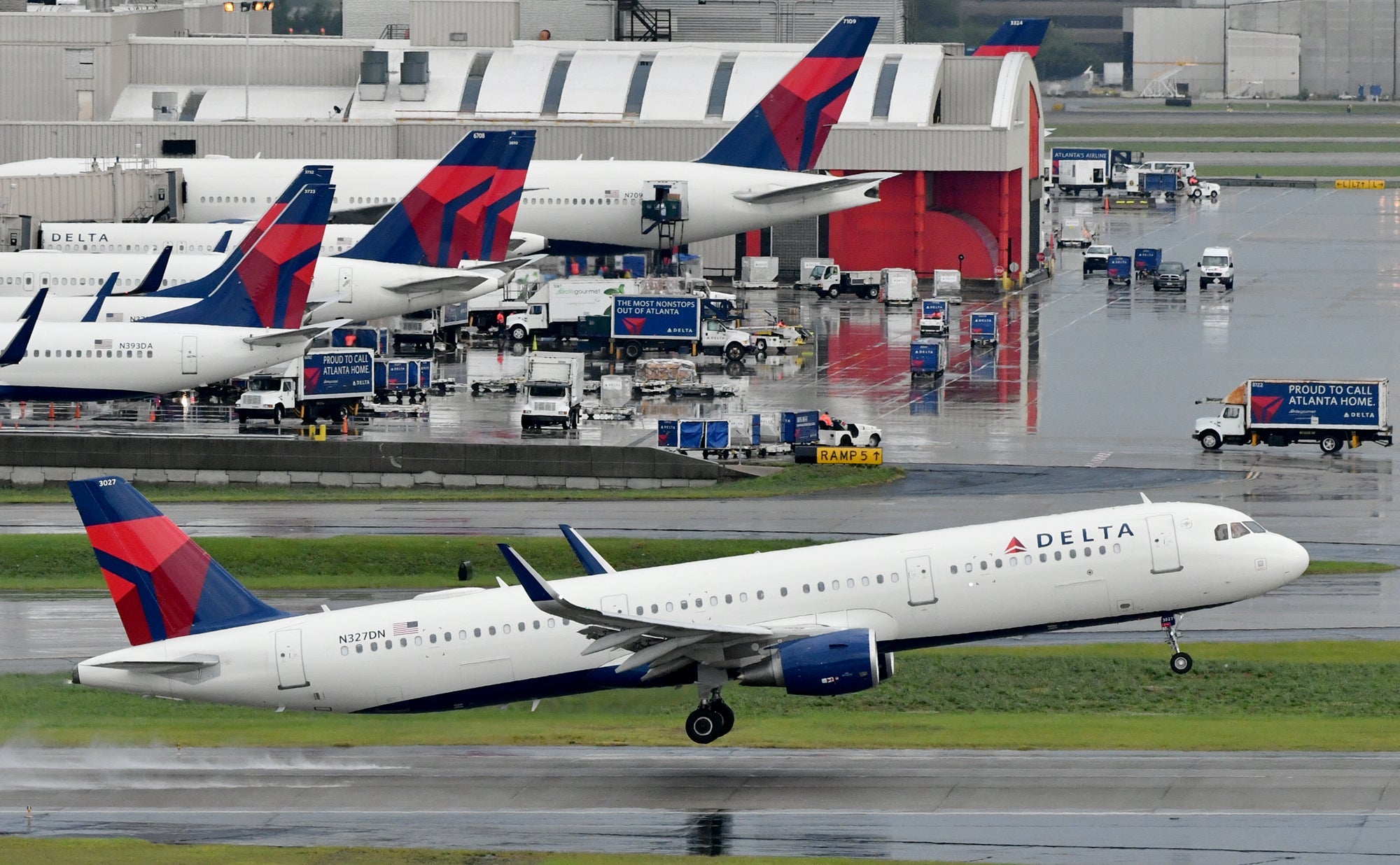
117 years after the Wright brothers' first flight, aviation is a part of daily life and comparatively a very safe mode of transportation. Airplanes take off, cruise and land without a hiccup in the most demanding conditions.
But how exactly planes fly is still mysterious to many—even after so much time has passed since that first flight.
"When a relatively thin, flat lifting surface such as a wing, a sailboat sail or a shark's fin moves through air or water, it can produce a force perpendicular to its direction of motion. This force is called lift, whether or not it is in an upward direction." So writes Dr. Doug McLean, a retired Boeing Technical Fellow, Princeton PhD and author of Understanding Aerodynamics, a book that helps distill the complex into "plane" English.
There are, in fact, various explanations for why flight happens.
I checked in with Dr. McLean and Dr. Snorri Gudmundsson, Professor of Aerospace Engineering at Embry-Riddle Aeronautical University. Gudmundsson was also the chief aerodynamicist at planemaker Cirrus Aircraft.
"Mathematical theories of lift have been agreed on by the experts since the early 20th century, but there has been a long history of disagreement on how to explain lift in simple physical terms, without math," McLean wrote. (If you're looking for the part with math, you can look to the Navier-Stokes equations, derived in the 1800s. They mathematically model the relations between pressure, velocity, temperature, and density of a moving fluid.)
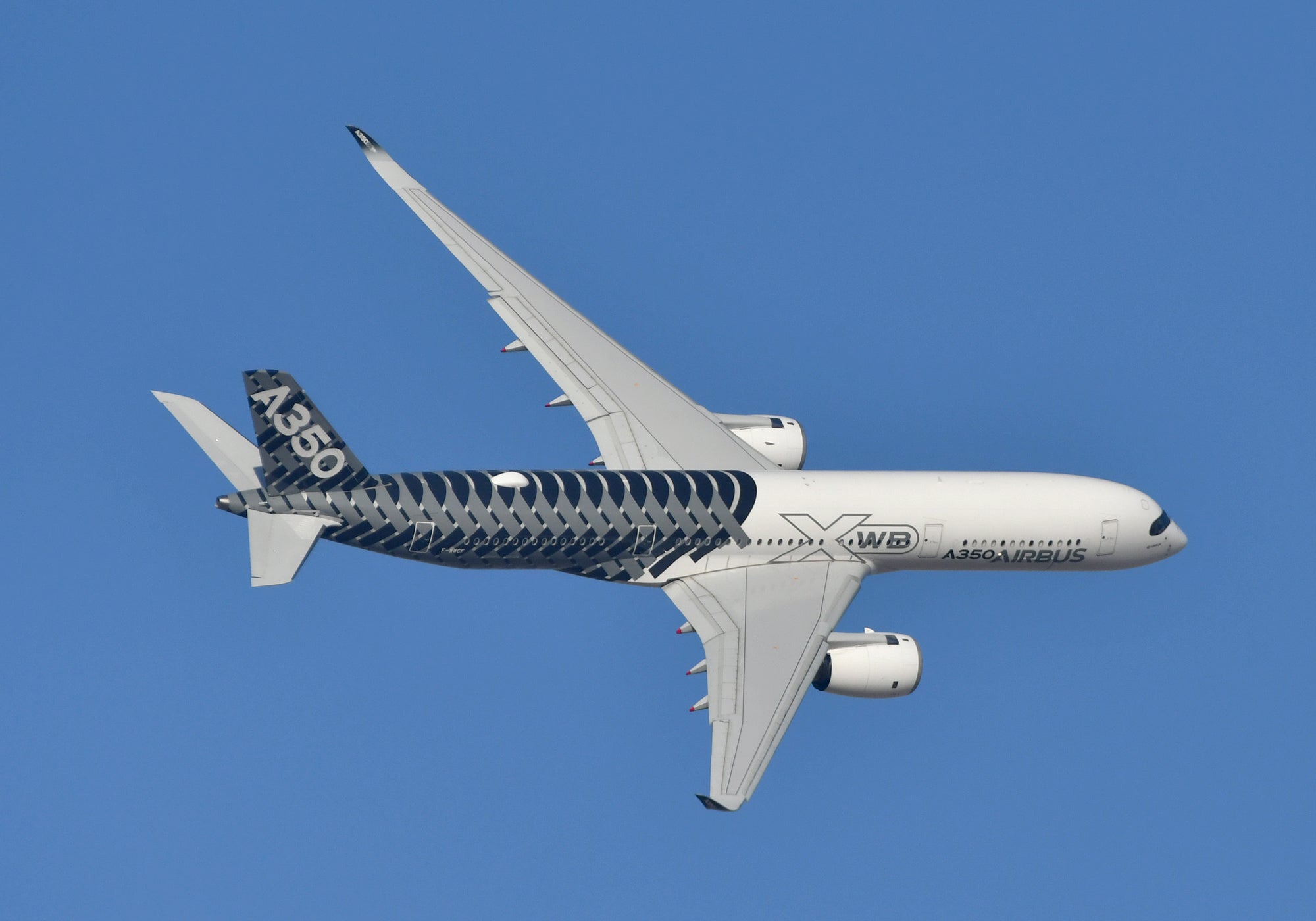
The explanation of lift cited most often involve Swiss mathematician Daniel Bernoulli's principles related to pressure. Another cites Sir Isaac Newton and his laws of physics. Dr. McLean writes that the truth lay in a combination of both explanations, and that they complement each other.
Take an airplane rolling down the runway, courtesy of its engines, with air rushing over and under the wings.
According to explanations that cite Bernoulli, the wing is shaped so that air moving over the top of it has a longer path to travel than air traveling across the bottom of the wing.

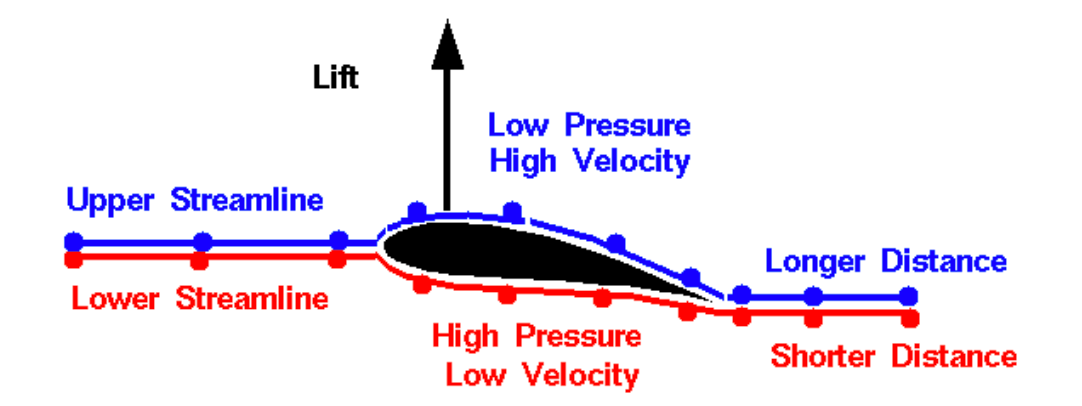
Bernoulli proved through experiments that when a fluid speeds up, its pressure drops. (This is fact — confirmed each semester, Gudmundsson says, by tens of thousands of engineering students worldwide.)
So the explanation goes, air flowing over the top of the wing moves faster than air below the wing in order to "catch up" at the trailing edge, and that increase in speed equates to a lowering of pressure. There is more pressure under the wing than on top of it, and presto, the wing lifts off — and so does the fuselage it's attached to.
The problem with this explanation is that the air doesn't have a mind of its own. There's no credible reason in fluid mechanics why the air on the top of the wing "must" meet up with air on the bottom of the wing, Gudmundsson explained. In fact, the air rushing over the top of the wing speeds up and exits from the trailing edge of the wing much faster than air passing below. And then there is the problem that planes can fly upside down, irrespective of their wing shape — and the fact that one side of the wing is longer than the other.
Nevertheless, engineers and scientists know there is a measurable difference in pressure above and below the wing — and for some portion of the air surrounding the wings but not actually in contact with the wings.
McLean explained that the difference in pressure and the speed of the air each feed off each other: "The pressure differences cause the flow to change speed and direction, and the changes in flow, speed and direction cause the pressure differences to be sustained." The faster the air moves, the lower the pressure. And the lower the pressure, the faster the air moves. This pressure differential spread across the huge area of the wing is enough to lift a giant plane off the ground.
"It's not a simple one-way cause-and-effect thing. Wing geometry, shape and angle of attack (the angle at which the wing meets the oncoming air) plays a crucial role in the whole phenomenon, but it's only one part of the web of cause-and-effect. The wing also has to be pushing on the air in the right way, and the air has to be flowing at a sufficient airspeed."
The Wings
Airplane wings are like a knife that cuts through the air at particular angles, an angle controlled first by airplane design and later by the pilots. "The wing is a giant piece of machinery that converts the momentum of air," Gudmundsson said. "Consider the air ahead of the wing. The wing comes slicing through that space and it imparts downward velocity on that air. It takes the momentum of the air from zero — at rest — and accelerates it downward at some finite value."
Gudmundsson emphasized that we are not flying around in a vacuum; we're surrounded by air, and that air has mass. It's heavy and dense, and can be measured. At sea level, the atmosphere is weighing down on us at 14.7 pounds per square inch. The air is a fluid, just like water — one is a gas and the other is a liquid.
The wing (and the angle at which the wing meets the air) pushes against the oncoming air, deflecting it downward. Indeed, the shape of the wing even deflects the flow of air on the top of the wing downward, off the trailing edge. Just like when you put your hand out the window, you're deflecting the air downward, and your hand moves up. And because of Newton's Third Law (for every action, there is an equal and opposite reaction) the wing, and the plane, move upward.
A more complete Truth
For his part, Gudmundsson provided an explanation that would make Newton proud. Follow along.
"Consider one kilogram of air at rest, in front of the wing, as the wing comes slicing through," Gudmundsson explains. "Let's say the wing gives the air, say, one meter per second of downward movement over the course of one second. This is one Newton of force, one meter per second squared, or about 2.21 pounds of force. It gave that mass acceleration, measured as one meter per second, per second."
And because the air is being forced downward, it has an opposite and equal reaction on the wing, pushing it upward. "If you think of a firearm, the bullet exits from the front at some rate, and it provides a recoil or a kick," Gudmundsson explains. "A wing is like that but it is a continuous recoil over the surface of the wing."
Brilliant.
McLean added a wrinkle to this explanation. The air that surrounds the wing — including the air in front of the wing — is not actually at rest. There is a pressure field that surrounds the wing — in front, behind, above and below it — and for some distance beyond the physical surface of the wing. The wing accelerates air both upwards and downwards by its pressure field. When the wing encounters air that's been accelerated upward by its pressure field, the wing imparts to it a downward kick that gives the air a downward velocity equal to the upward velocity it had before "on average at least," McLean says. "Ahead of the airfoil, regardless of how far ahead you look, there's an integrated flux of upward momentum corresponding to half the lift, and behind the airfoil, also regardless of distance, there's an integrated flux of downward momentum corresponding to the other half. The difference (change) is what was imparted by wing, and it corresponds to all of the lift."
When you consider the whole wingspan, then, the wing is moving thousands of pounds of air per second. According to McLean, "Even the heaviest of airplanes requires no more than about 150 pounds of lift per square foot of wing area." Unpacking that, the Airbus A380 has 9,100 square feet of wing, or 845 square meters. An A380 during cruise moves about 500,000 kilograms (about 1 million pounds) of air close to 12 meters per second (27 miles per hour) in downward speed every second, Gudmundsson said.
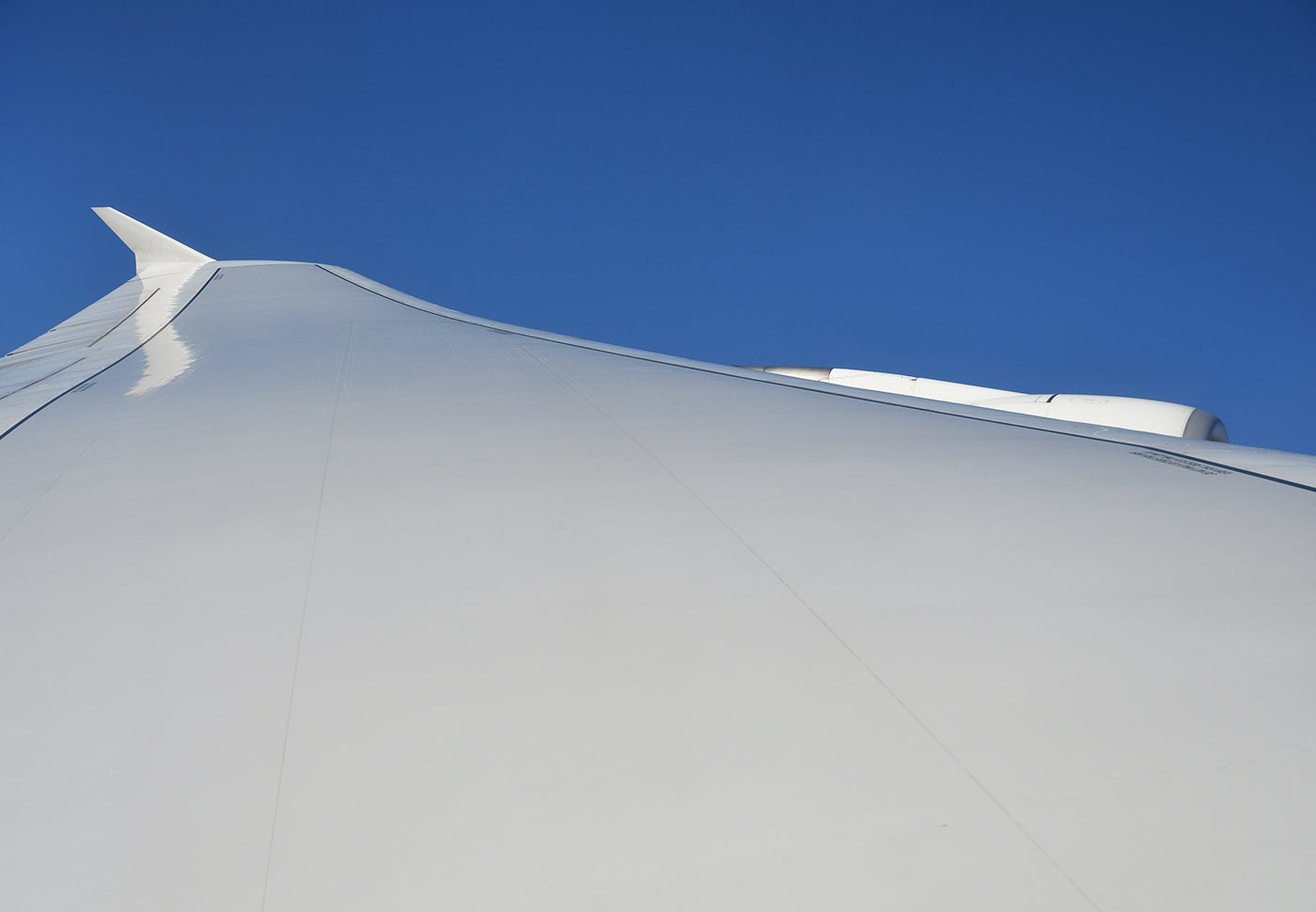
So, why is there any debate about how planes fly? (And there is plenty of it, online.)
"That there is a debate, it tells you a bit about human nature. Some see everything in black and white — either or," Gudmundsson said.
"There is no debate or mystery among engineers and scientists. The debate online is among people who think they know more about aerodynamics than they do!"
Mike Arnot is the founder of Boarding Pass NYC, a pilot and a marketing consultant to airlines, none of which appear in this article.
TPG featured card

at American Express's secure site
Terms & restrictions apply. See rates & fees.
| 4X | Earn 4X Membership Rewards® points per dollar spent on purchases at restaurants worldwide, on up to $50,000 in purchases per calendar year, then 1X points for the rest of the year. |
| 4X | Earn 4X Membership Rewards® points per dollar spent at US supermarkets, on up to $25,000 in purchases per calendar year, then 1X points for the rest of the year. |
| 5X | Earn 5X Membership Rewards® points on prepaid hotel stays booked through AmexTravel.com or the Amex Travel App™. |
| 3X | Earn 3X Membership Rewards® points on flights booked through AmexTravel.com, the Amex Travel App™, or purchased directly from airlines. |
| 2X | Earn 2X Membership Rewards® points on prepaid car rentals booked through AmexTravel.com or the Amex Travel App™ and cruises booked and paid through AmexTravel.com. |
| 1X | Earn 1X Membership Rewards® point per dollar spent on all other eligible purchases. |
Pros
- Valuable dining and food-related credits
- Flexible rewards with airline and hotel transfer partners
- Multiple travel and purchase protections
- No foreign transaction fees
- Access to Amex Offers for additional savings (enrollment required)
Cons
- Not as useful for those living outside the U.S.
- Some may have trouble using Uber and other dining credits
- You may be eligible for as high as 100,000 Membership Rewards® Points after you spend $8,000 in eligible purchases on your new Card in your first 6 months of Card Membership. Welcome offers vary and you may not be eligible for an offer. Apply to know if you’re approved and find out your exact welcome offer amount – all with no credit score impact. If you’re approved and choose to accept the Card, your score may be impacted.
- Earn 4X Membership Rewards® points per dollar spent on purchases at restaurants worldwide, on up to $50,000 in purchases per calendar year, then 1X points for the rest of the year.
- Earn 4X Membership Rewards® points per dollar spent at US supermarkets, on up to $25,000 in purchases per calendar year, then 1X points for the rest of the year.
- Earn 5X Membership Rewards® points on prepaid hotel stays booked through AmexTravel.com or the Amex Travel App™.
- Earn 3X Membership Rewards® points on flights booked through AmexTravel.com, the Amex Travel App™, or purchased directly from airlines.
- Earn 2X Membership Rewards® points on prepaid car rentals booked through AmexTravel.com or the Amex Travel App™ and cruises booked and paid through AmexTravel.com.
- Earn 1X Membership Rewards® point per dollar spent on all other eligible purchases.
- Pay It® lets you tap in the American Express® App to quickly pay for small purchase amounts throughout the month and still earn rewards the way you usually do. Plan It® gives you the option to split up big purchases into equal monthly payments with a fixed fee. You’ll know upfront exactly how much you’ll pay.
- $120 Dining Credit: Earn up to a total of $10 in statement credits monthly when you pay with the Gold Card at Grubhub (including Seamless), Buffalo Wild Wings, Five Guys, The Cheesecake Factory, and Wonder. This can be an annual savings of up to $120. Enrollment required.
- $100 Resy Credit: Get up to $100 in statement credits each calendar year at over 10,000 qualifying U.S. Resy restaurants after you pay for eligible purchases with the American Express® Gold Card. That’s up to $50 in statement credits semi-annually. Enrollment required.
- $84 Dunkin' Credit: Earn up to $7 in monthly statement credits after you pay with the American Express® Gold Card at U.S. Dunkin’ locations. Enrollment required.
- $120 Uber Cash on Gold: Enjoy up to $120 in Uber Cash annually with your Gold Card. Just add your Card to your Uber account and you'll get $10 in Uber Cash each month to use on orders and rides in the U.S. when you select an Amex Card for your transaction.
- Enjoy complimentary Hertz Five Star® Status benefits like skipping the counter at select locations, adding an additional driver at no additional cost*, and vehicle upgrades**. Benefit enrollment and Hertz Gold+ registration are required. *Additional drivers must meet standard rental qualifications and must be a spouse or domestic partner to qualify as complimentary. Other additional drivers subject to fees. **Benefits are subject to availability and vary by location. Additional Hertz program Terms and Conditions including age restrictions apply.
- Book two nights or more with The Hotel Collection through AmexTravel.com or the Amex Travel App™ and receive a $100* credit towards eligible charges at over 1,400 upscale hotels worldwide. *Eligible charges vary by property.
- Book your travel through the Amex Travel App™ with added peace of mind – backed by American Express® service and support. Only for American Express® Card Members.
- Whenever you need us, we're here. Our Member Services team will ensure you are taken care of. From lost Card replacement to statement questions, we are available to help 24/7.
- No Foreign Transaction Fees.
- Annual Fee is $325.
- Terms Apply.