Insider Series: Are US Aircraft Safely Maintained?
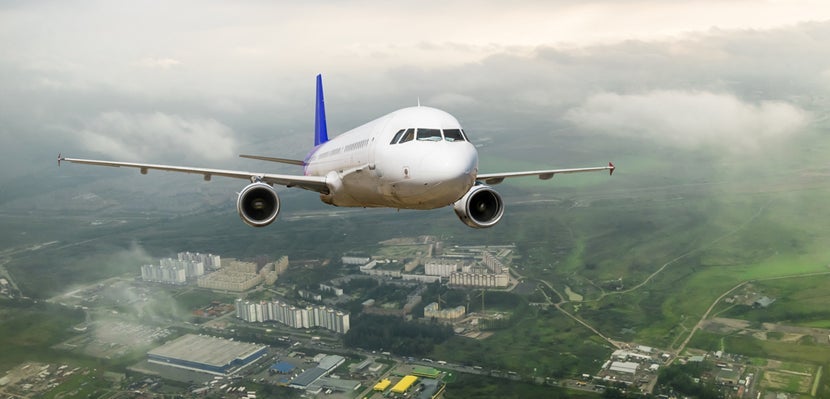
New to our Insider Series (where travel-industry professionals write about their work under pseudonyms), TPG Contributor "Marty McFly," a pilot for a major American airline, shares his thoughts on aircraft maintenance in the fleets of domestic carriers.
Of all the choice comments I overhear from passengers awaiting delayed flights, the ones that confuse me most are complaints about 1. the weather (airlines still haven't invented a "weather off" switch), and 2. aircraft maintenance. The latter is especially perplexing to me, as when I'm on board a jet — either as a passenger or working crew — I want to be in a fully functioning and safe machine. When a maintenance delay occurs, I'm thankful that not only was the issue found, but that the discrepancy is going to be repaired before we break the surly bonds of Earth.
In my entire career as a pilot, I've experienced only a handful of (very manageable) equipment malfunctions that ranged from a jammed flap to an engine failure, and in each case, my crew was well trained to handle the situation and the back-up systems worked as designed. However, a recent Vanity Fair article questioned the maintenance practices of a majority of the airline industry when it highlighted the outsourcing of heavy aircraft checks to foreign maintenance facilities. This practice is sadly one of the hangovers of the financial meltdown of the early 2000s that severely impacted the airline industry. During that era, many airlines used employee contract restructuring, both in and out of bankruptcy, to allow for more outsourcing of maintenance to subcontractors.
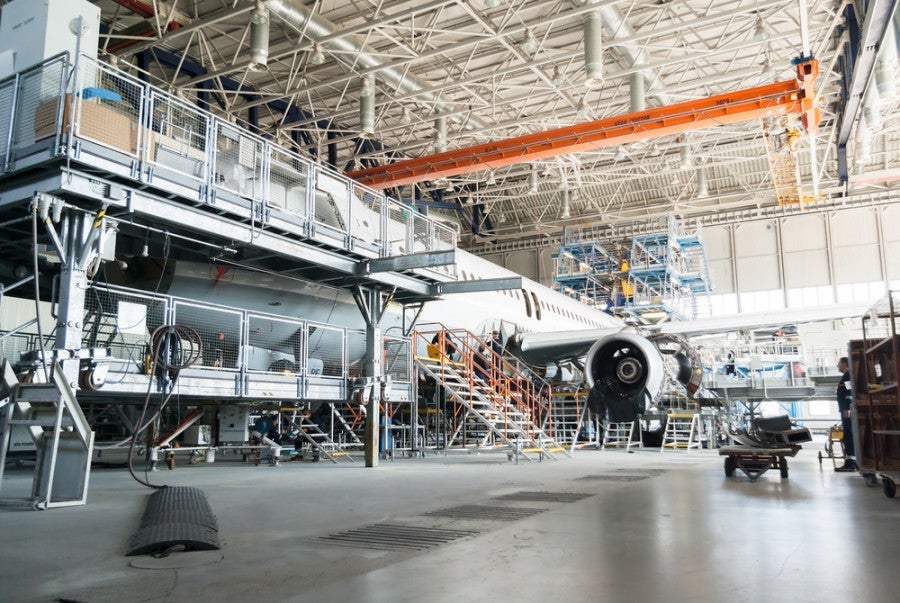
Many of these maintenance subcontractors are in Mexico, El Salvador and China, among other countries. I don't doubt the professionalism of the subcontractors employed in these foreign facilities, but I'd rather all of the maintenance be done in-house by employees of the airline — I simply have more trust in the mechanics who are part of an airline's family than I do in outsourced employees.
That said, subcontracted maintenance facilities are inspected by the United States FAA, their procedures are approved and certified by the aircraft manufacturer, and individual airlines will have representatives present to provide additional oversight. Additionally, pilots fly each aircraft that has undergone maintenance and test all its aircraft/backup systems before it's returned to service.
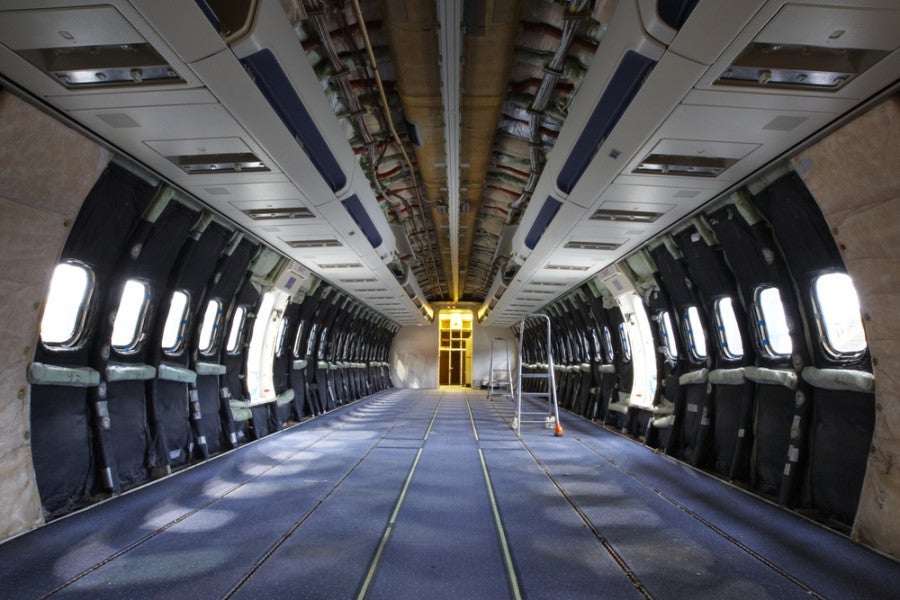
The bulk of the work performed at subcontracted maintenance facilities are Heavy Maintenance Visits (HMV), which are also called "heavy checks" or "D" checks. Done about once every six years, an HMV check is essentially a complete tear-down of the aircraft during which every aircraft system, flight control, tube, wire and cable is checked for functionality and continuity. These checks can take more than a month to complete and cost well over one million dollars.
Additionally, each airline has its own FAA-approved maintenance schedule that complies with the manufacturer's maintenance guidelines. While an airline may vary the timing of certain checks, airline maintenance facilities know that the following required checks must be done without exception:
"C" checks are performed every 20-24 months or after a manufacturer-designated number of flight hours. The primary focus of these checks, which take about two weeks to complete, is an aircraft's major control systems — hydraulic, electrical, pneumatic and emergency — to ensure they don't require repair or replacement.
"B" checks are done every three to six months or a predetermined number of cycles (take-offs and landings) or flight hours. These checks are less intensive and usually require visual inspection of flight systems and checks of systems quantities like oxygen, hydraulic fluid levels and other miscellaneous items. Some carriers don't do B checks but instead incorporate the required inspections as part of the A or D check.

"A" checks are done regularly and usually completed at least once a month. They're designed to test the functionality of an aircraft's brakes, hydraulics, electrical, emergency lighting and crew/passenger oxygen systems. These systems aren't torn down like in a D check, but are instead simply tested for airworthiness.
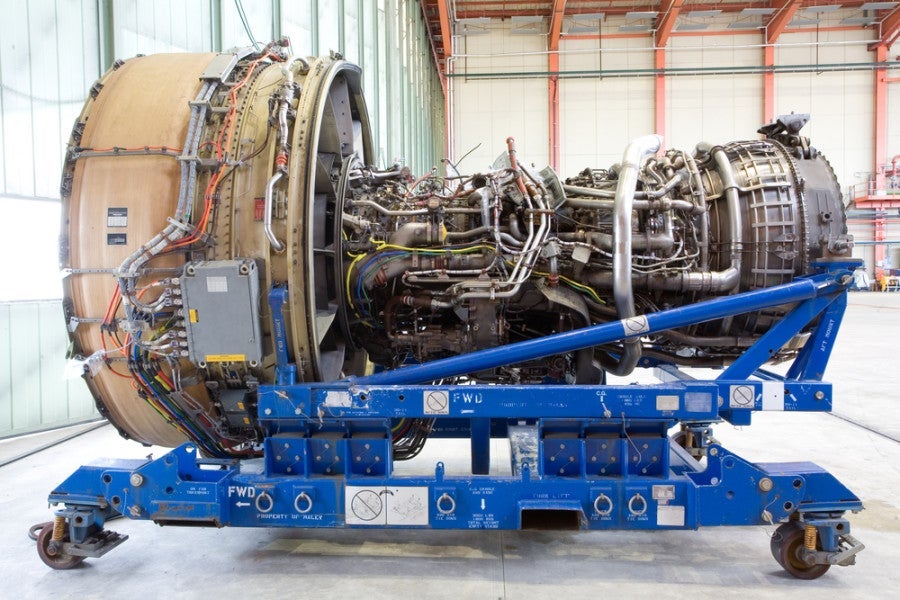
Aircraft engines are also on a rigorous inspection schedule that's often different from the aircraft as a whole, as engines are often swapped from one aircraft to another as they're found to need repair and replacement. In regards to every other part, system, etc., airlines and manufacturers are in constant communication in order to alert each other to frequent maintenance issues on specific aircraft types.
The one check that's done before every flight is the walk-around by maintenance and flight crews. The exterior is inspected for bird and lightning strikes, ramp damage, missing screws, tire pressures, tire-tread wear, as well as the general overall condition of the aircraft. The pilots also run a number of pre-flight tests of the aircraft systems in the cockpit before each flight.
Since any broken item on an aircraft — from tray tables to bathroom lights — essentially "breaks" the entire aircraft, the manufacturer creates a minimum equipment list that designates what permits the aircraft to safely operate with passengers on board. This list is certified by the FAA for each aircraft and includes the mundane (e.g., overhead reading lights) to the slightly more important (e.g., standby systems for larger aircraft). Individual airlines will often create their own minimum equipment lists, which may be more restrictive (but not more permissive) than the manufacturer list.
Ultimately, the decision to fly an aircraft with broken, disabled or missing items falls to the dispatcher and flight's captain and crew. For instance, an inoperative anti-skid braking system may be deferred for future maintenance, as the crew flying to an airport with long runways and good weather may be completely confident that they can safely operate that flight with an inoperative anti-skid system. However, a different crew may not accept the same aircraft because the runway they're flying to or weather they'll be operating in may not allow for the highest level of safety without that anti-skid system.

I often point out that the maintenance on an airplane is infinitely more thorough than the maintenance on your car, and most people don't think twice about driving at high speeds in any kind of weather and surrounded by people in cars who may or may not maintain their car. Personally, I feel a lot more comfortable in my jet — and I want to get home safely just as much as you do.
[card card-name='Chase Sapphire Preferred® Card' card-id='22125056' type='javascript' bullet-id='1']
TPG featured card
at American Express's secure site
Terms & restrictions apply. See rates & fees.
| 4X | Earn 4X Membership Rewards® points per dollar spent on purchases at restaurants worldwide, on up to $50,000 in purchases per calendar year, then 1X points for the rest of the year. |
| 4X | Earn 4X Membership Rewards® points per dollar spent at US supermarkets, on up to $25,000 in purchases per calendar year, then 1X points for the rest of the year. |
| 5X | Earn 5X Membership Rewards® points on prepaid hotel stays booked through AmexTravel.com or the Amex Travel App™. |
| 3X | Earn 3X Membership Rewards® points on flights booked through AmexTravel.com, the Amex Travel App™, or purchased directly from airlines. |
| 2X | Earn 2X Membership Rewards® points on prepaid car rentals booked through AmexTravel.com or the Amex Travel App™ and cruises booked and paid through AmexTravel.com. |
| 1X | Earn 1X Membership Rewards® point per dollar spent on all other eligible purchases. |
Pros
- Valuable dining and food-related credits
- Flexible rewards with airline and hotel transfer partners
- Multiple travel and purchase protections
- No foreign transaction fees
- Access to Amex Offers for additional savings (enrollment required)
Cons
- Not as useful for those living outside the U.S.
- Some may have trouble using Uber and other dining credits
- You may be eligible for as high as 100,000 Membership Rewards® Points after you spend $8,000 in eligible purchases on your new Card in your first 6 months of Card Membership. Welcome offers vary and you may not be eligible for an offer. Apply to know if you’re approved and find out your exact welcome offer amount – all with no credit score impact. If you’re approved and choose to accept the Card, your score may be impacted.
- Earn 4X Membership Rewards® points per dollar spent on purchases at restaurants worldwide, on up to $50,000 in purchases per calendar year, then 1X points for the rest of the year.
- Earn 4X Membership Rewards® points per dollar spent at US supermarkets, on up to $25,000 in purchases per calendar year, then 1X points for the rest of the year.
- Earn 5X Membership Rewards® points on prepaid hotel stays booked through AmexTravel.com or the Amex Travel App™.
- Earn 3X Membership Rewards® points on flights booked through AmexTravel.com, the Amex Travel App™, or purchased directly from airlines.
- Earn 2X Membership Rewards® points on prepaid car rentals booked through AmexTravel.com or the Amex Travel App™ and cruises booked and paid through AmexTravel.com.
- Earn 1X Membership Rewards® point per dollar spent on all other eligible purchases.
- Pay It® lets you tap in the American Express® App to quickly pay for small purchase amounts throughout the month and still earn rewards the way you usually do. Plan It® gives you the option to split up big purchases into equal monthly payments with a fixed fee. You’ll know upfront exactly how much you’ll pay.
- $120 Dining Credit: Earn up to a total of $10 in statement credits monthly when you pay with the Gold Card at Grubhub (including Seamless), Buffalo Wild Wings, Five Guys, The Cheesecake Factory, and Wonder. This can be an annual savings of up to $120. Enrollment required.
- $100 Resy Credit: Get up to $100 in statement credits each calendar year at over 10,000 qualifying U.S. Resy restaurants after you pay for eligible purchases with the American Express® Gold Card. That’s up to $50 in statement credits semi-annually. Enrollment required.
- $84 Dunkin' Credit: Earn up to $7 in monthly statement credits after you pay with the American Express® Gold Card at U.S. Dunkin’ locations. Enrollment required.
- $120 Uber Cash on Gold: Enjoy up to $120 in Uber Cash annually with your Gold Card. Just add your Card to your Uber account and you'll get $10 in Uber Cash each month to use on orders and rides in the U.S. when you select an Amex Card for your transaction.
- Enjoy complimentary Hertz Five Star® Status benefits like skipping the counter at select locations, adding an additional driver at no additional cost*, and vehicle upgrades**. Benefit enrollment and Hertz Gold+ registration are required. *Additional drivers must meet standard rental qualifications and must be a spouse or domestic partner to qualify as complimentary. Other additional drivers subject to fees. **Benefits are subject to availability and vary by location. Additional Hertz program Terms and Conditions including age restrictions apply.
- Book two nights or more with The Hotel Collection through AmexTravel.com or the Amex Travel App™ and receive a $100* credit towards eligible charges at over 1,400 upscale hotels worldwide. *Eligible charges vary by property.
- Book your travel through the Amex Travel App™ with added peace of mind – backed by American Express® service and support. Only for American Express® Card Members.
- Whenever you need us, we're here. Our Member Services team will ensure you are taken care of. From lost Card replacement to statement questions, we are available to help 24/7.
- No Foreign Transaction Fees.
- Annual Fee is $325.
- Terms Apply.