Insider Series: How Air Traffic Controllers Handle Emergencies
TPG Contributor "Vic Vector" is an air traffic controller at a major ATC facility in the United States. In this installment of our "Insider Series," he discusses emergency situations, how controllers handle them and how aviation safety is a group effort.
I recently talked about the potential for computers to replace human air traffic controllers and why that's simply not plausible given today's technology. The main reason it remains such a dubious concept is the inability of computers to adapt on the fly to abnormal situations, namely emergencies. Most air traffic scenarios are rather routine, but controllers earn their paychecks by being ready to respond at a moment's notice to a potential emergency, working in conjunction with pilots and first responders to ensure the safest outcome possible.
Emergencies can take many forms, though some are more common than others. Generally speaking, an emergency involves an aircraft in some sort of distress or condition of urgency. The source of that distress might be a mechanical issue, like if an engine fails or a pilot is having difficulty getting the aircraft's landing gear down. Additionally, meteorological conditions can force an aircraft into a distressed situation, such as an unexpected encounter with ice or when a pilot who's only certified to fly in visual conditions finds himself inadvertently in a cloud. Emergencies can also occur when the aircraft itself is fine but a passenger or crew member has experienced an unexpected medical complication, as occurred recently on an American Airlines flight from Phoenix to Boston. The captain lost consciousness in flight, the first officer declared an emergency and diverted the aircraft to the nearest airport — with assistance from ATC and his company dispatch, the aircraft was eventually brought to a safe landing. Unfortunately, once on the ground, the captain was pronounced dead.
Not all emergencies are as dramatic as they are portrayed in movies or on TV. I once had a C-130, a four-engine military cargo plane, report the loss of an engine. They declared an emergency and said their intentions were to continue to their destination, about 150 miles ahead, on their remaining three engines. There was no panic and no real change in the service I provided, except, of course, I cleared them on a more expeditious and direct route to minimize their remaining flight time. It's quite possible that some of the people on board weren't even aware of the situation — that's how much of a non-event it was.
There's an old aviation joke I've heard countless times about a B-52, a large military bomber with eight engines, declaring an emergency after losing one of them. Upon being told he'd have to discontinue his approach and clear the runway for the inbound emergency, the pilot of a single engine fighter jet remarked, "Ah yes, the dreaded seven engine approach."
That is to say, like many things in aviation, the official declaration of an emergency is oftentimes more of an official paperwork thing or a precautionary measure meant as a bit of CYA (cover your ass), as we call it. The odds are overwhelmingly likely that everything is going to end well regardless, but declaring an emergency just makes sure everyone is on the same page and has all the resources they need to effectively work toward the common goal.
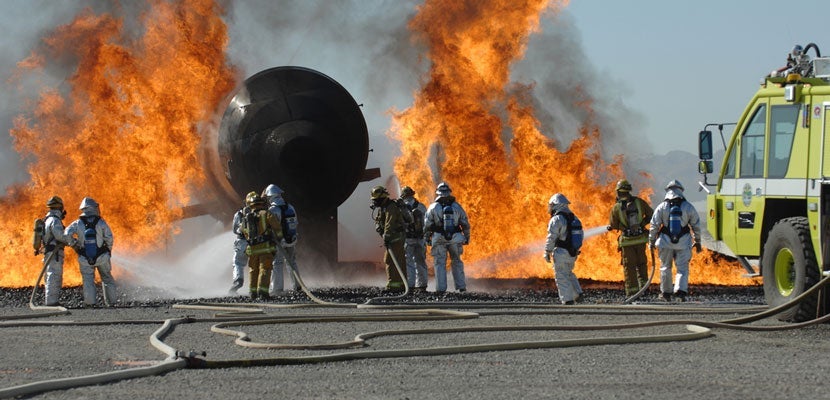
One of the primary jobs of an air traffic controller during an emergency is to forward pertinent information to the fire and rescue personnel who will likely be responding to an emergency landing. Information like the number of people on board and the amount of fuel the plane has remaining can allow them to be even better prepared to respond and ensure the rescue of those on board.
An emergency situation changes very little about how the pilots or air traffic controllers do their jobs in accordance with their training, but rather it simply allows the modifying of some otherwise basic rules or procedures if necessary to effect a safe outcome. For example, an aircraft in distress will be given a more preferential handling and go to the front of the line, so to speak, even it if it impedes other traffic flows or delays other aircraft. Without an official emergency declaration, that aircraft would have to take its place like everyone else, on a first come, first serve basis.

In fact, when it comes to declaring an emergency, it's not only the pilots who can make that determination. Airline dispatch personnel and air traffic controllers both have the authority to declare an emergency on behalf of a pilot or flight crew.

Why would we as controllers have to declare in lieu of the pilot? Though it's a point emphasized repeatedly in pilot training, some new or inexperienced pilots are hesitant to declare an emergency by thinking they might get in trouble or suffer some consequences after the fact. While that's not true, the stigma is still such that it prevents pilots from asking for the help they need in a situation that might be construed as a borderline emergency. Instead of trying to solicit the pilot to say the words themselves, we can simply declare an emergency for them, sometimes without even telling the pilot we've done it. That gives us the legal and procedural basis on which to provide services to an extent we might not be able to otherwise provide in a non-emergency situation. Again, it's a CYA thing that allows me, as the air traffic controller, a little more latitude in doing everything I can to ensure a safe outcome, and it's almost always worth the negligible amount of paperwork that must be completed after it's over.
Bottom Line
The fact that the US has both the busiest and the safest national airspace system in the entire world is not an accident. It takes thousands of professionals working together every day and training simultaneously to ensure their skills stay on point. Though emergency situations are indeed rare, the unpredictability with which they happen means it's important for all aviation safety professionals to be ready to react to one at a moment's notice. As a traveler, you can rest assured that those of us working behind the scenes are well-trained and well equipped to make sure you make to terra firma safely.
TPG featured card

at Capital One's secure site
Terms & restrictions apply. See rates & fees.
| 5X miles | Earn 5X miles on hotels, vacation rentals and rental cars booked through Capital One Travel |
| 2X miles | Earn unlimited 2X miles on every purchase, every day |
Pros
- Stellar welcome offer of 75,000 miles after spending $4,000 on purchases in the first three months from account opening. Plus, a $250 Capital One Travel credit to use in your first cardholder year upon account opening.
- You'll earn 2 miles per dollar on every purchase, which means you won't have to worry about memorizing bonus categories
- Rewards are versatile and can be redeemed for a statement credit or transferred to Capital One’s transfer partners
Cons
- Highest bonus-earning categories only on travel booked via Capital One Travel
- LIMITED-TIME OFFER: Enjoy $250 to use on Capital One Travel in your first cardholder year, plus earn 75,000 bonus miles once you spend $4,000 on purchases within the first 3 months from account opening - that’s equal to $1,000 in travel
- Earn unlimited 2X miles on every purchase, every day
- Earn 5X miles on hotels, vacation rentals and rental cars booked through Capital One Travel
- Miles won't expire for the life of the account and there's no limit to how many you can earn
- Receive up to a $120 credit for Global Entry or TSA PreCheck®
- Use your miles to get reimbursed for any travel purchase—or redeem by booking a trip through Capital One Travel
- Enjoy a $50 experience credit and other premium benefits with every hotel and vacation rental booked from the Lifestyle Collection
- Transfer your miles to your choice of 15+ travel loyalty programs
- Top rated mobile app