Start checking Uber and Lyft as soon as you land


Given how frequently I fly, I'm fortunate to live pretty close to my home airport. Normally, when I forgo parking fees and take a nine-minute Uber or Lyft ride to Raleigh-Durham International Airport (RDU), it costs between $14 and $16.
As most frequent ride-hailing customers know, though, the price you actually find when you plug in a ride is not always what you'd expect. This was particularly true in 2020 and 2021, when driver shortages fueled a combination of long waits and often unpredictable surge pricing.
After a flight earlier this year, I plugged my address into Uber as I walked toward ground transportation. I was surprised to find the cost at almost $40 for the brief ride. It was a similar story on the Lyft app.
I pondered going to get a taxi, but instead decided to just wait a bit and then check back; I accepted the fact that I'd probably be sitting around for a half hour in hopes of overpaying by $15 to $20, instead of by $25 or more.
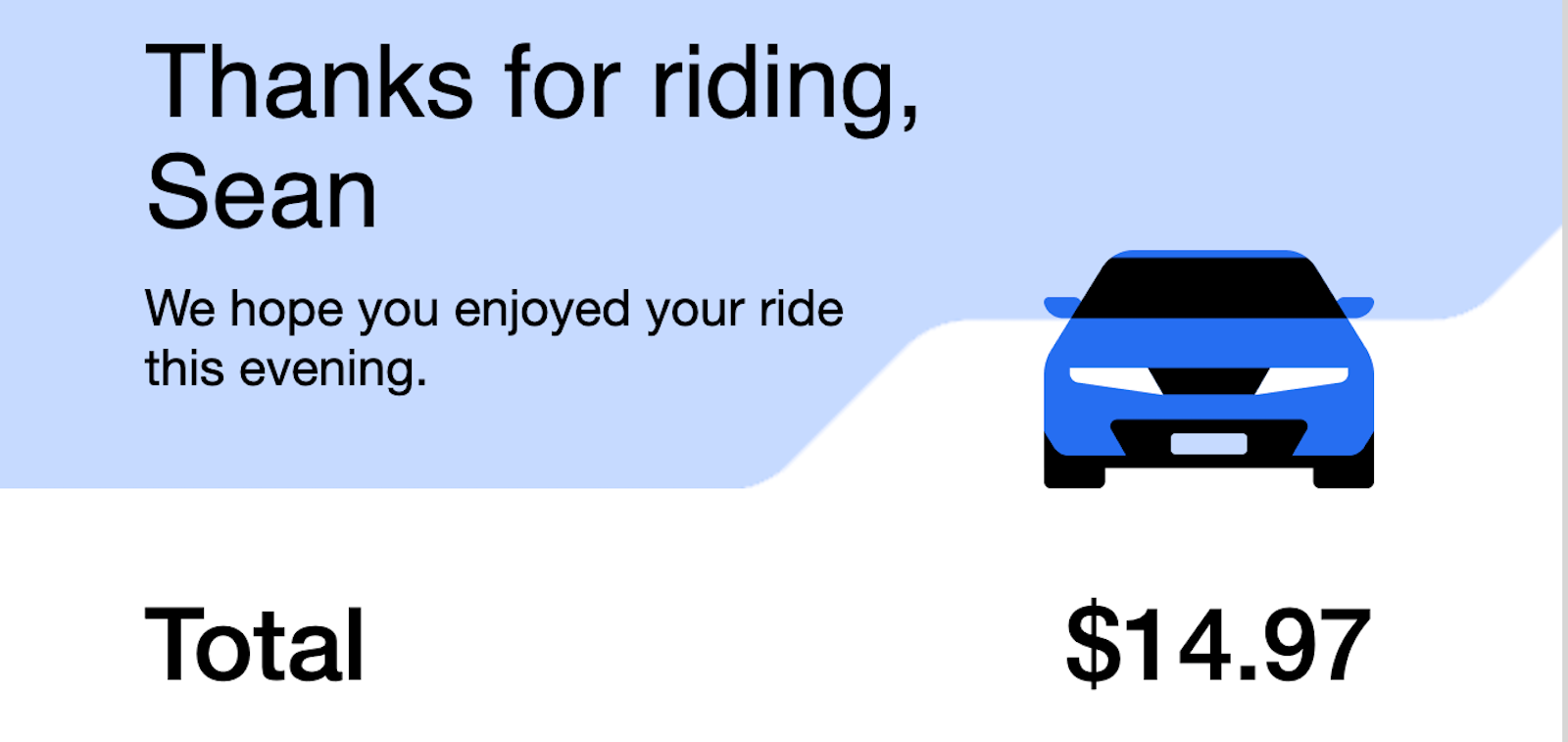
After just two or three minutes, though, I was pleasantly surprised that the fare didn't just drop by half ... it dropped right back to where I'd normally expect it. I paid a quite typical $14.97 for the ride home.
It's a reminder that the price you find when you plug a route into your ride-hailing app can largely be a snapshot in time. If you're hoping to save money, there are a few tactics you can try, whether you're landing at an airport or leaving a busy gathering.
Look early, check often
A variety of factors drive the price you'll pay for a ride through ride-hailing apps like Uber and Lyft. Namely, it's a supply-and-demand equation: If a lot of people are looking for rides and a relatively small number of drivers are available, there's a good chance you'll pay more.
It's the reason you can end up paying a lot more than normal when trying to get a ride after a concert, sporting event or at an airport after a bunch of flights just landed.
As I learned earlier this year, the price can change dramatically from one moment to the next, so one of the best things you can do is monitor the situation as closely as possible.

This means checking your Uber or Lyft app as soon as you land, potentially while you're still in your seat on the plane.
If it's going to be a 25-minute wait for a ride, this may be a good time to go ahead and book your ride (or at least once you're off the plane).
Checking early can both give you a good sense of how long you might be waiting for a ride — and thus when you might want to book it — and what the prices are.
If the fare is higher than you're expecting, you may want to take your time heading to the airport exit, refreshing the app to see if the prices start trending downward again. If you find a great fare, it may be a good time to hustle to the pickup area so you can lock the good price in before it spikes.
Of course, if you book your ride early, it's important to be sure you have enough time to actually make it to the rideshare pickup area before your ride arrives, or else you could face cancellation fees. So be sure to consider factors like how long it will take you to walk to the pickup area, and whether you checked luggage before locking in a ride.

Consider other Uber, Lyft app functions
If you don't think fares on Uber or Lyft are going to come down or if you're waiting and not having any luck, you may want to consider one of the other functions the apps offer.
In addition to sharing and splitting a ride with a stranger — a more feasible option now than it was during the height of the pandemic — there are also ways to essentially de-prioritize yourself in the queue in favor of a better fare.
Namely, Lyft has a "wait and save" function where you can delay your pickup a bit but enjoy a discount on your ride. This could be an especially useful option when you're still far away from the pickup area.
There are also ways to book a ride in advance, locking in your price ahead of time. For instance, Uber Reserve is available for typical rides as well as for pickups from dozens of airports nationwide; you can schedule it up to 30 days ahead of time, and your driver will be alerted of your flight status. Be sure to check and see if the price is right before booking this way.
Bottom line
Even though more drivers have joined Uber and Lyft in recent months, there are still times when you'll find fares far higher than you'd like when trying to get a ride from an airport. By beginning your ride-searching process as soon as you land — and checking back often — or using the alternative ride options the apps offer, you may be able to ward off unpleasant wait times and prices.
Read more:
TPG featured card
at American Express's secure site
Terms & restrictions apply. See rates & fees.
| 4X | Earn 4X Membership Rewards® points per dollar spent on purchases at restaurants worldwide, on up to $50,000 in purchases per calendar year, then 1X points for the rest of the year. |
| 4X | Earn 4X Membership Rewards® points per dollar spent at US supermarkets, on up to $25,000 in purchases per calendar year, then 1X points for the rest of the year. |
| 5X | Earn 5X Membership Rewards® points on prepaid hotel stays booked through AmexTravel.com or the Amex Travel App™. |
| 3X | Earn 3X Membership Rewards® points on flights booked through AmexTravel.com, the Amex Travel App™, or purchased directly from airlines. |
| 2X | Earn 2X Membership Rewards® points on prepaid car rentals booked through AmexTravel.com or the Amex Travel App™ and cruises booked and paid through AmexTravel.com. |
| 1X | Earn 1X Membership Rewards® point per dollar spent on all other eligible purchases. |
Pros
- Valuable dining and food-related credits
- Flexible rewards with airline and hotel transfer partners
- Multiple travel and purchase protections
- No foreign transaction fees
- Access to Amex Offers for additional savings (enrollment required)
Cons
- Not as useful for those living outside the U.S.
- Some may have trouble using Uber and other dining credits
- You may be eligible for as high as 100,000 Membership Rewards® Points after you spend $8,000 in eligible purchases on your new Card in your first 6 months of Card Membership. Welcome offers vary and you may not be eligible for an offer. Apply to know if you’re approved and find out your exact welcome offer amount – all with no credit score impact. If you’re approved and choose to accept the Card, your score may be impacted.
- Earn 4X Membership Rewards® points per dollar spent on purchases at restaurants worldwide, on up to $50,000 in purchases per calendar year, then 1X points for the rest of the year.
- Earn 4X Membership Rewards® points per dollar spent at US supermarkets, on up to $25,000 in purchases per calendar year, then 1X points for the rest of the year.
- Earn 5X Membership Rewards® points on prepaid hotel stays booked through AmexTravel.com or the Amex Travel App™.
- Earn 3X Membership Rewards® points on flights booked through AmexTravel.com, the Amex Travel App™, or purchased directly from airlines.
- Earn 2X Membership Rewards® points on prepaid car rentals booked through AmexTravel.com or the Amex Travel App™ and cruises booked and paid through AmexTravel.com.
- Earn 1X Membership Rewards® point per dollar spent on all other eligible purchases.
- Pay It® lets you tap in the American Express® App to quickly pay for small purchase amounts throughout the month and still earn rewards the way you usually do. Plan It® gives you the option to split up big purchases into equal monthly payments with a fixed fee. You’ll know upfront exactly how much you’ll pay.
- $120 Dining Credit: Earn up to a total of $10 in statement credits monthly when you pay with the Gold Card at Grubhub (including Seamless), Buffalo Wild Wings, Five Guys, The Cheesecake Factory, and Wonder. This can be an annual savings of up to $120. Enrollment required.
- $100 Resy Credit: Get up to $100 in statement credits each calendar year at over 10,000 qualifying U.S. Resy restaurants after you pay for eligible purchases with the American Express® Gold Card. That’s up to $50 in statement credits semi-annually. Enrollment required.
- $84 Dunkin' Credit: Earn up to $7 in monthly statement credits after you pay with the American Express® Gold Card at U.S. Dunkin’ locations. Enrollment required.
- $120 Uber Cash on Gold: Enjoy up to $120 in Uber Cash annually with your Gold Card. Just add your Card to your Uber account and you'll get $10 in Uber Cash each month to use on orders and rides in the U.S. when you select an Amex Card for your transaction.
- Enjoy complimentary Hertz Five Star® Status benefits like skipping the counter at select locations, adding an additional driver at no additional cost*, and vehicle upgrades**. Benefit enrollment and Hertz Gold+ registration are required. *Additional drivers must meet standard rental qualifications and must be a spouse or domestic partner to qualify as complimentary. Other additional drivers subject to fees. **Benefits are subject to availability and vary by location. Additional Hertz program Terms and Conditions including age restrictions apply.
- Book two nights or more with The Hotel Collection through AmexTravel.com or the Amex Travel App™ and receive a $100* credit towards eligible charges at over 1,400 upscale hotels worldwide. *Eligible charges vary by property.
- Book your travel through the Amex Travel App™ with added peace of mind – backed by American Express® service and support. Only for American Express® Card Members.
- Whenever you need us, we're here. Our Member Services team will ensure you are taken care of. From lost Card replacement to statement questions, we are available to help 24/7.
- No Foreign Transaction Fees.
- Annual Fee is $325.
- Terms Apply.