Sure, you can travel internationally right now -- But here are 7 reasons you might not want to


There's a certain type of excitement and wonder that only an international trip can bring.
When you have your passport and boarding pass in hand and are walking through that international terminal about to cross an ocean, it feels like anything is possible. Like countless other frequent travelers, I've had a number of exciting international trips canceled due to the pandemic -- and the way things are going, I'm betting my personal cancelation list will only grow.
After a recent international trip, I'm just not sure that the stress and hassle are worth it right now -- at least for those who have to plan for a whole family or group and who have little flexibility if, or rather when, things go wrong.
Here are some things to keep in mind before you decide now is the time for you to spread your wings and get that next passport stamp.
Things keep changing
Perhaps the hardest part of international travel right now is how quickly and dramatically the rules of the game can change.
Within the last couple of weeks, we've seen multiple countries in Europe either add a vaccination requirement in order to visit from the U.S., or in some cases, close borders altogether to U.S. tourism regardless of vaccination status.
You can't book an international trip and just assume the rules will stay the same as when you book since, depending on where you plan to go, the rules might change frequently and in major ways that impact whether you can even visit at all.
If you don't want a side of uncertainty to go along with your international reservations, just continue focusing on domestic trips for now to reduce those risks. Or, if you do want to go international, target a destination that has had stable rules for a long time now. An obvious example of this is Mexico, which doesn't have testing or vaccination requirements. That could theoretically change in the future, but it's had more stable entry rules than Europe, for example.
Related: What it's like traveling to Cancun right now

Tightening testing timelines
If a level of uncertainty around changing entry requirements is okay with you, then the next challenge for international travel is ensuring you have access to rapid COVID-19 testing.
The timelines for travel-related COVID tests are shrinking. Where you once had five days to test and get a result before travel, you may now only have three days. And where you had a three-day testing window, such as with some cruise lines, you may soon only have two days.
And in some cases, that timeline is shorter than it sounds.
With Turks and Caicos, you theoretically have a three-day window before arrival for a lab-based negative COVID-19 test, but you don't really have that long as you can't apply for entry until you have that negative result in hand. Effectively, that shrinks your useable window to about 36 hours.

In major cities, such as NYC and San Francisco, same-day or guaranteed 24-hour COVID-19 test results may be commonplace, but in more rural locations, or where there are surges of cases, appointments can be scarce and it can easily take 48 hours or longer for many lab-based results to come back. And even if you can find somewhere to do your quick turnaround testing, if you need rapid PCR level results for travel, it can cost $150 to $300+ per person.
For a family, that can add a sizeable expense to a vacation, assuming quick enough testing even exists in your area.
Proof of vaccination required
If you are old enough to be vaccinated and haven't yet done so, your list of international travel destination options is small -- and shrinking. Where you could once be vaccinated or take a COVID-19 test, you might now need to both be vaccinated and present a negative test.
But assuming you are fully vaccinated, the way you prove it for international travel is evolving.
As of right now, your paper CDC card is still usually sufficient for travel-related documentation, but the seeds of change have been planted. Turks and Caicos had announced that as of Sept. 1, paper documentation of vaccination was not sufficient and digital proof (such as a QR code) would be required. That has been walked back, for now, but from Hawaii to Europe and beyond, digital vaccine passports are gaining traction as a potentially more secure and time-saving way to demonstrate your vaccine status.
Some nationwide pharmacies, such as Walmart, have a pretty simple way to obtain digital vaccination proof via a QR code, so that's something to consider when deciding where to get vaccinated if you haven't yet and want to be able to easily prove it for travel.
You might need to buy travel insurance
You may have never bought travel insurance or have always relied on the protections afforded by booking airfare with one of your rewards credit cards. Unfortunately, if you are considering international travel right now, your old ways may not fly.
Some countries, such as the Bahamas, include the cost of COVID-related travel insurance in the visitor application fee, while other countries, such as St. Martin and Turks and Caicos, require documentation of a purchased plan. The cost for these plans obviously varies, but I recently paid $125 per person for one that had the required COVID-19 coverages to visit Turks and Caicos.
While it's great to have the protection, this is an additional cost you need to factor into the overall equation.
There's a risk of quarantine
There's a risk of quarantine whether you are at home or abroad.
Of course, it's always much better to know you are positive than not. But if you find out you are positive while away from home, it's going to be a problem. You're probably going to have to test before your international trip, you may need to test upon arrival or after a certain number of days on the ground and you're for sure going to have to test within three days of returning to the U.S. That's a whole lot of chances to test positive and need to quarantine where you are for at least 10 to 14 days.
Like with much of the challenges with international travel, that's likely less of a problem if you are a solo traveler or perhaps with one other adult and you can remote work from wherever you get stuck. It would be inconvenient, expensive and nerve-wracking to test positive for COVID-19 in another country, but assuming you are fortunate enough to have a mild case, and the means to find a comfortable place to stay, passing the days in quarantine by working on your laptop, ordering delivery and watching TV might be doable.
That reality with young kids is another ballgame.
Not only do the odds of someone testing positive along the way go up with more people in your traveling group, but the challenges of quarantining in something like a hotel room with a whole family are exponentially greater than with just yourself or one other adult.
Related: How a 3 day trip to the Bahamas turned into a 15-day quarantine
Country-specific approvals can be tough
A growing list of countries, such as Anguilla, Bahamas, St. Kitts and Nevis, French Polynesia and many others, require you to not only have all of the required documents but also to register and obtain approval to travel before you go.
This sounds easy enough, but it can be quite stressful as you are at the accepting country's mercy when it comes to processing your approval and approving it in time for your flight.
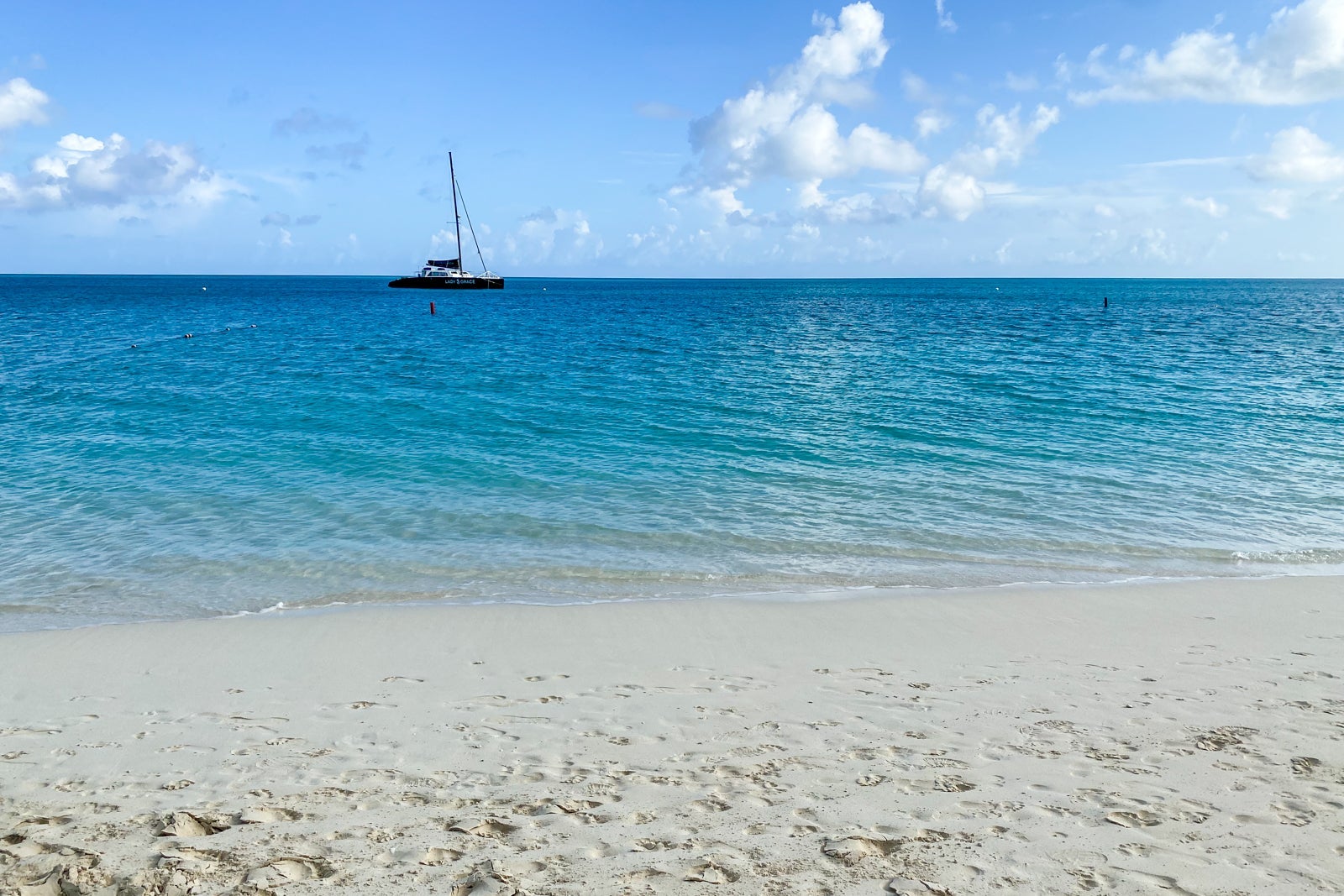
For our recent trip to Turks and Caicos, approval came less than an hour before we had to leave for the airport. We heard stories of others who didn't get approval until 15 minutes before their flights. And if the approval doesn't come in time, you may be out of luck as your COVID-19 test timeframe may also expire, setting you back to the starting line.
What will be open when you get there can change
Just as entry rules change, so do the rules around what you can -- and can't -- do when you get where you want to go.
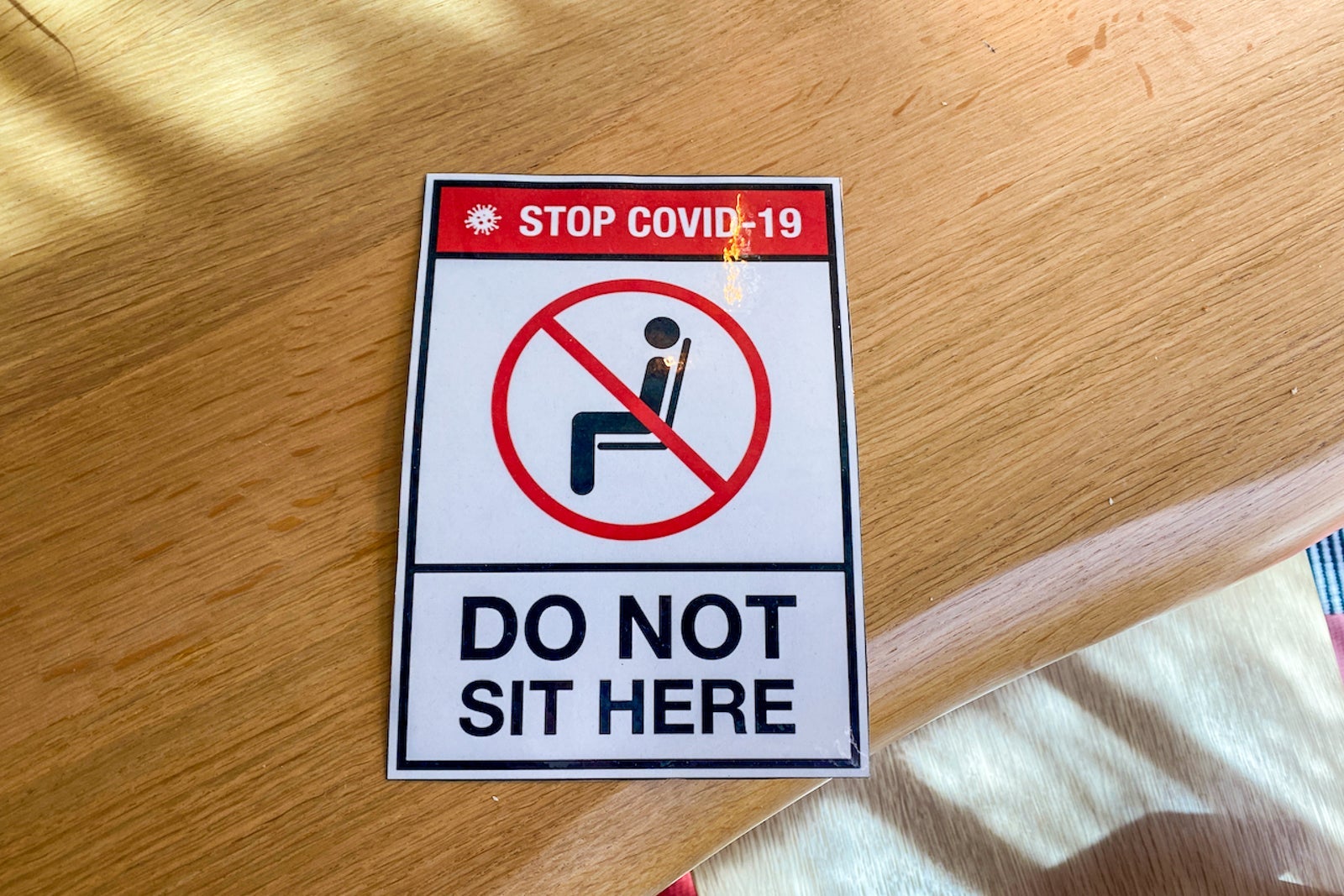
Mask requirements, curfews, nightlife, restaurant occupancy, activity and tour limits and more are actively ebbing and flowing in locations as they experience surges of COVID-19 cases.
And while this mostly relates to indoor activities, just recently, Hawaii even discussed whether to close beaches down once again as the islands are battling a surge of cases. You need to keep an eye not only on entry requirements but also on your destination's activities if you are planning, or counting down to, an international trip.
Bottom line
With passports, visas, currency exchanges, roaming charges, language challenges and more, international travel was always more complicated than most domestic jaunts.
While there's no denying the rush of endorphins when exploring somewhere foreign and new-to-you, the current-day realities of layering changing COVID-19 requirements onto international travel can vary from stressful to almost impossible.
I've been to Mexico and Turks and Caicos in the last few months, and very tentatively have Europe and Canada booked a bit further out. But while our time on the ground in Turks and Caicos was fantastic -- the process of getting approved was expensive, stressful and so down to the wire, I didn't think it was going to happen.
Having a backup trip at least penciled in your mind is wise in case something doesn't work out may be prudent, especially if this is your one shot at getting approved days off from work, you've flown in help with your kids or have some other complexities that make it especially challenging to just "try again next time.'
If you are okay with last-minute changes and are able to meet the quick testing turnaround and other common requirements for international travel, it can be very exciting to have such a dramatic change of scenery. But if you need certainty with your travel plans and aren't 100% sure whether you will be able to test in time or keep up with the ever-changing rules, it might be less stressful to target a closer-to-home destination for now.
It's a different vacation than an international getaway, but national parks, U.S. cities with an international feel, Alaska or even a return to NYC to take in a reopening Broadway show can be a good stepping stone for a return to more far-flung adventures with fewer hassles and a touch less uncertainty.
TPG featured card

at Capital One's secure site
Terms & restrictions apply. See rates & fees.
| 5X miles | Earn 5X miles on hotels, vacation rentals and rental cars booked through Capital One Travel |
| 2X miles | Earn unlimited 2X miles on every purchase, every day |
Pros
- Stellar welcome offer of 75,000 miles after spending $4,000 on purchases in the first three months from account opening. Plus, a $250 Capital One Travel credit to use in your first cardholder year upon account opening.
- You'll earn 2 miles per dollar on every purchase, which means you won't have to worry about memorizing bonus categories
- Rewards are versatile and can be redeemed for a statement credit or transferred to Capital One’s transfer partners
Cons
- Highest bonus-earning categories only on travel booked via Capital One Travel
- LIMITED-TIME OFFER: Enjoy $250 to use on Capital One Travel in your first cardholder year, plus earn 75,000 bonus miles once you spend $4,000 on purchases within the first 3 months from account opening - that’s equal to $1,000 in travel
- Earn unlimited 2X miles on every purchase, every day
- Earn 5X miles on hotels, vacation rentals and rental cars booked through Capital One Travel
- Miles won't expire for the life of the account and there's no limit to how many you can earn
- Receive up to a $120 credit for Global Entry or TSA PreCheck®
- Use your miles to get reimbursed for any travel purchase—or redeem by booking a trip through Capital One Travel
- Enjoy a $50 experience credit and other premium benefits with every hotel and vacation rental booked from the Lifestyle Collection
- Transfer your miles to your choice of 15+ travel loyalty programs
- Top rated mobile app