United Airlines CEO says flying is safe, even without social distancing onboard

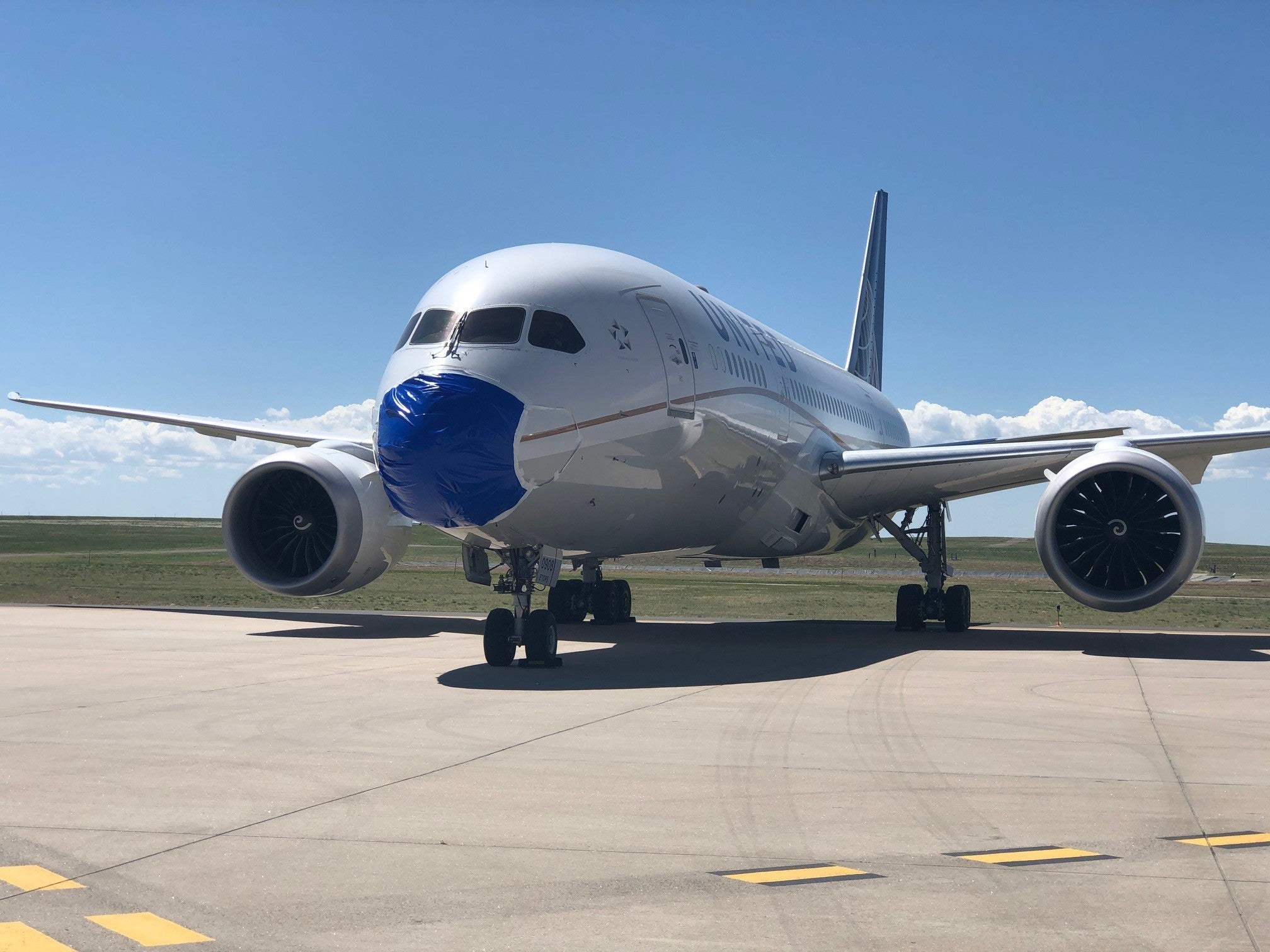
United Airlines CEO Scott Kirby is standing by the carrier's decision not to block middle seats on its flights, arguing that safety from the coronavirus comes from other measures but not physical distance onboard.
Kirby, who stepped into the top job at the Chicago-based carrier a little over a week ago, insisted at the Bernstein Strategic Decisions conference on May 28 that it is safe to fly on United's aircraft even as concerns of COVID-19 remain. The airline's cleaning regime, requirement that all passengers and crews wear masks, and air circulation through high-efficiency particulate air, or HEPA, filters keep travelers safe.
"Airplanes don't have social distancing -- we're not going to be six feet apart," he said. "But an airplane environment is incredibly safe."
Get Coronavirus travel updates. Stay on top of industry impacts, flight cancellations, and more.
More and more travelers are noticing fuller planes as people gradually return to the skies in the United States. On average, domestic flights had 46 passengers onboard during the week ending May 26, according to trade group Airlines for America (A4A). That's up dramatically from fewer than 10 people onboard at the end of March.
But while the improvement shows more people are flying on the few flights still operating, it has also created some uncomfortable situations for passengers unsure about safety onboard. People have tweeted images of full cabins with questions about airlines' social distancing policies.
Alaska Airlines, Delta Air Lines and JetBlue Airways are blocking most middle seats and Southwest has capped sales below capacity. Other carriers are blocking them from sale or selection at booking, but the seats can still be assigned at check in or by a gate agent. And all of the policies sunset by the end of June.
Related: Which US airlines are blocking middle seats, requiring masks?
Kirby is correct that it's difficult to social distance from others onboard an aircraft. The typical economy seat is just 17 inches wide, or less than a quarter of the 6 feet of distance recommended by the Centers for Disease Control and Prevention. In addition, the distance from a seat back to the front of the next seat -- or "pitch" -- is only around 30 inches in economy on non-low cost carriers.

"You can't be six feet apart on an airplane, middle seat or not," said Kirby.
United will allow travelers who are uncomfortable sitting next to someone else to move to another flight.
Related: A complete list of major carriers' coronavirus change and cancellation policies
Bankruptcy was another question that Kirby laid to rest at the Bernstein conference. While few have suggested that United could file for Chapter 11, he put the kibosh on any thought of the idea.
"To me it's like the dumbest question possible -- we are not going to like file for bankruptcy," said Kirby. "It would be the absolute last thing we'd do… That is not even remotely in the plans for United Airlines."
American Airlines CEO Doug Parker has made similar comments, arguing that he views bankruptcy as failure and not a financial tool.
"I think we're all going to be fine," said Parker at the Bernstein conference on May 27. "I don't think you're going to see any airlines go by the wayside."
Related: United Airlines may change route map post-coronavirus, says no hub is 'sacred'
Cash is critical to airlines' surviving the coronavirus crisis. Those who have filed for bankruptcy or their local equivalent, including United partner Avianca as well as Virgin Australia, have cited the near disappearance of all revenues as people stopped traveling and country's restricted their borders for their restructurings.
Raymond James analysts estimated that the big three U.S. carriers -- American, Delta and United -- respectively have seven months, nearly 13 months and 10 months, of cash on hand in a May 25 report.
"We are going to survive the crisis, and emerge stronger on the other side," said Kirby.
Related: United considers retiring Boeing 757s and 767s, many of its 50-seat jets
TPG featured card

at Capital One's secure site
Terms & restrictions apply. See rates & fees.
| 5X miles | Earn 5X miles on hotels, vacation rentals and rental cars booked through Capital One Travel |
| 2X miles | Earn unlimited 2X miles on every purchase, every day |
Pros
- Stellar welcome offer of 75,000 miles after spending $4,000 on purchases in the first three months from account opening. Plus, a $250 Capital One Travel credit to use in your first cardholder year upon account opening.
- You'll earn 2 miles per dollar on every purchase, which means you won't have to worry about memorizing bonus categories
- Rewards are versatile and can be redeemed for a statement credit or transferred to Capital One’s transfer partners
Cons
- Highest bonus-earning categories only on travel booked via Capital One Travel
- LIMITED-TIME OFFER: Enjoy $250 to use on Capital One Travel in your first cardholder year, plus earn 75,000 bonus miles once you spend $4,000 on purchases within the first 3 months from account opening - that’s equal to $1,000 in travel
- Earn unlimited 2X miles on every purchase, every day
- Earn 5X miles on hotels, vacation rentals and rental cars booked through Capital One Travel
- Miles won't expire for the life of the account and there's no limit to how many you can earn
- Receive up to a $120 credit for Global Entry or TSA PreCheck®
- Use your miles to get reimbursed for any travel purchase—or redeem by booking a trip through Capital One Travel
- Enjoy a $50 experience credit and other premium benefits with every hotel and vacation rental booked from the Lifestyle Collection
- Transfer your miles to your choice of 15+ travel loyalty programs
- Top rated mobile app