'Good riddance to 2020': United says recovery is coming, but not soon
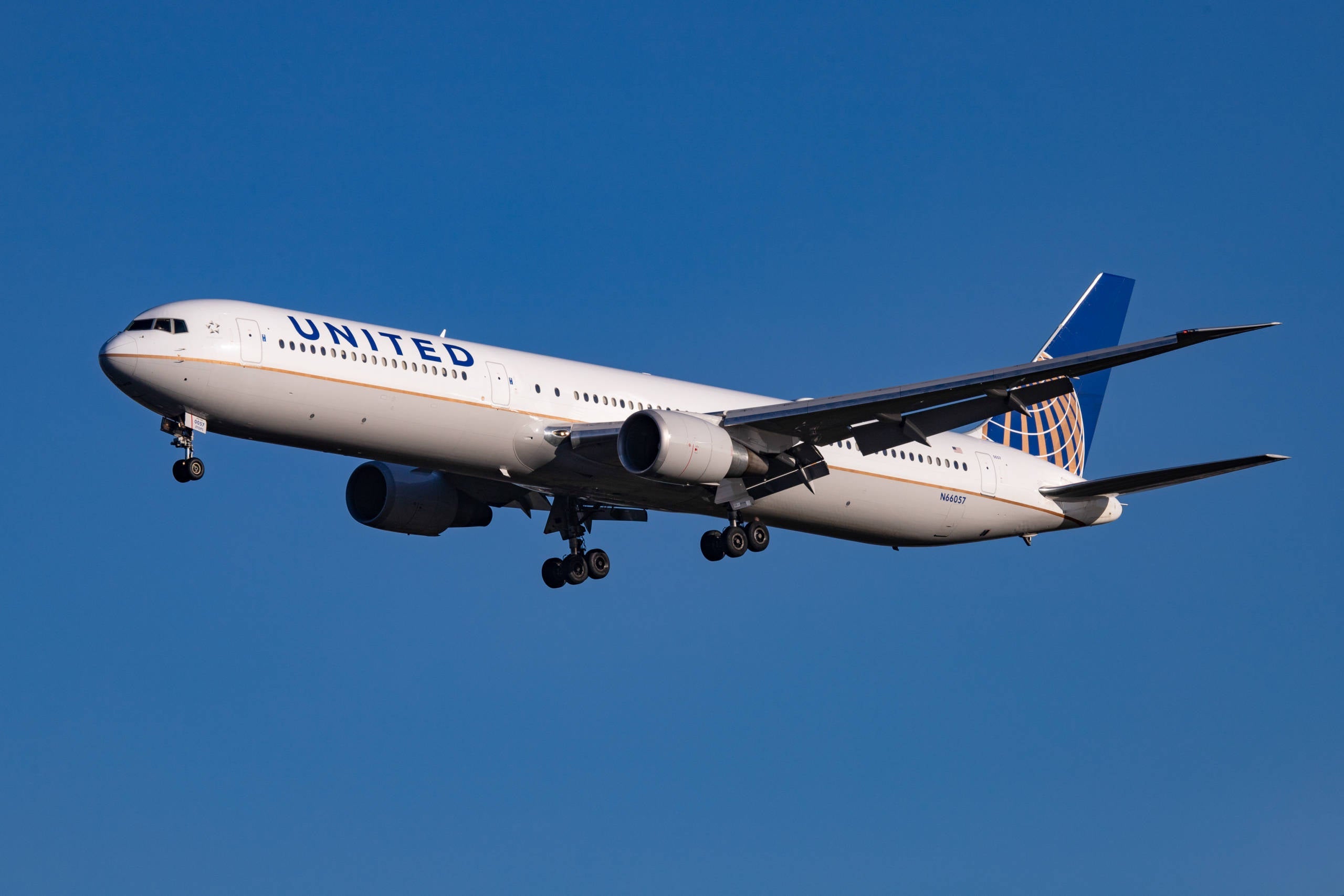
Delta thinks a rebound could come as soon as the second half of the year. United is not as optimistic
United revealed that detail Thursday during its fourth quarter earnings call, where it posted a full-year loss of nearly $10 billion as the pandemic has upended travel.
Delta was first to report last week, with the Atlanta-based carrier focusing on its forecast that corporate travelers will start to return in the second half of 2021. On Thursday, United took a different tack, choosing to focus on what will happen in 2023.
As the airline industry looks to a return to profitability, enabled by vaccines, United expects "the turning point is coming a little bit later than others think," CEO Scott Kirby said on the carrier's fourth quarter earnings call.
"We hope it's earlier; we can cite pretty reasonable scenarios that it's earlier, but we have confidence about 2023," Kirby said.
Kirby said that 2023 costs, measured by cost per available seat mile excluding fuel, will be the same as in 2019. "You can take it as a personal commitment from myself," he said. United will get there by reducing spending by $2 billion annually, he said.
Without mentioning Delta, Kirby implied that the carrier is too optimistic. "We have been more conservative, more realistic than others," he said, explaining that is "the reason we have said 2023," but conceding, "I'm not sure of the timing."
"Nobody including us has a perfect crystal ball on how soon this really will be over," he said. Vaccine efficacy will be the key determinant.
Pandemic travel: Will you need an immunity passport to fly? How the COVID-19 vaccine will restart travel

Kirby's comments were decidedly less rosy than those made by Delta last week.
Delta expects that "sustained recovery will begin in the second half of 2021," CEO Ed Bastian said during the carrier's Jan. 14 earning call. "Demand will start to accelerate as vaccinations become more widespread," Bastian said.
In mid-afternoon trading on Thursday, most airlines were down 1% to 2%, but United was down about 5%.
A distinction between United and Delta is that United's traffic is more international, which has suffered more than domestic during the pandemic. In the fourth quarter of 2019, international operations accounted for 36% of revenue, compared with 26% at Delta and 24% at American.
United has the top two coastal gateways in Newark (EWR) and San Francisco (SFO), but lacks a domestic hub as powerful as Atlanta (ATL) for Delta or Dallas/Fort Worth (DFW) and Charlotte (CLT) for American.
Pre-pandemic: How American will grow its Charlotte hub to more than 700 flights
"United and Delta may be in the same business, but that doesn't mean they will have the same timelines for the same challenges," said travel analyst Henry Harteveldt of Atmosphere Research.
"Delta and United have different route networks," Harteveldt added in comments after United's call on Tuesday. "Except for New York and Los Angeles, they don't share any other common U.S. hub markets. Their international route networks are also different, with United operating a more extensive trans-Pacific network."
Also, he said, "The two carriers ask their business customers slightly different questions about recovery timelines, and their customer mix may differ enough that those businesses may have different planning horizons for who they expect to resume business travel."
On the earnings call, Andrew Nocella, United's chief commercial officer, said United's international recovery will benefit because "A significant portion of capacity (was) operated by someone across the Atlantic (who) has publicly said they're are not going to do it anymore", referring to Norwegian Air.
One less transatlantic competitor: Norwegian Air to axe long-haul operations in bid to survive
Additionally, he noted, various international airlines are retiring some or all of their Airbus A380s and Boeing 747s, leading to capacity reductions. "The world is very different," he said.
Nocella said that in a second recovery cycle, international will lead domestic, which will benefit United. So far, the coronavirus crisis has severely restricted international travel. In the fourth quarter, Nocella said, United domestic passenger revenue fell 72% (Denver and Houston outperformed) while Atlantic fell 88% and Pacific fell 91%. In the current quarter, he said, "We don't expect a material improvement over Q4."
In its earnings release, United said, "The company expects 2021 to be a transition year that's focused on preparing for a recovery." It said, "The combination of structural cost reduction and timely investments will help set up United to exceed its 2019 adjusted Earnings Before Interest, Taxes, Depreciation and Amortization (EBITDA) margin in 2023."
Full the full year 2020, United reported a pre-tax loss of $9.9 billion. "By any measure, the size of this loss is stunning," said Chief Financial Officer Gerry Laderman. "Like most of us, I am happy to say good riddance to 2020."
Photo by Nicolas Economou/NurPhoto via Getty Images.
TPG featured card

at American Express's secure site
Terms & restrictions apply. See rates & fees.
| 4X | Earn 4X Membership Rewards® points per dollar spent on purchases at restaurants worldwide, on up to $50,000 in purchases per calendar year, then 1X points for the rest of the year. |
| 4X | Earn 4X Membership Rewards® points per dollar spent at US supermarkets, on up to $25,000 in purchases per calendar year, then 1X points for the rest of the year. |
| 5X | Earn 5X Membership Rewards® points on prepaid hotel stays booked through AmexTravel.com or the Amex Travel App™. |
| 3X | Earn 3X Membership Rewards® points on flights booked through AmexTravel.com, the Amex Travel App™, or purchased directly from airlines. |
| 2X | Earn 2X Membership Rewards® points on prepaid car rentals booked through AmexTravel.com or the Amex Travel App™ and cruises booked and paid through AmexTravel.com. |
| 1X | Earn 1X Membership Rewards® point per dollar spent on all other eligible purchases. |
Pros
- Valuable dining and food-related credits
- Flexible rewards with airline and hotel transfer partners
- Multiple travel and purchase protections
- No foreign transaction fees
- Access to Amex Offers for additional savings (enrollment required)
Cons
- Not as useful for those living outside the U.S.
- Some may have trouble using Uber and other dining credits
- You may be eligible for as high as 100,000 Membership Rewards® Points after you spend $8,000 in eligible purchases on your new Card in your first 6 months of Card Membership. Welcome offers vary and you may not be eligible for an offer. Apply to know if you’re approved and find out your exact welcome offer amount – all with no credit score impact. If you’re approved and choose to accept the Card, your score may be impacted.
- Earn 4X Membership Rewards® points per dollar spent on purchases at restaurants worldwide, on up to $50,000 in purchases per calendar year, then 1X points for the rest of the year.
- Earn 4X Membership Rewards® points per dollar spent at US supermarkets, on up to $25,000 in purchases per calendar year, then 1X points for the rest of the year.
- Earn 5X Membership Rewards® points on prepaid hotel stays booked through AmexTravel.com or the Amex Travel App™.
- Earn 3X Membership Rewards® points on flights booked through AmexTravel.com, the Amex Travel App™, or purchased directly from airlines.
- Earn 2X Membership Rewards® points on prepaid car rentals booked through AmexTravel.com or the Amex Travel App™ and cruises booked and paid through AmexTravel.com.
- Earn 1X Membership Rewards® point per dollar spent on all other eligible purchases.
- Pay It® lets you tap in the American Express® App to quickly pay for small purchase amounts throughout the month and still earn rewards the way you usually do. Plan It® gives you the option to split up big purchases into equal monthly payments with a fixed fee. You’ll know upfront exactly how much you’ll pay.
- $120 Dining Credit: Earn up to a total of $10 in statement credits monthly when you pay with the Gold Card at Grubhub (including Seamless), Buffalo Wild Wings, Five Guys, The Cheesecake Factory, and Wonder. This can be an annual savings of up to $120. Enrollment required.
- $100 Resy Credit: Get up to $100 in statement credits each calendar year at over 10,000 qualifying U.S. Resy restaurants after you pay for eligible purchases with the American Express® Gold Card. That’s up to $50 in statement credits semi-annually. Enrollment required.
- $84 Dunkin' Credit: Earn up to $7 in monthly statement credits after you pay with the American Express® Gold Card at U.S. Dunkin’ locations. Enrollment required.
- $120 Uber Cash on Gold: Enjoy up to $120 in Uber Cash annually with your Gold Card. Just add your Card to your Uber account and you'll get $10 in Uber Cash each month to use on orders and rides in the U.S. when you select an Amex Card for your transaction.
- Enjoy complimentary Hertz Five Star® Status benefits like skipping the counter at select locations, adding an additional driver at no additional cost*, and vehicle upgrades**. Benefit enrollment and Hertz Gold+ registration are required. *Additional drivers must meet standard rental qualifications and must be a spouse or domestic partner to qualify as complimentary. Other additional drivers subject to fees. **Benefits are subject to availability and vary by location. Additional Hertz program Terms and Conditions including age restrictions apply.
- Book two nights or more with The Hotel Collection through AmexTravel.com or the Amex Travel App™ and receive a $100* credit towards eligible charges at over 1,400 upscale hotels worldwide. *Eligible charges vary by property.
- Book your travel through the Amex Travel App™ with added peace of mind – backed by American Express® service and support. Only for American Express® Card Members.
- Whenever you need us, we're here. Our Member Services team will ensure you are taken care of. From lost Card replacement to statement questions, we are available to help 24/7.
- No Foreign Transaction Fees.
- Annual Fee is $325.
- Terms Apply.