United Airlines expects little to no impact from Boeing 787 manufacturing issues

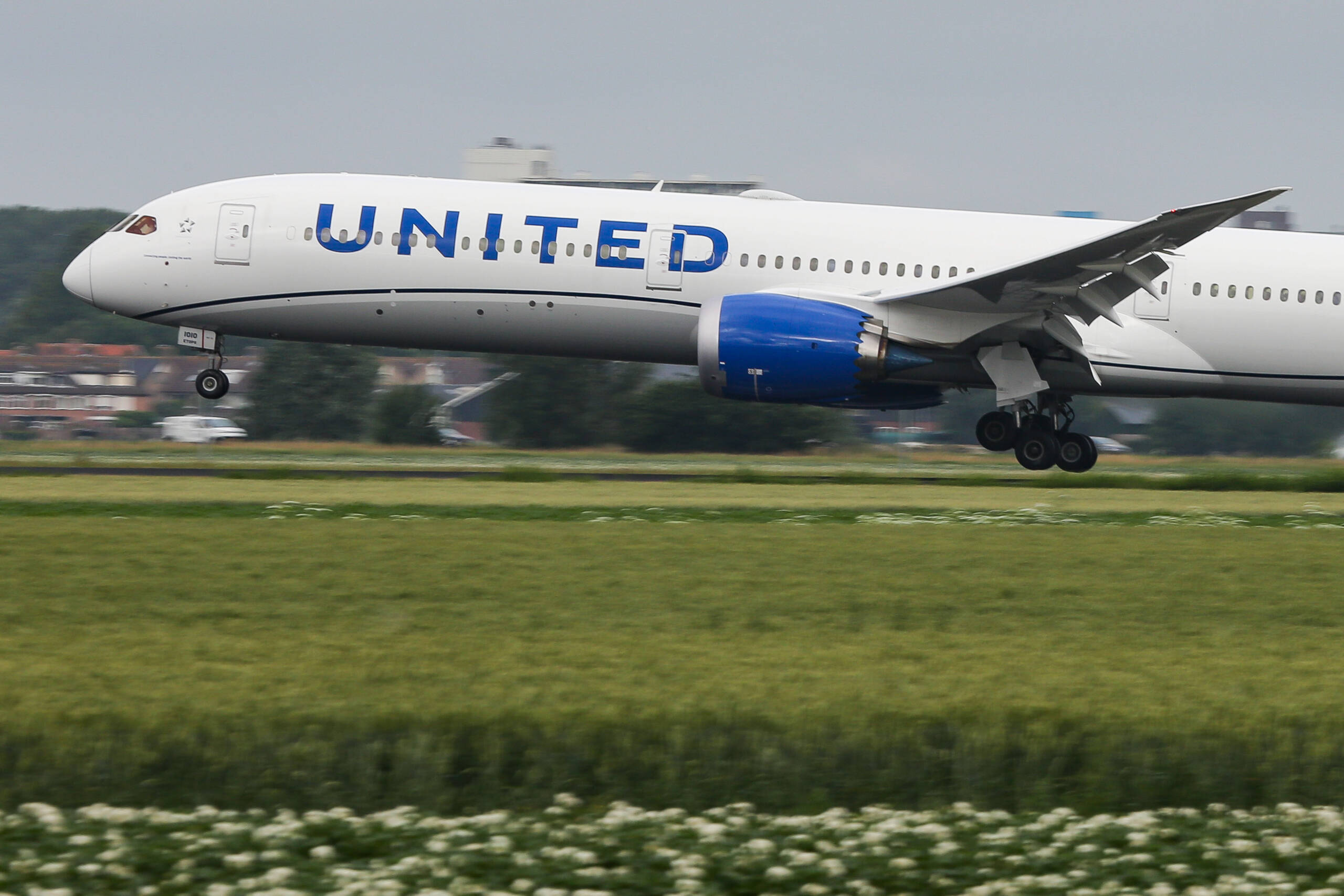
United Airlines anticipates little or no impact on flights from the latest manufacturing issues plaguing Boeing's 787 Dreamliner jets.
Two separate issues related to the rear section of the jet's fuselage — or "aft body" as Boeing puts it — and the tail, or horizontal stabilizer, are not expected to "have much or any impact" on United's operations, spokesperson Josh Earnest said Thursday.
The Chicago-based carrier has parked one 787 following the discovery of the two separate fuselage issues. However, with United flying less than a third of its normal international schedule, the move has not affected travelers.
United flew 57 787s at the end of August, according to Boeing data. It is one of the largest operators of the Dreamliner globally.
Sign up for TPG's free new biweekly Aviation newsletter for more airline news!
Earnest's comments come a day after Boeing confirmed an issue with the manufacturing of 787 tails. Certain stabilizer components were "clamped together during the build process with greater force than specified," Boeing spokesperson Jessica Kowal told TPG. This resulted in "non-conformance" with specifications and could result in the "pre-mature aging" of the parts.
The planemaker estimates that roughly 893 787s — more than 90% of the 981 Dreamliners delivered — could be impacted by the stabilizer issue, she said.
Kowal emphasized that the Dreamliner is safe and the stabilizer issue is, as she put it, "not an immediate safety of flight issue." The planemaker is making necessary corrections to assembled but not-yet-delivered 787s and is assessing whether a fix to delivered jets is needed.
Related: Boeing delays 777X, 737 MAX timeline as COVID hits business

The stabilizer issue follows the two rear fuselage concerns that first came to light a year ago. One issue is related to "shims" — or the material used to fill gaps between sections of fuselage — where the rear section joins another, and a separate concern regarding the "flatness" of certain mould lines, said Kowal.
While neither issue alone constitutes a safety concern, the two issues together resulted in eight 787s being pulled from service in August. These include the United jet, as well as ones delivered to Air Canada and Singapore Airlines.
"We take safety and quality very seriously," said Kowal.
Related: FAA move could have Boeing 737 MAX flying again this fall
The 787 fuselage and stabilizer issues — while separate and none alone considered a safety issue — come at a time of heightened focus on Boeing. The 737 MAX remains grounded a year and a half after two fatal crashes took the lives of 346 people. The grounding has prompted a reworking of the certain flight control systems on the jet, as well as an in-depth review of the certification process.
"The concern, however, is more about each issue separately and its reflection on Boeing's Quality Manufacturing System (QMS). Principally that the QMS didn't catch the errors," wrote The Air Current editor-in-chief Jon Ostrower on the 787 issues on Sept. 8.
Boeing has pushed to reduce the number of inspectors on staff in favor of the automated QMS system, according to Ostrower. This comes even as the planemaker has faced repeated examinations by regulators of its manufacturing processes, especially at its assembly line in North Charleston, South Carolina.
The latest 787 quality concerns could delay the delivery of new jets as Boeing corrects the stabilizer issue. However, as yet, the only affected in-service planes are the eight already pulled from service.
Related: United sees Boeing 787 as new long-haul 'workhorse,' orders 7 more Dreamliners
TPG featured card

at Capital One's secure site
Terms & restrictions apply. See rates & fees.
| 5X miles | Earn 5X miles on hotels, vacation rentals and rental cars booked through Capital One Travel |
| 2X miles | Earn unlimited 2X miles on every purchase, every day |
Pros
- Stellar welcome offer of 75,000 miles after spending $4,000 on purchases in the first three months from account opening. Plus, a $250 Capital One Travel credit to use in your first cardholder year upon account opening.
- You'll earn 2 miles per dollar on every purchase, which means you won't have to worry about memorizing bonus categories
- Rewards are versatile and can be redeemed for a statement credit or transferred to Capital One’s transfer partners
Cons
- Highest bonus-earning categories only on travel booked via Capital One Travel
- LIMITED-TIME OFFER: Enjoy $250 to use on Capital One Travel in your first cardholder year, plus earn 75,000 bonus miles once you spend $4,000 on purchases within the first 3 months from account opening - that’s equal to $1,000 in travel
- Earn unlimited 2X miles on every purchase, every day
- Earn 5X miles on hotels, vacation rentals and rental cars booked through Capital One Travel
- Miles won't expire for the life of the account and there's no limit to how many you can earn
- Receive up to a $120 credit for Global Entry or TSA PreCheck®
- Use your miles to get reimbursed for any travel purchase—or redeem by booking a trip through Capital One Travel
- Enjoy a $50 experience credit and other premium benefits with every hotel and vacation rental booked from the Lifestyle Collection
- Transfer your miles to your choice of 15+ travel loyalty programs
- Top rated mobile app