'I think we're going to win': United CEO says airline is ready for industry's challenges


United Airlines CEO Scott Kirby said on Thursday that he remains fully confident in his business plan for the airline despite some early concerns about the broader market.
Speaking with reporters after an event at United's hub at Houston's George Bush Intercontinental Airport (IAH), Kirby suggested that United's broader two-pronged network plan — growing domestically by using bigger planes in crowded markets and expanding globally to capture international leisure demand — will build a successful path for the airline into the 2030s.
"I think that demand is normalized," Kirby said. "This is the new normal."
United is increasing its global presence both by entrenching itself in tried-and-true international markets — such as London and Paris — and adding routes from various hubs, like San Francisco to Rome. The airline has also experimented by adding flights to smaller cities or destinations that might not have a direct flight from the U.S. already, especially on an American carrier.
Those newer markets are particularly aimed at leisure travelers, including VFR customers. VFR, shorthand in airline business lingo for "visiting friends and relatives," is a subset of leisure that is generally more price-conscious. Recent examples include Christchurch, New Zealand; Amman, Jordan; and Accra, Ghana.
As countries in Asia have reopened since the peak of the coronavirus pandemic, the airline also plans to resume and expand service across the Pacific. It recently announced or initiated routes to cities including Taipei, Taiwan, and Manila, Philippines, along with Tokyo and Hong Kong.
However, concerns have recently begun to surface regarding the transatlantic market's outlook for next year. In a research note to investors this week, airline analyst Helane Becker of TD Cowan expressed concern that airlines are adding too much capacity for 2024 after seeing record demand and strong pricing power in summer 2023.
"We believe traffic in the market will return to more normal, seasonal levels," Becker wrote, "resulting in possible overcapacity."
This could be good news for passengers, as "an overcapacity situation is developing in the North Atlantic that is likely to lead to lower air fares," the Cowen note reads. However, it would lead to lower yields for airlines like United and would force them to pull back.

Kirby, however, disagreed with the TD Cowen assessment.
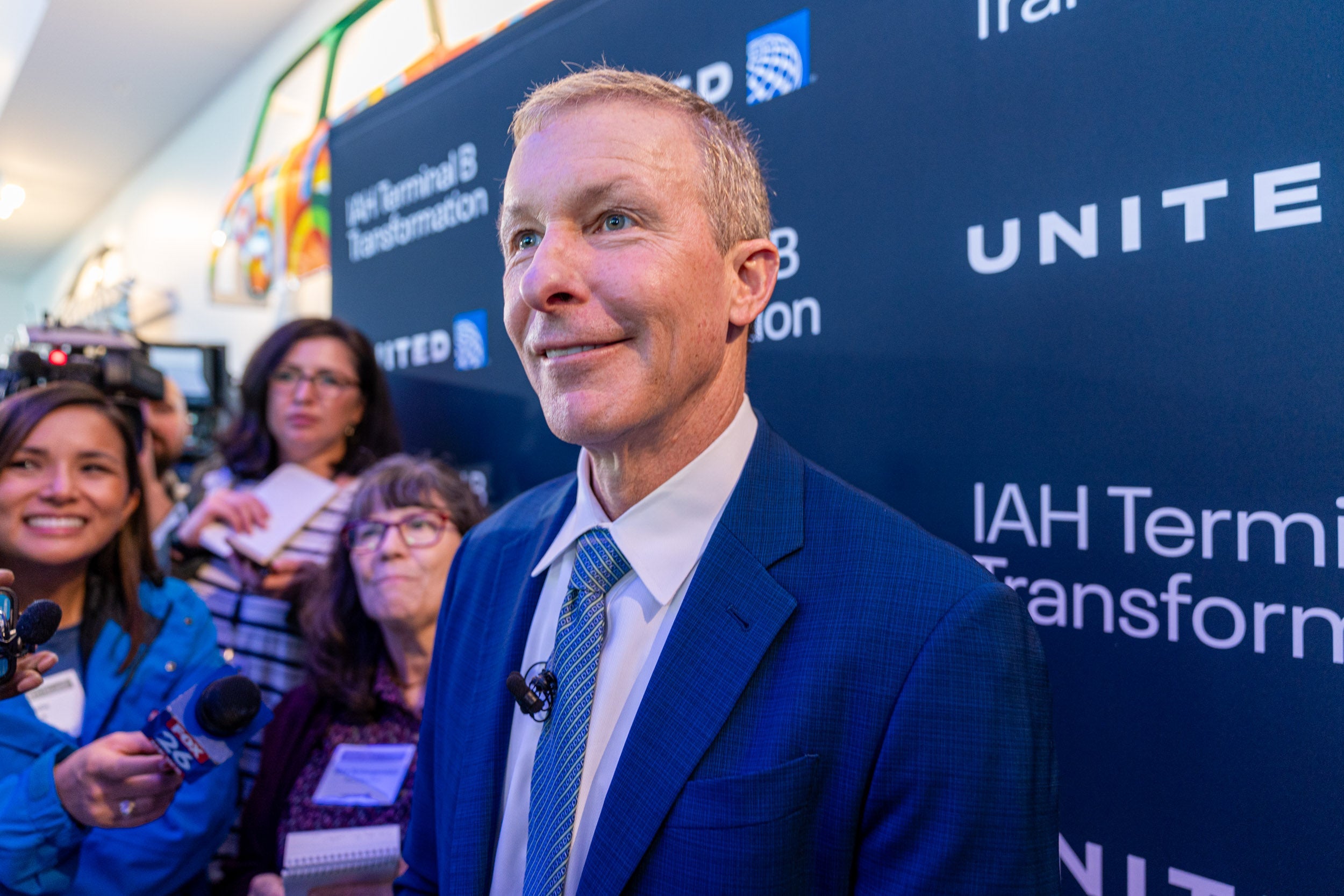
"I think that they're overstating the challenge for next summer, and mostly, there's higher capacity growth in the winter," he said. "We feel really good, still, about transatlantic demand."
Kirby added that despite his expectations for strong demand, United will not put significant additional capacity across the Atlantic next summer. Instead, it'll stick with roughly the same capacity as in 2023, even if some routes are moved around.
"At United, we're going to be flat in transatlantic year-over-year," Kirby said. "Our big growth push is in the Pacific as the Pacific is finally reopened."
In terms of the domestic market, however, Kirby expects a bumpier ride amid slowing demand, ongoing challenges linked to supply chain issues, air traffic control staffing shortages and more.
"I think domestic growth is going to moderate pretty significantly around the industry," Kirby said. "A few months ago, airline plans were for about 11% (growth). It's now down to less than five and getting lower."
Kirby said that United expects to "come close" to its original plans, with enough pilots for its mainline operation and enough aircraft for now; he pointed to challenges as being ongoing across the industry, including at air traffic control, which the Federal Aviation Administration runs.
"The FAA did an amazing job over the Thanksgiving holidays, particularly with the changes they made in New York," Kirby said. "But the reality is we're 3,000 controllers short in this country."
Related: United and American reduce New York flights this summer amid air traffic controller shortage
The plan to use newer, larger aircraft on domestic routes would likely help United amid at least some of the challenges. It would allow the airline to grow while operating fewer flights (by carrying more passengers per flight), and, ideally, avoid some maintenance issues that older aircraft are prone to.
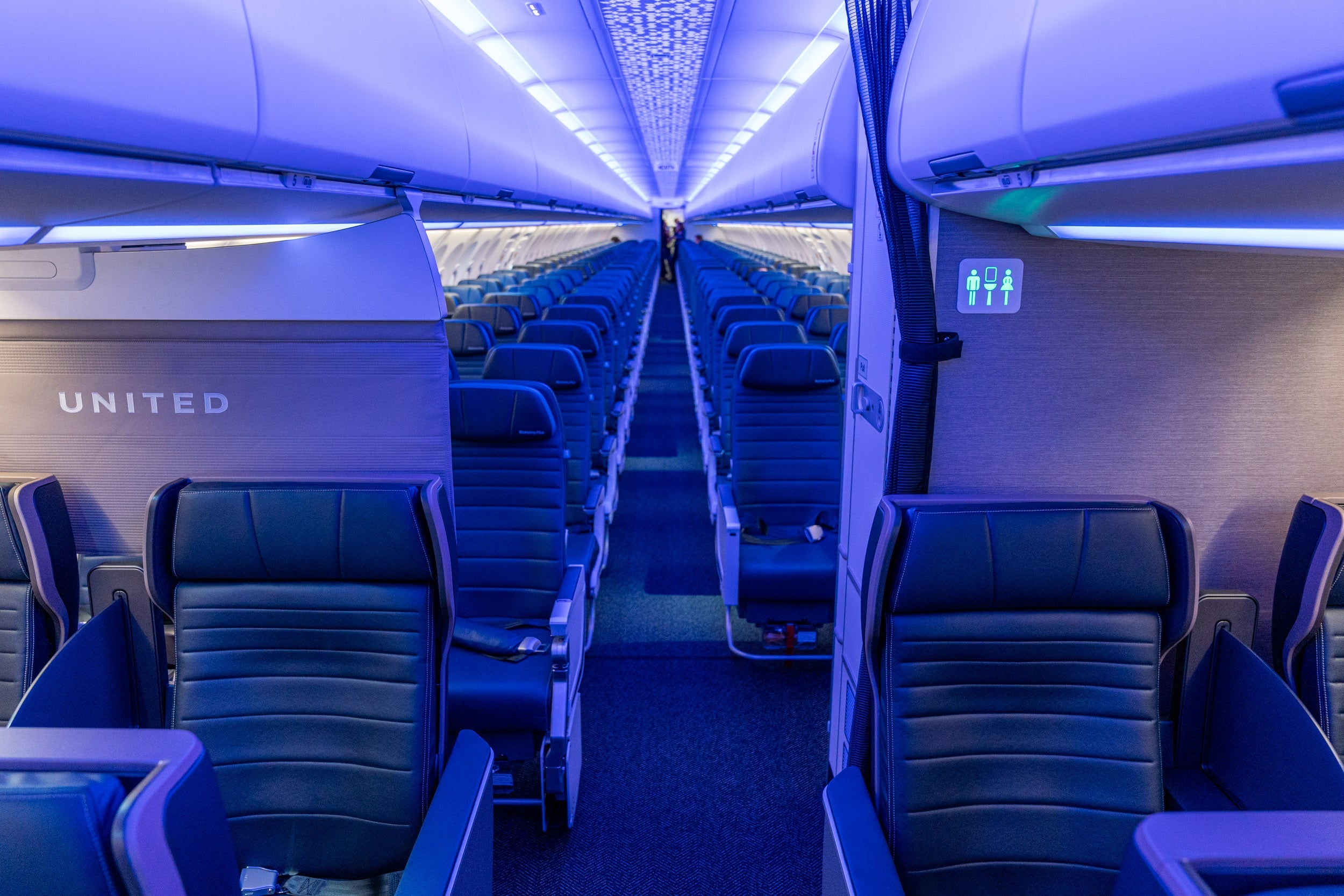
Still, getting those new aircraft in time has proven difficult, even as the airline marked the inaugural flight of its new Airbus A321neo — its first brand-new delivery from Airbus since 2002.
"Boeing, Airbus, engine manufacturers are behind," Kirby said. "It's supply chain (issues) that (go) deeper — we're having to order parts in some cases a year earlier than we would have before."
Despite the challenges, Kirby said the domestic market was still a strong performer for United.
"Demand is still really strong. RASM has come down domestically, you know, with a lot of growth," Kirby said. "But domestic is still strong for us." (RASM stands for unit revenues, a measure of revenue efficiency and yield.)
Kirby has previously noted challenges in the domestic market that he says United is well prepared to address. Low-cost airlines, however, are more likely to have a difficult time.
"We also expected and now believe it'll happen even faster, that the domestic market is going to see a shakeout," Kirby said on the airline's third-quarter earnings call in October.
With rising fuel and labor costs, Kirby said that without better cost and pricing structures, the low-cost carriers are in for a challenge.
"The lowest margin airlines are the so-called low-cost carriers, and that's where I think the changes are going to occur," he wrote in a LinkedIn post announcing the airline's third-quarter results.
Related: Fate of JetBlue-Spirit merger hangs in balance as antitrust trial begins in Boston
On Thursday in Houston, Kirby reaffirmed his belief that low-cost and lower-margin airlines would struggle, including both JetBlue and Spirit Airlines, regardless of whether the two airlines' proposed merger is allowed to proceed.
"I think we're going to win no matter what," Kirby said. "I think they're both in huge trouble."
"Delta and United are making 11% profit margin, Spirit's making negative 16 (percent)," he added. "In the history in the aviation business, those are go-out-of-business numbers."
Related reading:
- When is the best time to book flights for the cheapest airfare?
- The best airline credit cards
- What exactly are airline miles, anyway?
- 6 real-life strategies you can use when your flight is canceled or delayed
- Maximize your airfare: The best credit cards for booking flights
- The best credit cards to reach elite status
TPG featured card
at American Express's secure site
Terms & restrictions apply. See rates & fees.
| 4X | Earn 4X Membership Rewards® points per dollar spent on purchases at restaurants worldwide, on up to $50,000 in purchases per calendar year, then 1X points for the rest of the year. |
| 4X | Earn 4X Membership Rewards® points per dollar spent at US supermarkets, on up to $25,000 in purchases per calendar year, then 1X points for the rest of the year. |
| 5X | Earn 5X Membership Rewards® points on prepaid hotel stays booked through AmexTravel.com or the Amex Travel App™. |
| 3X | Earn 3X Membership Rewards® points on flights booked through AmexTravel.com, the Amex Travel App™, or purchased directly from airlines. |
| 2X | Earn 2X Membership Rewards® points on prepaid car rentals booked through AmexTravel.com or the Amex Travel App™ and cruises booked and paid through AmexTravel.com. |
| 1X | Earn 1X Membership Rewards® point per dollar spent on all other eligible purchases. |
Pros
- Valuable dining and food-related credits
- Flexible rewards with airline and hotel transfer partners
- Multiple travel and purchase protections
- No foreign transaction fees
- Access to Amex Offers for additional savings (enrollment required)
Cons
- Not as useful for those living outside the U.S.
- Some may have trouble using Uber and other dining credits
- You may be eligible for as high as 100,000 Membership Rewards® Points after you spend $8,000 in eligible purchases on your new Card in your first 6 months of Card Membership. Welcome offers vary and you may not be eligible for an offer. Apply to know if you’re approved and find out your exact welcome offer amount – all with no credit score impact. If you’re approved and choose to accept the Card, your score may be impacted.
- Earn 4X Membership Rewards® points per dollar spent on purchases at restaurants worldwide, on up to $50,000 in purchases per calendar year, then 1X points for the rest of the year.
- Earn 4X Membership Rewards® points per dollar spent at US supermarkets, on up to $25,000 in purchases per calendar year, then 1X points for the rest of the year.
- Earn 5X Membership Rewards® points on prepaid hotel stays booked through AmexTravel.com or the Amex Travel App™.
- Earn 3X Membership Rewards® points on flights booked through AmexTravel.com, the Amex Travel App™, or purchased directly from airlines.
- Earn 2X Membership Rewards® points on prepaid car rentals booked through AmexTravel.com or the Amex Travel App™ and cruises booked and paid through AmexTravel.com.
- Earn 1X Membership Rewards® point per dollar spent on all other eligible purchases.
- Pay It® lets you tap in the American Express® App to quickly pay for small purchase amounts throughout the month and still earn rewards the way you usually do. Plan It® gives you the option to split up big purchases into equal monthly payments with a fixed fee. You’ll know upfront exactly how much you’ll pay.
- $120 Dining Credit: Earn up to a total of $10 in statement credits monthly when you pay with the Gold Card at Grubhub (including Seamless), Buffalo Wild Wings, Five Guys, The Cheesecake Factory, and Wonder. This can be an annual savings of up to $120. Enrollment required.
- $100 Resy Credit: Get up to $100 in statement credits each calendar year at over 10,000 qualifying U.S. Resy restaurants after you pay for eligible purchases with the American Express® Gold Card. That’s up to $50 in statement credits semi-annually. Enrollment required.
- $84 Dunkin' Credit: Earn up to $7 in monthly statement credits after you pay with the American Express® Gold Card at U.S. Dunkin’ locations. Enrollment required.
- $120 Uber Cash on Gold: Enjoy up to $120 in Uber Cash annually with your Gold Card. Just add your Card to your Uber account and you'll get $10 in Uber Cash each month to use on orders and rides in the U.S. when you select an Amex Card for your transaction.
- Enjoy complimentary Hertz Five Star® Status benefits like skipping the counter at select locations, adding an additional driver at no additional cost*, and vehicle upgrades**. Benefit enrollment and Hertz Gold+ registration are required. *Additional drivers must meet standard rental qualifications and must be a spouse or domestic partner to qualify as complimentary. Other additional drivers subject to fees. **Benefits are subject to availability and vary by location. Additional Hertz program Terms and Conditions including age restrictions apply.
- Book two nights or more with The Hotel Collection through AmexTravel.com or the Amex Travel App™ and receive a $100* credit towards eligible charges at over 1,400 upscale hotels worldwide. *Eligible charges vary by property.
- Book your travel through the Amex Travel App™ with added peace of mind – backed by American Express® service and support. Only for American Express® Card Members.
- Whenever you need us, we're here. Our Member Services team will ensure you are taken care of. From lost Card replacement to statement questions, we are available to help 24/7.
- No Foreign Transaction Fees.
- Annual Fee is $325.
- Terms Apply.