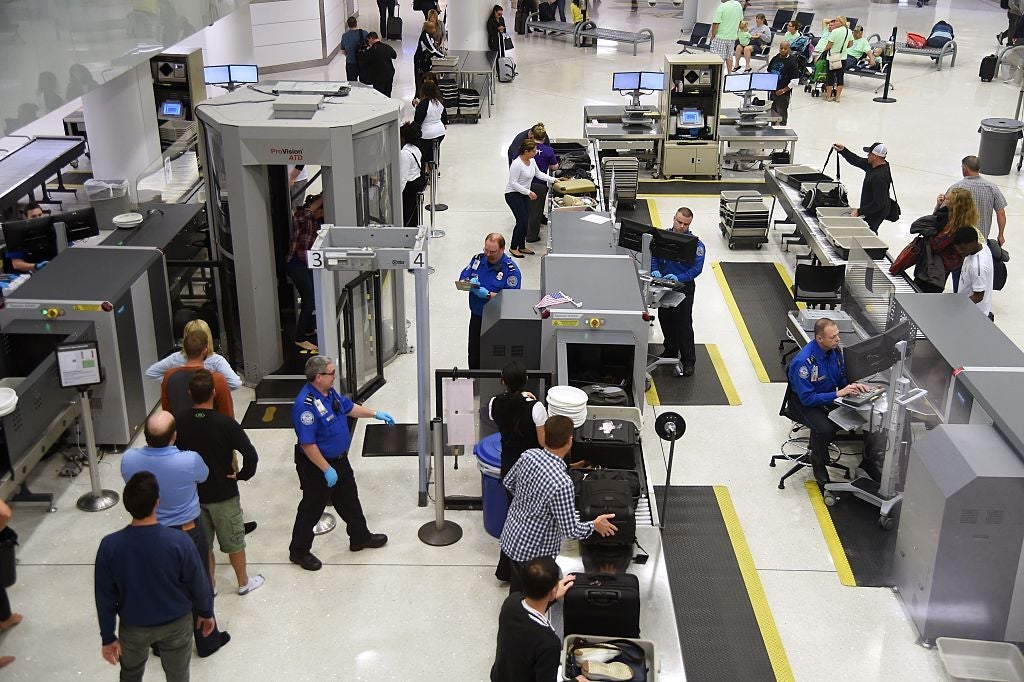

As we reported in July of last year, the TSA began testing the CT scanners at a handful of airports in 2017, eventually expanding the program to an additional 12 airports including Chicago O’Hare (ORD) and Los Angeles (LAX) in 2018.
The CT scanners, which have been rolled out slowly across airports including New York (JFK) Terminal 8, use algorithms to detect explosives and create a 3-D image that can be viewed and rotated 360 degrees by a TSA agent. Because the new CT scanner produces imagery in 3-D — as opposed to 2-D, which is what’s offered with traditional x-ray scanners — it’ll allow for quicker, more thorough scans. In addition, the functionality of the scanner leaves the possibility open for passengers to be allowed to leave liquids, gels, aerosols and laptops in their bags at all times.
TSA Administrator David Pekoske previously told TPG that, “Use of CT technology substantially improves TSA’s threat detection capability at the checkpoint. By leveraging strong partnerships with industry, we are able to deploy new technology quickly and see an immediate improvement in security effectiveness.”
The TSA hopes to complete the scanner rollout by 2020.
For the latest travel news, deals and points and miles tips please subscribe to The Points Guy daily email newsletter.
Photo credit ROBYN BECK/AFP/Getty Images