The Boeing 777 turns 25. Here's why it has become so popular

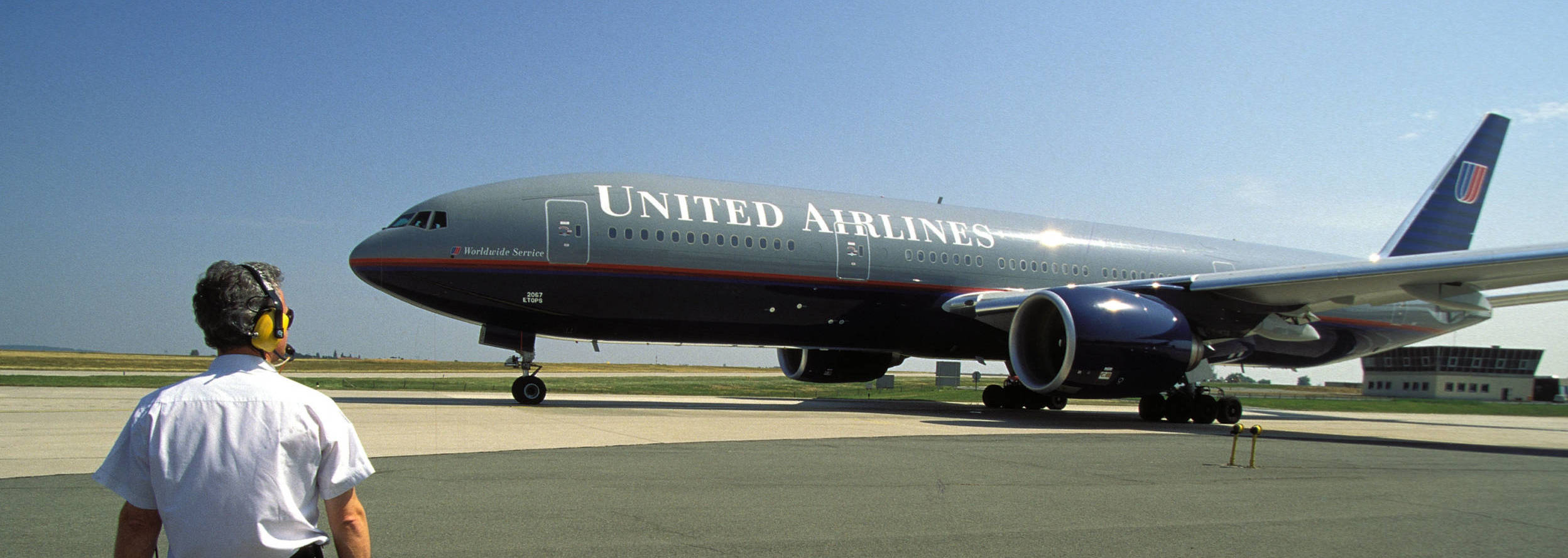
June 7, 1995, was a momentous date in aviation history. The Boeing 777 made its first commercial flight, a transatlantic hop from London Heathrow to Washington Dulles. The airplane's launch customer, United Airlines, became the first to fly what was then, and still is now, the biggest twin-engine airliner in the world. It started a success story that continues today. If you are even a moderately frequent flyer, chances are that a 777 has taken you at least once across an ocean, or across the United States.
After all, airlines have bought a lot of 777s — more than 2,000 of them in the three decades since the program was started. Compare that number with the total orders for Boeing's other legacy twin-aisle jets, the 747 and 767, which have been in production for much longer but sold respectively around 1,600 and 1,300 units. It's clear that airlines love the 777.
For more travel tips and news, sign up for our daily newsletter
All three U.S. majors have bought 777s; after United, American and Delta both chose Boeing's big twin. Even with Delta retiring its entire 777 fleet this year due to falling demand because of the coronavirus, the other two will keep flying them likely for decades. Around the world, you'll find 777s on every inhabited continent. It's the airplane that made the fortunes of the Big 3 Middle East carriers — Emirates is the world's biggest operator of 777s, and Etihad and Qatar also have sizable fleets — and it has been hugely successful in Asia. Among the world's 10 biggest airlines by passengers carried, only short-haulers Southwest and Ryanair don't have 777s.
It was, Boeing says, the first jetliner to be entirely designed with computers. That digital design has proven to be extremely flexible, and the 777 has come a long way since those early, mid-1990s models with just enough range to cross the Atlantic. A 777 still holds the record for the longest nonstop flight ever by a commercial airplane, set in 2005 when the first 777-200LR, for "long range", flew eastbound from Hong Kong to London covering 13,422 miles. (The record for longest regularly scheduled flight belongs to Singapore Airlines' flight to New York with the Airbus A350; the 777 did it with no paying passengers.)
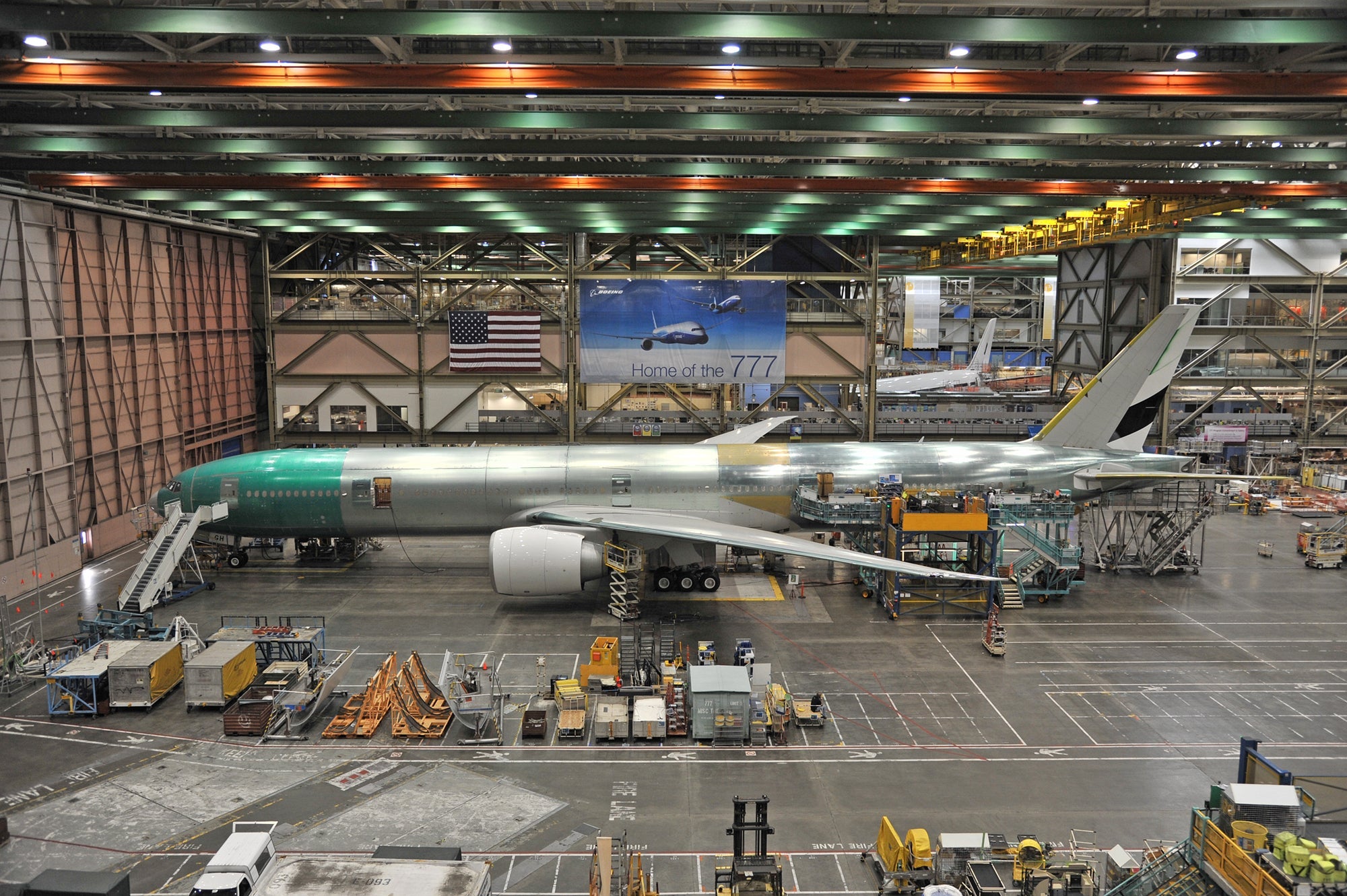
In the U.S., 777s now cover the gamut from 15-hour long-hauls to China to transcon hops. The United 777 that made the first revenue flight in 1995 is still flying today, doing mostly cross-country trips. The Triple Seven also came to market at the perfect time to get a big sales boost from airlines that needed to replace aging 747s. When the stretched, long-range 777-300ER appeared in 2002, it became an instant success. It could fly 350 passenger in first, business and economy over 8,000 miles easily — just like a 747, but much more cheaply with only two engines instead of four. It's done so well that most operator of passenger 747s have bought the stretched 777 instead.
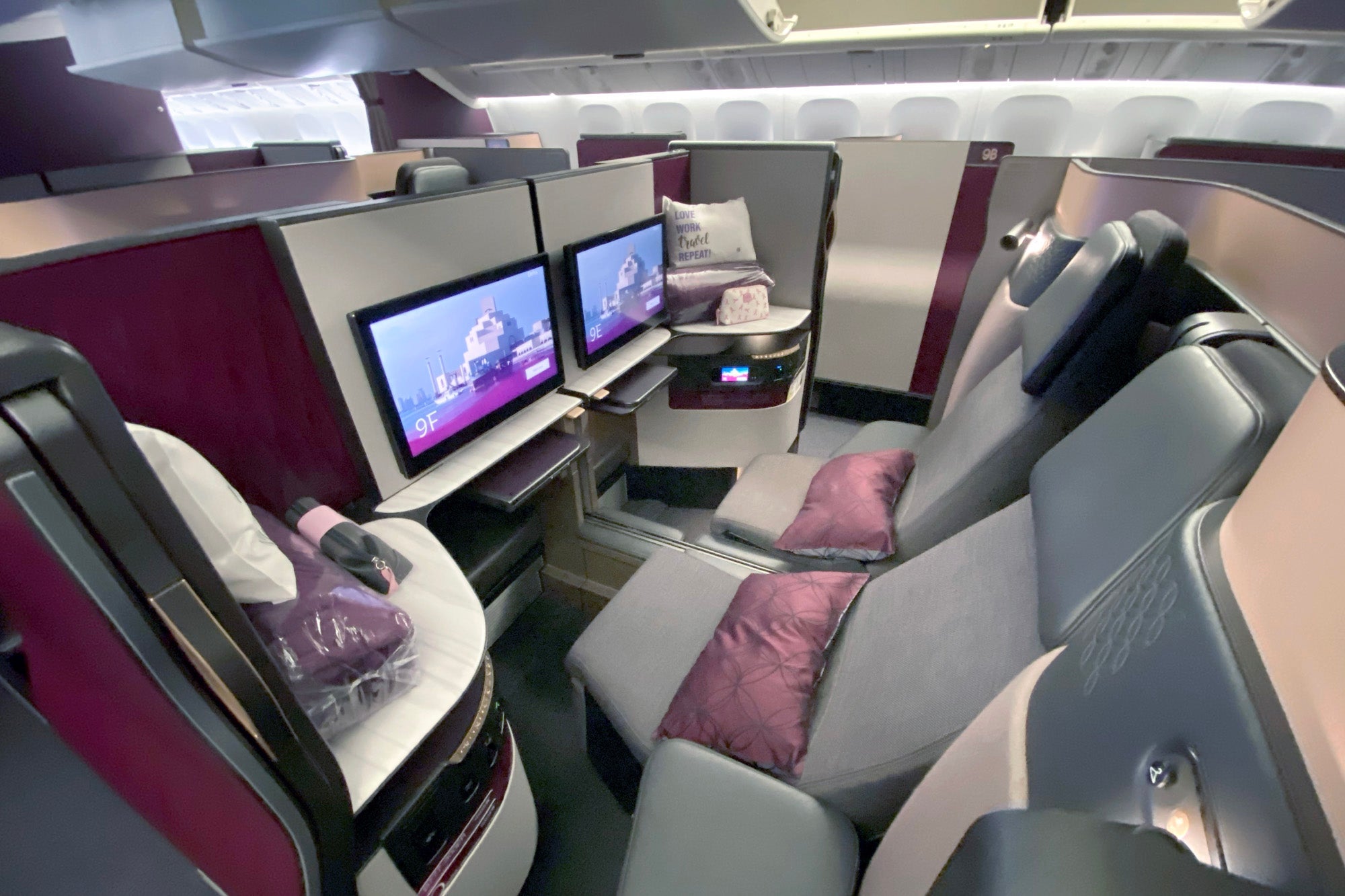
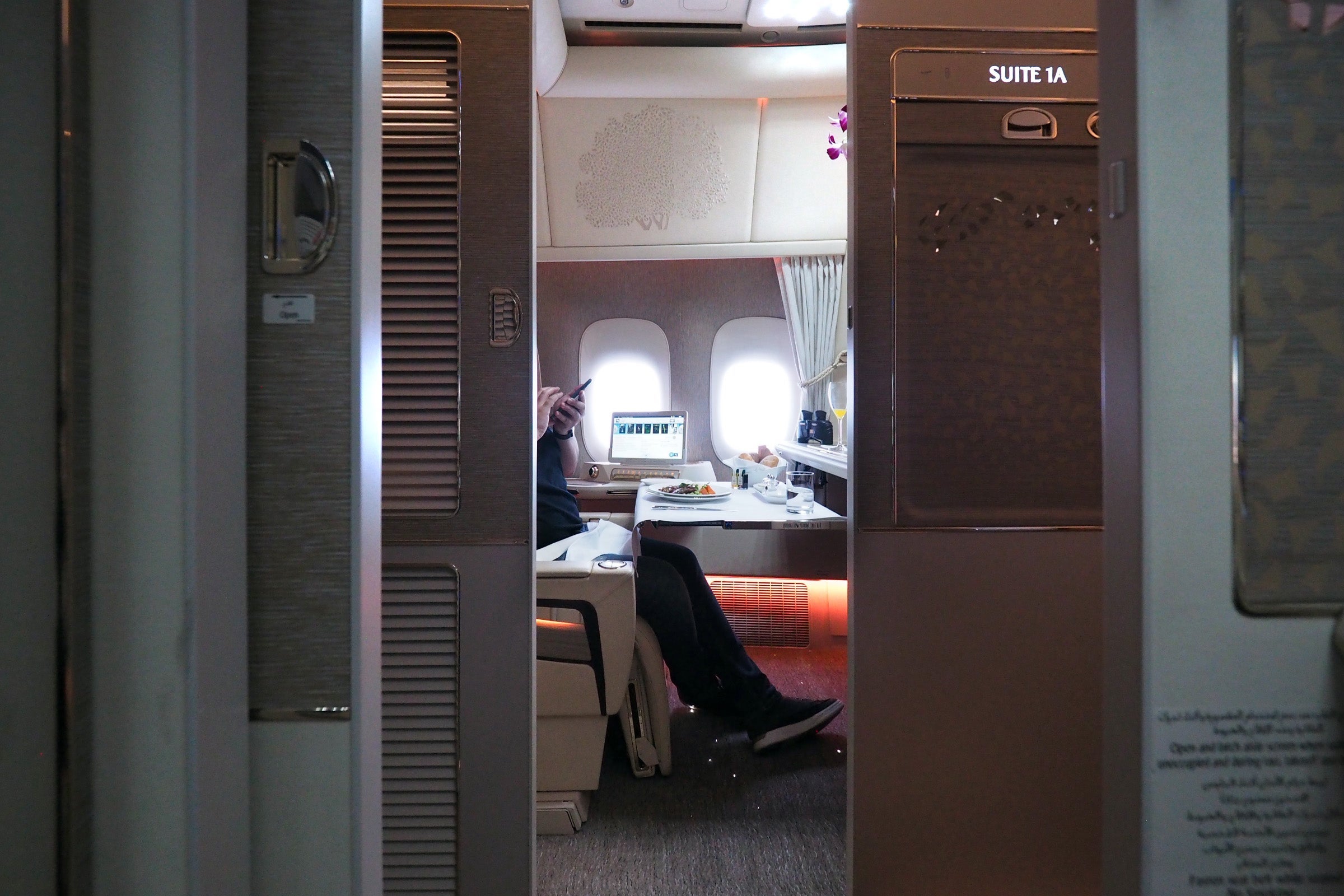
On board, you can expect to find some of the best inflight products available today. (You won't have showers and a bar like on Airbus A380s, but those amenities are suspended these days anyway due to the coronavirus.) Emirates puts its new, dazzling first-class suite only aboard 777s — and only on a few of those at the moment — while Air France's La Premiere first class, winner of the 2019 TPG Award for best long-haul first, is another 777 exclusive. Triple Sevens also boast of the only true long-haul first class on a U.S. airline, aboard American Airlines 777-300ERs. And one notch down in business, you can find the best biz seats in the world — Qatar Airways' Qsuite and ANA's The Room — aboard 777s too.
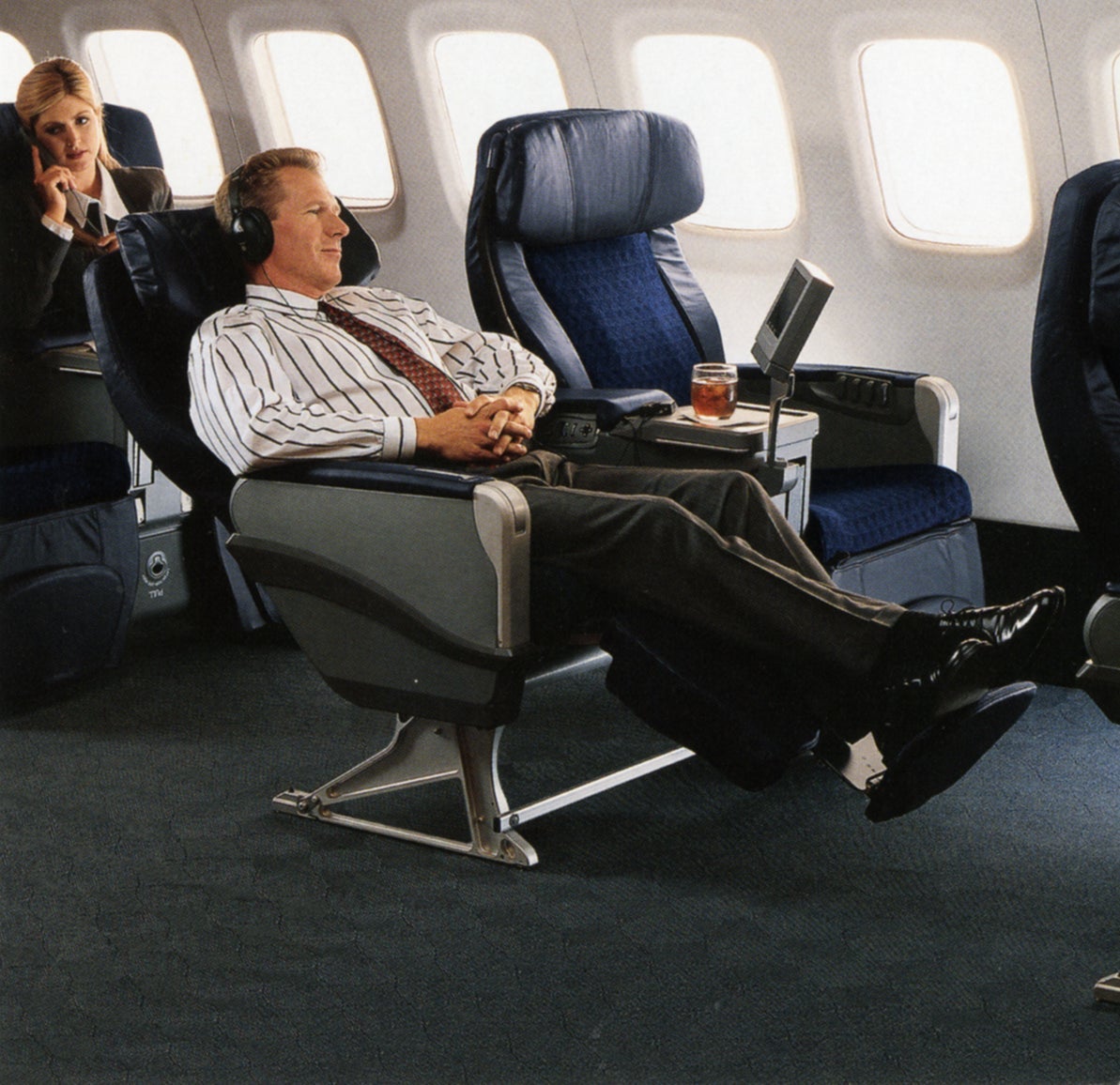
You can trace the evolution of passenger flying by looking at 777 cabins over the years. When the airplane first appeared, biz class had recliner seats and tiny screens.
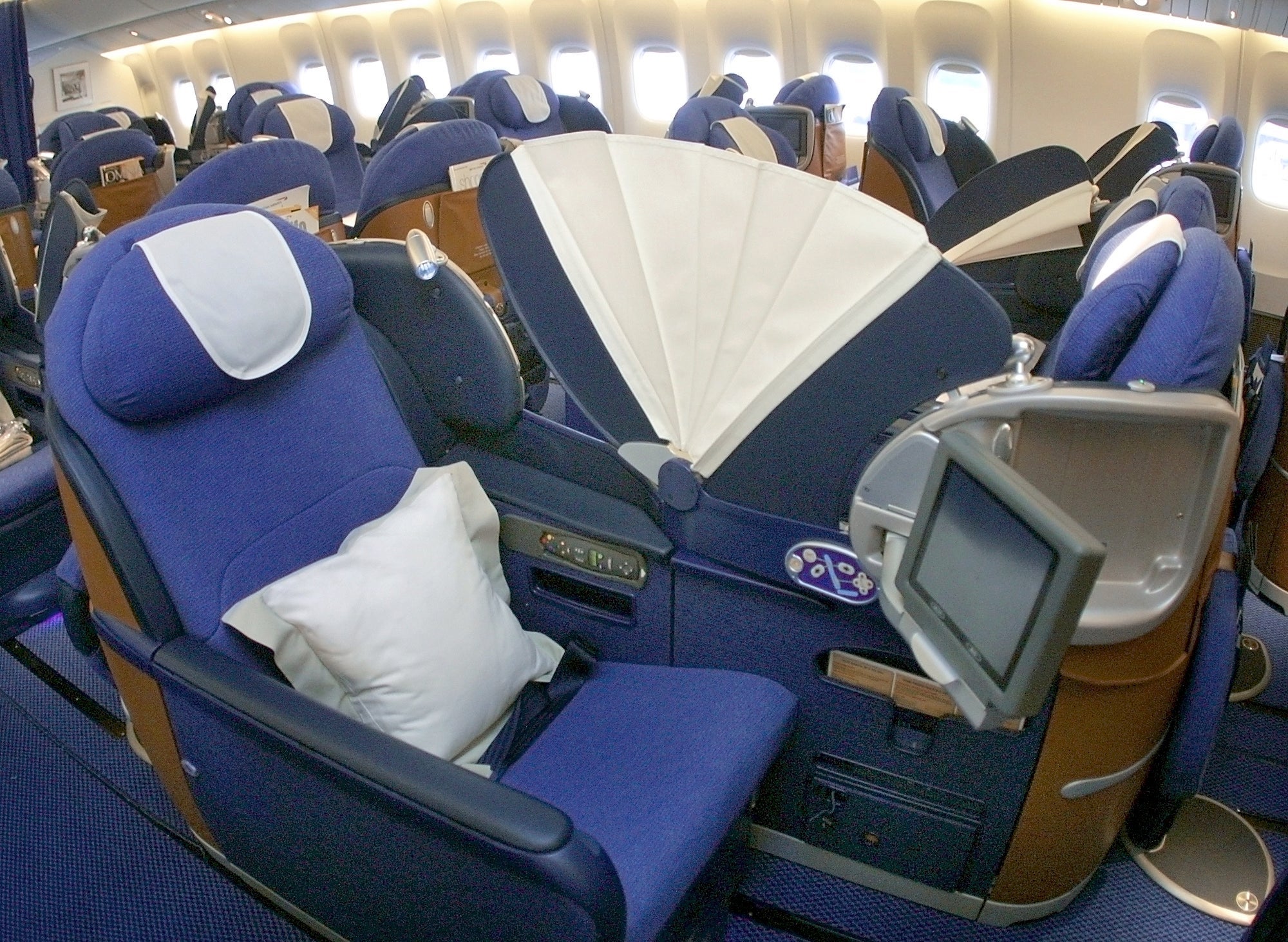
The first lie-flat seats that appeared on the 777 — which were the first biz-class lie-flats on any airplane — were in British Airways' Club World. They look hopelessly dated today, but 20 years ago they were exceptional.

Today, a good biz class on a 777 has enclosed suites for couples or single travelers — something that was unimaginable even in first class when 777s began plying the skies.
In first class, the space available on the 777 has let airlines go big when it comes to fancy suites — none more than Emirates, which put its new suite in some 777s beginning in 2017.
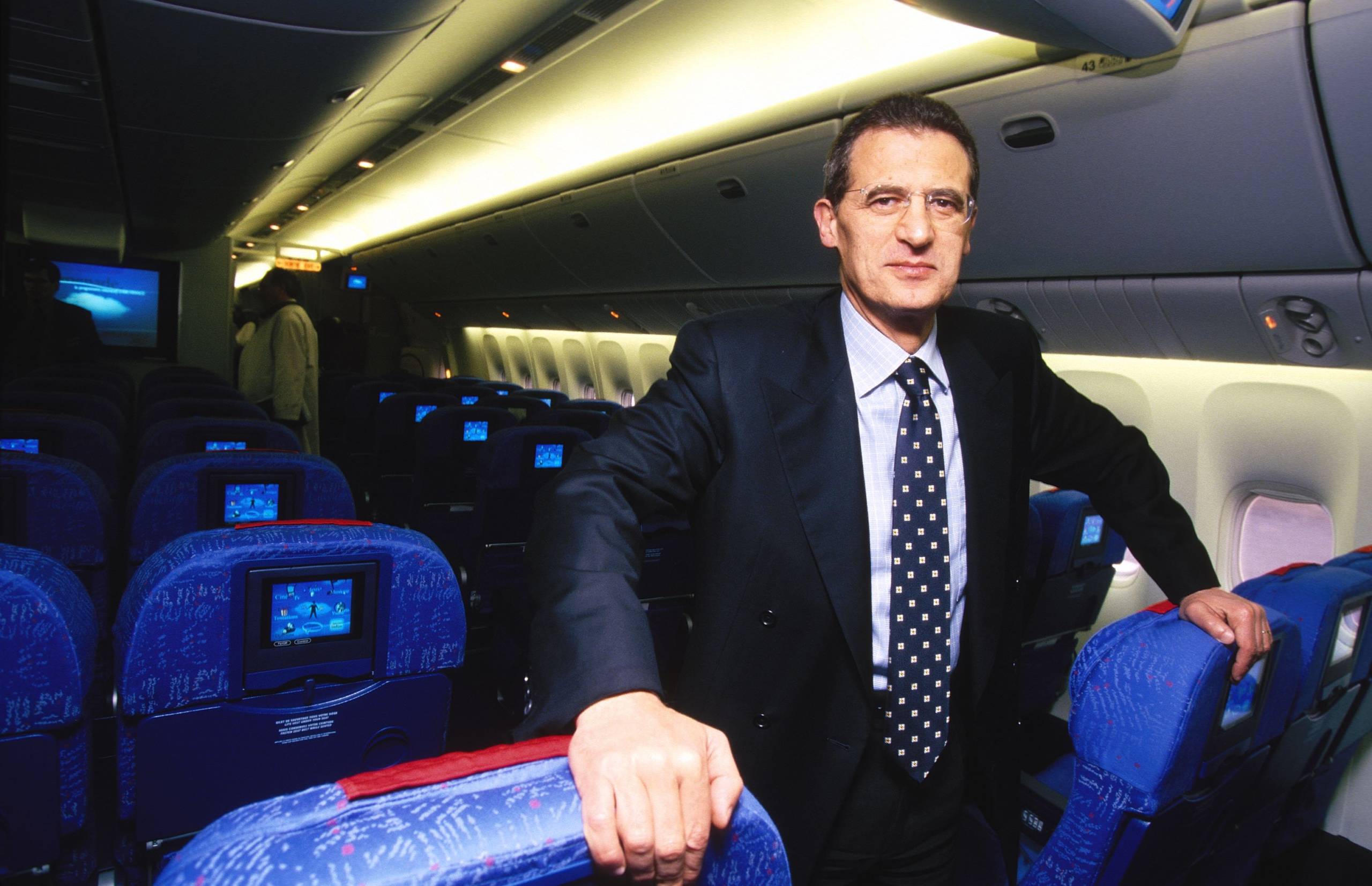
Back in coach class, all that space has let airlines do something different: cram as many seats as possible into the plane. The 777 had been designed for nine seats across arranged in a 3-3-3 layout, and that's how those early Triple Sevens came out of the factory. Airlines then figured out that they could squeeze one more in, and most of them went 3-4-3. Today you'll get individual monitors that are far better than the tiny, archaic displays pictured aboard this Air France 777 in 1998, but you'll still be squeezed closer to your neighbor.
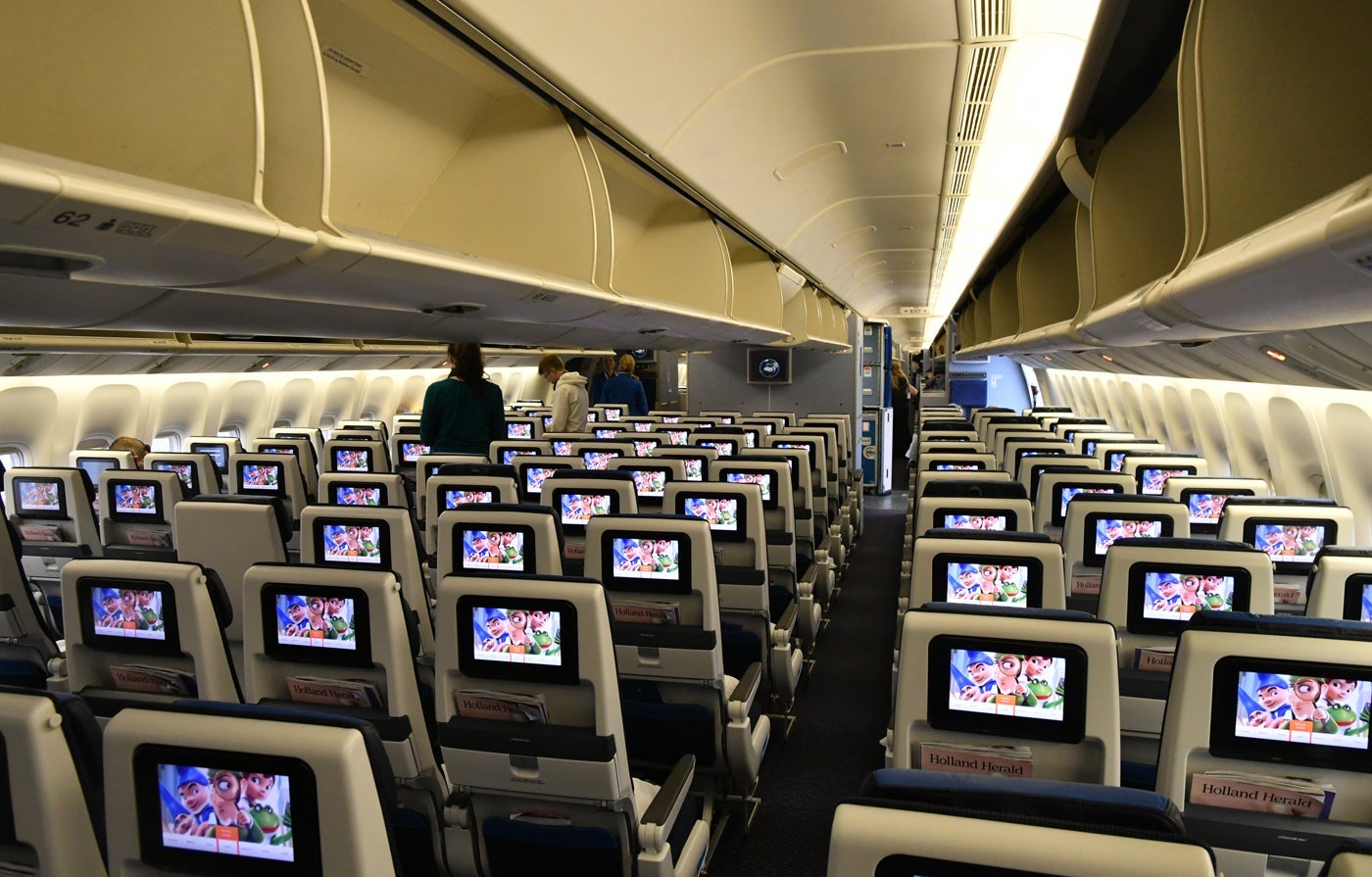
The disappearance of Delta's 777s — they will be gone by the end of this year — is a sad moment for flyers also because Delta was the only U.S. airline flying 777s with that nine-abreast layout in coach. (You'll still find them on Japan Airlines, Asiana Airlines and Korean Air, among carriers that serve the U.S.)
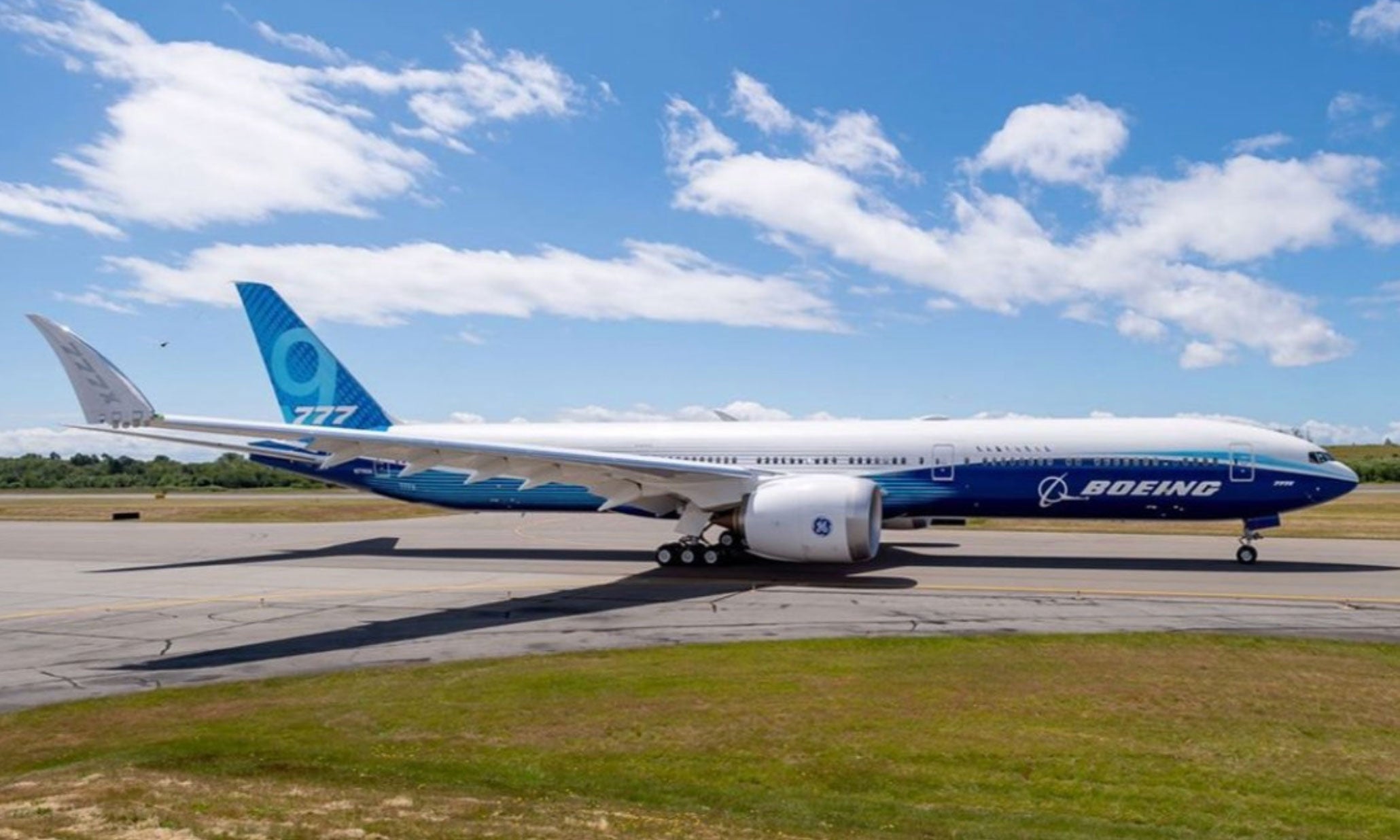
Whatever the seat layout, you can expect to find yourself on a 777 decades from now. Boeing has just flown the newest generation of the Triple Seven, known as the 777X; the largest twinjet in the world, the 777-9, took to the sky earlier this year and will enter service in 2021 if all goes well. With the average age that jetliners reach before retirement, you can be sure that you will find Triple Sevens hauling people around the world well into the 2050s, making for a spectacularly long seven-decade career.
TPG featured card

at American Express's secure site
Terms & restrictions apply. See rates & fees.
| 3X | Earn 3X Miles on Delta purchases. |
| 1X | Earn 1X Miles on all other eligible purchases. |
Pros
- Delta SkyClub access when flying Delta
- Annual companion ticket for travel on Delta (upon renewal)
- Ability to earn MQDs through spending
- Various statement credits for eligible purchases
Cons
- Steep annual fee of $650
- Other Delta cobranded cards offer superior earning categories
- Earn 100,000 Bonus Miles after you spend $6,000 or more in purchases with your new Card within the first 6 months of Card Membership and an additional 25,000 bonus miles after you make an additional $3,000 in purchases on the Card within your first 6 months, starting from the date that your account is opened. Offer Ends 04/01/2026.
- Delta SkyMiles® Reserve American Express Card Members receive 15 Visits per Medallion® Year to the Delta Sky Club® when flying Delta and can unlock an unlimited number of Visits after spending $75,000 in purchases on your Card in a calendar year. Plus, you’ll receive four One-Time Guest Passes each Medallion Year so you can share the experience with family and friends when traveling Delta together.
- Enjoy complimentary access to The Centurion® Lounge in the U.S. and select international locations (as set forth on the Centurion Lounge Website), Sidecar by The Centurion® Lounge in the U.S. (see the Centurion Lounge Website for more information on Sidecar by The Centurion® Lounge availability), and Escape Lounges when flying on a Delta flight booked with the Delta SkyMiles® Reserve American Express Card. § To access Sidecar by The Centurion® Lounge, Card Members must arrive within 90 minutes of their departing flight (including layovers). To access The Centurion® Lounge, Card Members must arrive within 3 hours of their departing flight. Effective July 8, 2026, during a layover, Card Members must arrive within 5 hours of the connecting flight.
- Receive $2,500 Medallion® Qualification Dollars with MQD Headstart each Medallion Qualification Year and earn $1 MQD for each $10 in purchases on your Delta SkyMiles® Reserve American Express Card with MQD Boost to get closer to Status next Medallion Year.
- Enjoy a Companion Certificate on a Delta First, Delta Comfort, or Delta Main round-trip flight to select destinations each year after renewal of your Card. The Companion Certificate requires payment of government-imposed taxes and fees of between $22 and $250 (for itineraries with up to four flight segments). Baggage charges and other restrictions apply. Delta Basic experiences are not eligible for this benefit.
- $240 Resy Credit: When you use your Delta SkyMiles® Reserve American Express Card for eligible purchases with U.S. Resy restaurants, you can earn up to $20 each month in statement credits. Enrollment required.
- $120 Rideshare Credit: Earn up to $10 back in statement credits each month after you use your Delta SkyMiles® Reserve American Express Card to pay for U.S. rideshare purchases with select providers. Enrollment required.
- Delta SkyMiles® Reserve American Express Card Members get 15% off when using miles to book Award Travel on Delta flights through delta.com and the Fly Delta app. Discount not applicable to partner-operated flights or to taxes and fees.
- With your Delta SkyMiles® Reserve American Express Card, receive upgrade priority over others with the same Medallion tier, product and fare experience purchased, and Million Miler milestone when you fly with Delta.
- Earn 3X Miles on Delta purchases and earn 1X Miles on all other eligible purchases.
- No Foreign Transaction Fees. Enjoy international travel without additional fees on purchases made abroad.
- $650 Annual Fee.
- Apply with confidence. Know if you're approved for a Card with no impact to your credit score. If you're approved and you choose to accept this Card, your credit score may be impacted.
- Terms Apply.
- See Rates & Fees