From crabs to COVID-19 tests: Southwest is gearing up for a busy (cargo) holiday season

The holiday season may be nearing, but there is no tinsel hanging in Southwest Airlines' cargo warehouse at Baltimore/Washington airport. At least not yet.
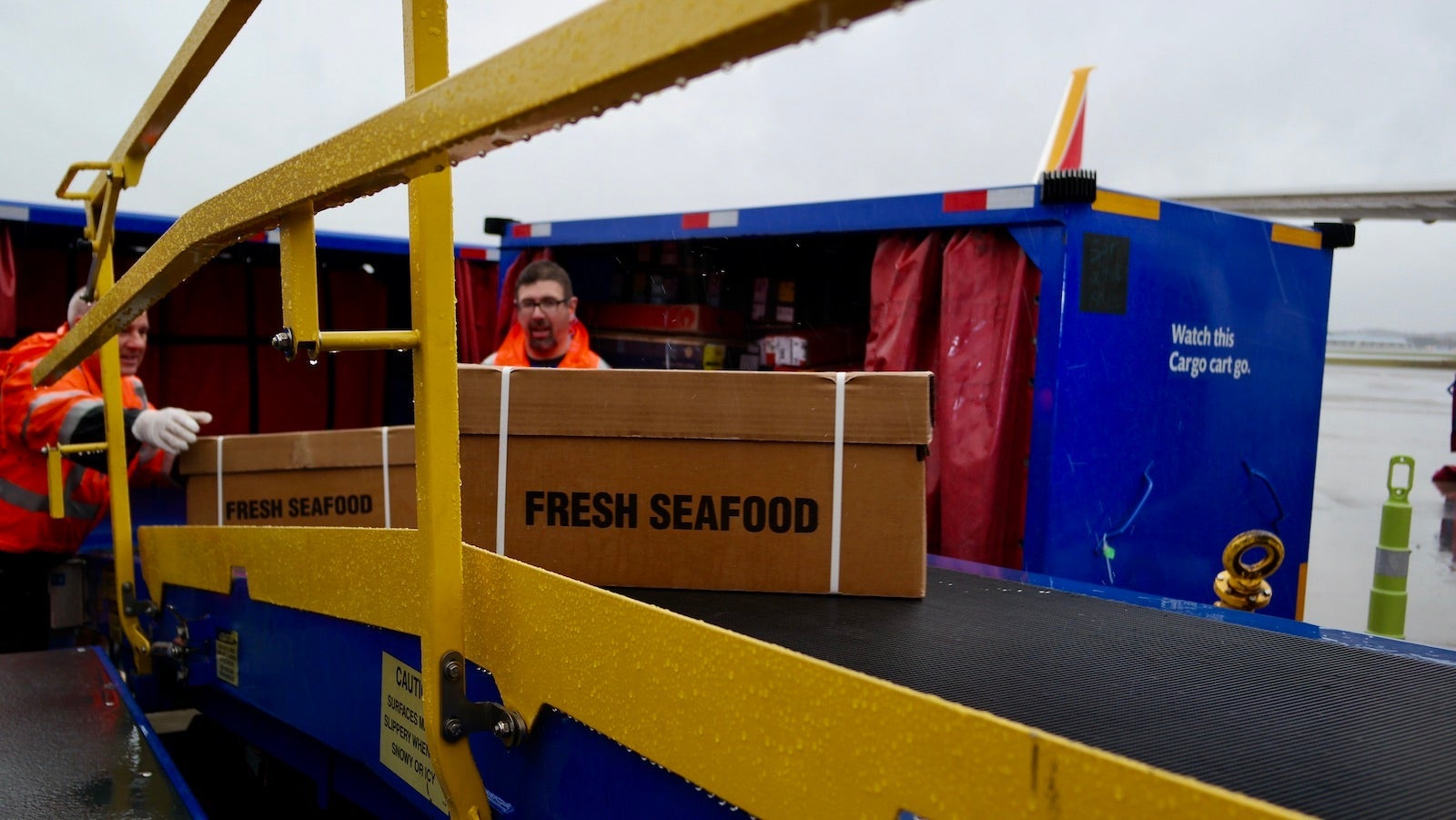
Boxes and boxes of crabs, arrivals from a recent flight from the Gulf of Mexico, are sorted before they're sent on their way to Maryland's famed crab houses — whose menus feature more out-of-state crabs than one might expect. Fresh cut flowers fill a refrigerator while boxes from e-commerce shippers line walls. And in a sign of the coronavirus pandemic times, white boxes with COVID-19 tests await shipment.
"Every kind of freight we ship comes through Baltimore," Sean Moody, cargo customer service manager at Southwest Cargo, told TPG during a tour of the airline Baltimore/Washington (BWI) freight operations earlier in November.
Want more airline-specific news? Sign up for TPG's free new biweekly Aviation newsletter!
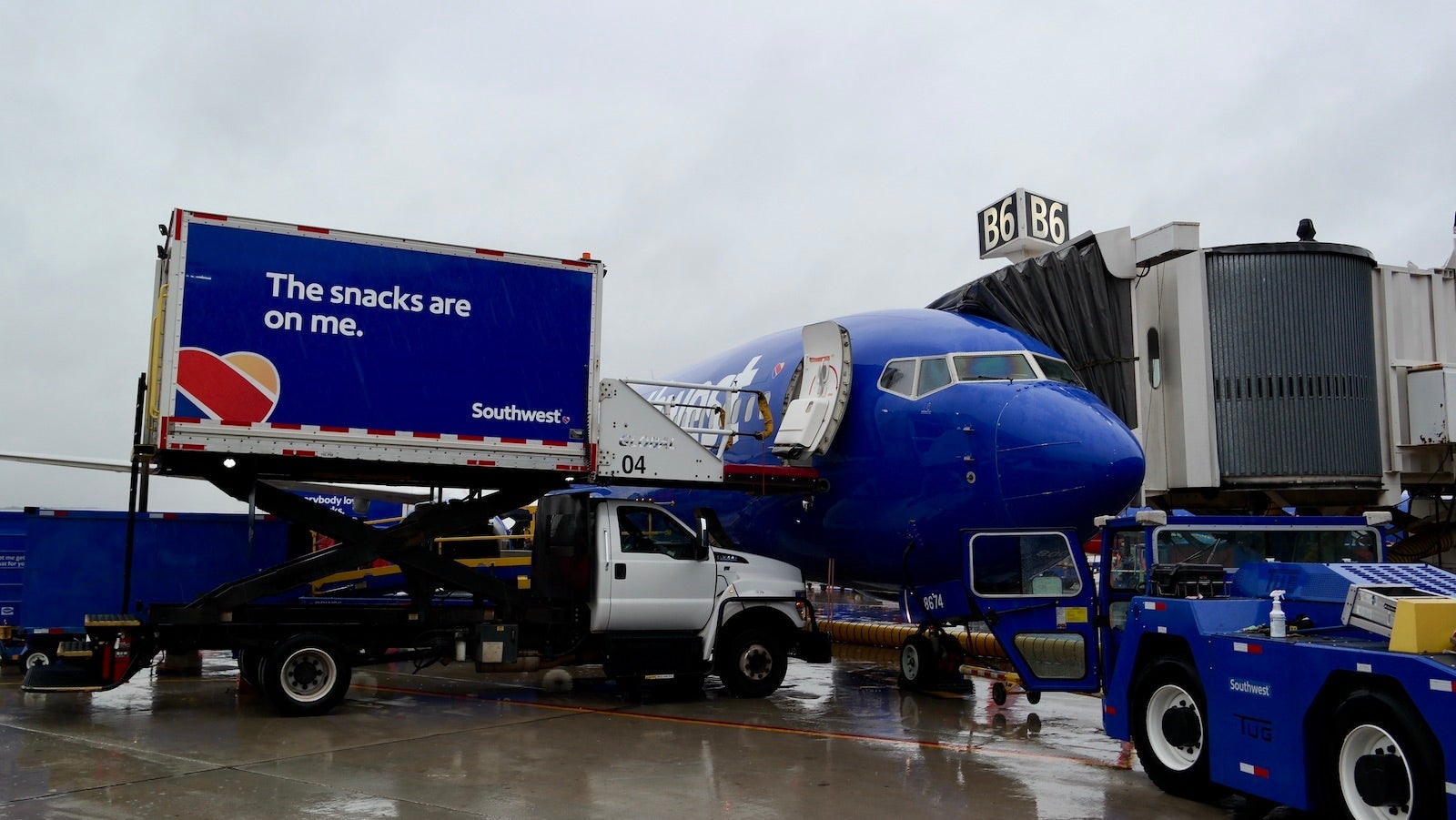
Baltimore/Washington is one of Southwest's busiest bases, both for flights and cargo. The airport is second only to Denver (DEN) in handling transfer freight.
This time of year already accounts for a large portion of Southwest's cargo goods. Now, the airline is preparing for an even bigger uptick in shipments through the end of the year, said Southwest managing director of cargo and charters Wally Devereaux in an interview with TPG.
"You have what is being referred to as 'peak on peak,'" he said. "It's really being prepared to move high-volumes of e-commerce related goods."
Related: Southwest on full-court press to win back biz flyers, one airport tour at a time
Underscoring the type of year it's been, Cowen analyst Helane Becker understatedly described 2020 as "an interesting holiday shipping season" in a recent report. The air freight market faces both higher-than-usual demand as more goods are being shipped, yet less ability to carry those shipments as passenger flights are down significantly in response to the pandemic.

It is a lesser-known fact that two-thirds of global air freight flies in the belly of passenger jets, be it a Southwest 737 or American Airlines Boeing 777. And on some international routes — such as those between the U.S. and China — so much cargo flies on passenger flights that airlines are resuming service there on the back of cargo demand. Paying passengers are just an added bonus in the current environment.
The lack of supply in the midst of rising demand has increased shipping rates, benefitting passenger and cargo airlines alike, wrote Becker.
Related: Airlines expect a post-coronavirus boom in leisure travel, they just don't know when
Still, that increase does not outweigh the losses at Southwest. Cargo revenues were down 2% during the three months ending in September. That's a far shallower decline than the 72% drop in passenger revenues, but it's a drop that comes as many other large airlines recorded double-digit jumps in freight revenue.
Devereaux attributed this drop to the loss of certain types of freight, like conference materials and equipment for sporting events. The need for these goods all but disappeared when COVID-19 shut down large swathes of the economy.
"We're still not back to maybe normal," he said. "But those commodities that were really impacted early on have started to return, at least to some degree, and e-commerce goods have still remained very high throughout."
Related: Southwest Airlines adds new Hawaii route, connects Sarasota and Savannah to its 'hubs'
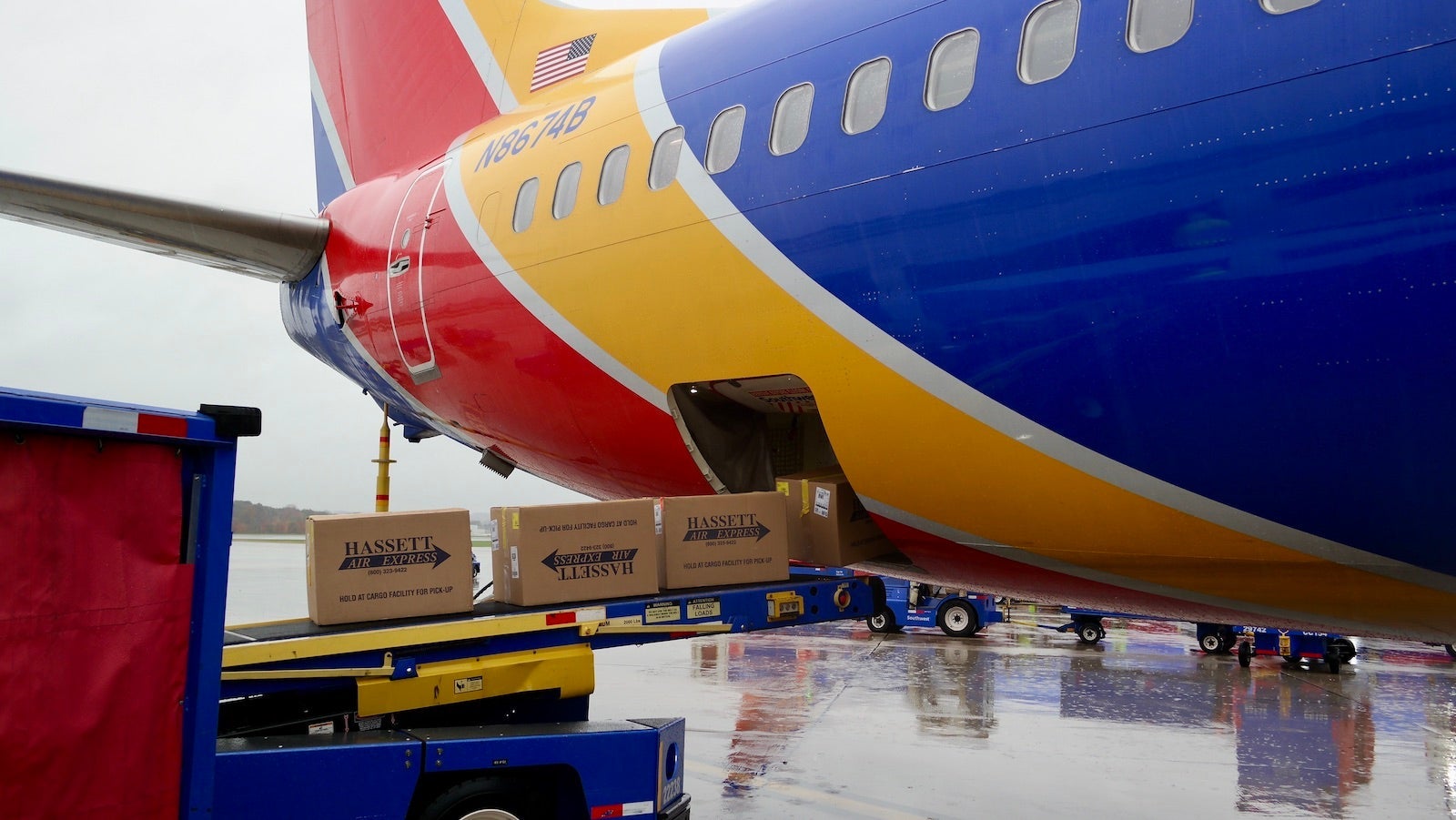
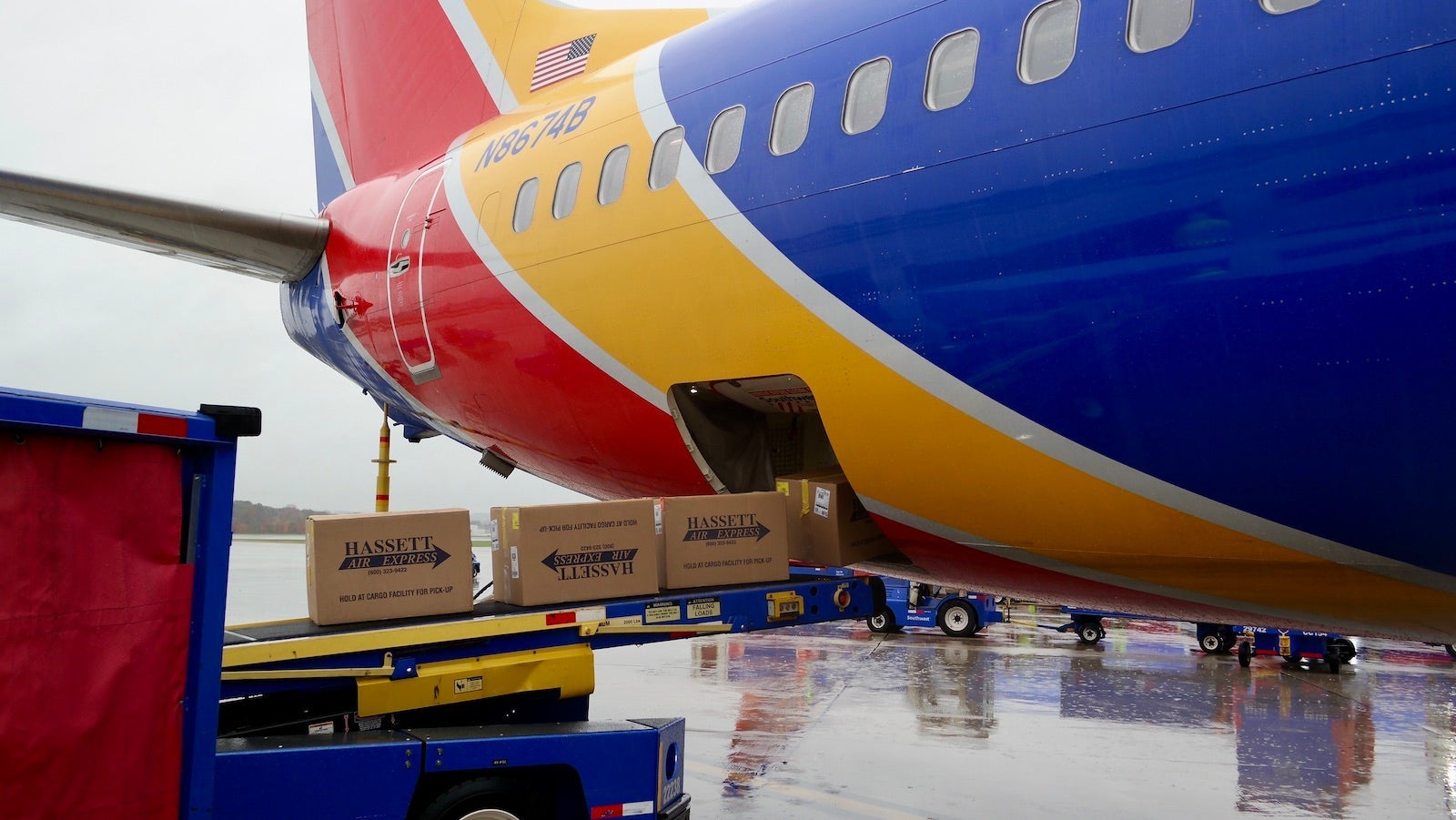
In terms of e-commerce, Southwest deals almost exclusively with middlemen, or freight forwarders. Among those is Hassett Logistics, many of whose shipments pass through Baltimore.
Hassett boxes were just part of the cargo coming off a Southwest flight that had just arrived from Houston Hobby (HOU) when TPG toured the Baltimore facilities earlier in November. Fresh caught crabs and cut flowers were among the allotment being sorted. Some were destined for connections to onward flights, others bound for warehouses where they would be picked up by local distributors. Or, in the case of crabs, they were headed directly to the restaurants themselves.
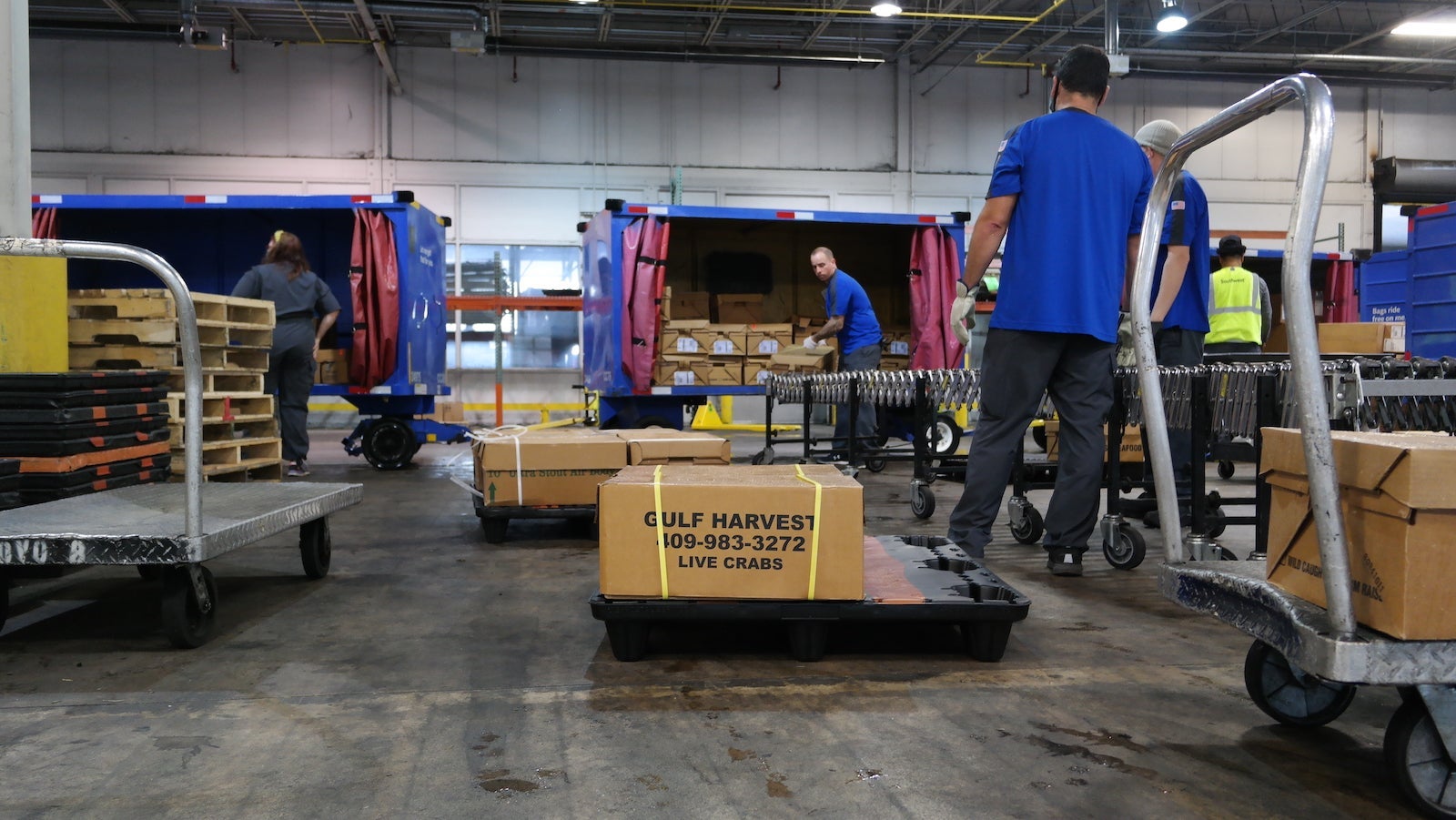
"My favorite tall tale is you can eat a Maryland crab," Moody joked as boxes of crabs from the Gulf head out to Maryland restaurants. Southwest handles far more shipments of crabs to Baltimore than it sends out, he added.
Crab and other seafood shipments were initially hit hard when restaurants closed their doors early in the pandemic. This has ticked back up in recent months, but remains below 2019 levels, Devereaux said.
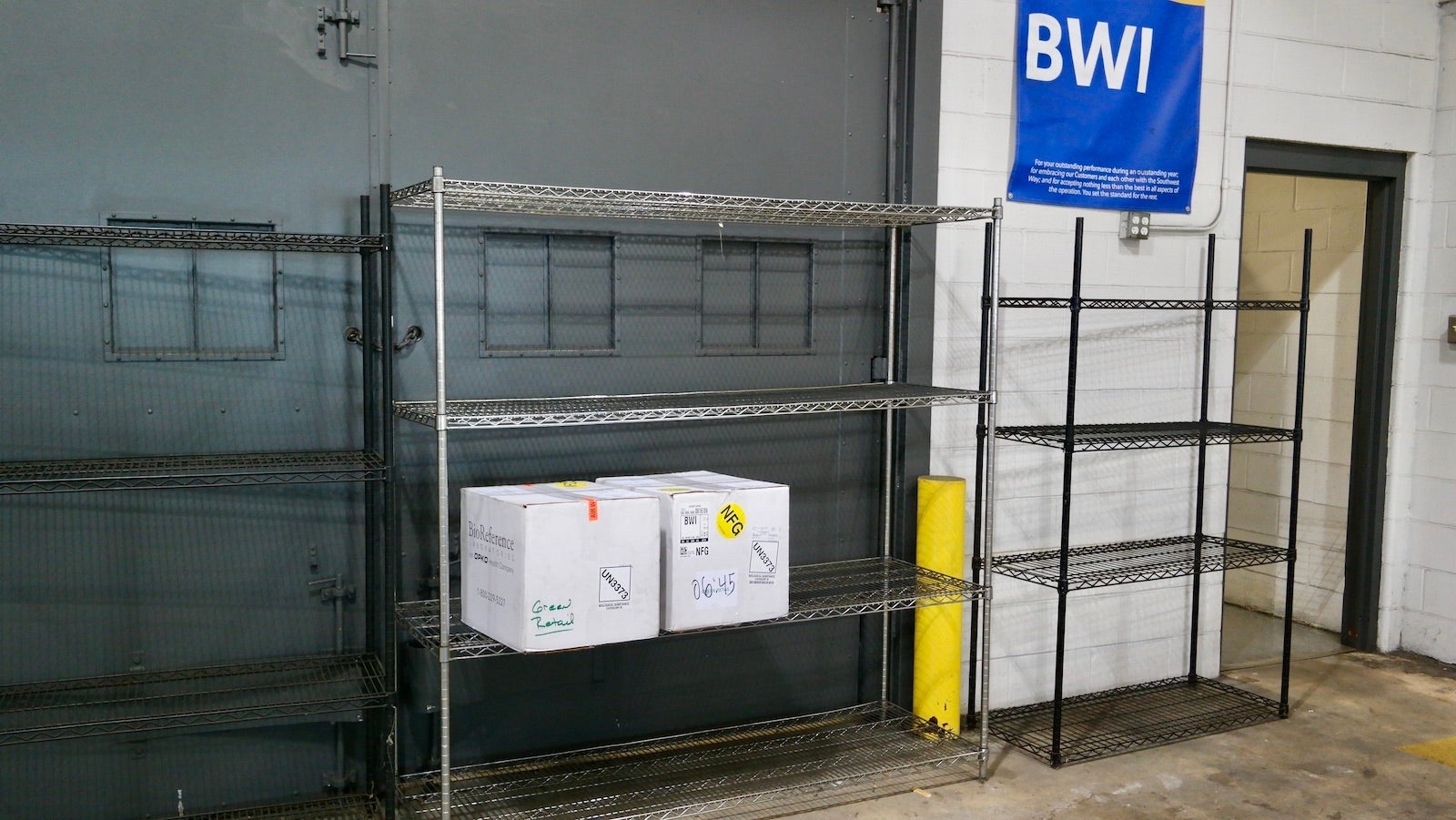
However, the crisis has also created opportunities. One is carrying boxes of COVID-19 testing samples to various labs around the country. This is a critical mission as the U.S. continues to fight the pandemic that is surging once again.
In terms of carrying the eventual coronavirus vaccine, Southwest is in conversations with customers now so it can be prepared when shipments begin.
However, if the vaccine shipments require significant cold storage facilities, Southwest may need to make investments. Its Baltimore warehouse only has one refrigerator that is not equipped, for example, to facilitate the minus 94 degrees Fahrenheit storage temperatures that the in-development Pfizer vaccine requires.
Related: Southwest Airlines warns staff of first layoffs in carrier's history
Not even the holidays will get cargo back where it was before COVID-19, at least not at Southwest. Freight, like the airline industry in general, needs the economy to get back to normal operating procedure before things will really look rosy again, said Devereaux.
"Not until you're really back to a complete state of everything being open, up and running and operational do I think you have a complete recovery across all commodities in the cargo sector," he said. "But things do continue to improve in certain commodity areas."
Maybe a recovery will mean some tinsel for Southwest's cargo warehouse, after all.
Related: Southwest helps BWI dominate DC area as coronavirus shakes up US airports
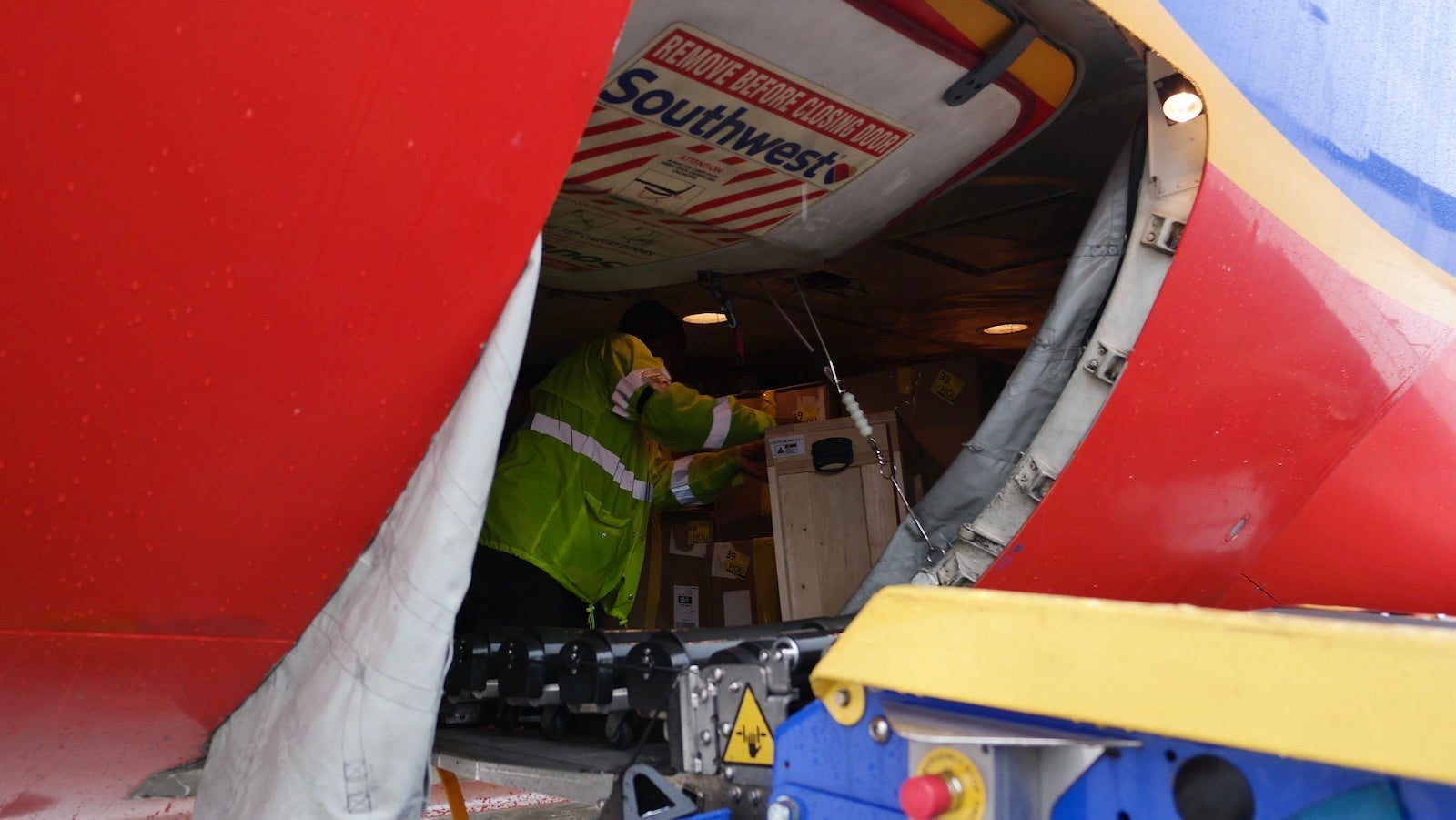
Featured image by Edward Russell/TPG.
TPG featured card

at Capital One's secure site
Terms & restrictions apply. See rates & fees.
| 5X miles | Earn 5X miles on hotels, vacation rentals and rental cars booked through Capital One Travel |
| 2X miles | Earn unlimited 2X miles on every purchase, every day |
Pros
- Stellar welcome offer of 75,000 miles after spending $4,000 on purchases in the first three months from account opening. Plus, a $250 Capital One Travel credit to use in your first cardholder year upon account opening.
- You'll earn 2 miles per dollar on every purchase, which means you won't have to worry about memorizing bonus categories
- Rewards are versatile and can be redeemed for a statement credit or transferred to Capital One’s transfer partners
Cons
- Highest bonus-earning categories only on travel booked via Capital One Travel
- LIMITED-TIME OFFER: Enjoy $250 to use on Capital One Travel in your first cardholder year, plus earn 75,000 bonus miles once you spend $4,000 on purchases within the first 3 months from account opening - that’s equal to $1,000 in travel
- Earn unlimited 2X miles on every purchase, every day
- Earn 5X miles on hotels, vacation rentals and rental cars booked through Capital One Travel
- Miles won't expire for the life of the account and there's no limit to how many you can earn
- Receive up to a $120 credit for Global Entry or TSA PreCheck®
- Use your miles to get reimbursed for any travel purchase—or redeem by booking a trip through Capital One Travel
- Enjoy a $50 experience credit and other premium benefits with every hotel and vacation rental booked from the Lifestyle Collection
- Transfer your miles to your choice of 15+ travel loyalty programs
- Top rated mobile app